

Industry News

OSHA Posting and Submitting Guide
Author, Alyssa Burley, Media Communications and Client Services Manager, Rancho Mesa Insurance Services, Inc.
Rancho Mesa Insurance Services, Inc. would like to remind its clients that February 1, 2022 marks the start of the OSHA Form 300A Summary posting period. The OSHA Form 300A is a summary of the company's annual work-related injuries and illnesses. It must be posted from February 1, 2022 to April 30, 2022.
Author, Alyssa Burley, Media Communications and Client Services Manager, Rancho Mesa Insurance Services, Inc.

Rancho Mesa Insurance Services, Inc. would like to remind its clients that February 1, 2022 marks the start of the OSHA Form 300A Summary posting period. The OSHA Form 300A is a summary of the company's annual work-related injuries and illnesses. It must be posted from February 1, 2022 to April 30, 2022.
To learn more about maintaining all the OSHA logs, listen to Rancho Mesa's StudioOne™ podcast episode 168 where Alyssa Burley and Megan Lockhart discuss the Forms 300, 300A and 301.

REQUIRED TO POST
According to Cal/OSHA, “If your company had more than ten (10) employees at any time during the last calendar year, you must keep Cal/OSHA injury and illness records unless your establishment is classified as a partially exempt industry under Section 14300.2.”
POST FORM 300A SUMMARY
The Form 300A Summary must be posted in a conspicuous place at each workplace, where notices to employees are usually displayed. Make sure that the posted annual summary is not altered, defaced, or covered by other material. Employers must send a copy of the summary to employees who do not report to the workplace on a regular weekly basis.
NO RECORDABLE INJURIES
Companies with no recordable injuries or illnesses in 2021 must post the OSHA Form 300A Summary with zeros on the “total” lines.
HOW TO GENERATE THE FORM 300A SUMMARY
Through Rancho Mesa's Risk Management Center, clients can generate the OSHA Form 300A Summary using the incident tracking feature. Individual employers are required to maintain the OSHA Forms 300, 300A and 301 throughout the year. So, when it is time to generate the Form 300A Summary, it can be printed from the Risk Management Center, as long as the employer has been documenting the information in the platform throughout the year.
To print the OSHA Form 300A Summary, login to the Risk Management Center and navigate to Incident Track. Ensure you have entered all your incident information, then go to the Reports section and choose the Form 300A Summary from the available list. You'll be able to choose the year and locations (Sites) that you want to print.
SUBMITTING THE FORM 300A SUMMARY TO FEDERAL OSHA
In addition to posting the Form 300A Summary in your workplace, the data must also be submitted to Federal OSHA by March 2, 2022. If you have entered your incident data into the Risk Management Center, you'll be able to generate the electronic .CSV file that is used to upload the data to the Federal OSHA website. Watch out short video on how to generate the electronic Form 300A Summary.
Data Entry and Generating the Electronic Form 300A Summary
There are some minor differences between Cal/OSHA and Federal OSHA requirements. Check with your state’s OSHA division for specific differences for your state.
Visit the California Recordkeeping Standard or Injury & Illness Recordkeeping Forms webpages for more information.
2022 Workers' Compensation Expectations for CA Landscape Industry
Rancho Mesa's Alyssa Burley and Drew Garcia, Vice President of the Landscape Group set the stage for insurance expectations in 2022.
Transcript
Alyssa Burley: Welcome back, everyone. My guest is Drew Garcia, Vice President of the Landscape Group with Rancho Mesa. Today, we're going to set the stage for insurance expectations for 2022. Drew, thank you for joining us.
Drew Garcia: Alyssa, thanks for having me.
AB: Since you specialize in the landscape industry, what do you see for the insurance marketplace, for these companies as we move into 2022?
DG: Great question, and I think a lot of companies are always wondering this each year as they come up for renewal. So what I want to do is just, I'll give you a little insight to all the lines of insurance that most landscape companies are going to be renewing in 2022.
And this is basically what we do at a pre renewal, very low level. But I'll start with work comp, which has been a soft market now for four or five years where there's been pressure for rates to continue to go down as a group, as a whole.
And each company's obviously individually underwritten by a carrier, and they're looking at the losses for that particular company. But in general, the work comp market has been soft and that's led to, you know, general decreases for most businesses over the last four or five years.
We think that trend is going to continue in 2022, and we'll see if there's any change in 2023. But for the foreseeable future through this policy period, we do believe that the work comp market is going to stay relatively soft, and that just means rates are going to stay down as a whole.
Again, there could be some individual things that you're experiencing as a landscape business that's causing your pricing to increase, whether that's your ex mod or you've got claims in the current year that haven't gone into the mod calculation or you've changed operations, things like that could impact your own pricing.
But as a group, we feel like the market's going to stay relatively soft. And I'm going to share a little detail that we do individually, myself and Greg, who helps me here with the landscape group at Rancho Mesa. We track a lot of industry data and then we use that when we're having our conversations with our customers.
So one thing we like to pull is we measure every contractor that has a C-27 license in California. There's about 5,465 of those companies that have work comp policies, and that's businesses that are landscape companies that only carry that license. They don't also have other licenses so strictly landscape, which helps us keep our data clean when we're looking at it. So there's 5,465 of those companies, 125 carriers, insurance carriers for work comp, right? At least one policy for all of those companies.
So there's 125 insurance carriers writing at least one landscape policy. Now there's only 25 carriers that have more than 20 policies, so we really start to limit down, you see carriers become niche when trying to write a particular business, in this case, landscape. Of those 125, only 25 of them have more than 20 policies. So there's probably a little bit of an appetite there that's aligning for those carriers. And then when we really might it down, there's only ten carriers they have more than 150 policies, and those are the bulk of the businesses of the insurance carriers riding the business or writing work comp policies for landscape companies in California. The top five are going to be familiar names, Berkshire Hathaway, Insurance Company of the West, State Fund, Markel and then Am Trust.
Those are the top five carriers in terms of market share writing those 5,465 C-27 license landscape companies that have work comp policies. So a little bit of an insight into the market and what carriers are interested in writing business or work comp policies for landscape companies.
And then when we look at the numbers, we always like to watch the pure premium rate for the 0042 class code and just a quick refresher on pure premium. Every year the bureau, the rating bureau, will recommend a rate that the carriers should charge per $100 in payroll for every particular class code to strictly just cover claim costs. So, this rate doesn't include carrier overhead or expense. So, that number went from $4.93 last year to $4.57 this year, effective September the first of 2021. That's a 7% decrease, and when you're watching that recommendation come from the bureau to the insurance carriers, what happens next is insurance carrier’s base rates come down a little bit. Normally, the rates should come down a little bit on the base rate side, and last year, the average base rate for an insurance carrier, which is the rate that they're going to start at when they're going to underwrite a landscape business, and that rate is going to be different for every insurance carrier. The average rate that they started at was $9.92. That's down to $9.52 on average. So 4% down on the base rate for work comp carriers. Again, those are indicators to us that the market is still soft.
There's still plenty of carriers trying to write the business and that, we should see rates stay relatively down for 2022 as a whole. Again, we talked about the individual aspect of underwriting, but as a whole, those are good indicators that the market still is pretty soft.
And I'm going to share my screen really quick. This is a factor here that nobody really talks about. But California is so diverse with how work comps are handled throughout the state. So there's individual territory factors that most carriers apply when they're underwriting based on where you're doing your business and the reason why they use territory factors is because the claim outcomes, the claim activity can be higher in certain areas than in others. So the screen that you're looking at right now shows Berkshire Hathaway's territory factors based on 2021 and then 2022. And what I did is you can see, based by zip code, I've got different colors indicating the severity of territory factors that could be applied depending on where you're doing your business. So the lighter colors that you're seeing, the more yellow, lighter yellow that you see, those are the preferred areas and then the heavier, darker red that's going to be where maybe there's some territory debits that increase, and most carriers are using something like this when they're underwriting and looking at the business, but you can see some movement in some of the color from last year to this year. You can see San Diego's lightened up a little bit as a territory, so rates are probably a little bit more favorable in San Diego.
But there really is always been some heavy focus on L.A., Orange County, Riverside County, San Bernardino, where carriers really look at implying a debit on territories just because of claim outcomes and claim activity in those in those particular regions.
And then San Jose in Northern California, those have always been generally lighter intel. There's a less territory factor that that happens up there based on better claim activity and claim outcomes that are associated with the zip codes up in that area.
So I wanted to share that, I'll pull that screen down. And then now exiting work comp kind of just highlighting a couple of the other lines of insurance that we think are going to be impacted in 2022. And we've talked about it for many years with our customers, but the auto market is still very difficult.
And if you're a landscape maintenance company, you have a heavy fleet and a lot of vehicles. So it's really important for you to continue to monitor your cost per unit. And we wrote that article a few weeks back, measuring your cost per unit at each renewal so you can kind of see where your insurance has gone over the years. And so landscape companies really need to pay attention to their cost per unit because we do believe there's still more pressure on the auto market for rates to continue to increase. There's a lot of things that Rancho Mesa provides, and so many of our landscape companies are taking advantage of our Fleet Safety trainings that we have in the Risk Management Center and client services on our end has done a great job when we've had claimed activity with our customers to recommend certain driver trainings, you know, as a result of those claim outcomes - or those accidents that have occurred.
So, we've been happy with how we're helping our customers manage the auto side and then really everyone should watch out on the excess or the umbrella layer of their insurance that's really taking its toll and we've seen rate increases coming on that line in particular. A lot of carriers are limiting their capacity, so a lot of carriers usually go up to 10 million for that limit. But now it seems five is the most that any one carrier wants to go to.
So if you carry more than 5 million, you're probably going to need to stack that with multiple carriers to achieve that limit, which could be different than what you've seen in the past, and also watch out for wildfire exclusions. A lot of excess of reinsurance carriers are trying to apply a wildfire exclusion to landscape companies in California, which would be a detriment to your policy if you have it. So always pay attention for that. You can also look out for that wildfire exclusion on your general liability policy. Those are new things that are potentially coming to the liability side. There are still carriers out there that don't offer that exclusion, so you would want to make sure that you're aligned with a carrier that's doing that. But for the general liability property inland marine policies, we think rates are staying relatively flat.
So we don't see a lot of movement coming there. More of the pressures coming on the auto and excess lines. And I think we'll see that for the next couple of years, there should be should remain some pressure on those lines.
That basically wraps it all up for us, covers the basic lines that most companies are looking at. And again, kind of an overview, but hopefully it gives some insight to business as they're moving into 2022, what to expect and where to focus their attention when it comes to their renewal.
AB: Drew, if listeners have questions about their workers compensation insurance, what's the best way to get in touch with you?
DG: Email, they can email me at drewgarcia@ranchomesa.com, call my office (619) 937-0200, and then I'd also encourage them just to check out our website, we've got a ton of content that we've created, all designed for landscape companies to help them better manage their risk. And we have, you know, different tools that aren't really available online that we'd be happy to introduce to companies and let them use to better manage their risk.
AB: Drew, thank you so much for joining me in StudioOne™.
DG: Thanks for having me, Alyssa.
The Field Guide to Navigating Your Insurance in 2022
Author, Dave Garcia, President, Rancho Mesa Insurance Services, Inc.
As a business owner preparing for 2022, what areas of insurable risk should cause you the biggest concerns? During the 2021 year, we experienced a hardening insurance market. All lines of insurance were negatively impacted as a result of the catastrophic events we experienced such as wildfires, flooding, hurricanes, and the emergence of COVID-19. Large national and worldwide crises like these caused underwriting losses in the billions of dollars to both front line insurers and reinsurers.
Author, Dave Garcia, President, Rancho Mesa Insurance Services, Inc.

As a business owner preparing for 2022, what areas of insurable risk should cause you the biggest concerns?
During the 2021 year, we experienced a hardening insurance market. All lines of insurance were negatively impacted as a result of the catastrophic events we experienced such as wildfires, flooding, hurricanes, and the emergence of COVID-19. Large national and worldwide crises like these caused underwriting losses in the billions of dollars to both front line insurers and reinsurers.
COVID-19’s impacts included:
The loss of income/revenues
Labor shortages
Health concerns
Relocation of labor forces
As the year comes to a close, we now have some answers but even more questions about what challenges 2022 will bring. Below are a few remaining questions that create uncertainty.
Will Property, Auto, General Liability, Excess, Cyber, and EPL insurance continue to see pressure? The short answer is yes.
What can I do today as a business owner to prepare and better mitigate these increases?
Start your renewal process a minimum of 120 days away from your expiration date. Learn more about the pre-renewal process in our article, “3 Reasons Your Pre-Renewal Meeting is Key to your Success.”
Be willing to meet and discuss your particular situation, needs and goals.
Choose a broker that specializes in your industry and can negotiate with the marketplace from a position of expertise.
Evaluate the services that you receive from your broker’s agency to assure they align with your specific risk management needs. Are they proactive or reactive?
Where is the Workers’ Compensation Industry Going in 2022 and Beyond?
What is expected of Workers’ Compensation in 2022? The short answer is that this market will remain soft.
The Workers’ Compensation Insurance Rating Bureau (WCIRB) has asked for a modest decrease in overall rates and most carriers’ filings have reflected that recommendation. However, these are averages and many industries will find these decreases harder to come by.
What is expected of Workers’ Compensation in 2023? There are several leading indicators that present early signs of a hardening market. Here are a few:
Wage inflation for most businesses. This will lead to higher temporary disability payments to injured workers thus increases in overall claim amounts.
Wage inflations within insurance carrier’s personnel. This will cause a rise in their overhead costs and then a subsequent rise in their combined ratios which will impact their bottom line.
The likely inclusion (September 2022 and beyond) of COVID claims in the Experience Modifier Rating formula (X-Mod). While this is not yet official, approval appears likely.
Preparing for the hard workers’ compensation market starts today with our checklist.
We will explore those at length in a series of articles beginning in January 2022. Subscribe to our newsletter to receive those articles. For now, here are a few tips:
Utilizes a Workers’ Compensation Gap Analysis and Opportunity Assessment (through the Risk Management Center).
Benchmark your performance to industry standards to look for areas of improvement. Learn more about Rancho Mesa’s KPI.
Choose your workers’ compensation carrier wisely. Learn more about selecting a carrier in the article, “How to Choose a Workers’ Compensation Carrier Partner.”
Have you ever considered performance-based programs? If not, maybe it’s time to bet on yourself. Watch the “Deductible Workers’ Compensation: Understanding performance-based insurance programs” webinar.
With workers’ compensation premiums representing a significant line item on many profit and loss statements, staying up to date on the rapidly changing environment should be a priority for all businesses. And, preparing for the expected rate increases is more important than ever with inflationary costs already choking profitability for so many operations. Our series of articles starting in January will help in this education process and allow you to better understand steps you can take now to weather this building storm.
Incorporating a clear strategy as it relates to your insurance portfolio is perhaps more critical than ever leading into 2022. With pricing increases across all lines of coverage becoming more and more common, managing this line item on your financials should be a proactive process with your broker. Start that dialogue now and develop the right plan to design and coordinate the most comprehensive and competitive program possible.
Wage Inflation’s Impact On Workers’ Compensation
Author, Casey Craig, Account Executive, Rancho Mesa Insurance Services, Inc.
Following up on a great article by fellow construction team member Kevin Howard, about anticipated wage threshold increases coming in 2022, I wanted to highlight the building problems resulting from substantial hourly wage increases.
Author, Casey Craig, Account Executive, Rancho Mesa Insurance Services, Inc.

Following up on a great article by fellow construction team member Kevin Howard, about anticipated wage threshold increases coming in 2022, I wanted to highlight the building problems resulting from substantial hourly wage increases.
I specialize in painting, drywall and plastering contractors and have been asking my clients over the past few months about the health of their business and any new challenges. The most common answer: there is a substantial amount of work to bid on, but a labor shortage limits the possibility of growth.
Paying an employee higher wages creates new issues. Employees tend to inform co-workers when they get a raise. Employees may also try to leverage another company’s higher wage into a raise. The combination of a labor shortage and overpaying employees may result in hyperinflation, leading these employees to believe their value has skyrocketed.
Tying back into Kevin’s article, it is easy to see why these thresholds need to be increased. The wage threshold is meant to separate historically safer employees from newer employees who are less safety conscious. These increases in payroll are pushing less skilled employees into the higher wage category, resulting very likely in higher claim frequency as they are historically less experienced and safety conscious on the jobsite. This is leading to a smaller gap in workers’ compensation rates between the above and below class codes for each industry.
For example, a painter had a separation of 56% from 5474 to 5482 (painters making above or below $28) for their 2021 renewal. For 2022, they are only looking at a 46% difference. From the carrier perspective, more losses are expected in the 5482 (above $28) than the previous year, leading to a rate increase in that class code. I wish I could say that this was industry specific, but from conversations with multiple underwriters, most industries are dealing with these same employment issues and have struggled to find meaningful solutions.
It is possible these dual wage threshold increases will help restore balance by bringing the less skilled employees back into the proper class code, securing the lower rates in the over class code. Employers have shared that these threshold increases are hurting them, but should assist with workers’ comp savings for the truly elite seasoned workers. Carriers have these thresholds to help you differentiate experience from inexperience.
This is a developing issue that we are trying to stay ahead of. The time is now to meet with someone who specializes in your industry and help you formulate a strategy for 2022 to mitigate these impacts and improve your profitably. To schedule a time to talk or meet with me or you can call me directly at 619-438-6900.
Timely Reporting of Workers’ Compensation Claims Lower Overall Costs
Author, Jack Marrs, Associate Account Executive, Rancho Mesa Insurance Services, Inc.
Leading into 2022, it is important for employers to examine their workplace injury reporting practices. Specifically, employers should report all injuries including medical-only workplace injuries to their workers’ compensation insurance company. Best practices dictate all claims should be reported within the first 24 hours in order to improve treatment to the injured worker and reduce the overall cost of the claim to the employer.
Author, Jack Marrs, Associate Account Executive, Rancho Mesa Insurance Services, Inc.

Leading into 2022, it is important for employers to examine their workplace injury reporting practices. Specifically, employers should report all injuries including medical-only workplace injuries to their workers’ compensation insurance company. Best practices dictate all claims should be reported within the first 24 hours in order to improve treatment to the injured worker and reduce the overall cost of the claim to the employer.
A recent conversation with an underwriting manager highlighted the fact that some employers are choosing to pay for occupational clinic visits rather than filing a claim, assuming that small medical-only claims will negatively impact the Experience Modification Factor (X-mod) and ensuing workers’ compensation premiums. However, in actuality claims of $250 or less do not impact the X-mod. Not only are employers legally required to report workplace injuries, but those small claims can easily turn into something bigger, if not reported in a timely manner. Further, the reporting of all incidences can assist a company in identifying trends and root causes thereby allowing for proactive measure to be taken. Rancho Mesa’s proprietary Key Performance Indicator (KPI) dashboard helps track these trends and compare a company’s performance to that of their industry. Request a KPI dashboard for your company.
Why then does reporting lag result in higher claim costs? An insurance carrier’s ability to investigate a claim, determine compensability, and identify fraud may be hindered as details of the incident fade, witnesses may no longer be available or key evidence may not be preserved. According to Liberty Mutual, a 29-day delay in reporting an injury can lead to a 33% increase in lost time, 52% higher average claim cost, and 152% increase in litigation rates. This makes sense when one considers that a delay in seeking treatment could cause an employee’s condition to worsen, extending recovery time and temporary disability payments.
Lastly, an employer paying a medical bill will pay much more than a workers’ compensation carrier would pay for that same bill as insurance companies negotiate a reduced fee schedule for occupational injuries. Bottom line, failure to report workplace incidents in a timely manner can put any organization and its employees at risk for no benefit. Contact Rancho Mesa to learn more about our Risk Management Center and how our free trainings and webinars can improve your reporting practices.
Cal/OSHA Adopts Revised ETS Through April 2022
Author, Alyssa Burley, Media Communications and Client Services Manager, Rancho Mesa Insurance Services, Inc.
On Thursday, December 16, 2021, the Cal/OSHA Standards Board voted in favor, 6 to 1, of adopting the revised COVID-19 Prevention Emergency Temporary Standard (ETS). This is the third iteration of the ETS since it originally went into effect in November 2020 and it happens to be the second and final re-adoption that’s allowed.
Author, Alyssa Burley, Media Communications and Client Services Manager, Rancho Mesa Insurance Services, Inc.

On Thursday, December 16, 2021, the Cal/OSHA Standards Board voted in favor, 6 to 1, of adopting the revised COVID-19 Prevention Emergency Temporary Standard (ETS). This is the third iteration of the ETS since it originally went into effect in November 2020 and it happens to be the second and final re-adoption that’s allowed.
The newly adopted revised ETS goes into effect on January 14, 2022 when the current ETS expires, and it will be in effect until April 14, 2022, at which time the temporary standard must expire or Cal/OSHA has to adopt a permanent standard in order to keep some sort of COVID-related standard in place.
Based on the discussions at the Cal/OSHA Standards Board’s December 16th meeting, it looks like Cal/OSHA is moving forward with proposing a permanent COVID-19 standard in March or April 2022. So, we’ll keep an eye on that.
Changes to Cal/OSHA’s COVID-19 Prevention Emergency Temporary Standard:
COVID-19 TEST
Starting January 14, 2022, there is a new definition for what is considered a “COVID-19 test” to account for over-the-counter tests that are now readily available. The new definition specifically says if you’re using an over-the-counter test, it cannot be both self-administered and self-read unless observed by the employer or an authorized telehealth proctor.
So, if an employee wants to use an over-the-counter COVID-19 rapid antigen test, they’ll need to either have the employer or an authorized telehealth proctor witness the test being performed and the results generated. This is really to prevent employees from providing false results to employers.
FACE COVERINGS
The new ETS also provides more details about what types of face coverings are now allowed and what’s not. Acceptable face coverings include surgical masks, a medical procedure mask, a respirator worn voluntarily, or a tightly woven fabric or non-woven material of at least two layers that does not let light pass through when held up to a light source. There are exceptions for clear face coverings when worn strictly for accommodations purposes. Coverings must be secured to the head with ties, ear loops or elastic bands that go behind the head.
This means many of the cloth masks that are currently being used by employees will no longer be acceptable under this new standard. Scarfs, ski masks, bandanas and other make-shift face coverings will not be permitted.
FULLY VACCCINATED
The definition of “fully vaccinated” has changed a bit. The new language recognizes those who may have gotten their first dose of a two-dose vaccine series from one manufacturer and the second dose from another manufacturer.
WORKSITE
Another change is the definition of “worksite.” The new ETS clarifies that a worksite does not include locations where the employee does not have exposure to other employees.
For example, if the employee is working from their home office, it would not be considered a worksite for ETS noticing purposes, nor would an office where the employee works by themselves and never is exposed to other employees.
TESTNG AFTER WORKSITE COVID-19 EXPOSURE
There are new requirements for testing employees after a COVID-19 exposure in the workplace. Regardless of vaccination status, employers must now offer testing to all employees who have had a close contact with a COVID-19 case in the workplace, regardless of their vaccination status.
Prior to the revised ETS, employers did not have to offer testing to vaccinated employees who were exposed. This change is a result of break through cases in those who are fully vaccinated. The only exception for not offering close contacts testing, is for those who have recovered from COVID-19 within the past 90 days and do not have symptoms.
RETURN TO WORK
Another change for vaccinated employees includes wearing a face covering in the workplace in lieu of a quarantine. While those employees who are vaccinated do not need to quarantine if they have had a close contact with a COVID-19 case, as long as they are asymptomatic and test negative, they can return to the workplace, but must wear a face covering and social distance for 14 days following the last date of close contact. This rule also applies to those who have recovered from COVID-19 within the last 90 days and are asymptomatic.
For those who are unvaccinated and have had a close contact with a COVID-19 case, as long as they test negative and are asymptomatic, they can return to the workplace after a 10-day quarantine, however, they must social distance and wear a face covering for 14 days.
There is a 7-day quarantine option for unvaccinated employees that are asymptomatic if they test negative at least five days after the close contact. In this situation, the employee must maintain social distancing and wear a face covering.
TESTING DURING AN OUTBREAK
As for changes to how to handle testing as a result of an outbreak, vaccinated employees can no longer be excluded from being offered testing if there are three or more employee COVID-19 cases within an exposed group. So, employers just need to make sure they’re offering testing to both vaccinated and unvaccinated employees if they’ve had a close contact or were in an exposed group during an outbreak.
One last thing to consider, while Cal/OSHA’s revised ETS does not take into consideration the federal vaccination or weekly testing mandates, nor other state and local requirements, we recommend that you consult your local and state health departments for additional requirements.
Rancho Mesa will make available an updated COVID-19 Prevention Program template that incorporates the modifications, as soon as possible.
Visit www.RanchoMesa.com/covid-19 for all our COVID-related articles, podcast episodes, sample COVID-19 Prevention Program Templates, and links to insurance carriers, the CDC and other agencies.
2022 Construction Dual Wage Thresholds - An Early Look
Author, Kevin Howard, Account Executive, Rancho Mesa Insurance Services, Inc.
There are 16 construction workers’ compensation class code pairs in California, each set up as dual wage classifications. The purpose of these “split” class codes allows the Workers’ Compensation Insurance Rating Bureau (WCIRB) and California insurers to better predict future risk and underwrite with more accuracy.
Author, Kevin Howard, Account Executive, Rancho Mesa Insurance Services, Inc.

There are 16 construction workers’ compensation class code pairs in California, each set up as dual wage classifications. The purpose of these “split” class codes allows the Workers’ Compensation Insurance Rating Bureau (WCIRB) and California insurers to better predict future risk and underwrite with more accuracy.
To illustrate the dual wage threshold, consider a seasoned laborer with years of safety training, exposure awareness, and familiarity with jobsite protocol. This employee is going to be less of a safety risk compared to an apprentice who is still learning his or her trade, the safety techniques and all of the skill associated with a trade. As one might imagine, statistics consistently show a much higher probability of an injury occurring with an apprentice versus a seasoned veteran or journeymen. So, having a dual wage threshold allows carriers to generate pricing based on the employees’ experience and likelihood of having an injury.
Exploring how this can directly impact rates and pricing, the 2021 roofing dual wage class codes of 5552 and 5553 is a great example.
Class code 5552 is defined as roofers who make less than $27 per hour. The average California worker’s compensation insurance base rate for this class code is $40 per $100 of payroll. Class code 5553 includes roofers who make $27 or more per hour. This class code’s average California workers’ compensation insurance base rate is $20 per $100 of payroll. In this example, the workers’ compensation premium base rate is half the cost for a more experienced employee over someone with less experience.
It is crucial for any roofing contractor to be mindful of this wage threshold data knowing that the delta in the 2022 recommended increase represents a staggering 61% gap between the two base rates.
Additionally, the WCIRB has continued to increase wage thresholds. This is to keep up with inflation of the US dollar, the increase in minimum wage and the demand for labor, among other factors.
Dual Wage Classification Thresholds by Year
Shown below are the wage thresholds for all dual wage classifications. For information about these classifications, see the California Workers' Compensation Uniform Statistical Reporting Plan—1995, effective September 1, 2021.
| Classifications | ||||||||||||||||
|---|---|---|---|---|---|---|---|---|---|---|---|---|---|---|---|---|
| Year | 5027 | 5140 | 5183 | 5185 | 5201 | 5403 | 5446 | 5467 | 5474 | 5484 | 5538 | 5552 | 5632 | 6218 | 6307 | 6315 |
| 5028 | 5190 | 5187 | 5186 | 5205 | 5432 | 5547 | 5470 | 5482 | 5485 | 5542 | 5553 | 5633 | 6620 | 6308 | 6316 | |
| 9/1/2022 | $32 | $34 | $31 | $32 | $32 | $39 | $38 | $36 | $31 | $36 | $29 | $29 | $39 | $39 | $39 | $39 |
| 9/1/2021 | $28 | $32 | $28 | $29 | $28 | $35 | $36 | $33 | $28 | $32 | $27 | $27 | $35 | $34 | $34 | $34 |
| 1/1/2021 | $28 | $32 | $28 | $29 | $28 | $35 | $36 | $33 | $28 | $32 | $27 | $27 | $35 | $34 | $34 | $34 |
| 1/1/2020 | $28 | $32 | $28 | $29 | $28 | $35 | $36 | $33 | $28 | $32 | $27 | $27 | $35 | $34 | $34 | $34 |
| 1/1/2019 | $27 | $32 | $26 | $27 | $25 | $32 | $34 | $32 | $26 | $29 | $27 | $25 | $32 | $31 | $31 | $31 |
| 1/1/2018 | $27 | $32 | $26 | $27 | $25 | $32 | $34 | $31 | $26 | $29 | $27 | $25 | $32 | $31 | $31 | $31 |
| 1/1/2017 | $27 | $30 | $26 | $27 | $24 | $30 | $33 | $31 | $24 | $27 | $27 | $23 | $30 | $30 | $30 | $30 |
© 2021 Workers' Compensation Insurance Rating Bureau of California. All Rights Reserved.
WCIRB’s 2022 RECOMMENDATION:
The Bureau is considering raising the hourly wage threshold for all 16 dual wage classification pairs with some codes seeing as much as a $5.00 increase. The average delta between the lower advisory rate and higher advisory rate is 48%.
Proposed Dual Wage Threshold Increases
| Dual Wage Classifications | Existing Threshold | Proposed Increase | Proposed Threshold | Low Wage Advisory Rate | High Wage Advisory Rate | % Difference From Low Wage Rate |
| 5027/5028 Masonry | $28 | $4 | $32 | $8.18 | $4.21 | -48.50% |
| 5190/5140 Electrical Wiring | $32 | $2 | $34 | $3.76 | $1.45 | -61.40% |
| 5183/5187 Plumbing | $28 | $3 | $31 | $5.31 | $2.36 | -55.60% |
| 5185/5186 Automatic Sprinkler | $29 | $3 | $32 | $4.57 | $1.00 | -57.30% |
| 5201/5205 Concrete Work | $28 | $4 | $32 | $6.64 | $1.95 | -36.30% |
| 5403/5432 Carpentry | $35 | $4 | $39 | $10.03 | $4.23 | -55.10% |
| 5446/5447 Wallboard Installation | $36 | $2 | $38 | $5.42 | $4.50 | -55.10% |
| 5467/5470 Glaziers | $33 | $3 | $36 | $7.62 | $2.65 | -59.30% |
| 5474/5482 Painting Waterproofing | $28 | $3 | $31 | $8.09 | $3.10 | -46.40% |
| 5484/5485 Plastering or Stucco | $32 | $4 | $36 | $9.98 | $4.34 | -37.40% |
| 5538/5542 Sheet Metal Work | $27 | $2 | $29 | $5.07 | $2.52 | -50.30% |
| 5552/5553 Roofing | $27 | $2 | $29 | $21.05 | $8.14 | -61.30% |
| 5632/5633 Steel Framing | $35 | $4 | $39 | $10.03 | $4.50 | -55.10% |
| 6218/6220 Grading/Land Leveling | $34 | $5 | $39 | $5.10 | $2.93 | -42.50% |
| 6307/6308 Sewer Construction | $34 | $5 | $39 | $6.98 | $2.84 | -59.30% |
| 6315/6316 Water/Gas Mains | $34 | $5 | $39 | $4.18 | $3.70 | -11.50% |
This recommendation, if approved by the insurance commissioner, would become effective September 1, 2022.
With the continuing labor shortage in the construction arena, employers have been doing everything possible to retain employees by offering richer benefits plans, pay increases and merit bonuses, when applicable. These recommended wage classification increases could potentially push employers to extend additional pay raises to employees in an effort to minimize workers’ compensation premiums.
It is best for contractors who utilize any of the 16 dual wage classification pairs to be aware of the potential increases and to do the math to see if it makes sense to consider raises prior to your 2022-2023 September 1st workers’ compensation renewal.
Rancho Mesa predicts that this info will become a major factor in payroll decisions based on overhead cost management and recommend this as a topic for discussion early so that our clients, prospects and listeners can prepare.
To discuss how the proposed dual wage threshold increases may affect your business, contact me at (619) 438-6874 or khoward@ranchomesa.com.
Top Five Workers’ Compensation Claims That Impact a MEP’s Bottom Line
Author, Amber Webb, Account Executive, Rancho Mesa Insurance Services, Inc.
If you are an MEP contractor who wants to impact both your productivity and profitably, then the following is crucial for your success. Our MEP Group at Rancho Mesa understands the importance of identifying the top five workers’ compensation claims that impact your industry while providing pertinent resources to help mitigate that risk.
Author, Amber Webb, Account Executive, Rancho Mesa Insurance Services, Inc.

If you are a Mechanical, Electrical & Plumbing (MEP) contractor who wants to impact both your productivity and profitably, then the following is crucial for your success. Our MEP Group at Rancho Mesa understands the importance of identifying the top five workers’ compensation claims that impact your industry while providing pertinent resources to help mitigate that risk. By working with leading workers’ compensation carriers and the Occupational Safety and Health Administration (OSHA), we identified the top 5 workers’ compensation claims affecting the MEP industry:
Cut/Puncture/Scrape/Lacerations
Slip/Falls from both same level and ladders/scaffolding
Strains from lifting/handling/pushing/pulling
Struck by object/Foreign Body in Eye
Motor Vehicle Accident (injured employee)
With employee safety at the forefront of your operations, understanding where the claims are likely to come from and then having the support and tools in place to address those concerns is vital to your long term success. When injuries occur on the job, it impacts not only the life of the injured worker and their family but will directly impact the productivity and profitability of the project.
For our clients to proactively mitigate these exposures, we provide them with access to specific trainings related to these top MEP claims and OSHA citations from our Risk Management Center Library. Our Client Services team then works closely with our clients to customize their trainings while meeting their specific risk management needs.
If you are not already a Rancho Mesa client, and would like a free trial of our Risk Management Center, please complete the form or contact Amber Webb at (619) 486-6562 or awebb@ranchomesa.com.
A Deep Dive into Workers’ Comp Claims in the Landscape Industry
Author, Greg Garcia, Account Executive, Rancho Mesa Insurance Services, Inc.
Workers’ compensation premiums typically represent one of the largest overhead expenses for landscape companies. Premium costs are driven by the number and severity of claims a company has had over a five-year period. Thus, fewer claims often equate to a lower premium paid for workers’ compensation insurance.
Author, Greg Garcia, Account Executive, Rancho Mesa Insurance Services, Inc.
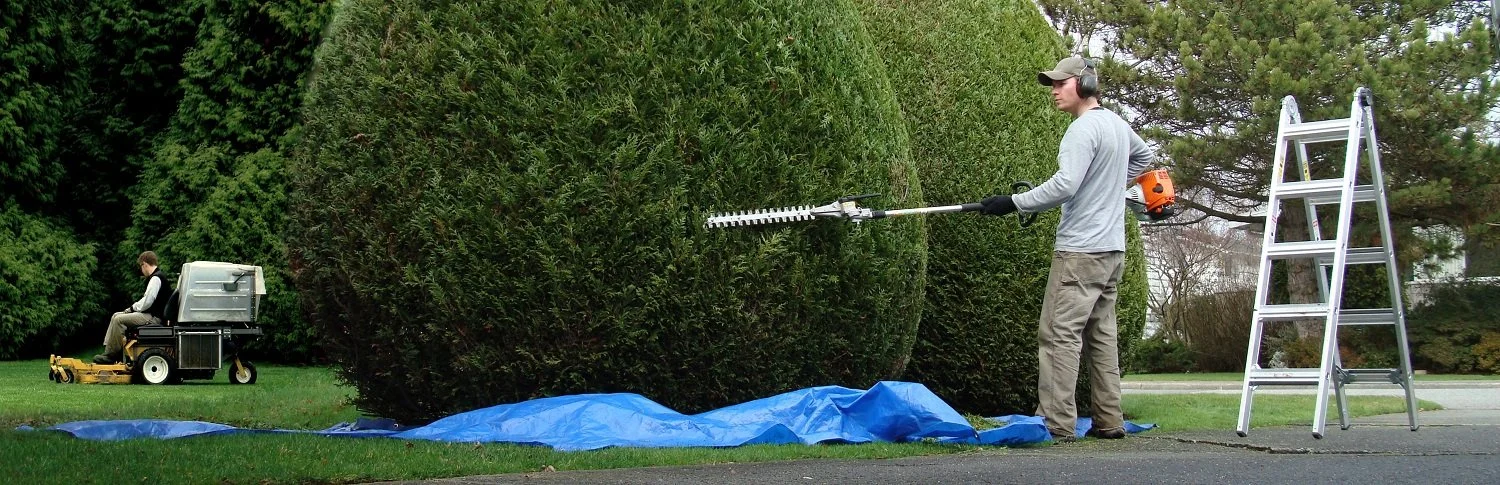
Workers’ compensation premiums typically represent one of the largest overhead expenses for landscape companies. Premium costs are driven by the number and severity of claims a company has had over a five-year period. Thus, fewer claims often equate to a lower premium paid for workers’ compensation insurance.
The National Institute for Occupational Safety and Health (NIOSH) takes a closer look at the landscape industry, detailing where claim frequency is increasing and decreasing.
When analyzing the claims data, a couple of areas stand out as contributors to higher premiums.
Most notably, 50% of all serious claims occur during the first year of an employee’s tenure. Employees under the age of 34 are also more susceptible to a serious claim occurrence. Therefore, it is best to provide new hires with immediate and comprehensive safety training when they first start and continue to emphasize a safety culture throughout their tenure to minimize claims. As employees gain experience, they become more likely to take safety seriously.
The data also shows that loading and unloading trucks and trailers causes roughly 20% of all serious claims. This includes loading and unloading materials, tools, and equipment. Although a seemingly simple task, it’s often overlooked, yet statistics confirm that improved attention to safety when performing these tasks can significantly reduce serious claims.
The industry has seen a considerable decline in claims from overexertion injuries such as back sprains and disc disorders which were once a large contributor to higher premiums. The improvement of lifting techniques and implementation of programs such as Rancho Mesa’s Mobility & Stretch/A.B.L.E. Lift Program, have played a key role in reducing these claims. Programs such as these ensure employees are lifting properly while also stretching their muscles before they begin work.
Reducing workers’ compensation claims should be a top priority for any landscape company. Not only does it protect employees from harm but it also can benefit the company’s bottom line. As an added resource to reducing workers’ compensation claims, Rancho Mesa encourages landscape businesses to take advantage of available safety trainings for new and experienced employees, implement safety measures for loading and unloading trucks, and utilize the Mobility & Stretch/A.B.L.E. Lift Protocol.
In order for you to take your safety program to another level, sign up and receive our weekly safety training tailgate talks specifically designed for the landscape industry.
To start a conversation about how Rancho Mesa can assist your company, contact me at (619) 438-6905 or ggarcia@ranchomesa.com.
Pure Premium and How It Impacts Your Company
Author, Casey Craig, Account Executive, Rancho Mesa Insurance Services, Inc.
The Workers Compensation Insurance Rating Bureau (WCIRB) is an agency that compiles essential data annually which determines how your Experience MOD is impacted.. These factors establish the baseline average MOD of 1.00 for California companies that produce enough payroll and premium to qualify within the guidelines. These factors can change year to year and represent a key rate trend indicator for all policyholders.
Author, Casey Craig, Account Executive, Rancho Mesa Insurance Services, Inc.

The Workers’ Compensation Insurance Rating Bureau (WCIRB) is an agency that compiles essential data annually which determines how your Experience MOD is impacted. These factors establish the baseline average MOD of 1.00 for California companies that produce enough payroll and premium to qualify within the guidelines. These factors can change year to year and represent a key rate trend indicator for all policyholders.
There are different rates generated for different classifications based on exposure and projected losses. The premium company’s pay for workers' compensation begins with multiplying the insurer's rate for the assigned classification(s) by the payroll developed in each classification. Workers' compensation rates are applied per $100 of payroll.
Pulling directly from the WCIRB website, “The WCIRB submits advisory pure premium rates to the California Department of Insurance (CDI) for approval. Insurer rates are usually derived from the advisory pure premium rates developed by the WCIRB and approved by the Insurance Commissioner. Advisory pure premium rates, expressed as a rate per $100 of payroll, are based upon loss and payroll data submitted to the WCIRB by all insurance companies. These rates reflect the amount of losses an insurer can expect to pay in benefits due to workplace injuries as well as the cost for adjusting and settling workers' compensation claims. Pure premium rates do not account for administrative and other overhead costs that an insurer will incur and, consequently, an insurer's rates are typically higher than the pure premium rates.” (WCIRB).
Of note, new pure premium rates were just released in September. Each carrier’s individual experience with all respective class codes also has an impact on these rates. Workers’ compensation has been in a soft market for the past several years with the expectation that rates will gradually start increasing. Following the change in pure premium rates is a great indication of where the marketplace is heading an effective way to better understand future costs that your company may be expecting.
With this in mind, engaging a broker that specializes in your industry and prepares you accordingly for the renewal process is a critical step in controlling workers compensation costs. Part of this process begins with understanding pure premium rates and how they ultimately will impact your MOD, carrier base rates, and your renewal pricing.
To discuss the current market or how your XMOD is affecting your workers’ compensation premium, contact me at (619) 438-6900 or ccraig@ranchomesa.com.
ADR Workers' Compensation Programs Reduce Litigation
Author, Sam Clayton, Vice President, Construction Group, Rancho Mesa Insurance Services, Inc.
Workers’ compensation rates have fallen steadily over the last ten years, but businesses in California still pay the highest rates in the country. In addition, California has the highest frequency of permanent disability clams, the highest medical cost per claim and the highest litigation rates per claim.
Author, Sam Clayton, Vice President, Construction Group, Rancho Mesa Insurance Services, Inc.

Workers’ compensation rates have fallen steadily over the last ten years, but businesses in California still pay the highest rates in the country. In addition, California has the highest frequency of permanent disability claims, the highest medical cost per claim, and the highest litigation rates per claim.
To mitigate the friction within the workers’ compensation system, California and several other state legislatures in the early 1990s developed legislation that would permit unions and management to jointly develop an Alternative Dispute Resolution (ADR) program or “carve-out” agreement that resolves disputes outside the state workers’ compensation system with benefits that are at least equal to the benefits required by the Labor Code.
ADR is an alternative to the traditional approach to workers’ compensation claims. With ADR, an injured worker will report the injury and then use the services of a neutral ombudsmen hired by the union trust who is knowledgeable in workers’ compensation law to quickly determine if the injury is work related. The ombudsmen will recommend to the injured worker the appropriate treatment and other benefits owed within the carve-out agreement.
Union ADR provides employers with flexibility to manage the overall cost for their workers’ compensation program by promoting voluntary agreement early on with the injured worker on effective medical treatment to reduce litigation over the scope of medical treatment. ADR can also provide an accelerated claims resolution, faster medical treatment and potentially quicker return to work for the injured employee.
This process limits litigation with the services of an ombudsman and, if needed, mediation and arbitration procedures designed to resolve the claim quickly and appropriately. Since this is a very specialized arena, workers’ compensation carriers typically have a separate claims division that are well versed in the nuances of ADR claims.
To find out if your workers’ compensation carrier offers ADR programs or to learn more, I can be reached at 619-937-0167 or sclayton@ranchomesa.com.
Performance-Based Workers’ Compensation Programs – Are Retros In Your Future?
Author, Dave Garcia, President, Rancho Mesa Insurance Services, Inc.
In the past, we explored performance-based workers’ compensation programs. These plans can create a competitive advantage and an opportunity to monetize your company’s insurance program.
Author, Dave Garcia, President, Rancho Mesa Insurance Services, Inc.
In the past, we explored performance based workers’ compensation programs. These plans can create a competitive advantage and an opportunity to monetize your company’s insurance program.
While we have previously discussed several of these programs in detail (i.e., captives and deductibles), another option that is often overlooked; Retrospective Rating Plan (retros), could possibly be the right next step for many businesses to explore.
Typically, these plans begin to make sense once a company’s annualized premiums exceed $500,000. They contain many elements and variables that must be analyzed and understood before inception, including:
maximum, basic, and minimum premiums
required letters of credit (LOC)
loss cost factor (LCF)
losses based on incurred or paid
potential return of premium
number and frequency of recalculation of the premium/losses
recapture of premium in future calculation if claims develop
claim buyouts
Are you a candidate for a performance based program?
Example of a Retro Workers’ Compensation Program
Assumes a $500,000 premium with a 30% incurred loss ratio
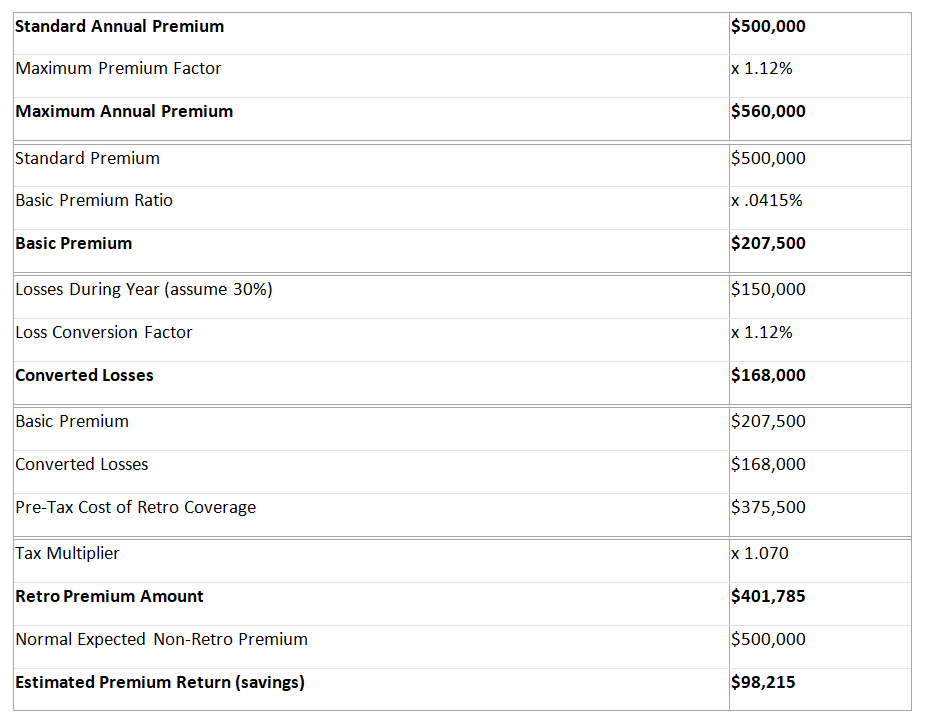
If you would like us to create a performance model for you and your team members to evaluate, contact Rancho Mesa at (619) 937-0164 or via our website. Or, complete our performance based insurance spreadsheet and submit to Alyssa Burley at aburley@ranchomesa.com
The Importance of Properly Classifying Stump Grinding Operations
Author, Rory Anderson, Account Executive, Rancho Mesa Insurance Services, Inc.
Because stump grinding is done from the ground, it can create some confusion for tree care companies on how to properly classify this exposure for workers’ compensation insurance. It’s important to understand how and where to classify this exposure, so you’re not setting yourself up for an issue at the audit. The Workers’ Compensation Insurance Rating Bureau defines all class codes to help companies classify specific operations. Let’s look at how they define 0106 Tree Pruning, Repairing or Trimming.
Author, Rory Anderson, Account Executive, Rancho Mesa Insurance Services, Inc.

Almost all tree care companies’ operations include stump grinding. Stump grinders are powerful machines that are designed to chew away and grind a tree stump down into little pieces, after a tree has been cut down. The operator guides the blade over the stump to take it down below ground level. Because stump grinding is done from the ground, it can create some confusion for tree care companies on how to properly classify this exposure for workers’ compensation insurance. A lot of tree care companies assume that because the employee operating the stump grinder is on the ground, it should be classified in 0042 – Landscape Gardening, which is more cost effective than classifying them in 0106 – Tree Pruning. However, this assumption is incorrect. It’s important to understand how and where to classify this exposure, so you’re not setting yourself up for an issue at the audit.
The Workers’ Compensation Insurance Rating Bureau defines all class codes to help companies classify specific operations. Let’s look at how they define 0106 Tree Pruning, Repairing or Trimming.
0106 Tree Pruning, Repairing or Trimming
This classification applies to pruning, repairing or trimming trees or hedges when any portion of the operations requires elevation, including but not limited to using ladders, lifts or by climbing. This classification includes clean-up, chipping or removal of debris; stump grinding or removal; and tree spraying or fumigating that are performed in connection with tree pruning, repairing or trimming. This classification also applies to the removal of trees that retain no timber value.
According to this definition, a tree care company must report stump grinding in 0106 if the stump grinding is in connection to the 0106 tree work that they performed. Even though the stump grinding operator is working from the ground, they must be classified as 0106 because the stump grinding is performed in connection with the 0106 tree work that they performed.
For example, a specific job calls for the removal of four valley oak trees. The arborists from a tree care company spend the morning climbing, trimming, and removing the four trees. A few hours later, the ground crew grinds all four stumps down using the stump grinder. Per the WCIRB classification definition, the ground crew who are operating the stump grinder must be classified in 0106 because it was in connection to the 0106 tree work that they (the company) performed.
The WCIRB also states that “stump grinding performed for other concerns on a fee basis and not in connection with tree pruning, repairing or trimming at a particular job or location shall be classified as 3724 – Millwright Work.”
To clarify, a tree care company may report stump grinding in the 3724 Millwright Work class code if it has no connection to 0106 tree work. So, in other words, you may only report stump grinding in 3724 if the job calls for only stump grinding.
For example, a homeowner has a stump in their backyard and calls a tree care company out to grind the stump down. This work may be classified in 3724 Millwright Work only if the tree care company did not trim or remove the tree first; they simply showed up and grinded the stump.
Having an insurance agent who specializes in the tree care industry is instrumental in building trust so that this critical information is communicated to you properly. With this information, you can have the confidence that you are reporting payroll correctly and avoid classification issues that can potentially arise at the final audit.
For questions about your operations and corresponding tree care classification codes, contact me at (619) 486-6437 or randerson@ranchomesa.com.
Changes on Horizon Likely to Affect Workers’ Compensation
Author, Sam Clayton, Vice President, Construction Group, Rancho Mesa Insurance Services, Inc.
Changes by the WICRB typically take place at the first of every year and can impact workers’ compensation Pure Premium Rates, Expected Loss Rates (ELR) and Wage Thresholds. However, the WCIRB has amended its filing schedule in 2021 to take effect September 1st.
Author, Sam Clayton, Vice President, Construction Group, Rancho Mesa Insurance Services, Inc.

Businesses in California have become accustomed to many changes in legislation and the filings from the Workers’ Compensation Insurance Rating Bureau (WCIRB).
Changes by the WICRB typically take place at the first of every year and can impact workers’ compensation Pure Premium Rates, Expected Loss Rates (ELR) and Wage Thresholds. However, the WCIRB has amended its filing schedule in 2021 to take effect September 1st.
Below are key changes that businesses should be aware of that can alter Experience Modification Rates (ExMod) and workers’ compensation renewal pricing.
Assembly Bill 1465
The proposed Assembly Bill 1465 (AB 1465) could have significant impact on workers’ compensation rates in the years to come. If passed, AB 1465 will establish the California Medical Provider Network (CAMPN), a broad and largely unregulated network run entirely by the state that would apply to the workers’ compensation system. All licensed physicians in good standing who elect to treat injured workers will be included in the network. Injured workers can choose any provider within the network and can transfer among providers multiple times without any limitation.
If this bill passes and a CAMPN is created, employers can anticipate:
Doctor shopping by injured workers and attorneys;
Increase in temporary disability and time to return to work;
Increase in permanent disability ratings;
Overall increase in medical costs per claim;
Poorer quality medical reports due to fewer controls and less oversight.
Workers’ Compensation Rates
The WCIRB recently proposed a 2.7% workers’ compensation rate increase, effective 9/1/2021. This would be the first rate increase since 2015. Updated fee schedules for med-legal review reports and physician office visits are what is driving this potential increase.
Expected Loss Rates
A characteristic of a Best Practice business is their focus on managing their ExMod. In simple terms, if a business’s ELR increases, it will have a positive effect on their ExMod. Conversely, if their industry’s ELR decreases, it will have a negative effect. While understanding what an ELR is and how it can specifically impact your ExMod is critical, this should be something your insurance advisor is explaining to you and projecting the impact it will have on your ExMod and ultimately your insurance premium.
To put this information at our clients’ finger tips, we have created a Key Performance Indicator (KPI) dashboard to not only show the impact of any changes in the ELR but also provide other key indicators like industry benchmarking, claim trending, and many other critical factors. Request your customized KPI dashboard.
To stay up to date with these topics and related insurance news, subscribe to our weekly safety and risk management newsletter and podcast. Or, contact me directly at (619) 937-0167 or sclayton@ranchomesa.com to discuss how your company may be affected.
How to Choose a Workers’ Compensation Carrier Partner
Author, Dave Garcia, President, Rancho Mesa Insurance Services, Inc.
Many years ago, when I was a young producer, one workers’ compensation carrier legend pulled me aside and told me never to forget that a workers’ compensation decision is not a one-year decision, but at least a 4-year decision. Of course, policies are only written on a one-year basis but what he was teaching me was that the carrier you choose will handle all the claims you have through your Experience Modification cycle. So, evaluating and recommending a workers’ compensation partner for my clients just became a much more thorough analysis of many critical factors beyond just the premium.
Author, Dave Garcia, President, Rancho Mesa Insurance Services, Inc.

Many years ago, when I was a young producer, one workers’ compensation carrier legend pulled me aside and told me never to forget that a workers’ compensation decision is not a one-year decision, but at least a 4-year decision. Of course, policies are only written on a one-year basis but what he was teaching me was that the carrier you choose will handle all the claims you have through your Experience Modification cycle. So, evaluating and recommending a workers’ compensation partner for my clients just became a much more thorough analysis of many critical factors beyond just the premium.
I understand and want to acknowledge that competitive pricing is very important, yet other than price, most business owners are not sure what to look for when comparing carriers. All businesses should consider the following in their evaluation of a workers’ compensation carrier:
What is the A.M. Best rating of the carrier?
How long have they been in the State workers’ compensation marketplace?
What is their premium volume within the State?
What “in-house” services does the carrier provide? Two services for special consideration are:
The Claims Department
Loss Control Service
How does their medical cost containment numbers compare to the industry averages?
How does their claim closing rates compare to the industry average?
Are the following services available?
Telemedicine
Nurse Triage
For any businesses that pay above $250,000 in annual premium, should consider these additional questions:
Does the carrier offer a dedicated indemnity claims examiner for your business?
Does the carrier offer Claim Review Meetings?
Does the carrier offer a Client Services coordinator?
Does the carrier offer on-line claim status information?
What loss sensitive programs do they offer?
Further, for any businesses that are exploring loss sensitive programs (usually above $400,000 in annual premium) like deductible workers’ compensation, they should evaluate the following:
What are the terms of the letter of credit required?
Is there a Loss Conversion Factor (LCF)?
Is a Loss Fund required?
How are Allocated Loss Adjustment Expenses (ALAE) handled?
Is there a policy deductible aggregate?
Are there any claims handling charges?
Are there Medical Cost Containment charges?
Since many of the concepts and terms above require a deeper understanding and explanation, listen to my podcast episodes where I examine this topic in greater detail.
Also, consider attending one or both of my live webinars that cover this topic and afford you the opportunity to ask questions. Register for our Thursday April 1, 2021 webinar where I will focus on businesses with annual premiums below $400,000, and/or register for my Thursday April 8, 2021, webinar where I will deal specifically with deductible workers’ compensation. Both webinars will be 30 minutes in length.
If you would prefer to speak with me directly, I can be reached at (619) 937-0170 or email me at dgarcia@ranchomesa.com.
I wish you all a safe and profitable 2021.
How Rising Pure Premium Rates Will Impact the Tree Care Industry
Author, Rory Anderson, Account Executive, Rancho Mesa Insurance Services, Inc.
In California, each workers’ compensation insurance company has its own set of base rates for each class of business. In order to come up with their base rate for each class code, the insurance carrier applies their Loss Cost Multiplier (LCM) to the Workers’ Compensation Insurance Rating Bureau’s (WCIRB) pure premium rates.
Author, Rory Anderson, Account Executive, Rancho Mesa Insurance Services, Inc.

In California, each workers’ compensation insurance company has its own set of base rates for each class of business. In order to come up with their base rate for each class code, the insurance carrier applies their Loss Cost Multiplier (LCM) to the Workers’ Compensation Insurance Rating Bureau’s (WCIRB) pure premium rates.
Pure premium rates are determined by the WCIRB and include the loss cost of claims for that particular class of business. Those costs include:
The cost of the claim itself (i.e., indemnity, medical and expense payments)
Loss adjustment expenses
Future loss adjustment expenses (e.g., fees for expert witnesses and salary/overhead for outside legal counsel)
A pure premium rate reflects the amount of losses that an insurance carrier can expect to pay out in claims for that class of business. Every 6 months, the WCIRB submits pure premium rates to the California Department of Insurance for approval. These pure premium rates are based on loss and payroll data submitted to the WCIRB by all the insurance companies in California.
A carrier’s LCM will include those additional expenses separate of the pure premium rate considerations. These would include a carrier’s:
General overhead expenses (e.g., rent, payroll, employee benefits, etc.)
Sales and Marketing
Taxes, licenses and fees
Profit
The 2021 pure premium rate in the tree care industry (class code 0106) has increased to $10.50 per $100 in payroll, which is roughly a 3.5% increase from last year’s $10.15. This means that the overall workers’ compensation claim activity in the tree care industry is up about 3.5%, and the WCIRB is recommending that workers’ compensation insurance carriers increase their base rates to address this change.
As a tree care professional, what can your company do to prepare for this change and mitigate the impact to your business? Reviewing your claims experience, benchmarking your company with the tree care industry, looking for root causes of the claims, and then implementing best practices safety trainings will go a long way in providing you a path to insulate you from future changes like these.
As part of our proprietary TreeOne™ program, we have created a Key Performance Indicator (KPI) dashboard for the tree care industry that puts this information at your fingertips. To see how you compare with your peers, request the KPI Dashboard for your company.
For more information on rising pure premium rates, contact me at (619) 486-6437 or randerson@ranchomesa.com.
Cal/OSHA 300A Form Posting Begins February 1st
Author, Lauren Stumpf, Media Communications Assistant, Rancho Mesa Insurance Services, Inc.
Rancho Mesa Insurance Services, Inc. would like to remind its clients that February 1, 2019 marks the start of the Cal/OSHA Form 300A posting period. The Cal/OSHA Form 300A is a summary of the company's annual work-related injuries and illnesses. It must be posted from February 1, 2019 to April 30, 2019.
Originally published January 22, 2019.
Author, Lauren Stumpf, Media Communications Assistant, Rancho Mesa Insurance Services, Inc.
Rancho Mesa Insurance Services, Inc. would like to remind its clients that February 1, 2021 marks the start of the Cal/OSHA Form 300A posting period. The Cal/OSHA Form 300A is a summary of the company's annual work-related injuries and illnesses. It must be posted from February 1, 2021 to April 30, 2021.
The 300A Form must be posted in a conspicuous place at each workplace, where notices to employees are usually displayed. Make sure that the posted annual summary is not altered, defaced, or covered by other material. Employers must send a copy of the summary to employees who do not report to the workplace on a regular weekly basis.
Companies with no recordable injuries or illnesses in 2020 must post the Cal/OSHA Form 300A with zeros on the “total” lines.
According to Cal/OSHA, “If your company had more than ten (10) employees at any time during the last calendar year, you must keep Cal/OSHA injury and illness records unless your establishment is classified as a partially exempt industry under Section 14300.2.”
Through Rancho Mesa's Risk Management Center, clients can generate the Cal/OSHA Form 300A using the incident tracking feature, within the system. The form may also be printed and manually completed.
Click here for the fillable Cal/OSHA 300A Form provided by CA.gov.
Visit the California Recordkeeping Standard page for more information.
Four Factors that Shape your Risk Profile
Author, Drew Garcia, Vice President, Landscape Group, Rancho Mesa Insurance Services, Inc.
How do you differentiate your company from your local competitors? Product, customer service, delivery, etc. The same can be said for your risk profile and insurance costs. Why are my insurance rates high when my competitors are low? This article breaks down four factors that influence your risk profile and impact pricing.
Author, Drew Garcia, Vice President, Landscape Group, Rancho Mesa Insurance Services, Inc.
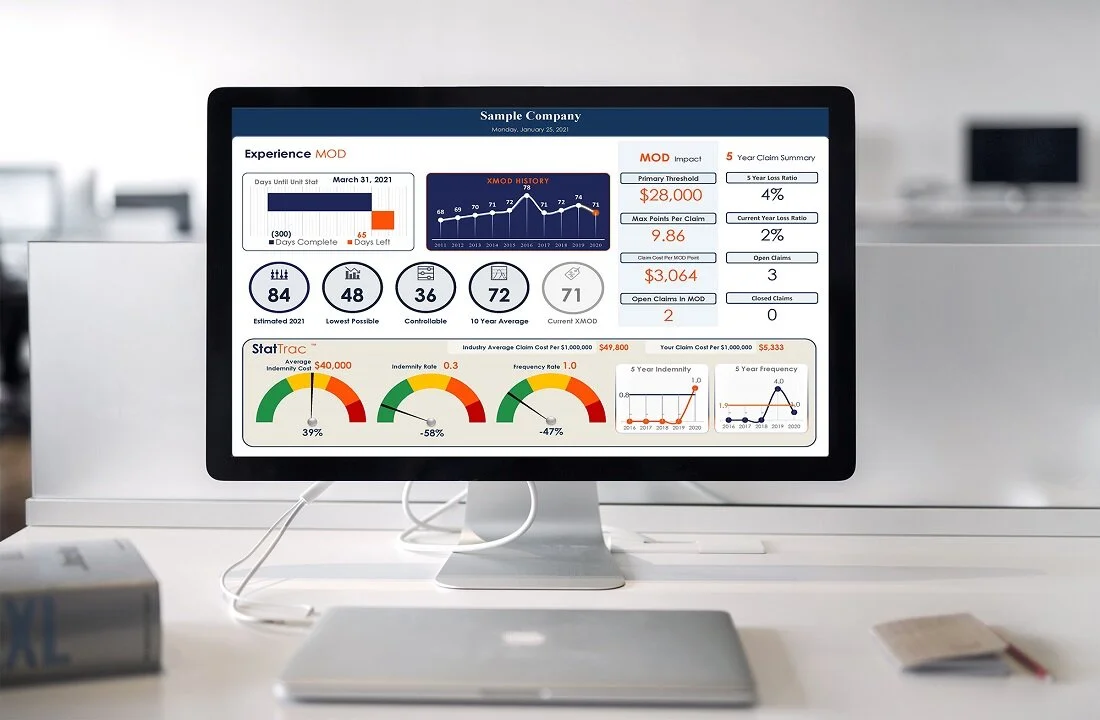
How do you differentiate your company from your local competitors? Product, customer service, delivery, etc. The same can be said for your risk profile and insurance costs. Why are my insurance rates high when my competitors are low? Here are four factors that influence your risk profile and impact pricing:
FREQUENCY OF CLAIMS
The frequency is the number of workers’ compensation claims you average.
Calculation – # of claims / basis
Evaluate – How often are you having workers’ compensation claims and how does that compare to other landscape companies in your region or state? If frequency is high, a line can be drawn to conclude that your high frequency will lead to more lost time or severe injuries.
Action – If you are having a frequency issue, you need to assess:
Injury Type (back, hand, wrist, knee…)
Root Cause (lifting, punctures, slips…)
Implement corrective actions to help mitigate the risks associated with your claims.
Take it to the next level and evaluate “near misses.” Treat a “near miss” as if it were a claim and strategize a corrective action to prevent it from happening in the future.
Use our Risk Management Center to assign a training to the foremen or supervisor and injured employee to help prevent this from occurring in the future.
Indemnity (Lost Time) Claims
Indemnity is the number of lost time claims your company experiences.
Calculation – # of lost time claims / basis
Evaluate – How often are you having indemnity claims that result in lost time and how does that compare to other landscape companies in your region or State?
Action – If you are having an Indemnity issue, you need to assess:
Injury Type (back, hand, wrist, knee…)
Root Cause (lifting, punctures, slips…)
Implement corrective actions to help mitigate the risks associated with your claims.
Establish a “return-to-work” program which allows your injured employees an opportunity to come back to work on limited duty.Improve accident investigation, documentation, and claim reporting protocols to equal best practices.
Experience Rating
Your experience rating is a combination of your loss data and total payroll when compared to your industry typically over a three year period. Your experience rating will either credit or debit your workers’ compensation premium accordingly.
Calculation – Project your Experience Modification (XMOD) 6 months early at your Unit Stat filing.
Evaluate – Determine the impact changes in your Expected Loss Rate (ELR) and Primary Threshold will have on your next XMOD.
Action – Controlling your frequency of claims and number of indemnity claims will lower your Experience Modification.
Operations
Heavier operations would include hardscape construction, tree trimming, and snow removal in which generally heavier machinery and product is used, thus a higher exposure to injury. Compare these types of landscape operations to a lighter exposure such as landscape maintenance, mowing, edging and pruning.
Calculation – Determine the percentages of your operations that fall into the various landscape work areas.
Evaluate – Identify the exposures that are unique to each area of your operations.
Action – Implement safety programs catered to your exposures that will mitigate risk and help protect your employees. Although your operations might be heavier, you have the ability to implement tactics to reduce or prevent the claims from happening, thereby subjectively and objectively making your risk profile more appealing.
We have seen 100% landscape construction firms achieve industry low experience XMODs and the markets most aggressive rates. Don’t wait for the injury to occur; be proactive and stop the claim before it transpires.
Your risk profile has already been created whether you know it or not. The opportunity for you to own it and improve it is always available.
With one click of the mouse, you can see how you stack up against your competitors through our Key Performance Indicator (KPI) dashboard, today.
Contact me to get a customized KPI dashboard at (619) 937-0200 or drewgarcia@ranchomesa.com.
Total Cost of Risk
Author, Rory Anderson, Account Executive, Rancho Mesa Insurance Services, Inc.
The total cost of risk is the sum of the measurable expenses that are associated with managing risk within any organization. Every successful business has a process for tracking and measuring performance to improve results. It is important for business owners to keep a pulse on key performance indicators. But, how are you measuring risk related costs? Some people may think that insurance premiums are the only cost associated with risk, but we need to look at the bigger picture.
Author, Rory Anderson, Account Executive, Rancho Mesa Insurance Services, Inc.

The total cost of risk is the sum of the measurable expenses that are associated with managing risk within any organization. Every successful business has a process for tracking and measuring performance to improve results. It is important for business owners to keep a pulse on key performance indicators. But, how are you measuring risk related costs? Some people may think that insurance premiums are the only cost associated with risk, but we need to look at the bigger picture.
In fact, insurance premiums only make up one fifth of an organizations total cost of risk. If you are only considering insurance premiums as a way of quantifying your company’s risk related costs, you are missing costs that you have control over. All risk-related costs can be observed and monitored. Also, there are certain strategies that, once implemented, will reduce those costs if executed correctly. That’s what total cost of risk is all about. There are five components that make up an organization’s total cost of risk: insurance premiums, retained losses, internal risk management costs, outside vendor fees, and indirect claim costs.
Insurance Premiums
An insurance premium is the payment that a company agrees to pay in order to have insurance. It is the most obvious component that makes up the total cost of risk and represents an important piece of the puzzle.
Retained Losses
There are two types of retained losses, active and passive. An active loss is simply when you have a deductible. If you have a deductible, you made a decision on the front end to take on (or retain) some of the risk, and pay a specified out of pocket amount for situations involving claims. On the other hand, a passive loss is any loss that is unexpected and not accounted for anywhere else. It could be a loss that is not covered by insurance and therefore must be covered out of pocket by the organization. Retained losses, active or passive, must be included when factoring total cost of risk.
Internal Risk Management Costs
Consider internal risk management costs as well. Maybe you have a full-time safety director. What is their salary? What about the person who is responsible for keeping track of the workers’ compensation claims, or the HR person who is in charge of managing and updating the employee handbook every time a new state law is passed? Calculate the internal hours that are spent looking at safety and risk management, and assign a dollar amount. These are costs that typically can be overlooked.
Outside Vendor Fees
You cannot forget to allocate any potential outsourced costs into the total cost of risk. Maybe you hired an outside firm to complete anti-harassment or First Aid/CPR training for your employees. Did you bring in outside safety consultants? These costs add up and need to be considered, as well.
Indirect Claim Costs
The last factor that makes up the total cost of risk are indirect costs associated with claims. These are secondary costs that are linked to claims. For example, with workers’ compensation insurance, the direct costs such as medical costs, indemnity payments, and legal services are just the tip of the iceberg. Some examples of indirect costs that are not covered by insurance are OSHA fines, accident investigation, implementation of corrective measures, hiring replacement workers, loss of productivity, etc.
Total cost of risk is critical for organizations to understand for several reasons. First, it helps you make educated and informed risk management decisions. You may want to invest into new equipment or bring in additional safety training from the outside. If you don’t know the total cost of risk and the ultimate impact in terms of upfront expense and projected return, how can you make the best decision?
Understanding your organization’s total cost of risk also helps you benchmark your progress towards your financial goals and objectives. It’s a quantifiable, controllable number that can be identified and reduced. It’s a metric that must be used to evaluate the overall success of your risk management process. When an organization is looking at their total cost of risk, they are focusing on the entire risk management function, which ultimately can lead to stronger safety programs and a reduction in frequency and severity of claims.
For questions about how your company can account for its total cost of risk, contact me at (619) 486-6437 or randerson@ranchomesa.com.
2021 Insurance Game Plan
Author, Dave Garcia, President, Rancho Mesa Insurance Services, Inc.
As we come to the end of 2020, the most challenging year most of us have ever experienced, where COVID-19, wild fires and other natural disasters took their toll emotionally, physically, mentally and financially on all of us we can only hope for a brighter 2021.
Author, Dave Garcia, President, Rancho Mesa Insurance Services, Inc.

As we come to the end of 2020, the most challenging year most of us have ever experienced, where COVID-19, wild fires and other natural disasters took their toll emotionally, physically, mentally and financially on all of us, we can only hope for a brighter 2021.
The insurance industry did not escape the impact of COVID-19 and the natural disasters, either. Insurance companies, along with their reinsurance companies, suffered catastrophic losses as a result. As with many industries, there will be lagging actions that will take place in 2021 to help these companies in their efforts to recover.
While there really isn’t a line of insurance that wasn’t impacted, the lines of insurance that suffered the greatest losses and impacts include:
Property
General Liability
Excess/Umbrella
Workers’ Compensation
EPLI
Cyber Liability
Surety
Employee Benefits
For this article, I will limit my discussion to the property and casualty lines and leave surety and employee benefits to another day.
To offset these losses, I anticipate any number of steps insurance companies will take as we move into 2021. But, let me just touch on those that I think will have the greatest impact and need for attention to business owners in 2021.
Let’s review these and I will try and give you a small sampling of the implications for each action.
Non-renewing policies
Carriers in many cases will not offer renewal terms.
Reducing coverage limits and terms
Increasing deductibles, lowering aggregate limits particularly in the excess/umbrella marketplace.
Add new exclusions
Businesses will start to see “communicable disease” exclusions added to various lines of insurance.
Increase underwriting information needed
A higher emphasis on information particularly as it relates to a business’s policies and procedures to mitigate COVID-19.
Raise premiums
This is the ultimate consequence and one we are all anticipating to see beginning in early 2021.
To many businesses, this will seem daunting and hopeless - one more hurdle to overcome to keep their businesses going. However, there are proactive steps you can take to mitigate these circumstances and have a strong year despite the adversity.
I’m a firm believer in being pro-active and not re-active. Following are steps you can take to meet this challenge head on:
Meet with your insurance advisor 90-120 days from your renewal date.
Understand the specific challenges you will be facing.
Create a strategy on how to approach the insurance marketplace to ensure the most cost effective and comprehensive risk management program.
Review and enhance your existing safety program. Rancho Mesa offers our RM365 Advantage Safety Star™ certification program. This is a comprehensive web-enabled training course designed to enable your employees from supervisory to front-line workers to be trained and certified in safety best practices. The insurance marketplace already places a high value on these types of safety trainings and certifications, so this will help your company’s productivity through fewer claims but also position you in a more favorable position in the marketplace.
Benchmark your company’s safety performance to your industry and see which areas you are outperforming your peers and areas that need your attention. Rancho Mesa offers a benchmarking report we call StatTrac™ to our clients or to other companies who want to see where they stack up.
To close, let me reassure you there is light at the end of the tunnel for 2021. Be proactive; start 90-120 day out from your renewal; don’t let insurance issues sneak up on you; attack them head on and I believe you can make 2021 a great year for you and your company.
If you have any questions or want any help in devising a plan and you are a construction company, please reach out to Sam Clayton, our Construction Group Leader at sclayton@ranchomesa.com. If you are in the human services industry, schools, non-profit, healthcare, assisted living, etc., please reach out to Sam Brown, our Human Services Group Leader. And finally, we can be reached at (619) 937-0164 or at our website, www.ranchomesa.com.
I really believe there is no limit to what you can do – best of luck in 2021.