

Industry News

Observations vs. Mobile Forms: Choosing the Right SafetyOne™ Tool
Author, Alyssa Burley, Partner, Rancho Mesa Insurance Services, Inc.
As organizations replace manual safety processes with the SafetyOne™ platform, one of the first decisions administrators face is determining whether a process should be managed as a Safety Observation or a Mobile Form.
Author, Alyssa Burley, Partner, Rancho Mesa Insurance Services, Inc.
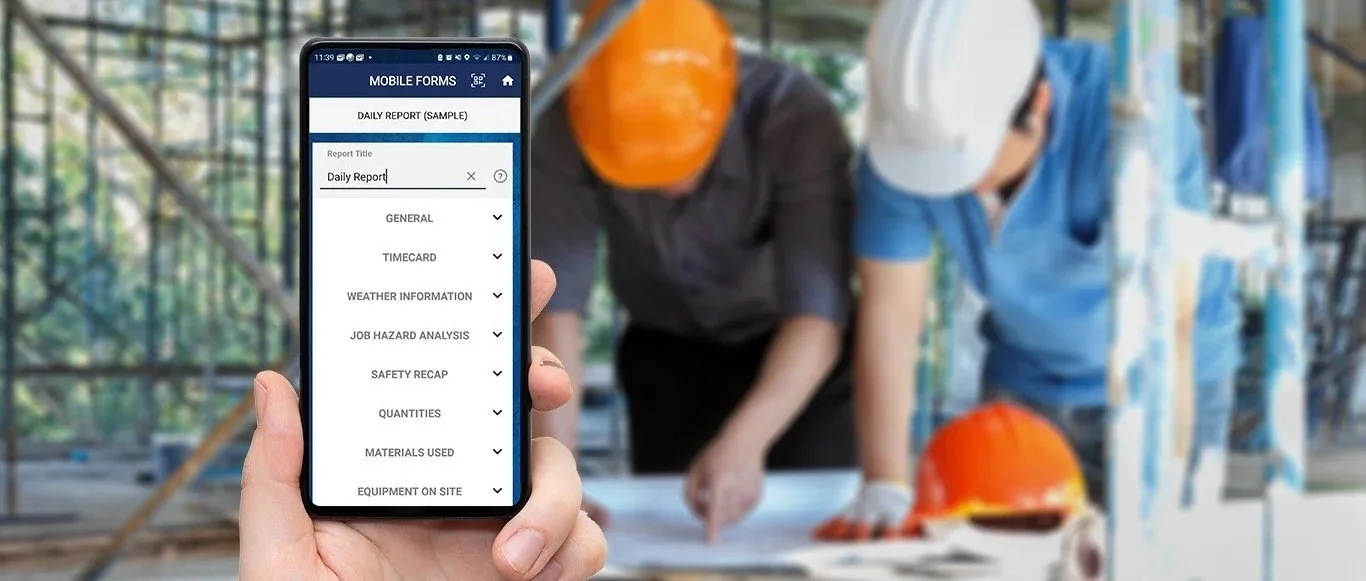
As organizations replace manual safety processes with the SafetyOne™ platform, one of the first decisions administrators face is determining whether a process should be managed as a Safety Observation or a Mobile Form.
While both tools help collect important data in the field, they serve different purposes. Understanding when to use each tool improves reporting consistency, strengthens accountability, and provides more meaningful analytics for the organization.
Safety Observations
A Safety Observation is best used to identify, document, and address a specific risk, hazard, unsafe condition, or unsafe behavior observed in the field. It allows users to answer a set of safety questions, add notes and photos, assign issues to internal or external parties, and track corrective actions through resolution.
The observation process supports a proactive safety culture by helping organizations identify and address issues before they result in incidents or injuries.
Safety Observations can be used to identify, document and correct:
Missing guardrails around an elevated work area
Employees not wearing required personal protective equipment (PPE)
Blocked emergency exit
Damaged extension cord in use
Improper ladder setup
Poor housekeeping creating a trip hazard
Other workplace hazards
In each of these examples, the goal is not simply to document the condition, but to ensure the issue is corrected and the corrective action can be tracked and verified.
Mobile Forms
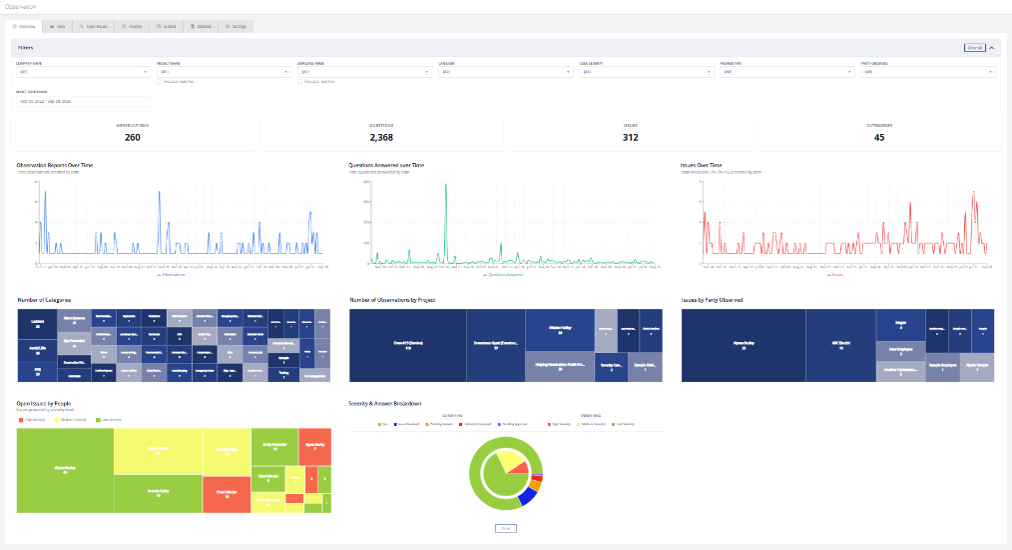
Using Safety Observations in SafetyOne also enables management to identify trends, uncover recurring issues, and analyze potential risks through AI and data analytics.
A Mobile Form is used when the primary goal is to collect, document, and store information using a structured template. Forms can be completed through the mobile app, a shared URL, or by scanning a QR code with a mobile device.
Mobile Forms replace paper processes with configurable digital forms that standardize data collection, capture signatures, upload photos, and generate reports.
Mobile Forms can collect standardized data for:
Auto Accident Reports
Daily Reports
Equipment and Vehicle Check-outs
Incident Investigation Reports
Job Hazard Analysis (JHA)
Security Checks
Witness Statements
Other custom forms
In these examples, the primary objective is to document an event, activity, or company process for operational or compliance purposes rather than track corrective actions.
Contractors: When it Comes Down to Delays and Disputes, Documentation is your Best Friend
Author, Josh Hill, Account Executive, Rancho Mesa Insurance Services, Inc.
Every contractor knows that project delays and disputes are just a part of life in the industry. The question is, how does one go about improving their chances of achieving the outcome they desire when this occurs and the answer is, documentation.
Author, Josh Hill, Surety Account Executive, Rancho Mesa Insurance Services, Inc.

Every contractor knows that project delays and disputes are just a part of life in the industry. The question is, how does one go about improving their chances of achieving the outcome they desire when this occurs and the answer is, documentation.
Construction contractors face project delays and disruptions on jobsites of every size, but their ability to successfully defend their position in negotiations, mediation, arbitration, or litigation depends largely on the quality of the records they create and maintain throughout the project. By implementing disciplined processes for tracking schedules, documenting impacts, preserving project correspondence, and recording productivity losses as they occur, contractors can transform routine project data into compelling evidence when disputes arise.
There are several software platforms available to manage and monitor your projects, and each is designed for different types and sizes of users. For example, if you are a small to mid-sized contractor, a useful and affordable platform such as Microsoft Planner & Project is a great option. It is easy for most Microsoft users to learn and provides Gantt charts, dependencies, baselines and critical path scheduling. These inputs provide critical data for yourself and your attorney to utilize when defending your position as it pertains to delays and disputes. If you are a general contractor working on large complex projects, then the gold standard platform would be Oracle Primavera P6. This is a sophisticated platform that monitors critical path method scheduling with tremendous detail and analysis data points for Time Impact Analysis which is routinely relied upon during the dispute process.
Regardless of what software system is utilized, contractors should make it standard practice to utilize some type of platform to maintain baseline schedules, progress updates, documentation of changes, and historical scheduling data. It is also advisable to involve their attorney early so that they can address disputes before it becomes a serious matter and potentially a more costly process. If used effectively, monitoring software will greatly improve your attorney’s position and the documentation provided through these systems will help get the best outcome possible.
For more information about how to protect your company during a dispute or delay, contact Shay Kulkarni at Skulkarni@pecklaw.com or (619) 202-0175 or Josh Hill at Jhill@ranchomesa.com or (619) 798-2819.
The True Cost of DSP Turnover in Developmental Disability Services
Author, Sam Brown, Vice President, Human Services Group, Rancho Mesa Insurance Services, Inc.
Non-profit organizations supporting adults with developmental disabilities fulfill their missions and promise to individuals and families by employing a dedicated group of people, Direct Support Professionals (DSP). The evergreen challenge to attract and retain DSPs adds hidden costs and increases an organization’s exposure to risk. Below we outline these challenges and questions to raise with a National Best Practices insurance agency.
Author, Sam Brown, Vice President, Human Services Group, Rancho Mesa Insurance Services, Inc.

Non-profit organizations supporting adults with developmental disabilities fulfill their missions and promise to individuals and families by employing a dedicated group of people, Direct Support Professionals (DSP). The evergreen challenge to attract and retain DSPs adds hidden costs and increases an organization’s exposure to risk. Below we outline these challenges and questions to raise with a National Best Practices insurance agency.
DSP are aids who help intellectually disabled adults live in the community by teaching individual living skills and providing supported living services. While this role offers a rewarding contribution to one’s community, the DSP turnover in many states has hovered between 40% and 50% for many years due to low wages. Employers struggle to address the issue as Medicaid reimbursement rates have not kept pace with inflation or local wage markets, meaning agencies cannot simply raise pay to compete for talent. In addition, the vacancies force agencies to operate short-handed with heavier workloads for remaining employees.
There is a cost to the turnover that rarely makes it into public conversation. Every departure means another round of onboarding including background checks, training, and CPR/First aid certification. Industry estimates commonly put the full loaded cost of replacing a single DSP well into the thousands of dollars once recruiting, training hours, and lost productivity are factored in. One large service provider reported incurring $300,000 over a 12-month period on job board postings alone.
The inexperience gap can also cost the agency in the form of insurance claims. Without proper guidance and onboarding, new staff are statistically more likely to incur workplace injuries, driving up workers’ compensation insurance claim frequency as well as auto and professional liability exposures. A spike in claims frequency can mean higher premiums at renewal, compounding the very budget pressures faced in the first place.
Given how turnover directly feeds into claims exposure, an experienced business insurance agent can provide valuable guidance at the pre-renewal meeting and throughout the policy term. A few questions worth bringing to that conversation:
How is our workers' compensation experience mod trending, and is turnover a visible driver? An agent can summarize and present data, so leadership sees the direct link between staffing churn and premium cost.
Do our limits and coverage lines reflect current exposure, particularly abuse/molestation coverage, professional liability, and auto/non-owned auto liability for client transport?
What loss-control or risk-management resources do the carrier and insurance agency offer? Training modules, toolbox talks, safety app, HR compliance, and incident-reporting tools can help get new hires up to speed faster and reduce early-tenure incidents.
Is our incident reporting uniform and strong enough to support aggressive underwriting at renewal? Agents can advise on claims reporting lag and best practices that help demonstrate leadership’s commitment to safety and partnership with the insurer.
How do we get favorable pricing that considers our hiring practices, below average turnover rate, and safety training? Underwriters want to learn of an agency’s structured onboarding programs, defensive driving certification, or de-escalation training that could offset costs while also improving employee retention.
How are we positioned for a hard market cycle in liability lines, given the sector's exposure to abuse/molestation and professional liability claims?
There is no easy solution to the DSP staffing crisis, but organizations that understand the connection between workforce stability, risk management, and insurance costs are better positioned to navigate the challenges ahead. Taking a proactive approach today can help protect both the population served and the long-term sustainability of the organization.
If you have questions about any of the topics discussed in this article or would like to talk through your organization's unique circumstances, please contact me at (619) 937-0175 or sbrown@ranchomesa.com.
2026 Brings Another Increase in California Tree Care Work Comp Rates
Author, Rory Anderson, Partner, Account Executive, Rancho Mesa Insurance Services, Inc.
Pure premium rates are developed by the Workers’ Compensation Insurance Rating Bureau of California (WCIRB) and reflect the expected cost of workers’ compensation claims for a particular class of business. Each year, the WCIRB evaluates loss and payroll data reported by insurance carriers throughout California and develops advisory pure premium rates that serve as an important benchmark for workers’ compensation pricing.
Author, Rory Anderson, Partner, Account Executive, Rancho Mesa Insurance Services, Inc.

Pure premium rates are developed by the Workers’ Compensation Insurance Rating Bureau of California (WCIRB) and reflect the expected cost of workers’ compensation claims for a particular class of business. Each year, the WCIRB evaluates loss and payroll data reported by insurance carriers throughout California and develops advisory pure premium rates that serve as an important benchmark for workers’ compensation pricing.
Every workers’ compensation insurance carrier establishes its own base rate for the 0106 Tree Pruning class code. In developing that rate, carriers consider the WCIRB pure premium rate along with their own expenses, claims experience, underwriting results, taxes and fees, and profit requirements. As pure premium rates increase, there is generally upward pressure on the rates carriers charge tree care companies.
For 2026, the pure premium rate for class code 0106 Tree Pruning increased to $12.39 per $100 of payroll, up from $11.24 in 2025. That represents an increase of approximately 10.2% year over year.
For tree care companies, this is an important indicator of the continued cost of workers’ compensation losses within the industry. While an increase in the pure premium rate does not mean every company will see its workers’ compensation premium increase by the same percentage, it does create additional pricing pressure across the marketplace. A company’s actual rate will continue to depend on factors including its individual loss history, experience modification, payroll, safety practices, carrier relationship, and overall underwriting profile.
So, there are steps tree care companies can do to prepare and limit the impact of rising workers’ compensation costs:
Reduce claim frequency and severity through a continuous and robust safety and training program that identifies and addresses the root causes of injuries. Rancho Mesa’s proprietary SafetyOne™ Platform offers tree care-specific toolbox talks and other tools designed to streamline effective safety programs.
Control your experience modification rating through regular claim reviews, proactive claims management, and an aggressive return-to-work program.
Maintain strong carrier partnerships and continuity. Long-term relationships with carriers that understand the tree care industry and provide strong in-house claims handling can become increasingly valuable in a challenging workers’ compensation environment.
The recent increase in the 0106 pure premium rate reinforces the importance of treating workers’ compensation as more than just a transactional purchase. Tree care companies that actively manage safety, claims, return-to-work, and their overall risk profile will be better positioned to control costs and navigate an increasingly challenging insurance marketplace.
To learn how Rancho Mesa and our SafetyOne™ Platform can help your tree care company reduce risk and better manage workers' compensation costs, contact me at randerson@ranchomesa.com or (619) 486-6437.
Your Dashboards and AI Tools Are Only as Good as Your Data
Author, Alyssa Burley, Partner, Rancho Mesa Insurance Services, Inc.
As businesses continue to adopt artificial intelligence (AI) tools and data analytics, the quality of the information entered into applications like Rancho Mesa’s proprietary SafetyOne™ Platform has become increasingly important.
Author, Alyssa Burley, Partner, Rancho Mesa Insurance Services, Inc.

As businesses continue to adopt artificial intelligence (AI) tools and data analytics, the quality of the information entered into applications like Rancho Mesa’s proprietary SafetyOne™ Platform has become increasingly important.
Whether your organization uses SafetyOne or another technology platform to manage safety, compliance, and/or operations, accurate and standardized data entry is essential.
Every day, employees at all levels enter information into mobile forms, safety observations, incident reports, and training records. When fields are consistently used as intended, companies can generate meaningful reports, review reliable dashboards, and leverage AI-powered insights to guide future safety training and business decisions. When fields are used inconsistently or not as they were intended by the platform developer, the value of that data can be significantly reduced.
High-quality data helps organizations make informed decisions about training needs, resource allocation, corrective actions, and long-term safety initiatives.
Accurate Fields Lead to Accurate Reporting
One of the most common examples we see in SafetyOne of not using a field as intended is the Project Name field on the Administrator website. This field is designed to identify a specific job, crew, facility, location, or program associated with a group of records. Depending on your organization’s industry, it might make sense for the Project field to track records by each construction job, service team or crew, physical campus, or community program. When the Project field is incorrectly used for individual supervisors or employees, reporting capabilities become ineffective. For example, management may want to analyze incidents, inspections, or training activities by Project to identify trends and allocate resources. If the Project field is used differently than intended, dashboards may not be able to display the aggregated data for jobs, crews, facilities, locations or programs accurately. Dashboards and AI tools rely on consistent data to identify patterns and generate meaningful recommendations.
Complete Data Powers Smarter Decisions
Completing all available fields within a platform can save your organization significant time and frustration down the road. Although many fields in SafetyOne and other platforms are required, optional fields often contain valuable information that may become critical later. What seems unimportant today could become a key data point when leadership wants to analyze trends, evaluate performance, or leverage AI-powered insights. One of the greatest challenges organizations face is realizing they need data that has never been collected. If information is not captured at the time an event occurs or the record is entered, historical insights often cannot be recreated after the fact. As data analytics and AI become increasingly integrated into business operations, the completeness of your data may ultimately determine the quality of the decisions you can make from it.
Unlike a human reviewer who can often infer meaning from incomplete information, AI tools depend on structured, standardized data to identify trends and generate insights. The more organized and complete the data set, the more accurate and useful the resulting recommendations become.
Consistency Unlocks the Full Potential of AI and Data Analytics
Consistency is just as important as completeness. If an employee signs and types their name on a toolbox talk record as “John Smith,” then the next week signs it "Johnny S,” and the following week "J. Smith," the platform may interpret those as three separate people. So, establishing standardized naming conventions throughout the platform helps ensure records are grouped correctly and that reports, dashboards, and AI tools can accurately analyze the data.
As technology continues to evolve, data quality will only become more important. Clean, standardized data is the foundation that supports accurate reporting, effective dashboards, and meaningful AI-generated insights. By taking a few extra moments to ensure information is entered correctly into the proper fields, organizations can significantly improve the accuracy and usefulness of the data they collect.
If you have questions about field usage, reporting, or data management best practices within the SafetyOne platform, contact your Rancho Mesa Client Technology Team. Our team can provide guidance on proper field configuration and data entry standards to help your organization maximize the value of SafetyOne and the information it collects. Additional SafetyOne resources and frequently asked questions are available at www.ranchomesa.com/safetyone-app.
Simply put, data is only as valuable as the accuracy, completeness and consistency of the information being entered.
Reducing Risk Near Traffic for Landscaping and Tree Care Crews
Author, Jessee Keirstead, Risk Control Consultant, Rancho Mesa Insurance Services, Inc.
Landscaping and tree care companies are already high-risk operations, but few job sites present more risk than roadsides, medians, and highway corridors. When employees work is near moving traffic, the potential for severe injury increases significantly, making effective traffic management a priority.
Author, Jessee Keirstead, Risk Control Consultant, Rancho Mesa Insurance Services, Inc.
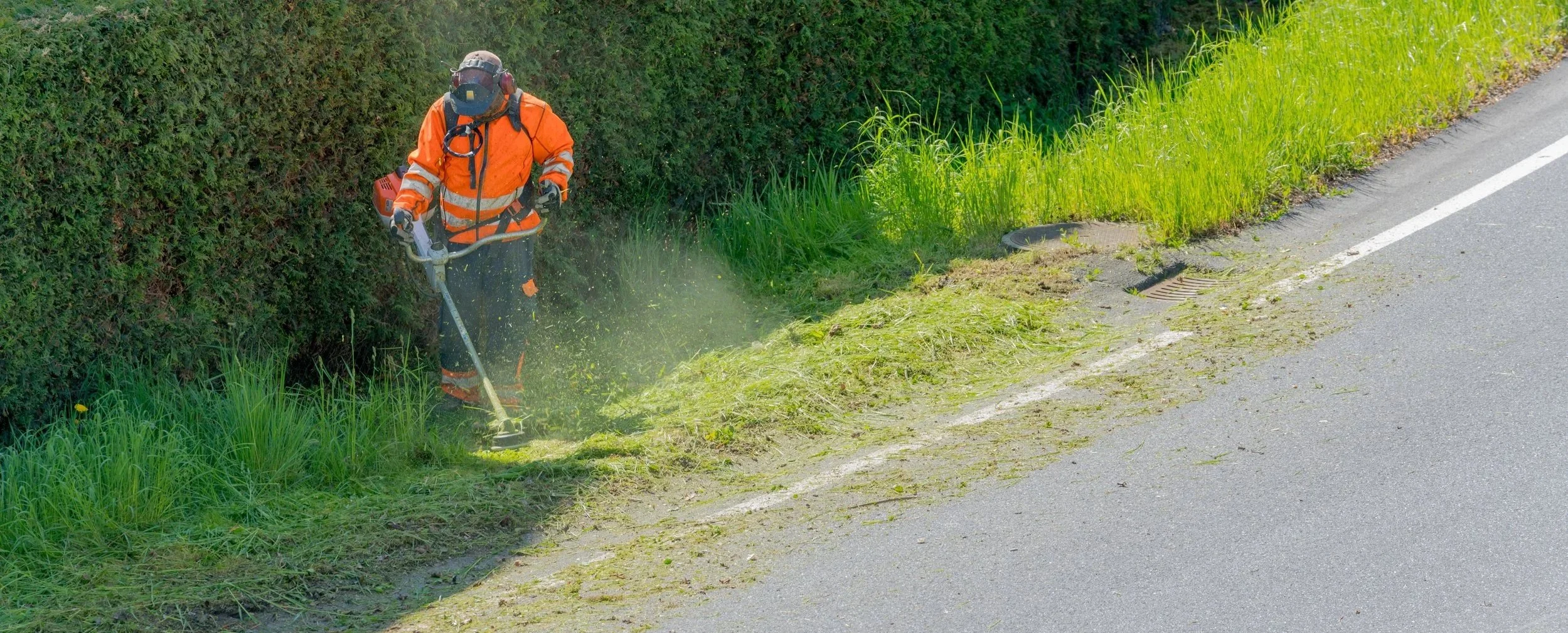
Landscaping and tree care companies are already high-risk operations, but few job sites present more risk than roadsides, medians, and highway corridors. When employees work is near moving traffic, the potential for severe injury increases significantly, making effective traffic management a priority.
Temporary traffic management is a frequent and critical part of the job. And, when crews are exposed to moving traffic, the primary controls are designed to create enough time, space, and visibility for drivers to recognize the work zone and react safely. Even when lane closure is not required, proper planning, vehicle positioning, signs, cones, and escape routes are necessary controls that can prevent serious incidents.
Pre-Planning
Every roadside job should begin with a hazard assessment. Factors such as road speed, traffic volume, sight distance (including curves and hills), proximity of workers to traffic, and available escape routes help determine the level of protection that is needed.
Preparation also includes ensuring the work zone has with all required equipment on-site including signs, cones, communication devices, and high visibility personal protective equipment (PPE). Workers exposed to traffic should wear ANSI Class 2 or Class 3 high visibility reflective vests.
Core Elements of a Safe Roadside Work Zone
Effective temporary traffic control should include five core elements:
Signs provide early warnings to approaching drivers.
Cones create visual separation between traffic and workers.
Buffer zones provide a clear recovery area.
Company vehicles act as a physical protective barrier when positioned between traffic and the work zone.
Escape routes provide a predetermined path to safety and serve as the crew's last line of defense.
Adjust for Roadway Conditions
Traffic control requirements vary depending on roadway type. Urban streets may present challenges like pedestrians, driveways, and intersections, while rural roads often have limited visibility due to hills and curves. Highways present the greatest level of exposure because of higher vehicle speeds and reduced reaction times.
As roadway speeds increase, work zones generally require larger buffer areas and more advanced warning for passing drivers.
Specific Challenges of Median Work
Median operations require special consideration because traffic approaches from both directions.
Effective traffic control typically includes signs in both directions of traffic, cones protecting both sides of the work area, clearly marked access points, and protection that moves with the crew as work progresses.
Workers should never enter the road to conduct work nor should they focus solely on one direction of traffic. They must continuously maintain awareness of vehicles approaching from both sides.
A Proactive Approach to Safety
Although roadside and median work will always involve some exposure to traffic, you can reduce risk through planning and proper work zone setup. The most effective roadside operations provide drivers with early warning signs, create separation between traffic and workers, maintain clear escape routes, and continually adapt to changing conditions. Implementing these best practices can help landscaping and treecare companies conduct roadside work safely while protecting employees.
Rancho Mesa’s proprietary SafetyOne™ mobile app offers both landscape and tree care-specific traffic control toolbox talks designed to streamline training of workers on the hazards of roadside and median work.
Companies that prioritize visibility, communication, traffic control, and worker awareness are better positioned to protect employees while performing essential landscaping and tree care services in high-traffic environments.
Accident Investigation: Turning Incidents into Opportunities for Improvement
Authors, Sam Clayton, Vice President, Construction Group, Rancho Mesa Insurance Services, Inc.
During my recent podcast episode, I discussed how near misses can represent missed opportunities for general engineering contractors to prevent future workplace injuries.
Author, Sam Clayton, Vice President, Construction Group, Rancho Mesa Insurance Services, Inc.
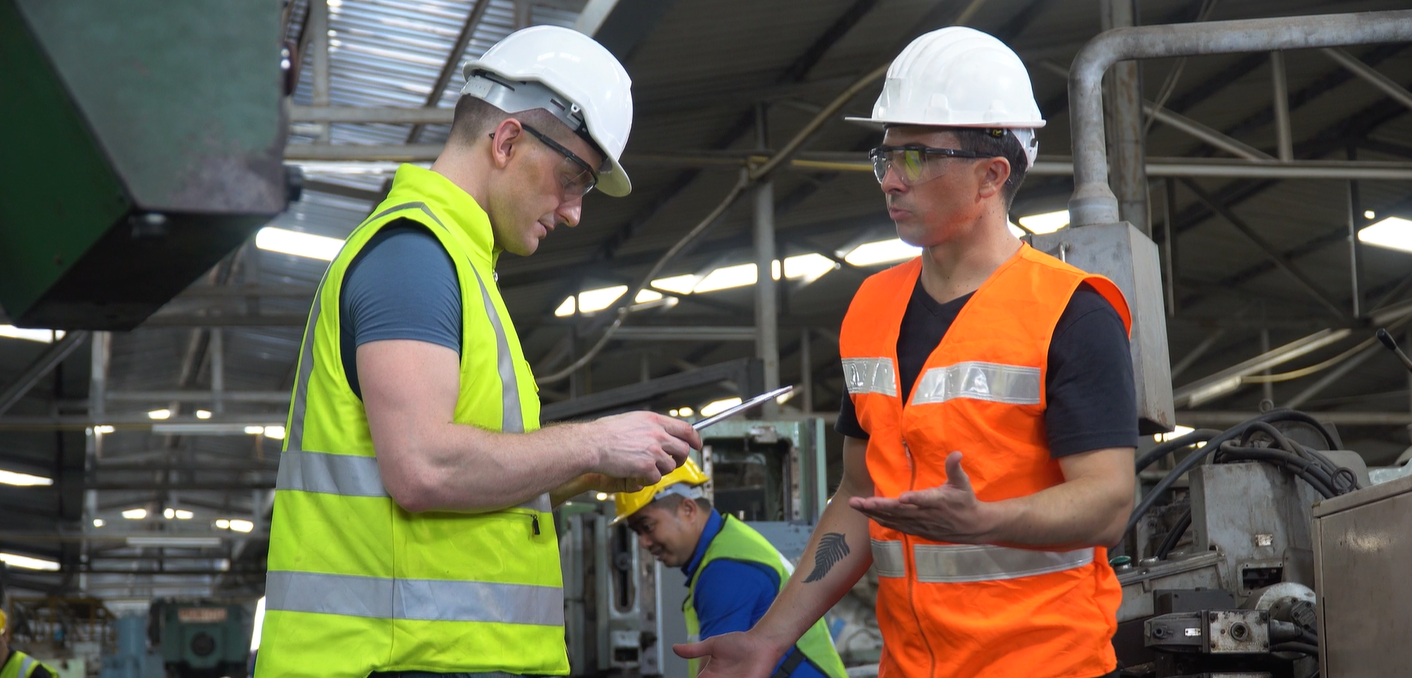
During my recent podcast episode, I discussed how near misses can represent missed opportunities for general engineering contractors to prevent future workplace injuries.
Continuing that theme, I would like to expand on the importance of having a formal accident investigation program in place and how it can help contractors and employees identify and implement corrective actions that reduce the likelihood of similar incidents occurring in the future.
An accident investigation is a systematic process used to examine a workplace injury or incident to determine how and why it occurred. These investigations are often conducted by foremen or supervisors and should focus on identifying and correcting root causes rather than assigning fault or placing blame.
The goal is simple: learn from the incident and prevent it from happening again.
Key Steps in the Investigation Process
A successful accident investigation typically includes four key steps:
Secure the scene to ensure the area is safe and preserve any evidence.
Gather information by interviewing witnesses, reviewing documentation, and collecting facts.
Analyze the root causes to determine the underlying factors that contributed to the incident.
Implement corrective actions to address deficiencies and reduce future risk.
Benefits of an Accident Investigation
A formal accident investigation program provides several important benefits:
Improves Employee Morale. When employees see that management is committed to understanding incidents and improving workplace safety, it helps build trust and demonstrates that employee well-being is a priority.
Identifies Training Opportunities. Investigations often reveal gaps in knowledge, procedures, or communication. These findings can help organizations deliver targeted training where it's needed most.
Prevents Recurrence. By identifying and addressing root causes, contractors can implement meaningful corrective actions that help prevent similar incidents from occurring in the future.
Training Matters
Because workplace accidents and injuries are relatively infrequent, it is important to ensure your foremen and supervisors receive proper accident investigation training before an incident occurs.
Rancho Mesa has developed the RM365 Advantage Safety Star™ Program, which includes dedicated instruction on accident investigation techniques and best practices. I highly recommend enrolling your foremen and supervisors so they understand both the importance of a formal investigation program and how to effectively conduct investigations when incidents occur.
Leveraging Technology
Through Rancho Mesa's SafetyOne™ Platform, clients can create corrective action plans, assign responsibilities, track completion, and deliver the appropriate training to affected employees. This helps ensure that corrective actions are documented, completed, and continuously monitored.
While every contractor's goal is to achieve zero incidents, accidents can still happen. Organizations that have a formal accident investigation program in place and can demonstrate that they have identified root causes and implemented effective corrective actions are in a much stronger position to prevent future losses and minimize potential workers' compensation cost increases.
To learn more about the RM365 Advantage Safety Star Program or how the SafetyOne Platform can support your company's accident investigation efforts, contact me at sclayton@ranchomesa.com.
Creating a Safer Workplace Through Effective Violence Prevention Planning
Author, Jadyn Brandt, Client Communications Coordinator, Rancho Mesa Insurance Services, Inc.
Workplace violence is a serious safety threat affecting employees across all industries. In 2023, the U.S. Bureau of Labor Statistics (BLS) recorded 740 fatalities due to violent acts in the workplace. Preventing fatalities and injuries is a top concern when addressing workplace violence; however organizational, financial, and emotional consequences can also arise from violent incidents in the workplace. Employers should implement a clear Workplace Violence Prevention Plan to keep employees and their organization safe.
Author, Jadyn Brandt, Client Communications Coordinator, Rancho Mesa Insurance Services, Inc.

Workplace violence is a serious safety threat affecting employees across all industries. In 2023, the U.S. Bureau of Labor Statistics (BLS) recorded 740 fatalities due to violent acts in the workplace. Preventing fatalities and injuries is a top concern when addressing workplace violence; however organizational, financial, and emotional consequences can also arise from violent incidents in the workplace. Employers should implement a clear Workplace Violence Prevention Plan to keep employees and their organization safe.
What is Workplace Violence?
The Occupational Safety and Health Administration (OSHA) defines workplace violence as, “any act or threat of physical violence, harassment, intimidation, or other threatening behavior that occurs at the work site.” Employees, clients, customers, and visitors can all be affected by and involved in incidents of workplace violence.
Employees in healthcare, retail or transportation are especially at risk because of the public nature of their work. BLS data shows healthcare and social assistance workers “accounted for 73% of all nonfatal injuries and illnesses due to violence in 2018.”
How Can Employers Protect Their Employees?
The best way to protect employees is through the implementation of clear and well-enforced violence prevention guidelines, often in the form of a Workplace Violence Prevention Plan. These plans set a zero-tolerance precedent toward workplace violence for all workers, contractors, clients, patients, and visitors. Cal/OSHA mandates employers “establish, implement, and maintain a Workplace Violence Prevention Plan;” however, regulations may vary by state so be sure to check with your specific state guidelines.
When building a Workplace Violence Prevention Plan, Cal/OSHA requires the plan include:
Prohibiting employee retaliation
Accepting and responding to reports of workplace violence
Employee workplace violence training and communication.
Emergency response
Workplace violence hazard assessments
Other requirements, such as maintaining a Violent Incident Log.
Although there are no current specific OSHA standards for workplace violence at the federal level, OSHA recommends a Workplace Violence Prevention Program “ensure that all workers know the policy; are trained on prevention methods, signs for potential violent behavior, and how to effectively react when an incident occurs; and understand that all claims of workplace violence will be investigated and remedied promptly.”
What Steps Should Employers Take Following a Workplace Violence Incident?
A Workplace Violence Prevention Program is an excellent proactive step in keeping your employees and organization safe. However, there may be times when employers will need to be reactive following a violent incident.
Employers should provide prompt medical evaluation and treatment for all injured and affected persons. Violent incidents should be reported to local law enforcement. Victims should be informed of their legal avenues for prosecution and violent incidents should be investigated by the organization. Employers should also communicate with staff honestly about the incident and discuss ways to avoid similar situations, including reviewing and updated workplace policy.
Violent incidents should be recorded in an employer’s OSHA 300 logs.
Resources
While every Workplace Violence Prevention Plan is unique to its organization, Rancho Mesa offers a variety of sample policies, and online trainings through the RM365 HRAdvantage™ Portal and SafetyOne™ platform.
Developing a Strategic Business Development Process
Author, Anne Wright, Surety Relationship Executive, Rancho Mesa Insurance Services, Inc.
When your business development strategy aligns with your unique strengths and you are no longer competing solely on price, you have become your clients’ preferred partner because of the value you bring.
Author, Anne Wright, Surety Relationship Executive, Rancho Mesa Insurance Services, Inc.

When your business development strategy aligns with your unique strengths and you are no longer competing solely on price, you have become your clients’ preferred partner because of the value you bring.
A successful business development process requires a long-term strategy. Positioning your company for successful new and repeat relationships is one of the many challenges of any business owner. It takes time to develop these relationships that will provide the best revenues for your company. Oftentimes, it is a key person or persons within your company that manages these important relationships. A firm that is most successful will empower everyone to be a part of the business development process.
If you are fortunate enough to have the relationships you need to grow and further your success, great. However, oftentimes a company will get complacent with their relationships, assuming they will be there forever. They think if it is not broke, don’t fix it. But, we all have to consider how many eggs we need to have in that proverbial client basket in case something unexpected happens.
In a recent podcast episode, my collaborator Katie Yee, owner of Connect Strategic Consulting and I spoke about strategic business development processes. Katie has worked with a few of Rancho Mesa’s clients, which is how we were introduced. And, she is well known and respected for the tools she uses to support those businesses.
In our conversation, we discussed the tools that you might use to set your company apart from the competition:
Tailored vs. Generic Value Statement
Unique Expertise to Address Challenges
Surety Relationship
Repeat Clients
Establishing Trust
Transitions of Key Management, or Ownership Relationships
The most successful firms focus on opportunities where they can clearly demonstrate value based on their relevant project experience, technical expertise, specialized services, and proven ability to solve client challenges. Do not be left behind because you have not put the right focus on this.
Business development is more than just getting new businesses. It is earning the reputation that keeps you relevant in an industry that is too often focused just on price.
If you would like to reach out to Katie about developing a strategic development process, she can be reached at katie@connectstrategicconsulting.com or (760) 650-6462.
If you are looking for a strategic surety partner, I can be reached at awright@ranchomesa.com or (619) 218-4249.
Introducing SafetyOne™ AI: Smarter Safety Insights for Better Decision-Making
Author, Jadyn Brandt, Client Communications Coordinator, Rancho Mesa Insurance Services, Inc.
SafetyOne™ Administrators now have access to SafetyOne AI Data Analytics. AI analysis capabilities are now available on the Observations and Mobile Forms screens. By analyzing your organization’s operational data stored in the platform, SafetyOne AI can produce relevant insights to streamline safety practices. Summarize inspections and observations, identify trends and recurring risks, compare projects, and draft toolbox talks in minutes to save time and resources while making faster and more informed safety decisions.
Author, Jadyn Brandt, Client Communications Coordinator, Rancho Mesa Insurance Services, Inc.

SafetyOne™ Administrators now have access to SafetyOne AI Data Analytics.
AI analysis capabilities are now available on the Observations and Mobile Forms screens. By analyzing your organization’s operational data stored in the platform, SafetyOne AI can produce relevant insights to streamline safety practices. Summarize inspections and observations, identify trends and recurring risks, compare projects, and draft toolbox talks in minutes to save time and resources while making faster and more informed safety decisions.
How to Use SafetyOne AI
SafetyOne Administrators can access AI functions on the SafetyOne website.
To access AI functions within Mobile Forms or Observations, navigate to the Mobile Form Reports page or the Observation Reports page and click the View tab at the top of the page. Then, select the data sets (i.e., reports) from the list that you want to analyze.
A chat will open where questions (or requests) can be submitted about the selected data set
Using AI Tokens
AI analytics uses tokens to process each request. The number of tokens deducted from your SafetyOne account will depend on the complexity of the request and the size and amount of data is being analyzed. Token count can be viewed by Administrators on the menu panel on the SafetyOne web browser. To purchase more tokens, contact your Client Technology Team.
Ways to Use and Implement SafetyOne AI
SafetyOne AI is easy to use and can be prompted using plain English. Ask SafetyOne AI questions such as:
“What hazards are increasing this month?”
“Summarize this inspection.”
“Show me recurring forklift problems.”
“Generate a Toolbox Talk from today's observations.”
It can generate toolbox talks from incidents and observations focused on actual conditions affecting your workforce.
Safety and Accuracy
SafetyOne AI analyzes the information available within your organization's SafetyOne dashboard. It does not permanently "learn" from individual conversations in a way that changes future behavior. Your AI interactions are not shared with other organizations using SafetyOne.
SafetyOne AI is designed to assist safety professionals, not replace them. Training recommendations should always be checked to ensure they are following local, state, and federal guidelines.
Additional Resources
SafetyOne AI provides organizations with the tools needed to transform their existing safety data into actionable insights to identify risks, improve decision-making, and enhance workforce safety. Thorough analysis, customized toolbox talk generation, and strong data security supports safety professionals in creating safer, more proactive workplaces.
Critical Steps That Protect Employees and Your Business Following a Work-Related Injury
Author, Greg Garcia, Account Executive, Rancho Mesa Insurance Services, Inc.
In the landscaping industry, workplace injuries can occur despite the best safety efforts. When an injury does happen, the employer’s next steps can significantly impact the outcome for the injured employee, the employer, and the insurance carrier.
Author, Greg Garcia, Account Executive, Rancho Mesa Insurance Services, Inc.

In the landscaping industry, workplace injuries can occur despite the best safety efforts. When an injury does happen, the employer’s next steps can significantly impact the outcome for the injured employee, the employer, and the insurance carrier.
The first step is to report the injury as soon as possible, even if it initially appears to be a minor injury. Prompt reporting allows the insurance carrier to begin managing the claim immediately, which often leads to better outcomes for all parties involved. Early reporting helps ensure the injured employee receives appropriate medical care, logs important details about the incident, and can help prevent a minor injury from developing into a more costly claim.
After the claim has been reported, it is important to let the treating clinic know that modified duty is available. This allows the medical provider to evaluate the employee's ability to return to work and identify any temporary work restrictions.
If the work restrictions can be accommodated, modified duty can be offered to the injured employee. By doing this, it allows for several important benefits:
It allows the injured employee to continue to receive their normal wages. If the injured employee was not offered modified duty, then they would be eligible for temporary disability benefit which is generally less than their normal wages.
By keeping the claim from any temporary disability being paid, the impact to the experience modification rate (XMOD) is minimal. Because normal wages continue to be paid by the employer and not the insurance carrier, the temporary disability portion of the claim is controlled and the actual overall claim costs are reduced, thus having a positive impact on your XMOD. By controlling your XMOD, you are helping your company maintain stable rates for your workers’ compensation insurance premiums.
Offering modified duty also improves employee morale while strengthening company culture. It demonstrates that the company values its employees and is committed to supporting them throughout the recovery process.
Finally, offering modified duty can significantly reduce the likelihood of litigation. When injured employees remain connected to the company, continue earning their regular wages, and feel supported throughout the recovery process, communication tends to remain strong. This often leads to a more positive claim experience while reducing the potential for litigation.
Prompt claim reporting and a strong return to work program are great ways for landscape companies to control workers' compensation costs, reduce likelihood of litigation, and demonstrate their commitment to employee wellness.
Reach out to me at ggarcia@ranchomesa.com if you have any questions or additional interest in this topic.
What to Do After A Vehicle, Equipment or Fuel Theft
Author, Jessee Keirstead, Risk Control Consultant, Rancho Mesa Insurance Services, Inc.
When a company vehicle, piece of equipment, or fuel supply is stolen, taking immediate and organized action is critical. A prompt response can increase the chances of recovery, support insurance claims, and help minimize business disruptions.
Author, Jessee Keirstead, Risk Control Consultant, Rancho Mesa Insurance Services, Inc.

When a company vehicle, piece of equipment, or fuel supply is stolen, taking immediate and organized action is critical. A prompt response can increase the chances of recovery, support insurance claims, and help minimize business disruptions.
By following a clear reporting process and preserving important documentation, companies can assist law enforcement, strengthen claim investigations, and alert others who may help identify or recover stolen assets. The following steps outline the key actions to take as soon as a theft is discovered.
1. Call Local Police
As soon as a theft has been identified, call the police and file a report. Provide the PIN/serial number, photos, GPS pings, geofence event, etc.
2. Report Theft to National Equipment Registry (NER)
After contacting the police, submit a free theft report to the NER which requires a police report. The NER will then alert the National Insurance Crime Bureau (NICB).
3. Notify Your Broker and Insurance Carrier
Reach out to your insurance broker/carrier to report the loss. Record keeping is important and can help subrogation efforts and shorten claim investigation time. Collect purchase records, PIN plate, concealed markings, maintenance logs, tracker IDs, geofence history, and other information that can be useful.
4. Contact Contractors
Share photos and serial numbers with state and local contractors who thieves may target to sell your used vehicles and equipment.
Using Rancho Mesa’s proprietary SafetyOne™ mobile app to document vehicles and equipment left on jobsites, along with fuel deliveries and fueling schedules, can help companies quickly identify when an asset or fuel supply is missing. Maintaining accurate, real-time records of equipment locations, usage, and fueling activity provides valuable information that can support theft investigations, improve recovery efforts, and reduce the time spent determining when and where a theft occurred.
The best protection against theft is a combination of preparation and prompt action. By maintaining detailed records, leveraging technology to track assets, and following the reporting steps outlined above, companies can improve their chances of recovering stolen property and minimizing business disruption. A proactive approach not only strengthens security but also helps protect your employees, customers, and bottom line.
Your Plumbing or HVAC Website May Be Sending the Wrong Message to Your Insurance Carrier
Author, Matt Gorham, Account executive, Rancho Mesa Insurance Services, Inc.
Most plumbing and HVAC contractors view their website as a sales tool. However, insurance carriers increasingly view it as an underwriting tool. The same website designed to attract customers is at the same time influencing how an underwriter evaluates your business, impacting carrier appetite, available coverage, and, ultimately, the cost of your insurance program.
Author, Matt Gorham, Account Executive, Rancho Mesa Insurance Services, Inc.

Most plumbing and HVAC contractors view their website as a sales tool. However, insurance carriers increasingly view it as an underwriting tool. The same website designed to attract customers is at the same time influencing how an underwriter evaluates your business, impacting carrier appetite, available coverage, and, ultimately, the cost of your insurance program.
Insurance carriers typically receive very little information about a contractor from their renewal application. The information submitted can include recent loss history, some details about the contractor’s industry experience, and a generic supplemental application that provides a basic explanation of their operations. While those are central to the underwriting process, with so much information now available online, underwriters commonly rely on a contractor’s website and online presence to gain additional details about their operations, practices, history, and culture. Furthermore, a contractor’s website often serves as an underwriter’s first impression of the business, which will influence the questions that are asked throughout the renewal process.
As rising claim severity continues to drive a hardening market, carriers are closely evaluating which industries and classes of business they want to support. According to market research from Swiss Re and Marathon Strategies, there were 27 verdicts that each exceeded $100 million in 2023, while there were 49 verdicts over $100 million in 2024. With these verdicts significantly impacting carrier profitability, underwriters that remain committed to construction are becoming increasingly selective about the contractors they choose to partner with.
When underwriters see a contractor advertising operations or services that are known as severity loss drivers, they may apply exclusions, increase pricing, or decline the renewal application altogether. This can limit market interest and, weaken a contractor’s position when their broker negotiates their renewal terms.
With carriers applying a higher level of scrutiny on the risk profile of contractors in the current market, here are three things to consider when building or updating your website:
1. Audience
A residential service and repair plumber may have more of a need to advertise a broader range of services than a new construction commercial plumber. Similarly, an HVAC contractor that relies on SEO marketing to drive appointments from residential customers will want to include key search terms, while a mechanical contractor focused on tenant improvement jobs with a limited number of trade partners will not. Think about who will be visiting your website and what they are looking for.
2. Services
It is common to see exhaustive dropdown lists on plumbers’ or HVAC contractors’ websites, advertising things like gas line installation, boilers, medical gases, clean rooms, duct cleaning, excavation, or sewer and water main work. Even with a clear understanding of these operations, many carriers will shy away from these risks due to their potential for severe claims. Review the services advertised on your website, as well as the industries served, to ensure you are only advertising services that are being performed and represent a meaningful part of your operations.
3. Visuals
Pictures can be very effective in conveying information. They can also be effective in misrepresenting your company and operations. HVAC contractors often use pictures of helicopter lifts even when they have never self-performed the placing or removing of larger HVAC units. Have a person knowledgeable about safety review all pictures before they are published on the website or social media to ensure no OSHA violations are shown. Pictures from crane picks or rooftop work can also raise questions about safety controls, like the use of personal protective equipment, fall protection, or hazard analyses. Plumbing contractors frequently use pictures on their websites that show plumbers in trenches, crawl spaces, operating heavy machinery, or near septic tanks. While these types of operations can be eye-catching, if they are an inaccurate reflection of the work you perform, they can create a costly misperception. Consider what pictures, videos, or media are used on your website so that it supports an accurate, constructive representation of your company.
As insurance carriers become increasingly selective about the contractors they want to partner with, every piece of information used during the underwriting process matters. Your website should accurately reflect your operations and showcase your expertise. It should also be a key element that supports the narrative that your company is a disciplined, well-managed risk and a smart long-term investment for the insurance company.
If you would like to review your website for potential concerns or learn how a broker that specializes in plumbing and HVAC contractors can help you develop the right narrative to negotiate your insurance renewal, I can be reached at (619) 486-6554 or mgorham@ranchomesa.com.
Navigating the Future of Workers’ Compensation with Todd Lewis: Litigation Trends, AI, and Claims Management
Rancho Mesa President and CEO Dave Garcia sits down with Todd Lewis, Vice President of Claims at Republic Indemnity, to discuss the growing challenges facing California’s workers’ compensation system, including rising litigation and cumulative trauma (CT) claims. They explore how AI is helping claims organizations investigate and manage claims more effectively, along with practical strategies employers can use to reduce claim disputes, support employees, and foster a stronger workplace culture.

Rancho Mesa President and CEO Dave Garcia sits down with Todd Lewis, Vice President of Claims at Republic Indemnity, to discuss the growing challenges facing California’s workers’ compensation system, including rising litigation and cumulative trauma (CT) claims. They explore how AI is helping claims organizations investigate and manage claims more effectively, along with practical strategies employers can use to reduce claim disputes, support employees, and foster a stronger workplace culture.
Dave Garcia: Hi, everyone. This is Dave Garcia, and you're listening to Rancho Mesa's StudioOne™ podcast, where each week we break down complex insurance and safety topics to help your businesses thrive. I'm your host, Dave Garcia, president of Rancho Mesa, and I'm joined today by Todd Lewis, Vice President of Claims with Republic Indemnity, one of the leading workers' compensation carriers here in California.
Todd, welcome to the show.
Todd Lewis: Hey, thank you for having me, Dave.
DG: Great. So Todd let’s jump in to some of the general industry, state of the union types of things. So, what do you see—from your position, what do you see as the biggest challenges facing workers' compensation claims organizations today?
TL: Well, I think it's, you know, I think the obvious answer to that and what we're all seeing is the increase in litigation, you know, primarily CT. I mean, that's the buzz phrase these days in workers' compensation. But, you know, when we, and also too, I think we hate to just kind of blame all the changes in the world on COVID. But you can really see a change in workers' compensation that took place. And, you know, a lot of claim professionals such as myself, we tend to scratch our head because there's nothing that really changed primarily in the law. There's nothing that changed in work comp. But yet we've seen dramatic differences. You know, some of the primary differences that we see now is that the amount of new claims that come into our shops that are litigated from day one.
DG: Really?
TL: That's increased dramatically.
DG: What do you attribute that to?
TL: You know, I think when we look back at how the world changed when COVID hit is that you had a lot of non-essential workers go home. We all thought it would be days or weeks. It turned into months. And I think even applicant attorneys sat back and all of a sudden they looked at their clients dry up and they had to look for ways to keep their businesses going. So I think that they started to lean into an area that was always there and the opportunity was there. But I think that they had to figure out a way to do what they needed to do to keep their business going and then also to be able to do so in a world where we weren't going to be in person. And so, CT really lent itself to that.
And we started to see a lot of these workers that were at home and they started to file CT claims. And we started to see a very, very large spike in that. It's odd because a lot of folks think that litigation rose at the same rate that CT did, but it really didn't. I mean, if you look at most claim operations, you'll see that litigation over the last six years rose primarily about 10%, yet CT has gone up 20%, 25%. You know, as an industry, it's up 21% in the last five years. And so, it's just really odd to see things shift in that direction.
DG: Yeah. When you look at some of the fixes that might be out there, and everybody talks about AI. It's on every street corner, every conversation you have. How do you see technologies like AI maybe helping defending against some of the CT claims that you're seeing?
TL: One of the primary ways that we try to use AI is how we dive into medical records. And I don't want to get too far in the weeds, but from a technical aspect. But CTs, they come in the door with no medical. The employer likely, if they're still employed, many employers don't even know that the CT claim has been filed. Some of these people are even still at work, which is very strange. But most of it's post-term, post-layoff. Obviously, we saw a spike in layoffs after COVID. Many businesses struggled.
And so, there's nothing to support the claim at all. So, one of the things that we have to do as a carrier is to be able to differentiate between the CTs that come in your door. Some of them, even if they're post-term, these are 10, 15-year laborers that quite frankly, could have an injury. And maybe they didn't report something for one reason or another, whatever the case is. You have to handle those a little bit differently. But the way we use AI for these other set of claims that come in the door with no support at all, there really is nothing in there to validate the claim that's being alleged. And there's a laundry list of allegations being made.
We dive into the medical records, the personal medical records, where someone treats for and has been treating. Maybe it's Blue Shield or UnitedHealth. And we get those records and we use AI to dive in and identify prior diagnosis and injuries that have occurred over their lifetime that focus on those body parts. And it's enabled us to shine a light on that and say, hey, this is something that's been with you for quite some time. And we identify fraud that way. We identify other body parts where maybe we're going to get apportionment at the end.
There's many ways to use AI to be able to help you do that because the human being can't go through thousands of pages of records. AI can very quickly, and it can basically outline those facts for you.
DG: So, do you think that's one of the variables that separates a high-performing claims operation from just the average claims operation, amongst carriers?
TL: It does. It really does. I think that you have to be creative. You can't do things by route. And I think many of the, I don't want to say poor claim operations but claim operations that really haven't changed with the times, they're handling things very in a standard way that we've done so for years. The claim comes in, they delay it, they send them their MPN link. They allow the claimant and the attorney to create the claim from scratch on their dime. In California, we pay the first $10,000 if the claim is delayed. So they allow and they basically, they initiate the claim for them, and they allow themselves to be put in a lesser spot from a defense perspective.
DG: Oh, I see.
TL: Yeah, but it's also too, it's as a claim leader, I have to be very careful too, because my message is not, let's deny them all and let's be, that's not what I'm saying. You have to be able to differentiate at the desk level when claims come in. And you have to be able to make first contact, initiate a good investigation, have discussions, and to be able to identify and separate the CT claims that lack merit from those that actually have some substance. And these are good people. We need to take care of them.
DG: Yeah, it's interesting. As you're talking, I'm thinking, you know, AI is such a great tool for lots of different businesses. But there's still a human element to it. And so in your view, you know, what kinds of claims decisions, you maybe have alluded to it a little bit, should remain human decisions?
TL: You know, there's a lot. I mean, there's a few different things that go on in California workers' compensation, such as the way we do utilization review, which is like a doctor makes a request for a specific treatment. It goes through utilization review. We don't want adjusters making medical decisions. Sometimes there's things, though, that may not be approved by utilization review. You have to look at the bigger picture. You have some people that have very complex injuries, very significant injuries. You have to take a look at it and ask yourself what this person needs to get to MMI, which is basically where we're all trying to get. It's financially to our benefit to get this person to the end of treatment. You have to look at it realistically and what's going to benefit this person.
Sometimes there's things that you need to approve at the desk level that before you go to UR and not go to UR and be able to take care of that because it's the right thing to do. It's, it's, it makes sense. And we can't think. We can't be so boxed in in the way our adjuster's mentality works that they're just thinking black and white. They're just thinking process, which is very easy to do when you're at a desk. But you have to be human about it. It doesn't mean that you're giving benefits and things that aren't due, but you're trying to understand where you're trying to go, that you're trying to get this person to be permanent and stationary. How am I going to get there? Because it's going to financially benefit the company, it's going to benefit this person greatly, and it's going to be a win-win.
DG: That's outstanding. So let's shift it to, we get this question asked a lot. from our clients, you know, with CT or just frivolous, fraudulent types of claims, you know, as an employer, what can I do to help me defend against that kind of an onslaught of claim? Are there things employers can do?
TL: Yeah, I think there's things that employers can do overall. to help themselves deal with workers' compensation. And I think CT is definitely obviously part of that. There's the obvious things, where you make it known how to report a claim if you have an injury. You make sure you have good people managers that aren't leveraging people to work the number day sign in the warehouse that says, we've been this many days without an injury. We can't lean into that so much that we're pressuring people not to report claims. We have to do all those things, which are very obvious.
But I think there's a bigger component to it. And much like the way I run claims, much like the way you probably run your business here, I know you well enough to know that you're very conscious of this, is that you want to create an environment where you don't lead and manage by the stick, meaning that people don't fear retribution. They don't fear that they're going to be written up. They're not looking at it that way. They look at you as the president of Rancho Mesa, for example, that I don't want to let Dave down. Dave wants the best for me. He wants the best for this business. He wants to obviously make a profit, but he also wants to advance my career and develop me as an individual because he's smart enough to know that that's going to make his business better. It doesn't matter what you're doing. You could be counting widgets in a corner. And if you have that mentality with your staff and you lead that way, people have a tendency to want to take value in their job and their employer. They're not going to be the type they're going to file a frivolous claim. They're not going to be the type that's looking to litigate or is going to get bitter because something didn't go their way. They're going to understand the greater good, if that makes sense.
DG: Yeah, that's a great point. I think sometimes, you know, we've heard where an injured worker then just feels no longer a part of the company. And so whether it's intentional or unintentional or retaliatory, you know, like, well, fine, if you don't care about me. I don't care about you.
TL: Right.
DG: What is there any advice you could give? You know, post-term claims are a huge issue out there. Sometimes layoffs are necessary and it may be just short term. You know, we just the job completed. We don't need the manpower we currently have. When future jobs come, you know, we want you to come back with us. Is there any advice you can give to an employer how to handle that transition from you're employed to I've got to let you go in a manner that it mitigates, doesn't probably completely remove, it mitigates the opportunity for those post-term claims that are not legitimate claims?
TL: At the point of termination or layoff, you need to be apathetic. You need to have some apathy for the employees who are being let go. If you're able financially, I would highly recommend that you give some sort of consideration. You know, we'll talk to employers that have like a factory environment and they'll lay off 20 people and they gave them their last check. They gave them no notice and they did it on a Friday and that's that. And then they're surprised when they get 10 to 15 claims from the EDD or that were made through the lunch truck or whatever, or the bar where all these gentlemen or women drink after work and they all start to talk. And that surprises them. Why are you surprised? These people, you almost kind of left them with no choice.
If you can have consideration, and by that I mean if it's financial, that's great, you should have an exit interview. You should sit down, try to have an exit interview, have some consideration financially for these folks. If you can, have them sign something that whether or not or have them report something if they have an injury, let's hear about it now. If not, if you could sign this document, I'm going to take care of you. I'm not going to give you consideration to sign the document. That's not the message here. But it's a package. And there's some sort of apathy. I'm doing something for you as it takes place. I think those that go the cold route, they're going to see litigation. That's just the way it's going to work.
DG: Kind of like the golden rule, right? Treat others like you want to be treated. So I know businesses get busy and sometimes they don't have in their mind time to sit down and have that formal conversation letting somebody go. But it sounds like you'd advise, find the time. Find the time to do it because it's probably the right thing to do, but it also is likely to reduce the chances to some degree of those post-termination claims.
Todd, you've got a great reputation in the industry as well as Republic Indemnity. Let's shift gears. I know you've been with Republic now about a year and a half or so. Let's talk about, with that strong reputation kind of already in place, what do you believe that you and Republic do differently than many competitors?
TL: I try to practice what I preach. The way that we lead our claim department is very similar to what I talked about, what I would recommend to an employer. You know, adjusting claims is a difficult job. It's a very hard job. It's something that's hard to do in managing a claim department. My team managers, it's rough. It could be a very challenging job. It's one of these types of jobs that's never done. And people have a hard time adjusting to that. It's not for everybody. So what we try to do is develop organizational skills inwardly.
Also, too, one of the things I do when I come into a claim organization, and I haven't been in a lot of shops, but when I came to Republic was first try to identify what's causing them pain. Here's my claim department. We have three locations. What don't you like? What's causing you pain? Do skip-level interviews and touch points with employees and find out what makes them tick. You're going to hear some of the usual things, but you're also going to hear some things. that means something and things that are changes that can simply be made and bring value, real value to them. But you want to start from day one to create the environment within a claim department that people want to work for.
And it's a very competitive environment. Claim handlers get stolen away by recruiters every day. There's a lot of money to be made as well. It's a good career. And good claim handlers are of great value. And so you have to create an environment that they want to be at. And if someone leaves you, there's a reason why they left you. And you need to understand what that is. You can't just be upset and just be hurt by it and just kind of turn your back on it and go, I don't know why Bob left. You have to understand it. And so what I try to do is create an environment where people want to be at. They want to work for it. They believe in where we're trying to go.
And also, too, you make it very clear to them. You communicate. And if anything, probably if I look at myself critically, I probably overly over communicate. And some like it. Some probably like it's a little much. But I'm a fan of it. I want to know where everyone stands. I want the department to know where we stand, what we're doing, why we're doing it, what our numbers are, and what our goals are. And also, too, to clearly explain expectations.
There's many businesses, especially claim organizations. where people really don't understand clearly what's expected of them. That needs to be black and white and it needs to be forefront. You need to understand what is expected of me daily and what I need to achieve, not only to be successful, but also if I want to move upward, you need to develop me as a leader. You need to understand what my wants are and then also too what my needs are.
DG: Is there anything that you're formally doing? You identify somebody that wants to grow. They'd like to take on more responsibility as their career develops. Is there things within Republic that you're doing to consciously develop those people into a leadership position?
TL: Yeah, definitely. I think mentorship is a great way to do that. We're actually doing that consciously right now with a few individuals. I do require all my people leaders to have monthly touch points, one-on-ones with their staff. Also, too, to be able to have some value brought to that. It's not like, well, my door is always open. Dave knows he could come in and talk to me anytime. That doesn't work. You need to have something on the calendar so Dave can plan on what he wants to talk to me about as his manager. And so that's important. And that's hard for a lot of managers to understand, but that's something that I do require within our organization. And I think it brings a lot of value.
So what we've done is we clearly understand where people want to go as much as we can. And then we try to assign mentors to actually help them get to that next level and explain to them the qualities and what they need to take on from a technical perspective. Because this is a very technical job. You must be a technician first in claim. And you must understand the law. You must understand what you're doing. It's not enough just to say, hey, do A, B, and C. I need you to understand what A, B, and C mean and what you're doing. There's a difference.
DG: So it sounds like the characteristics you're looking for is somebody that utilizes critical thinking, problem solving. All of that is something that your mentors try to work with the people that are mentoring to develop those types of skills. Is that kind of the idea?
TL: Definitely, definitely. I think in a career and in a field where, like I said earlier, like you're never finished, right? There's always something to do. You have to be able to be very organized. You have to be able to prioritize very well. You have to think critically as you commented on. These things are very important. And that's what I look in the interview process as well. And if I'm going to bring someone in and, you know, it's always nice and to bring someone in that's like a known quantity, as I call it.
But I was at a prior job where I actually hired a lot of people out of college and whether they be right out of college or a year or two and trying to differentiate between those that are thinking critically, that are organized. It's not always the smartest person, you know, book smart. You have to find someone that's able to think on their feet and the way they react. And I probably have, I've been told probably a more odd style of interview because it's not about me. asking you what you know about claim or these things. It's me trying to figure out how you think.
DG: Oh, interesting. Is there a claim handling practice at Republic that really challenges the conventional industry thinking?
TL: You know, I think what we're doing right now in litigation is challenging that way of thought. And I mentioned it earlier. I think we have a very aggressive CT litigation strategy, but it's all built around differentiating at the desk level.
To give you an idea of basically in most insurance carriers right now, over half of the claims that they set up daily come in the door, litigated, blind application, no medical, just here's a letter from an attorney and you don't know much else. And that person's never been to a doctor. In some of these cases, unfortunately, within California and primarily LA County, these attorneys in many cases haven't even met these people. And it'll say signature on file. You have to be able to differentiate between these types of claims and the types that are made by individuals that truly you need to handle in a different fashion.
I think what we do is we're very aggressive with those in the first bucket. I'm going to deny your claim. Your claim has no substantial evidence, not only medical evidence, just nothing. There's nothing there at all. You may or may not even still be employed. No one knows that you've had an injury. There's things listed that just don't make sense. There's nothing to validate it at all. So we're very aggressive out of the chute.
And also, too, part of that goes in, and again, not to get too in the weeds, but once we go to medical legals, things of this nature, we're going to provide the doctor with everything. We're going to make sure that we have what we call a perfected medical legal. And that's important. Many carriers today will send out to medical legals QMEs that you hear. And the doctor comes back and they find a compensable injury. It's a trial of fact issue. This is a CT claim. This person hasn't been employed for months. They may have a diagnosis, but how's that link it to work? And this doctor doesn't have that information. Oftentimes, they don't have any medical records. They haven't been given anything. And so you have to object to that medical. You have to hold your ground and get to a perfected medical legal. And you try to settle these claims early. You try to understand what nuisance value really means. And I think that's something that's kind of lost on the industry. But you need to be very aggressive up front. But most importantly, you need to differentiate the claims that you're going to take that strategy on from those that actually have probably some merit. And you need to actually handle them in a different fashion.
DG: So no one size fits all.
TL: No, no. And the thing I fear most in sitting down with you today is walking away and having people listen to this and think, well, it's just another claim guy that's beating everybody up with a stick. That's not the mentality at all. This is a claim administration system. We are a benefit administrative system. Our job is to pay benefits that are due. We will pay every dollar due, but my job, I'm not going to pay one more. I'm going to pay everything you have coming. I'm going to take really good care of you and so is my staff. But we are going to draw the line once we feel that there's abuse.
DG: Well, I can hear the passion in your voice, Todd. That's outstanding. OK, we're getting near the end. So I've got a couple of questions for you. I wanted to let you brag a little bit. So what accomplishment are you most proud of at Republican Indemnity?
TL: You know, I think that I'd say I'm only a year and a half in. And I think what I've done with the staff and to turn many of our metrics around the way that we're audited. Republic Indemnity has been a great claim department and great insurance company for a long time. It didn't take Todd Lewis to come in to do that. They administer benefits and they audit at the very top of the state rankings and have for a lot of years. We do that very well. I think what I like to think about what we do well now in the recent past is that the way that we've embraced AI. the way that we've actually embraced the strategy to handle increased litigation.
Everyone's getting beat up in California Work Comp. You know that. I know that. We've all seen the combined ratio go up. It's how do you get beat up less? How do you manage this system to be able to understand the strategy that's needed. So much of what I just talked about, our ability to develop the staff and train them to understand and differentiate between these claims that come in the door, because truly you have to take care of people at the end of the day. That's the job. But to understand where you draw the line. And I think that's the thing I'm most proud of. And I think I see our staff now, our walkaway rate, which is like the rate of people that file litigation and just walk away from their claim because it's just not—you handle it in such a way out of the gate that's like, okay, well, this isn't what I was told. I was told that I don't really need to do much here and we'll just get a check and we'll go away. That's just not the way we do things at Republic.
DG: Yeah, that's great. Okay, last question. I'm going to give you the magic wand. If you could change any one thing about the workers' compensation system here in California, what would it be?
TL: Well, I think it's obvious we need reform, but I don't want to sound like the basic claim VP and say all these things that we feel it's too liberal because it is a benefit administrative system. That's the way it's built. But in California, I've managed every state and I've also managed Defense Base Act and Longshore and just about every kind of comp there is. California is set up to basically hurt the insured. We need to make it tougher, and not tougher from a standpoint where we make it hard to collect benefits, but the burden to prove a compensable claim is just too low. We can't allow litigation to be filed months after someone's employment ends. Other states don't do that, and they're able to provide benefits in a very fair manner.
Also, too, though, there's some other reform that's going to have to take place as well, like our permanent disability. There's different kinds of legislative change out there. that, you know, labor is going to want something and they should get it. And maybe we should look
at the PD rate. There are some changes that make sense there. It's been a long time since they've increased their weekly rate. Maybe there's some give take that needs to happen, but it can't be all give. And we need to figure out how to basically keep employers in California, make them solvent, make them want to be here and make them successful. Because right now it's not set up that way.
DG: Yeah, it's interesting. You know, we're, so we talked last night at dinner. We're, here at Rancho Mesa, we're involved in three different peer groups nationally. So we get to talk to other agency owners from every state in the union. And CT, frankly, they don't even, what's it stand for?
TL: Right.
DG: They don't see it. So we know it's fixable. You know, we just have to get there. And I do agree with you. It is going to be a give or take. And we're all in agreement that the PD rates should go up. No problem there. We want to compensate those injured workers accordingly, but that are really injured workers. What we want to try to get away from is everybody feeding into the system that are not the injured worker or the employer that are driving these costs up and creating all these log jams of litigation and things like that.
Well, Todd, I don't have the ability to say I grant your wish, but I wish I did. But I think you know, the audience that's listening to this are people that understand we've all
got to take an action in arms here. We've got to all do our part, whether it's reaching out to our council members, to our state senators, chairs, anybody in Sacramento to say, hey, we need to take a look at this and we need to take a look at it sooner than later to correct some things.
So, Todd, is there anything else before I wrap up today that you'd like to share?
TL: No, that's about it, Dave. I appreciate your time.
DG: Yeah, thank you so much for joining me today. Really appreciate it.
And to everyone out there, thanks for tuning in to our latest episode produced by StudioOne. If you enjoyed what you heard, please share this episode and subscribe. For more insights like this, visit us at RanchoMesa.com and subscribe to our weekly newsletter. I'll talk to you again soon. Bye.
Top 5 Risk Exposures for Janitorial Service Providers
Author, Jeremy Hoolihan, Partner, Rancho Mesa Insurance Services, Inc.
Running a successful janitorial company means more than delivering spotless facilities. Every day, your employees work around customers, expensive property, cleaning chemicals, and equipment creating exposures that can lead to costly liability claims.
Author, Jeremy Hoolihan, Partner, Rancho Mesa Insurance Services, Inc.
Running a successful janitorial company means more than delivering spotless facilities. Every day, your employees work around customers, expensive property, cleaning chemicals, and equipment creating exposures that can lead to costly liability claims.
However, knowing the most common liability risks facing janitorial companies and understanding ways to mitigate your exposure can reduce your overall risk.
Slip and Fall Accidents Remain a Leading Risk
One of the leading causes of liability claims in the cleaning industry is slip and fall injuries.
Whether it is a recently mopped floor, a misplaced caution sign, or excess cleaning solution left behind, a single incident can result in significant medical and legal costs.
When someone is hurt, the costs can extend far beyond medical expenses. Legal fees, settlements, and damage to client relationships can make even a single incident extremely costly. That’s why consistent safety practices are so important. Ensuring wet floor signs are always visible, following documented cleaning procedures, and providing regular employee safety training can significantly reduce the likelihood of an accident.
Rancho Mesa’s SafetyOne™ platform offers multiple slip, trip and fall online training courses and toolbox talks to ensure employees are properly trained for a variety of workplace settings.
Property Damage Can Happen in Seconds
Janitorial companies often work around valuable assets, from office furniture and flooring to electronics and fixtures. Even when employees exercise care, accidents can happen. A floor cleaning machine may cause water damage, a cleaning solution may discolor a specialty surface, or equipment could accidentally damage furniture or fixtures.
Because these incidents can be costly, proper employee training and equipment maintenance are essential. Making sure staff understand the correct cleaning methods for different surfaces and regularly inspecting equipment can help prevent costly mistakes.
Chemical Handling Requires Ongoing Attention
Cleaning chemicals are a necessary part of the job, but they also pose a significant liability when used improperly. Exposure incidents can lead to respiratory irritation, skin burns, allergic reactions, or other injuries. In some cases, mixing chemicals incorrectly can create serious health hazards.
Reducing this exposure starts with proper education. Ongoing training, clear labeling practices, and easy access to Safety Data Sheets (SDS) help employees understand how to safely handle and use cleaning products. A well-trained team is often the first line of defense against chemical related claims.
Not only does the SafetyOne platform offer online training on both chemical hazards and GHS Safety Data Sheets, but the mobile app also allows employees to access your company’s SDS from their mobile device through the app or via QR code.
Protecting Client Equipment Is Critical
Many businesses today rely heavily on technology and specialized equipment. Computers, security equipment, medical devices, and manufacturing machinery can all be damaged during routine cleaning operations.
Unfortunately, even a minor accident can have major consequences. A spilled cleaner or an improperly moved piece of equipment may result in expensive repairs, business interruption, and strained client relationships. Establishing clear procedures for working around sensitive equipment and maintaining open communication with clients about restricted or high-risk areas can help minimize these exposures.
Theft Allegations Can Damage Reputations
Not every liability exposure involves physical damage. In the janitorial industry, theft allegations can be just as damaging as the actual loss. If cash, electronics, inventory, or personal belongings go missing, janitors are often the first people questioned.
Even when no wrongdoing has occurred, accusations can harm a company’s reputation and client relationships. Conducting thorough background checks and implementing a crime policy that includes theft of client’s property can help protect both your employees and your business.
Liability claims are an unfortunate reality for many janitorial businesses, but risk management can significantly reduce both the frequency and severity of incidents. Rancho Mesa Insurance provides its clients with access to its proprietary SafetyOne platform, RM365 HRAdvantage™ portal, monthly workshops and webinars, and RM365 Advantage Safety Star Program™ . These services offer a way for employers to implement employee training, maintain strong operational procedures, and foster a culture of safety and accountability. This allows janitorial companies to better protect their employees, their clients, and their bottom line.
If you would like to discuss how Rancho Mesa can assist your companies risk profile, please reach out to me at (619) 937-0174 or jhoolihan@ranchomesa.com.
Jobsite Fuel Theft is on the Rise
Author, Jessee Keirstead, Risk Control Consultant, Rancho Mesa Insurance Services, Inc.
Gasoline and diesel theft has emerged as a growing and often underreported risk across Southern California, driven in part by persistently high fuel costs and organized theft activity.
Author, Jessee Keirstead, Risk Control Consultant, Rancho Mesa Insurance Services, Inc.

Gasoline and diesel theft has emerged as a growing and often underreported risk across Southern California, driven in part by persistently high fuel costs and organized theft activity.
Regardless of where a business is located, construction contractors are particularly vulnerable to fuel theft due to the nature of their operations. Since jobsites are often temporary, unfenced, and located in high traffic or remote areas, they are ideal conditions for fuel theft, particularly where vehicles, generators, and heavy equipment are left unattended overnight. Thieves are targeting bulk fuel storage tanks, fuel contained within equipment and fleet vehicles.
Gas and diesel theft is no longer just a nuisance, and the rising cost of fuel has a direct impact on theft. California’s fuel cost is amongst the highest in the country, creating stronger incentives for theft. Fuel is typically easier to steal than equipment, easier to transport covertly, and stolen fuel has become much easier to re-sell.
Industry data shows construction theft costs between $300 million and $1 billion annually in the U.S., with more than 11,000 incidents reported each year. Fuel is a frequent target because it is easily siphoned, resold, and almost impossible to trace. In many cases, fuel theft may go unnoticed. However, there has been a surge in fuel theft incidents, including events where thousands of gallons have been siphoned from commercial businesses in a single event.
Beyond the direct loss of fuel, contractors face indirect costs including project delays, equipment downtime, and potential environmental liabilities from damaged or drilled fuel tanks.
Solutions
There are two methods contractors can utilize to reduce the risk of fuel theft from their jobsites: physical and procedural.
Video monitoring and mobile towers paired with alarms and analytics can deter thefts and provide evidence for prosecution. Installing good lighting and heavy-duty access controls create minor hurdles that can often deter or frustrate would-be thieves. At a minimum, secure jobsites with fencing, lighting, and surveillance systems, park vehicles in well-lit and controlled areas. If you have equipment or vehicles that will be unmonitored for a significant period of time, you may want to consider securing fuel storage tanks with locking caps and anti-siphon devices.
Modify company procedures to avoid pre-staging vehicles and equipment near public roads overnight.
And, train crews on security measures, spotting suspicious activity, proper locking of gas caps, use of deterrents, and response to theft. If you have noticed suspicious activity, you may want to consider keeping logs and conducting regular checks of fuel levels. Encourage operators to inspect tanks, fuel caps, and equipment to identify any signs of theft as early as possible.
Fuel theft is a costly and growing threat, but it’s one that contractors can manage with a solid layered approach. Combining physical and procedural security measures can reduce the likelihood your fuel will be stolen. Ultimately, prevention is about discipline, consistency, crew training, and rapid reporting protocols. By integrating these strategies, contractors can protect their fuel and keep projects on schedule.
Hierarchy of Controls Applied to Landscape Maintenance Fleet Safety
Author, Drew Garcia, Vice President, Landscape Group, Rancho Mesa Insurance Services, Inc.
The National Safety Council introduced the Hierarchy of Controls in the 1950s as a safety framework. The framework is organized as an inverse pyramid of risk mitigation practices that can help organizations reduce workplace hazards.
Author, Drew Garcia, Vice President, Landscape Group, Rancho Mesa Insurance Services, Inc.
Hierarchy of Controls
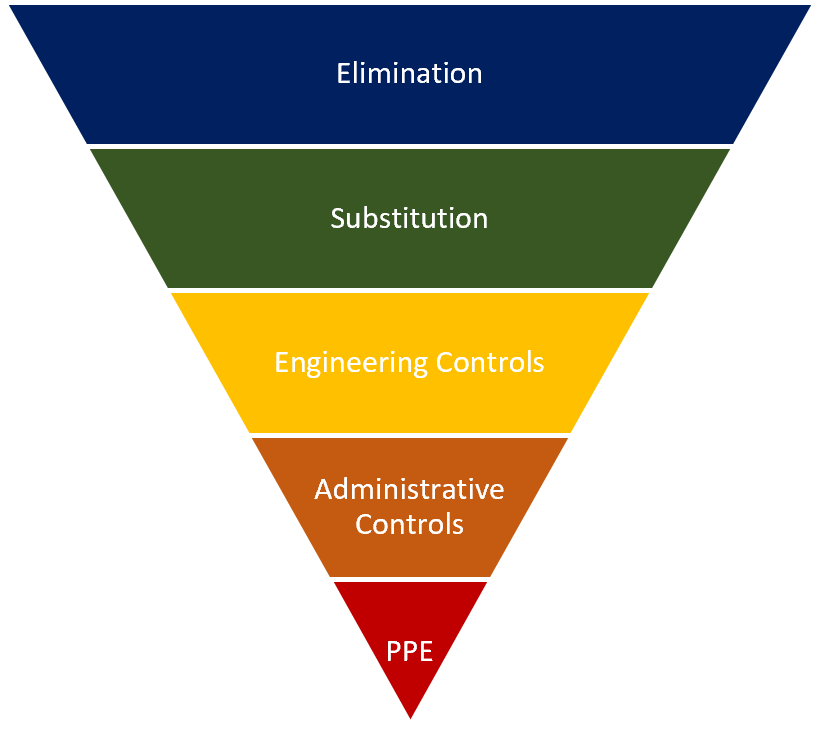
The National Safety Council introduced the Hierarchy of Controls in the 1950s as a safety framework. The framework is organized as an inverse pyramid of risk mitigation practices that can help organizations reduce workplace hazards. The graphic places the most effective methods at the top and the least effective at the bottom starting from elimination, substitution, engineering controls, administrative controls, and personal protective equipment.
Applying the Hierarchy of Controls to fleet safety for a commercial landscape maintenance company is critical. Using the five levels of controls in the order of most effective first to the least effective can reduce overall fleet risks.
Elimination
Although eliminating the over-the-road exposure all together is impossible for landscape companies, there are still ways to critically reduce the risk through other means.
Eliminate unnecessary trips due to route optimization or job consolidation can reduce overall miles driven.
Eliminate hazardous or unsafe vehicles from the fleet immediately.
Eliminate driving in severe weather conditions like rain, wind, fog, and snow.
Eliminate the need for backing up at job sites with pre site planning.
Substitution
If a risk cannot be eliminated, try replacing the hazard with something less risky.
Replace older vehicles that lack updated safety technology with more modern options.
Replace open utility trailers with enclosed options.
Stagger morning rollouts, when appropriate, for a safer start to the day.
Engineering Controls
The third option is deploying engineering controls to isolate people from the hazard.
Utilize safety controls such as backup cameras, 360-degree cameras, blind spot notice, land departure, forward collision warning and automatic emergency braking technology in vehicles.
Organized and fitted trailers help hold equipment and material while in transport to prevent shifting.
Dash cameras and global positioning systems (GPS) are tools help monitor driver behavior and provide more insight if an accident occurs.
Prepare flow maps for the yard to help crews enter and exist safely.
Administrative Controls
Changing the way people work is an administrative control that can reduce fleet risks.
The controls can consist of MVR reviews, driver authorization programs, driver evaluations, and driver training.
Implement cell phone, seatbelt, and drug/alcohol policies.
Perform daily vehicle inspections and telematics safety habit reviews.
Implement a preventive maintenance program that helps keep vehicles operating safely.
Personal Protective Equipment
The last control in the hierarchy is personal protective equipment (PPE).
High visibility safety vest help with existing and entering the vehicles.
Signage and cones when parked near roadsides alert drivers that people are working near by.
Safety blocks for parking and effective tools that can help employees in and out of truck beds or trailers to minimize slip and trip hazards.
When looking for opportunities to improve your fleet safety program, look at your risk through the hierarchy of controls. We tend to see most improvements within engineering space with telematics, GPS and dashcameras alongside strong administrative controls from driver selection to ongoing monitoring and training.
Success with SafetyOne™: A Fundamentals Refresh for Administrators
Author, Jadyn Brandt, Client Communications Coordinator, Rancho Mesa Insurance Services, Inc.
Rancho Mesa’s SafetyOne™ platform is built to support and enhance the implementation of an effective safety program. Real-time data insights, industry-specific safety trainings, and intuitive technology empower organizations and administrators to make safety a priority on the job.
Author, Jadyn Brandt, Client Communications Coordinator, Rancho Mesa Insurance Services, Inc.

Rancho Mesa’s SafetyOne™ platform is built to support and enhance the implementation of an effective safety program. Real-time data insights, industry-specific safety trainings, and intuitive technology empower organizations and administrators to make safety a priority on the job.
Company News
The company news function simplifies communication, making it easy to communicate important information with your entire organization or groups of people working on a specific project, or program. Administrators can utilize this function to share jobsite information, required forms, procedural reminders or toolbox talk topics to SafetyOne app users and send notifications straight to their mobile device.
File Cabinet
The file cabinet in SafetyOne is where administrators can store important documents. Rancho Mesa recommends using this function to store items including, certificates of insurance, employee handbooks, IIPP/HIPP, and safety data sheets so that they are easily accessible to mobile app users.
Mobile Forms
Mobile form templates can be used in a variety of ways to streamline data collection from the jobsite and in the workplace. Templates can be used to document reports like accident investigations, daily inspections, client visits, and visitor logs. The uses are endless.
SafetyOne administrators can then use the Mobile Forms “Reports” function to analyze the data collected from mobile forms. This can enhance the implementation of better safety practices and address recurring issues.
Observations
Observations streamline the assessment and reporting of possible risks and hazards in the workplace. Mobile app users can document issues using written and photographic data. Existing open issues can be assigned to employees and solutions can be tracked and stored within SafetyOne. Report data can be analyzed to improve safety practices.
Policies
SafetyOne ensures your mobile app users have access to your organization’s policies for workplace safety and best practices. From fall protection to drug and alcohol testing, having clear policies easily accessible keeps employees informed and compliant.
Toolbox Talks
Toolbox talks are a great way to ensure your safety program is proactive, rather than reactive. Hundreds of templates are available for use in both English and Spanish, and industry-specific topics are also available for landscape, tree care, and company drivers.
Integrating the SafetyOne platform into your organization’s safety practices is a small step that can make a big difference. Storing and collecting data allows for personalized safety responses, supported by easily accessible training. And, our platform is regularly updated with new content and technology to ensure you have the tools to administrator an effective safety program.
A complete list of SafetyOne app user guides can be found on our website.
If you have a SafetyOne account with Administrator privileges and want so help getting started, register for our upcoming “The SafetyOne™ Advantage: Mastering Rancho Mesa’s Safety Platform” for a hands-on workshop.
Overlooked Coverage that Keeps Projects Moving After an Equipment Loss
Author, Kevin Howard, Account Executive, Rancho Mesa Insurance Services, Inc.
For trade and general contractors that own heavy and/or valuable specialty equipment, there is an overlooked coverage that can be critical in certain loss scenarios.
Author, Kevin Howard, Partner, Rancho Mesa Insurance Services, Inc.

For trade and general contractors that own heavy and/or valuable specialty equipment, there is an overlooked coverage that can be critical in certain loss scenarios.
When we think of business income in the classic form, we think of a fire that shuts a business down and a business income policy that responds, supplementing the revenues and/or operating expenses lost over a set time. Separately, there is also a coverage form that is tied directly to an equipment schedule; so, in case of a loss where a revenue-generating piece of equipment is damaged or stolen, there is a business income limit that can offer coverage for potential loss of revenue.
For example, consider a concrete pumping contractor that has roughly $6,000,000 in total scheduled equipment. Three of these items are cranes and/or pumps that are used daily. If the equipment is not running, revenue is lost. If the contractor secures a $150,000 business income policy that aligns with this schedule, there is additional coverage available in case of a loss. The piece of equipment is covered either through actual cash value or replacement cost, and there is now coverage for the loss of income based on historical data vs. the $150,000 limit.
Coverage makes the most sense for contractors who own heavier pieces of equipment like concrete pumpers, excavation contractors, grading and or utility contractors, paving contractors, crane operators and equipment rental companies.
The business income limit can be adjusted by an underwriter who typically will have a max limit around $150,000 to $250,000 depending on external factors.
Over the past couple of years, California has experienced a major uptick in equipment theft including gas theft, vandalism and well thought out plots to steal large pieces of equipment. These thefts are more common now because of higher resale values and an abundance of attractive targets. Understandably, it is these types of equipment which are now prime targets for thieves. And with that, a business income limit becomes an important risk transfer technique.
Inland marine insurance protects the physical assets that contractors depend upon every day while business income coverage protects the financial engine behind those assets. As equipment values continue to rise and replacement timelines become more uncertain, contractors should consider business income coverage as an important option within the policy offerings.
Should you have questions about this exposure within your own operations, please contact me at khoward@ranchomesa.com or (619) 438-6874.
Strategies to Help Contractors Reduce Insurance Costs
Author, Casey Craig, Account Executive, Rancho Mesa Insurance Services, Inc.
Rising insurance costs in California continue to put pressure on contractors. While many companies focus on finding lower premiums, the most effective way to control insurance costs is to reduce risk before claims occur.
Author, Casey Craig, Account Executive, Rancho Mesa Insurance Services, Inc.

Rising insurance costs in California continue to put pressure on contractors. While many companies focus on finding lower premiums, the most effective way to control insurance costs is to reduce risk before claims occur.
Two of the most effective ways to accomplish this are implementing strong hiring practices and maintaining a formal return-to-work program. Together, these strategies help reduce injuries, improve claim outcomes, increase employee retention, and demonstrate to insurance carriers that your company is committed to risk management.
Hire for Safety and Retention
Every employee impacts your company's risk profile. While technical skills are important, hiring individuals who fit your safety culture can help reduce workers' compensation, general liability, and commercial auto claims.
A strong hiring process should include:
Reviewing employment history
Confirming licenses and certifications
Checking references
Validating specialized training
Conducting background checks where appropriate
Reviewing motor vehicle records for employees who will operate company vehicles
Hiring is only part of the equation. Building employee retention through a clear mentoring process is equally important.
Workers who understand company procedures, safety expectations, and jobsite hazards are generally less likely to be involved in accidents than newly-hired inexperienced employees. By creating clear career paths, promoting from within, and investing in employee development, contractors can build a more experienced and stable workforce while reducing turnover-related risk.
New hires should also receive a comprehensive onboarding program that covers:
Safety orientation
Injury reporting procedures
Drug and alcohol policies
Equipment training
Return-to-work expectations
Establishing expectations from day one helps create accountability and reinforces a culture of safety.
Establish Return-to-Work Programs
Even the safest companies experience workplace injuries. The difference is how those injuries are managed.
A prolonged workers' compensation claim affects more than just medical costs. Contractors often face lost productivity, overtime expenses, project delays, and administrative burdens while an injured employee remains away from work.
Insurance carriers also pay close attention to claim management practices. While a single claim may have a limited impact on a company's experience modification rate, insurers view return to work programs as an indicator of how actively the management team works to control losses and support injured employees.
A formal return-to-work program provides modified duty assignments that allow employees to remain productive while recovering. Employees who stay connected to the workplace often experience better recovery outcomes, while employers retain valuable workers and reduce lost time claim costs.
Insurance carriers evaluate much more than claims history; they assess how a company manages risk. Contractors that demonstrate strong hiring standards, low turnover, effective onboarding procedures and formal return-to-work programs are consistently viewed as better insurance risks.
Contractors who achieve the best long-term insurance results are typically those that invest in their workforce. Strong hiring practices help prevent claims before they happen, while return-to-work programs help manage injuries effectively when they do occur.
By focusing on employee retention, safety, and injury management, companies can reduce insurance costs, improve workforce stability, and position themselves more favorably with insurance carriers in an increasingly challenging market.
If you have questions about your hiring practices and return-to-work programs, do not hesitate to reach out to me at ccraig@ranchomesa.com or (619)438-6900.