

Industry News

Contractors: When it Comes Down to Delays and Disputes, Documentation is your Best Friend
Author, Josh Hill, Account Executive, Rancho Mesa Insurance Services, Inc.
Every contractor knows that project delays and disputes are just a part of life in the industry. The question is, how does one go about improving their chances of achieving the outcome they desire when this occurs and the answer is, documentation.
Author, Josh Hill, Surety Account Executive, Rancho Mesa Insurance Services, Inc.

Every contractor knows that project delays and disputes are just a part of life in the industry. The question is, how does one go about improving their chances of achieving the outcome they desire when this occurs and the answer is, documentation.
Construction contractors face project delays and disruptions on jobsites of every size, but their ability to successfully defend their position in negotiations, mediation, arbitration, or litigation depends largely on the quality of the records they create and maintain throughout the project. By implementing disciplined processes for tracking schedules, documenting impacts, preserving project correspondence, and recording productivity losses as they occur, contractors can transform routine project data into compelling evidence when disputes arise.
There are several software platforms available to manage and monitor your projects, and each is designed for different types and sizes of users. For example, if you are a small to mid-sized contractor, a useful and affordable platform such as Microsoft Planner & Project is a great option. It is easy for most Microsoft users to learn and provides Gantt charts, dependencies, baselines and critical path scheduling. These inputs provide critical data for yourself and your attorney to utilize when defending your position as it pertains to delays and disputes. If you are a general contractor working on large complex projects, then the gold standard platform would be Oracle Primavera P6. This is a sophisticated platform that monitors critical path method scheduling with tremendous detail and analysis data points for Time Impact Analysis which is routinely relied upon during the dispute process.
Regardless of what software system is utilized, contractors should make it standard practice to utilize some type of platform to maintain baseline schedules, progress updates, documentation of changes, and historical scheduling data. It is also advisable to involve their attorney early so that they can address disputes before it becomes a serious matter and potentially a more costly process. If used effectively, monitoring software will greatly improve your attorney’s position and the documentation provided through these systems will help get the best outcome possible.
For more information about how to protect your company during a dispute or delay, contact Shay Kulkarni at Skulkarni@pecklaw.com or (619) 202-0175 or Josh Hill at Jhill@ranchomesa.com or (619) 798-2819.
Developing a Strategic Business Development Process
Author, Anne Wright, Surety Relationship Executive, Rancho Mesa Insurance Services, Inc.
When your business development strategy aligns with your unique strengths and you are no longer competing solely on price, you have become your clients’ preferred partner because of the value you bring.
Author, Anne Wright, Surety Relationship Executive, Rancho Mesa Insurance Services, Inc.

When your business development strategy aligns with your unique strengths and you are no longer competing solely on price, you have become your clients’ preferred partner because of the value you bring.
A successful business development process requires a long-term strategy. Positioning your company for successful new and repeat relationships is one of the many challenges of any business owner. It takes time to develop these relationships that will provide the best revenues for your company. Oftentimes, it is a key person or persons within your company that manages these important relationships. A firm that is most successful will empower everyone to be a part of the business development process.
If you are fortunate enough to have the relationships you need to grow and further your success, great. However, oftentimes a company will get complacent with their relationships, assuming they will be there forever. They think if it is not broke, don’t fix it. But, we all have to consider how many eggs we need to have in that proverbial client basket in case something unexpected happens.
In a recent podcast episode, my collaborator Katie Yee, owner of Connect Strategic Consulting and I spoke about strategic business development processes. Katie has worked with a few of Rancho Mesa’s clients, which is how we were introduced. And, she is well known and respected for the tools she uses to support those businesses.
In our conversation, we discussed the tools that you might use to set your company apart from the competition:
Tailored vs. Generic Value Statement
Unique Expertise to Address Challenges
Surety Relationship
Repeat Clients
Establishing Trust
Transitions of Key Management, or Ownership Relationships
The most successful firms focus on opportunities where they can clearly demonstrate value based on their relevant project experience, technical expertise, specialized services, and proven ability to solve client challenges. Do not be left behind because you have not put the right focus on this.
Business development is more than just getting new businesses. It is earning the reputation that keeps you relevant in an industry that is too often focused just on price.
If you would like to reach out to Katie about developing a strategic development process, she can be reached at katie@connectstrategicconsulting.com or (760) 650-6462.
If you are looking for a strategic surety partner, I can be reached at awright@ranchomesa.com or (619) 218-4249.
The Evolution of Credit-Based Bonding Programs
Author, Andy Roberts, Account Executive, Rancho Mesa Insurance Services, Inc.
When I first started in the industry, 8+ years ago, there were a handful of surety companies that offered credit based surety programs. They required a one-page application, would do a soft pull on the owners credit, and so long as it was sufficient, they could qualify for up to $400,000 in single and aggregate bonding limits. Since then, the limits in these programs have continued to grow as the market for the credit-based programs has evolved.
Author, Andy Roberts, Surety Group Leader, Rancho Mesa Insurance Services, Inc.

When I first started in the industry, 8+ years ago, there were a handful of surety companies that offered credit based surety programs. They required a one-page application, would do a soft pull on the owners credit, and so long as it was sufficient, they could qualify for up to $400,000 in single and aggregate bonding limits. Since then, the limits in these programs have continued to grow as the market for the credit-based programs has evolved.
From that $400,000 limit, we saw these programs jump to $750,000 single and aggregate, then it went to a $1,000,000 single and aggregate. Now we have surety companies that are offering $3,000,000 single and aggregate limits based on the personal creditworthiness of the owners. Just as before, there is no need for the contractor to provide company financials. The contractor would need to fill out an application and depending on the strength of their credit they could qualify for up to $3,000,000 in bonding. However, there is one caveat. The limits in these programs are also based on the contractor’s largest completed project, with surety companies offering a single bond limit at two times their largest project size. This is a significant development in the industry that is being driven by a few different factors.
First, sureties have become increasingly more comfortable with the idea that if owners pay their bills personally they are likely to operate their businesses in the same fashion. The increased comfort level stems from the fact that these programs have performed well from a loss perspective. Second, there is a lot of competition in the surety marketplace, especially in California, and this is driving companies to develop programs that will attract quality contractors earlier than previously. Finally, inflation is a significant factor. A project that was $1,000,000 a few years ago may now very well be close to $2,000,000 now. The scope is the same, but labor and material costs have increased substantially, and sureties need to increase their limits to keep pace.
We often talk about how very little changes within the surety industry, but that is not the case with credit-based bonding programs. This part of the industry has changed a lot and is continuing to evolve creating more opportunities than ever for contractors to get access to bonding. This makes it important to work with a surety agent that understands all the different markets, and can help identity the program that best fits your company’s goals.
For more information on credit-based bonding programs, contact me at aroberts@ranchomesa.com or (619) 937-0166.
The Real Reason Sureties Require Fund Control (And Why It Matters)
Author, Josh Hill, Account Executive, Rancho Mesa Insurance Services, Inc.
When a surety company issues a bond, the main goal is simple, to make sure the job gets finished and no one loses money. Even if a company has deep experience and strong finances, that does not always mean project money will be handled the right way. Because of this, a surety may ask for fund control when there is more risk.
Author, Josh Hill, Surety Account Executive, Rancho Mesa Insurance Services, Inc.
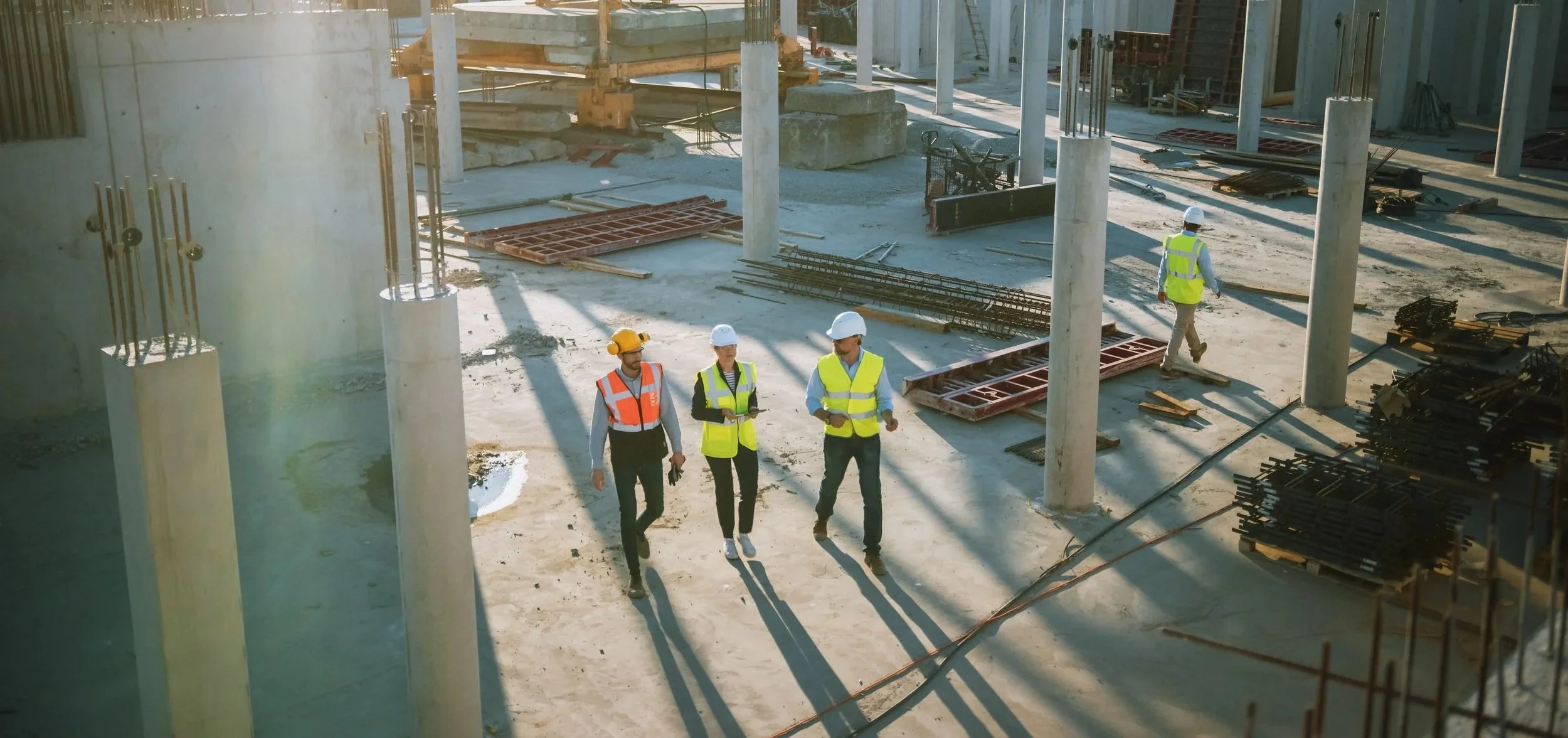
When a surety company issues a bond, the main goal is simple, to make sure the job gets finished and no one loses money. Even if a company has deep experience and strong finances, that does not always mean project money will be handled the right way. Because of this, a surety may ask for fund control when there is more risk.
One major reason projects run into trouble is poor cash flow management. Contractors often work on several jobs at once and must pay for labor, materials, and everyday business expenses. Without controls, money from one job may be used on another. This can leave a project short of cash and cause delays or failure. Fund control helps prevent the comingling of funds by ensuring that funds are only used exclusively for their designated project.
Another concern a surety wants to avoid is money being used in the wrong way, especially on private jobs where there is much less oversight than on a public project. Fund control helps by placing money into a special account, requiring proof before payments are made, and making sure work is done before money is released. This helps ensure funds go toward the right things, like workers and materials.
Sometimes there is no lender or outside party tracking how money is spent. In these cases, fund control acts like a financial checkpoint. It tracks spending, requires documentation, and adds structure. This helps everyone stay organized and reduces mistakes.
Sureties also use fund control to support higher-risk companies, such as newer contractors, companies with less cash, or businesses taking on bigger jobs. Instead of turning the work down, the surety can approve the bond with controls in place. This gives companies a chance to grow while lowering risk.
Even though fund control may seem strict, it can help the business. It keeps finances organized, helps ensure subcontractors get paid on time, reduces disputes, and can make it easier to get bonds in the future.
Fund control is not meant to make things harder. It helps projects succeed by making sure money is used the right way at the right time. In the end, it protects the surety, supports the contractor, and helps the job get done successfully.
Rancho Mesa is happy to assist you with any questions regarding your bonding needs. Please content me with your questions at jhill@ranchomesa.com or (619) 798-2819.
From RFI to Payment: Navigating the Full Change Order Lifecycle
Author, Anne Wright, Surety Relationship Executive, Rancho Mesa Insurance Services, Inc.
I recently had the pleasure of interviewing Luke Thompson, Esq. who is uniquely qualified to help us understand the nuances of change orders. Based on our conversation, I’ve put together an overview of what all subcontractors should know about change orders.
Author, Anne Wright, Surety Relationship Executive, Rancho Mesa Insurance Services, Inc.

I recently had the pleasure of interviewing Luke Thompson, Esq. who is uniquely qualified to help us understand the nuances of change orders. Based on our conversation, I’ve put together an overview of what all subcontractors should know about change orders.
First, it is important to know what is in the general contract, whether it is a public or a private job, and whether it is a design-build or design-bid-build project.
Most subcontractors understand the basics of a change order, but often times they fail to fully understand how they affect the job’s contract.
A change order is an amendment to an original construction contract or a subcontract that alters a given project’s scope, cost, materials, design, or schedule. These changes are sometimes also called contract modifications or contract supplements. There are subtle differences, but for the purposes of this discussion, “change order” is sufficient.
For most subcontractors, they may only use the change order process when they are seeking additional money for work that was not in the original scope (i.e. scope changes). But, there is a lot more that can and should be done when there is a change order.
The Change Order Process
First, it is important to document all change orders for the entire project. Sometimes, the change request comes from the owner; sometimes, it comes from the general contractor; and sometimes, it is the subcontractor who initiates the change order process. Regardless, there are specific contractual and sub contractual processes that must be followed.
In a typical fixed price, fixed scope project, the owner/agency is usually responsible for the design. Any changes to the original scope, design, or schedule of the project need to be approved by both the design team and the owner (who is typically responsible for the costs related to the change order). However, if the change is the result of the prime or general contractor’s actions (e.g. scope gap in the general contractor’s bid or delays not caused by the owner/agency), then, the general contractor might be responsible for any resulting costs.
In a design-build arrangement, the prime or general contractor is often responsible for the costs if the change is initiated by the owner or agency.
There are budget allocations, contingencies, and many other factors that can affect who is paying for the change. It is critical that the subcontractor understands who is paying for the change order and what other impacts the change will have on the scope, design, or schedule. In the end, the subcontractor ultimately needs to sell the change order to the general contractor, even the zero-dollar ones. And, if the general contractor needs to sell the change order to the project owner, it can be a recipe for delaying payment or even having the change order rejected. While a subcontractor may be able to pursue a claim for the change order, this is often a costly and time-consuming process.
In general, when a subcontractor submits a change order, it goes to the general contractor for initial review. Because the general contractor has to submit the change order request (COR) to the design team and get approval from the owner/agency, a poorly drafted COR will need to be redrafted by the general contractor, something that invites scrutiny and often skepticism. It is much more efficient to have the COR properly formatted and supported than go through the revision process.
If the general contractor accepts the COR, that does NOT mean it is approved. The general contractor must then submit it to the owner/agency for approval. Typically, a general contractor will need to pitch the COR to the owner and design team. A properly structured and supported COR makes this process much easier. Once the owner/agency approves the COR, they issue a change order to the general contractor, often times that change order is bundled with other CORs that were approved. Then, the general contractor issues a change order to the subcontractor. Until that subcontract change order is executed by both parties, there is no official change to the subcontract. That is why a subcontractor cannot bill against a change order until the cycle is complete.
The whole cycle rarely takes less than a month, and often takes much longer to complete. In the meantime, the subcontractor is likely to have been directed to perform and may have already completed the work. Since most subcontracts require subcontractors to perform when directed, a subcontractor needs to be mindful that payment for the subcontract change order may take 30, 60, or 90 days, or longer. The labor costs alone (assuming a subcontractor is holding off on paying vendors until it gets paid) can be crippling.
Change Order Procedures
Perhaps the single biggest mistake subcontractors make when dealing with change orders is that they drag their feet in issuing CORs. The failure to timely submit a COR can result in a rejection of the COR outright, even if the work has been completed. Most contracts and subcontracts have strict timelines (often 5 days or less) when notice and the COR itself must be submitted. Few project managers are aware of these timelines. In most cases, it ends up not being a major problem, especially when it is clearly additional work. But sometimes, particularly with respect to disputed issues involving significant schedule impacts, this can create an enormous problem for everyone.
Read the subcontract carefully. Talk to the on-site foreman daily. And, send notice as soon as the issue is known. When the costs cannot yet be determined, send an email anyway letting the general contractor know that a changed condition has been discovered and that the cost and schedule impact are being investigated. The best way to send notice is typically through a carefully designed request for information (RFI). The RFI is what primes the pump for most change orders and many subcontractors fail to take the opportunity to draft their RFIs in a way that compels the general contractor, owner/agency, and design team to acknowledge that a change order is inescapable.
The Full Potential of a Change Order
The change order does much more than simply capture additional costs for the subcontractor. It can be used to capture additional time, scope changes that favor the subcontractor’s installation, or even credits (i.e. deductive change orders) that might advantage the subcontractor.
While not every change warrants a change order (sometimes it is cheaper to just roll with the change), every change does warrant analysis. Many times, subcontractors are only capturing the direct costs of the changed condition but fail to properly assess the impact on the schedule or the subcontractor’s overall performance. Of course, being overbroad in a COR can get a lot of pushback and skepticism, leaving money or time on the table should never be an option.
What A Proper Change Order Request Should Capture
A proper COR should have all material, equipment, and labor hours involved, obviously. It should also include the schedule impact, which is almost always more than just the time to complete the work. A COR should also include, when allowable, supervision, delivery costs/fees, cleanup, planning, and project management. In addition, a subcontractor should include the allowable overhead and profit.
It is also important to consider that when the frequency or size of the change orders begin to stack up (e.g. more than 10% of the original subcontract value), it is time to meet with the general contractor and discuss inefficiencies. There is a meaningful difference between a project that was bid at $1M and one that is $1.5M, for example. If additional time is provided and the impact is minimal, then there may not be the need to push the issue, but subcontractors should not allow general contractor s to force them into performing subcontracts that are materially different in size or scope without expecting someone to pay for the impact on the subcontractors operations.
CA New Change Order Law
Civil Code 8850 or the Private Works Change Order Fair Payment Act (Senate Bill 440) is designed to establish clear deadlines for change order reviews to prevent contractors and subcontractors from financing disputed extra work. The law requires (in part) that:
The owner must provide a written response within 30 days, identifying approved and disputed items.
Undisputed amounts must be paid within 60 days of the owner’s response.
If the owner fails to respond within 30 days, the contractor or subcontractor may have the right to suspend work without penalty.
This law does require that the claim for extra work be submitted via registered or certified mail, which is an uncommon practice in the digital age but subcontractors should be aware of this requirement.
The full impact of the law on industry practices is yet to be determined. But, if a subcontractor is having a difficult time getting change orders approved, it might be worth evaluating whether or not this law can be used to get the owner to timely respond, approve, and ultimately pay the subcontractor’s change order.
In California, the construction industry has moved, in recent years, to some very specific standards when it comes to change orders. It is critical that subcontractors read their subcontracts and the prime contract carefully to understand the change order requirements. Most subcontracts have very stringent requirements for notices like what can be included and allowable markup. Sadly, in many situations these restrictions make it difficult, if not impossible, to capture all the true costs involved for a subcontractor. In most cases, subcontractors are probably losing money on change orders. The earlier that a subcontractor can submit a properly supported change order request, the greater likelihood of getting it approved as submitted.
This makes it all the more important to try and get ahead of the curve and use the RFI and COR process to your advantage. Set your general contractor up for success by carefully articulating why the COR includes all the costs and impacts it does and then provide as much supporting documentation as possible. Then follow up with friendly phone calls and emails, building relationships and trust. Good luck out there.
Underbillings and How They are Viewed by the Surety
Surety Group Leader Andy Roberts sat down with Marc Henry, Region Vice President for Sompo International and Damian Pintor, underwriter in the Western Region for Sompo International. They shared valuable insight about underbillings in the construction industry and discussed how surety companies handle them.

Surety Group Leader Andy Roberts sat down with Marc Henry, Region Vice President for Sompo International and Damian Pintor, underwriter in the Western Region for Sompo International. They shared valuable insight about underbillings in the construction industry and discussed how surety companies handle them.
Andy Roberts: You’re listening to Rancho Mesa’s StudioOne™ podcast, where each week we break down complex insurance and safety topics to help your business thrive. I’m your host, Andy Roberts, and I’m joined by Marc Henry, Regional Vice President for Sompo International and Damian Pintor, who’s an underwriter in the Western Region for Sompo International. Welcome to the show, guys.
Marc Henry: Thank you.
Damian Pintor: Thank you. Thanks for having us. Yeah, glad to be here.
AR: Yeah, thanks for making the trip down. This is going to be a lot of fun. We're going to be diving into an important topic here kind of regarding underbillings and how they're viewed by you guys on the underwriting side. But before we get into that, why don't you guys give me a little background on what you guys do, how you got into the industry?
MH: So my name is Marc Henry, and I am the Western Regional Vice President of the Sampo Contract Surety in the western part of the United States. So I oversee all of the operations west of the Mississippi, and that includes seven regional offices. And one of the best things about my role is I get to work with a really talented and exceptional group of people that are committed to working with our producer partners and the success of our contractor clients.
AR: Yeah, that's great.
DP: Yeah, my name is Damian Pintor. I've been with Sampo now for four years, straight out of college. And I kind of stumbled into the industry just as straight out of Cal State Fullerton, majored in risk management and insurance, looking to go into insurance underwriting, came across this thing called surety. And then from there, I kind of figured to fit my strengths a little more and kind of went down that rabbit hole of getting into surety and bonding itself and no looking back for me.
AR: Yeah, I feel like that's one thing whenever you know I hear about your background is I’m a little jealous of that you found it right out of college it took me eight years of working in insurance to realize the surety opportunity is going to be way better and such a much more fun industry that I feel suits myself as well too. So yeah that's great so let's jump into kind of what we're going to discuss here and so you know from a basic standpoint, like what are underbillings? That's what we're going to kind of dive into here. If one of you guys want to just give us a basic rundown of what that looks like or what those are.
MH: Sure, I'll jump in there. So basically what underbillings are is it's the difference between the work that a contractor has completed and what they have billed for. So essentially it's like a contractor saying, I have completed so much work, but I've yet to bill for that work. So that underbilling then sits on the balance sheet as an asset representing money that the contractor is going to receive in the future.
DP: Hopefully.
MH: Hopefully. It's a great point. That's what we're here to talk about. I didn't want to get too far into it, but that's a great point. Absolutely.
AR: That's the thing I think they look at it too is like most people that don't really understand it look at it as just like it's on their current asset. It helps their working capital. But like within relation to working capital, like what do you guys, how do you guys dive into it more deeply?
DP: Yeah. And I think when it comes to in relation to working capital, I mean, first of all, it's going to be shown, it's not going to say underbilling, right? It's going to show as cost in excess of billings. And that's going to be classified under the current asset section on your balance sheet, but also on your work in progress report as well. So I think that's important to know. And so when it comes to looking at it that way, I mean, the way we analyze it, you know, we'll typically take note of those larger underbillings that may be present on their WIP reports and at the beginning stages of those project.
I think it's important to at least make note of you know what large ones outstanding and then track those as you know you get future statements and WIP reports too really analyze you know how that billing process is going and I think for us where we really start to analyze and make adjustments is going to be for those late stage underbillings. And when I say late stage that's going to be projects that are in your back half of completion. So that'll be 80 to 85 percent complete or more. When we start to see those underbillings still on there that's typically when we'll start to ask the questions we'll request updates or what's going on there because for us looking at it when you have those underbillings at the beginning stages I think that's completely normal.
But then once you start to get on to the later stages, eventually you start to see that even out and catch up. So when you get into that back part, usually there's a story there, and I think for us, that's important to understand. But when you get to those points, that's when we'll typically make those adjustments depending on the notes we get. Or just looking at the numbers because we're only looking at the numbers, we understand there's a whole story to what's going out there actually in the field.
AR: Yeah. So at that point too, so you guys are kind of looking at it and as you're tracking those and you're seeing those late stage ones, that's when they kind of become a concern in your guys' eyes.
DP: Right.
AR: But so when you're having that conversation and getting that story with the contractor, like what would their reply be that would be to distinguish between a healthy underbilling versus like something that's problematic in your eyes with regard to those late stage underbillings?
MH: So it's all about context, right? Because at the core, an underbilling is an asset like we just talked about, but it's not a celebrated one, right? It's not one that we would love to see the makeup of your working capital, but it's how quickly can that underbilling be converted to billings and then be collected and then be converted to cash? And cash flow is really the name of the game.
So when you're saying when is an underbilling sort of healthy or manageable and when is it not? Kind of what Damian said, when you're seeing underbilling sort of pile up and grow as the job progresses, that's where, you know, as a surety, we should be working with you guys and having that communication, that dialogue as to what's going on. What's the context behind this? And not just jump to conclusions because it could be sometimes there's certain contractors or certain trades. They have large, upfront costs that they incur that they're not able to bill for sometimes until they're actually on the job or for however their contract is structured so when that happens they do show up as an under billing but if you understand that that underbilling is good and it's going to be converted over very quickly you're able to kind of say okay I can I see that I understand that we don't have to discount or analyze that. But it's when you get into the late stage of the job, like what Damian said, when a job is almost completed, the job should be almost billed.
AR: Absolutely.
MH: The billing should match the work. And so when you don't have that, then it's like, okay, what do we have here? Is this a billing process issue? Is this a lack of communication internally? Is this a problem between the contractor and their client?
And again, it just all comes down to communication and asking those questions and understanding what's going on behind that.
AR: Do you guys have something you hear most frequently from contractors like what they're reasoning behind or is it just kind of run the table based on different circumstances?
Like when you come to them they might go, “Well we're just behind on billing,” or, “The owner--we're on like the back side of a billing cycle from the owner we missed like a cut-off date,” or something?
MH: I feel like a lot of times most of the time, I feel like what we see is change orders. It's waiting for change orders to be approved, and they're following up on the approval process, but they expect them to be approved. Those kinds of updates of keeping us into the loop, I think, are very valuable to us because it gives us some insight onto why that may be. I mean, there's some added work in there that is expected to be approved, and it's not going to affect their profit margin.
Or there's even approved change orders that we're getting an update on after the fact because I think it's also important to remember that when we get these WIP reports and um and financial statements there's already two to three months that have gone by and you know there's most likely already updates that that are available for us to get. So if there's approved change orders that's I mean that's great I mean then we can mark it as like all right well it's addressed it'll be billed and they should be able to collect down the line.
AR: That all that all makes a lot of sense um what happens in a situation say you get with a contractor and they're like. “Oh well this is an internal issue we're way behind on our billings.”
You know, it's like, does that affect in your guys’ mind, like bonding capacity? Because there's like now there's like some sort of management issue maybe or processes issue?
MH: So, yeah, sometimes it is a personnel issue. I mean, you know, at the end of the day, these companies are run by people and, you know, life happens. Right. And so we've had situations where the person that's responsible for billing is out, you know, medical leaves, things like that. So. There's legitimate reasons as to why they fall behind.
But I think the contractors who make it a priority, make the billing a priority, and really take a proactive approach in staying on top of that help to avoid running into those issues. Sometimes it's converting software. They're changing from different softwares, and there's issues that way. And again, I'm trying to provide you where these are legitimate reasons where it's, you know, from a surety standpoint we can hear that we can understand that and we know that there's not an issue out in the field, there's not an issue bigger than, you know, what's going on internally because again one thing to just to kind of come back to on the underbilling is because that contractor has performed work and they have yet to bill for it essentially who's funding that job now, right? It's the contractor's money funding that job and when you have that, back to what you were saying earlier, Andy, it starts to squeeze their working capital. And I think that creates, from a surety standpoint, greater risk exposure.
AR: Yeah, well, now we're looking at more of a liquidity issue.
MH: Exactly.
DP: And I think going back to Marc's point, like underbillings themselves, they're not generally like a bad thing. At the end of the day, they're an asset. They’re a current asset looked at that way on the balance sheet. But the other side of that is when you as a contractor are heavily reliant upon those underbillings for the makeup of your working capital and your net worth then on the surety and bonding capacity side then we're heavily reliant upon the updates we're getting regarding any late stage underbillings and, you know, the quicker you can turn that into you know being able to bill and collect I mean we can't ask questions on cash right cash is cash.
AR: Get a bank statement.
DP: Yeah, exactly. Yeah. So we're not going to ask questions there. So I think that's just an important thing to know. And, you know, it could affect your liquidity overall. So, yeah, I mean, I think I think it's important to take that in consideration that, you know, they're not a bad thing, but if not addressed appropriately, you know, it could lead to a problem.
AR: Yeah. Well, I think you said it's not a bad thing, but, you know, it's a marker or something to pay attention to that. Could be a sign of how things are trending or what's going on. Like if it's a consistent thing, that's going to affect their, you know, liquidity down the road and then ultimately their bonding capacity.
MH: Exactly.
AR: How deep of a dive do you guys do, you know, your initial underwriting when you're looking at, you know, a new submission and, you know, you're tracking all these stuff. Like, does that go into your mind right away of like what kind of capacity you guys could maybe offer? Or is it, you know, are you guys looking to go to the agent with a lot of questions about underbuildings right away, to kind of figure out what the issue is up front?
DP: Yeah, and I think there's a difference too when we're talking about new submission versus long-time existing account. With the new submission, we're getting a few periods, a few years’ worth of financial data you know job schedules so we're able to properly trend um those jobs individually and the underbillings individually so we can look at the earliest statement that we have and some of those jobs and what those underbillings look like and then how they progressed.
So, I think when it comes to that um you know that plays a that plays a factor into how we look at it because if you if you see that the project margin has hold that has held across you know like two three four years of data depending on how long the project is then you know that goes to show you that historically this contractor does a good job of managing their billings, being able to bill and collect so I think I think that certainly helps and I think that's the deep dive that we typically take.
It’s different when you're jumping into a new relationship but at the same time you have you know a strong relationship with your agent that you can trust so I think you know that's the deep dive that we take. And there's a whole other side of you know if it's an existing relationship then you have a long-term understanding of that contractor's history.
MH: Exactly I was, and that's what I was going to add to that is that when it's an existing relationship there's a trend, there's a historical pattern, there's questions that we've asked in meetings so if that contractor is historically showing underbillings but those underbillings do get billed out. We have a track record we can look at and we can hang our hat on our decisions, knowing that they don't typically have issues with their underbillings not being billed and collected.
AR: Right. Absolutely.
MH: Whereas with a new submission, you're getting to know that account. So it's, you know, yes, you can look at the financial information, but it definitely it all comes down to communication. And it's the communication that we have with good producer partners like yourself. But it's also the open communication that we have with the contractors too. And just being able to ask those questions is, “Okay, tell me about this underbilling. You know, why are you essentially funding this job based on what we're seeing? And you've been carrying this for a while and it's starting to grow. Walk me through this and when you're going to get collected,” because, you know, it's important to us, but let me tell you, it's important that contractors too, because it's immediately hitting their cash flow.
AR: Yeah, absolutely. Just something kind of off the top of my head. In a situation where it's like, you know, there's maybe a dispute on the job near the end and the contractor comes to you and says, “Well, I think I'm in the right here. I think I'm going to collect this. I'm going to get this back from the city or the entity.”
Like, do you take them on their word? Do you look for any documentation from them or anything along those lines that help ease it? Or do we take that out until we know it's going to get realized for sure?
MH: That's a good question. I think what we try to do is obviously we want to hear a contractor story and we do want to take them for their word. But, you know, usually disputes and things like that, there's a there's a time frame that's going to have to play out. So even if they're right, that money is not going to be something that's coming in the door tomorrow.
So we have to apply some type of something to our analysis as to, okay, how are we going to treat this? Because this is not something that's going to be converted to cash tomorrow. So we may apply some kind of discount. But what the best tools that we have as a surety is kind of what Damian mentioned is the job schedules, the WIP report, being able to produce that timely. And quickly and accurately helps us kind of gives us an indication of that, you know, the contractor's health, being able to see those underbillings and what's going on there.
But also documentation. Hey, this was a change order that was approved, but now there's some kind of dispute on it. Like any kind of documentation like that helps. And I think the more documentation that we can get helps us make a much more informed decision. And it's better for the contractor because then we can choose, we’re making an adjustment to our analysis that is a little more accurate than based on just an amount we see on the web. And we just, if we have no communication, then we're left to just say, okay, we just got to discount this whole thing. We don't know when they're going to collect this.
AR: Yeah. No, I guess that probably leads into the next question too, of like what separates. It's a good contractor who manages their underbillings well versus those who might struggle, like documentation, financials. Is there anything else you guys can think of off the top of your head?
DP: Yeah. So, I mean, going back to the change orders thing, I think documentation of approved change orders, you know, that certainly helps. And then documenting whether or not that long-standing relationship, you know, because when it's when it's long-standing relationship it certainly helps and we know that the contractor is good for their word. When it's a new submission and we're getting to know them then that's completely different I think that documentation of things you mentioned along with the change orders I mean those things definitely help us to get to understand them and their billing process their internal systems which is another key part for us and just overall, you know, get the full picture.
MH: Yeah. I'll add to that, too. I think, like Damian said, it's understanding the systems. And that's why when we, you know, typically most sureties will ask what type of accounting systems and cost tracking and, you know, project management software do you use? Because if you, you know, if you have good systems and good policies and good people in place and you make it a priority to stay on top of your billings. Companies I feel that do that, they usually tend to manage the underbilling process much better.
And again, I don't want to leave here today with the thought process of underbillings are bad because they're not. To the question you just asked, there are times where they're healthy, they're manageable, and there's a lot of sense behind why or good reasoning as to why this underbilling is here. But it is an asset where you've got to be on top of it and making sure that this thing is eventually going to convert and convert as quickly as possible to boostering cash and working capital.
AR: Yeah, it's kind of like you said earlier, too. Like, you know, different trades have, you know, some trades might have more underbillings upfront.
MH: Exactly.
AR: And there's just understanding, like, kind of what's going on there. And that's going to be the case going forward, but they're going to convert it. You know that's going to happen. Any final advice you guys could give to contractors? I know we kind of talked about some of the management stuff, about what they can do to prevent underbillings from becoming an issue with regards to their bonding?
DP: Yeah. I mean, I think from a contractor standpoint, I think it's easy to see or easy to get lost in exactly what the surety is asking of you, especially financially or what they're looking at or their analysis or, you know, whether they set goals to reach a certain financial milestone or, you know, get to a certain point.
But overall, just working back and utilizing, you know, your agent. I mean, Rancho Mesa, you guys do a great job of just, you know, being able to provide that context to not only your surety, but translate exactly what the surety is looking forward to your contractor clients. So I'd say utilizing your agent because they have a plethora of resources that you guys can utilize as a contractor of just being able to be in the loop and what surety exactly is going to look for when analyzing your balance sheet and get you to the program and get the bonding credit that you want. So I think just getting an understanding of that and utilizing your resources is important.
AR: Fantastic.
MH: When I first told my daughter I was doing a podcast and when she found out it was about underbuilding, her excitement sort of left her face. But I think she would have been much more happier if this was about dating and relationships. But I'm going to kind of tie it back together a little bit here.
You know, surety is a relationship, right? And it's a lot more relationship-driven than, I would say, a lot of the other insurance product lines. So to really help in this process, it's really about communication because communication is kind of the foundation of any relationship. So it's having that open and transparent communication, being proactive.
And for contractors, you know, we don't have direct relationships with our accounts, but it's when you have a good surety professional like Rancho Mesa, you guys are very good at being proactive asking those questions you say see the WIP reports before we do and I like how you look at those and you'll see those underbillings and you're asking those questions before we even get that and that's important because we're saving time and we're getting to the core of what's going on, like what's the root of that? Is it something that we all need to be concerned about? Or is it one of those situations where, “Hey you know what it's a part of their normal course of operations it's not something that we need to be very concerned about.”
So I think it's having that transparency, meeting with your clients, having a good surety professional as your intermediary that's working between the surety and the contractor. Those are things that really help to make the process and make working through underbillings really work well.
AR: Yeah, that all sounds great.
Marc, Damian, just want to say thank you both so very much for taking the time to join me today here in StudioOne.
DP: Well, thanks, Andy. Hopefully we didn't say underbillings too many times.
MH: Yeah, really appreciate you, you know, giving us this opportunity. Thanks a lot.
AH: Yeah, this was wonderful. So thanks for tuning in to our latest episode produced by StudioOne. If you enjoyed what you heard, please share this episode and subscribe. For more insights like this, visit us at ranchomesa.com and subscribe to our weekly newsletter.
2026 Legal Updates Reshaping California’s Private Construction Sector
Author, Josh Hill, Account Executive, Rancho Mesa Insurance Services, Inc.
California’s private construction industry has entered 2026 with two major legal changes that will significantly impact how contractors and subcontractors manage cash flow, negotiate contracts, and process change order work. Beginning January 1, 2026, California Senate Bill 61 Private works of improvement: retention payments (SB 61) and Senate Bill 440 Private Works Change Order Fair Payment Act (SB 440) took effect, reshaping longstanding practices around retention and change order payments. These laws apply only to new private works contracts signed on or after that date, leaving existing agreements untouched.
Author, Josh Hill, Account Executive, Rancho Mesa Insurance Services, Inc.

California’s private construction industry has entered 2026 with two major legal changes that will significantly impact how contractors and subcontractors manage cash flow, negotiate contracts, and process change order work. Beginning January 1, 2026, California Senate Bill 61 Private works of improvement: retention payments (SB 61) and Senate Bill 440 Private Works Change Order Fair Payment Act (SB 440) took effect, reshaping longstanding practices around retention and change order payments. These laws apply only to new private works contracts signed on or after that date, leaving existing agreements untouched.
These updates aim to correct chronic pain points for contractors who have long shouldered the financial burden of excessive retention and slow moving change order approvals.
A New Era for Retention: SB 61 Sets a 5% Cap
For decades, retention practices in California’s private works sector varied widely, with some upstream parties imposing retention rates higher than those seen in public projects. SB 61 changes that landscape by capping retention at 5%, aligning private contracting with the standards already established for public works.
This shift is intended to create more predictable cash flow throughout the contracting chain. Contractors and subcontractors may need to revise their contract templates and ensure that the new cap flows consistently through all tiers of subcontracts. The responsibility now falls on every party to verify that contract language mirrors the law, preventing scenarios where a subcontractor is held to a higher retention percentage simply because an outdated template was used.
The statute also carries financial consequences for disputes where a prevailing party seeking to enforce the retention cap may recover reasonable attorney’s fees.
There are, however, some exceptions to the new law. Purely residential projects of four stories or fewer are excluded unless it is part of a mixed use development. Additionally, if a higher tier contractor gives written notice before bidding that payment and performance bonds are required and the subcontractor chooses not to furnish them the retention cap does not apply.
SB 440: Bringing Fairness and Timeliness to Change Order Payments
Equally impactful is SB 440, which tackles one of the industry’s most persistent friction points, the slow approval and payment of extra work. Many contractors have grown accustomed to performing additional work promptly while waiting weeks or months for owners to process and compensate approved change orders.
SB 440 introduces firm deadlines designed to eliminate that delay. Once a contractor or subcontractor submits a change order claim via registered or certified mail, the project owner has 30 days to issue a written response identifying approved and disputed items. Any undisputed portion must be paid within 60 days of that response.
Failure to respond triggers a powerful remedy where the contractor or subcontractor may have the right to suspend work without penalty.
The intent behind SB 440 is straightforward accelerate reviews, encourage timely resolution of disagreements, reduce the financial strain created by float funding extra work, and ultimately keep projects on schedule. By establishing clear accountability, the law aims to ensure that contractors are no longer forced to operate as involuntary lenders on privately funded construction projects.
January 1st, 2026 and Beyond
Owners, contractors, and subcontractors should update their internal processes to comply with SB 41 and SB 61. Contract language, administrative workflows, and change order procedures should be reviewed to ensure they align with the new requirements. Subcontractors, in particular, should make it routine practice to obtain and review the prime contract to verify proper flow down provisions for both retention and change order rules. Understanding these new laws and adjusting practices accordingly will help protect your margins, avoid disputes, and ensure compliance as the industry transitions into this new regulatory landscape.
Rancho Mesa is happy to assist with any questions you may have regarding SB 41 and SB 61. Please direct your questions to me at jhill@ranchomesa.com or (619) 798-2819.
Understanding the PLA Grievance Process
Rancho Mesa’s Surety Relationship Executive Anne Wright sits down with Adrianna Lopez, Director of Labor Relations for the Associated General Contractors (AGC) to discuss the grievance process for project labor agreements.

Rancho Mesa’s Surety Relationship Executive Anne Wright sits down with Adrianna Lopez, Director of Labor Relations for the Associated General Contractors (AGC) San Diego Chapter, to discuss the grievance process for project labor agreements.
Anne Wright: You’re listening to Rancho Mesa’s StudioOne™ podcast, where each week we break down complex insurance and safety topics to help your business thrive.
I’m your host, Anne Wright, and today I’m joined by Adrianna Lopez, Director of Labor Relations for the Associated General Contractors (AGC) in San Diego
Adrianna, welcome to the show.
Adrianna Lopez: Thank you. Good morning.
AW: So we're going to talk a little bit about project labor agreements, often referred to as PLAs, or I guess in some sectors PSAs, have become increasingly prevalent in public contracting over the years. And as a result, non-union contractors are frequently faced with a significant business decision, whether to pursue that work governed by a job-specific labor agreement or to walk away from those opportunities altogether.
So we're not going to go into all the pros and cons today about whether or how to participate on a PLA and what that might mean for a non-union contractor or subcontractor. But I think it's important for our listeners to know more about this grievance process if they do opt to undertake a PLA job.
So, Adriana, tell us a little bit about your background and we'll go from there.
AL: Well, thank you for having me on this morning. And my role at AGC is whether you're union or whether you're non-union/open shop, my job is to educate you to succeed on PLAs or inform you as to why you shouldn't work on a PLA. We're a pro-contractor, and so my background is in construction. I've been in the industry for 15 years, mostly on the regulatory side, working with PLAs in public works construction, supporting contractors, awarding bodies, and developers, et cetera.
At AGC, San Diego, my role as Director of Labor Relations is twofold. It's one to support our signatory contractors and also to help navigate the PLAs that are very common in San Diego so that anybody, whether they're open shop or not, can succeed on them and keep the work flowing.
AW: And AGC has always done a great job on education for the industry and its members, again, regardless of whether it's open shop or merit shop-based. So we're happy to have you here. Who do you think will benefit most from listening to this podcast?
AL: I think the people that will benefit most would be the people who are new to PLAs or maybe a bit averse to PLAs, just not understanding the process, or maybe a contractor who's in the middle of a grievance and doesn't exactly know which way is up.
AL: Yeah, interesting grievances. We're going to talk a little bit about what those might look like and how they can be responded to. But I think it's not something that a lot of people think about when they realize what they have to do to participate on a PLA. You know, getting a project from start to completion involves so many things in contracting. We know that. And I always honor the contractors that are able to successfully perform a job from start to finish with all these issues that they have to come across. So let me ask you regarding these master labor agreements or PLAs, are there any provisions that are negotiable when you're setting something up?
AL: No. So the negotiations happen at the bargaining table with the bargaining units. And in San Diego, our agreement for several crafts is the collectively bargained agreement. And if you're on a local PLA and you're using carpenters, cement masons, operators, laborers, you would be using our agreement as part of the Schedule A for many of the PLAs in the local area. They're not negotiable. It's a very standard set of rules and processes, and people need to read them very carefully before they get on to those types of jobs because they're not negotiable in any way or form.
AW: Just one more thing from day one contemplating a project, educate yourself, know what getting into.
AL: Exactly.
AW: Contracts, contracts, et cetera. So what would constitute a valid grievance? How do those come up? What do they look like?
AL: So a grievance is a set structure for a complaint of sorts, let's say. Any sort of violation, whether it be of the PLA itself and of the agreement at terms. So, for example, a grievance might be if a contractor was on a piece of equipment and was classifying the workers as a laborer, whereas that equipment is covered under the operating engineers’ agreement. So that scope of work should have been the operators. And so the operators have every right to file a complaint against a contractor for not using the right craft.
Another example might be if somebody was terminated without proper notice to the union, and there's certain steps of which have to be taken before an employee of certain types can be terminated. So that would be another reason for a grievance that somebody would have to work through.
AW: And things like lunch hours and breaks and all those things that a lot of people think of that unions have always been supportive of from day one. It's down to that kind of nitty-gritty stuff as well.
AL: Yeah, basically anything and everything that's covered in the master labor agreement, which you basically, as part of a PLA, you abound by the terms temporarily to that agreement. You need to be very familiar with it, the hiring procedures as well as the firing procedures, as well as the breaks, as well as the holidays, work hours, schedules, et cetera.
AW: So, an employer might be in a situation where they think it’s a grey area between a definitive grievance and situations that could potentially be a grievance. How can they navigate through that?
AL: Honestly, it's about communication. First of all, they need to be speaking with the PLA coordinator, which is the representative, usually from the awarding body, that helps oversee contractors in the workflow from the PLA on the project.
They also should be contacting the union if they want more clarity as to exactly how to do something.
But mostly, if they're an AGC member, they can contact me and I can help walk them through that entire process as part of my job. My part of my job is to walk them through from A to Z, the grievance process, and identify potential grievance issues, as well as if there is one, to hold their hand and walk them through that process until completion.
AW: Yeah, I can't imagine being a subcontractor new to this and going it on your own and not having an advocate. It seems a little intimidating.
AL: Just a little bit.
AW: Yeah. So we know that a well-defined process of processing those grievances will help keep things like the job schedule from being impacted. Are there any shortcuts to handling grievances so that maybe there isn't as much disruption? Can you offer any advice to those contractors who are new to the process or want to prepare in advance?
AL: So with respect to shortcuts, I'd like to first tap on to the idea that grievances have very strict timelines. And so the worst thing you can do is if you get a grievance to ignore it, because depending on the local and depending on the terms and the terms of the agreement, the timelines are very strict and you could really be at a disadvantage and or subject yourself to penalties, basically, liquidated damages, et cetera, if you don't adhere to those timelines.
With respect to shortcuts, I guess the best shortcut would be to call me if you're an AGC member, and so we can review it and we can immediately get on the same page of how we're going to address it to the union and to meet with those union representatives in order to make a fair case immediately and as soon as possible. And the union's job is really just to make sure that everybody's following the procedures, the master labor agreement terms, and to keep the work flowing. So they don't want to hold things up just as much as the contractor doesn't want to hold things up.
And so the earlier we can jump on a grievance and meet with the union and make it a priority to come to an agreement as soon as possible is the best route that we should take.
AW: I mean, my mind's thinking of other things that these contractors have to deal with all the time when they get into a contract with documentation, whether it's change orders, scope of work. This is just one more thing. If you're on a PLA, it's just like pay attention to what you're expected to do and document your files.
AL: Absolutely. And actually anything with regards to construction and public works construction, PLA construction, documentation is key. You're absolutely right. If you have an issue with an employee, it needs to be well documented. Same with if you have a reasoning as to why you hired one subcontractor over another it needs to be well documented. If you learned something on-site from a business rep, from the union that’s there, you need to make sure that you document their visit, the reason for their visit, the time and date. This will all help so that if in the unfortunate event you’re in the grievance process, if you have all of your documentation supporting why you did what you did, it really goes a long way.
AW: We always recommend that our clients know and would necessary retain a good construction attorney, whether it's to review their contracts from the get-go or get involved in some of these disputes. It sounds like the AGC offers another advantage to the contractor, as you mentioned, contact you to be able to resolve some of these issues and understand them a little bit better. So that's recognized and appreciated. Is there anything else that you think is important to share with our listeners?
AL: Yeah. So I'm excited to be here. This is a new position at AGC San Diego. And already I've been meeting a lot of people and educating people on a lot of really important topics. Yesterday, I just completed an eight -hour prevailing wage training for members and non-members. And then also on Friday, we have a for non-members and members, we have a PLA lunch and learn where people can learn a little bit more about the PLA process and it's hosted by myself.
But yeah, as part of the AGC membership benefit, I'm here to educate and I'm here to support open shop, union, just contractors in the local area. And so part of the membership means that you have access to me at any time. I can come on site. I can give a training maybe at your office, or you can call if you have a tricky prevailing wage question. We’re just really pro-contractor and that’s really the beauty of AGC San Diego.
AW: Well, as we discussed, these PLAs are not going away and when they first came into town people were like, “Well maybe, how about, what if we, let’s just skilled and trained in there and everybody will be good,” no we’re seeing more and more of it, sometimes it’s legislated, I think City of San Diego we actually voted on it a few years ago. So kudos to AGC for hiring you.
And thank you so much for coming in. If you want to reach me, I can be reached at awright@ranchomesa.com.
And Adriana, you want to share your email?
AL: Sure. My email is alopez@acgsd.org
AW: Thank you very much.
AL: Thank you.
AW: Thanks for tuning into our latest episode produced by StudioOne. If you enjoyed what you heard, please share this episode and subscribe. For more insights like this, visit us at RanchoMesa.com and subscribe to our weekly newsletter.
A Year-End Meeting with Your Surety and Agent Could Make or Break Your 2026
Author, Andy Roberts, Account Executive, Rancho Mesa Insurance Services, Inc.
As 2025 comes to a close, companies are focused on finalizing their year-end financials. For contractors, it is important to have a surety agent who will coordinate a meeting with the surety company early in 2026, once the year-end financials are completed. This meeting is important for several reasons, including reviewing the previous year's financial performance, looking at the outlook for the coming year, understanding current bonding capacity limits, and discussing any potential issues on the horizon.
Author, Andy Roberts, Surety Group Leader, Rancho Mesa Insurance Services, Inc.

As 2025 comes to a close, companies are focused on finalizing their year-end financials. For contractors, it is important to have a surety agent who will coordinate a meeting with the surety company early in 2026, once the year-end financials are completed. This meeting is important for several reasons, including reviewing the previous year's financial performance, looking at the outlook for the coming year, understanding current bonding capacity limits, and discussing any potential issues on the horizon.
The primary aim of reviewing year-end financials with the surety company and agent is to gain an accurate picture of the business's performance. Key financial items such as profitability, working capital, and equity are essential in determining bonding capacity limits. Furthermore, once the year-end financials are ready, it is important to discuss any significant changes. Whether it involves declining cash flow, increased debt, or performance issues with specific projects.
While evaluating the previous year's financials is a central aspect of this meeting, it is equally important to look ahead. The discussion should include the contractor's upcoming projects and the bonding requirements associated with them. This proactive approach not only helps in planning for the future but also gives the surety an idea of what they will be needing with regards to bonds in the future.
In addition to the year-end meeting, maintaining regular communication with your surety company and agent is essential for building a stronger relationship. Consistent communication will help foster trust, which ultimately benefits the contractor by providing greater access to bonding limits.
In conclusion, the year-end meeting with your surety team is important to review past performance, plan for the future, and strengthen the contractor’s relationship with the surety and the agent. By prioritizing this meeting and maintaining open lines of communication, contractors can set themselves up for success in the coming year.
For questions regarding the importance of this meeting, please give me a call at (619) 937-0166 or email me at aroberts@ranchomesa.com.
Elevating Your Surety Program with Reviewed Financials
Author, Josh Hill, Account Executive, Rancho Mesa Insurance Services, Inc.
Over the last several years, contractors have been challenged to manage rising costs, especially those companies operating in the steel and concrete industries. These rising costs in the private sector can be mitigated through escalation clauses and other price adjustment features which offers some level of protection from inflation; however, in the public sector where bonds are necessary, fixed price contracts are a more common practice which creates additional pressure on surety underwriters in their evaluation of risk.
Author, Josh Hill, Account Executive, Rancho Mesa Insurance Services, Inc.

Over the last several years, contractors have been challenged to manage rising costs, especially those companies operating in the steel and concrete industries. These rising costs in the private sector can be mitigated through escalation clauses and other price adjustment features which offers some level of protection from inflation; however, in the public sector where bonds are necessary, fixed price contracts are a more common practice which creates additional pressure on surety underwriters in their evaluation of risk.
The surety industry, while still very healthy and seeking more opportunities to support their clients with bond approvals, has seen an uptick in scrutiny evaluating contractor financials, particularly when seeking increased capacity limits 2 or 3 times greater than what the contractor may have needed in the past. Larger contracts resulting from increased costs have created the need for larger bonding capacity for many contractors. Surety markets understand this and remain supportive when provided with reliable financial information.
Providing reviewed quality year-end statements will go a long way with your surety partner to improve the terms of their support (i.e. greater single and aggregate limits or more aggressive premium rate). In fact, the cost benefit can be substantial. For example, if Contractor ABC spends $10,000 to obtain reviewed financials, they might think it is just an unnecessary expense. However, investing in reviewed financials could move them out of a 3% flat premium expense into what is often referred to as the “25 slide or standard” (a widely used rate but there are even more competitive programs available depending on credit worthiness). Let’s use a $1,000,000 project size to demonstrate this. At a flat 3.0% premium, the cost for that bond is $30,000, but if this same job were on the 25 slide, the premium would only be $13,500. The cost benefit practically speaks for itself and your surety will appreciate the higher level of reporting as well.
If you are a contractor who has a revenue concentration stemming from public work, it is important to have a well-established relationship with your surety carrier through your broker. Investments in financial reporting like this might seem unnecessary at first, but a proactive agent broker will show you the benefits that decisions like these can create.
If you would like me to review your current bonding program, I can be reached at jhill@ranchomesa.com or (619)798-2819.
Exit Strategies for Construction Companies
Author, Anne Wright, Surety Relationship Executive, Rancho Mesa Insurance Services, Inc.
For years, I’ve heard various clients’ explain their plans to ensure both retirement and business continuity as their key people plan to exit the workforce. Depending on the company, some plans have gone well, and others not quite as well. And, some plans are ever evolving. Typically, this process will take a lot of time and thought, and rethinking in order to make sure it is done right.
Author, Anne Wright, Surety Relationship Executive, Rancho Mesa Insurance Services, Inc.
For years, I’ve heard various clients explain their plans to ensure both retirement and business continuity as their key people plan to exit the workforce. Depending on the company, some plans have gone well, and others not quite as well. And, some plans are ever evolving. Typically, this process will take a lot of time and thought, and rethinking in order to make sure it is done right.
If are planning your exit strategy and your company works with a surety, please do not wait to bring this to the attention of your agent. Both your agent and surety might be able to provide some valuable insight based on what they have experienced or other resources. Certainly, it is important to bring the surety into the conversation early. Surprises, as we often experience and talk about, are typically not the best way to manage communication.
So, let us visit some thoughts on various options and strategies.
I continue to be very fortunate, in my long career in this industry, to be connected with some really bright people in so many areas that can assist my contractor clients with planning of various types. The thing with continuity planning, though, is that a lot of people do not seem to want to either think about it or take the time to plan for it. It will go so much more smoothly, if they do. With the right plan and the right consultant, a lot of peace of mind can follow.
Often times, for small to medium companies, we have seen plans to hand the company off to the next generation. But how do you do that without a good plan for the transition, considering management, mentoring and, importantly, tax strategies?
We have, of course, seen large companies be purchased by even larger companies. Mergers and acquisitions have been happening for years. Private equity acquisitions continue to be popular. And, ESOPs (employee stock ownership plans) continue to be in the mix.
For some, a visit with their CPA and an attorney might be all they need to lay out a plan, but this should be done well in advance of a formal transition date.
For others, where does one find a good resource to lay out the various options to put the best strategy and plan in place? I am happy to connect you with John Ovrom with Exit Consulting Group and his team to start a conversation and planning process. Or, another option is perhaps you have peers as members of your trade associations who can share their story and experience.
As you consider a retirement or transition strategy, the first thing you will want to have in order is your financial information. Any planning is going to be based on the equity/value of the company, and, strategies for how to buy out an owner over a specific period of time, and who will be taking charge, of what and when, will determine the timeline.
Before you begin the process, pull together a few items:
Updated accurate financials
Valuation of the company by an outside source, such as your CPA
Organizational charts for management and key positions
Projections for the financial impacts of working capital and equity of the company
And, decide on the following:
What compensation do you want to get out of the company and what are your terms?
Key team for ownership and management
Timeline to put a plan in place
All of these items will be important tools for your surety when you start these important discussions.
A company is only as good as its management and people, as we all know. Oftentimes, a business owner thinks the day to day business operations would continue in the event of their absence. That said, regardless of whether the plan is to retire and sell the company or something tragic happens, all businesses should know what might happen when the inevitable comes.
I have heard of some companies testing the waters with a mock death, of sorts, where employees are aware it is only a drill. But the idea is to see how smoothly operations would really run if an unplanned exit should occur. It helps to answer questions like who handles the relationships with key business partners, inside and outside staff, etc.? Having that peace of mind matters to everyone involved. So, this tool could be used by any business owner, whether that succession/transition is on the horizon today or not. This may sound a little extreme, but for some, it could prove to be enlightening and assist with any weak links in what a transition plan/exit strategy might involve.
If you have any questions on any of this, feel free to reach out to me at awright@ranchomesa.com, (619) 937-0164, or John Ovrom at jovrom@exitconsultinggroup.com, (619) 202-6888.
Private Equity and Bonded Contractors: Building a Foundation through Communication
Author, Andy Roberts, Account Executive, Rancho Mesa Insurance Services, Inc.
Private equity firms have been actively purchasing construction companies. For the firms that are acquiring the construction companies that perform bonded work, it is highly important that they know there is a stark difference between how surety companies underwrite standard construction bond programs and how they underwrite private equity-owned construction bond programs. Matt Gaynor discussed this in detail in a previous article. Because of these differences, it important that the firms involve their agent and surety company early in the acquisition/due diligence process. This is to ensure the firms know the specific information that the surety company will want to see in order to advise regarding the impact the acquisition will have on the bond program.
Author, Andy Roberts, Surety Group Leader, Rancho Mesa Insurance Services, Inc.

Private equity firms have been actively purchasing construction companies. For the firms that are acquiring the construction companies that perform bonded work, it is highly important that they know there is a stark difference between how surety companies underwrite standard construction bond programs and how they underwrite private equity-owned construction bond programs. Matt Gaynor discussed this in detail in a previous article. Because of these differences, it important that the firms involve their agent and surety company early in the acquisition/due diligence process. This is to ensure the firms know the specific information that the surety company will want to see in order to advise regarding the impact the acquisition will have on the bond program.
As noted in the previously linked article, the financials from private equity-owned companies often carry more debt due to acquisitions, which often leads to a net loss on the income statement. It will be important that the firm can present a pro forma financial so the agent and surety can see how much the debt and goodwill will impact the statement going forward. If there is significant degradation, it can impact the amount of support the surety company may offer.
Additionally, review of the work in progress (WIP) and backlog to identify how much of the work is bonded, or will need to be bonded, will be equally important. If the company that is being acquired relies on bonded work as their primary revenue source, an inability to get bonds after the acquisition would be detrimental to the business. For the current surety partnered with the company being acquired, it is important to know what their appetite for writing bonds is within the private equity space, and also how long the current management/ownership team will be staying on board to help with the transition. This last point is of the most importance, because the longer the involvement of the previous team, the smoother the transition tends to be.
For the private equity firms that are acquiring companies that rely on bonded work for their revenue, open and clear communication is critical between the firm, their surety agent and surety company. Knowing the questions that will be asked and what information the surety will want to see will help determine if the contractor can continue to get bonds post acquisition.
For questions on this or any other surety matter, please contact me at (619) 937-0166 or at aroberts@ranchomesa.com.
Maintaining Strong Banking Relationships Supports Surety Bonding Capacity
Author, Josh Hill, Account Executive, Rancho Mesa Insurance Services, Inc.
Having a good relationship with your bank can pay dividends for your business when obtaining bonds from your surety. Managing that line of credit appropriately can be a resource of available working capital which surety carriers likes to see, but when it is not utilized as expected by your bank, it could become a substantial detriment to your operations and ability to secure bonds.
Author, Josh Hill, Account Executive, Rancho Mesa Insurance Services, Inc.

Having a good relationship with your bank can pay dividends for your business when obtaining bonds from your surety. Managing that line of credit appropriately can be a resource of available working capital which surety carriers likes to see, but when it is not utilized as expected by your bank, it could become a substantial detriment to your operations and ability to secure bonds.
Many established businesses are well versed in what their bank expects from them and what they need to provide in order to keep their line of credit in place, which surety companies like to see. However, many smaller companies who have been in business only a handful of years have not necessarily thought about what they need to do to keep their line of credit in good standing and renewable for the foreseeable future.
Not keeping a line of credit in good standing often happens when banks are focused upstream on middle market companies where their seasoned bankers are dedicated to that space. Newer companies or smaller revenue businesses (i.e., $10MM or less) are often serviced by less experienced bankers that may not coach their clients on bank expectations as outlined in their loan documents to keep that line of credit in good standing.
A common pitfall I have noticed among less experienced bankers in my previous 18-year career as a commercial loan officer was that smaller businesses often did not understand that their revolving line of credit needs to actually, revolve. The line is designed to support short term working capital but when your business is in growth mode, that will deplete working capital and often the line of credit gets utilized to help alleviate cash constraints.
The problem, the line of credit gets maxed out and it stays there becoming, permanent working capital. If this occurs, when the line of credit comes up for renewal, banks will typically look at two solutions; the first is to term out balance on the line of credit over a 3 or 4-year period creating a hefty P&I payment to retire the debt in full; or, if the company is lacking collateral and/or cash flow, they may decide to turn the client over to their special assets division where they will work out a less favorable repayment plan possibly looking at the assets of the business owner(s) for repayment.
No one wants to find themselves in a situation where they need to worry about their ability to obtain bonds from their surety. That is why it is important to have a dedicated banker who understands your business and proactively communicates bank expectations so that as a business owner, you can renew that line of credit at each maturity date. This keeps the surety happy and it will keep you, as a business owner, focused on your business and not a potential workout with your bank.
If you are a business owner who feels they could benefit from a good relationship banker or has questions about how to build your bonding program, I can be reached at jhill@ranchomesa.com or (619) 798-2819.
The History, Importance and Value of Surety Bond Requirements for Contractors
Author, Anne Wright, Surety Relationship Executive, Rancho Mesa Insurance Services, Inc.
Surety bonds, in the world of construction, guarantee that the obligations of the contract will be properly completed and all costs paid. The concept of surety – which is a guarantee of one party for another’ party’s debts or obligations – literally goes back to ancient times.
Author, Anne Wright, Surety Relationship Executive, Rancho Mesa Insurance Services, Inc.

Surety bonds, in the world of construction, guarantee that the obligations of the contract will be properly completed and all costs paid.
The concept of surety – which is a guarantee of one party for another party’s debts or obligations – literally goes back to ancient times. Whether the story you might find is a farmer in Mesopotamia in 2750 BC promising that another farmer will deliver on their obligation – or more recently (1600s) a guarantee that a ship would safely arrive at its cross-ocean destination with the goods promised – civilizations have long realized that an instrument of protection was important to ensure something was delivered as promised.
Here in the US, Congress passed the Heard Act in 1894 requiring surety bonds to guarantee completion of any projects funded with federal dollars. This was revisited and updated in 1935, under the Miller Act, which you may have heard of. Today’s federal requirements require a form of surety guarantee (i.e., corporate or individual surety bonds) for any construction projects over $150,000.
Individual public agencies (e.g., states, cities, universities, school districts, etc.) set their own guidelines for bonding thresholds. These have been referred to as “Little Miller Acts” for the local jurisdictions.
When it comes to private construction projects, it is not mandated by law but, rather, determined by an owner or often a lending institution whether they want a guarantee from the general contractor to the project owner. This serves as a form of insurance that guarantees job completion and payment of all associated costs, thereby ensuring the project is finished without any liens.
The surety process itself is a useful tool for owners, general contractors, and contractors needing bonds in order to be considered a good risk. Which means they have proper processes in place to ensure a productive and, in the end, profitable project.
The processes that are typically needed for a contractor to get the best support, and often rate, from their surety relationship, all serve the contractor well in their overall business, too.
The process might be seen as a prequalification of a contractor’s ability to perform, but it also can set a contractor apart from competition who cannot claim to be bondable.
To some, the surety processes (e.g., producing trackable financial information, perhaps annual financials prepared by a CPA, getting a bank relationship in place for a line of credit, etc.) may seem to be an extra burden for some business owners, a benefit to the contractor is that it provides the business owner with certain accountability tools to make sure their jobs are managed properly, and accounted for properly, and allow them to see their businesses flourish. This is a tangible value to the contractor, and we, as surety professionals, appreciate being able to facilitate these processes and witness that success.
While you can see that the history of suretyship really started to protect the owner’s dollars at stake in the project, it has also served construction companies well to help them manage their business and related performance indicators.
To see how Rancho Mesa can assist with your surety needs, contact me at awright@ranchomesa.com or (619) 486-6570.
Liquidated Damages: What Every Contractor Needs to Know
Author, Andy Roberts, Account Executive, Rancho Mesa Insurance Services, Inc.
For a surety agent and underwriter, there are specific provisions within a contract that are important. One of the more critical provisions, references Liquidated Damages (LD). Often overlooked by contractors, LDs represent important elements of the contract that can cause significant financial losses on a project. So what are LDs; why are they important; and, what can contractors do to make sure the LDs in their contracts are fair?
Author, Andy Roberts, Account Executive, Rancho Mesa Insurance Services, Inc.

For a surety agent and underwriter, there are specific provisions within a contract that are important. One of the more critical provisions, references Liquidated Damages (LD). Often overlooked by contractors, LDs represent important elements of the contract that can cause significant financial losses on a project. So what are LDs; why are they important; and, what can contractors do to make sure the LDs in their contracts are fair?
Liquidated damages are daily charges within a contract that come into effect when there are delays on a project. The amount of the charge is spelled out within the contract, usually as “$X amount per day,” and are put into place to compensate the project owner for losses they may experience when a project’s completion is delayed. While that seems straightforward, this provision is very important and contractors need to understand what can happen if LDs are enforced on a project because of their delay.
If an owner is assessing liquidated damages on a project, the concern is that the contractor is going to start minimizing profits and depending on the amount, it could happen very quickly. Additionally, as those profits drop, cash flow can become an issue. This will lead to a potential default due to the financial distress which would trigger the surety’s involvement. There are a couple of ways contractors can mitigate their exposure to liquidated damages.
First, contractors should try to limit their exposure by capping the amount of the damages that can be assessed. We often see flow down provisions within subcontracts, where the higher LDs are used and it doesn’t make sense for the sub-contractor to take on that risk when their contract amount is significantly smaller than the prime contract amount. Second, contractors should try to negotiate terms that would limit their exposure to the damages that they cause.
While the liquidated damages provision within construction contracts is often overlooked, the daily amount that can be assessed can quickly become significant and should be considered prior to signing a contract.
Should you have more specific questions about LDs within your contract, give me a call at (619) 937-0166 or email me at aroberts@ranchomesa.com.
A Contractor’s Best Practice Approach to Price Escalations in the Current Market
Author, Anne Wright, Surety Relationship Executive, Rancho Mesa Insurance Services, Inc.
Historically, market conditions and economic factors have contributed to both contractors and subcontractors having to deal with price escalations. Today, the uncertainties of how the tariffs will impact the construction industry is causing many to rethink their pricing models and contracts.
Author, Anne Wright, Surety Relationship Executive, Rancho Mesa Insurance Services, Inc.

Historically, market conditions and economic factors have contributed to both contractors and subcontractors having to deal with price escalations. Today, the uncertainties of how the tariffs will impact the construction industry is causing many to rethink their pricing models and contracts.
I engaged the input of a couple of our colleagues in the legal realm here in San Diego– Luke Thompson of Thompson Law & Consultation and Jeffrey Baird with Finch Thornton and Baird, to get their take on price escalations. And, I thank them for their feedback on presenting some information that might be meaningful to our audience who are unsure how to handle the rising costs.
One notable observation regarding today’s construction industry suggests that some companies pursue their backlog of projects without proper consideration of profits. Many contractors have concerns about an uncertain flow of money in both the public and private sectors, so they are taking these jobs without proper evaluation of the profitability of the job and the balance sheet.
The construction industry certainly learned some lessons during COVID for dealing with cost increases from project delays, primarily from supply chain issues that impacted budgets for both labor and materials, and schedules. Both public and private owners, did, however, often recognize that there needed to be some flexibility with schedules and prices as a result of these impacts from supply chain problems.
General contractors may work to include protections in their prime contracts with the owners to address price escalations. Educated subcontractors will also make sure that they confirm these provisions in the prime contract, and that these flow down in their subcontract.
So, here we are today with some lingering questions about the effects of the supply chain and market conditions. And in 2025, the discussion now also includes potential impacts from tariffs. Contractors are now wondering what products might the tariffs affect? How do we adapt to the on again/off again news and chatter about the what, when, and how much cost increases might come from tariffs on various products?
In gathering some feedback, I have been told that some contractors are now submitting their proposals with language regarding long-lead items and material escalation warnings due to tariffs.
Savvy subcontractors are also requesting copies of the prime contracts to review the escalation provisions to make sure they have some protection, and if not what they need to negotiate into their subcontracts to ensure that they are protected. Thorough contract review and modifications will always be important regardless of the market conditions.
Steel, wire and certain other commodities regularly fluctuate in pricing. That said, it is prudent to keep a watchful eye on such items, and have good communication with suppliers, general contractors, and project owners to manage pricing changes and expectations.
Historical data that suggests vendors will honor prices represented in the purchase orders and offset the loss by making higher margins on future orders when the market settles down. However, if we have learned anything about this industry, nothing is that predictable.
So, your best practice strategy is to pay close attention when talking to your vendors, and review your contracts and subcontracts closely to make sure you have the most reasonable protections as possible. Having an attorney review each contract is typically money well spent.
Feel free to reach out to me for a referral to an industry partner in the legal realm. I can be reached at awright@ranchomesa.com or (619) 486-6570.
And again, I thank Luke Thompson and Jeffrey Baird for their contributions here.
Forty Year of Surety Bonding: A Look Back
Rancho Mesa President Dave Garcia and Matt Gaynor, Director of Surety look back on Matt’s carrier in the surety business and how it has evolved over the last 40 years, as he prepares for his upcoming retirement.

Rancho Mesa President Dave Garcia and Matt Gaynor, Director of Surety look back on Matt’s career in the surety business and how it has evolved over the last 40 years, as he prepares for his upcoming retirement.
Dave Garcia: Hi, this is Dave Garcia. You're listening to Rancho Mesa’s StudioOne™ podcast where each week we break down complex insurance and safety topics to help your businesses thrive.
Today I'll be joined by Matt Gaynor who's our Director of Surety with Rancho Mesa. We're going to take a look back at Matt's career in the surety business and how it's evolved over the last 40 years as he prepares for his upcoming retirement in June.
Matt, I still can't believe you're retiring, but welcome to the show.
Matt Gaynor: Always great to be in the studio, Dave.
DG: Well, okay, Matt, let's go back. Let's wind the clock back and tell our listeners a little bit about how you got started in surety.
MG: So I worked in accounting for Merrill Lynch out of college and a friend I'd previously worked with started telling me about a career that involved both accounting and construction. So I joined Reliance Surety at their home office in Philadelphia, Pennsylvania in 1986 as a trainee.
DG: Wow, 1986, that's the year before I started in insurance, so you've got me by a year. So when you look back at when you first started in 1986, what are some of the things you observed about the way things were done back then?
MG: Well, first off, I started working in a company reading manuals, and for the first maybe four to six weeks, you're reading these boring insurance manuals and one other trainee that started with me we found out had narcolepsy.
DG: Oh my gosh.
MG: And he would fall asleep like after an hour reading so after a couple weeks they had to let him go because they said you know you can't really do this.
DG: No matter how much coffee he had right?
MG: No it wouldn't change it.
The next thing there was the biggest thing is communication. We only had a landline at our desk which for today's people that have cell phones and all they can't even imagine that and there was no voicemail. So if we got a call from our contractor client or from one of our branches, you just had a message at your desk that said, "Call this person back."
And there was no voicemail that said, "Here's what we want to talk about,” or any of that. So that's really been a big change.
DG: I can relate to that. I remember, you go out for a meeting, you come back in, you've got all these little notes on your desk of who phoned and what the phone call was regarding, and there was just a stack of paper, then you just had to literally dial them back, right, with the rotisserie dial.
MG: That's right, exactly. And you had to remember all these phone numbers, remember, there was no computer to look things up, you had everything written down on a sheet of paper somewhere.
DG: Yeah, you had to have your little business black book, so to speak. What about submissions, Matt? How did those, how have those changed?
MG: Yeah, that segues into how paper trails were created back then. I mean, we got all our mail through the U.S. mail. If you got something, I don't know when Federal Express was even started, but if you got something through Federal Express, it better be pretty important because the company wasn't going to spend the money to send something through Federal Express.
Now, fax machines had just come out. So when you received the fax, again, it had to be a pretty big deal, but the fax would go away from the paper so you had to make a copy right away because you were afraid the ink that came through the fax machine would just disintegrate and you couldn't read it in a few days. So that was a big change just the paper.
So think of that, it would take five days, six days for the submission to come through the mail and then you took a week to underwrite it. So it would take two weeks, which nowadays that's 30 minutes.
DG: Right, exactly. You know, I used to work for Xerox back before I was in the insurance industry and I sold those fax machines that had the disappearing ink. So yeah, I know exactly what you're talking about. How did it work on your files?
MG: Yep, so everything was done by hand. So when we would get the information in, you had to do a work in progress computation and you had to print it out very carefully because someone else had to read it. So they would just pick up the paper file and read it and look at your notes there. Now the year–end summaries we recorded on Dictaphone and a funny story with that was the first time I had to do one, my boss said, "Hey, go in a separate office and do this because you're going to feel really weird talking into this machine."
So the lady who typed up my first submission is laughing and laughing as she's reading it because I'd said like, start a sentence, I'd say, "Oh, damnit,” or something, and she'd just be like, “Oh, you made another mistake.”
So it was very overwhelming to record something on a Dictaphone.
DG: Yeah, I don't think people today can appreciate that. You know, they don't, it's so easy now to tape and record and delete and whatever. But back in the day, you know, you're talking into like a little cassette recorder kind of thing with a mic, and then you hand that little cassette to somebody and then they listen to it and type it. I mean, that turnaround time was immense.
MG: The amazing speed that she could type that at too, it was as she was hearing words, she's typing. I was overwhelmed by it.
DG: Well, let's talk about some of the softer side, paychecks, vacations, sick days. We're two older guys, so it's different today, but how was it back then for you, Matt?
MG: So every second Friday, around three o'clock, they handed you a paper paycheck and they did us a favor because there might have been like four or five banks. We were on floor 20, like downstairs either in the bottom of our building or another building because we were in central Philadelphia. So they would let us go down and cash it. So there was no direct deposit or any of that. So you'd say like, "Give me 15 or 20 dollars of cash and put the rest of this into our account."
That would pay all the bills and from that, so that was kind of weird. Vacation was two weeks until I got five years with the company, so you only had two weeks. And of course, if you couldn't make it like one time, we had a guy that was going to install a carpet at our house, so I had to take the day off. And he calls me 10 o'clock and says, "I cut my finger. I can't come."
Well, I'd already taken the day, so you lose that day. You didn't like get it back. But the other thing was sick days, which is really funny because you only got three and you really had to sound sick because you had to call your boss at around seven in the morning or eight o'clock and say, “Hey I feel bad today.”
So you had to really sound sick because he was on the other end saying, like, “Are you really sick or not?”
But that came to pass because when I worked for another company for ten years I only had one sick day in ten years with that company. Well back then you just came into work if you were a little bit sick.
DG: Yeah right yeah I know it was a different world for sure very different. Absolutely. What about bond premium rates and dress codes and things like that?
MG: So the irony is over 40 years, bond premium rates really haven't changed that much. It's an archaic system where there's a preferred rate, there's a standard rate, and then there's a higher rate. But you would think it would go to a flat rate like 1% or 2% or whatever, but they've never done that over the years.
So it's all filed by state, which I assume insurance rates are also filed that way. But you had a manual that was handed to you and it had every state in there and it had all these rates. And to this day, I still have that manual.
DG: Really?
MG: Yes. And it describes just about all the different bonds. So I probably could give you the rate for like 5,000 bonds from that one little manual. Yeah, it's kind of crazy.
DG: Let's talk about dress codes 'cause it certainly has changed from the time I started working to now, how about you?
MG: Yeah, there was no casual Fridays for anything, no such thing. You had to wear a suit and tie, sport coat and tie at least. So when I got my first job, I went to, I think probably whatever was Men's Warehouse back then, bought a couple sport coats, a couple ties, and maybe two suits, and then you just had to keep them clean.
But a funny story with that was I used to iron all my shirts, and they had to spray starch that you could put on, but I decided one time, I’m going to take it to the dry-cleaners. And I said, "Do extra starch."
And the lady looked at me like, "Are you sure?"
And I got that back. I felt like I was putting cardboard on my face.
DG: Yeah, exactly.
MG: But you had to prepare every morning and you had to look decent. You couldn't go in looking sloppy or anything. Because think of it, any day you could be meeting a new account, so you had to make sure you made a great impression on them from the first time.
DG: And it was just common practice back then, you know, it's, I know in my Xerox days, it was a uniform, you know, blue suit, gray suit, white shirt, blue shirt, red tie, blue tie, that was your options. And, but everybody, you know, yeah, okay, you know, just it kind of shifted your mentality too. I don't know if you felt the same, but you know, when I put that suit on every morning, I went from being a dad or whatever to being a business person, and it just kind of shifted your perspective a little bit. So a little harder now, don't you think, Matt, with everybody's walking around with golf shirts on, at least we haven't gone to shorts in the office, right?
MG: Right, yeah, that would be crazy.
DG: But were you in the Pittsburgh branch at all?
MG: Yeah, so when I started at Reliance, after three years, they wanted you in the home office, they wanted you to go to a branch. So they offered us Louisville, Orlando or Pittsburgh and Pittsburgh was a six-hour drive and we just had our second daughter. So we decided on that. A lot of people said why not go to Orlando because Disney World, you know, it would be fun there and I went to visit the Louisville branch a great branch but again, we thought just being six hours away was close enough yet far enough to be away so went to the Pittsburgh branch and my manager said, “Hey if you want to get out of the office, you got to play golf.”
So that's where I really started picking up golf.
DG: Okay.
MG: Yeah, so I would play in a different tournament, just say the AGC or whatever they had. And I really, as you got it, like you get bitten by the bug and you want to improve and you want to get better. So those three years, I really played a bunch of golf.
And the other story that sticks out in that branch was they gave you a company car after like a year in the branch and they gave me this Chrysler with this terrible color, and my wife Donna says to me, like, "Turn that in, I don't want you driving that."
And I'm like, "Donna, I'm just happy to have a car."
Like, I'm not going to tell them I don't want this color or anything like that, no. But the good part was when I went back to the home office, they gave me a stipend to buy a car, because they said, "Okay, you had a company car,” and you could use it for your personal time, too. You didn’t just use it for work time. So it was a big positive for working for the company.
DG: Sure. How have some of the other things changed, Matt, like the bond reporting initiatives and things like that?
MG: Yeah. So nowadays, again, we can make a copy on a computer and it's no problem. But back then, they had these carbon pages. So our administrative assistant would take three pages and stick these carbon, which if you got on your fingers, it was all messy and all. So she had to do it exactly. And if she made a mistake, she could probably use some whiteout to fix it, but making two mistakes, they just threw it out and started over again. So it was a lot of work just to, because one copy was for the agent, one was for the home office and one was for the branch. So they had to have these copies here, you know, so that's the way they did it.
DG: I know. It's just crazy to think back like, but that's how it was. It wasn't antiquated at the time. And then did you become a senior contract underwriter at some point?
MG: Yeah. So then when I went back to the home office, one of the big positives was that I was trained with five other people. We all started together and I was the only one that accepted the three year transfer to a branch. So when I came in, I came in as a senior contractor over all them. So because they didn't get that branch training, which was important because you had to deal with contractors and agents directly so it really boosted your career from that.
But when I got back, I had three branches that I was in charge of and one funny story was we were down at Alabama meeting a road contractor and they were like all excited to do the home office guys coming in to meet me. So they baked a cake for me. So we're sitting there and they gave us these little bottles of coke because back then, you know, down in Birmingham…
DG: Coca-Cola, right.
MG: Yeah, right, yeah, yeah, Coca-Cola. And they give us a piece of cake and it was like really warm and all that. And they expected that by me eating that, I would approve a bigger line of credit for them and all that, but yeah, they went out of their way to really, the hospitality was great, but it just goes to say that they did, you know, extra work just to try to get us to like
DG: And they thought a cake and a Coke were going to…
MG: That a cake and a Coke, we're going to prove that job. I might have approved that job but it wouldn't have been because of the cake.
DG: Exactly right. Well, how did you, when did you make your change from the company side to the agency side, then how did you find your way to us here at Rancho Mesa?
MG: Yes, so after being in a branch and getting to deal with agents and contractors directly, it was tough to go to the home office and sit behind a desk. So after probably two and a half years of that, I decided, let's go to the agency side and try something new. So I had two stints, one company, 10 years, one seven. And then in 2011, I joined Rancho Mesa’s surety operations.
And it was a blank slate because as you know, we didn't have an operation at that time. And you kind of said, “Hey, here's the keys.”
DG: Yeah, it was a complete gut feel and faith, you know, because we know we wanted to add that such a vital side of our business, but we for years never found the right person to lead it. And then when we met you, we're like, okay, this is the person that can take us from zero to where we are today.
So, let me stop now and just say thank you for those wonderful 14 years, but talk a little bit about how it's changed over that time for you.
MG: Yeah, so we might've had like five little accounts but fortunately through your insurance operations you were able to introduce me to a lot of your current clients and they had a need for bonding so it was a great fit but over that 14 years our department's grown to five employees six if you count me but we have three producers and we have two people that do the data work for us.
We have over 150 surety clients that do like decent size bonds but another 100 that might need a bond each year like a license permit or a contractor's license bond or whatever so in theory we have over 250 surety clients. During that time our smallest bond—because bonds are all over the place—was we issued a thousand-dollar bond and the minimum premium is a hundred dollars but we've also issued a 60-million-dollar bond so they're all over.
DG: Yeah, that's a big range right there.
MG: Yeah, it is right.
DG: Yeah. Do we just do work in California or do we do bonding in some of the other states?
MG: So we're licensed, as you know, in 50 states. We've done bonds in 15 states, but we've also done bonds in Canada and Guam. Now, when I say done bonds, like in Guam, we're not allowed to issue bonds. You actually have to have a relationship with an agency over there. And through the years we've just developed that and we work with them and they're happy to help us with that.
DG: So what do you think are some of the most significant things that have changed in the industry?
MG: Yeah. So speed of transaction, that's got to be the top thing. As I previously mentioned, we didn't have computers and every transaction involved paper. But today, if I need an updated financial statement, I can call our contractor or email them, and within 15 minutes, they can put something together. In 1986, that would take several days, but I was just thinking today, I asked someone for their bank statement, and they just went into their Bank of America, whatever, and pushed a button and sent me something. Well, back then, they would have had to call their bank, stop, drove over, got there, and then got actually a copy of a statement, and would have had it figured away either. They could have faxed it, but probably would have mailed it to me. So that's kind of, yeah. So what we can do nowadays is so much quicker, which is sometimes good and sometimes bad.
Because sometimes, like we just did a bond yesterday, for a bid today, and we had one day to get it together. So we had to do first overnight Federal Express to get it there by the time so they could deliver it. Now, we don't complain about that. I'm just trying to get across how it's changed in this environment.
DG: You know, it's changed and expectations have changed, right? We live in a society now where they want it now. You know, they don't want to wait. Nobody wants to wait for anything. And we adapt as an agency, as a surety department. We just adapt. We use technology to try to help us with that. But when there's guys like you and I that remember pads of paper and pencils and checking the mail for different things, it's completely different today than it was. Not that it's bad. It's probably better. But it's just something that the new people to the industry never knew what it used to be like. So they're a little bit spoiled, right, Matt?
MG: Right, yeah.
DG: Yeah, they don't know why that's old timers you just have to go through.
MG: That's right.
DG: So what would you tell someone who's just starting their career about working in surety?
MG: Yeah, I would say it's a great industry to be involved with. I mean, the work involves finance, reading contracts, and a basic understanding construction because I know a little bit about what our clients do, but I would never be able to explain or do what they do.
Most important are the relationships with our contractor clients and our surety partners. I mean, over the 40 years, I developed lifelong friendships with a lot of the people I've worked you know, some contractors, I would invite them to my daughter's wedding. I mean, we just get so close because you learn so much about them and you forge a great relationship. So it's an incredible industry to be part of.
DG: Yeah, well, hats off to you, Matt, because you're a big part of developing those relationships. You're approachable, you're knowledgeable, you're timely. So I think those people, like the trust in you allows for those deep friendships to occur. So congratulations to you, congratulations.
Everybody listening. I've tried to talk Matt into hybrid retirement, which I'm not a big hybrid guy, but I was hoping that would just stay, but he's not, he's really ready for retirement, so he'll be retiring June the 30th of this year, but he's not leaving, he'll be in town, he'll be here, I'm sure we'll get out and play around the golf, but Matt, I just want to thank you, not just for today, but for those 14 wonderful years and your guidance and counsel that you provided me to help grow Rancho Mesa.
So Matt, thanks for joining me today in StudioOne.
MG: Yeah, thanks Dave. I appreciate you hosting and I enjoyed it.
DG: Thanks everyone for tuning in to our latest episode produced by StudioOne. If you enjoyed what you heard, please share this episode and subscribe. For more insights like this, visit us at RanchoMesa.com and subscribe to our weekly newsletter. Thank you.
Shaping the Industry's Future with SDSU’s Construction Management Program
Surety Account Executive Andy Roberts interviews Thais Alves, Chair of the Construction Engineering and Management Program at SDSU, about her journey to academia, the growth of SDSU's construction management program, and the role industry support plays in shaping future leaders in construction.
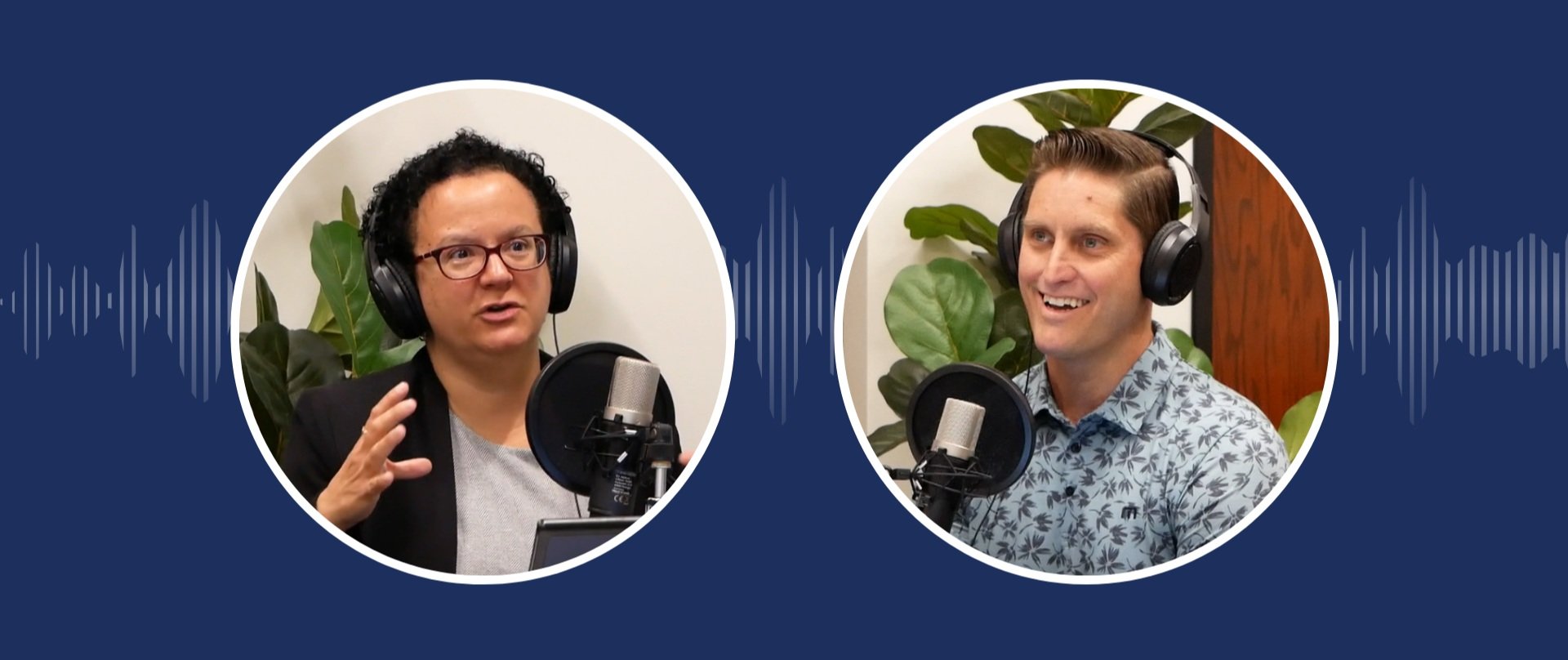
Surety Account Executive Andy Roberts interviews Thais Alves, Chair of the Construction Engineering and Management Program at SDSU, about her journey to academia, the growth of SDSU's construction management program, and the role industry support plays in shaping future leaders in construction.
Andy Roberts: Hello everyone and welcome back to Studio One. I'm Andy Roberts, a Surety Account Executive here at Rancho Mesa and also your host for this week's podcast. Today, I have the joy and honor of being joined in studio by Thais Alves, who is a professor and the Chair of the Construction Engineering and Management Program at San Diego State University. Thank you so much for joining me today.
Thais Alves: Thank you Andy. I appreciate the invitation and the opportunity.
AR: Yeah I was super excited when you said you were on board for coming in here and letting me ask you some questions and, you know, get to be on this side of it. So you know first off I think it'd be good to kind of tell us a little bit about yourself like where you're from, how you got here, just any background information you like to share with us and the listeners because you know I mean we've kind of connected over the last few years but that's usually just out on campus and getting ready to do the presentation and stuff like that.
TA: Right. I feel that I get to talk more about you than you get to talk about me. Yeah, so I'm originally from Brazil and this is a joke that I play with my students. I asked them where this accent is from and I get a few, you know, guesses. I was trained as a civil engineer and when I was in civil engineering during my time in the major, I thought I was going to be a structural designer, a geotechnical designer, and then at some point I got to see construction. And then that changed, like I had discourses towards the end of my major back in Brazil, and I got to intern in a construction site and work with people on the field and then started doing research, and then my career has been academic through and through and I went through my masters back in Brazil then I came to my PhD in Berkeley and all along the research that I developed was always related to people in the industry so I didn't have a lab on campus. I say that my labs are the construction sites, the organizations and this led me to where I am today because over the years as I did my research and advanced whatever theory I was working on, I met a lot of people along the way and this serves me very well today. It helps me to meet people like you, like Anne Wright. It helps my students get jobs, the program gets funded. So I think over the years, I just kept accumulating this human capital in these contacts and the network that I have today and I appreciate that. So that's how I got here and I've been at SDSU since 2009. So this is year 16 for me.
AR: Yeah, but it goes fast.
TA: It does and I mean, it's amazing to see how we have grown in different ways here, which I guess we are going to talk about later. But I feel that every step of my career prepared to the next one. When I was working back in Brazil at some point, I was asked to create a program there, and I went through the process of creating the program. And fast forward to 2017, I was asked to create the construction management program in addition to our construction engineering program. So one thing leads to the other.
AR: Yeah, absolutely. What's the difference like between, kind of, academics in Brazil versus stateside?
TA: So interestingly enough, and again, this is one of those things that your network leads you to places that you never know. When I finished my PhD program at Berkeley, I went back to Brazil and I started working there. And the place where I was working at, it's a city in the northeast of Brazil, it's called Fortaleza. And the industry was extremely supportive of the research of that group. They cannot financially back the schools there, like we have the support here, but they would support our research. So there was always this sense that you were working with people in the industry all along the way. Then when this opportunity came up here, I felt that I was very uniquely positioned because I came to an environment that was very similar to what I had worked with before and at that group back there.
AR: That's really nice.
TA: So I think the fact that there are academics that they have their lives on campus and they don't need to get out of school or to their labs to talk to people right they do research they teach and they stay there. In my line of work this is impossible.
AR: Absolutely. Yeah.
TA: So if I don't talk to people like you, if I don't invite people like you to come to my classes and build this network, I think this doesn't work, doesn't work for me, doesn't work for the students either.
AR: Well, and it's probably really beneficial for the students to be out participating in the network as well and kind of seeing, you know, I find the industry very exciting and, you know, we're always building stuff around San Diego and, you know, it really and it helps their perspective to see stuff in real life.
TA: Yeah, and I think here, the community here in San Diego is absolutely phenomenal. I mean, I think, I see other CSUs, right? I see my colleagues in UCs and the CSUs, and when I tell them the kind of support we enjoy here in San Diego, they get so jealous, right? Because we have AGC supporting our program, it's beyond belief, like all that they do for us and all the support that we enjoy from AGC, the leadership, the staff, the board, also we have the support of NECA who's also a strong backer of our program. We see this here as like a very unique place to be and this reflects in terms of the relationship that the industry also has with our students. So for example, every week or every other week, the students bring folks from the industry to speak. So yesterday there was a company speaking in one of our student chapters. Tomorrow there is another one. And everybody, because we are in a metropolitan area, it's very easy for everybody to drive to SDSU and present. So I feel that we are extremely blessed, not just in terms of support, but where we are. It gives us access to construction projects, to professionals like you and so many other opportunities.
AR: Yeah, well, it's really beneficial, too. I mean, you think about it, like, especially on AGC, like, you know, San Diego is one of their better, bigger, you know, more involved chapters, you know, kind of nationwide. And same thing with NECA, too. Right, so it's really beneficial for her to have those kind of involvement, you know and those types of organizations backing you and helping you out.
TA: Yeah, and the other point is you know, we've been pointed the fact that these are special chapters These are groups of people who have been recognized nationally and I can also I cannot forget CMAA also has been with us in the program since the very beginning and so much so that the chapter we have one of our major chapters is called AGC and CMAA. So it's a chapter that pulls these two organizations together and CMA has also been along with us. Our chapter has received awards in the past. The local CMAA chapter has received awards, SDSU as a partner has received awards. In other words, we work well together and I think there is this symbiotic relationship that people want to be associated with us and we want to be associated with them and we grow together. I think that's very important.
AR: Yeah, well, it's just so nice too on those like, you know, the AGC and NECA, there's so many owners that are really, really involved in those organizations. I mean, I've seen taking a real vested interest in what's going on at San Diego State and it's really exciting and it's really great to see like the community really participate and want to see that grow because, you know, it takes time out everyone you know their day to do that kind of stuff but they see the long-term value in it and you know when we come and speak in your class and you see all the different internships that all the kids have with all the different companies and it's really exciting. And you know you see the excitement from them too when we ask that question of like who are you working for this summer, who did you work for? And you know, they all want to raise their hands and tell us all about it.
TA: Yeah. And I mean, come August, I'm going to be emailing you and Megan and Anne to come back and present to them. And it's, it's very rewarding to see the interest in the local companies like they want to hire from our program. And we also receive very good feedback when we hear from them about the students who are going to work in the local market. And most of them, they stay here in Southern California. Their plan is to stay in San Diego. If they can find a job here, they will stay here. And then the next choice is to stay up to L.A. in Southern California, and some of them stay go up north, back where their families are. But most of our students, they stay here. So that's one more reason for the local industry to support the program because they don't have to go and recruit people from elsewhere and make them get used to the way we live here. And of course it's a very expensive area. So whoever wants to be here, they already know how this area works, how it functions, they know the industry. So that's very important too.
AR: Yeah, Well, so kind of you know, we've seen what the support is kind of done with the program like how like where's the program come? Like how did it start originally and like when you came in on? 2017 you said.
TA: 2009.
AR: 2009. Okay. Oh 2017 was when you did the construction management portion of it.
TA: Yes.
AR: So like how is it transformed from when it started to like where it is now?
TA: Yeah, that's a story that I told a few times, but it's interesting how the industry came together and it all started with Pete Phelan's and the Phelan's family. He came into the university and said, "Hey, you guys have a civil engineering major here, but we should have construction-related majors."
And during that time, the university looked around and said, "You know, if you want that construction major, I guess you're going to have to fund it,” or something along these lines. And they hired somebody who started the program, Professor Ken Walsh, and he was a very important figure to start this whole program, because I think he came here in 2004. So over 20 years ago, he started the program. The Phelan's family named it, so they made a big gift, and our program is named J.R. Phelan's Construction Engineering Management Program, and when you look at that, the program is housed in the College of Engineering, so they had to start with construction engineering first. So in 2008, I believe, was when the first class graduated with a construction engineering degree, so between 2004 Ken Walsh came in here and started everything, and in 2008, the first class graduates. And fast forward to 2017, I'm in my office on a Friday afternoon. And if you are in your office on a Friday afternoon, you're going to pick up calls that maybe you should push to Monday, right? I have had several of those. It's like, “Should I pick up this phone?”
AR: You see that caller ID, you're like, I don't know about that one.
TA: Yeah. So I get a call from my Dean, the Dean of Engineering. And he said, "Look, the industry is asking when we are going to start a construction management program."
And he had talked to other people and he didn't find whoever was the person who was going to push that. And he said, "Do you want to do it?" And I'm like, "Yes, I will do it."
And actually when I was hired, in my interview, I was asked if I had any interest in starting a program and at the time when I arrived that program should have some relationship with the College of Business because there was some real estate component to it but when we got to 2017 and I got that call the dean said this program has to be in the College of Engineering and it's going to be a more engineering you know based kind of curriculum. He said I want the students to take classes in the College of Engineering, and you can put classes elsewhere, but it shouldn't be the bulk of the program. So this was 2017, and the program didn't get into the system for the CSU system until 2020. So it took three years for the program to show up online so that the students could apply. And then 2021, we got the first class admitted as construction management majors. So I was excited. I was, you know, so happy we have this picture of our first time we got that class together. We have the, it was during the COVID years.
AR: I was going to say, that's got to be a little challenging because everything was kind of all shaken up and not running as normal then.
TA: So we were in class in 2021, but everybody was wearing masks. So we have this picture of the first class in 2021, everybody's wearing masks and they're going to graduate this year. So I have to dig that picture and compare who made the four years, made the four years. But interestingly enough, there were several students who were around and they knew this major was coming. They were calling me and emailing me during the pandemic and they were like, "When is this major going to start? I want to start taking courses so that when it's officially the catalog, I'm going to jump in.”
So what happened was we graduated our first class in three years because of that.
AR: Oh yeah, they've done a bunch of the pre-kind of stuff.
TA: So I have this student number one that I remember, he was so insistent and I was like, "We don't have a major yet," he said, "but I'm going to start taking the classes."
And when the major is out, I have the classes ready and he graduated last year, he's working for Hensel Phelps. And it was James, his name is James Snoke. It's a shout out to him. I say this, he's the first construction management student who jumped in even though there was not an official major.
AR: Was he on the engineering side or was he somewhere else within the school like college?
TA: I don't know if he came as a business major and then he decided that whatever he got in as a major, he was going to follow the flow chart of the new major. So he met with me and he said, "What courses do I need to take so that when these start I'm already on track?" So because of him and others who came in those first few years, I had to put classes in place much faster than what I had to do for the class that is graduating now in four years. Because these guys were ahead of the curve.
AR: They're ready to go.
TA: So last year we graduated 14 students and this year we are going to graduate double that number, about double. So it just shows how the program is growing. You probably saw that when you presented that.
AR: Absolutely.
TA: Right, the class was very small when we had to change. Like you came to three different classrooms because the class…
AR: Each one’s bigger and bigger and each time you walk in, like, oh, man, there's a lot more people here to talk to.
TA: Yeah. And I mean, the more the merrier, right?
AR: Absolutely. Well, and it's really nice to when we go to do that, because the first time I did it, you think about, oh, it's college kids. Like, what's their interest level going to really be like? But everyone in there is so invested in this major and what they're doing. And they're so engaged. It makes it a lot of fun to come in there and they're always asking questions and you know seem to really, maybe not, I don't know if it's enjoy the right word but I appreciate that we're there to talk to him about something and what they take away from it So it makes it fun on our end too.
TA: Yes, and you know yesterday I was talking to somebody who has a son who wants to switch into construction management and I wrote to that person This is somebody who is in the industry and the son wants to join the industry, he's in a different major, he's not finding his path and wants to join construction management and I said, you know, through the transfer. So this person's going to have to apply and transfer like any other student who'd be admitted. So I told him that I like to think that our program is also very nurturing. We have such great support from the industry, right? These people want to see them grow, they're going to give them tough love when tough love is needed, but they are very nurturing. And I like to think that our faculty is like that too. So we are there, I'm there every day and I have another colleague who shares the office where we stay and my other colleagues are there, but she and I, we have this special bond that we are like, don't give me excuses, do your homework and like we are there and we are not accepting excuses. And another shout out, her name is Nancy Lakrori. I don't know if you have met her yet, but she's a phenomenal instructor. And she's very tough, very stern, but the students love her because they go through that and they know that they are learning for life, right? So having people like that in our program, it's very important because the students see that we are invested in their education. We are not just going there and talking, turning our backs, and collecting a paycheck. Like, we are there. For me, my work is not done until I see them walking on that stage and graduating. And hopefully, I'm going to be able to help them find a job. So I'm there all along the way.
Some students take more advantage of that than others. I think some of them, they are like, "Oh, I'm going to figure out my own way." But some of them, they take advantage of this mentorship and they get engaged in the clubs and competitions. And so that also makes a big difference for them.
AR: Yeah, absolutely. And I mean, I can even see when I'm in your class, just how, you know, with how engaged they are and just a lot of them feel so free to come and just talk to you and seek out your advice and help, which is really nice and it shows that you care, which is really important.
TA: In our office, like the faculty, we are five faculty who are focused in construction engineering and management, and we enjoy the support of the entire department that is civil construction and environmental engineering, so the students take courses with different faculty in this department that has 20 different people, but five of us, we are focused on that office, in that office, we are construction related for the most part. So they see that we are there for them. And I have colleagues who are more interested in research and the students can focus that on research and do like cutting edge research here. But the fact is we want to see that they feel that they are supported and we are there.
AR: Yeah.
TA: Right, we are there for them. I think that's very important.
AR: Yeah, no, it absolutely is very important. So, you know, you said, you mentioned it's doubled from last year. Like how do you see, what do you see for the future? Like with enrollment and interest, I mean, it seems to me, interest is only going up.
TA: So that's a great question. So we accept students from two main sources, like either they come because they applied to get into SDSU or they are already at SDSU and they show up in my office and they say, “My dad is in business in some business area of finance or something like this and I did that because my dad told me to do it but I want to do construction management.”
So they show up at my office like that right so the problem is some of these students they entered SDSU entered SDSU through a very tough process. It's hard to get into the college of business. But some of them are trying to find easier paths to get and go there and say, now I want to get into your major. And you're like, not so fast, right? If you don't have the math and physics preparation, which you need more for construction engineering.
TA: Absolutely, especially if you're in like a business or like a finance, if you take a finance class, it's just a sort of that type. It's a big difference.
TA: Yeah. So if they want the engineering one, they have an even tougher path, but they also need that preparation for construction management, which some of them don't seem to know. So they have to spend two years taking courses and getting good grades to show that they can advance in the College of Engineering, right? We are not saying that the rigor is up or down or different or—they have to be good in STEM courses because that's what they are going to keep taking and they are going to follow classes with other students in engineering. And at some point the engineers, they take a turn and they do more design and the construction management students take another turn and they go and do more management. But they have to be prepared to advance and so to your point going back so this is the explanation of how they come in so we were having so many students who were already at SDSU who wanted to join our major they talked to their friends and they hear about the industry and all that and they want to switch majors and in the beginning we were accepting because the major had space in the classrooms. Well we don't have any more. So now I'm trying to keep the program at 200 students. We have 175 for construction engineering and construction management, out of that 120 are construction management, 55 are in construction engineering, but we have 20, 30 students at any given time that they are trying to take those classes in the first two years and they are appearing some of our classes, right? So right now we have 200 people. Our advisory board wants to grow the program and I'm like, we cannot because who's going to staff the classes?
AR: That was going to be my next question.
TA: So we maxed out, like the class that you saw, that's the maximum. So we are counting that these classes that we used to have 15 people and now they have 60, that's it, right? We can't, so this generated a lot of discussions because the students would come as undeclared and they said, “Oh, now I want to do construction management.”
And maybe some people who are going to be listening to this podcast know somebody who wants to be in one of these majors and the right way to do is if they don't get in as a freshman, go to a community college, do the first two years in a community college, reach out to me, we can talk about how this person can start transitioning to SDSU until they apply and they transfer. That is a sure bet.
AR: That's great to know. That's really great to know and great to put out there.
TA: Yeah. This is very important because I receive messages and the students contact me about that and I think community colleges are so cost so cost efficient. They are not going to pay the big tuition of the big schools, and they take care of those core classes in the beginning, and there is an additional advantage. When students are in a community college, they can go to SDSU and take one course per semester, and they pay a fee, I think it's like $50. Don't quote me on that, but it's a small fee. It's not the full tuition for the course, but they can do what is called cross-enrollment. So for example, I teach a course that is called construction and culture, is construction engineering 101. And I have a lot of students who are in community colleges, and they are taking that course through cross-enrollment, but they get to know how we function
AR: That's fantastic. That's a great program.
TA: It's really good. And I have students, they are so in awe because I start my classes talking about internships and scholarships and clubs and events that are coming. So they are in awe that they have the opportunity to participate in those events even though they are still in the community college stage, right? And the same internships that I post for my students is posted to everybody and they start getting engaged with the industry early. So I love that kind of arrangement that we have the Freshman and we have the students who are going to be transferring already getting used to the system.
AR: Absolutely. I mean, that's just a great way to set this program up and them up for long-term success.
TA: Absolutely. And I cannot tell you how many great examples there are of students who they start on this path and they are so focused. Some of them are more mature. Some of them come from the military. They are veterans. And when you start talking to them, you see the wheels turning. And by the time they transfer, they are like 10 steps ahead of the people who are not involved because they were paying attention and they were taking advantage of this opportunity. So that is, I think it's a great, it's a great program.
AR: Yeah, that's awesome. I mean kind of last question I have for you is like what kind of support can we give you or what else can the industry as a whole do to really support this program?
TA: Well, I think the first one is keep hiring our students keep backing up these pro these projects that are happening here, right? So that they happen as they should but we have an advisory board who is the backers, the supporters, the financial backers of the program, they are part of our advisory board and we are going to have a meeting next month and usually they ask me for a wish list, right? So they tell me what they want to see and we tell them what we need and we kind of negotiate where we can go with what we have. But I think the first one is I hope the industry keeps supporting the program by hiring our students, but also supporting the program financially. I mean, we just had the news that we were going to have three years of 10% cuts in our budget. And then this was in February. Last month, we heard the cuts are not going to be 10%. They're going to be 12% now.
AR: Oh, no.
TA: So any help, any help in any capacity, of course, I appreciate you all coming and guest-speaking because that is golden. They are having that already in school versus having to learn about surety and insurance and all later, right? So when they have this chance to learn in class, I appreciate immensely that the industry is so supportive in coming and guest-speaking. We have teams that are mentored by the local companies here also and it's very important that we have people who volunteer their time to keep training our students. This is this like internships, jobs, mentorship during the program, guest speaking and of course financial backing. Any amount it's well received because we are facing a very tough budget right now.
Like from the state side, we have been hearing about it and now we know how deep the cuts are going to be. And we want to keep the program the quality of instruction, the experience that the students have. And one thing that I think it's beautiful is our students, they fundraise for their activities too. They just don't sit there and wait for the money to show up, right? So I think they see how I work with the industry, they see how much support they receive, and they nurture these relationships as well. And that's something that I work a lot with them, how to work with the local industry, the local supporters, and just help them help us, right? It goes both ways. They want to hire; they want to be hired.
AR: Yeah well, they need to put that investment in. If they want to hire, you know, quality workers that know what they're doing, it makes sense for them to put that time investment in to make sure that the program's doing well and they're getting the instruction that they need.
TA: Yeah. And it's the it's phenomenal as you go around and you visit projects and you meet former students like we meet our former students and I think a testament to how well I think we do in this nurturing and mentoring and creating this community is that they graduate and they want to keep helping, they want to be associated with us. They want to come and get speak and mentor and offer internships and I love it. I mean, what's not to love about that? It's a phenomenal place. I really appreciate the support of the industry. I appreciate your support and Rancho Mesa's support in going and presenting to my students because that's going to make them prepared, that they're going to be better prepared for what's coming.
AR: Yeah. Well thank you for saying that I mean, I really enjoy that day. It's super fun to see that you know, it makes me feel a little old when I'm walking around the college campus now, but outside of that I love that day. So thank you so very much for taking the time and coming to talk to me today this has been really wonderful.
TA: Thank you and thank you and thanks to Anne Wright for introducing us and nurturing this relationship and Megan Sanker who's always with us in that presentation so I want to thank all of you it's very much appreciated and the students see that they appreciate that too so thank you.
AR: Yeah you're welcome.
Contractors’ Guide to Navigating Cybersecurity Maturity Model Certification
Author, Anne Wright, Surety Relationship Executive, Rancho Mesa Insurance Services, Inc.
In true government fashion, the Cybersecurity Maturity Model Certification requirement, more commonly referred to as CMMC, is a mouthful! While most companies are familiar with or are working on compliance with this requirement by now, we felt it was appropriate to share the history of this certification with our audience.
Author, Anne Wright, Surety Relationship Executive, Rancho Mesa Insurance Services, Inc.

In true government fashion, the Cybersecurity Maturity Model Certification requirement, more commonly referred to as CMMC, is a mouthful! While most companies are familiar with or are working on compliance with this requirement by now, we felt it was appropriate to share the history of this certification with our audience.
I have enlisted the help of a long-time friend and trusted resource of mine, Mandy Irvine, founder and CEO of Hoop 5 Networks - IT and Cybersecurity Solutions. As experts in this field, she and Russell Emig, Hoop 5’s Certified Chief Information Security Officer have provided much of the following information.
Why Did CMMC Became A Requirement?
The CMMC framework was born out of the need to protect sensitive information within the U.S. Department of Defense’s (DoD) supply chain. Historically, the DoD relied on a set of cybersecurity requirements embedded within the Defense Federal Acquisition Regulation Supplement (DFARS). However, rising cyber threats and increasingly sophisticated attacks against defense contractors highlighted the inadequacy of those measures.
Evolving Threat Landscape. Over time, cyber-attacks grew more frequent and severe, targeting companies that managed Controlled Unclassified Information (CUI). The traditional self-attestation model for cybersecurity controls proved insufficient.
Unified Standard. CMMC was introduced as a unified framework to ensure that every organization within the defense industrial base meets a baseline of cybersecurity practices. This move helps safeguard not only government data but also the integrity of the broader supply chain.
Who Needs to Comply?
CMMC compliance is not reserved solely for technology companies; it extends to all entities within the defense industrial base.
Defense Contractors and Subcontractors. Any company that bids on or holds DoD contracts and handles CUI must comply with the relevant CMMC level.
Broader Business Ecosystem. This includes manufacturers, IT service providers, and even logistics firms that support the DoD. Essentially, if your organization is part of the defense supply chain, CMMC compliance is on the horizon.
The framework is structured into multiple tiers, ensuring that each organization implements security practices appropriate to the sensitivity of the data it handles.
What to Expect Regarding Compliance
Preparing for CMMC certification involves a structured process that may require substantial changes to an organization’s cybersecurity posture.
Assessment and Gap Analysis. Organizations typically begin with a thorough assessment of their current cybersecurity measures to identify gaps relative to CMMC standards.
Implementation of Controls. Depending on the required CMMC level, companies may need to implement a range of controls from basic cyber hygiene (like access control and incident response) to advanced measures for more sensitive data.
Third-Party Certification. For higher maturity levels, a formal assessment by an accredited third-party organization is necessary. This external validation ensures that the implemented controls are effective and align with DoD requirements.
Operational Impact. Beyond technology, compliance may affect business processes, training programs, and even contractual relationships. Preparing for CMMC is an investment in the future stability and credibility of your business within the defense sector.
Consequences of Non-Compliance
Failing to meet CMMC standards can have far-reaching consequences for companies involved in the defense supply chain.
Loss of Contracts. The most immediate risk is exclusion from bidding on or maintaining DoD contracts. For many companies, this loss of business could be devastating.
Increased Cybersecurity Risk. Without adherence to robust cybersecurity practices, organizations are more vulnerable to breaches. A successful attack could lead to the compromise of sensitive data, resulting in financial losses, legal ramifications, and severe reputational damage.
Regulatory and Financial Penalties. Non-compliance may trigger increased scrutiny from federal regulators. Over time, this could result in additional sanctions or penalties, further straining business operations.
CMMC represents a significant shift in how the defense industrial base approaches cybersecurity. Its history is rooted in the necessity to counter a landscape of evolving threats, and its requirements extend to a wide array of businesses involved with the DoD. Preparing for compliance is a comprehensive process that, while challenging, is essential for securing contracts and protecting critical data. Conversely, the risks of non-compliance underscore the importance of investing in robust cybersecurity measures.
Understanding the intricacies of CMMC will be crucial for organizations looking to secure their place in the future of defense contracting.
For questions about the CMMC, contact the team at Hoop 5. They are ready to be of assistance and support if needed.
Beyond a Single Bond: How We Help Contractors Stay Ahead of Their Surety Needs
Author, Matt Gaynor,Director of Surety, Rancho Mesa Insurance Services, Inc.
We recently issued a very large bond for one of our contractor clients which prompted a discussion during the underwriting process about potentially moving their account to a surety carrier with a larger capacity. However, after enjoying a seven-year relationship with the current bond company and receiving an early indication that they could support the larger bond request, this provided us with an initial understanding that we might be okay staying with the current carrier.
Author, Matt Gaynor, Director of Surety, Rancho Mesa Insurance Services, Inc.

We recently issued a very large bond for one of our contractor clients which prompted a discussion during the underwriting process about potentially moving their account to a surety carrier with a larger capacity. However, after enjoying a seven-year relationship with the current bond company and receiving an early indication that they could support the larger bond request, this provided us with an initial understanding that we might be okay staying with the current carrier.
Most bond companies will provide their agency partners, like Rancho Mesa, with a range of support for their typical bond programs. For example, they may indicate they are looking to support established contractors with single bonds up to $40,000,000 range and work programs up to the $80,000,000 range with the caveat that they can go higher for specific accounts.
So, once we had the initial indication, the next step was to talk to our contractor client about the potential size of their future projects that might require bonding over the next few months. Based on that discussion, we realized it was actually time to find a bond company with much larger capacity to fit our client’s future needs. So, the discussion turned from support for this particular large bond to ensuring we had support for larger capacity both today and in the future.
We successfully placed the contractor with a larger carrier by focusing on really understanding the client’s business over the long term instead of just considering a particular bond at a particular time. The additional communication was key.
If you would like more information about ways to ensure you are placed with the best bond company to fit your needs, please contact me at (619) 937-0165 or mgaynor@ranchomesa.com.