

Industry News

Accident Investigation: Turning Incidents into Opportunities for Improvement
Authors, Sam Clayton, Vice President, Construction Group, Rancho Mesa Insurance Services, Inc.
During my recent podcast episode, I discussed how near misses can represent missed opportunities for general engineering contractors to prevent future workplace injuries.
Author, Sam Clayton, Vice President, Construction Group, Rancho Mesa Insurance Services, Inc.

During my recent podcast episode, I discussed how near misses can represent missed opportunities for general engineering contractors to prevent future workplace injuries.
Continuing that theme, I would like to expand on the importance of having a formal accident investigation program in place and how it can help contractors and employees identify and implement corrective actions that reduce the likelihood of similar incidents occurring in the future.
An accident investigation is a systematic process used to examine a workplace injury or incident to determine how and why it occurred. These investigations are often conducted by foremen or supervisors and should focus on identifying and correcting root causes rather than assigning fault or placing blame.
The goal is simple: learn from the incident and prevent it from happening again.
Key Steps in the Investigation Process
A successful accident investigation typically includes four key steps:
Secure the scene to ensure the area is safe and preserve any evidence.
Gather information by interviewing witnesses, reviewing documentation, and collecting facts.
Analyze the root causes to determine the underlying factors that contributed to the incident.
Implement corrective actions to address deficiencies and reduce future risk.
Benefits of an Accident Investigation
A formal accident investigation program provides several important benefits:
Improves Employee Morale. When employees see that management is committed to understanding incidents and improving workplace safety, it helps build trust and demonstrates that employee well-being is a priority.
Identifies Training Opportunities. Investigations often reveal gaps in knowledge, procedures, or communication. These findings can help organizations deliver targeted training where it's needed most.
Prevents Recurrence. By identifying and addressing root causes, contractors can implement meaningful corrective actions that help prevent similar incidents from occurring in the future.
Training Matters
Because workplace accidents and injuries are relatively infrequent, it is important to ensure your foremen and supervisors receive proper accident investigation training before an incident occurs.
Rancho Mesa has developed the RM365 Advantage Safety Star™ Program, which includes dedicated instruction on accident investigation techniques and best practices. I highly recommend enrolling your foremen and supervisors so they understand both the importance of a formal investigation program and how to effectively conduct investigations when incidents occur.
Leveraging Technology
Through Rancho Mesa's SafetyOne™ Platform, clients can create corrective action plans, assign responsibilities, track completion, and deliver the appropriate training to affected employees. This helps ensure that corrective actions are documented, completed, and continuously monitored.
While every contractor's goal is to achieve zero incidents, accidents can still happen. Organizations that have a formal accident investigation program in place and can demonstrate that they have identified root causes and implemented effective corrective actions are in a much stronger position to prevent future losses and minimize potential workers' compensation cost increases.
To learn more about the RM365 Advantage Safety Star Program or how the SafetyOne Platform can support your company's accident investigation efforts, contact me at sclayton@ranchomesa.com.
What to Do After A Vehicle, Equipment or Fuel Theft
Author, Jessee Keirstead, Risk Control Consultant, Rancho Mesa Insurance Services, Inc.
When a company vehicle, piece of equipment, or fuel supply is stolen, taking immediate and organized action is critical. A prompt response can increase the chances of recovery, support insurance claims, and help minimize business disruptions.
Author, Jessee Keirstead, Risk Control Consultant, Rancho Mesa Insurance Services, Inc.

When a company vehicle, piece of equipment, or fuel supply is stolen, taking immediate and organized action is critical. A prompt response can increase the chances of recovery, support insurance claims, and help minimize business disruptions.
By following a clear reporting process and preserving important documentation, companies can assist law enforcement, strengthen claim investigations, and alert others who may help identify or recover stolen assets. The following steps outline the key actions to take as soon as a theft is discovered.
1. Call Local Police
As soon as a theft has been identified, call the police and file a report. Provide the PIN/serial number, photos, GPS pings, geofence event, etc.
2. Report Theft to National Equipment Registry (NER)
After contacting the police, submit a free theft report to the NER which requires a police report. The NER will then alert the National Insurance Crime Bureau (NICB).
3. Notify Your Broker and Insurance Carrier
Reach out to your insurance broker/carrier to report the loss. Record keeping is important and can help subrogation efforts and shorten claim investigation time. Collect purchase records, PIN plate, concealed markings, maintenance logs, tracker IDs, geofence history, and other information that can be useful.
4. Contact Contractors
Share photos and serial numbers with state and local contractors who thieves may target to sell your used vehicles and equipment.
Using Rancho Mesa’s proprietary SafetyOne™ mobile app to document vehicles and equipment left on jobsites, along with fuel deliveries and fueling schedules, can help companies quickly identify when an asset or fuel supply is missing. Maintaining accurate, real-time records of equipment locations, usage, and fueling activity provides valuable information that can support theft investigations, improve recovery efforts, and reduce the time spent determining when and where a theft occurred.
The best protection against theft is a combination of preparation and prompt action. By maintaining detailed records, leveraging technology to track assets, and following the reporting steps outlined above, companies can improve their chances of recovering stolen property and minimizing business disruption. A proactive approach not only strengthens security but also helps protect your employees, customers, and bottom line.
Your Plumbing or HVAC Website May Be Sending the Wrong Message to Your Insurance Carrier
Author, Matt Gorham, Account executive, Rancho Mesa Insurance Services, Inc.
Most plumbing and HVAC contractors view their website as a sales tool. However, insurance carriers increasingly view it as an underwriting tool. The same website designed to attract customers is at the same time influencing how an underwriter evaluates your business, impacting carrier appetite, available coverage, and, ultimately, the cost of your insurance program.
Author, Matt Gorham, Account Executive, Rancho Mesa Insurance Services, Inc.

Most plumbing and HVAC contractors view their website as a sales tool. However, insurance carriers increasingly view it as an underwriting tool. The same website designed to attract customers is at the same time influencing how an underwriter evaluates your business, impacting carrier appetite, available coverage, and, ultimately, the cost of your insurance program.
Insurance carriers typically receive very little information about a contractor from their renewal application. The information submitted can include recent loss history, some details about the contractor’s industry experience, and a generic supplemental application that provides a basic explanation of their operations. While those are central to the underwriting process, with so much information now available online, underwriters commonly rely on a contractor’s website and online presence to gain additional details about their operations, practices, history, and culture. Furthermore, a contractor’s website often serves as an underwriter’s first impression of the business, which will influence the questions that are asked throughout the renewal process.
As rising claim severity continues to drive a hardening market, carriers are closely evaluating which industries and classes of business they want to support. According to market research from Swiss Re and Marathon Strategies, there were 27 verdicts that each exceeded $100 million in 2023, while there were 49 verdicts over $100 million in 2024. With these verdicts significantly impacting carrier profitability, underwriters that remain committed to construction are becoming increasingly selective about the contractors they choose to partner with.
When underwriters see a contractor advertising operations or services that are known as severity loss drivers, they may apply exclusions, increase pricing, or decline the renewal application altogether. This can limit market interest and, weaken a contractor’s position when their broker negotiates their renewal terms.
With carriers applying a higher level of scrutiny on the risk profile of contractors in the current market, here are three things to consider when building or updating your website:
1. Audience
A residential service and repair plumber may have more of a need to advertise a broader range of services than a new construction commercial plumber. Similarly, an HVAC contractor that relies on SEO marketing to drive appointments from residential customers will want to include key search terms, while a mechanical contractor focused on tenant improvement jobs with a limited number of trade partners will not. Think about who will be visiting your website and what they are looking for.
2. Services
It is common to see exhaustive dropdown lists on plumbers’ or HVAC contractors’ websites, advertising things like gas line installation, boilers, medical gases, clean rooms, duct cleaning, excavation, or sewer and water main work. Even with a clear understanding of these operations, many carriers will shy away from these risks due to their potential for severe claims. Review the services advertised on your website, as well as the industries served, to ensure you are only advertising services that are being performed and represent a meaningful part of your operations.
3. Visuals
Pictures can be very effective in conveying information. They can also be effective in misrepresenting your company and operations. HVAC contractors often use pictures of helicopter lifts even when they have never self-performed the placing or removing of larger HVAC units. Have a person knowledgeable about safety review all pictures before they are published on the website or social media to ensure no OSHA violations are shown. Pictures from crane picks or rooftop work can also raise questions about safety controls, like the use of personal protective equipment, fall protection, or hazard analyses. Plumbing contractors frequently use pictures on their websites that show plumbers in trenches, crawl spaces, operating heavy machinery, or near septic tanks. While these types of operations can be eye-catching, if they are an inaccurate reflection of the work you perform, they can create a costly misperception. Consider what pictures, videos, or media are used on your website so that it supports an accurate, constructive representation of your company.
As insurance carriers become increasingly selective about the contractors they want to partner with, every piece of information used during the underwriting process matters. Your website should accurately reflect your operations and showcase your expertise. It should also be a key element that supports the narrative that your company is a disciplined, well-managed risk and a smart long-term investment for the insurance company.
If you would like to review your website for potential concerns or learn how a broker that specializes in plumbing and HVAC contractors can help you develop the right narrative to negotiate your insurance renewal, I can be reached at (619) 486-6554 or mgorham@ranchomesa.com.
Jobsite Fuel Theft is on the Rise
Author, Jessee Keirstead, Risk Control Consultant, Rancho Mesa Insurance Services, Inc.
Gasoline and diesel theft has emerged as a growing and often underreported risk across Southern California, driven in part by persistently high fuel costs and organized theft activity.
Author, Jessee Keirstead, Risk Control Consultant, Rancho Mesa Insurance Services, Inc.

Gasoline and diesel theft has emerged as a growing and often underreported risk across Southern California, driven in part by persistently high fuel costs and organized theft activity.
Regardless of where a business is located, construction contractors are particularly vulnerable to fuel theft due to the nature of their operations. Since jobsites are often temporary, unfenced, and located in high traffic or remote areas, they are ideal conditions for fuel theft, particularly where vehicles, generators, and heavy equipment are left unattended overnight. Thieves are targeting bulk fuel storage tanks, fuel contained within equipment and fleet vehicles.
Gas and diesel theft is no longer just a nuisance, and the rising cost of fuel has a direct impact on theft. California’s fuel cost is amongst the highest in the country, creating stronger incentives for theft. Fuel is typically easier to steal than equipment, easier to transport covertly, and stolen fuel has become much easier to re-sell.
Industry data shows construction theft costs between $300 million and $1 billion annually in the U.S., with more than 11,000 incidents reported each year. Fuel is a frequent target because it is easily siphoned, resold, and almost impossible to trace. In many cases, fuel theft may go unnoticed. However, there has been a surge in fuel theft incidents, including events where thousands of gallons have been siphoned from commercial businesses in a single event.
Beyond the direct loss of fuel, contractors face indirect costs including project delays, equipment downtime, and potential environmental liabilities from damaged or drilled fuel tanks.
Solutions
There are two methods contractors can utilize to reduce the risk of fuel theft from their jobsites: physical and procedural.
Video monitoring and mobile towers paired with alarms and analytics can deter thefts and provide evidence for prosecution. Installing good lighting and heavy-duty access controls create minor hurdles that can often deter or frustrate would-be thieves. At a minimum, secure jobsites with fencing, lighting, and surveillance systems, park vehicles in well-lit and controlled areas. If you have equipment or vehicles that will be unmonitored for a significant period of time, you may want to consider securing fuel storage tanks with locking caps and anti-siphon devices.
Modify company procedures to avoid pre-staging vehicles and equipment near public roads overnight.
And, train crews on security measures, spotting suspicious activity, proper locking of gas caps, use of deterrents, and response to theft. If you have noticed suspicious activity, you may want to consider keeping logs and conducting regular checks of fuel levels. Encourage operators to inspect tanks, fuel caps, and equipment to identify any signs of theft as early as possible.
Fuel theft is a costly and growing threat, but it’s one that contractors can manage with a solid layered approach. Combining physical and procedural security measures can reduce the likelihood your fuel will be stolen. Ultimately, prevention is about discipline, consistency, crew training, and rapid reporting protocols. By integrating these strategies, contractors can protect their fuel and keep projects on schedule.
Overlooked Coverage that Keeps Projects Moving After an Equipment Loss
Author, Kevin Howard, Account Executive, Rancho Mesa Insurance Services, Inc.
For trade and general contractors that own heavy and/or valuable specialty equipment, there is an overlooked coverage that can be critical in certain loss scenarios.
Author, Kevin Howard, Partner, Rancho Mesa Insurance Services, Inc.

For trade and general contractors that own heavy and/or valuable specialty equipment, there is an overlooked coverage that can be critical in certain loss scenarios.
When we think of business income in the classic form, we think of a fire that shuts a business down and a business income policy that responds, supplementing the revenues and/or operating expenses lost over a set time. Separately, there is also a coverage form that is tied directly to an equipment schedule; so, in case of a loss where a revenue-generating piece of equipment is damaged or stolen, there is a business income limit that can offer coverage for potential loss of revenue.
For example, consider a concrete pumping contractor that has roughly $6,000,000 in total scheduled equipment. Three of these items are cranes and/or pumps that are used daily. If the equipment is not running, revenue is lost. If the contractor secures a $150,000 business income policy that aligns with this schedule, there is additional coverage available in case of a loss. The piece of equipment is covered either through actual cash value or replacement cost, and there is now coverage for the loss of income based on historical data vs. the $150,000 limit.
Coverage makes the most sense for contractors who own heavier pieces of equipment like concrete pumpers, excavation contractors, grading and or utility contractors, paving contractors, crane operators and equipment rental companies.
The business income limit can be adjusted by an underwriter who typically will have a max limit around $150,000 to $250,000 depending on external factors.
Over the past couple of years, California has experienced a major uptick in equipment theft including gas theft, vandalism and well thought out plots to steal large pieces of equipment. These thefts are more common now because of higher resale values and an abundance of attractive targets. Understandably, it is these types of equipment which are now prime targets for thieves. And with that, a business income limit becomes an important risk transfer technique.
Inland marine insurance protects the physical assets that contractors depend upon every day while business income coverage protects the financial engine behind those assets. As equipment values continue to rise and replacement timelines become more uncertain, contractors should consider business income coverage as an important option within the policy offerings.
Should you have questions about this exposure within your own operations, please contact me at khoward@ranchomesa.com or (619) 438-6874.
Strategies to Help Contractors Reduce Insurance Costs
Author, Casey Craig, Account Executive, Rancho Mesa Insurance Services, Inc.
Rising insurance costs in California continue to put pressure on contractors. While many companies focus on finding lower premiums, the most effective way to control insurance costs is to reduce risk before claims occur.
Author, Casey Craig, Account Executive, Rancho Mesa Insurance Services, Inc.

Rising insurance costs in California continue to put pressure on contractors. While many companies focus on finding lower premiums, the most effective way to control insurance costs is to reduce risk before claims occur.
Two of the most effective ways to accomplish this are implementing strong hiring practices and maintaining a formal return-to-work program. Together, these strategies help reduce injuries, improve claim outcomes, increase employee retention, and demonstrate to insurance carriers that your company is committed to risk management.
Hire for Safety and Retention
Every employee impacts your company's risk profile. While technical skills are important, hiring individuals who fit your safety culture can help reduce workers' compensation, general liability, and commercial auto claims.
A strong hiring process should include:
Reviewing employment history
Confirming licenses and certifications
Checking references
Validating specialized training
Conducting background checks where appropriate
Reviewing motor vehicle records for employees who will operate company vehicles
Hiring is only part of the equation. Building employee retention through a clear mentoring process is equally important.
Workers who understand company procedures, safety expectations, and jobsite hazards are generally less likely to be involved in accidents than newly-hired inexperienced employees. By creating clear career paths, promoting from within, and investing in employee development, contractors can build a more experienced and stable workforce while reducing turnover-related risk.
New hires should also receive a comprehensive onboarding program that covers:
Safety orientation
Injury reporting procedures
Drug and alcohol policies
Equipment training
Return-to-work expectations
Establishing expectations from day one helps create accountability and reinforces a culture of safety.
Establish Return-to-Work Programs
Even the safest companies experience workplace injuries. The difference is how those injuries are managed.
A prolonged workers' compensation claim affects more than just medical costs. Contractors often face lost productivity, overtime expenses, project delays, and administrative burdens while an injured employee remains away from work.
Insurance carriers also pay close attention to claim management practices. While a single claim may have a limited impact on a company's experience modification rate, insurers view return to work programs as an indicator of how actively the management team works to control losses and support injured employees.
A formal return-to-work program provides modified duty assignments that allow employees to remain productive while recovering. Employees who stay connected to the workplace often experience better recovery outcomes, while employers retain valuable workers and reduce lost time claim costs.
Insurance carriers evaluate much more than claims history; they assess how a company manages risk. Contractors that demonstrate strong hiring standards, low turnover, effective onboarding procedures and formal return-to-work programs are consistently viewed as better insurance risks.
Contractors who achieve the best long-term insurance results are typically those that invest in their workforce. Strong hiring practices help prevent claims before they happen, while return-to-work programs help manage injuries effectively when they do occur.
By focusing on employee retention, safety, and injury management, companies can reduce insurance costs, improve workforce stability, and position themselves more favorably with insurance carriers in an increasingly challenging market.
If you have questions about your hiring practices and return-to-work programs, do not hesitate to reach out to me at ccraig@ranchomesa.com or (619)438-6900.
Construction Equipment Theft on the Rise
Author, Jessee Keirstead, Risk Control Consultant, Rancho Mesa Insurance Services, Inc.
Across the United States, construction equipment theft is on the rise. And, for companies that depend on small and/or heavy equipment to operate, a stolen piece can have devastating consequences that result in project delays and lost revenue.
Author, Jessee Keirstead, Risk Control Consultant, Rancho Mesa Insurance Services, Inc.

Across the United States, construction equipment theft is on the rise. And, for companies that depend on small and/or heavy equipment to operate, a stolen piece can have devastating consequences that result in project delays and lost revenue.
Each year, construction equipment theft losses are estimated to be between $300 million and $1 billion. And, that doesn’t include the indirect costs like equipment downtime, cost of rentals, and delays in construction, which all raise the true impact far beyond direct costs.
Since construction equipment is mobile, valuable, and often stored on jobsites with predictable on-site schedules, it is a target for organized and opportunistic thieves. Equipment that can be moved and resold quickly, often across state lines, is a likely target while recovery rates lag far behind the frequency of thefts.
On average, an equipment claim and recovery typically costs between $29k - $35k per incident. And, while industry briefings have stated around 1,000 equipment pieces are stolen per month on average, it is expected to rise.
Thieves target equipment like skid steer loaders, utility carts, mowers, backhoes, excavators and mini excavators, and bulldozers. They rank among the most stolen machinery types due to mobility and market demand. Compact tracked loaders, towable chippers, generators, and trailers are also consistently targeted because they are easy to move.
Physical Controls
No system is 100% effective, but utilizing physical controls to deter would-be thieves is the first step in protecting equipment at the yard or on the jobsite.
Minor hurdles can often deter or frustrate thieves. So, installing good lighting, utilizing heavy duty access control, wheel locks/boots, chains, cables, and anchors can be enough to slow or stop a thief. Parking smaller equipment boxed in and facing inward so that the hitch on trailers are facing towards larger equipment or a building can also be a deterrent to thieves.
Rekeying equipment eliminates the ability for a thief to use universal keys often installed by equipment manufacturers. This makes it harder for a thief to start the piece of equipment. Once you have rekeyed the equipment, conduct audits on keys, document key storage, control spares, lock keys in a secure location, and require sign out to ensure the keys are not stolen.
Removing batteries and detaching or storing critical attachments separately can immobilize equipment. Making the thief install a battery or other attachments in order to steal the piece of equipment may be enough of a deterrent that they move on.
Modern Solutions
As technology advances, construction companies have increasingly more tools available to help combat equipment theft.
Global Positioning Systems (GPS) and telematics systems can send immediate notifications when equipment moves or leaves a defined zone. Trackers can accelerate law enforcement response and increases recovery rates.
Yard and jobsite security like video monitoring and mobile towers paired with alarms and analytics can deter thefts and provide evidence for prosecution.
The National Equipment Register (NER) HelpTECH (Heavy Equipment Loss Prevention Technology) program, is a centralized, law enforcement-backed equipment ownership database that also boosts recovery and deters theft.
Procedures
Adopting procedures to ensure equipment is inventoried, limit exposure on the jobsite, and employees are properly trained helps limit risk of theft.
Conducting regular inventory of equipment at the yard and daily inventory on the jobsite provides documentation of where equipment is located and where it is supposed to be, plus it can help to confirm when something is missing. Rancho Mesa’s SafetyOne app provides daily jobsite reports that include a section for equipment that is left on the jobsite.
Limit the time the equipment is on a jobsite. Avoid pre-staging trailers or equipment before it is needed near public roads and overnight to reduce the chances the equipment is noticed by thieves.
Train crews on physical and procedural security measures, spotting suspicious activity, proper locking, trailer security, use of deterrents, battery removal, and response to theft.
Using a combination of physical deterrents, modern technology and procedural training can help protect jobsite equipment.
Construction equipment theft is a costly and growing threat, but it is one that contractors can manage with a solid layered approach. Combining physical security measures, such as perimeter controls, key management, and immobilization, with modern technology like GPS tracking, geofencing alerts, and remote monitoring creates a good defense. Programs like NER’s HELPtech add another layer by improving identification and recovery odds.
Ultimately, prevention is about discipline, consistent inventory checks, crew training, and rapid reporting protocols. By integrating these strategies, contractors can significantly reduce theft risk, protect their equipment, and keep projects on schedule.
Hiring as a Risk Strategy: Controlling Insurance Costs in Construction
Author, Kyle Dunlap, Account Executive, Rancho Mesa Insurance Services, Inc.
Best-in-class construction contractors treat hiring as a strategic function. When scaling quickly after winning large contracts, these employers use structured recruiting, safety-focused screening, and disciplined onboarding to reduce risk, protect their workforce, and control workers’ compensation costs and their experience modification rate (EMR).
Author, Kyle Dunlap, Account Executive, Rancho Mesa Insurance Services, Inc.

Best-in-class construction contractors treat hiring as a strategic function. When scaling quickly after winning large contracts, these employers use structured recruiting, safety-focused screening, and disciplined onboarding to reduce risk, protect their workforce, and control workers’ compensation costs and their experience modification rate (EMR).
Proactive hiring is critical when scaling for large projects. Contractors that win large projects often face immediate pressure to rapidly scale their workforce, which can expose weaknesses in their hiring process. For example, an electrical contractor awarded a major multifamily or public works job may need to hire 20 to 30 electricians within weeks to meet schedule demands. A reactive approach, hiring whoever is available, typically leads to unverified, underqualified workers entering the field.
In contrast, best-in-class companies prepare in advance by maintaining active recruiting pipelines, pre-qualified candidate pools, and strong referral networks. Allowing the company to scale quickly without sacrificing quality. This matters because rapid, unstructured hiring directly leads to increased jobsite risk, reduced productivity, and higher error rates, all of which compound over the life of the project. The solution is preparation. Contractors should align hiring strategy with backlog forecasting, ensuring they can scale intentionally rather than reactively when opportunities arise.
Like Benjamin Franklin one said, "By failing to prepare, you are preparing to fail."
Lowering your hiring and onboarding standards can negatively impact a company’s workers’ compensation EMR and increase insurance costs. Inexperienced or improperly trained employees are significantly more likely to contribute to injuries, near-misses, and unsafe behaviors, resulting in increased claims frequency. Industry benchmarks show that most workers’ compensation claims occur within the first 6 months of employment, so strong hiring and onboarding practices are essential.
EMRs are one of the most important financial metrics tied to risk performance. A shift from a favorable modifier (i.e.,0.85) to an unfavorable one (i.e., 1.10) can increase workers’ compensation costs considerably across multiple policy years. A commitment by the management team to use disciplined hiring and onboarding practices that prioritizes skill validation and safety-mindset screening, ensures that every new hire strengthens rather than weakens the company’s risk profile.
Best-in-class employers align hiring with long term workforce and risk strategy. Top performing contractors integrate hiring into a broader risk management and operational strategy, using data and structure to guide decisions. They track key metrics such as time to fill, retention rates, and injury frequency among new hires, allowing leadership to identify trends and improve outcomes over time.
At the same time, these companies build clear career pathways from apprentice to leadership to retain talent and reduce turnover, which is a major driver of workforce attrition and risk exposure. This matters because stable, experienced teams consistently deliver better safety performance, lower claims frequency, and more predictable insurance outcomes. The solution is alignment.
Leadership should treat hiring as a core business function tied directly to safety, profitability, and insurance performance, while brokers and advisors can help connect workforce strategy to EMR trends and long-term cost control.
Winning large projects creates opportunity but also brings risk if hiring is not managed strategically. Contractors who scale with discipline, focusing on quality and safety, will protect their workforce, maintain strong EMR performance, and sustain long term profitability.
If you are interested in managing this process with our proprietary Workers’ Compensation KPI and to learn how Rancho Mesa can help you proactively manage and control your company’s EMR through data, and safety strategy, contact me at (619) 798-2822 or kdunlap@ranchomesa.com.
Near Misses Are Often Missed Opportunities
Authors, Sam Clayton, Vice President, Construction Group, Rancho Mesa Insurance Services, Inc.
General engineering contractors deal with a myriad of risks on a daily basis. Even though these risks are typically few in frequency, they are high in severity. This means the claim is going to be significant and could ultimately impact your company’s financial and reputational standing within the industry. Too many times I have seen contractors only focus on the claim after it happens, which is reactive. I recommend taking a proactive approach and have your foreman and project managers focus on the near misses.
Author, Sam Clayton, Vice President, Construction Group, Rancho Mesa Insurance Services, Inc.

General engineering contractors deal with a myriad of risks on a daily basis. Even though these risks are typically few in frequency, they are high in severity. This means the claim is going to be significant and could ultimately impact your company’s financial and reputational standing within the industry. Too many times I have seen contractors only focus on the claim after it happens, which is reactive. I recommend taking a proactive approach and have your foreman and project managers focus on the near misses.
OSHA defines a near miss as a potential hazard or incident in which no property was damaged, and no personal injury was sustained, but where, given a slight shift in time or position, damage or injury easily could have occurred.
Common examples of a near misses include:
Two pieces of heavy equipment almost collide at a blind corner.
A trench wall shifting or beginning to collapse while workers are inside.
Equipment, such as a backhoe, nearly making contact with an unmarked underground utility line.
Addressing near misses before they become a claim is important for the following reasons:
Your work has high-severity risk exposure.
Site conditions are constantly changing.
It helps prevent “repeat hazards.”
It builds a proactive safety culture.
Through Rancho Mesa’s SafetyOne™ platform, contractors can leverage these near miss incidents and create corrective action plans to mitigate future hazards. Within the mobile app, reports of near misses can alert the company’s safety manager to conduct an on-site safety observation where they can then assign the responsibility for corrective actions to the appropriate person within the company.
General engineering contractors who treat near misses seriously can prevent catastrophic claims, improve project safety, and protect the company’s financial and reputational risk.
To learn more about how SafetyOne can help your company track near misses, contact me at sclayton@ranchomesa.com or (619) 937-0167.
A Strategic Approach for Insuring HVAC and Plumbing Contractors in California Requires an Industry Specialist
Author, Matt Gorham, Account executive, Rancho Mesa Insurance Services, Inc.
The insurance landscape that California plumbers and HVAC contactors currently face looks noticeably different than that of recent years. A prolonged period of sharp economic and social inflation has driven up claim costs for carriers, forcing many to exit or reevaluate their positions in the market. As carrier appetite shifts and capacity is constrained, contractors are largely experiencing frustration arising from limited carrier options, reduced coverage, and rapidly rising insurance premiums.
Author, Matt Gorham, Account Executive, Rancho Mesa Insurance Services, Inc.
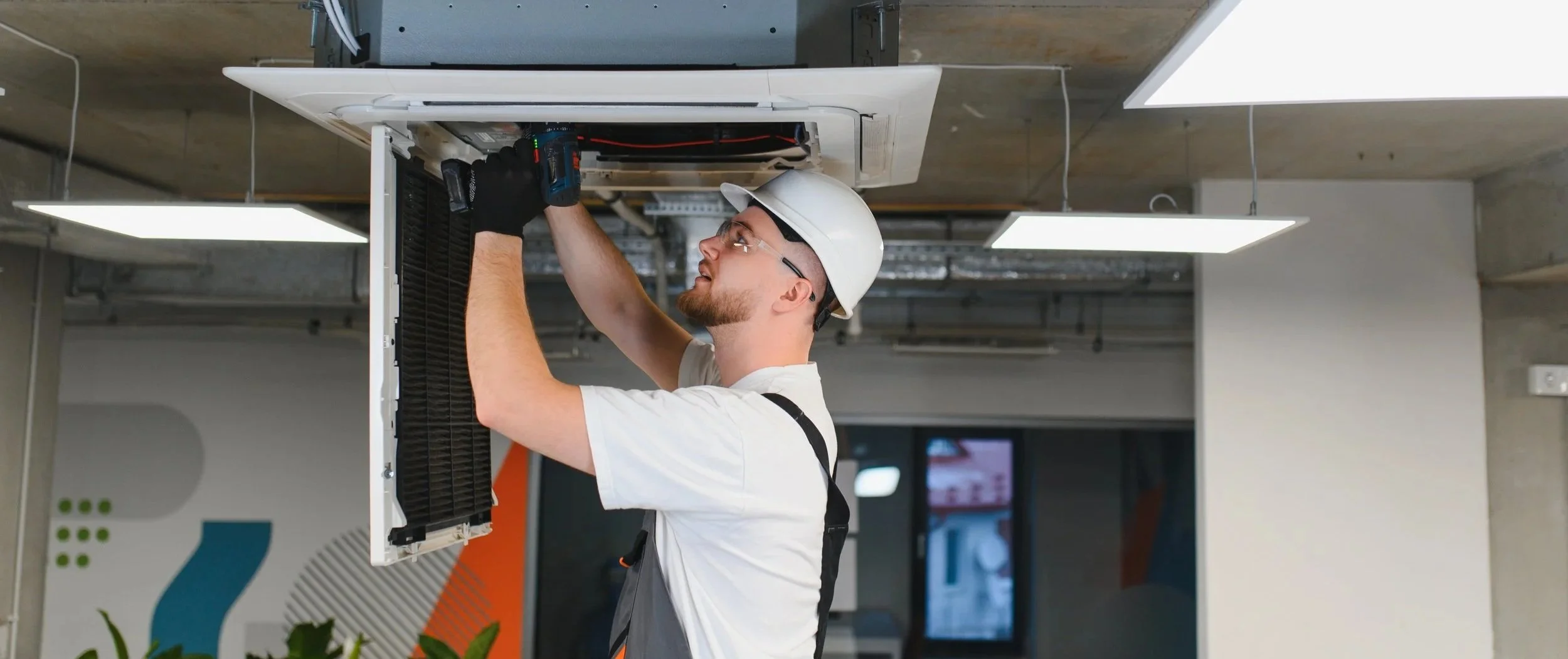
The insurance landscape that California plumbers and HVAC contactors currently face looks noticeably different than that of recent years. A prolonged period of sharp economic and social inflation has driven up claim costs for carriers, forcing many to exit or reevaluate their positions in the market. As carrier appetite shifts and capacity is constrained, contractors are largely experiencing frustration arising from limited carrier options, reduced coverage, and rapidly rising insurance premiums.
In this challenging environment, renewal outcomes are heavily influenced by carriers’ understanding of the specific business’ risks, as well as the processes and procedures used to effectively control them.
Mechanical contractors rely on their insurance broker to represent them and their operations to carriers. Partnering with an insurance broker who specializes in these trades allows HVAC and plumbing contractors to highlight favorable characteristics of their risk profile and provide more detailed insights that address potential underwriting concerns.
Proactively addressing underwriter concerns also provides the opportunity for the contractor to learn how to build or enhance their risk management strategies for common claims within their industry, leading to more favorable pricing. A specialist broker can help their clients:
Strengthen their fleet safety program to reduce accidents within their service fleet,
Understand the importance of a thorough subcontractor agreement which can direct liability to the appropriate party, and
Closeout procedures to mitigate the risk of damage from latent defects.
While the ability to favorably represent a mechanical contractor’s risk profile is beneficial, knowing which carriers to approach is also critical. As carriers reevaluate their market positions, their willingness to entertain an HVAC contractor working on rooftops, a plumber serving HOAs, or a refrigeration contractor involved in the life sciences industry may be impacted.
A specialized broker regularly has conversations with carriers about their appetite and proactively recognizes subtle shifts in the market. Working with a broker who specializes in your industry enables them to develop an insurance program tailored to the specific needs of the individual business.
When using a broker who is a generalist, coverage gaps can arise in a variety of ways that jeopardize a contractor’s financials, like:
A residential exclusion for a plumber performing work on custom homes,,
Inadequate installation floater limits for an HVAC contractor installing custom designed chillers,,
Water intrusion claims that lead to mold, and
Coverage limitations like work performed by subcontractors or work at height.
Rather than relying on a generalist using a generic mass marketing strategy that leads to market fatigue and diminished leverage, aligning with a specialist broker allows mechanical contractors to approach renewals strategically and to consistently secure more favorable outcomes.
To learn more about the ways our specific focus on plumbing and HVAC contractors can benefit you, contact me at mgorham@ranchomesa.com or (619) 486-6554.
Construction Risk Management in Action: Century Painting Making Safety A Priority
Author, Kevin Howard, Account Executive, Rancho Mesa Insurance Services, Inc.
StudioOne™’s Episode 603 was packed with safety knowledge as I had the opportunity to interview and spotlight Rancho Mesa’s long time client, Century Painting Corp.
Author, Kevin Howard, Partner, Rancho Mesa Insurance Services, Inc.

StudioOne™’s Episode 603 was packed with safety knowledge as I had the opportunity to interview and spotlight Rancho Mesa’s long time client, Century Painting Corp.
In this episode, I had the pleasure of interviewing Brian Escalera and Eddie Lopez with a main focus on safety, work family, and project pride.
Brian is the son of the founders, Rosa and Arturo Escalera. His insight into what it took to build Century Painting is invaluable. In our discussion, Brian dove into some projects that he is personally proud of and also expressed the importance of high level synergy that sparks innovation daily in the Century Painting office.
Eddie Lopez is their full-time safety director who lives, breathes and teaches safety daily. Eddie was Rancho Mesa’s first ever Safety Star™ recipient and he proudly earned the certification in 2017.
In our discussion, Eddie talked about the transition in teaching safety topics he has witnessed as they are consumed by the newer generation. Hands-on over written-word seems to really drive it home. He also reminisced on projects that are visible from the freeway, standing as quality finished work performed by Century Painting.
This podcast interview intertwined a great conversation regarding safety, the topic of work families becoming real families, and the challenges faced in the world of construction safety.
If you enjoy what you hear, please share this episode and subscribe.
Building Protection Through Strong Subcontract Agreements
Author, Casey Craig, Account Executive, Rancho Mesa Insurance Services, Inc.
As insurance requirements become increasingly stringent across California’s construction industry, specialty contractors are facing more scrutiny from both general contractors and insurance carriers. It has become standard practice for prime contractors, and sometimes project owners, to require specialty contractors to sign detailed subcontractor agreements outlining scope, pricing, claims procedures, termination rights, indemnification, and strict insurance requirements.
Author, Casey Craig, Account Executive, Rancho Mesa Insurance Services, Inc.

As insurance requirements become increasingly stringent across California’s construction industry, specialty contractors are facing more scrutiny from both general contractors and insurance carriers. It has become standard practice for prime contractors, and sometimes project owners, to require specialty contractors to sign detailed subcontractor agreements outlining scope, pricing, claims procedures, termination rights, indemnification, and strict insurance requirements.
The bigger concern is what happens after those agreements are signed. Specifically, how little due diligence is applied when specialty contractors hire their own lower‑tier subcontractors. From an insurance and risk perspective, this gap creates serious exposures.
As a non‑prime contractor, your ability to control a jobsite is limited. You typically do not control the master schedule, access to the site, or coordination among trades. Yet when you hire a secondary subcontractor, you become responsible for their performance, their timing, and their compliance. If a lower‑tier subcontractor fails to show up when scheduled, causes delays or creates safety issues, the responsibility does not always land with them, it very often can stay with you.
One of the most common misconceptions among specialty contractors is that collecting a certificate of insurance is enough. If your subcontractor does not carry adequate limits or allows coverage to lapse mid-project, the liability ultimately falls back on you. The same potential issue can occur if they are improperly classified for workers’ compensation. From an insurance carrier’s standpoint, you hired that subcontractor; if their coverage is insufficient, or disappears, you are absorbing that exposure.
This directly impacts:
General liability and workers’ compensation claims
General liability and workers’ compensation payroll audits
Experience modification factors
Renewal pricing and carrier appetite
In many cases, if you cannot provide proof of compliant insurance for your subcontractors, your company may end up paying the premium for their payroll, even though they were not your employees.
Most specialty contractors are acutely aware that if they fail to meet a prime contractor’s subcontract requirements, consequences can be severe. This may mean payment withheld or back charges, to liability being pushed downstream or contracts terminated. Yet that same level of diligence is often not applied when engaging lower‑tier subcontractors. This double standard leaves specialty contractors squeezed in the middle where they are held to strict contractual and insurance requirements upstream, while remaining fully exposed downstream.
Whether you use subcontractors occasionally or on a regular basis, having a strong subcontractor agreement is no longer optional, it is a key business protection tool.
A strong agreement helps:
Clearly define scope and responsibility
Enforce insurance and indemnity requirements
Protect against uninsured claims
Prevent premium leakage during audits
Reduce disputes with both carriers and prime contractors
Most importantly, it helps ensure that risk is allocated fairly and intentionally, rather than by default when something goes wrong.
In today’s California construction market, insurance carriers are paying close attention to how risk is managed at every level of a project. Specialty contractors who lack strong subcontractor agreements put themselves at risk of uncovered claims, higher premiums, and long‑term insurability issues. Working with an insurance broker who specializes in your trade, alongside a qualified construction attorney, can help ensure your subcontractor agreements align with your insurance program and business objectives.
If you have questions about subcontractor agreements, insurance requirements, or how these issues may be affecting your premiums and renewals, feel free to reach out to me at (619) 438‑6900 or ccraig@ranchomesa.com.
Fleet Maintenance: An Overlooked Pillar of Jobsite Safety for Electrical Contractors
Author, Kyle Dunlap, Account Executive, Rancho Mesa Insurance Services, Inc.
Fleet maintenance is essential for electrical contractors that rely on service trucks, vans, and heavy-duty vehicles to transport employees, tools, and materials safely to job sites on a daily basis. When contractors prioritize clean, safe, and well-maintained vehicles on highways, back roads, and active construction zones, they protect their workforce, prevent costly mishaps, maximize fuel consumption and reduce insurance challenges at renewal.
Author, Kyle Dunlap, Account Executive, Rancho Mesa Insurance Services, Inc.

Fleet maintenance is essential for electrical contractors that rely on service trucks, vans, and heavy-duty vehicles to transport employees, tools, and materials safely to job sites on a daily basis. When contractors prioritize clean, safe, and well-maintained vehicles on highways, back roads, and active construction zones, they protect their workforce, prevent costly mishaps, maximize fuel consumption and reduce insurance challenges at renewal.
In the construction industry, fleet maintenance is a direct extension of jobsite safety.
Electricians frequently operate vehicles loaded with tools, ladders, wire spools, and heavy equipment. Worn brakes, underinflated tires, malfunctioning lights, or unsecured cargo can lead to serious incidents before a worker ever steps onto a jobsite. Because these vehicles often travel long distances, navigate uneven terrain, and operate in high-traffic or work-zone environments, mechanical reliability is critical.
A vehicle-related incident can result in employee injuries, OSHA scrutiny, project delays, and third-party liability claims. For electrical contractors, a preventable accident caused by poor maintenance can be just as damaging as an on-site safety violation impacting both worker morale and company credibility.
Electrical contractors should implement formal fleet maintenance programs that include routine inspections, preventive servicing, and documented repair schedules. Pre-trip inspections and clear reporting procedures ensure issues are addressed before vehicles reach the road.
Clean and organized fleet vehicles help reduce risk and support safe operations in the field.
Service vehicles often become mobile workshops. When interiors become cluttered with loose tools, materials, or debris, drivers face increased distraction and the risk of shifting cargo. Dirty windshields, mirrors, and backup cameras further reduce visibility, especially critical when maneuvering in tight jobsite conditions or backing near workers and pedestrians.
Vehicle condition reflects a company’s overall safety culture. Insurance carriers and general contractors often view poorly maintained or unclean vehicles as indicators of broader risk management issues. Additionally, clean, well-kept vehicles project professionalism to clients, inspectors, and the public.
Establish standards for vehicle cleanliness, secure storage systems for tools and materials, and regular housekeeping requirements. Driver safety trainings, QR code-accessible vehicle inspections and fleet management assessments offered in Rancho Mesa’s proprietary SafetyOne™ mobile app can help reinforce expectations and reduce preventable losses tied to vehicle condition.
“When the misuse of tools becomes routine, it sends the wrong message that shortcuts are acceptable and risk is secondary. Maintain a culture where precision and safety comes first.” Rear Admiral Dan “Dino” Martin USN Commander, Naval Safety Command.
Preventable vehicle mishaps can significantly affect insurance premiums and renewal terms for contractors.
Insurers closely analyze fleet loss history when underwriting, accidents involving brake failure, tire blowouts, poor visibility, or unsecured loads are often classified as preventable losses. Even minor incidents such as backing into fences or poles or roadside breakdowns can accumulate and negatively impact loss ratios.
A pattern or frequency of maintenance-related claims may result in higher premiums, increased deductibles, coverage restrictions, or additional underwriting requirements. In a tightening insurance market, contractors with poor fleet performance may face limited carrier options.
Proactive maintenance, documented inspections, driver accountability, and corrective action plans demonstrate to insurers that fleet risks are actively managed. Risk management partners like Rancho Mesa can assist electrical contractors by reviewing fleet losses, identifying trends, and helping prepare for successful insurance renewals.
For electrical contractors, fleet maintenance is not optional, it is a critical investment in employee safety, operational efficiency, and long-term insurability. Clean, well-maintained vehicles help prevent avoidable losses and position contractors as responsible, safety-driven organizations.
To learn about how Rancho Mesa can help streamline your fleet maintenance program, contact me at (619)798-2822 or kdunlap@ranchomesa.com.
Protecting Your Bottom Line: The Critical Role of Excess/Umbrella Liability Coverage for Contractors
Author, Jeremy Hoolihan, Partner, Rancho Mesa Insurance Services, Inc.
The construction industry operates in one of the highest‑risk environments. Contractors work with heavy machinery, multiple layers of subcontractors, hazardous jobsites, strict contractual obligations, and constant exposure to the public. These conditions create significant exposure to large liability claims. And, although general liability, auto liability, and employers’ liability insurance make up the foundation of a contractor’s risk management program, these primary policies often do not provide enough protection when a major incident occurs.
Author, Jeremy Hoolihan, Partner, Rancho Mesa Insurance Services, Inc.

The construction industry operates in one of the highest‑risk environments. Contractors work with heavy machinery, multiple layers of subcontractors, hazardous jobsites, strict contractual obligations, and constant exposure to the public. These conditions create significant exposure to large liability claims. And, although general liability, auto liability, and employers’ liability insurance make up the foundation of a contractor’s risk management program, these primary policies often do not provide enough protection when a major incident occurs.
Excess and umbrella liability coverage plays a critical role by adding a financial safety net that protects construction companies from catastrophic losses. This additional coverage ensures that one significant claim does not jeopardize the entire business’ financial health.
Construction claims can escalate quickly, and the industry routinely deals with high‑hazard operations like trenching, scaffolding, welding, and heavy equipment. When something goes wrong, the consequences can be severe. Claims involving multi‑party lawsuits, public accidents near the jobsite, structural failures, or damage to neighboring properties often exceed the limits of standard liability policies. Judgments, often referred to as nuclear verdicts, in the tens of millions of dollars have become increasingly common. Without adequate excess or umbrella liability insurance, a single large‑scale accident can financially devastate a contractor.
The industry also depends heavily on financial stability to keep projects moving forward. A major loss can disrupt working capital, delay active jobs, hinder bonding capacity, and interrupt cash flow, all of which are essential elements of a construction company’s balance sheet. Excess and umbrella coverage helps protect these critical financial elements. Ultimately, this coverage ensures that a significant claim does not derail a company’s long‑term stability.
Contractors rely on excess and umbrella insurance as project owners, municipalities, and general contractors are increasingly requiring higher liability limits. Many construction contracts now call for total limits of five million dollars, ten million dollars, or more, depending on the project’s size and complexity. Having an excess or umbrella policy makes it easier for contractors to meet these requirements, bid confidently on larger and more profitable projects, and demonstrate reliability during contract negotiations. Without the appropriate limits, a contractor may be eliminated from consideration before a project even begins.
Excess and umbrella liability insurance is also one of the most cost‑effective ways for construction companies to increase their protection. Rather than raising limits on individual primary policies which can be expensive, these policies offer an affordable way to secure millions of dollars in additional coverage. Because they are designed to respond to major, unexpected events rather than routine claims, they provide a high-level of value relative to their cost. For many contractors, this makes them one of the smartest risk management investments available.
Construction companies face some of the most complex and severe liability risks. While primary insurance policies address routine exposures, excess and umbrella liability coverage is what protects contractors from catastrophic events that could undermine financial stability, damage their reputation, or threaten long‑term viability. For contractors of all sizes, this type of coverage should be strongly considered as an essential safeguard and one that not only protects the business but also supports contract compliance, enhances competitiveness, and ensures longevity in a high‑risk industry.
Feel free to reach out to me at (619) 937‑0174 or jhoolihan@ranchomesa.com to discuss excess and umbrella coverage.
Navigating California Labor Laws: Key Compliance Challenges for Contractors
Jason Fischbein of Fisher Phillips sits down with Matt Gorham to discuss some of the primary labor and employment law issues currently impacting contractors, especially those within the HVAC and Plumbing industries.
Author, Matt Gorham, Account Executive, Rancho Mesa Insurance Services, Inc.
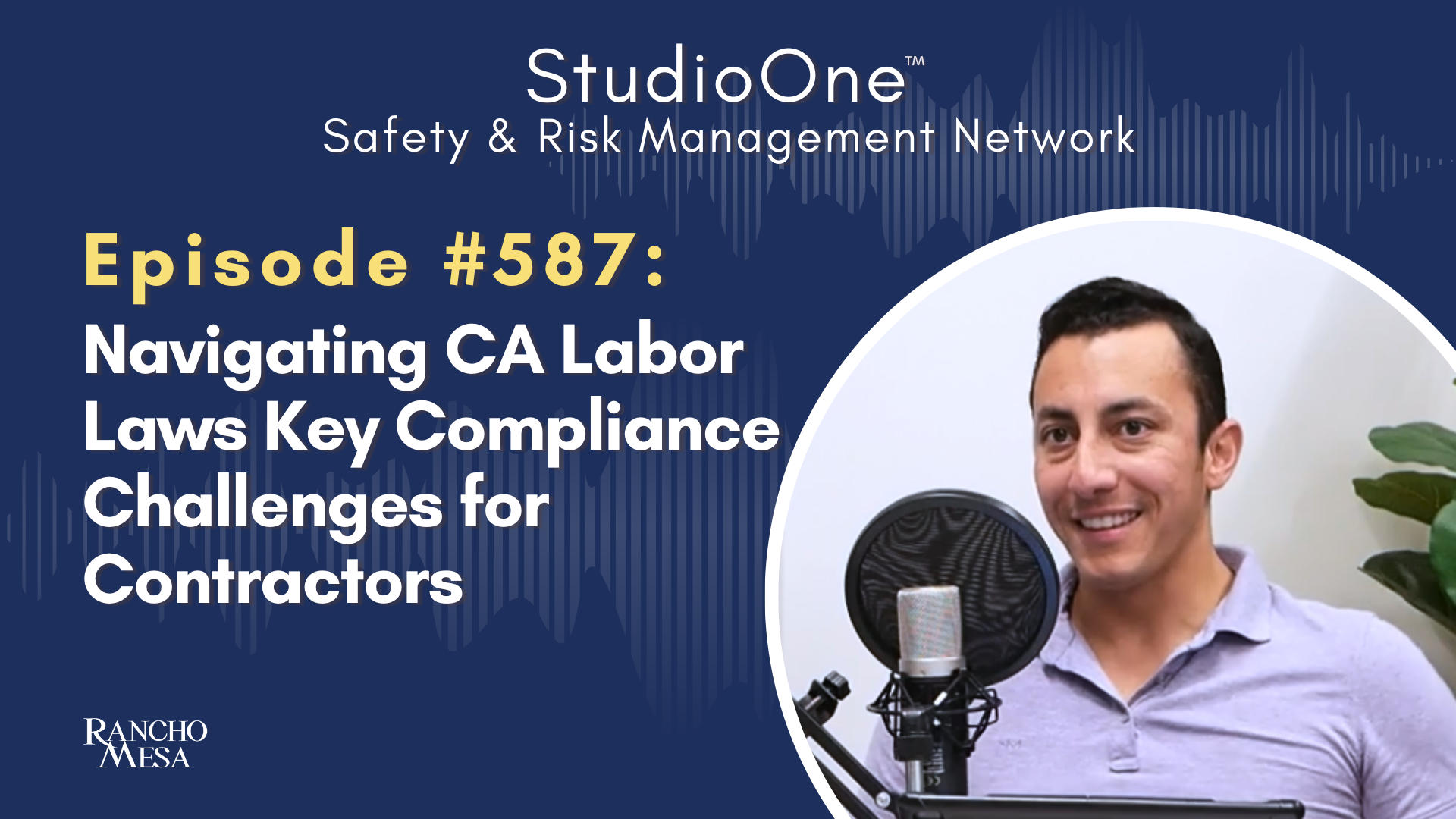
Jason Fischbein of Fisher Phillips sits down with Matt Gorham to discuss some of the primary labor and employment law issues currently impacting contractors, especially those within the HVAC and Plumbing industries.
Recognized by San Diego Business Journal as one of the 40 Next Business Leaders Under 40, Jason provides insights to the challenges of compliance with California’s highly technical labor code, specifically around meal breaks and rest periods, determining regular rates of pay, and the importance of the interactive process for employee accommodations.
Jason also discusses how wage and hour issues can develop into PAGA claims, and offers suggestions to avoid them.
Matt Gorham: You're listening to Rancho Mesa’s StudioOne™ podcast, where each week we break down complex insurance and safety topics to help your business thrive. I'm your host, Matt Gorham, and I'm joined by Jason Fischbein with Fisher Phillips, and I appreciate you being here. So, yeah, Jason, first and foremost, thanks for making the time to sit down with me.
Jason Fischbein: Thanks for having me, Matt. First ever podcast for me, so looking forward to it.
MG: I'm excited to hear how it goes. So let's jump in. I guess I want to start first because I know San Diego is a really close-knit market, a really interesting community here. And so you're from Chula Vista, so you're from the San Diego area. You've got a lot of personal experience here.
JF: Yep. San Diego, born and raised. I grew up in Chula Vista. Currently live in North Park and have been in San Diego my entire life, apart from three years of law school.
MG: Well, I understand you also went to UCSD, correct?
JF: Yes, UCSD for undergrad. I was a political science major at Roosevelt College and loved my time up there. Nothing beats going to college so close to the beach, right?
MG: I can relate to that. I mean, I fellow triton here. So, yeah, I'm sure we've got some stories that we can share offline. But you mentioned, of course, three years away from the San Diego area to go to school, and you went to Stanford.
JF: Yeah, Stanford for law school. Bay Area, of course, is not too different, but I was eager to come back to San Diego, all my family's here. And I always knew that right after law school, I'd come straight back and start my practice with a focus on employment law.
MG: That's fantastic. You know another personal connection for me. My dad's a Stanford alum, so obviously speaks to your qualification and your insights. I mean, you were recognized as 40 Next Business Leaders Under 40 by the San Diego Business Journal. Tell me about that.
JF: That was quite the honor. And that was bestowed on me last year. It's something that I'm proud of. and it's always rewarding to be recognized in my hometown community.
MG: Well, congratulations to you on that. And, you know, it's a testament to you and your work, your expertise, and the way that you serve your clients. So we'll jump into some questions here. And just to clarify the point, of course, that you focus specifically on labor and employment law. And so we're really going to offer some, I think, valuable insights on some of these areas here. With that focus, what are some of the most common challenges that contractors run into with respect to labor and employment law?
JF: Yeah, thanks, Matt. So you're exactly right. My practice is 100% employment law and focusing specifically on the management side, so representing businesses. And I would say that the biggest challenge that I'm seeing from plumbing, HVAC clients, but also clients in practically any industry, is how to comply with California's labor code, which is hyper-technical and also uncompromising.
The penalties for violating the labor code can be very severe and the consequences can be dire. So just one example off the top of my head. In the plumbing industry, for example, often the employees are compensated either on a commission basis or with bonus compensation. And depending on what type of compensation the plumber is receiving, the company needs to make sure that they're incorporating that type of incentive compensation in the rate that employees are earning for their meal break premiums, their rest break premiums, their overtime pay, their sick leave pay. So there's all sorts of factors to be aware of simply because an employee receives a non-discretionary bonus and now leads to all these other ramifications.
MG: Yeah, I really like the way that you use the word hyper-technical there. You know, it does seem like there are certain laws that almost contradict other laws and use some technical language here, of course, because it does depend on the specifics of the situation, and they don't always translate well to, you know, plain English, where I think it is really beneficial for people to work with you or someone like you because you can help them understand how do these hyper-technical terms really apply within the operations of their business?
And the fact that you work exclusively with the business side of management, you can help them to navigate the complexity of it and make decisions that set them up for success depending on what roles their employees are performing for them. Whether those are true salespeople, whether those are technicians, or whether there's a mixture of responsibilities for particular individuals that work for them.
JF: Yeah, absolutely. And you're exactly right. Whether they are exclusively focused on sales or whether they're at the client customer sites doing the hard technical work, it can drastically vary what rules of play are governing the compensation structure.
MG: Yeah. And so, you know, compliance, a lot of different ways that that can be interpreted or applied. But I'm curious to hear, because you mentioned that there are ramifications and consequences.
What would you say are the three, I guess, kind of main issues that plumbing/HVAC clients are coming to you for? Because I imagine most of them fall within compliance. But are those specific areas you mentioned meal breaks, rest breaks, commission structure. Can you speak a little bit more about some of those main issues?
JF: So I was going to start with meal and rest breaks. You hit the nail on the head there. It's very important in California that a meal break and a rest break be completely uninterrupted. So what we mean by uninterrupted is the employee cannot be receiving any work-related emails, any work-related calls, or fielding any work-related questions when they should be taking their meal break or the rest break. And if they do get a work-related call and they answer that call, they're going to either have to be paid a meal break premium for that interrupted meal break or, as soon as possible, reset things and go and take now a true proper uninterrupted 30-minute meal break. Right?
And practically speaking, it may not always be possible to reset that meal break. So now we have to be aware of, well, we need to pay this particular employee a premium because their break was interrupted. And then the question is, what hourly rate should that premium be paid at? And that entirely depends on their base rate of pay, as well as any non-discretionary bonuses they're receiving.
So for example, if they receive a bonus because they were able to refer a particular customer to an additional service that they're purchasing or that they're receiving from the company. Now potentially we have to incorporate the value of that compensation into the meal break premium rate. And it can get quite complicated. So we call this the regular rate of pay. Determining the regular rate of pay is always very tricky, especially in industries where the hourly employees are receiving all sorts of non-discretionary compensation, as is common in the plumbing industry in particular.
MG: Yeah, it's interesting you talk about, you know, the uninterrupted nature of these meal breaks, which is so difficult on both the construction side, you know, for guys that are at the job site of what conversation or what responsibilities, they're able to just completely shut down that aren't in some way able to be construed as work related. Or on the service side, you know, where guys are going from one job site to the next, you know, or one service call to the next. And so their breaks are more or less drive time. You know, is that really considered a break? I think most people would say no and yes at the same time, depending on how you interpret it. Obviously, the law is going to say no, but, you know, meal breaks in particular, you know, it’s common for people to just pick up food on the way from one call to the next. And so it's not really having uninterrupted time for a break, but it's kind of common practice. So it does seem like it's very difficult to provide those uninterrupted breaks.
JF: Right. And it's challenging just to track them, right? Because if you have an employee that's in the field, they're servicing one home on a plumbing issue, and then their next job is 20 minutes away, so they're driving to another customer's home. Making sure that the employee is tracking when their break time starts, when their break time ends, and ensuring that they're not performing any work-related activities during that time can be difficult in and of itself. So yeah, I completely agree with you. It can be tricky and most importantly we need to emphasize clear policies and practices. The employee needs to understand what is expected of them. And then we need to enforce those policies and practices, right? That's the logical next step. So if we have an employee that is not taking an uninterrupted break instead they are just eating and driving and going to the next client's site I would consider that to not be a truly uninterrupted break so my guidance to my clients all the time is to emphasize to the employees you need to take an uninterrupted break you should not be performing any work-related activity during that break and that would include driving to wherever the next job is, right? That counts as work-related activity, and that is not sufficient for a break. That break needs to be uninterrupted.
And, of course, if the break is interrupted, if the break is interrupted, the employee should be able to report that to the company, and the company then needs to be able to investigate, you know, what were the factors and circumstances at play that prompted this employee to say that they could not take an uninterrupted break. And if the company deems that break to have been interrupted, now the company should, in all likelihood, be paying a meal period premium. But there should be a process in place to basically allow the employee to report an interruption to the break and then allow the company to investigate and review the circumstances so that they can then make that decision as to what sort of premium needs to be paid.
MG: Yeah, it makes sense. So you mentioned that meal breaks and interest periods are kind of the top issue that clients are coming to you for. What's another area that you're seeing your clients have an issue with compliance?
JF: In the trade industries, right plumbing HVAC and similar industries tools and how to compensate for tools is always a big one that I'm seeing. So under the labor code if an employee is carrying their own tools they need to be earning at least twice the minimum wage and often in these industries we have an employee that is provided the tools by the employer but they might carry their own wrench because they like it, right? Or their own certain pocket knife or any other sort of tool that they personally own and that they deem to be reliable and they want to use their own tools, even though their employer provides them all the tools, right?
So, the way to solve this, in my view, is to have a clear tool usage policy that says, “this employee acknowledges and agrees that they have been provided all the tools they need for the job.”
Or, on the contrary, “this employee is providing their own tools.” We need to have clarity as to which situation is at play. Does this employee bring their own tools to the job? Or is this employee provided all of the tools they need for the job? And if it's the former, if they bring their own tools, the company needs to make sure that they're being paid at least twice the minimum wage.
MG: Yeah, which again gets into the complexity of when you've got these variable pays, you know, commissions and discretionary bonuses that can influence that calculation. Because, you know, I don't think I've met anyone in the field that doesn't have some preference for the tools that they're using.
And you're going to be hard pressed to find two guys in the field that agree exactly on what the best brand is or the best tools for the job. So it creates a bit of friction or conflict. So I appreciate you offering of suggestions too about, again, it seems like having clear policies in place, setting expectations and enforcing the policies.
And I know there's a few other challenges, some other issues that your clients are coming to you for, you know, talked about meal breaks and rest periods, compliance with employees providing their own tools and wages and how that comes into play. Is there another issue or kind of another topic that you're seeing a lot of questions around from your clients?
JF: Yeah, well, generally speaking, just to shift gears completely and kind of leave the wage and hour realm, because it's not only wage an hour that's difficult, right? Whenever there's a need for an interactive process discussion for an employee that may have medical restrictions, for example. That's always very challenging. And a couple of rules of thumb when I am helping clients navigate the interactive process and evaluating reasonable accommodation requests, I would say first and foremost, those types of discussions should be handled in conjunction with human resources. If there's a dedicated human resources department, my strong preference and guidance is to get human resources involved rather than having a supervisor try to handle that type of discussion because a supervisor typically doesn't have the training necessary to have that type of discussion and is also balancing hundreds of other items. So it's best to get human resources involved whenever we need to have an interactive process dialogue with an employee that is seeking medical restrictions or accommodations.
And secondly, it's important that the company is creative and open-minded rather than closed-minded. So if we have an employee that wants to continue working but they have some sort of medical restrictions, then companies should be approaching this from the perspective of, “We need to consider any and all possibilities to try to allow this employee to continue working, consistent with their medical restrictions, of course.”
And if the restrictions are unclear because the medical note is unclear, it is permissible to ask the employee to request an updated note. It's entirely contact-specific, so it's difficult to capture all the factors in a hypothetical scenario, but I would say this is why it's so important to get the assistance of human resources and legal counsel when dealing with the interactive process questions.
MG: Yeah, I really appreciate your point on the last part in particular, Jason, because there are so many different accommodations that might come up, and there are so many rules that govern what you can and can't ask, you know, at the hiring process or in the course of employment, yet there are expectations for accommodations around, you know, medical limitations.
And, I know, one of the areas that I've seen be addressed is clearly defining job descriptions so that there's a very well understood and clear idea and understanding of what an employee is expected of them within the course of their work and whether they can or cannot perform the duties of the job that they're being hired for or reassigned to. But your point about, you know, working with HR, working with legal counsel, everything that you've talked about really is proactive, or maybe not everything, but I think there's a strong emphasis that I'm picking up about kind of a proactive approach instead of just a reactive approach that once something has gone wrong, how do we address it? But more saying, how do we put the right systems in place? Again: policies, enforcement, clear communication and support to avoid the issues from really having the dire consequences that you've referred to.
JF: Absolutely. Yeah, I love to be proactive because it's much better to address an issue before it turns into litigation. And so I handle both, right? I handle plenty of litigation, but I also handle advising and counseling before there's a legal dispute. And the better job that our clients can do on the front end, the more likely it is they won't have a litigation down the line.
So I really enjoy advising and counseling my clients and solving issues before they turn into litigation. Not only does it save them time, money, and headaches, but it also ensures but it also ensures that the employees feel taken care of and are in good spirits as well.
MG: Yeah, which is a really good point that it's morale. It’s do the employees feel like they are a part of the team? Do they feel like they've got an interest in the success of the business or if they feel like they're being exploited, you know, or taken advantage of? Because that's where I think a lot of situations can arise in different forms that jeopardize the success of the business. And one of those wage and hour claims, you know, PAGA claims, you mind speaking to that a little bit? Because it a little, like, those can be retaliatory.
JF: Yeah, so PAGA claims are constant thorn in the side of almost any employer in California. And PAGA, it stands for the Private Attorney's General Act. This law has existed for over 20 years now in California. And these claims just become more and more prevalent in this state. And on a basic level, an employee who brings a PAGA claim is intending to stand in the shoes of the labor commissioner to enforce the labor code. So an employee basically can say that they want to represent not only themselves, but also other employees that have suffered the same type of labor code violation. And they can do that without having to exhaust all the formalities of a class action lawsuit.
So basically, PAGA claims are very worrisome and difficult to deal with in California because it allows for representative claims, claims made on behalf of dozens, potentially hundreds or thousands of employees, all in the interest of enforcing the labor code because the state of California doesn't have the resources to enforce every single labor code claim. That's the underlying rationale behind the law, but we've seen essentially just hundreds of these types of claims filed every single day.
And it could be the smallest violation of the labor code, but now you have an employee that tries to represent all other non-exempt employees for that same type of violation. So basically the reason that PAGA is such a powerful tool for employees is because it can turn one small issue into now a very large scale legal headache for the employer. So in my practice, I am helping clients with PAGA and class action types of wage and hour cases probably at least 50% of the time in my day-to-day practice. And having strong policies and practices is absolutely the first step to avoid that type of litigation before it can ever materialize.
MG: Yeah. So it seems like that, you know, wage an hour leads itself right into potential exposure for pocket claims.
JF: Right. Yeah, that's exactly right.
MG: Yeah. Jason, you mentioned that, you know, a lot of your advice includes bringing in legal counsel like yourself, as well as HR, and a lot of smaller companies maybe don't have access to those resources or don't invest in them yet. But I'm curious to hear your thoughts. You know, is there a certain size where a business becomes more vulnerable to these type of issues?
JF: Yeah, it's a really good question, Matt. And unfortunately, no matter how large or small the employer is in California, there's always going to be risk. And especially for labor code compliance, even the small companies have to comply with the labor code. And if there is a violation, especially a systemic violation that can impact all of the non-exempt employees, for example, that can turn into a PAGA lawsuit. It can turn into a class action depending on the circumstances. And the size of the company really has no bearing, right?
So of course, the bigger companies have more employees so there's more volume to go around and potentially bring a claim. But even the small companies need to ensure that they're complying with their labor code, that they're working with counsel if they can or at least have a dedicated person that is focused on those compliance efforts because simply being a small company isn't going to eliminate the litigation.
And in fact, it could mean that the litigation has the potential to threaten the viability of the business because it is a small company, right? So no matter what, my advice is to have a dedicated person at the company who is thinking about labor code compliance, working with trusted advisors as possible and as needed to ensure compliance, and also staying abreast with the latest changes in the laws because the labor code and other legislation in California changes on a yearly basis. And it's always kind of a moving target, just another reason why it's so difficult to do business in this state. And so something as simple as making sure your handbook is updated on a yearly basis can ensure that the company is taking the right steps to protect themselves.
MG: Again, just a number of really good points there. One of them is, it comes to mind for me, you know, big businesses now, they haven't always been big businesses. They started as a small business and they've been able to grow just through whatever circumstance they were able to navigate or persevere. And a lot of small businesses end up either staying small or end up unfortunately having to close their doors because of the threat of something like this if it should arise. So being proactive and having the right trusted advisors in place can make a huge difference for how to avoid or how to handle a situation like this should it arise.
You also talk about how quickly and how frequently the laws can change and how important is to stay in compliance. We're able to offer our clients a living handbook that's able to offer updates consistently as new laws go into effect. But I'm curious to hear your thoughts. Are there any new laws that went into effect January 1st that you took special interest in?
JF: Yeah, Matt, so one law that I wanted to point out for purposes of today's discussion is Senate Bill 642, which takes effect on January 1st, 2026. And this new law imposes significant changes to California's pay transparency requirements. Under this new law, employers will have to be more specific about the pay ranges that they provide in job posting. So what this really means is that an employer in a job posting should be providing a good faith estimate of the salary or hourly wage range that the employee could reasonably expect to be paid for that position. And that needs to include not only the base pay, but bonuses, commissions, other non-discretionary compensation, and it needs to be for the specific job position that that candidate would reasonably expect it to be offered rather than the position on a more broader scale.
So if this specific applicant would be expected to be paid, this base hourly pay, this type of bonus, and this type of other incentive compensation, that needs to be accounted for on the job posting. It also ensures that the statute of limitations for a fair pay type of claim is extended to three years. And the employee could potentially recover lost wages for a period of up to six years. So again, pretty significant consequences for noncompliance. And this is just another way that California is always reshaping the laws to make things more challenging for our clients in California.
MG: Yeah, which it's a good point, right? Because this stuff does evolve quickly. And from the insurance side of things, a lot of the conversations that we have is how to transfer that risk, what to retain as clients or as business owners, but also how to work with the right people to put the right controls in place and maintain and enforce the right policies and the right controls.
So, Jason, we've talked about a lot of different topics, and I'm sure that, you know, some of our listeners might have additional questions. If they want to reach out to you, how do they get in touch with you?
JF: Yeah, thanks, Matt. So the best way to reach me is at my law firm email address, jfischbein@fisherphillips.com. And they could also call me, and I'm available anytime. Always happy to assist, regardless of what the underlying need is, I'm available to chat. And I appreciate you giving me this opportunity to chat about these items with you today.
MG: Yeah, thank you so much for making the time, Jason. Again, it was great to have you. Thanks again for coming down and sit down with us.
JF: Yeah, thank you, Matt, very much.
MG: Thanks for tuning in to our latest episode produced by StudioOne. If you enjoyed what you heard, please share this episode and subscribe. For more insights like this, visit us at RanchoMesa.com and subscribe to our weekly newsletter.
GPS Tracking Isn’t Enough: One Simple Step Can Protect Your Heavy Equipment from Theft
Authors, Sam Clayton, Vice President, Construction Group, Rancho Mesa Insurance Services, Inc.
The use of heavy equipment by grading/excavating, street/road and water/sewer contractors is vital in their daily operations. Outside of their employees, this is their 2nd most valuable asset and also very expensive to replace, if stolen. Contractors across the country have seen an increase in heavy equipment theft. According to the National Equipment Register (NER), heavy equipment is nine times more likely to be stolen than vandalized and five times more likely to be stolen than encounter fire damage.
Author, Sam Clayton, Vice President, Construction Group, Rancho Mesa Insurance Services, Inc.

The use of heavy equipment by grading/excavating, street/road and water/sewer contractors is vital in their daily operations. Outside of their employees, this is their second most valuable asset and also very expensive to replace, if stolen. Contractors across the country have seen an increase in heavy equipment theft. According to the National Equipment Register (NER), heavy equipment is nine times more likely to be stolen than vandalized and five times more likely to be stolen than encounter fire damage.
Contractors are often comforted that they purchased an inland marine policy to cover the loss of a piece of heavy equipment when stolen. However, there are steps companies can take to reduce the likelihood of their equipment being stolen or at least increase the chances of the equipment being recovered.
In addition to using GPS asset tracking software, Rancho Mesa recommends registering all heavy equipment with the NER, a subsidiary of the Verisk Crime Analytics family of companies.
The NER, through the their HELPtech (Heavy Equipment Loss Prevention Registry) program, is the largest national database company that houses ownership information and theft data for construction and agricultural equipment. This database helps law enforcement officials identify your equipment after a theft, increasing the odds and speed of recovery significantly. Think of this as the DMV for heavy equipment.
Annual membership to the NER is nominal:
$250 for up to 50 pieces of equipment
$450 for up to 150
$750 for up to 1000
Members also receive special decals for their equipment, alerting potential thieves that stealing this equipment and trying to sell it would be more trouble than what it is worth.
In addition, many insurance carriers are willing to waive the policies theft deductible up to $10,000 if the piece of equipment is stolen and registered through the NER.
In partnership with the NER, Rancho Mesa can offer clients a discount when registering your equipment through HELPtech. Contact me at (619)937-0167 or sclayton@ranchomesa.com to learn more.
PAGA Lawsuits: The Employment Risk Catching California Businesses Off Guard
Author, Kevin Howard, Account Executive, Rancho Mesa Insurance Services, Inc.
As insurance advisors, we have a responsibility to keep our clients (and any business within earshot) informed about emerging risks that could impact their operations. One area that has grown significantly in recent years is Private Attorneys General Act (PAGA) lawsuits.
Author, Kevin Howard, Partner, Rancho Mesa Insurance Services, Inc.

As insurance advisors, we have a responsibility to keep our clients (and any business within earshot) informed about emerging risks that could impact their operations. One area that has grown significantly in recent years is Private Attorneys General Act (PAGA) lawsuits. These claims can catch businesses off guard, leading to costly penalties and reputational challenges. By understanding what PAGA is, why it matters, and how to proactively protect against it, we can help steer clients in the right direction and strive for compliance.
Why Should You Care About PAGA
PAGA is a California law that allows employees to step into the shoes of the state and sue their employer for labor code violations. Instead of waiting for state agencies to enforce compliance, employees can file these claims themselves; and, the penalties can add up quickly. While the intent was to improve labor law enforcement, the reality is that PAGA lawsuits have become a major source of litigation for businesses.
The Worst Case PAGA Scenario
The most nightmarish scenario occurs when attorneys get involved in a single employee complaint which becomes the seed for a larger action. Counsel may pursue a representative PAGA claim on behalf of many employees statewide; and, where facts support it, may also file a traditional class action lawsuit under Rule 23 that seeks certification of a class including many current and former employees over several years. Class actions can expand exposure dramatically (for example, unpaid wages, penalties, and attorneys’ fees), while PAGA actions focus on civil penalties per employee per pay period. In practice, plaintiffs’ firms often file both PAGA and class claims together, leveraging overlapping facts and time periods to broaden the case and increase potential recovery.
How Did We Get Here
According to the California Department of Industrial Relations, PAGA was introduced in 2004 to help address the backlog of labor complaints. Since then, filings have exploded to over 9,000 notices in 2025. These figures represent California-only filings, underscoring the growing exposure employers now face.
Recent Changes You Should Know
In July 2024, California passed reforms to make PAGA more fair and less punitive. These changes include:
Early cure periods: Employers now have a chance to fix issues quickly and reduce penalties by up to 85 percent.
Stricter standing: Employees must have personally experienced the violations they claim.
Online filing requirements: Streamlined processes for notices and compliance.
These updates are good news, but they don’t eliminate the risk, they just give businesses more tools to manage it.
How Can You Protect Your Business
Here are practical steps every employer should take:
Consider the pros and cons of Employment Practices Liability (EPL) Insurance with a wage & hour defense sub-limit.
Audit regularly: Review payroll, timekeeping, meal and rest breaks, and expense reimbursements.
Train your team: Supervisors should understand compliance basics to prevent violations.
Act fast: If you receive a notice, use the cure period to correct issues and reduce penalties.
Document everything: Keep detailed records of compliance efforts—this can make all the difference in court.
Insurance Advisor’s Role
Your insurance advisor should explain in detail Employment Practices Liability, laying out annual premium and deductible options with a detailed coverage analysis. We will provide a clear understanding of wage & hour coverage coupled how defense sub-limits work. Very often, choice of counsel is rare with EPL carriers, so businesses need to be comfortable working with attorneys in which they may be unfamiliar.
In partnership with Coastal Payroll, Rancho Mesa is hosting an in-person workshop on PAGA claims which will take place on Friday, February 20th, 2026 at 9:00 am. Reach out to me with specific questions on this topic at khoward@ranchomesa.com or call me directly at (619) 729-5173.
About the Author
Kevin Howard is a Commercial Insurance Broker at Rancho Mesa Insurance Services, Inc., specializing in risk management and insurance solutions for artisan contractors including solar, roofing, and other skilled trades. Based in San Diego, California, Kevin serves contractors throughout the Southern California region, helping them protect their businesses with tailored coverage and proactive support. His clients benefit from access to exclusive tools like the SafetyOne™ Platform, RM365 HRAdvantage™ Portal, and workers’ compensation claims advocacy services, designed to improve safety, streamline HR processes, and support better claims outcomes.
Navigating California’s Hardening Marketplace
Author, Casey Craig, Account Executive, Rancho Mesa Insurance Services, Inc.
California’s insurance market has shifted dramatically in recent years, creating challenges for both carriers and insureds. While premium increases are often the most visible sign of a hard market, the underlying issues are far more complex.
Author, Casey Craig, Account Executive, Rancho Mesa Insurance Services, Inc.

California’s insurance market has shifted dramatically in recent years, creating challenges for both carriers and insureds. While premium increases are often the most visible sign of a hard market, the underlying issues are far more complex.
Market Contraction and Volatility
From 2020 to 2025, many carriers have either exited California or significantly reduced the lines they write. Factors such as wildfires, theft, rising repair and rebuild costs, cumulative trauma claims, and nuclear verdicts have made predicting losses increasingly difficult. This volatility has led carriers to tighten underwriting standards and decline new business more frequently.
Litigation and Its Ripple Effect
Escalating litigation rates have amplified the problem. Even minor claims are resulting in outsized settlements, driving up costs for carriers and insureds alike. This cycle, higher premiums leading to more lawsuits leading to higher premiums, has created systemic pressure across the industry.
Impact on Reinsurance and Rate Filings
The reinsurance market has also tightened, with some reinsurers refusing to cover certain industries, implementing new exclusions. Your carrier partner needs to share risk in the reinsurance marketplace to insulate themselves. So, these changes are trickling down. Compounding the issue, carriers often wait years for rate approvals from the Department of Insurance, leaving filings outdated and misaligned with current exposures.
What This Means for Businesses
In this environment, partnering with a broker and carrier that specializes in your industry is critical. Carrier appetites are changing rapidly, and exclusions can appear without notice. A knowledgeable broker can help position your business effectively, secure competitive pricing, and ensure coverage aligns with your risk profile.
For questions or to discuss your insurance strategy, contact me at ccraig@ranchomesa.com or (619) 438-6900.
Three Key Elements in A Fleet Safety Program for Plumbers and HVAC Contractors
Author, Matt Gorham, Account executive, Rancho Mesa Insurance Services, Inc.
Commercial auto insurance continues to be problematic for plumbers and HVAC contractors as skyrocketing premiums are eroding profitability.
Author, Matt Gorham, Account Executive, Rancho Mesa Insurance Services, Inc.

Commercial auto insurance continues to be problematic for plumbers and HVAC contractors as skyrocketing premiums are eroding profitability.
Unfortunately, indicators show that this trend will continue for the foreseeable future. For the 14th consecutive year, commercial auto has posted an underwriting loss, while just the last two years have developed more than $10 billion combined in net underwriting losses.
The primary driver behind these poor results is auto liability. Fueled by third-party litigation funding, social engineering, and shifting views of corporate responsibility, nuclear verdicts have upended the auto insurance marketplace, causing many carriers to re-evaluate their willingness to even offer commercial policies.
For those carriers that are still writing commercial auto, higher premiums and tighter underwriting guidelines are now standard. Along with closer scrutiny of claims history, the quality of a written fleet safety program has become critical to carriers who typically compete in the plumbing and HVAC insurance space.
While there are many components to a strong fleet safety program, there are three key elements that should be included:
1. Personal Use Policy
A company’s personal use policy specifies whether company vehicles may be used outside of work duties, under which circumstances, whether non-employee passengers are allowed, who may drive the vehicle, and whether trailers or recreational equipment may be attached.
A personal use policy may also address whether a company’s employees’ vehicles or non-company vehicles may be used in the course of work, minimum standards for vehicle condition, maintenance regularity and documentation, and personal insurance limits that must be met.
2. Alcohol and Substance Abuse Policy
Alcohol and substance abuse policies outline expectations and consequences for drivers regarding the consumption, possession, or distribution of alcohol, recreational drugs, or illegal substances. These policies will often include drug testing requirements, such as prior to being selected as a driver, random, post-accident, or reasonable suspicion testing.
3. Distracted Driving Policy
Distracted driving policies emphasize the importance of attentive driving and prohibit or limit the use of cell phones, tablets, or other electronic devices. They may also address other activities that divert attention away from driving, such as eating, putting on makeup, getting dressed, or reading while driving.
Specific policies may also be developed in more detail to address hands free cell phone use, practices for looking up directions, or the use of technology that screens cell phone usage.
For these policies to be most effective, it is important for drivers to not only be aware of the policies but to clearly understand them. Discussing these policies with new drivers and periodically throughout the year with all drivers will keep them relevant.
In support of plumbing and HVAC contractors, Rancho Mesa has developed a library of weekly driver-specific safety toolbox talks, providing key topics to further conversations about safe driving practices. The extensive safety library is accessible within the SafetyOne™ platform and by subscribing to the weekly Driver-Specific Toolbox Talk emails.. SafetyOne also provides the tools necessary to implement a company’s Fleet Safety Program.
Another crucial factor that determines the effectiveness of these policies is consistent enforcement. When drivers understand that there are consequences for breaking company rules, they are more likely to adhere to them, especially if their livelihood is at stake.
While cameras, GPS tracking, and telematics have gotten a lot of attention in recent years, these tools, while powerful, simply provide information. Cameras do not make drivers better; they just show what drivers are doing behind the wheel. Similarly, GPS and telematics do not make a driver safer; they just show where vehicles are and how fast they are being driven. The company must review the data and take action, when needed, to ensure these tools are effective.
Defining, discussing, and enforcing clear policies that govern the safe use of company vehicles reinforces safe driving habits and decision making by individual drivers. It can also help to create a company culture that elevates the status of drivers, celebrating the fact that driving is a privilege that comes with responsibility.
While auto insurance premiums are expected to continue rising, there are actionable steps that can minimize increases and avoid costly accidents that impact your profitability, your productivity, and your people.
If you have questions about your fleet safety program or want to learn more about the strategies that we are leveraging to help our mechanical contractor clients navigate this challenging market, reach out to me at (619) 486-6554 or mgorham@ranchomesa.com.
Mitigating Risk on the Move: The Case for Third-Party Subhauler Agreements
Authors, Sam Clayton, Vice President, Construction Group, Rancho Mesa Insurance Services, Inc.
Street and road, general engineering and trade contractors understand the importance of having a written and executed subcontract agreement in place when using different subcontractors to complete a project. This agreement serves to protect both parties by clarifying responsibilities, managing risk and providing legal protections in the event of a dispute.
Author, Sam Clayton, Vice President, Construction Group, Rancho Mesa Insurance Services, Inc.
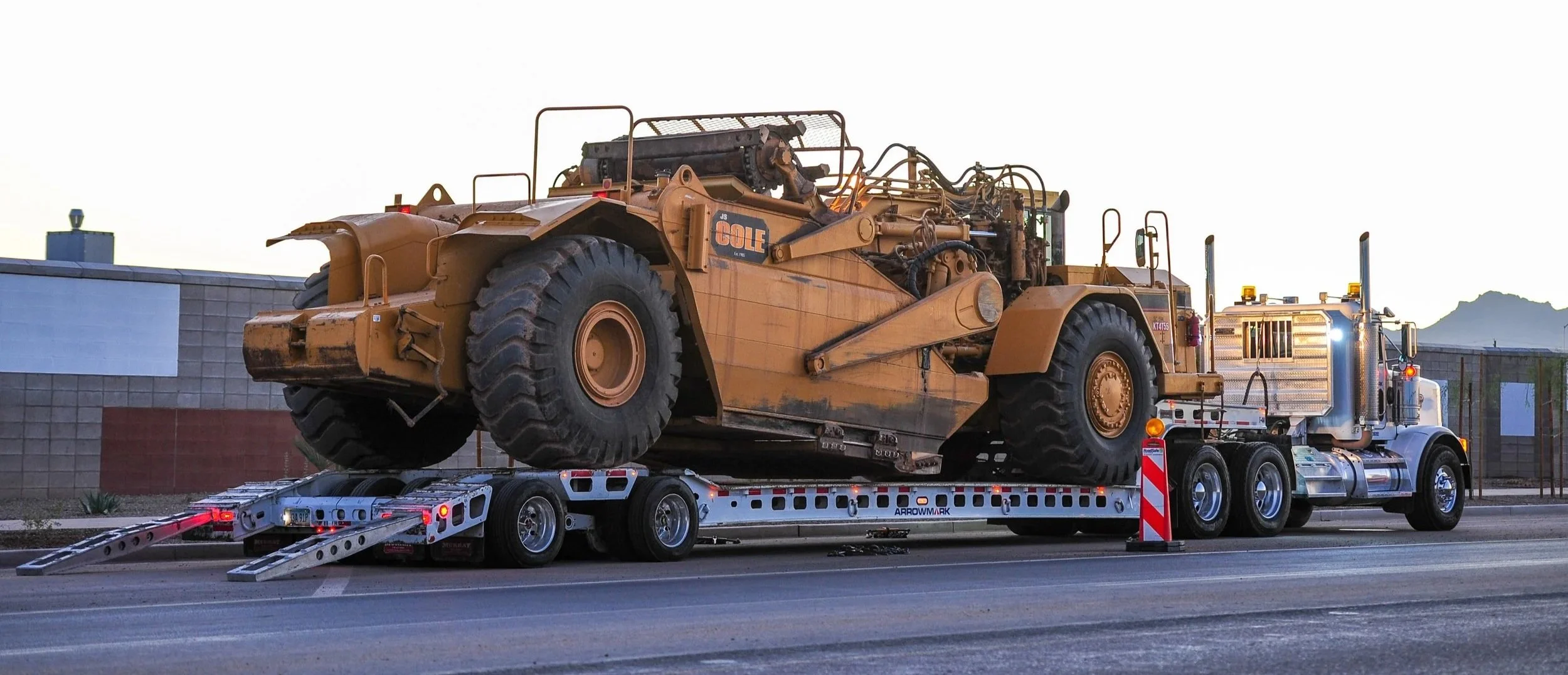
Street and road, general engineering and trade contractors understand the importance of having a written and executed subcontract agreement in place when using different subcontractors to complete a project. This agreement serves to protect both parties by clarifying responsibilities, managing risk and providing legal protections in the event of a dispute.
However, many of these same contractors will overlook having a subcontract agreement in place for third-party subhaulers or what is called a subhauler agreement. If you hire a third-party to move a piece of heavy equipment or use someone to import/export material from a project, we recommend implementing a subhauler agreement. While this type of exposure will not affect the project once it reaches its final intended use (i.e., completed operations), it may have an impact during the construction phase.
For example, if a street and road contractor needs to import or export material, they contact a subhauler to let them know that they will need two dump trucks running eight hours a day for one week. On the first day, they enter the jobsite and accidently hit a pedestrian because they are unfamiliar with project site. That individual will more than likely obtain legal representation and file suit against the subhauler who caused the bodily injury and will more than likely name the street and road contractor as well.
In order to protect and transfer the risk in the scenario above, we recommend working in conjunction with your legal counsel to establish a written subhauler agreement to include:
Scope of work
Indemnification – subhauler agrees to protect and indemnify contractor
Insurance requirements – general liability, workers’ compensation, commercial auto, excess/umbrella and pollution
Equipment and maintenance – subhauler must maintain its own equipment, pay for all related charges/expenses and ensure compliance with all regulatory requirements and licenses.
Safety – subhaulers are responsible for hiring qualified and safe drivers and show that they have protocols in place to monitor drivers.
In today’s legal environment, it is imperative that companies understand their potential exposure to risk. Those that can successfully implement and manage both their subcontract and subhauler agreements will not only protect the assets of their companies but also receive more favorable insurance pricing and improve their risk profile.
If you have questions about your subhauler risk, contact me at (619) 937-0167 or sclayton@ranchomesa.com.