

Industry News

Training Your Landscape Fleet Drivers with Rancho Mesa
Author, Drew Garcia, Vice President, Landscape Group, Rancho Mesa Insurance Services, Inc.
Landscape businesses are well aware of the risks associated with their employees operating vehicles on a daily basis. The commercial insurance market has also taken notice of the risks and responded with rate increases and a diminishing appetite to write the policies.
Author, Drew Garcia, Vice President, Landscape Group, Rancho Mesa Insurance Services, Inc.

Landscape businesses are well aware of the risks associated with their employees operating vehicles on a daily basis. The commercial insurance market has also taken notice of the risks and responded with rate increases and a diminishing appetite to write the policies.
Rancho Mesa works with over 100 landscape and tree care professionals across the country. Due to our heavy concentration on the green industry, we are able to bring specific resources to this group in an effort to better prepare their businesses to mitigate risk.
An example of these industry-specific resources is our recently released driver-specific toolbox talk library that can be used on a weekly basis to help employees prepare for the common exposures they face while driving for your company. These short safety meetings should be used to supplement your fleet and driver safety program.
The library of 52 English/Spanish driver-specific toolbox talk topics includes:
6 Utility Trailer Driving
6 Worksite Parking and Awareness
40 General Driver Safety
Safety managers can use this content for:
Weekly refresher trainings for fleet drivers
During a specific time of year when there is low light, wet weather, or high wind
Corrective action from GPS or dashcam insights (e.g., harsh breaking, speed management, following distance, right of way, turning, backing safely, and blind spots)
The library of driver-specific toolbox talks are available within the SafetyOne™ mobile app. And, anyone can subscribe to receive Rancho Mesa’s weekly driver-specific toolbox talk emails.
Rancho Mesa encourages the landscape industry to continuously train their drivers to better position them for success.
For questions about best practices for managing driver risk, contact me at drewgarcia@ranchomesa.com or (619) 937-0200.
Six Ways Contractors Can Prepare for Higher Workers’ Compensation Rates
Authors, Sam Clayton, Vice President, Construction Group, Rancho Mesa Insurance Services, Inc.
Over the last couple of months, we have published multiple articles and podcasts on the Workers’ Compensation Insurance Rating Bureau’s proposed rate increase and now the approved 8.7% increase to the pure premium rates effective 9/1/25. But, what we have not touched on are the specific steps our best-in-class contractors are doing to position their companies to offset these increases.
Author, Sam Clayton, Vice President, Construction Group, Rancho Mesa Insurance Services, Inc.
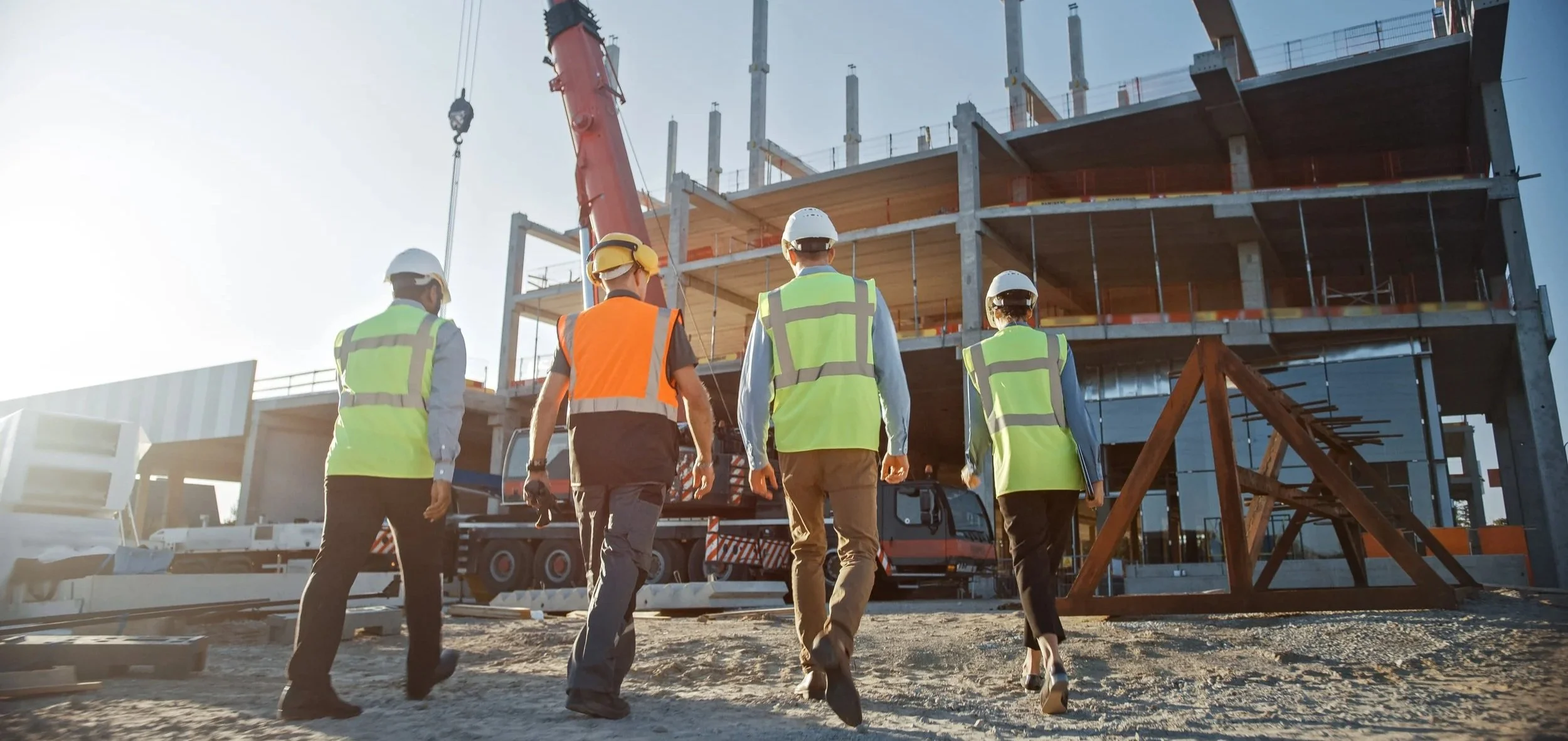
Over the last couple of months, we have published multiple articles and podcasts on the Workers’ Compensation Insurance Rating Bureau’s proposed rate increase and now the approved 8.7% increase to the pure premium rates effective 9/1/25. But, what we have not touched on are the specific steps our best-in-class contractors are doing to position their companies to offset these increases. They are:
Engaging with their advisor early in the renewal process. Contractors need to know exactly how this rate change will impact their specific class code. For 5506 Street/Road Contractors, the pure premium increase is 5%, but contractors performing dry utility work in class code 6325 Conduit Construction, it is increasing 26%.
Continuing to evaluate and update their companies’ risk control program.
Understand and managing their historical and future experience modification rate (EMR) . If their EMR is a debit mod (i.e., over 100), determine what is driving it upward?
Using KPIs to benchmark their frequency and severity against their peers’.
Analyzing both open and closed claims. They are looking for any lag times in claim reporting, and reviewing open claims on a consistent basis to manage open reserves. They identify the root causes of the incident and what they can do to prevent these types of claims from reoccurring in the future.
Evaluating alternative risk financing strategies like captives, retros or deductible workers’ compensation plans.
So the question becomes, why do these best-in-class contractors take these proactive steps? One, they understand that losses unfortunately are inevitable but if there are processes and procedures that they can put in place to minimize the impact, they are willing to do it. The second reason is that they are bidding projects that potentially do not start for another 8-12 months and they want to factor in any increase in operating costs and protect their profitability.
To get started on these six steps to prepare for higher workers’ compensation rates, contact me at sclayton@ranchomesa.com or (619) 937-0167.
Updates to OSHA Penalty Guidelines and Reductions for Small Businesses
Author, Jadyn Brandt, Client Communications Coordinator, Rancho Mesa Insurance Services, Inc.
Small businesses are set to be the beneficiaries of new Occupational Safety and Health Administration (OSHA) penalty adjustments. The U.S. Department of Labor has updated its penalty and debt collection procedures in OSHA’s Field Operations Manual, expanding the number of businesses that fall under small business guidelines.
Author, Jadyn Brandt, Client Communications Coordinator, Rancho Mesa Insurance Services, Inc.

Small businesses are set to be the beneficiaries of new Occupational Safety and Health Administration (OSHA) penalty adjustments.
The U.S. Department of Labor has updated its penalty and debt collection procedures in OSHA’s Field Operations Manual, expanding the number of businesses that fall under small business guidelines.
Under new guidance, businesses across all 50 states who employ up to 25 employees will now be eligible for up to a 70% fine reduction. Previously, that level of penalty reduction was only available for business with 10 or fewer employees.
A penalty reduction of 20% has also been expanded for employers who do not have a history of violations. Businesses who have never undergone inspection by OSHA at a federal or state level, as well as those who have undergone inspection in the last five years but had no “serious, willful, or failure-to-abate violations” are eligible for this reduction.
Additionally, employers who take immediate steps to eliminate a hazard will now be eligible for a 15% penalty reduction.
These policy changes take effect July 14, 2025. Any penalties issued before that date will be held to the previous penalty structure. If your business is part of an open investigation where a penalty has not yet been issued, you will be covered by the new guidance.
Contact your local OSHA office to find our if you company is eligible for these new fine reductions.
The Value of Safety Committees in Human Services Organizations
Author, Jack Marrs, Associate Account Executive, Rancho Mesa Insurance Services, Inc.
Human services organizations operate in challenging environments. Staff regularly work in close contact with individuals who may have physical, cognitive, or behavioral needs. This can involve lifting and transferring clients, managing unpredictable situations, or navigating unfamiliar environments. National data from the Bureau of Labor Statistics (BLS) shows that these situations elevate the risk of workplace injuries.
Author, Jack Marrs, Associate Account Executive, Rancho Mesa Insurance Services, Inc.

Human services organizations operate in challenging environments. Staff regularly work in close contact with individuals who may have physical, cognitive, or behavioral needs. This can involve lifting and transferring clients, managing unpredictable situations, or navigating unfamiliar environments. National data from the Bureau of Labor Statistics (BLS) shows that these situations elevate the risk of workplace injuries.
The BLS data confirms the healthcare and social assistance sector has some of the highest injury rates across all industries, with 4.5 nonfatal cases per 100 full-time workers in 2022. While some risk is unavoidable in this field, many of the most common injuries are preventable and that’s where safety committees can make a powerful impact.
Role of a Safety Committee
Safety committees are internal teams that meet regularly to discuss hazards, evaluate recent injuries and near misses, and implement steps to prevent injuries from happening in the first place. They often bring together staff and management from different departments to proactively create a formal structure for addressing workplace safety.
Organizations with engaged safety committees experience fewer claims, lower insurance costs, and stronger relationships with their employees. Safety committees are not just about checking a box, they help create a safe work environment in a way that becomes part of the organization’s culture.
Benefits of an Active Safety Committee
Having an active safety committee comes with several benefits that support both the organization and its employees. Some examples are:
Fewer workplace injuries. One of the most significant benefits of having a safety committee is a reduction in workplace injuries. Over time, committees will begin to identify trends, like repeated lifting injuries or slips in common areas, and respond by recommending lifting trainings or suggest that employees need to wear nonslip shoes. When these improvements are implemented and reinforced, injury rates often decline significantly.
Insurance savings. Insurance carriers pay close attention to how seriously an organization takes safety. An active safety committee that documents meetings, follows through on recommendations, and tracks results can improve underwriting outcomes when presented by the broker.
Improved staff morale and retention. Employees like to feel heard. When staff see leadership taking action on safety issues they have raised, whether it is adding nonslip shoes, improving lighting, or increasing trainings, it fosters trust. And, in a field where burnout and turnover are high, trust matters.
Regulatory compliance. Under OSHA’s General Duty Clause, employers are responsible for maintaining a workplace free from recognized hazards. A safety committee helps fulfill this obligation and can serve as documentation of due diligence during audits or inspections. In California and several other states, safety committees may also play a role in meeting state-specific requirements related to workers' compensation or injury prevention plans.
Best Practices for Human Services Settings
To be effective, a safety committee needs more than just good intentions. The most successful ones follow key practices:
Balanced membership. Include management and frontline workers. Direct support staff often have the insight into daily risk and often have ideas to prevent injuries.
Consistent meetings. Monthly or quarterly meetings keeps safety on the forefront of your mind. Sporadic meetings will not lead to lasting results.
Review of incidents and near misses. Analyze both what went wrong and what almost went wrong. These near misses are also important to document and put steps in place so an injury does not occur in the future.
Site walkthroughs. Physically inspecting locations can uncover hazards that are not easily visible on paper.
Clear documentation. Keep meeting minutes, assign follow-ups, and track progress. This level of detail not only improves accountability, it can also support insurance or OSHA documentation if needed.
If you are just starting out, OSHA has a resources for effective health and safety committees along with many other state and national safety organizations.
For human services organizations, safety is more than checking a box, it is essential to long-term stability. Fewer injuries mean fewer claims, which leads to less disruption, and a stronger team. A well-run safety committee is a low-cost strategy that leads to a safer work environment and a cost savings outcome.
To learn more about how Rancho Mesa can support your safety committee’s efforts, contact me at (619) 486-6569 or jmarrs@ranchomesa.com.
Top Work-Related Injuries for Landscapers
Author, Greg Garcia, Account Executive, Rancho Mesa Insurance Services, Inc.
Travelers Insurance’s peer data from 2020 to 2025 report showcases the top work-related injury causes within the landscape industry. Looking at the top of this list, slip/trips/falls as well as strains account for roughly 40% of the injuries reported.
Author, Greg Garcia, Account Executive, Rancho Mesa Insurance Services, Inc.
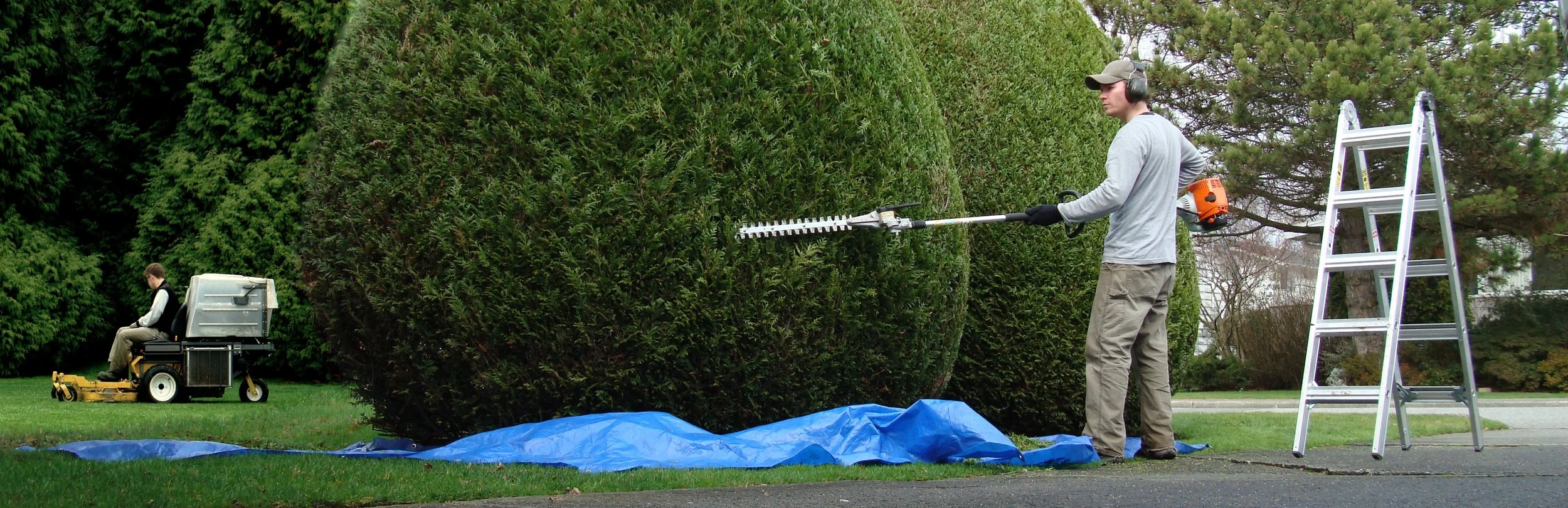
Travelers Insurance’s peer data from 2020 to 2025 report showcases the top work-related injury causes within the landscape industry. Looking at the top of this list, slip/trips/falls as well as strains account for roughly 40% of the injuries reported.
With the state of the worker’s compensation marketplace clearly hardening, as shown by the proposed 11% increase to the pure premium rates in CA, now is a great time to make sure your landscape company is focused on preventing these top work-related injuries. (Learn more about the pure premium increase.)
Managing and accounting for slips, trips and falls for landscape companies can be difficult. Best-in-class landscape companies mitigate these claims by managing their job hazard analyses (JHAs). Documenting and communicating to the crew these JHAs can be very beneficial in the prevention of slips trips and falls. Examples include calling out a portion of the sidewalk that may be uneven due to a root, or a hole in the grass. It can also include identifying a slippery slope if it had just rained the night before, or perhaps when crew members are working in the morning hours when dew is present. Staying diligent with your company’s JHAs can help reduce these slip trips and falls.
The second major cause of work-related injuries referenced for landscape companies would be strains. The day-to-day demands of being a landscape professional can be very taxing on the body as it is a very physical occupation. To help mitigate some of these strains, landscape companies should consider implementing a mobility and stretch program into their organization’s daily routine. This would consist of the crews getting together either in the morning at the yard, or at their respective jobsites and performing a quick 5 minute stretch routine to make sure their bodies are ready for the physical activity of the day. Rancho Mesa’s Mobility & Stretch™ Program offers an effective way to ensure employees are stretching prior to performing their job duties.
With workers’ compensation rates on the rise, now is a great time to revisit these key elements of your safety program and make sure your team is doing everything possible to help mitigate future work-related injuries.
For more information or to learn more about our safety resources, email me at ggarcia@ranchomesa.com or (619) 438-6905.
Signs of Future Increased Costs in Workers’ Compensation Continue
Author, Kevin Howard, Account Executive, Rancho Mesa Insurance Services, Inc.
Senator Anna M. Caballero recently introduced Senate Bill 555 (SB 555), also known as the Workers’ Disability Adjustment Act. While the bill is currently stalled in the Senate Appropriations Committee, SB 555 could, if signed into law, increase weekly Permanent Disability (PD) benefits for injured workers in the California workers’ compensation system, adjusting these annually to reflect economic inflation through a cost-of-living adjustment (COLA).
Author, Kevin Howard, Partner, Rancho Mesa Insurance Services, Inc.

Senator Anna M. Caballero recently introduced Senate Bill 555 (SB 555), also known as the Workers’ Disability Adjustment Act. While the bill is currently stalled in the Senate Appropriations Committee, SB 555 could, if signed into law, increase weekly Permanent Disability (PD) benefits for injured workers in the California workers’ compensation system, adjusting these annually to reflect economic inflation through a cost-of-living adjustment (COLA).
According to the official Senate Committee analysis, the projected cost of SB 555 is estimated at $570 million to $907 million over eight years. This potential increase in long-term claim cost could catch workers’ compensation underwriters and actuaries off guard. Exploring things further, we have provided an example below of an injured worker’s permanent disability benefits should SB 555 generate enough interest back in Sacramento.
Meet Joe the Roofer
If Joe is deemed 25% permanently disabled, here is how his PD benefits would look before and after SB 555. I am using a 5-year period in this claim scenario:
Before SB 555 (Current System)
Weekly Benefit: $290/week
Duration: 5 years
Total: $75,400
(Note: These rates have remained unchanged since 2014.)
After SB 555 (COLA)
Benefits increase annually with inflation (assume 3% COLA/year)
Estimated Total: $80,051
Bottom line: Over five years, Joe would receive 6–8% more in PD benefits under SB 555. These payments would reflect modern cost-of-living realities for injured workers.
Projecting these new claim costs could dramatically impact underwriting within the worker’s compensation marketplace. It would most certainly elevate premiums to levels not been seen in years. While it is clear this bill may continue to be stalled, we expect the push for higher permanent disability benefits to be a regular theme in this and other potential new legislation.
How to Prepare For the Hardening Workers’ Compensation Market
Work closely with your broker at your pre-renewal meeting to understand your company’s key performance indicators and how those can be leveraged for the best possible pricing outcome at renewal. Re-visit your safety program and protocol, focusing on lowering claim frequency and severity. And finally, understand how your broker is developing your risk profile to the underwriters. To learn more about how Rancho Mesa can help in these areas, contact me at khoward@ranchomesa.com or call me at (619) 438-6874.
About the Author
Kevin Howard is a Commercial Insurance Broker at Rancho Mesa Insurance Services, Inc., specializing in risk management and insurance solutions for artisan contractors including solar, roofing, and other skilled trades. Based in San Diego, California, Kevin serves contractors throughout the Southern California region, helping them protect their businesses with tailored coverage and proactive support. His clients benefit from access to exclusive tools like the SafetyOne™ Platform, RM365 HRAdvantage™ Portal, and workers’ compensation claims advocacy services, designed to improve safety, streamline HR processes, and support better claims outcomes.
Have you Experienced Turbulence in Your Commercial Auto Insurance Renewal?
Landscape maintenance contractors with large fleets of service trucks are tough to place in the current insurance market. This, along with a hardening general liability market has lead to some frustrating insurance renewals.
Rancho Mesa Insurance’s Green Industry Practice Group has helped over a 100 landscape and tree care customers currently operating across the country with navigating this turbulent market. Connect with them for a more detailed review of your company’s insurance placement needs.

Landscape maintenance contractors with large fleets of service trucks are tough to place in the current insurance market. This, along with a hardening general liability market has led to some frustrating insurance renewals.
Rancho Mesa Insurance’s Green Industry Practice Group has helped over a 100 landscape and tree care customers currently operating across the country with navigating this turbulent market. Connect with them for a more detailed review of your company’s insurance placement needs.
“Our current landscape customer base has an average fleet size of 40 vehicles,” said Drew Garcia, Vice President with Rancho Mesa, Landscape and Tree Care Group Leader. “We are a fit for all types of landscape organizations generally starting at $3,000,000+ in annual revenue.”
Reasons Behind the Difficult Insurance Market
Increase in bodily injury claims
Increase litigation cost
Distracted driving
In-experienced drivers
Increase cost for vehicle repair
Areas where Landscape Companies Can Focus
Implement motor vehicle report standards
Review physical damage needs for comprehensive/collision
Provide formal annual driver training
Ongoing driver monitoring and training
Implement technology (i.e., telematics, fleet monitoring, dashcam)
Train drivers based on data revealed from technology
Perform daily/weekly vehicle inspections
Detailed auto accident and incident reports and prompt reporting procedures
Rancho Mesa’s Green Industry Insurance Solutions
Property and casualty insurance only (i.e., general liability, auto, umbrella, workers’ compensation, management liability, cyber liability, professional, pollution, property, inland marine)
Multiple insurance carrier partners
SafetyOne™ mobile app with landscape and tree care-specific toolbox talk content
Trusted by over 100 landscape and tree care (green industry) businesses across the country
CA Insurance Commissioner Lara Approves 8.7% Workers Compensation Increase
Rancho Mesa’s Alyssa Burley and President David Garcia discuss California's approved 8.7% workers' compensation insurance rate increase, its impact on businesses, and practical steps business owners can take to prepare for the changes effective September 1st.
Rancho Mesa’s Alyssa Burley and President David Garcia discuss California's approved 8.7% workers' compensation insurance rate increase, its impact on businesses, and practical steps business owners can take to prepare for the changes effective September 1st.
Alyssa Burley: You're listening to Rancho Mesa’s StudioOne™ podcast, where each week we break down complex insurance and safety topics to help your business thrive. I'm your host, Alyssa Burley, and I'm joined by Dave Garcia, president with Rancho Mesa. And we're going to talk about California's now approved workers' compensation insurance rate increase. Dave, welcome to the show.
Dave Garcia: Thanks, Alyssa, glad to be back here in StudioOne and anxious to get this information out there for everybody.
AB: Yeah. So we've actually been talking about the proposed workers' compensation increase for, I don't know, the last few months. And we've published multiple articles and podcast episodes on the subject, and now it's actually official. California's Insurance Commissioner, Ricardo Lara, has approved an 8.7% average rate increase.
So Dave, in your opinion, what kind of impact will this increase have on California businesses?
DG: Well, you know, this is a deep, deep topic. So I'll try to be brief right now. So in short, you know, we've obviously been talking a lot about this recently, and particularly about what's driving these increases. But rather than go over all those elements again, I'd encourage the audience to listen to the three-part series I did recently with Margaret Hartman. She's the Senior Vice President and Chief Marketing Officer for Berkshire Hathaway Homestate Companies. They're one of the largest specialty work comp carriers in California and Margaret gave just tremendous insightful overviews of what's at the heart of this and the increases range from medical cost inflation, payroll inflation, and cumulative trauma claims just to name a few of the many cost drivers.
So to fix those, we're definitely going to need reform, but as with anything else, to address those bigger problems that are going to require that type of reform, I just don't see that coming until 2027 at the earliest. Maybe election year 2026, puts a little upward pressure there, but I'm not going to bank on anything happening before 2027.
So with Laura's decision, the WCIRB just recently released their new pure premium rates per class code, which we take the opportunity then to download that into our pricing models here at Rancho Mesa. So that gives us an ability to identify the individual impacts these new pure premium rates will have on each class code.
AB: Okay, and we'll include links to those three episodes with Margaret in the episode notes for this episode. And I would encourage our listeners to reach out and see if this increase or how this increase is going to impact your individual class code.
Now, when can California business owners expect to feel the result of this increase?
DG: That's a great question, Alyssa. So this all goes into effect September the first of this year. So these pricing changes will take effect on that day. But the thing that business owners should understand is that those changes will not take effect for them until the actual renewal time of their workers' compensation policy.
AB: All right. So businesses with a renewal date on or after September 1st will feel this change. While someone who renews, let's say in February, won't feel this impact until February 2026, correct?
DG: Yeah, exactly. You’re spot on there. And that's why I think we've tried to kind of be the canary in the mine here by publishing so many articles and podcasts months ago to try to get this message out because, so many of the businesses that--so for those business that renew really close to September they have some opportunity to get prepared the time is short.
AB: All right so there are things business owners can do to prepare even if they renew early September, maybe October?
DG: Yes, there's ways to prepare now and that's whether your renewal is in September or some month after September. But let me just stress this, time is of the essence. There is no time to delay. So the closer you are to September 1st in your renewal, you really have no time to spare.
So along those lines, we've got solutions here that we think will help all businesses. So we're going to be taping an episode here in the next few days that will spell out exactly what businesses can do now to try to mitigate these increases. The good news is we have the answers and on top of that we're more than willing to roll up our sleeves and get to work.
AB: If you're talking to your client today we know the time is over the essence what are you telling them?
DG: You know I'm telling them that the first thing they need to do is understand what the actual individual increase is to them and their pure premium rates. So they need to reach out to the broker, hopefully they're aware of what those changes are, and find out is it a single digit, double digit, high double digit increase, it's going to really make a big difference.
The second thing they really need to do is kind of roll up their sleeves and have somebody audit their safety program.
And then thirdly, I think it's time to really mine into your claims and try to develop solutions to the root causes of those claims. Without those three things, the wave's going to hit you and you're not going to see it coming.
So we all need to just encourage one another, now's the time to be proactive. And this is work that is able to be done. This is not overwhelming work. It's a matter of being proactive, understanding the situation, and then implementing a strategy and moving forward.
So businesses that are out there, reach out to your broker, reach out to us, talk to somebody now, don't wait.
AB: All right, and I look forward to discussing all of those ways California businesses can prepare now for the coming increases. So Dave, thank you for joining me in StudioOne.
DG: Alyssa, thank you so much, an audience out there. Really, time is of the essence. So make those calls.
AB: All right. Well, thanks for tuning in to our latest episode produced by StudioOne. If you enjoyed what you heard, please share this episode and subscribe. For more insights like this, visit us at RanchoMesa.com and subscribe to our weekly newsletter.
Mid-Year Insurance Outlook for Contractors: Rising Costs, Tighter Margins
Author, Casey Craig, Account Executive, Rancho Mesa Insurance Services, Inc.
As a contractor in California, you are likely feeling the squeeze, right now. Material costs are up, labor is more expensive, and insurance, typically a predictable line item, is becoming a growing burden on your bottom line. 2025 is proving to be one of the most challenging years yet for construction business owners. Even companies with best practice risk management controls in place are getting hit with premium increases that are hard to absorb.
Author, Casey Craig, Account Executive, Rancho Mesa Insurance Services, Inc.

As a contractor in California, you are likely feeling the squeeze, right now. Material costs are up, labor is more expensive, and insurance, typically a predictable line item, is becoming a growing burden on your bottom line. 2025 is proving to be one of the most challenging years yet for construction business owners. Even companies with best practice risk management controls in place are getting hit with premium increases that are hard to absorb.
Auto Insurance
Auto premiums continue to climb, making fleet coverage one of the fastest growing expenses for contractors.
Replacement parts and labor costs have skyrocketed. Even a basic bumper repair now involves expensive sensors, which take longer to replace and recalibrate.
Distracted driving is at an all-time high. Today’s younger drivers have never known life without a smartphone, and it shows—claim frequency is rising, especially in high traffic areas like Southern California.
These and other factors are pushing rates higher, regardless of your claims history and shrinking margins even for the most careful contractors.
Workers’ Compensation Rate Increases Expected Soon
Even as jobsite safety improves and injury rates fall, workers’ compensation costs are trending upward—driven largely by the costs associated with litigation and cumulative trauma claims.
Each claim costs more, especially when attorneys get involved.
Once a claim becomes litigated, it can escalate into a cumulative trauma (CT) claim. This drastically increases costs while also impacting your experience modification (Ex-MOD). Even when carriers believe the injury did not occur on the job, the burden of proving it often forces them to settle anyway.
Fraudulent or exaggerated claims are becoming more common, particularly after layoffs or when employees feel disgruntled.
Contractors with tight margins and lean crews are at higher risk as a single claim can now have twice (or more) the financial impact compared to just a few years ago.
Shrinking Margins: More Pressure, Less Room for Error
Between rising insurance costs, wage inflation, and higher overhead, contractors are operating with less margin for error than ever before. Jobs that were profitable five years ago may now just get you to breaking even—or worse. Compound this with fewer jobs to bid leading to more competitors bidding on each job, all while trying to remain profitable.
This puts even more importance on risk management and proactive insurance planning. It is not just about reducing the frequency of accidents—it is about protecting your margins and keeping your business viable in a high-cost environment.
What You Can Do Right Now
Do a thorough review of your insurance policies to ensure you have the broadest coverage in place and understand clearly where the market is headed in advance of bidding projects. Revisit your stretch and mobility program, heat illness prevention protocol, and ladder safety training—especially with the rise in fraudulent claims. Avoidable injuries will only add to the pressure and compromise margins.
Ensure your fleet safety program is updated and consider using cameras or apps in vehicles that restrict phone use while driving.
Make sure foremen and all staff are treating employee’s well. Disgruntled employees are typically the ones who can and will file claims if layoffs are required.
Track and manage claims closely to prevent small issues from becoming a larger impact to your Ex-MOD and your future workers’ compensation costs. This includes building out a formal, written return-to-work program.
Partner with a broker who understands your trade and can advocate for the most competitive rates and broadest coverage for your exposures.
If you have any questions relating to this article, I am more than happy to provide a detailed audit of your insurance portfolio and safety programs. Contact me at ccraig@ranchomesa.com or call me at (619) 438-6900.
Preparing for the Summer Heat: Heat Illness Prevention Resources from Rancho Mesa
Author, Jadyn Brandt, Client Communications Coordinator, Rancho Mesa Insurance Services, Inc.
As temperatures continue to rise through the summer months, heat illness prevention is essential to protect employees from the dangers of extreme weather. Rancho Mesa has a variety of safety resources available for employee training and incident reporting.
Author, Jadyn Brandt, Client Communications Coordinator, Rancho Mesa Insurance Services, Inc.

As temperatures continue to rise through the summer months, heat illness prevention is essential to protect employees from the dangers of extreme weather.
Rancho Mesa has a variety of safety resources available for employee training and incident reporting.
Heat Illness Prevention Workshop/Webinar
Rancho Mesa’s Heat Illness Prevention workshop provides an in-depth overview of California’s Heat Illness Prevention regulations for outdoor and indoor workplaces. This workshop is also available as a recording (webinar) that covers the key elements required to protect employees from heat-related illnesses and ensure company compliance. It can be access through the SafetyOne™ Learning Management System.
Completing this training counts towards earning the RM365 Advantage Safety Star™ Program certificate of completion.
Heat Stress Online Training Course
Two Heat Stress online training courses are available through the SafetyOne Learning Management System. Employees assigned to the Heat Stress training will watch a training video and take a quiz to complete the course.
Toolbox Talks
A number of Toolbox Talks are available in SafetyOne in both English and Spanish, and can be used for weekly safety trainings:
Heat Exhaustion/Sunstroke
Heat Illnesses
Heat Stress Prevention for Landscape Contractors
Heat Stress Prevention for Tree Care Companies
Protecting Yourself Against the Heat
Warning - Extreme Heat is Coming
Observation Reports and Mobile Forms
SafetyOne app users can utilize Observations to document when heat Illness prevention programs are followed on the job site and identify when there is an issue.
Mobile Forms can be used to collect and report safety data relating to heat illness using templates such as accident reports, incident reports, and daily reports.
Heat Advisories
SafetyOne administrators can utilize the Company News function to send heat advisories to employees who may be working in high temperatures, and remind those employees of ways to stay safe in the heat.
Documentation through the HR Portal
If an incident does occur on the job, employers can document the incident in their OSHA 300 logs through the RM365 HRAdvantage™ Portal.
For more information about heat illness prevention resources available through Rancho Mesa, contact your Client Technology Specialist.
Liquidated Damages: What Every Contractor Needs to Know
Author, Andy Roberts, Account Executive, Rancho Mesa Insurance Services, Inc.
For a surety agent and underwriter, there are specific provisions within a contract that are important. One of the more critical provisions, references Liquidated Damages (LD). Often overlooked by contractors, LDs represent important elements of the contract that can cause significant financial losses on a project. So what are LDs; why are they important; and, what can contractors do to make sure the LDs in their contracts are fair?
Author, Andy Roberts, Account Executive, Rancho Mesa Insurance Services, Inc.

For a surety agent and underwriter, there are specific provisions within a contract that are important. One of the more critical provisions, references Liquidated Damages (LD). Often overlooked by contractors, LDs represent important elements of the contract that can cause significant financial losses on a project. So what are LDs; why are they important; and, what can contractors do to make sure the LDs in their contracts are fair?
Liquidated damages are daily charges within a contract that come into effect when there are delays on a project. The amount of the charge is spelled out within the contract, usually as “$X amount per day,” and are put into place to compensate the project owner for losses they may experience when a project’s completion is delayed. While that seems straightforward, this provision is very important and contractors need to understand what can happen if LDs are enforced on a project because of their delay.
If an owner is assessing liquidated damages on a project, the concern is that the contractor is going to start minimizing profits and depending on the amount, it could happen very quickly. Additionally, as those profits drop, cash flow can become an issue. This will lead to a potential default due to the financial distress which would trigger the surety’s involvement. There are a couple of ways contractors can mitigate their exposure to liquidated damages.
First, contractors should try to limit their exposure by capping the amount of the damages that can be assessed. We often see flow down provisions within subcontracts, where the higher LDs are used and it doesn’t make sense for the sub-contractor to take on that risk when their contract amount is significantly smaller than the prime contract amount. Second, contractors should try to negotiate terms that would limit their exposure to the damages that they cause.
While the liquidated damages provision within construction contracts is often overlooked, the daily amount that can be assessed can quickly become significant and should be considered prior to signing a contract.
Should you have more specific questions about LDs within your contract, give me a call at (619) 937-0166 or email me at aroberts@ranchomesa.com.
A Contractor’s Best Practice Approach to Price Escalations in the Current Market
Author, Anne Wright, Surety Relationship Executive, Rancho Mesa Insurance Services, Inc.
Historically, market conditions and economic factors have contributed to both contractors and subcontractors having to deal with price escalations. Today, the uncertainties of how the tariffs will impact the construction industry is causing many to rethink their pricing models and contracts.
Author, Anne Wright, Surety Relationship Executive, Rancho Mesa Insurance Services, Inc.

Historically, market conditions and economic factors have contributed to both contractors and subcontractors having to deal with price escalations. Today, the uncertainties of how the tariffs will impact the construction industry is causing many to rethink their pricing models and contracts.
I engaged the input of a couple of our colleagues in the legal realm here in San Diego– Luke Thompson of Thompson Law & Consultation and Jeffrey Baird with Finch Thornton and Baird, to get their take on price escalations. And, I thank them for their feedback on presenting some information that might be meaningful to our audience who are unsure how to handle the rising costs.
One notable observation regarding today’s construction industry suggests that some companies pursue their backlog of projects without proper consideration of profits. Many contractors have concerns about an uncertain flow of money in both the public and private sectors, so they are taking these jobs without proper evaluation of the profitability of the job and the balance sheet.
The construction industry certainly learned some lessons during COVID for dealing with cost increases from project delays, primarily from supply chain issues that impacted budgets for both labor and materials, and schedules. Both public and private owners, did, however, often recognize that there needed to be some flexibility with schedules and prices as a result of these impacts from supply chain problems.
General contractors may work to include protections in their prime contracts with the owners to address price escalations. Educated subcontractors will also make sure that they confirm these provisions in the prime contract, and that these flow down in their subcontract.
So, here we are today with some lingering questions about the effects of the supply chain and market conditions. And in 2025, the discussion now also includes potential impacts from tariffs. Contractors are now wondering what products might the tariffs affect? How do we adapt to the on again/off again news and chatter about the what, when, and how much cost increases might come from tariffs on various products?
In gathering some feedback, I have been told that some contractors are now submitting their proposals with language regarding long-lead items and material escalation warnings due to tariffs.
Savvy subcontractors are also requesting copies of the prime contracts to review the escalation provisions to make sure they have some protection, and if not what they need to negotiate into their subcontracts to ensure that they are protected. Thorough contract review and modifications will always be important regardless of the market conditions.
Steel, wire and certain other commodities regularly fluctuate in pricing. That said, it is prudent to keep a watchful eye on such items, and have good communication with suppliers, general contractors, and project owners to manage pricing changes and expectations.
Historical data that suggests vendors will honor prices represented in the purchase orders and offset the loss by making higher margins on future orders when the market settles down. However, if we have learned anything about this industry, nothing is that predictable.
So, your best practice strategy is to pay close attention when talking to your vendors, and review your contracts and subcontracts closely to make sure you have the most reasonable protections as possible. Having an attorney review each contract is typically money well spent.
Feel free to reach out to me for a referral to an industry partner in the legal realm. I can be reached at awright@ranchomesa.com or (619) 486-6570.
And again, I thank Luke Thompson and Jeffrey Baird for their contributions here.
Workers' Comp Rate Increases On the Way with Margaret Hartmann: Part 3
In the final episode of a three-part series, President David Garcia and Margaret Hartmann, Sr. VP and Chief Marketing Officer with BHHC, discuss the WCIRB's proposed 11.2% workers’ compensation rate increase in California. They explore how this may impact employers, and actionable steps businesses can take to mitigate rising premiums.

In the final episode of a three-part series, President David Garcia and Margaret Hartmann, Sr. VP and Chief Marketing Officer with BHHC, discuss the WCIRB's proposed 11.2% workers’ compensation rate increase in California. They explore how this may impact employers, and actionable steps businesses can take to mitigate rising premiums.
Dave Garcia: Hi, you're listening to Rancho Mesa's StudioOne™ podcast where each week we break down complex insurance and safety topics to help your businesses thrive. I'm your host, Dave Garcia. Thanks for joining us.
So today with the WCIRB's recent announcement of 11.2% recommended rate increase in workers' compensation, it definitely feels to me like the workers' compensation marketplace in California is about to change, and with that in mind, we've invited Margaret Hartman, the Senior
Vice President/Chief Marketing Officer at Berkshire Hathaway Home State Companies, who's one of the largest specialty workers' compensation carriers in California, to give us some insights as to how this recommendation came about, what are the areas that are driving this increase, and what employers can do to try and mitigate the rate increases.
Hi Margaret, welcome back to StudioOne. Thanks for joining me today.
Margaret Hartman: Thanks for having me.
DG: It seems to me Margaret, given all the data and recent recommendations that many employers have not all are going to experience rate increases on the renewals. You know, we know Commissioner Lara--generally speaking--the Bureau makes their recommendation which they have at 11.2. Commissioner Lara--usually in June so it could be any day now-- will make his recommendation.
MH: I think it's today. There's a hearing today. He may not decide today, but I know there's a hearing today.
DG: Okay, well it could be today and today, so the we're taping this it's June the 10th. You know, I don't have a crystal ball. My crystal ball has snow in it I think he's going to come in with a recommendation of somewhere between four and six percent increase or somewhere in that range, six to seven, I don't know. Regardless, it's going to be a recommended increase, which we have not seen in over a decade in workers' compensation. So while that means it's going to put upward pressure on rate, that doesn't mean every single policyholder in California will see the same rate increase as another.
So your experience modifications come into play, your claims experience is going to come into play, and most importantly too, your safety practices. And this is where we're really auditing that and then allowing your broker to present that to the marketplace and what you're doing to prevent injuries from occurring and then what you do once an injury occurs. I think that is the really, really critical right now and Margaret, what actions would you recommend they try to do, if they see an increase to try to mitigate the increase and in some cases maybe there's still a decrease out there?
MH: Sure. And I mean, we've talked a lot about some specific ways that employers can help themselves out. But really, that experience modification that you're talking about is the best way to manage your insurance premium. So as you mentioned, there's going to be probably some sort of rate increase and probably single-digit, I'd imagine. And I agree with you four to six, three to five, something like that, but you're experiencing it. So that's, the carrier will have a base rate increase, increase likely, but your net rate is not going to be the same as that base rate. And the only way to impact that is to have a low mod. So try to manage your experience mod as much as you can.
And again, that's all the things we talked about, having the safest work environment that you can so you can prevent accidents from happening and then partnering with a carrier that's focused on providing the best possible care, getting claims resolved quickly and efficiently.
DG: Yeah, and we know, as Margaret said, it’s your premiums can be predicated on your payrolls by class code, multiplied by the final rate from the carrier, multiplied by your experience modification. But to get to the final rate of the carrier, there is some subjectivity still available with the carriers. So they can deviate a certain percentage, usually it's plus or minus 50%, off of their base rate. But in order to warrant those credits, it's going to take real items to try to get the carrier to understand why they should apply those credits. So when we talk about that out there, what your broker does is he or she submits to a carrier your information. We call that a submission.
So Margaret, how important is receiving a complete submission early in the process of benefit to the policyholder in getting the best possible rates?
MH: Yeah, I think it's incredibly important. So an underwriter is going to be getting a lot of these
applications, right, they're coming to their desk. And the ones that are complete, where they don't have to call or send an email or ask questions or try to get more information, those are going to rise to the top of the stack and they'll be able to process them quickly and maybe get the quotation out, right?
And then that starts the process of negotiation or tweaking that price. So the earlier that you can do that, the better. I think it definitely helps. And then the more complete the information is, you know, that will help the underwriter better price the risk as well.
DG: Yeah, are there any parts of submission that, you know, they're all important, but does any part of it carry more weight for your underwriting team than another area?
MH: Yeah, I mean, I think we look at the account as a whole, but obviously, loss history. It goes a lot into how we view an account, how we price an account. You know, a lot of times there's a supplemental application and employers out there have checked the box. "Oh, yeah, I have a safety program," blah, blah, blah.
But sometimes it becomes a check the box versus a, you know, "What exactly are you really doing?" But the proofs and the pudding, what does the loss history look like?
We also pay a lot of attention to payroll too. Is the account growing and if there's substantial growth in the payroll versus the expiring year, what's going on is there going to be growth and if there's going to be growth, it's not to say we would dislike the account, but that's one where we may want to keep an eye on them. how are they going to manage hiring practices to bring on all these new people? What kind of projects are they going to be taking on? It just goes into us understanding what that risk is isn't understanding how to price it.
Likewise, if the payroll's dropping substantially, why is that happening? Is there a layoff spending, those kinds of things? And then we look at the risk quality, risk management, safety program. Those are harder to get our arms around because as I said, a lot of people will just kind of check the box. Yeah, we have these things. So a narrative is really important from the broker, kind of putting together the story of the account.
The loss history, none of these things are the only, they're only a little piece of the puzzle, right? So maybe the loss history is such that it looks really bad and then in the last two years, it's improved. If you can substantiate why it's improved, not just send, here's the loss runs and here's the application, but this employer really took some steps to improve their loss profile. You know, they hired a new risk manager, they automated a lot of their procedures. Those are things that are going to play into the price and you're going to go, well, I think that account is going to perform the way it has the last two years, not what happened in the past. And they may still have a really high mod because of past poor losses. So it can help kind of paint the picture of what's going on with the account today.
DG: I think that's great you know what it sounds to me and it's high time it's time for everybody go to work, you know the broker needs to go to work and not just check boxes needs to provide more information. I know we regularly dig deep into those things if payrolls are going up maybe it's just payroll inflation maybe there's no new employees everybody just got pay raises or now they're doing union work versus not. Like you need to know more than just the basic facts. And I love the summaries, you know, we're a big proponent of that. But I think I'm always three dimensional, always seems to be the best. And so I know we've worked in the past Margaret, when we get looking at a new potential client of ours, we put all the all the paperwork together, the summaries, the losses, the payrolls, all those things, but it's still paper.
And what I think I like, you know, how we work with you is we'll say, "Hey, can we go out and do a joint call together so you can actually ask the questions and see the operations?"
Do you think having the carrier go out prior to quoting the business is a benefit to the business?
MH: Yeah, absolutely it is. And we love to go out and see the prospects. There's nothing like meeting somebody face-to-face, looking them in the eye and seeing the operation as well. And on the other hand too, they have an opportunity to meet us and see their service team and what they’re going to get from us. You know, policy, especially in the workers’ comp, you know, they all kind of cover the same thing, there’s not really a lot changes besides maybe a deductible. So it's really the service that's important. And so I think it's good for an employer to actually meet their service team and see who's going to be working with them in the future. Yeah, I mean, absolutely. We love to do that. We're always open to having our folks go out and meet with prospects face to face.
And now with virtual too, a lot of times we will do them virtually. It's easier and you can do them quickly. You can get them set up quickly.
DG: I'm sure you can do more than two or three in a day if you need to.
MH: Right, so either way. We're happy to have those meetings. And it does make an impact.
DG: So employers, I would encourage you, you're working with your broker currently to engage with them early. And when we say early, you're probably talking 120 days outside of your renewal date. So you want to get this process started early, particularly with the changes that are occurring. And then as a team, you guys decide should we involve some carrier interviews where we get an opportunity to talk to the carriers, and you can talk to more than one. You know, if you just want to get a comparison like who did you like better? They both offer great services and things like that. So it is going to, it's time to roll up our sleeves and you know really get to work here. There's some tremendously great work comp carriers--Berkshire Hathaway heading the
List--that are out there. So I would just encourage you to you know to go out and work with your broker partner and make sure that they're doing the job that they're supposed to be doing too.
So Margaret you know I appreciate your time today before we wrap up is there anything else you'd like to share with our audience.
MH: Gosh, no, I mean, I think we've covered a lot today. And again, I think our mission is really to provide, you know, the best possible care for injured workers, because at the end of the day, you know, that's what's going to result in the best claims costs more effective for employers. And it's the right thing to do. And keeping employees safe is the right thing to do, not just for, you know, an employer's business, but just because, you know, we care about people.
DG: Yep. And you've demonstrated that, you know, time and time again. So I think everybody out there, you know, there's been a lot of things that we've discussed today. If you're looking for more information, you know, reach out to myself or to Margaret directly, you know, you can go to our site, RanchoMesa.com.
And we're happy to help, you don't have to be our client, we're in this together. So Margaret, listen, I can't thank you enough for joining me today in StudioOne and kind of sharing your insights to this changing worker compensation marketplace. Last, anything else? How's Notre Dame football going to be this year? What do you think? What's your prediction?
MH: Oh boy, I don't know. Don't throw that curve at me. I have no idea, but I'm still looking forward to the season.
DG: Okay, there you go. All right. Well, listen, thank you all for joining me today in StudioOne. If you found this information useful, you can subscribe to our podcast channel, which is StudioOne, all one word, and it can be found on literally all the podcast applications. So thank you again for your time. Goodbye for now.
Ensure Pricing Accuracy and Validity of Insurance Coverage
Author, Sam Brown, Vice President, Human Services Group, Rancho Mesa Insurance Services, Inc.
As the insurance market for nonprofit and human service agencies continues to harden, with fewer and fewer insurance companies willing to insure valuable community programs, careful completion and review of the insurance applications will ensure proper pricing and coverage following an insurance claim.
Author, Sam Brown, Vice President, Human Services Group, Rancho Mesa Insurance Services, Inc.

As the insurance market for nonprofit and human service agencies continues to harden, with fewer and fewer insurance companies willing to insure valuable community programs, careful completion and review of the insurance applications will ensure proper pricing and coverage following an insurance claim.
Failure to ensure an application’s accuracy can lead to voided coverage, insufficient coverage, or overpaying of insurance premiums.
A best practice approach is to avoid all of the above by reviewing areas of concern that commonly lead to underwriter confusion and mistakes on insurance policies.
Statement of Values
Carefully review the broker’s Statement of Values (SOV), which lists each location and its underwriting characteristics. Each characteristic aids the underwriter in pricing and rating for the exposure to risk. The SOV will include:
Location usage - is the location used for office space, a resale shop, a residential recovery center, or all three?
Square footage - this is easy to overlook, but impacts property and general liability insurance premium.
Building construction – what is the building date, construction type, and safeguards like non-sprinklered wood frame or sprinklered steel/concrete construction? Inquiring underwriters (and their supervisors) want to know.
Are all non-owned locations listed? Leased space is often omitted. List the addresses of all operations to ensure coverage.
Vehicle Values
Is the list of vehicles accurate and does the replacement cost of each vehicle include modifications such as wheelchair lifts? Non-standard vehicles are often underinsured if the agent assumes it is just a standard Dodge Caravan without modifications.
Complete the Full Insurance Application
Renewal applications often do not contain space to update existing program details. So, share the details of new programs or ask about recent incidents that could result in a claim. Worse yet, a competing underwriter may offer a quote without firm and bindable terms, meaning the work product is incomplete and does not consider all exposures.
List Employed and Contracted Professionals
Professional liability is often rated on the number of employed professionals. A review of this section will ensure pricing accuracy and highlight professions requiring separate coverage, such as medical malpractice insurance.
Business Interruption Worksheet
Rancho Mesa clients understand the importance of business interruption coverage, so a thorough review of the worksheet’s definitions, the information contained therein, and hypothetical claim scenarios will help leadership make informed decisions. Without the proper limit, a seemingly insignificant property claim can result in critical lost revenue and extra expense.
Right-sized Deductibles
Why pay for a smaller deductible if the organization only reports claims of financial significance? To ensure insurance premiums match leadership’s risk tolerance, the policyholder and broker should carefully review auto, property, and liability deductibles. Organizations accepting risk in the form of a higher deductible will realize premium savings.
In 2025’s hardening market, insurance underwriters need accurate and updated information to provide competitive and comprehensive quotes. Fortunately, it is easy to avoid a potentially uninsured claim or inaccurate insurance premium with a well planned and executed pre-renewal insurance review with an experienced insurance broker. Use these items detailed above to ensure the organization, its mission, and their employees are protected.
To ensure your nonprofit or human service agency has accurate coverage, contact me at (619) 937-175 sbrown@ranchomesa.com.
Workers' Comp Rate Increases On the Way with Margaret Hartmann: Part 2
In the second episode of a three-part series, President David Garcia continues his discussion with Margaret Hartmann, Sr. VP and Chief Marketing Officer with BHHC, and explains how companies can mitigate cumulative trauma claims in light of the WCIRB’s recent 11.2% recommended rate increase.

In the second episode of a three-part series, President David Garcia continues his discussion with Margaret Hartmann, Sr. VP and Chief Marketing Officer with BHHC, and explains how companies can mitigate cumulative trauma claims in light of the WCIRB’s recent 11.2% recommended rate increase.
David Garcia: Hi, you're listening to Rancho Mesa's Studio One podcast, where each week we break down complex insurance and safety topics to help your businesses thrive. I'm your host, Dave Garcia, thanks for joining us.
So today, with the WCARB's recent announcement of a 11.2% recommended rate increase in workers' compensation, it definitely feels to me like the workers' compensation marketplace in California is about to change and with that in mind, we've invited Margaret Hartman, the Senior Vice President, Chief Marketing Officer at Berkshire, Hathaway Homestate Companies, which's one of the largest specialty workers' compensation carriers in California, to give us some insights as to how this recommendation came about, what are the areas that are driving this increase and what employers can do to try and mitigate the rate increases.
Hi Margaret, welcome back to Studio One. Thanks for joining me today.
Margaret Hartman: Thanks for having me.
DG: I know that Berkshire Hathaway, we've worked with you guys for any number of years. We have a tremendously strong relationship so I'm very familiar with a lot of the services that you're able to provide policy holders, but are you guys looking at taking any targeted steps to help manage this growing impact of CT claims as a company?
MH: Yeah, I'm glad you asked. We are taking this very seriously and we have taken some proactive steps here, including you know we have a task force a little committee that we’ve set up internally within our claims teams to try and manage some of these claims and have strategies for, you know, we want to make sure that we make decisions on these quickly, ones that are legitimate that we’re getting people treated quickly and though the system so that we can get them back to health and back to work as quickly as possible.
DG: You know, that's a really, really smart idea. I know you guys did the same thing during COVID, when you started to see COVID claims, you kind of bunched those into a unit because the repetitiveness of the type of claim led to expertise in managing the claim.
MH: Right.
DG: Yeah. That's a, that's, that's awesome. I'm glad to hear you're doing that.
MH: Yeah, so we've, you know, we've improved our tracking, like our CT tracking approach implemented some analytics on that so we can dig deeper on some of the doctors that we're seeing, some of the players in the CT space. We ramped up our training around the compensability decisions involved, more managers in the process. We've just, we've made a lot of targeted changes, including using data analytics again and identifying the players in that CT space. And then we really kind of launched a collaborative approach on how we're managing these claims. So along with our claims professionals and consolidating cases with specific claims professionals, we also have specialty teams that are pretty unique, including our medical excellence team, which is headed by our medical director, Dr. Lynn, who's an occupational health specialist. So she's developed some strategies for helping us deal with these. We have a roundtable approach that we've now implemented for some of these CT claims.
We also have a contribution team which is kind of unique as well. So, as I mentioned, a lot of these, since they happen over a span of time, it often, you know, somebody may work for multiple employers and we want to make sure that our policyholders are only paying for their fair share of those claims. So we have a contribution teams that helps us manage those third party recoveries and get those dollars back if somebody else is responsible for a portion of those claims. We also have in-house council and a very robust special investigation unit, for when we do start to see some of those like mass layoff type filings of CT claims, we'll get our special investigations unit involved in those as well.
DG: Is that unit also involved with I guess the slang word would be capping you know by attorneys?
MH: Yes.
DG: Can you explain what capping is and maybe how that hurts the system if you're the employer or the insurance carrier?
MH: Right well there's been several really, really high profile cases of capping here in California where people are actually going out and trying to that people to come in and get medical treatment, signing them up, say you have a claim and we'll send you in to see these doctors. I mean, to the point where some of them are really egregious, like people were having surgeries that they didn't need just so that they could get paid and then they're getting paid for that. So our special investigation unit is very involved in those types of cases. Those are, of course, very, very extreme cases, but we want to make sure that they're involved. And so when we start spotting some of these trends and behaviors and things, we will definitely bring them into the loop. And they work with the local district attorney's offices. A lot of them have very good relationships with the DA's offices so that we can move some of these cases forward and make sure that there's no abuse there. And then, you know, all of that is kind of what we're doing after the fact. But probably the most important thing, and I'm going to talk about this again when we talk about what employers can do, is getting loss control involved early on. I think our loss control specialists are very well versed in trying to identify these possible CT exposures that may occur in the workplace. And we may not be able to eliminate them all, but we can reduce the risk often.
DG: Well that's great. So let's switch gears now and start talking about what would you recommend employers do to try to mitigate this risk.
MH: Well prevention starts at the workplace level of course so one of the most effective things employers can do is foster early reporting, open communication, many CT claims stem from issues that were never reported or addressed early If somebody is having problems with their wrists, for example, because they're doing, you know, repetitive typing, we can get an ergonomic eval and get somebody out there to help prevent that injury from progressing because now we're going to have the right equipment in place for them to be able to do the job safer. And often some of these modifications are not expensive to do.
DG: And that ergonomic evaluation is something that your loss control department can assist with?
MH: They can assist with it. We also have a kind of a do -it -yourself app. Okay. You know, there's a lot of them out there. I mean, the nice thing for employers right now is that there are so many safety resources before you had to go through some library and now you can kind of Google YouTube videos and get them from anywhere.
DG: Right.
MH: So I'd say, you know, stay informed, stay engaged in what kind of preventative measures are out there. And then just stay tuned into what's going on with your workforce as well. Strong return to work programs also can help with that as well. I want to highlight another thing that, you know, we have nurse triage that's available for employers. So nurse triage programs where the injury gets reported to a nurse and they help to triage that injury, get them to the right medical provider network doctor and get people in appropriate treatment right away. That can also really help with early reporting.
Also, that these nurses take a pretty detailed medical history. So that can really go a long way to in helping like set the groundwork for the defense of a claim. If say the specific injury you talked about, sometimes a specific injury, then turns into a CT, then turns into multiple body parts, we'll have a detailed and recorded statement from the nurse with a medical history of the injured worker. So a lot of times we can use that to help defend against that spread. Now, you know, it was a risk, but now it's an elbow and a shoulder and a neck.
DG: Yeah, you know, big, big proponent of nurse triage. I just think it's you guys implemented that now I don't know several years ago and in just with our clients that utilize it we've seen a significant decrease in claims kind of growing arms and legs because it's make that phone call at the initial time the injury occurs. This is of course assuming a non -life -threatening type of injury. It's recorded as you said it's a very thorough, you know, evaluation by a nurse on the other end, but it is recorded. And then the nurses then report the claim into your claims department. So there's really hardly any lag time in reporting the claim. And then it gives your claims people an opportunity to get it from the jump. I just think that's a, if you're an employer out there and you're not asking your current carriers, if they have this availability you may consider moving to a carrier, like a Berkshire Hathaway, that does provide this service because it comes to you at no cost. Berkshire absorbs this cost and it's just a way of you know treating your employees better. They feel like you really care because you're getting immediate assistance right away. You know it also eliminates the drive time between wherever the injury occurred and whatever facility you're taking them to be seen. If it's not an urgent situation then they're just sitting in an urgent care waiting room and it's not very productive. So you know we've seen that the claim handled better and we've seen productivity have less of an impact negatively for our clients that use it. So I think nurse triage is really something that everybody should be using regularly.
MH: Yeah, I Agreed.
DG: What other things Margaret?
MH: Again, I'm going to highlight loss control, you know, loss control specialists can help develop a plan to address some of the CT exposures that that may occur in the workplace. Some wellness programs and I know you guys implemented that mobility stretch program for landscapers. That is also very helpful if somebody's already, you know, stretched and they're loose and it can help prevent injuries. And if they're doing that consistently, it can also help prevent a CT claim.
DG: Yeah, yeah, thanks for bringing that up. We did, you know, we worked closely with your team to identify, you know, what is the predominant type of injury a landscaper might have. We found it to be lower back. It looked for the root cause of what it's what were they doing in those situations. Then identified a stretching program that helped mitigate that when they were going to be doing whatever that procedure in the work day entailed. And you know, I think when we do that, whether it's a broker, the carrier, the combination of the broker and the carrier, and then the employer, the worker feels like they matter, that somebody actually cares about them.
And you know, most people, that's all they're really looking for. It's like I want to provide a living for my family. I want to go to a work environment that I feel safe, that I feel valued. And so we're going to switch just a little bit about culture too. Do you find culture, you know, being a part of this that an employer can, you know, I mean, there's so many things, aging workforce.
So let's hold off on culture. Talk to me about aging workforce. I'm in that category. I'm 67 years
old. I was hoping to skip it, but we really need to talk about it. So is there any plan, you know, that you think an employer can do for handling the aging workforce like me?
MH: Well, again, I just think it has to be acknowledged and addressed. So, you know, Bureau of Labor Statistics is saying employees age 65 or older has grown 117 % in the last 20 years. So people are just staying in the workforce-
MH: -A lot longer. And, you know, I think employers just need to be cognizant of that and that there may be work modifications that can and should be done to accommodate some of these workers just to keep them also protected.
DG: Yeah.
MH: Often we will see CT claims and it's kind of the retirement claim after a prolonged, you know, like 10 year of doing heavy lifting, right? If it is some of these workers, you know, they're great employees. And that's why people keep them on and they want to continue to contribute. And I think that there are some ways that you can strategize on keeping them safe. So and I, I'm going to highlight loss control and reaching out to them or some of some guidance on some of those plans. And then, if there is going to be a pending layoff, there's some things that can be done in advance to prepare as well. So again, I think the partnership between employer and carrier, just open communication and knowing what's going on early on, we can help. We can't eliminate all of the exposure, but we can help mitigate some of it.
DG: Yeah, we get asked this question a lot prior to a layoff or even just during the regular work week is it helpful to have anybody acknowledge sign something saying I don't presently have an injury you know so they're going to be laid off and then you say great are you know you're okay yes would you mind acknowledging that is that just a pipe dream or is that something that maybe an employer should think about doing does it help at all if they have that document?
MH: I think it certainly can help and I think that there's you know the other side will argue well then are you putting it in their mind that you know now they've had a claim. I think there's ways to ask those questions that are you know are still legitimate we don't want to certainly be you know sneaky in the way we're asking it but we do want We do want to ask, is there anything we could do to make the workplace safer? How do you feel about the things that we have in place to keep you safe? Maybe having some of those questions. There are some ways that I think it does help if you can set that groundwork early on. Again, you might not be able to completely defend any of these cases, but it can just be one more thing. Look, we do ask how people feel at the end of their shifts, how people feel about our ability to keep them safe, and there was no issues at all until six months post layoff, and now all of a sudden we're getting this litigation. But all along they were saying that everything was okay. So I think it can help, and again, it's about really developing the right strategy and talking to our loss control professionals about how to go about doing that. That kind of tees up culture in a way, you know, the empathy, the care, all of those types of things. So, do you think that the culture of an organization can really impact the number of CT claims a business might have?
MH: I think it's probably the best way to impact the number of CT claims. You know, some of the things you were saying earlier about employees feeling heard and valued and safe, you know, physically and emotionally, you know, culture plays this huge role because those employees are likely to report issues early. And they're also not likely to litigate because they feel angry or disenfranchised or because they've been treated unfairly. So I think it's probably the most impactful thing that you can do is to have that really good culture. And on the other hand, we see environments where morale is very low and the culture's not good. And employees will find a way to retaliate on that. So it's often we'll see like a group of CT claims and they'll all be in one department or one unit or one team or reporting to one supervisor.
So those issues about leadership in your organization, you know, have to be addressed. And so yes, I think culture isn't just like a nice to have, it's actually a risk management tool.
DG: Yeah, and it's, you know, it's not to the point where you have to say, you know, the inmates are running the asylum kind of thing, it's like, no, but you know, it's the golden rule, right? Treat others that you'd like to be treated. So I think if you're, you know, seeing things or observing things that you don't feel are right, you need to do something to correct it. And I think that feedback to ask those questions like, is there anything else we could do or can be doing to make your job better, safer, more productive, things like that. It's an overused term, culture, you know, like what does that really mean? But boy, I'll tell you, I'm sure you've seen this, when you walk into certain businesses, within five minutes, you can see that on the good or bad culture scale, you're like, this is an energy company, these people are engaged, these people are happy to be here, they're working well, and you can walk into a company like, I don't think anybody wants to be here. It seems very punitive or something.
So I think it's a really good measure for us. And maybe another transition point here is to say, hey, do you think it's now time, given the changes that we see coming in the marketplace, that employers should really fully audit their safety plans, their cultures, and be looking for areas to improve it? Do you think that would be step one for a lot of companies out there right now?
MH: 100%. I mean, it's a best practice anyway to be constantly looking and evaluating and enhancing your safety program. But now with what we're seeing in the market and appending rate increase, it's really actually critical. And I think what you said about, you know, culture to wrap that up, you know, you can tell and a company has a really good safety culture. And if you want to help improve it, again, I'm going to make a pitch for loss control and our loss control especially, they do a lot of training on safety culture, train the trainers, training managers and lead people to do that. Because those are the key people within the organization. You know, you might say it at the top, but if it's not happening at the management level, it's probably not happening, and they have a lot of ideas. One of the strategies, as an example, that was mentioned to me was we had an employer that they had one of their lead people that was a very long-term employee that was bilingual. They have Spanish-speaking workforce, and he volunteered as part of his leadership responsibilities to be accountable for the work comp claims. If there was a work comp claim, he was kind of the go-to that they could come and ask questions on what to do, who to go to, how to report. And having that be somebody that was actually out there that was a worker on the floor made a huge impact with that company where they were having a problem with late reporting. So, that's just one little example of what an employer might do.
DG: Yeah, and there's, you know, a company safety program, it's like an octopus. It has a lot of different arms to it. You could be looking for root causes of injuries, what safety trainings are you providing to attend any workshops. If you have a claim or you engage, as you mentioned earlier, with a return to work program, are you reporting the claims timely? How are you investigating the claims you're looking for, hey an injury occurred, we should do an accident investigation and then use that as a training with other employees So that we don't have that reoccurrence of that issue because we've now trained for it benchmarking themselves against industry peers. How am I doing against other landscapers or whoever it happens to be I probably any one of those things you can spend a lot of time on but you need to tackle them You know those are all things and there's the list can kind of go on and on. Are there any one in particular that stands out to you? Or is that just-
MH: Well, you know, I'd say all of the above I mean I think everything you mentioned is really important and helping to manage claims costs and have a good safety culture and you know as I said before safety resources are readily available everywhere yeah and even if you don't you If you're a small employer and you say, "Well, I don't have a loss control consultant that's coming out," I mean, almost all carriers have safety centers, websites, and all sorts of tools and resources that can help keep employees safe.
And we haven't talked yet about return to work programs. And with indemnity payments on the rise, and I recently saw a study by another large multi-line carrier, but they write a lot of work with composition here in California, and they were noticing that disability days are very much on the rise. So it's important to get employees back to work as quickly as possible. And some employers don't have the ability to modify jobs, so there's no modified work available.
We have a transitional work program so we can get people back to work at local nonprofits. It gets employees back to some kind of modified duty, feeling like they're doing something to add value and help get them back on the path to recovery. So I would encourage a return to work program for all employers, especially given that we're seeing those increases and wages are continuing to go up too. So temporary disabilities tied to state average weekly wage, so we've seen some pretty big increases the past couple of years.
DG: Yeah, and you know, we've been big proponents of that and utilized your resources, whether it's, as you mentioned, kind of the re-employability side of your business where you do put them out into nonprofits or your other program, Shakley, which actually sends the work to their house.
MH: Right.
DG: So they don't even have to leave their house if that was the need. And we've just seen tremendous improvement in returning them back to their customary job.
And it also, just for employers out there, if you’re able to continue any of the wage during that period of time, any portion of it, it comes off of that temporary disability benefit so, your wages that you’re going to pay that person this work does not accumulate to go towards your experience modification. So, only the actual temporary disability payment that the carrier is making on behalf of you go into that calculation. So, you know, for our clients, they're very aware of that, they understand, you know, how many dollars of claim value is equal to one point of claim, and they realize, well, if I just pay this person X, I've reduced my experience modification by one, three, five points. So, there's just a lot of benefit to doing it. So I would definitely encourage you to take a look at that. Make sure that your place in your business with a carrier like Berkshire Hathaway that offers those tools.
Margaret, listen, I can't thank you enough for joining me today in StudioOne and kind of sharing your insights to this changing worker compensation marketplace. And thank you all for joining me today in StudioOne. If you found this information useful, you can subscribe to our podcast channel, which is StudioOne, all one word, and it can be found on literally all the podcast applications. So thank you again for your time. Goodbye for now.
New Auto Insurance Minimums Could Expose Coverage Gaps for HVAC and Plumbing Contractors
Author, Matt Gorham, Account executive, Rancho Mesa Insurance Services, Inc.
The State of California has raised its minimum auto insurance limits effective January 1st of this year, and it could be problematic for some HVAC and Plumbing contractors. Although the intention of the limits increase was to expand coverage for victims of accidents, there is concern that it will marginalize many drivers.
Author, Matt Gorham, Account Executive, Rancho Mesa Insurance Services, Inc.

The State of California has raised its minimum auto insurance limits effective January 1st of this year, and it could be problematic for some HVAC and Plumbing contractors.
Although the intention of the limits increase was to expand coverage for victims of accidents, there is concern that it will marginalize many drivers.
According to a 2023 study from the Insurance Research Council, California was already among the nation’s leading states for share of uninsured drivers at 17%, with many anticipating that number to be increasing.
Drivers that had carried the previous minimum limits due to financial constraints may not be able to afford policies with the higher limits and may choose to forego insurance altogether. For those that qualify for the California Assigned Risk Plan, their policy limits ($10k/$20k/$3k) will actually be lower than the previously imposed minimums ($15k/$30k/$5k).
Other drivers that had previously carried higher limits may now choose to reduce their limits to the state minimum due to the rising cost of auto insurance statewide.
With the commercial auto insurance marketplace already facing challenges, many carriers have chosen to reduce coverages they are willing to provide.
One key area of concern for HVAC and Plumbing contractors is Uninsured/Underinsured Motorists coverage, which provides coverage when an accident is caused by a driver who either does not have insurance or whose policy limits are inadequate to cover the costs of medical care and property damage arising from the accident.
Without appropriate coverage, an HVAC or Plumbing contractor could be found responsible for significant financial costs caused by medical expenses, lost wages, and pain and suffering due to injury to drivers and passengers of their vehicles – even if they are not at fault for the accident.
Here are 3 steps to help insulate your business from such a loss:
Review the personal use policies in your company’s fleet safety program.
Do employees drive company vehicles home and/or are allowed to use company vehicles outside of the course of work? Who else can drive or be in the vehicle as a passenger? Establish clear answers to these questions and enforce your policies, reminding employees of them, as well as the risk of neglecting them.
Review your current insurance coverages for limits and symbols.
Uninsured/Underinsured Motorist coverage limits can vary greatly from one carrier to another, while California allows policyholders to waive the coverage completely. Also, verify that the limits apply to the appropriate vehicles for your company with the relevant auto symbols.
Meet with your broker early in the renewal cycle.
Discuss auto coverages, review vehicle and driver schedules, and develop a strategy to approach the market to secure the appropriate coverage for your business.
If you have questions on auto insurance coverages or would like to complete a policy review, you can reach me at (619) 486-6554 or mgorham@ranchomesa.com.
Workers' Comp Rate Increases On the Way with Margaret Hartmann: Part 1
President David Garcia sits down with Margaret Hartmann, Sr. VP and Chief Marketing Officer with BHHC, to offer insight on the outcome of WCIRB’s recent 11.2% recommended rate increase, what areas are driving this increase, and what employers can do to mitigate it.

In the first episode of a three-part series, President David Garcia sits down with Margaret Hartmann, Sr. VP and Chief Marketing Officer with BHHC, to explain the outcome of WCIRB’s recent 11.2% recommended rate increase, and offer insight on what areas are driving this increase.
David Garcia: Hi, you're listening to Rancho Mesa's StudioOne™ podcast, where each week we break down complex insurance and safety topics to help your businesses thrive. I'm your host, Dave Garcia. Thanks for joining us.
So today, with the WCIRB's recent announcement of 11.2 % recommended rate increase in workers' compensation, it definitely feels to me like the workers' compensation marketplace in California is about to change. And with that in mind, we've invited Margaret Hartman, the Senior Vice President, Chief Marketing Officer, Berkshire Hathaway Home State Companies, who's one of the largest specialty workers' compensation carriers in California, to give us some insights as to how this recommendation came about, what are the areas that are driving this increase, and what employers can do to try and mitigate the rate increases. Hi, Margaret. Welcome back to Studio One. Thanks for joining me today.
Margaret Hartman: Thanks for having me.
DG: All right. Well, let's just roll up our sleeves and jump into this thing. So starting with the 11.2 rate increase being the recommendation by the Bureau, and the root causes driving it, aside from cumulative trauma claims, which we definitely will talk about today, what are the other areas that are driving this recommended increase?
MH: Okay, well, I think first we have to start with medical cost inflation, which we thought we would see a couple of years ago, and I think really because we've had very good fee schedules here in California, the impact of medical inflation was delayed a little bit. We are now starting to see significant growth in paid medical services per claim in 2024, attributed to a recent growth in the number of medical transactions per claim and a continued increase in paid per transaction.
So one of the other things that happened a couple of years ago is they redid the fee schedule for medical legal services and we've seen increases for medical legal services per claim also with an increase of 15% in 2024. So those numbers are now starting to hit and they're really pretty big numbers.
DG: Yeah, so when you talk about medical cost inflation, that's something I think our audience is probably well aware of just in their own health insurance costs. I mean, what we're talking about here is you go to the doctor for some procedure, it's going to be more expensive today than it was five years ago, simply because of inflation in the medical arena. Is that kind of what we're talking about?
MH: Absolutely.
DG: Yeah. So that eventually is going to trickle into the premium, the losses and all of those things for when we consider workers' compensation, it's going to pull into that arena as well. So that's it. That's a cost driver, an increase that has to be accounted for.
MH: Absolutely.
DG: Yeah.
MH: The fee schedules have now caught up with medical inflation.
DG: Yeah. What else is driving this Margaret?
MH: So we've also seen a slight increase in indemnity payments of about 3%, which is driving indemnity claim and just an indemnity claim is really a lost time claim, a claim that it's not just a need for medical but also disability payments.
DG: Right. So you're going to be away from work.
MH: Right. So the projected severity on indemnity claims for 2024 was 6% higher than in 2023. And the average severity in 2024 is the highest it's been in more than a decade. So we, so we talked a lot about the workers' compensation market and how great the Senate Bill 863 reforms that happened several years ago were on the industry. Well, now we're starting to see that some of those increases creep back in. And so we're seeing indemnity claim frequency also on top of the severity. So it's kind of a double whammy.
DG: Yeah, so more serious claims and more often.
MH: More often.
Yeah, okay.
MH: Now, interestingly, this is what we're going to talk a little bit about, start to talk about CT claims. There was a lot of volatility obviously in frequency during the pandemic years, but then we started to see claims frequency start to tick up and really the sharp increase in the frequency of claims really involves these cumulative trauma or continuous trauma claims that we're going to talk about here in a minute. That started really in 2022 and has continued through the beginning of this year as well. So if you take those claims out of the system, there's a slight actually decline in frequency. So those are really what's driving claims frequency here in California.
DG: Okay. So CT claims is the major driver for this cost increases. So you mentioned it, but before we jump into the topic, just for the audience, how do you define Cumulous Trauma, a CT claim? What is that?
MH: Okay. Yeah, I'm happy to describe what that is.
DG: Give it a shot.
MH: I'm also going to tell you, though, that one last thing on the increases, because these continuous trauma claims are typically litigated, there’s also been a big increase in loss adjustment expenses and we saw a 10 % jump in 2024. So a lot of that 11.2 % increase is driven by these negative trends, including this big impact on continuous trauma. So now I'm going to delve into what is this and you may hear the term cumulative trauma, continuous trauma, RMI, of motion injury, repetitive stress injuries.
The thing that's in comment about these claims is they occur gradually over time. So it's not a specific incident that causes it, but it's a gradual onset. And they result from repetitive stress or continuous exposure or chronic overuse of a body part during work activities. So to give you a couple of examples of repetitive stress injuries is carpal tunnel syndrome, which happens of the risks from repetitive typing. You can have back pain from chronic heavy lifting or bending and stooping.
Hearing loss is another form of continuous trauma from prolonged exposure to loud machinery. You have respiratory claims from prolonged exposure to chemicals.
So those are just some examples of what a continuous trauma claim is.
DG: And that doesn't seem, I mean, obviously some of this could be industry specific. I think about the construction industry, as you know, we focus quite heavily on that. We see a lot of these types of claims from what you were talking about, the lifting, just the year over year over year of doing that manual work. But it's not limited just to construction, right? You're seeing these CT claims across the board, whether it's an office exposure, a manufacturer, hospitality, construction, doesn't really matter, is that?
MH: Absolutely.
DG: Okay. What do you, in your view, what have these CT claims met to the overall performance of workers' compensation claims in California? How big of an impact have they really had?
MH: Well, in talking about the numbers that went into that recommended increase, I mean, CT claims have had a pretty significant impact on our overall system. They're also, interestingly, kind of California -specific. We write workers' compensation, of course, in all states. And we really see this phenomenon here in California. They are typically litigated. 70 % of the continuous trauma claims that we see are litigated, which results in longer claim duration. So they're open longer, they're going to stay on an employer's experience mod longer. So there's a lot of challenges in trying to get these claims resolved. It's typically not a quick resolution. Often there's other carriers involved since they happen a prolonged period of time. They limit it to a year, but there could be two or more different employers that are involved in these claims. So, they can be rather complicated. And then, you know, applicants, attorneys here in California have been very aggressive about using social media and a lot of advertising to kind of get the word out and sometimes even kind of convince workers that the aging process itself is part of their continuous trauma.
And then the other interesting thing that's happened with CT claims recently is they were really, really prevalent in Southern California. So it's kind of started in the LA Basin and expanded throughout Southern Cal. But, you know, there was often talk about there was it was a tale of two states. Southern California had all these issues with CT claims. We didn't see them in the North. Now we're starting to see them. Since 2022, big increases in Northern California and the Central Valley as well.
One of the theories behind why that's happening, which I think makes a lot of sense, is that with the pandemic, a lot of things pivoted, a lot of these legal proceedings now have pivoted to virtual, so they don't have to go to the board to prove the case. The attorneys now can have clients all over the state, it doesn't really matter, and then handle depots and hearings virtually, so it's made it a lot easier for them to get clients that are outside of their area. So we've seen these claims really balloon and expand.
DG: So, that's kind of like you said that's a residual of the COVID years right that's what it had to be enacted and that's just continued.
MH: Right.
DG: Yeah so you know I'm already thinking of some solutions here but let's power forward here a little bit further. So are there any ways potential reform changes in the laws that you can see that might help tune this around?
MH: Well, you know, absolutely, there's opportunities for reform. For one, just tightening the standards around how CT claims are filed and accepted could help. The threshold in California is vague and really leaves the door open for some questionable claims.
Today, really, an introvert only has to prove 1% of work causation cause their disability. So they could have all sorts of pre -existing conditions, but if the work environment contributed even just very slightly like the 1%, that CT claim would be accepted. So you may get some apportionment on permanent disability, but you still, the employer would be responsible for the medical treatment and the temporary disability for that claim. So tightening up some of those thresholds years and years ago in California, we were seeing the same thing. It was just a flurry of mental health psychological claims and with the same threshold and they actually changed the threshold. So now for a pure site claim where there's no other specific incident, post -traumatic stress type situation, that's involved, it's a continuous trauma type of cycling, the work has to be the predominant cause of that. So it's like it's more of a 51% threshold. So maybe doing something like that.
DG: So I mean, that makes total sense to me, of course. What would it take to get something like that done? Why isn't that happening right now?
MH: Yeah, I think the biggest problem is that, you know, it's California right now is having problems with property insurance with a wildfire situation that we have here, auto insurance, there's just not been a focus on workers comp. Workers comp rates have just continued to decline for the past several years, so there hasn't really been any big efforts to make any changes there.
Now that we're seeing rates start increasing, we may see some reform. The California Workers Comp Institute is saying maybe in 2026, I think it's probably going to take a little bit longer than that before, you know, we see any types of changes. I think one of the other things that could be addressed to is really how post termination claims are handled because, you know, we still continue to see these post termination layoff claims where, you know, the insured has a layoff and then we see multiple claims filed often with the same attorney, same types of pleadings.
DG: So, on those post termination claims, is there any timeframe, post termination that they have to file the claim? Is it a year for that as well?
MH: It's not. So, a post term specific injury, there is a statute of limitations of a year, but not for a post-term continuous trauma because if the employee doesn't know that they're injured, they can't report the claim. And since the CT happens over time, the threshold is when you knew or should have known that you had a disability and an injury and so you have to have proof that they went to a doctor and someone told them they were injured and that kind of thing.
DG: So that leaves that door pretty wide open.
MH: Exactly.
DG: And just for the audience, we will get to some solutions that you can do as an employer to maybe try to mitigate some of these things. So what we really are trying to do is let's just get the issues on the table, try to really understand them, and then let's go about trying to put some fixes in place that in your companies that you might be able to do to try to help this situation. We're not going to be able to let it, we're not going to get it to go away until there's more reform. And as Margaret said earlier, that's going to take some time. But I think it's all employer groups, unions, associations, things like that. Now is the time to start to put some focus on, putting some pressure on Sacramento to try to get these things higher on the list and not let it just sit behind the wildfires and the other issues we have in California.
MH: Sure. And I want to add too that we don't want to take legitimate benefits away from somebody who's injured, but we have seen a lot of abuse with these types of claims and that's what we need to get out of the system.
DG: Yeah. I just, I mean, we can talk about the frustration and, you now, the accounts that we manage and work with and, you know, you just see where body parts become separate claims, you know, so it's a CT claim, first it's a shoulder, then a week later it's an ankle, then it becomes a back, an arm, you know, so these are just multiple claims then, which have individual costs, which again really impact the EMR's experience, lots of things like that.
Margaret, listen, I can't thank you enough for joining me today in StudioOne and kind of sharing your insights to this changing worker compensation marketplace.
And thank you all for joining me today in Studio One. If you found this information useful, you can subscribe to our podcast channel, which is StudioOne, all one word, and it can be found on literally all the podcast applications. So thank you again for your time. Goodbye for now.
4 Ways Tree Care Companies Can Strengthen Their Insurance Profile
Author, Rory Anderson, Partner, Account Executive, Rancho Mesa Insurance Services, Inc.
When it comes to insurance, your broker is responsible for representing your business to the marketplace. And, how your company is presented makes a real difference. There is a clear distinction between a submission that includes only the basics, an application and loss runs, and one that provides a full picture of your operations, safety practices, and credentials. Underwriters respond more favorably to businesses that take risk management seriously and can show it.
Author, Rory Anderson, Partner, Account Executive, Rancho Mesa Insurance Services, Inc.

When it comes to insurance, your broker is responsible for representing your business to the marketplace. And, how your company is presented makes a real difference.
There is a clear distinction between a submission that includes only the basics—an application and loss runs—and one that provides a full picture of your operations, safety practices, and credentials. Underwriters respond more favorably to businesses that take risk management seriously and can show it.
So, what exactly helps you stand out in the eyes of an underwriter? What are they looking for when deciding whether or not to offer terms? Let us take a look at the factors that can move the needle in your favor.
1. Safety Culture and Documentation
A documented safety program goes a long way with underwriters. They want evidence that safety is part of your daily operations.
What helps:
Commitment from the leadership team that safety is a priority
Written safety manual and job hazard analysis process
Regular, documented safety meetings (tailgates and formal trainings)
PPE usage policies and enforcement
Process for documenting when clients decline recommended work—for example, if you advise removing a hazardous tree and the client refuses, a signed acknowledgment or internal log can help limit future liability
The more specific and consistent your documentation, the more confidence an underwriter will have in how your risk is managed in the field.
2. Fleet Management and Driver Oversight
Auto losses are one of the biggest concerns in the tree care industry. Underwriters pay close attention to how you manage your vehicles and drivers.
What helps:
Written driver policy, including MVR screening and standards
Use of telematics to monitor speed, location, and driving behavior
Formal accident investigation – written description, witness statements, and photographs
Regular vehicle inspections and maintenance logs
If you are actively managing fleet and driver risk, it sends a clear message that your team is working to prevent losses before they happen.
3. Claims History and What You Have Learned from It
Most companies have claims—it’s how you respond that matters most.
What helps:
Timely and accurate reporting of all claims
Documentation of corrective actions taken after an incident
Written loss narratives on large claims explaining root cause and what’s been done to prevent reoccurrence
Using the claim incident as a teaching tool to prevent similar accidents
Underwriters are more inclined to offer favorable terms when they see that you have taken steps to learn from past incidents and improve your processes.
4. Industry Credentials and Professional Involvement
Credentials and affiliations show that your company operates at a higher standard, and underwriters take notice.
What helps:
TCIA Accreditation
ISA Certified Arborists on staff
CTSPs (Certified Treecare Safety Professionals)
Active membership in associations like TCIA and ISA
These credentials reflect a commitment to professionalism, ongoing education, and adherence to industry best practices.
Insurance carriers make decisions based on how they perceive your risk. The companies that demonstrate strong safety practices, solid operations, and industry commitment typically secure better outcomes.
You also need a broker who understands your business and knows how to present it effectively. If your risk management efforts are not being clearly communicated to underwriters, the value of that work can get lost.
Partnering with someone who knows the tree care industry and how to advocate for you in the insurance market can make all the difference—not just in pricing, but in the kind of support and coverage you receive.
If you want to make sure your business is being represented accurately and competitively, contact me directly at randerson@ranchomesa.com or call me at (619) 486-6437.
Four Areas of Focus for Landscape Contractors During A Hard Insurance Market
Author, Drew Garcia, Vice President, Landscape Group, Rancho Mesa Insurance Services, Inc.
The property and casualty insurance market continues to impact landscape contractors resulting in increased costs, changes to carrier appetites, and overall concerns for insurability. There are four areas of focus your business can review to help manage the things that are somewhat unpredictable during this difficult insurance market
Author, Drew Garcia, Vice President, Landscape Group, Rancho Mesa Insurance Services, Inc.

The property and casualty insurance market continues to impact landscape contractors resulting in increased costs, changes to carrier appetites, and overall concerns for insurability.
There are four areas of focus your business can review to help manage the things that are somewhat unpredictable during this difficult insurance market
Renewal Process
It is always a best practice to start the renewal process early. Engage with your insurance agent 90 – 120 days before your policies renew. And, be prepared to update renewal information and learn from your agent about current market conditions.
Policy Structure
Consider policy consolidation. Some insurance carriers have capabilities to underwrite your major casualty lines (i.e., general liability, automobile, umbrella and workers’ compensation) to leverage all your insurance to see if you can create some economies of scale and perhaps more opportunity within the insurance market. As your combined premiums exceed $200,000, additional deductible options may become available.
Pre-Injury and Accident Prevention
Implementing a strong safety program and ongoing training can help prevent employee injuries and third-party accidents.
Post-Injury and Accident Protocol
Conduct thorough accident reports and investigations. Gathering detailed information at the time of an accident or injury is critical for your insurance carrier to best handle the claim. And, create trainings to avoid similar incidents from occurring in the future.[DG2]
These four areas should be on your radar to ensure that your company can weather the hardening insurance market.
To discuss these specific areas or to evaluate your current insurance program, contact me at (619) 937-0200 or drewgarcia@ranchomesa.com.
How Changes to the Expected Loss Rates Will Impact Concrete Companies
Authors, Sam Clayton, Vice President, Construction Group, Rancho Mesa Insurance Services, Inc.
In addition to the Workers’ Compensation Insurance Rating Bureau’s (WCIRB) proposed 11.2% workers’ compensation pure premium rate increase, the WCIRB will also be updating the 2025 Expected Loss Rate (ELR) effective 9/1/25.
Author, Sam Clayton, Vice President, Construction Group, Rancho Mesa Insurance Services, Inc.

In addition to the Workers’ Compensation Insurance Rating Bureau’s (WCIRB) proposed 11.2% workers’ compensation pure premium rate increase, the WCIRB will also be updating the 2025 Expected Loss Rate (ELR) effective 9/1/25.
Each workers’ compensation class code has its own ELR and it is used in the Experience Modification Rate (EMR) calculation. ELRs are the average rate at which losses for a classification are estimated to occur during an experience rating period. They are expressed as a ratio per $100 of payroll and can have a significant impact on the EMR.
For example, the ELRs for 5201/5205 concrete class code will be dropping 19% and 10%, which we believe is not getting the attention it deserves. These decreases will have an adverse effect on concrete contractors’ EMRs effective 9/1/25 and beyond.
In addition to your EMR, the lowered expected rates also impact your primary threshold. Your primary threshold is the maximum primary loss value for each individuals’ workers’ compensation claim. If the primary threshold goes down, a small lost-time claim will have a bigger impact on your EMR. As all contractors know, any increase to your EMR can not only increase your overall workers’ compensation premium but also impact opportunities to bid certain projects in the municipal/commercial market.
So, how can concrete contractors get out in front of this?
Conduct open claim review meetings on a quarterly or semi-annual basis.
Audit any open reserves on claims that are impacting your current and future EMR.
Determine the timing of your next unit stat filing date.
Ensure that your accident investigations program addresses the root cause of claim frequency and severity.
Use trade-specific Key Performance Indicators (KPI) that benchmark you to other concrete contractors.
Work with your broker to project your EMR up to 7 months prior to your renewal date.
Conduct industry- specific trainings that are OSHA compliant.
We recommend taking a proactive approach. Here at Rancho Mesa, we can provide you with your industry specific KPI’s, a dedicated workers compensation claim advocate, a proprietary safety app, monthly safety workshops and more. Start now to insure you understand the financial impact to your company and the steps necessary to minimize the disruption.
If you would like to learn more or have us assist you I can be reached at sclayton@ranchomesa.com or (619) 937-0167.