

Industry News

Increasing Your Productivity and Profitability Through Your Insurance Program
Author, Dave Garcia, President, Rancho Mesa Insurance Services, Inc.
“What?” You’re probably asking yourself; “Did I read that wrong? How can my insurance program improve the productivity and profitably of my company?” Trust me, I understand your confusion.
Author, Dave Garcia, President, Rancho Mesa Insurance Services, Inc.

“What?” You’re probably asking yourself; “Did I read that wrong? How can my insurance program improve the productivity and profitably of my company?” Trust me, I understand your confusion.
I’ve been working in the insurance industry for 35 years and this is a premise I heard about, but thought was impossible, until I dug a little deeper. Once I did, I was able to share this concept with my clients over the years and it changed how they approached this vital part of their businesses.
I have examined four current insurance issues facing you and your companies, and share the steps needed to make this premise a reality. To do this I will inspect each issue in some depth and help you build a foundation of understanding so that you can begin to increase your productively and profitability through your insurance program.
I will be covering the following topics:
“What is the True Cost of a Lost Time Workers’ Compensation Claim?”
“How Payroll Inflation is Impacting Your Workers Compensation Premium?”
“Is Now the Time for a Performance-Based Insurance Program?”
I hope you find this information as a pathway to improve both your productivity and profitability in 2022.
California Prepares to Restore COVID-19 Paid Sick Leave
Author, Kevin Howard, Account Executive, Rancho Mesa Insurance Services, Inc.
On January 25, 2022, California Governor Gavin Newsom announced he had made a deal with legislative leaders on a framework that would provide up to two weeks of supplemental paid sick leave to those who are unable to work due to COVID-19, quarantining or experiencing side effects from the vaccine. As of February 7, 2022, the California legislature passed the bill and we are waiting for the governor to sign it into law.
Author, Kevin Howard, Account Executive, Rancho Mesa Insurance Services, Inc.

On January 25, 2022, California Governor Gavin Newsom announced he had made a deal with legislative leaders on a framework that would provide up to two weeks of supplemental paid sick leave to those who are unable to work due to COVID-19, quarantining or experiencing side effects from the vaccine. As of February 7, 2022, the California legislature passed the bill and we are waiting for the governor to sign it into law.
Previously, the federal government’s Coronavirus Aid, Relief, and Economic Security Act (CARES Act), which expired September 30, 2021, had provided supplemental sick pay for workers.
California’s proposed employee COVID-19 paid sick leave law would retroactively apply to employers of more than 25 employees from January 1, 2022 through September 30, 2022.
The law would replace wages for:
People who are unable to work or telecommute because they either have COVID-19 or have symptoms and are seeking a diagnosis,
Individuals caring for a child or family member who is required to quarantine or self-isolate, and,
People experiencing vaccine-related side effects.
With the recent wave from the Omicron variant, employees are wondering if and when they will be paid. The proposed law would allow employers to be reimbursed for wages paid to employees who need to stay home due to COVID-19 and prevent the further spread of the virus to co-workers.
The governor announced employers would likely be reimbursed for wages through business tax credits and funding through a small business COVID-19 relief grant program.
Providing a state-sponsored mechanism for employee COVID-19 supplemental sick pay should be welcomed by California employers and employees who may otherwise be tempted to file COVID-19 workers’ compensation claims as a way to replace some wages. Keeping non-work-related COVID-19 cases out of the workers’ compensation system benefits everyone involved by keeping costs, and ultimately premiums, down.
Visit Rancho Mesa’s COVID-19 page for the latest Cal/OSHA COVID-19 Prevention Program Template, articles, podcasts and other resources.
For questions about your workers’ compensation insurance, contact me at khoward@ranchomesa.com or (619) 438-6874.
Top 5 OSHA Violations for 2021
Author, Sam Clayton, Vice President, Construction Group, Rancho Mesa Insurance Services, Inc.
Every year, Federal OSHA conducts thousands of inspections and issues costly citations to companies. So, it is imperative for business owners and safety managers to be aware of the most common citations and how to avoid them through effective safety programs.
Author, Sam Clayton, Vice President, Construction Group, Rancho Mesa Insurance Services, Inc.

Every year, Federal OSHA conducts thousands of inspections and issues costly citations to companies. So, it is imperative for business owners and safety managers to be aware of the most common citations and how to avoid them through effective safety programs.
Back in September 2021, Rancho Mesa highlighted the top Cal/OSHA citations issued during the 2019/2020 reporting period in podcast Episode 136. Now that the 2021 Federal OSHA data is available, we can analyze the citations that were most common across the United States to see what’s changed and evaluate our safety programs to avoid being another statistic.
Although OSHA violations can be issued for numerous reasons, there are 5 citations that continue to show up on the list year after year, though their order may change slightly.
Fall Protection, General Requirements (29 CFR 1926.501)
This Standard outlines where fall protection is required, which systems are appropriate for given situations, the proper construction installation of safety systems, and the proper supervision of employees to prevent falls. It is designed to protect employees on walking/working surfaces (horizontal or vertical) with an unprotected side or edge above 6ft.There were 5,295 fall protection violations in 2021. To help avoid fall protection citations, take advantage of Rancho Mesa’s fall protection resources like the online awareness course and safety videos, a webinar on how to implement a fall protection and prevention plan, along with a library of fall protection training shorts (i.e., tailgate talks) that are designed to reinforce the company’s policies.
Respiratory Protection, General Industry (29 CFR 1910.134)
This standard directs employers on establishing or maintaining a respiratory protection program. It lists requirements for program administration, worksite specific procedures, respirator selection, employee training, fit testing, medical evaluation, respirator use, cleaning, maintenance and repair.There were 2,527 respiratory protection violations in 2021. The best way to avoid these types of citations is through training and documentation. Rancho Mesa’s Personal Protection Equipment (PPE) for Management and Respiratory Protection courses address implementing and enforcing the PPE program and information the employee needs to know about their respiratory protection, respectively.
Ladders, Construction (29 CFR 1923.1053)
This standard covers general requirements for all ladders.There were 2,026 ladder violations in 2021. The RM365 Advantage Safety Star™ Program’s Ladder Safety module provides an in-depth practical overview of ladder safety from seasoned risk control experts.
Scaffolding, General Requirements, Construction (29 CFR 1926.451)
This standard covers general safety requirements for scaffolding, which should be designed by a qualified person and constructed and loaded in accordance with that design. Employers are bound to protect construction workers from falls and falling objects while working on or near scaffolding at heights of 10ft or higher.There were 1,948 scaffolding violations in 2021. Safety is everyone’s responsibility, so utilizing Rancho Mesa’s scaffolding online course and safety videos to provide a general awareness of best practices to all employees is a proactive way to help comply with OSHA regulation 29 CFR 1926.451.
Hazard Communication Standard, General Requirements (29 CFR 1910.1200)
This standard addresses chemical hazards, both those chemicals produced in the workplace and those brought into the workplace. It also governs the communication of those hazards to workers.There were 1,947 hazard communication violations in 2021. Proper hazard communication in construction environments can save lives. Consider utilizing the variety of hazard communication resources in the Risk Management Center like online courses for both employees and management along with video training specific to hazard communication in construction environments and a sample Hazard Communication Program template.
Rancho Mesa knows these top five citations can be avoided by reviewing safety programs often and ensuring they are effective. Clients can take advantage of the RM365 Advantage Safety Star™ Program that specifically addresses some of the most common citations.
To discuss your safety program, workers’ compensation or other insurance needs, contact me at (619) 937-0167 or sclayton@ranchomesa.com.
OSHA Posting and Submitting Guide
Author, Alyssa Burley, Media Communications and Client Services Manager, Rancho Mesa Insurance Services, Inc.
Rancho Mesa Insurance Services, Inc. would like to remind its clients that February 1, 2022 marks the start of the OSHA Form 300A Summary posting period. The OSHA Form 300A is a summary of the company's annual work-related injuries and illnesses. It must be posted from February 1, 2022 to April 30, 2022.
Author, Alyssa Burley, Media Communications and Client Services Manager, Rancho Mesa Insurance Services, Inc.

Rancho Mesa Insurance Services, Inc. would like to remind its clients that February 1, 2022 marks the start of the OSHA Form 300A Summary posting period. The OSHA Form 300A is a summary of the company's annual work-related injuries and illnesses. It must be posted from February 1, 2022 to April 30, 2022.
To learn more about maintaining all the OSHA logs, listen to Rancho Mesa's StudioOne™ podcast episode 168 where Alyssa Burley and Megan Lockhart discuss the Forms 300, 300A and 301.

REQUIRED TO POST
According to Cal/OSHA, “If your company had more than ten (10) employees at any time during the last calendar year, you must keep Cal/OSHA injury and illness records unless your establishment is classified as a partially exempt industry under Section 14300.2.”
POST FORM 300A SUMMARY
The Form 300A Summary must be posted in a conspicuous place at each workplace, where notices to employees are usually displayed. Make sure that the posted annual summary is not altered, defaced, or covered by other material. Employers must send a copy of the summary to employees who do not report to the workplace on a regular weekly basis.
NO RECORDABLE INJURIES
Companies with no recordable injuries or illnesses in 2021 must post the OSHA Form 300A Summary with zeros on the “total” lines.
HOW TO GENERATE THE FORM 300A SUMMARY
Through Rancho Mesa's Risk Management Center, clients can generate the OSHA Form 300A Summary using the incident tracking feature. Individual employers are required to maintain the OSHA Forms 300, 300A and 301 throughout the year. So, when it is time to generate the Form 300A Summary, it can be printed from the Risk Management Center, as long as the employer has been documenting the information in the platform throughout the year.
To print the OSHA Form 300A Summary, login to the Risk Management Center and navigate to Incident Track. Ensure you have entered all your incident information, then go to the Reports section and choose the Form 300A Summary from the available list. You'll be able to choose the year and locations (Sites) that you want to print.
SUBMITTING THE FORM 300A SUMMARY TO FEDERAL OSHA
In addition to posting the Form 300A Summary in your workplace, the data must also be submitted to Federal OSHA by March 2, 2022. If you have entered your incident data into the Risk Management Center, you'll be able to generate the electronic .CSV file that is used to upload the data to the Federal OSHA website. Watch out short video on how to generate the electronic Form 300A Summary.
Data Entry and Generating the Electronic Form 300A Summary
There are some minor differences between Cal/OSHA and Federal OSHA requirements. Check with your state’s OSHA division for specific differences for your state.
Visit the California Recordkeeping Standard or Injury & Illness Recordkeeping Forms webpages for more information.
What to Consider When Hiring a Bond Agent
Author, Andy Roberts, Account Executive, Surety Group, Rancho Mesa Insurance Services, Inc.
With the passage of the Infrastructure Investment and Jobs Act, there is $125 billion of federal funds available for procurement. This provides a significant amount of federal construction work which will be put out to bid, with a vast majority of it requiring bonding.
Author, Andy Roberts, Account Executive, Surety Group, Rancho Mesa Insurance Services, Inc.

With the passage of the Infrastructure Investment and Jobs Act, there is $125 billion of federal funds available for procurement. This provides a significant amount of federal construction work which will be put out to bid, with a vast majority of it requiring bonding. For contractors that may have never bonded before or bond infrequently, this is a clear opportunity to build revenues. With that in mind, it is critical that these contractors have a good surety bond agent on their side to help them navigate this process. Here are some questions and things to look for when evaluating if an agent is the right fit.
Experience
It is important to note how many years an agent has been in the industry, but it’s more important to make sure they are a surety specialist. Surety bonding is a very specialized insurance product, and an agent that focuses solely on surety will have a better understanding of what the different bond companies value when they are reviewing a new contractor because each bond company has a different appetite. Additionally, agents that focus solely on surety will have developed stronger relationships with bond companies. This relationship is important because bond companies want to work with agents that are knowledgeable and have good reputations within the industry.
Agent Appointments
Which bond companies does the agent have an appointment? This is an important question to ask, as bond companies are very conservative and the better bond companies are much more selective with the agents that they appoint. When asking this, it is also important to note how many bond companies the agent is appointed with. Having access to numerous sureties, while maintaining key relationships with the main companies, allows an agent to find the best bond company for each contractor.
Additional Value Adds
Surety bonding is a complicated industry, and if a contractor's goal is to increase their bonding capacity, it is vital that the agent provide additional services, like a detailed review of the company’s financials, and yearly analysis of a contractors single and aggregate bond limits. These services are important because they help the agent and the contactor get on the same page with regards to the current bond program, while also allowing them to game plan for the future, and set goals for how to increase bonding capacity. In addition to these in-house services, an agent should be able to recommend a good construction CPA and reputable banking contacts that know what a contractor needs to maximize their bond credit.
Bond agents play a vital role and partnership for contractors, which makes it very important that a contractor performs proper due diligence when hiring an agent. At Rancho Mesa, we have surety only specialists whose expertise is used to ensure our clients are placed with the right bond company to suit their needs.
To answer any questions from this article or discuss if we can assist with any bond related needs, contact me at aroberts@ranchomesa.com or call my direct line at (619) 937-0166.
Revised 2022 COVID-19 Prevention Program Template Now Available
Author, Alyssa Burley, Media Communications and Client Services Manager, Rancho Mesa Insurance Services, Inc.
Rancho Mesa has revised its written COVID-19 Prevention Program Template based on the Emergency Temporary Standards (ETS) adopted by California’s Department of Industrial Relations Occupational Safety & Health Administration (Cal/OSHA) in December 2021 and effective as of January 14, 2022.
Author, Alyssa Burley, Media Communications and Client Services Manager, Rancho Mesa Insurance Services, Inc.

Rancho Mesa has revised its written COVID-19 Prevention Program Template based on the Emergency Temporary Standards (ETS) adopted by California’s Department of Industrial Relations Occupational Safety & Health Administration (Cal/OSHA) in December 2021 and effective as of January 14, 2022.
To access the revised template, clients can access the editable version from the Risk Management Center, or request to download the PDF, below.
The template is designed to assist organizations in the development of a COVID-19 Prevention Program that is specific to their organization and locations. Rancho Mesa highly recommends organizations using this template also consult their state’s Occupational Safety & Health Administration and local Public Health Department for specific requirements for their area as requirements can vary from state to state and municipalities. For example, California’s Department of Public Health’s recent guidelines supersede some of the requirements in the ETS.
A discussion on the differences between the previous version and the current version can be found in Ep. 162
Remember, this template alone is not enough to be in compliance. It must also be adapted to each organization and specific locations, as well as implemented. Organizations’ programs may require additional information if the company provides employee housing.
For current COVID-19 information, visit www.RanchoMesa.com/covid-19.
Your Commercial Vehicle May Require a Motor Carrier Permit
Author, Jeremy Hoolihan, Account Executive, Rancho Mesa Insurance Services, Inc.
When a company has vehicles on the road, it’s important to understand all the commercial vehicle requirements in order to stay in compliance.
Author, Jeremy Hoolihan, Account Executive, Rancho Mesa Insurance Services, Inc.

When a company has vehicles on the road, it’s important to understand all the commercial vehicle requirements in order to stay in compliance.
We recently had a client purchase a new medium-sized truck from a commercial dealership. A few weeks later, an employee driving that new vehicle was pulled over by the California Highway Patrol and fined for not carrying a Motor Carrier Permit (MCP). Our client immediately contacted Rancho Mesa confused by the citation. They have other similar trucks that they have been on the road for many years and never received a citation like this. To avoid a similar situation, it’s essential to understand the MCP and the types of drivers and vehicles that are required to carry one.
The MCP provides proof that the motor carrier is legally operating on California highways. In order to get a MCP, the Department of Motor Vehicles (DMV) verifies that the motor carrier has complied with all the requirements for both registration and insurance. It includes specific information about the motor carrier (e.g. name, mailing address, USDOT number, California Carrier Identification number (CA #), and effective/expiration dates of the permit. MCP terms only last 12 months, so make sure not to miss the deadline.
There are many drivers/companies that are required to have MCPs. If your drivers fall under any of these scenarios, they must have a MCP:
Any person, business or entity who is paid to transport property in their motor vehicle regardless of the vehicle’s size, type or weight. This applies to for-hire carriers.
Any person, business or entity operating a motor vehicle with Gross Vehicle Weight Rating of 10,001 pounds or more. This applies to businesses transporting their own property (i.e., private carrier).
Operators of any vehicle or a combination of vehicles transporting hazardous materials.
Operators of a combination or a motor truck and trailer, semitrailers, pole or pipe dollies, auxiliary dollies, and logging dollies that exceed forty feet in length when coupled together. For purposes of an MCP, a “trailer” excludes camp trailers, utility trailers, and trailer coaches.
While there are many scenarios where a MCP is required, there are still some instances where the MCP is not. A MCP is not needed for:
Vehicles operated by household goods and/or passenger carriers.
Vehicles operated by household goods carriers to transport used office, store, and institutional furniture, and fixtures when operated under a household goods carrier permit.
Pickup trucks with gross vehicle weight rating of fewer than 11,500 pounds, an unloaded weight of fewer than 8,001 pounds, and equipped with a box-type bed not going over 9 feet in length when operated in non-commercial circumstances.
Utility trailers, camp trailers, or trailer coaches.
Vehicles providing transportation of passengers only, a passenger stage corporation transporting baggage and express upon a passenger vehicle incidental to the transportation of passengers.
Vehicles used only for personal use and are 10,000 pounds gross vehicle weight rating or less.
Two-axle daily rental trucks with a gross vehicle weight rating of than 26,001 pounds when operated in a non-commercial use.
Vehicles that are exempt from vehicle registration fees. These includes all publicly-owned vehicles, special construction equipment, special mobile equipment, and any other vehicle used primarily off highway and not required to be registered.
Motor trucks or two-axle truck tractors with a gross vehicle weight of less than 26,001 pounds, when operated singly or when used to tow a camp or utility trailer, a trailer coach, a fifth-wheel travel trailer, or a trailer designed to transport a watercraft, and is never operated commercially.
There are potential fines for not carrying a MCP when its required. If a motor carrier caught operating with a suspended MCP, they could be fined up to $2,500, charged with a misdemeanor and/or receive up to three months in jail. The CHP may also find it necessary to impound the vehicle.
It is important to know the classification of your vehicle prior to purchase in order to determine whether a MCP filing is required.
Manufactures classify their truck based on the Gross Vehicle Weight Rating government guidelines. The GVWR indicates the maximum truck weight plus what it is able to carry fully loaded. That includes the truck’s own weight plus the fuel, cargo, passengers, and even the trailer tongue. Typically, ¾ and 1 ton trucks are referred to as “heavy duty,” though they are technically classified as light duty vehicles. MCP’s are typically required when your vehicle falls into the medium classification (GVWR 10,001-26,000).
Do your due diligence ahead of purchasing the vehicle in order to know the specific licensing and permitting requirements. Also, consider working closely with an insurance broker who can assist with the required insurance coverages and documents needed during the application process.
Rancho Mesa Insurance has extensive experience helping business owners with fleets of all sizes. If you need assistance with your commercial insurance needs, please contact me at (619) 937-0174 or via email at jhoolihan@ranchomesa.com.
2022 Workers' Compensation Expectations for CA Landscape Industry
Rancho Mesa's Alyssa Burley and Drew Garcia, Vice President of the Landscape Group set the stage for insurance expectations in 2022.
Transcript
Alyssa Burley: Welcome back, everyone. My guest is Drew Garcia, Vice President of the Landscape Group with Rancho Mesa. Today, we're going to set the stage for insurance expectations for 2022. Drew, thank you for joining us.
Drew Garcia: Alyssa, thanks for having me.
AB: Since you specialize in the landscape industry, what do you see for the insurance marketplace, for these companies as we move into 2022?
DG: Great question, and I think a lot of companies are always wondering this each year as they come up for renewal. So what I want to do is just, I'll give you a little insight to all the lines of insurance that most landscape companies are going to be renewing in 2022.
And this is basically what we do at a pre renewal, very low level. But I'll start with work comp, which has been a soft market now for four or five years where there's been pressure for rates to continue to go down as a group, as a whole.
And each company's obviously individually underwritten by a carrier, and they're looking at the losses for that particular company. But in general, the work comp market has been soft and that's led to, you know, general decreases for most businesses over the last four or five years.
We think that trend is going to continue in 2022, and we'll see if there's any change in 2023. But for the foreseeable future through this policy period, we do believe that the work comp market is going to stay relatively soft, and that just means rates are going to stay down as a whole.
Again, there could be some individual things that you're experiencing as a landscape business that's causing your pricing to increase, whether that's your ex mod or you've got claims in the current year that haven't gone into the mod calculation or you've changed operations, things like that could impact your own pricing.
But as a group, we feel like the market's going to stay relatively soft. And I'm going to share a little detail that we do individually, myself and Greg, who helps me here with the landscape group at Rancho Mesa. We track a lot of industry data and then we use that when we're having our conversations with our customers.
So one thing we like to pull is we measure every contractor that has a C-27 license in California. There's about 5,465 of those companies that have work comp policies, and that's businesses that are landscape companies that only carry that license. They don't also have other licenses so strictly landscape, which helps us keep our data clean when we're looking at it. So there's 5,465 of those companies, 125 carriers, insurance carriers for work comp, right? At least one policy for all of those companies.
So there's 125 insurance carriers writing at least one landscape policy. Now there's only 25 carriers that have more than 20 policies, so we really start to limit down, you see carriers become niche when trying to write a particular business, in this case, landscape. Of those 125, only 25 of them have more than 20 policies. So there's probably a little bit of an appetite there that's aligning for those carriers. And then when we really might it down, there's only ten carriers they have more than 150 policies, and those are the bulk of the businesses of the insurance carriers riding the business or writing work comp policies for landscape companies in California. The top five are going to be familiar names, Berkshire Hathaway, Insurance Company of the West, State Fund, Markel and then Am Trust.
Those are the top five carriers in terms of market share writing those 5,465 C-27 license landscape companies that have work comp policies. So a little bit of an insight into the market and what carriers are interested in writing business or work comp policies for landscape companies.
And then when we look at the numbers, we always like to watch the pure premium rate for the 0042 class code and just a quick refresher on pure premium. Every year the bureau, the rating bureau, will recommend a rate that the carriers should charge per $100 in payroll for every particular class code to strictly just cover claim costs. So, this rate doesn't include carrier overhead or expense. So, that number went from $4.93 last year to $4.57 this year, effective September the first of 2021. That's a 7% decrease, and when you're watching that recommendation come from the bureau to the insurance carriers, what happens next is insurance carrier’s base rates come down a little bit. Normally, the rates should come down a little bit on the base rate side, and last year, the average base rate for an insurance carrier, which is the rate that they're going to start at when they're going to underwrite a landscape business, and that rate is going to be different for every insurance carrier. The average rate that they started at was $9.92. That's down to $9.52 on average. So 4% down on the base rate for work comp carriers. Again, those are indicators to us that the market is still soft.
There's still plenty of carriers trying to write the business and that, we should see rates stay relatively down for 2022 as a whole. Again, we talked about the individual aspect of underwriting, but as a whole, those are good indicators that the market still is pretty soft.
And I'm going to share my screen really quick. This is a factor here that nobody really talks about. But California is so diverse with how work comps are handled throughout the state. So there's individual territory factors that most carriers apply when they're underwriting based on where you're doing your business and the reason why they use territory factors is because the claim outcomes, the claim activity can be higher in certain areas than in others. So the screen that you're looking at right now shows Berkshire Hathaway's territory factors based on 2021 and then 2022. And what I did is you can see, based by zip code, I've got different colors indicating the severity of territory factors that could be applied depending on where you're doing your business. So the lighter colors that you're seeing, the more yellow, lighter yellow that you see, those are the preferred areas and then the heavier, darker red that's going to be where maybe there's some territory debits that increase, and most carriers are using something like this when they're underwriting and looking at the business, but you can see some movement in some of the color from last year to this year. You can see San Diego's lightened up a little bit as a territory, so rates are probably a little bit more favorable in San Diego.
But there really is always been some heavy focus on L.A., Orange County, Riverside County, San Bernardino, where carriers really look at implying a debit on territories just because of claim outcomes and claim activity in those in those particular regions.
And then San Jose in Northern California, those have always been generally lighter intel. There's a less territory factor that that happens up there based on better claim activity and claim outcomes that are associated with the zip codes up in that area.
So I wanted to share that, I'll pull that screen down. And then now exiting work comp kind of just highlighting a couple of the other lines of insurance that we think are going to be impacted in 2022. And we've talked about it for many years with our customers, but the auto market is still very difficult.
And if you're a landscape maintenance company, you have a heavy fleet and a lot of vehicles. So it's really important for you to continue to monitor your cost per unit. And we wrote that article a few weeks back, measuring your cost per unit at each renewal so you can kind of see where your insurance has gone over the years. And so landscape companies really need to pay attention to their cost per unit because we do believe there's still more pressure on the auto market for rates to continue to increase. There's a lot of things that Rancho Mesa provides, and so many of our landscape companies are taking advantage of our Fleet Safety trainings that we have in the Risk Management Center and client services on our end has done a great job when we've had claimed activity with our customers to recommend certain driver trainings, you know, as a result of those claim outcomes - or those accidents that have occurred.
So, we've been happy with how we're helping our customers manage the auto side and then really everyone should watch out on the excess or the umbrella layer of their insurance that's really taking its toll and we've seen rate increases coming on that line in particular. A lot of carriers are limiting their capacity, so a lot of carriers usually go up to 10 million for that limit. But now it seems five is the most that any one carrier wants to go to.
So if you carry more than 5 million, you're probably going to need to stack that with multiple carriers to achieve that limit, which could be different than what you've seen in the past, and also watch out for wildfire exclusions. A lot of excess of reinsurance carriers are trying to apply a wildfire exclusion to landscape companies in California, which would be a detriment to your policy if you have it. So always pay attention for that. You can also look out for that wildfire exclusion on your general liability policy. Those are new things that are potentially coming to the liability side. There are still carriers out there that don't offer that exclusion, so you would want to make sure that you're aligned with a carrier that's doing that. But for the general liability property inland marine policies, we think rates are staying relatively flat.
So we don't see a lot of movement coming there. More of the pressures coming on the auto and excess lines. And I think we'll see that for the next couple of years, there should be should remain some pressure on those lines.
That basically wraps it all up for us, covers the basic lines that most companies are looking at. And again, kind of an overview, but hopefully it gives some insight to business as they're moving into 2022, what to expect and where to focus their attention when it comes to their renewal.
AB: Drew, if listeners have questions about their workers compensation insurance, what's the best way to get in touch with you?
DG: Email, they can email me at drewgarcia@ranchomesa.com, call my office (619) 937-0200, and then I'd also encourage them just to check out our website, we've got a ton of content that we've created, all designed for landscape companies to help them better manage their risk. And we have, you know, different tools that aren't really available online that we'd be happy to introduce to companies and let them use to better manage their risk.
AB: Drew, thank you so much for joining me in StudioOne™.
DG: Thanks for having me, Alyssa.
The Field Guide to Navigating Your Insurance in 2022
Author, Dave Garcia, President, Rancho Mesa Insurance Services, Inc.
As a business owner preparing for 2022, what areas of insurable risk should cause you the biggest concerns? During the 2021 year, we experienced a hardening insurance market. All lines of insurance were negatively impacted as a result of the catastrophic events we experienced such as wildfires, flooding, hurricanes, and the emergence of COVID-19. Large national and worldwide crises like these caused underwriting losses in the billions of dollars to both front line insurers and reinsurers.
Author, Dave Garcia, President, Rancho Mesa Insurance Services, Inc.

As a business owner preparing for 2022, what areas of insurable risk should cause you the biggest concerns?
During the 2021 year, we experienced a hardening insurance market. All lines of insurance were negatively impacted as a result of the catastrophic events we experienced such as wildfires, flooding, hurricanes, and the emergence of COVID-19. Large national and worldwide crises like these caused underwriting losses in the billions of dollars to both front line insurers and reinsurers.
COVID-19’s impacts included:
The loss of income/revenues
Labor shortages
Health concerns
Relocation of labor forces
As the year comes to a close, we now have some answers but even more questions about what challenges 2022 will bring. Below are a few remaining questions that create uncertainty.
Will Property, Auto, General Liability, Excess, Cyber, and EPL insurance continue to see pressure? The short answer is yes.
What can I do today as a business owner to prepare and better mitigate these increases?
Start your renewal process a minimum of 120 days away from your expiration date. Learn more about the pre-renewal process in our article, “3 Reasons Your Pre-Renewal Meeting is Key to your Success.”
Be willing to meet and discuss your particular situation, needs and goals.
Choose a broker that specializes in your industry and can negotiate with the marketplace from a position of expertise.
Evaluate the services that you receive from your broker’s agency to assure they align with your specific risk management needs. Are they proactive or reactive?
Where is the Workers’ Compensation Industry Going in 2022 and Beyond?
What is expected of Workers’ Compensation in 2022? The short answer is that this market will remain soft.
The Workers’ Compensation Insurance Rating Bureau (WCIRB) has asked for a modest decrease in overall rates and most carriers’ filings have reflected that recommendation. However, these are averages and many industries will find these decreases harder to come by.
What is expected of Workers’ Compensation in 2023? There are several leading indicators that present early signs of a hardening market. Here are a few:
Wage inflation for most businesses. This will lead to higher temporary disability payments to injured workers thus increases in overall claim amounts.
Wage inflations within insurance carrier’s personnel. This will cause a rise in their overhead costs and then a subsequent rise in their combined ratios which will impact their bottom line.
The likely inclusion (September 2022 and beyond) of COVID claims in the Experience Modifier Rating formula (X-Mod). While this is not yet official, approval appears likely.
Preparing for the hard workers’ compensation market starts today with our checklist.
We will explore those at length in a series of articles beginning in January 2022. Subscribe to our newsletter to receive those articles. For now, here are a few tips:
Utilizes a Workers’ Compensation Gap Analysis and Opportunity Assessment (through the Risk Management Center).
Benchmark your performance to industry standards to look for areas of improvement. Learn more about Rancho Mesa’s KPI.
Choose your workers’ compensation carrier wisely. Learn more about selecting a carrier in the article, “How to Choose a Workers’ Compensation Carrier Partner.”
Have you ever considered performance-based programs? If not, maybe it’s time to bet on yourself. Watch the “Deductible Workers’ Compensation: Understanding performance-based insurance programs” webinar.
With workers’ compensation premiums representing a significant line item on many profit and loss statements, staying up to date on the rapidly changing environment should be a priority for all businesses. And, preparing for the expected rate increases is more important than ever with inflationary costs already choking profitability for so many operations. Our series of articles starting in January will help in this education process and allow you to better understand steps you can take now to weather this building storm.
Incorporating a clear strategy as it relates to your insurance portfolio is perhaps more critical than ever leading into 2022. With pricing increases across all lines of coverage becoming more and more common, managing this line item on your financials should be a proactive process with your broker. Start that dialogue now and develop the right plan to design and coordinate the most comprehensive and competitive program possible.
Wage Inflation’s Impact On Workers’ Compensation
Author, Casey Craig, Account Executive, Rancho Mesa Insurance Services, Inc.
Following up on a great article by fellow construction team member Kevin Howard, about anticipated wage threshold increases coming in 2022, I wanted to highlight the building problems resulting from substantial hourly wage increases.
Author, Casey Craig, Account Executive, Rancho Mesa Insurance Services, Inc.

Following up on a great article by fellow construction team member Kevin Howard, about anticipated wage threshold increases coming in 2022, I wanted to highlight the building problems resulting from substantial hourly wage increases.
I specialize in painting, drywall and plastering contractors and have been asking my clients over the past few months about the health of their business and any new challenges. The most common answer: there is a substantial amount of work to bid on, but a labor shortage limits the possibility of growth.
Paying an employee higher wages creates new issues. Employees tend to inform co-workers when they get a raise. Employees may also try to leverage another company’s higher wage into a raise. The combination of a labor shortage and overpaying employees may result in hyperinflation, leading these employees to believe their value has skyrocketed.
Tying back into Kevin’s article, it is easy to see why these thresholds need to be increased. The wage threshold is meant to separate historically safer employees from newer employees who are less safety conscious. These increases in payroll are pushing less skilled employees into the higher wage category, resulting very likely in higher claim frequency as they are historically less experienced and safety conscious on the jobsite. This is leading to a smaller gap in workers’ compensation rates between the above and below class codes for each industry.
For example, a painter had a separation of 56% from 5474 to 5482 (painters making above or below $28) for their 2021 renewal. For 2022, they are only looking at a 46% difference. From the carrier perspective, more losses are expected in the 5482 (above $28) than the previous year, leading to a rate increase in that class code. I wish I could say that this was industry specific, but from conversations with multiple underwriters, most industries are dealing with these same employment issues and have struggled to find meaningful solutions.
It is possible these dual wage threshold increases will help restore balance by bringing the less skilled employees back into the proper class code, securing the lower rates in the over class code. Employers have shared that these threshold increases are hurting them, but should assist with workers’ comp savings for the truly elite seasoned workers. Carriers have these thresholds to help you differentiate experience from inexperience.
This is a developing issue that we are trying to stay ahead of. The time is now to meet with someone who specializes in your industry and help you formulate a strategy for 2022 to mitigate these impacts and improve your profitably. To schedule a time to talk or meet with me or you can call me directly at 619-438-6900.
Timely Reporting of Workers’ Compensation Claims Lower Overall Costs
Author, Jack Marrs, Associate Account Executive, Rancho Mesa Insurance Services, Inc.
Leading into 2022, it is important for employers to examine their workplace injury reporting practices. Specifically, employers should report all injuries including medical-only workplace injuries to their workers’ compensation insurance company. Best practices dictate all claims should be reported within the first 24 hours in order to improve treatment to the injured worker and reduce the overall cost of the claim to the employer.
Author, Jack Marrs, Associate Account Executive, Rancho Mesa Insurance Services, Inc.

Leading into 2022, it is important for employers to examine their workplace injury reporting practices. Specifically, employers should report all injuries including medical-only workplace injuries to their workers’ compensation insurance company. Best practices dictate all claims should be reported within the first 24 hours in order to improve treatment to the injured worker and reduce the overall cost of the claim to the employer.
A recent conversation with an underwriting manager highlighted the fact that some employers are choosing to pay for occupational clinic visits rather than filing a claim, assuming that small medical-only claims will negatively impact the Experience Modification Factor (X-mod) and ensuing workers’ compensation premiums. However, in actuality claims of $250 or less do not impact the X-mod. Not only are employers legally required to report workplace injuries, but those small claims can easily turn into something bigger, if not reported in a timely manner. Further, the reporting of all incidences can assist a company in identifying trends and root causes thereby allowing for proactive measure to be taken. Rancho Mesa’s proprietary Key Performance Indicator (KPI) dashboard helps track these trends and compare a company’s performance to that of their industry. Request a KPI dashboard for your company.
Why then does reporting lag result in higher claim costs? An insurance carrier’s ability to investigate a claim, determine compensability, and identify fraud may be hindered as details of the incident fade, witnesses may no longer be available or key evidence may not be preserved. According to Liberty Mutual, a 29-day delay in reporting an injury can lead to a 33% increase in lost time, 52% higher average claim cost, and 152% increase in litigation rates. This makes sense when one considers that a delay in seeking treatment could cause an employee’s condition to worsen, extending recovery time and temporary disability payments.
Lastly, an employer paying a medical bill will pay much more than a workers’ compensation carrier would pay for that same bill as insurance companies negotiate a reduced fee schedule for occupational injuries. Bottom line, failure to report workplace incidents in a timely manner can put any organization and its employees at risk for no benefit. Contact Rancho Mesa to learn more about our Risk Management Center and how our free trainings and webinars can improve your reporting practices.
Cal/OSHA Adopts Revised ETS Through April 2022
Author, Alyssa Burley, Media Communications and Client Services Manager, Rancho Mesa Insurance Services, Inc.
On Thursday, December 16, 2021, the Cal/OSHA Standards Board voted in favor, 6 to 1, of adopting the revised COVID-19 Prevention Emergency Temporary Standard (ETS). This is the third iteration of the ETS since it originally went into effect in November 2020 and it happens to be the second and final re-adoption that’s allowed.
Author, Alyssa Burley, Media Communications and Client Services Manager, Rancho Mesa Insurance Services, Inc.

On Thursday, December 16, 2021, the Cal/OSHA Standards Board voted in favor, 6 to 1, of adopting the revised COVID-19 Prevention Emergency Temporary Standard (ETS). This is the third iteration of the ETS since it originally went into effect in November 2020 and it happens to be the second and final re-adoption that’s allowed.
The newly adopted revised ETS goes into effect on January 14, 2022 when the current ETS expires, and it will be in effect until April 14, 2022, at which time the temporary standard must expire or Cal/OSHA has to adopt a permanent standard in order to keep some sort of COVID-related standard in place.
Based on the discussions at the Cal/OSHA Standards Board’s December 16th meeting, it looks like Cal/OSHA is moving forward with proposing a permanent COVID-19 standard in March or April 2022. So, we’ll keep an eye on that.
Changes to Cal/OSHA’s COVID-19 Prevention Emergency Temporary Standard:
COVID-19 TEST
Starting January 14, 2022, there is a new definition for what is considered a “COVID-19 test” to account for over-the-counter tests that are now readily available. The new definition specifically says if you’re using an over-the-counter test, it cannot be both self-administered and self-read unless observed by the employer or an authorized telehealth proctor.
So, if an employee wants to use an over-the-counter COVID-19 rapid antigen test, they’ll need to either have the employer or an authorized telehealth proctor witness the test being performed and the results generated. This is really to prevent employees from providing false results to employers.
FACE COVERINGS
The new ETS also provides more details about what types of face coverings are now allowed and what’s not. Acceptable face coverings include surgical masks, a medical procedure mask, a respirator worn voluntarily, or a tightly woven fabric or non-woven material of at least two layers that does not let light pass through when held up to a light source. There are exceptions for clear face coverings when worn strictly for accommodations purposes. Coverings must be secured to the head with ties, ear loops or elastic bands that go behind the head.
This means many of the cloth masks that are currently being used by employees will no longer be acceptable under this new standard. Scarfs, ski masks, bandanas and other make-shift face coverings will not be permitted.
FULLY VACCCINATED
The definition of “fully vaccinated” has changed a bit. The new language recognizes those who may have gotten their first dose of a two-dose vaccine series from one manufacturer and the second dose from another manufacturer.
WORKSITE
Another change is the definition of “worksite.” The new ETS clarifies that a worksite does not include locations where the employee does not have exposure to other employees.
For example, if the employee is working from their home office, it would not be considered a worksite for ETS noticing purposes, nor would an office where the employee works by themselves and never is exposed to other employees.
TESTNG AFTER WORKSITE COVID-19 EXPOSURE
There are new requirements for testing employees after a COVID-19 exposure in the workplace. Regardless of vaccination status, employers must now offer testing to all employees who have had a close contact with a COVID-19 case in the workplace, regardless of their vaccination status.
Prior to the revised ETS, employers did not have to offer testing to vaccinated employees who were exposed. This change is a result of break through cases in those who are fully vaccinated. The only exception for not offering close contacts testing, is for those who have recovered from COVID-19 within the past 90 days and do not have symptoms.
RETURN TO WORK
Another change for vaccinated employees includes wearing a face covering in the workplace in lieu of a quarantine. While those employees who are vaccinated do not need to quarantine if they have had a close contact with a COVID-19 case, as long as they are asymptomatic and test negative, they can return to the workplace, but must wear a face covering and social distance for 14 days following the last date of close contact. This rule also applies to those who have recovered from COVID-19 within the last 90 days and are asymptomatic.
For those who are unvaccinated and have had a close contact with a COVID-19 case, as long as they test negative and are asymptomatic, they can return to the workplace after a 10-day quarantine, however, they must social distance and wear a face covering for 14 days.
There is a 7-day quarantine option for unvaccinated employees that are asymptomatic if they test negative at least five days after the close contact. In this situation, the employee must maintain social distancing and wear a face covering.
TESTING DURING AN OUTBREAK
As for changes to how to handle testing as a result of an outbreak, vaccinated employees can no longer be excluded from being offered testing if there are three or more employee COVID-19 cases within an exposed group. So, employers just need to make sure they’re offering testing to both vaccinated and unvaccinated employees if they’ve had a close contact or were in an exposed group during an outbreak.
One last thing to consider, while Cal/OSHA’s revised ETS does not take into consideration the federal vaccination or weekly testing mandates, nor other state and local requirements, we recommend that you consult your local and state health departments for additional requirements.
Rancho Mesa will make available an updated COVID-19 Prevention Program template that incorporates the modifications, as soon as possible.
Visit www.RanchoMesa.com/covid-19 for all our COVID-related articles, podcast episodes, sample COVID-19 Prevention Program Templates, and links to insurance carriers, the CDC and other agencies.
2022 Construction Dual Wage Thresholds - An Early Look
Author, Kevin Howard, Account Executive, Rancho Mesa Insurance Services, Inc.
There are 16 construction workers’ compensation class code pairs in California, each set up as dual wage classifications. The purpose of these “split” class codes allows the Workers’ Compensation Insurance Rating Bureau (WCIRB) and California insurers to better predict future risk and underwrite with more accuracy.
Author, Kevin Howard, Account Executive, Rancho Mesa Insurance Services, Inc.

There are 16 construction workers’ compensation class code pairs in California, each set up as dual wage classifications. The purpose of these “split” class codes allows the Workers’ Compensation Insurance Rating Bureau (WCIRB) and California insurers to better predict future risk and underwrite with more accuracy.
To illustrate the dual wage threshold, consider a seasoned laborer with years of safety training, exposure awareness, and familiarity with jobsite protocol. This employee is going to be less of a safety risk compared to an apprentice who is still learning his or her trade, the safety techniques and all of the skill associated with a trade. As one might imagine, statistics consistently show a much higher probability of an injury occurring with an apprentice versus a seasoned veteran or journeymen. So, having a dual wage threshold allows carriers to generate pricing based on the employees’ experience and likelihood of having an injury.
Exploring how this can directly impact rates and pricing, the 2021 roofing dual wage class codes of 5552 and 5553 is a great example.
Class code 5552 is defined as roofers who make less than $27 per hour. The average California worker’s compensation insurance base rate for this class code is $40 per $100 of payroll. Class code 5553 includes roofers who make $27 or more per hour. This class code’s average California workers’ compensation insurance base rate is $20 per $100 of payroll. In this example, the workers’ compensation premium base rate is half the cost for a more experienced employee over someone with less experience.
It is crucial for any roofing contractor to be mindful of this wage threshold data knowing that the delta in the 2022 recommended increase represents a staggering 61% gap between the two base rates.
Additionally, the WCIRB has continued to increase wage thresholds. This is to keep up with inflation of the US dollar, the increase in minimum wage and the demand for labor, among other factors.
Dual Wage Classification Thresholds by Year
Shown below are the wage thresholds for all dual wage classifications. For information about these classifications, see the California Workers' Compensation Uniform Statistical Reporting Plan—1995, effective September 1, 2021.
| Classifications | ||||||||||||||||
|---|---|---|---|---|---|---|---|---|---|---|---|---|---|---|---|---|
| Year | 5027 | 5140 | 5183 | 5185 | 5201 | 5403 | 5446 | 5467 | 5474 | 5484 | 5538 | 5552 | 5632 | 6218 | 6307 | 6315 |
| 5028 | 5190 | 5187 | 5186 | 5205 | 5432 | 5547 | 5470 | 5482 | 5485 | 5542 | 5553 | 5633 | 6620 | 6308 | 6316 | |
| 9/1/2022 | $32 | $34 | $31 | $32 | $32 | $39 | $38 | $36 | $31 | $36 | $29 | $29 | $39 | $39 | $39 | $39 |
| 9/1/2021 | $28 | $32 | $28 | $29 | $28 | $35 | $36 | $33 | $28 | $32 | $27 | $27 | $35 | $34 | $34 | $34 |
| 1/1/2021 | $28 | $32 | $28 | $29 | $28 | $35 | $36 | $33 | $28 | $32 | $27 | $27 | $35 | $34 | $34 | $34 |
| 1/1/2020 | $28 | $32 | $28 | $29 | $28 | $35 | $36 | $33 | $28 | $32 | $27 | $27 | $35 | $34 | $34 | $34 |
| 1/1/2019 | $27 | $32 | $26 | $27 | $25 | $32 | $34 | $32 | $26 | $29 | $27 | $25 | $32 | $31 | $31 | $31 |
| 1/1/2018 | $27 | $32 | $26 | $27 | $25 | $32 | $34 | $31 | $26 | $29 | $27 | $25 | $32 | $31 | $31 | $31 |
| 1/1/2017 | $27 | $30 | $26 | $27 | $24 | $30 | $33 | $31 | $24 | $27 | $27 | $23 | $30 | $30 | $30 | $30 |
© 2021 Workers' Compensation Insurance Rating Bureau of California. All Rights Reserved.
WCIRB’s 2022 RECOMMENDATION:
The Bureau is considering raising the hourly wage threshold for all 16 dual wage classification pairs with some codes seeing as much as a $5.00 increase. The average delta between the lower advisory rate and higher advisory rate is 48%.
Proposed Dual Wage Threshold Increases
| Dual Wage Classifications | Existing Threshold | Proposed Increase | Proposed Threshold | Low Wage Advisory Rate | High Wage Advisory Rate | % Difference From Low Wage Rate |
| 5027/5028 Masonry | $28 | $4 | $32 | $8.18 | $4.21 | -48.50% |
| 5190/5140 Electrical Wiring | $32 | $2 | $34 | $3.76 | $1.45 | -61.40% |
| 5183/5187 Plumbing | $28 | $3 | $31 | $5.31 | $2.36 | -55.60% |
| 5185/5186 Automatic Sprinkler | $29 | $3 | $32 | $4.57 | $1.00 | -57.30% |
| 5201/5205 Concrete Work | $28 | $4 | $32 | $6.64 | $1.95 | -36.30% |
| 5403/5432 Carpentry | $35 | $4 | $39 | $10.03 | $4.23 | -55.10% |
| 5446/5447 Wallboard Installation | $36 | $2 | $38 | $5.42 | $4.50 | -55.10% |
| 5467/5470 Glaziers | $33 | $3 | $36 | $7.62 | $2.65 | -59.30% |
| 5474/5482 Painting Waterproofing | $28 | $3 | $31 | $8.09 | $3.10 | -46.40% |
| 5484/5485 Plastering or Stucco | $32 | $4 | $36 | $9.98 | $4.34 | -37.40% |
| 5538/5542 Sheet Metal Work | $27 | $2 | $29 | $5.07 | $2.52 | -50.30% |
| 5552/5553 Roofing | $27 | $2 | $29 | $21.05 | $8.14 | -61.30% |
| 5632/5633 Steel Framing | $35 | $4 | $39 | $10.03 | $4.50 | -55.10% |
| 6218/6220 Grading/Land Leveling | $34 | $5 | $39 | $5.10 | $2.93 | -42.50% |
| 6307/6308 Sewer Construction | $34 | $5 | $39 | $6.98 | $2.84 | -59.30% |
| 6315/6316 Water/Gas Mains | $34 | $5 | $39 | $4.18 | $3.70 | -11.50% |
This recommendation, if approved by the insurance commissioner, would become effective September 1, 2022.
With the continuing labor shortage in the construction arena, employers have been doing everything possible to retain employees by offering richer benefits plans, pay increases and merit bonuses, when applicable. These recommended wage classification increases could potentially push employers to extend additional pay raises to employees in an effort to minimize workers’ compensation premiums.
It is best for contractors who utilize any of the 16 dual wage classification pairs to be aware of the potential increases and to do the math to see if it makes sense to consider raises prior to your 2022-2023 September 1st workers’ compensation renewal.
Rancho Mesa predicts that this info will become a major factor in payroll decisions based on overhead cost management and recommend this as a topic for discussion early so that our clients, prospects and listeners can prepare.
To discuss how the proposed dual wage threshold increases may affect your business, contact me at (619) 438-6874 or khoward@ranchomesa.com.
Top Five Workers’ Compensation Claims That Impact a MEP’s Bottom Line
Author, Amber Webb, Account Executive, Rancho Mesa Insurance Services, Inc.
If you are an MEP contractor who wants to impact both your productivity and profitably, then the following is crucial for your success. Our MEP Group at Rancho Mesa understands the importance of identifying the top five workers’ compensation claims that impact your industry while providing pertinent resources to help mitigate that risk.
Author, Amber Webb, Account Executive, Rancho Mesa Insurance Services, Inc.

If you are a Mechanical, Electrical & Plumbing (MEP) contractor who wants to impact both your productivity and profitably, then the following is crucial for your success. Our MEP Group at Rancho Mesa understands the importance of identifying the top five workers’ compensation claims that impact your industry while providing pertinent resources to help mitigate that risk. By working with leading workers’ compensation carriers and the Occupational Safety and Health Administration (OSHA), we identified the top 5 workers’ compensation claims affecting the MEP industry:
Cut/Puncture/Scrape/Lacerations
Slip/Falls from both same level and ladders/scaffolding
Strains from lifting/handling/pushing/pulling
Struck by object/Foreign Body in Eye
Motor Vehicle Accident (injured employee)
With employee safety at the forefront of your operations, understanding where the claims are likely to come from and then having the support and tools in place to address those concerns is vital to your long term success. When injuries occur on the job, it impacts not only the life of the injured worker and their family but will directly impact the productivity and profitability of the project.
For our clients to proactively mitigate these exposures, we provide them with access to specific trainings related to these top MEP claims and OSHA citations from our Risk Management Center Library. Our Client Services team then works closely with our clients to customize their trainings while meeting their specific risk management needs.
If you are not already a Rancho Mesa client, and would like a free trial of our Risk Management Center, please complete the form or contact Amber Webb at (619) 486-6562 or awebb@ranchomesa.com.
Understanding Single and Aggregate Surety Bond Limits
Author, Matt Gaynor, Director of Surety, Rancho Mesa Insurance Services, Inc.
When we work with the bonding carriers on surety credit programs for our contractor customers, we traditionally put into place single and aggregate bond limits. This provides our contractor clients certain parameters when they are considering a maximum project size for bonding purposes.
Author, Matt Gaynor, Director of Surety, Rancho Mesa Insurance Services, Inc.

When we work with the bonding carriers on surety credit programs for our contractor customers, we traditionally put into place single and aggregate bond limits. This provides our contractor clients certain parameters when they are considering a maximum project size for bonding purposes.
The single limit is a guide the contractor can use on a per project basis as they consider various projects to bid or negotiate.
The aggregate limit is the total of all current projects using a “cost to complete” calculation. The cost to complete would be the estimated costs on a project (less) the costs to date. As an example, a contractor may have a $5,000,000 single / $20,000,000 aggregate bonding program.
A few important points to consider:
The limits are not set in stone. This is important to understand. The bond company will often raise the single and aggregate limit if the right type of project presents itself.
We include the bonding limits when we prepare a bondability letter for our client. If you are looking at a project that might exceed your single bonding limit, be sure that the required limit listed is sufficient to support the projected amount. For example, if your limit is typically $5,000,000 and the project requires a bondability letter for a $6,000,000 job, it is important that you secure pre-approval from your agent/bond company to increase the amount of the single limit on the letter.
The bonding limits are often determined by the contractor’s fiscal year-end financial statement. This is one of many factors to set the limit but an extremely important consideration.
One final consideration is that bonding limits listed on a letter are often just a guideline reflecting the normal size of the projects our contractor clients usually bid. Based on their financial ratios and project history, some clients, for example, will qualify for a $10,000,000 limit but only list $2,000,000 because they rarely consider projects over that amount.
If you would like more information on how your particular bond limits are determined, please contact me at 619-937-0165 or mgaynor@ranchomesa.com.
A Deep Dive into Workers’ Comp Claims in the Landscape Industry
Author, Greg Garcia, Account Executive, Rancho Mesa Insurance Services, Inc.
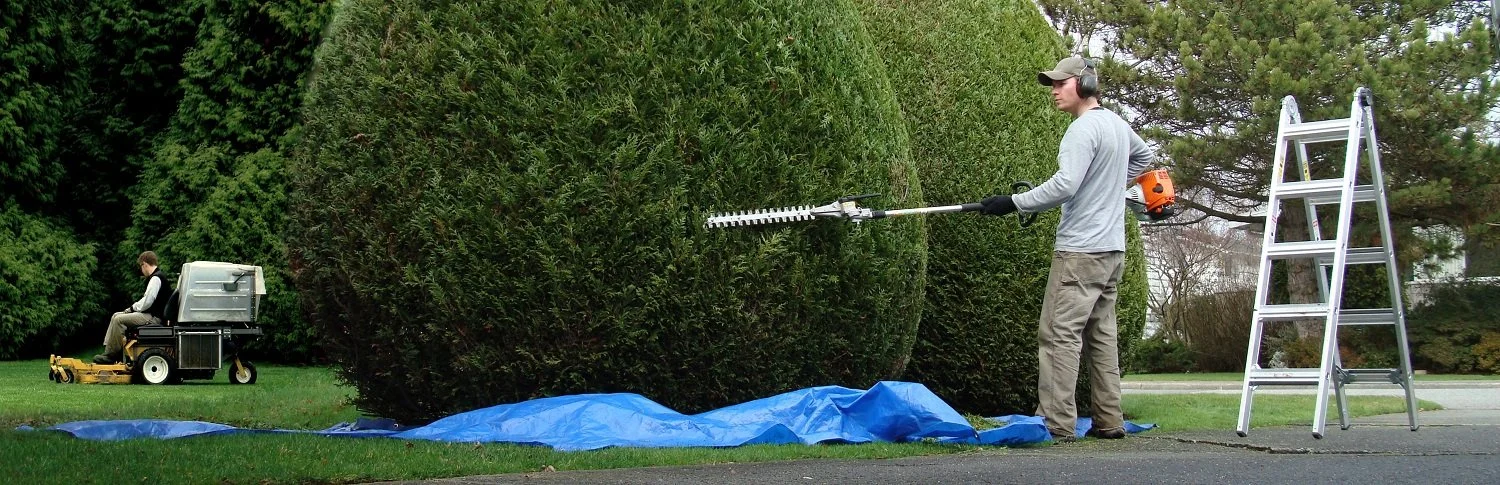
Workers’ compensation premiums typically represent one of the largest overhead expenses for landscape companies. Premium costs are driven by the number and severity of claims a company has had over a five-year period. Thus, fewer claims often equate to a lower premium paid for workers’ compensation insurance.
Author, Greg Garcia, Account Executive, Rancho Mesa Insurance Services, Inc.
Workers’ compensation premiums typically represent one of the largest overhead expenses for landscape companies. Premium costs are driven by the number and severity of claims a company has had over a five-year period. Thus, fewer claims often equate to a lower premium paid for workers’ compensation insurance.
The National Institute for Occupational Safety and Health (NIOSH) takes a closer look at the landscape industry, detailing where claim frequency is increasing and decreasing.
When analyzing the claims data, a couple of areas stand out as contributors to higher premiums.
Most notably, 50% of all serious claims occur during the first year of an employee’s tenure. Employees under the age of 34 are also more susceptible to a serious claim occurrence. Therefore, it is best to provide new hires with immediate and comprehensive safety training when they first start and continue to emphasize a safety culture throughout their tenure to minimize claims. As employees gain experience, they become more likely to take safety seriously.
The data also shows that loading and unloading trucks and trailers causes roughly 20% of all serious claims. This includes loading and unloading materials, tools, and equipment. Although a seemingly simple task, it’s often overlooked, yet statistics confirm that improved attention to safety when performing these tasks can significantly reduce serious claims.
The industry has seen a considerable decline in claims from overexertion injuries such as back sprains and disc disorders which were once a large contributor to higher premiums. The improvement of lifting techniques and implementation of programs such as Rancho Mesa’s Mobility & Stretch/A.B.L.E. Lift Program, have played a key role in reducing these claims. Programs such as these ensure employees are lifting properly while also stretching their muscles before they begin work.
Reducing workers’ compensation claims should be a top priority for any landscape company. Not only does it protect employees from harm but it also can benefit the company’s bottom line. As an added resource to reducing workers’ compensation claims, Rancho Mesa encourages landscape businesses to take advantage of available safety trainings for new and experienced employees, implement safety measures for loading and unloading trucks, and utilize the Mobility & Stretch/A.B.L.E. Lift Protocol.
In order for you to take your safety program to another level, sign up and receive our weekly safety training tailgate talks specifically designed for the landscape industry.
To start a conversation about how Rancho Mesa can assist your company, contact me at (619) 438-6905 or ggarcia@ranchomesa.com.
OSHA Issues ETS Addressing Mandatory COVID-19 Vaccination or Testing
Author, Sam Clayton, Vice President, Construction Group, Rancho Mesa Insurance Services, Inc.
Last week, the U.S. Department of Labor’s Occupational Safety and Health Administration (OSHA) announced a new emergency temporary standard (ETS) to protect more than 84 million workers from the spread of the coronavirus on the job.
Author, Sam Clayton, Vice President, Construction Group, Rancho Mesa Insurance Services, Inc.

Update: November 16, 2021 - Since the original publication of this article, OSHA announced it “has suspended activities related to the implementation and enforcement of the ETS pending future developments in the litigation.”
Recently, the U.S. Department of Labor’s Occupational Safety and Health Administration (OSHA) announced a new Emergency Temporary Standard (ETS) to protect more than 84 million workers from the spread of the coronavirus on the job.
Under the ETS standard, employers must develop, implement and enforce a mandatory COVID-19 vaccination policy, unless they adopt a policy requiring employees to be either vaccinated or undergo weekly COVID-19 testing and wear a face covering at work.
The emergency temporary standard covers employers with 100 or more employees and provides options for compliance. The standard also requires employers to provide paid time to workers to get vaccinated and to allow paid leave to recover from any side effects from the vaccination.
The ETS requires employers to:
Determine the vaccination status of employees, obtain acceptable proof of vaccination and maintain records and a roster of each employee’s vaccination status.
Require employees to provide prompt notice when they test positive for COVID-19 or receive a COVID-19 diagnosis. Employers must then remove the employee from the workplace, regardless of vaccination status. Employers must not allow them to return to work until they meet required criteria.
Ensure each worker who is not fully vaccinated is tested for COVID-19 at least weekly (if the employee is in the workplace at least once a week) or within 7 days before returning to work (if the employee is away from the workplace for a week or longer).
Ensure that each employee who has not been fully vaccinated wears a face covering when indoors or when occupying a vehicle with another person for work purposes.
The ETS does not require employers to pay for testing. However, employers may be required to pay for testing to comply with other laws, regulations, collective bargaining agreements. So, check with state and local jurisdictions for requirements.
The ETS is effective immediately upon its publication in the Federal Register, which took place on Friday, November 5, 2021. Employers must comply with most requirements within 30 days of publication and with testing requirements within 60 days of publication, or January 4th of 2022.
While more than half of the states are challenging the legality of federal OSHA’s ability to enforce the new ETS requirements, it is likely that individual states with their own OSHA State Plans (i.e., Alaska, Arizona, California, Hawaii, Indiana, Iowa, Kentucky, Maryland, Michigan, Minnesota, Nevada, New Mexico, North Carolina, Oregon, South Carolina, Tennessee, Utah, Vermont, Virginia, Washington, and Wyoming) will eventually adopt the new ETS as their own with or without modifications.
California’s State Plan (Cal/OSHA) implemented the most stringent COVID-19 ETS in the country months before federal OSHA released its original COVID-19 ETS that only applied to the health care industry.
Employers of all sizes should pay close attention to not only what federal OSHA’s ETS requires, but also requirements issued by state and local municipalities. Once your state adopts a COVID-19 ETS, be sure to also check your local ordinances, as some counties and cities are requiring additional measures.
If your state has not yet adopted the new federal OSHA ETS, which applies to our California clients, we recommend you start thinking about a game plan and maybe an alternate plan depending on whether your State Plan decides to adopt the ETS as it has been published or if they decide to adopt a more stringent ETS. You will want to consider the following:
Will you, as the employer, require all employees to be vaccinated?
Who will manage the vaccination records and the ongoing paperwork?
If testing is offered as an alternative to a vaccine, who will pay for testing (the employer or employee)?
If testing is offered as an alternative to a vaccine, will the company specify which type of test will be acceptable (PCR or Antigen)? Either is allowed, but the antigen tests must be proctored by a medical professional (virtually is allowed) or witnessed by the employer (for the over-the-counter home test). Who will administer the weekly tests?
As we learn more, Rancho Mesa will provide guidance and resources to mitigate risk in the workplace.
For questions about mitigating your risks, contact me at (619) 937-0167 or sclayton@ranchomesa.com.
How Year End Financial Statement Preparation Influences Bonding Programs
Author, Andy Roberts, Account Executive, Surety Group, Rancho Mesa Insurance Services, Inc.
As a contractor looking to qualify for a contract surety bond program, your team should be aware that company financial statements will be required by underwriters in most cases. This is largely due to the fact that a company’s financials, their balance sheet and an income statement, represent the primary source of information that a surety will use when building a bond program. And, the way this information is presented goes a long way in determining the amount of credit that a bond company is willing to extend. There are a few different options for presenting year-end financials, with the two most common being internal financials and CPA-reviewed financials.
Author, Andy Roberts, Account Executive, Surety Group, Rancho Mesa Insurance Services, Inc.

As a contractor looking to qualify for a contract surety bond program, your team should be aware that company financial statements will be required by underwriters in most cases. This is largely due to the fact that a company’s financials, their balance sheet and an income statement, represent the primary source of information that a surety will use when building a bond program. And, the way this information is presented goes a long way in determining the amount of credit that a bond company is willing to extend. There are a few different options for presenting year-end financials, with the two most common being internal financials and CPA-reviewed financials.
Internal statements are prepared either by the contractor in-house, or by a hired bookkeeper, and are often accepted by surety companies for contractors that do not bond frequently and/or only bond smaller projects under one million dollars. The reason for this limitation is internal statements are not viewed as being overly reliable because they have not been prepared by a third party CPA. If a contractor is looking at a bigger job or looking to grow their bond program, then it is worth the investment to have a CPA complete a review for the fiscal year-end financial statement.
A review from a CPA provides a deeper dive into a contractor’s financial statements and will usually include notes about the financial statements regarding revenue, accounts receivables, accounts payables, and other financial events that occurred over the course of the year. And, while there is a larger cost associated with a review, between $10,000-$15,000, as opposed to providing an internal year end statement, the surety gains a greater understanding of the company’s financials over internal statements. Additionally, they consider a CPA review more reliable and trustworthy, thereby willing to offer increased bonding capacity to qualified contractors.
Providing CPA-reviewed financials adds additional overhead to a company’s budget, but it can be vital to ensuring the maximum bonding capacity is provided when it’s need it most. Furthermore, to emphasize the point, it is important that contractors select a competent, proactive bonding agent and construction CPA in order to map out a successful strategy for year-end financial preparation. The right partnership can help your firm build the highest possible level of bond credit as you build toward the future.
Finding an experienced CPA with a construction financials background can be a challenge. I can help recommend someone who can assist your company.
To answer more questions from this article or discuss if it may be time to make the jump to a CPA review, please email me at aroberts@ranchomesa.com or call my direct line at (619) 937-0166.
Hydraulics Safety in the Tree Care Industry
Author, Rory Anderson, Account Executive, Rancho Mesa Insurance Services, Inc.
Tree care professionals regularly work with equipment that utilizes hydraulics: aerial lifts, stump grinders, and chippers, just to name a few. Injuries from hydraulic fluid leaks are very serious and can result in amputation.
Author, Rory Anderson, Account Executive, Rancho Mesa Insurance Services, Inc.
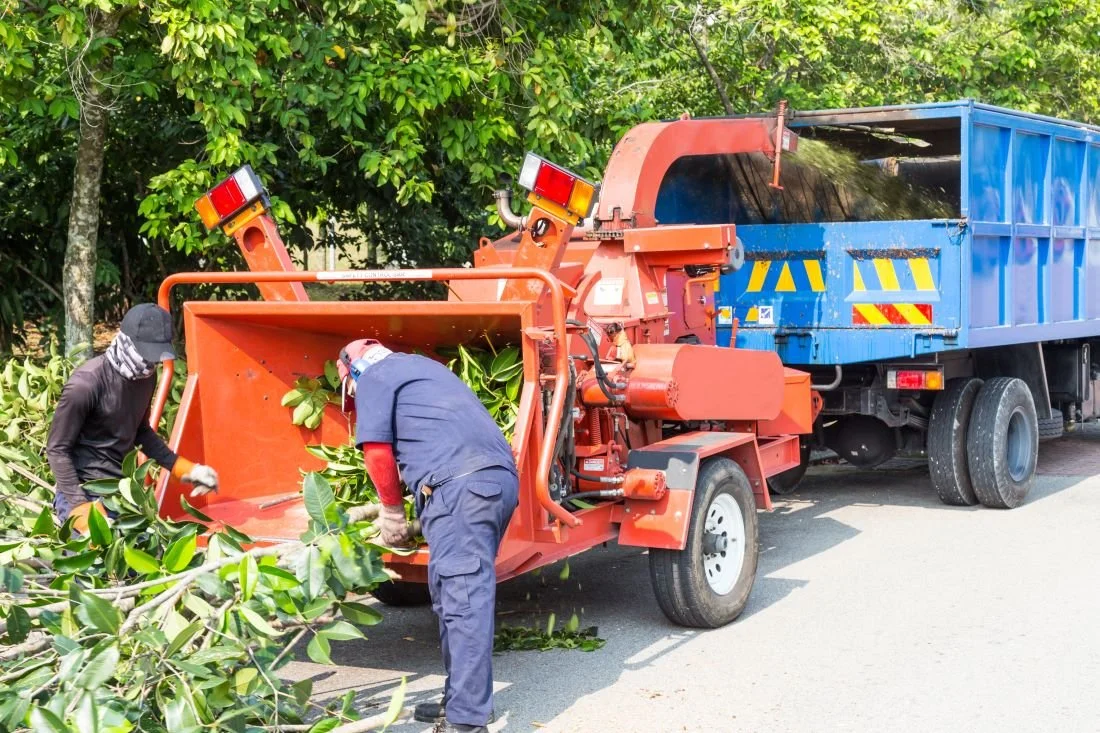
Tree care professionals regularly work with equipment that utilizes hydraulics: aerial lifts, stump grinders, and chippers, just to name a few.
Injuries from hydraulic fluid leaks are very serious and can result in amputation. These injuries occur when hydraulic fluid is lost through a small hole and comes in contact with the skin of a worker. The injury can at first look like a mild, small puncture wound – but the truth is that they are anything but minor.
Hydraulic fluids are toxic and act as a poison to the body. In almost all cases, treatment (surgery) is immediately required to save the workers limb.
Stump grinders, chippers, and other equipment that tree care professionals use commonly run at 4,000 PSI, and the pressure needed to penetrate your skin is only 100 PSI. So, it is vital that employees be trained on how to safely use hydraulic equipment.
Hydraulics safety trainings should include:
an overview and description of which equipment utilizes hydraulics;
proper techniques to check for leaks;
how to handle leaks;
how to handle injuries;
regular maintenance and upkeep on hydraulic hoses; and
the appropriate time to replace hydraulic hoses.
Make sure hydraulics safety is on your list of rotating topics that are regularly discussed with your crews at safety meetings.
For assistance with building your library of safety material for tailgate topics, reach out to me directly at (619) 486-6437 or randerson@ranchomesa.com.
SB 606 Broadens Cal/OSHA’s Enforcement Reach
Author, Sam Brown, Vice President, Human Services Group, Rancho Mesa Insurance Services, Inc.
California Governor Gavin Newsom recently signed into law Senate Bill 606 (SB 606), greatly expanding Cal/OSHA’s enforcement powers and monetary penalty amounts. The new law will take effect January 1, 2022, so California employers have only a few months to tighten their safety practices or face steep monetary fines.
Author, Sam Brown, Vice President, Human Services Group, Rancho Mesa Insurance Services, Inc.

California Governor Gavin Newsom recently signed into law Senate Bill 606 (SB 606), greatly expanding Cal/OSHA’s enforcement powers and monetary penalty amounts. The new law will take effect January 1, 2022, so California employers have only a few months to tighten their safety practices or face steep monetary fines.
The new law could be especially damaging to employers with multiple worksites. SB 606 creates a rebuttable presumption that an employer with multiple worksites has committed an “enterprise-wide” violation, if Cal/OSHA determines either of the following is true:
The employer has a non-compliant written policy or procedure.
Cal/OSHA "has evidence of a pattern or practice of the same violation or violations committed by that employer involving more than one of the employer's worksites."
This change creates the possibility that a California employer adhering to a written program applicable to all locations can be cited for each California worksite.
Cal/OSHA will also have the authority to seek a temporary restraining order and an injunction against any employer suspected to have committed an enterprise-wide violation.
The far-reaching second part of the law states that if Cal/OSHA determines an employer has “willfully and egregiously” committed a violation, the employer may receive a citation “for each egregious violation” and “each instance of any employee exposed to that violation shall be considered a separate violation for purposes of the issuance of fines and penalties.”
The law details seven bases for “egregious” conduct. Proof of only one will be sufficient to justify a citation.
California employers must prioritize a full review of safety policies, procedures, and practices to reduce the likelihood of an “enterprise-wide” or “egregious” conduct violation. Cal/OSHA’s Consultation Branch offers free on-site visits to proactively address any potential violations.
For helpful safety resources and compliance information, please contact me at (619) 937-0175 or sbrown@ranchomesa.com.