

Industry News

Closing the "Gaps in Coverage" When Using Temporary or Leased Labor
Author, Dave Garcia, AAI, CRIS, is the President and CEO of Rancho Mesa Insurance Services, Inc.
It has become more common for construction companies to use temporary or leased labor in order to meet the demands of their work. While this is a useful tool it can create some unintended gaps in coverage for the contractor hiring the temporary or leased labor. These gaps potentially exist for on-the-job injury claims suffered by the temporary or leased workers.
Author, Dave Garcia, AAI, CRIS, is the President and CEO of Rancho Mesa Insurance Services, Inc.
It has become more common for construction companies to use temporary or leased labor in order to meet the demands of their work. While this is a useful tool, it can create some unintended gaps in coverage for the contractor hiring the temporary or leased labor. These gaps potentially exist for on-the-job injury claims suffered by the temporary or leased workers.
The question for all construction companies is: if you use workers from staffing or leasing agencies to supplement your workforce, how adequately do your current insurance policies protect your company in the event that one of these individuals is injured on the job?
Following are two recommendations in order to better protect your interest and help close those gaps.
Alternate Employer Endorsement
(WC00 03 01 A)
It is recommended that an endorsement is added to a workers' compensation policy that provides an entity scheduled as an alternate employer, with primary workers compensation and employers liability coverage, as if it were an insured under the policy. This endorsement is commonly used when a temporary help agency (the insured) is required by its customer (the alternate employer) to protect the alternate employer from claims brought by the insured's employees.
Businesses may find themselves short staffed on occasion, and will seek out the services of a temporary staffing or leasing agency to fill the gaps. Workers that are employed through the temporary staffing or leasing agency are covered under the workers' compensation policy that the temporary staffing or leasing agency has purchased. When these workers are hired out to an outside firm, the firm that hires them should seek an “alternate employer endorsement” from the temporary staffing or leasing agency, in order to protect it from any lawsuits brought by the temporary employee for injuries they may suffer.
For example, a construction company needs some additional labor in order to complete a job on time. It hires some temporary labor. If a temporary employee injures themselves or has to go to an emergency room, they would be covered under the temporary staffing or leasing agency’s workers' compensation policy, thus, prohibiting them from making a claim against the construction company’s liability policy.
When an alternate employer endorsement is added to a policy’s endorsement schedule, the employer (contractor in this example) is often required to assist in any claims investigations. This scenario typically means reporting any injuries suffered by temporary or leased staff, ensure that the temporary employee is given proper medical treatment when the injury is suffered; and provide any documentation related to the injury to the policyholder (temporary staffing or leasing agency). If the policy is canceled for any reason, the insurance company is not obligated to tell the alternate employer (contractor) because the alternate policyholder (contractor) is not the primary party on the policy.
Coverage for Injury to Leased Workers Endorsement
(CG 04 24)
A second way to help close this potential gap is by adding the above endorsement to your (the contractors) existing general liability policy. However before filling this gap it is first important to understand how the gap is created. A gap in coverage arises from the way the CGL policy defines "temporary" and "leased" workers. Following are those definitions.
“Leased Worker” is a person leased to you by a labor leasing firm under an agreement between you and the labor leasing firm, to perform duties related to the conduct of your business. "Leased worker" does not include "temporary worker."
"Temporary worker" means a person who is furnished to you to substitute for a permanent "employee" on leave or to meet seasonal or short-term workload conditions.
Under the terms of a CGL policy, "employee" includes a leased worker, but does not include a temporary worker. The distinction is important, because the CGL policy's Exclusion e: employers liability, excludes from coverage bodily injury claims made by an employee of the insured. Thus, if your CGL policy definitions consider the worker to be an "employee"- even though that worker is provided by a staffing agency - the policy will not cover any bodily injury claims by that worker.
If the worker is not specifically substituting for a permanent employee who is on leave, or meeting a seasonal need or short-term workload conditions, the worker is not a "temporary worker" in the eyes of the insurer, and instead is considered your employee for purposes of Exclusion e.
To be a "temporary worker," that individual must have a specific end date to his or her employment with you. A temporary employee who is hired for an indefinite period of time simply does not meet the criteria stated above, and is therefore considered an employee, and subject to Exclusion e if they are injured on the job.
Adding the Coverage for Injury to Leased Workers (CG 04 24) endorsement to your CGL policy will help you fill this coverage gap. This endorsement states that the term "employee" does not include a "leased worker" or "temporary worker," making the employers liability exclusion of the CGL policy inapplicable to the claims for injuries to a leased or temporary worker.
Without the right coverage in place, on-the-job injuries to temporary workers can present a significant potential liability to your company. Examine your current CGL policy and arrangements with any staffing or leasing firms you use to make sure your company is adequately protected.
How to Prevent Back Injuries in the Landscape Industry
Author, Drew Garcia, with Rancho Mesa Insurance Services, is the program director for NALP’s Worker’s Compensation Program.
According to the Workers Compensation Insurance Rating Bureau (WCIRB), in the last 5 years, over a quarter of a billion dollars in back injury claims, on behalf of the landscape industry, have been paid out by carriers in California. The back claim is by far the most costly injury at $22,000 over the last five years and the second highest in terms of frequency (behind hand, wrist and finger injuries), and the leading claim resulting in an employee's time away from work.
Author, Drew Garcia, with Rancho Mesa Insurance Services, is the program director for NALP’s Worker’s Compensation Program.
According to the Workers Compensation Insurance Rating Bureau (WCIRB), in the last 5 years, over a quarter of a billion dollars in back injury claims, on behalf of the landscape industry, have been paid out by carriers in California. The back claim is by far the most costly injury at $22,000 over the last five years and the second highest in terms of frequency (behind hand, wrist and finger injuries), and the leading claim resulting in an employee's time away from work.
Consider
- Back claims are most costly.
- They are the second most frequent claim reported.
- They are the leading claim resulting in an employee losing time away from work.
Reflect
- Has your company had a back injury in the past?
- What are you doing to protect the backs of your employees?
- Would it be worth your time to consider ways to mitigate this exposure?
Solution
Implementing a pre-work stretch, when done properly, is a quick and effective solution to reduce the likelihood of back injuries. The following stretch program was designed to stretch the back with Professional Landscapers in mind. The program can be executed in minimal time, at any location (yard or on-site) and will not only help employees warm up for the day, but also strengthen their back to help maintain a healthy career.
Benefits
By implementing a stretch you are:
- Showing your employees that you care about their health and have explored an option to help keep them safe.
- Differentiating your companies risk profile against the industry to help enforce aggressive underwriting.
- Looking for a way to improve employee productivity while potentially decreasing insurance cost directly related to claims.

Why are hand injuries the most frequent claim reported in the Landscape Industry?
Author, Drew Garcia, with Rancho Mesa Insurance Services, is the program director for NALP’s Worker’s Compensation Program.
The landscape industry experiences frequent hand, wrist and finger injuries - they're three most frequent types of Workers Compensation claims. Employees complain their personal protection equipment (i.e., gloves) limit dexterity, prohibiting finger movement, causing difficulty in performing their jobs. As a result, employees remove their safety gloves to perform their job-related activities, and experience hand, wrist and finger injuries.
Author, Drew Garcia, with Rancho Mesa Insurance Services, is the program director for NALP’s Worker’s Compensation Program.
The landscape industry experiences frequent hand, wrist and finger injuries - they are the three most frequent types of Workers Compensation claims. Employees complain their personal protection equipment (i.e., gloves) limit dexterity, prohibiting finger movement, causing difficulty in performing their jobs. As a result, employees remove their safety gloves to perform their job-related activities, and experience hand, wrist and finger injuries.
To help reduce the number of hand, wrist and finger injuries, it is important to find a glove that fits comfortably, forms to the hand and allows for maximum dexterity, while providing superior protection.
Rancho Mesa has partnered with StoneBreaker Gloves, a leader in glove manufacturing, to offer a discount of 25% off our clients' orders with a promo code (Contact your broker for the code). StoneBreaker has designed gloves specifically for Professional Landscapers and carries a range of products from the standard dipped glove to a 28 piece crafted leather glove.
While Rancho Mesa has negotiated discounted pricing, it is not making any profit on the sales of StoneBreaker gloves. Rancho Mesa simply feels it is our job to connect the dots in an effort to better protect our clients.
Please visit www.stone-breaker.com to purchase your safety gloves. If you purchase gloves from StoneBreaker, be sure to send us pictures of your employees wearing them, so we can relay your commitment to safety with the carrier!
4 Factors That Shape Your Insurance Risk Profile
Author, Drew Garcia, with Rancho Mesa Insurance Services, is the program director for NALP’s Worker’s Compensation Program.
Ever wonder why your insurance rates high when your competitors are low? There are reasons for that including, frequency of claims, severity of claims, experience rating, average claim cost incurred, operations, trends, loss ratio etc. If you evaluate your risk profile you can take action to lower your premiums.
Author, Drew Garcia, with Rancho Mesa Insurance Services, is the program director for NALP’s Worker’s Compensation Program.
Ever wonder why your insurance rates high when your competitors are low? There are reasons for that including, frequency of claims, severity of claims, experience rating, average claim cost incurred, operations, trends, loss ratio etc. If you evaluate your risk profile you can take action to lower your premiums.
Here are 4 factors that help shape your risk profile.
Frequency of Claim
The number of workers’ compensation claims you average per million dollars in payroll.
Calculation = # of claims / (annual payroll/$1,000,000)
Evaluate – How often are you having workers’ compensation claims and how does that compare to other landscape companies in your region or state? You can expect your insurance premiums to be higher if your frequency rate of claim is higher than the average.
Action – If you are having a frequency issue, you need to assess;
- Trends (back, hand, wrist, knee…)
- Cause (lifting, punctures, slips…)
- Implement corrective actions to help mitigate the risks associated with your claims.
Take it to the next level and evaluate “near misses.” Treat a “near miss” as if it were a claim and strategize a corrective action to prevent it from happening in the future.
Lost Time Claims (Indemnity)
The number of “lost time” claims your company has per million dollars in payroll. These are the claims in which your employee loses time away from work.
Calculation = # of lost time claims / (annual payroll/$1,000,000)
Evaluate – How often are you having workers’ compensation claims that result in lost time and how does that compare to other landscape companies in your region or state? You can expect your insurance premiums to be higher if your Indemnity rate of claim is higher than the average.
Action – If you are having an indemnity issue, you need to assess;
– Trends (back, hand, wrist, knee…)
– Cause (lifting, punctures, slips…)
– Implement corrective actions to help mitigate the risks associated with your claims.
Establish a “return to work program” which allows your injured employees an opportunity to come back to work on limited duty. This will help you monitor your employee’s progress and keep them feeling a part of the team.
Experience Rating
Your experience rating is a combination of your loss data and total payroll when compared to your industry typically but not always, over a three year period. Your experience rating has the ability to credit or debit pricing accordingly based on your history.
Action – Controlling your frequency and indemnity claims will ultimately be reflected in your experience rating.
Operations
Heavier operations would include hardscape construction, tree trimming, and snow removal in which generally heavier machinery and product is used thus a higher exposure to injury. Compare these types of landscape operations to a lighter exposure such as landscape maintenance; mowing, edging and pruning.
Action – Identifying the exposures that are unique to your operations and then implementing safety programs catered to your exposures will help protect your employees. Although your operations might consist of heavier exposures, you have the ability to implement tactics to mitigate the claims from happening and subjectively making your risk profile more appealing. Don’t wait for the injury to occur, be proactive and stop the claim before it transpires.
Your risk profile has already been created whether you know it or not. The opportunity for you to own it and improve it is always available. To look at lowering your workers compensation insurance, take a look at NALP’s new program.
For more information, there will be a free webinar on March 22. Sign up here.
New First Aid Reporting Requirements Take Effect January 1st, 2017
Effective January 1, 2017, employers and insurers will be required to report first aid all claims, according to a recent bulletin from the Workers' Compensation Insurance Rating Bureau (WCIRB).
Effective January 1, 2017, employers and insurers will be required to report first aid all claims, according to a recent bulletin from the Workers' Compensation Insurance Rating Bureau (WCIRB).
To learn more about the changes, visit WCRIB's Bulletin.

Rancho Mesa “Rocks” the Landscape Industry
Author, Drew Garcia, NALP Program Director, Rancho Mesa Insurance Services, Inc.
On March 1st 2017 Rancho Mesa Insurance Services, Inc., The National Association of Landscape Professionals, and Berkshire Hathaway Homestate Companies will introduce a unique National Workers Compensation solution designed to cater the needs of Landscape Contractors and Lawn Care Professionals.
Author, Drew Garcia, NALP Program Director, Rancho Mesa Insurance Services, Inc.

On March 1st 2017 Rancho Mesa Insurance Services, Inc., The National Association of Landscape Professionals, and Berkshire Hathaway Homestate Companies will introduce a unique National Workers Compensation solution designed to cater the needs of Landscape Contractors and Lawn Care Professionals.
THE AGENCY
Rancho Mesa is a 10 Time National Best Practices Agency out of Santee, California with over 30 years’ experience in The Landscape Industry. As the program manager, Rancho Mesa will look to challenge and develop the growth of the program to better protect its members.
THE CARRIER
Berkshire Hathaway Homestate Companies has the Highest AM Best rating of A++(XV) “Superior” rating of financial strength, and is the one of the largest specialty Work Comp Carriers in the Country.
THE ASSOCIATION
The NALP is the only National Organization built by the collaboration of landscape and lawn care industry professionals and has pushed the boundaries for Professionalism in the Landscape Industry to new heights through; Education, Certification and Legislation. As the voice for 100,000 landscape professionals the NALP passionately advocates for the economic, social and environmental benefits of the landscape industry.
THE PROGRAM HIGHLIGHTS INCLUDE:
• 6% discounted rates for NALP members where allowable. Lowest available base rate in states that do not allow rate deviation.
• Multiple workers compensation options guaranteed cost and small to large deductible.
• Flexible payment plans including stipulated, pay as you go (zero deposit) and monthly payroll reports.
• Quarterly safety webinars specific to the injuries arising out of the landscape industry.
• Dedicated service team with experience in the landscape industry.
• Underwriting team only evaluating NALP members.
• Claims handling dedicated to NALP members with lower caseloads.
• Loss control with regional representation and managed nationally by a dedicated coordinator.
For more information contact Rancho Mesa Insurance Services at NALP@ranchomesa.com.
W-2 Phishing Scam – New Potential Risk to Nonprofits – Be Aware!!
There has been a recent increase in attempts of a phishing scams involving W2s in nonprofit, schools and other human services organizations. We caution any business, but particularity organizations in these sectors to be very cautious if they receive any emails requesting information regarding W2’s, earning summaries or any other employee sensitive information. In many cases these emails look like they originate from a high level employee and are sent to other high level, human resources or payroll department employees.
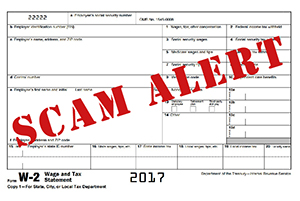
It has come to our attention that there has been a recent increase in attempts of phishing scams involving W-2 forms in nonprofit, schools and other human services organizations.
Rancho Mesa cautions any business, but particularity organizations in these sectors, to be very cautious if they receive any emails requesting information regarding W-2 forms, earning summaries or any other employee sensitive information. In many cases these emails look like they originated from a high level employee and are sent to other high level, human resources or payroll department employees.
We have included a link to the most recent release from the IRS concerning this issue. Please review it and call us if you have any questions.
Dangerous W-2 Phishing Scam Evolving; Targeting Schools, Restaurants, Hospitals, Tribal Groups and Others
Published February 2, 2017
www.irs.gov/uac/dangerous-w-2-phishing-scam-evolving-targeting-schools-restaurants-hospitals-tribal-groups-and-others
Court Case Endangers State Workers' Comp System
The California Chamber of Commerce recently filed a friend-of-the-court brief in a California Supreme Court case that will determine whether doctors who review workers' comp cases can be sued for certain medical decisions.

Seal of the Supreme Court of California
The Independent Insurance Agents & Brokers of California's (IIABCal) Legislative Update, a compilation of reports produced by IIABCal Lobbyist John Norwood of Norwood & Associates, recently published an update on the possible effects of a court case on the Workers' Compensation System.
Below is an excerpt from the February 6, 2017 Legislative Update article:
The California Chamber of Commerce recently filed a friend-of-the-court brief in a California Supreme Court case that will determine whether doctors who review workers' comp cases can be sued for certain medical decisions.
The brief in King v. CompPartners, Inc argues that the appellate court incorrectly found that utilization review doctors - those who look at records to decide whether a worker's treatment was appropriate, but do not examine the patient personally - have established a physician-patient relationship and therefore owe a duty of care to the injured workers.
Major Implications
If allowed to stand, the decision will create extensive future litigation and can be expected to increase costs that will put upward pressure on malpractice premium rates for all physicians, and have a chilling effect on utilization review physicians, according to the CalChamber.
Establishing potentially unlimited liability for utilization review physicians will potentially lead to higher premiums for employers and could drive future and existing business away from California.
The case also will determine whether medical malpractice claims against utilization review doctors are barred, because all workers' compensation claims are under the purview of the state Division of Workers Compensation. National and statewide insurer groups joined the CalChamber on the brief.
Cal/OSHA 300A Posting Begins February 1st
Rancho Mesa Insurance Services, Inc. would like to remind its clients that February 1, 2017 marks the start of the Cal/OSHA Form 300A posting period. The Cal/OSHA 300A Form is a summary of the company's annual work-related injury and illnesses. It must be posted from February 1, 2017 through April 30, 2017.

Cal/OSHA Form 300A
Rancho Mesa Insurance Services, Inc. would like to remind its clients that February 1, 2017 marks the start of the Cal/OSHA Form 300A posting period. The Cal/OSHA Form 300A is a summary of the company's annual work-related injuries and illnesses. It must be posted from February 1, 2017 to April 30, 2017.
Who is required to post the Cal/OSHA 300A Form?
Employers with at least 11 employees must post the Cal/OSHA 300A form (though, there are some exemptions for low-hazard industries).
Where must the Cal/OSHA Form 300A be posted?
The Cal/OSHA Form 300A Form must be posted in a conspicuous place within the workplace that is readily available to employees. Employers must also send copies to employees who do not regularly visit the workplace, at least on a weekly basis, where the Cal/OSHA Form 300A form is posted.
Do I need to post the Cal/OSHA Form 300A if we have no work-related injuries or illnesses?
Yes, employers must complete and post the Cal/OSHA Form 300A form even if they have no work-related injuries or illnesses to report.
How do I complete the OSHA Form 300A?
Through Rancho Mesa's Risk Management Center, clients can generate the Cal/OSHA Form 300A using the incident tracking feature, within the system. The form may also be printed and manually completed.
View the Cal/OSHA Form 300A.
Visit www.dir.ca.giv/dosh/etools/recordkeeping/index.html for more information.
California Workers Compensation 2017 Annual Officer Payrolls Minimums and Maximums, Assessment Rates, and Dual Wage Thresholds Announced by WCIRB
ICW Group Insurance Company, the largest group of privately held insurance companies domiciled in California, recently released an announcement that outlines the details and is attached for your review.
ICW Group Insurance Company, the largest group of privately held insurance companies domiciled in California, recently released an announcement that outlines the details of
California Workers Compensation 2017 Annual Officer Payrolls Minimums and Maximums, Assessment Rates, and Dual Wage Thresholds. The document is available for your review.
For any questions concerning the changes, please contact your Rancho Mesa service team.

"2017 Annual Officer Payrolls, CA Assessemnt Rates & Duel Wage Threshold." Insurance Company of the West.
AB 2883: Change in California Workers Compensation Law
Earlier this year, we reached out regarding California Assembly Bill 2883 (AB 2883), which drastically changed the legal requirements that allow an employer to exclude its corporate officers and the members of its board of directors from workers' compensation insurance coverage. As a result, this change will now affect ALL policies inforce as of January 1, 2017.
AB 2883 Change in California Workers Compensation Law- Officer, Director, Partner, LLC Member Exclusions Effective January 1, 2017
Earlier this year, we reached out regarding California Assembly Bill 2883 (AB 2883), which drastically changed the legal requirements that allow an employer to exclude its corporate officers and the members of its board of directors from workers' compensation insurance coverage. As a result, this change will now affect ALL policies inforce as of January 1, 2017.
Below are key details to note:
- A Corporate Officer/Director must own 15% or more of the corporation’s issued and outstanding stock to be eligible to elect exclusion from WC coverage.
- A General Partner of a Partnership, or a Managing-Member of a LLC, is eligible to elect exclusion from the WC policy (Note – the 15% ownership requirement does not apply to General Partners and Managing Members).
- Grantors of Revocable Trusts are no longer deemed shareholders and are no longer eligible for exclusion.
- Each eligible Corporate Officer/Corporate Director/General Partner/Managing-Member must sign a new waiver attesting to his/her qualification to be excluded, under penalty of perjury. The new waiver(s) will replace any current Exclusion Letter.
- AB 2883 has eliminated the requirement that 100% of the stock must be held by titled Officers/Directors in order for a Corporate Officer/Director to be eligible for exclusion.
What next?
You will receive notification from your current workers compensation carrier explaining these changes. Keep in mind that in order to exclude a Corporate Officer, Member of a Board of Directors, General Partner, or Managing Member of an LLC, each individual to be excluded must sign a written waiver of workers’ compensation benefits certifying under penalty of perjury that he/she is a qualifying Officer, Director, General Partner, or Managing Member of an LLC.
Once a waiver is accepted, new waivers will only be required if there is a change in status or individual wishes to change their status.
If you have any questions please don’t hesitate to call us at (619) 937-0164.