

Industry News

Understanding the DART and TCIR Calculations
Author, Lauren Stumpf, Media Communications and Client Services Specialist, Rancho Mesa Insurance Services, Inc.
When a project owner asks you to provide the company’s DART or TCIR rate, it may seem a little overwhelming at first. But, the two numbers are really a score that can be used to compare contractors’ safety history. These numbers can be important during the bidding process when comparing multiple bids and could be a determining factor for who is awarded the contract.
Author, Lauren Stumpf, Media Communications and Client Services Specialist, Rancho Mesa Insurance Services, Inc.

When a project owner asks you to provide the company’s DART or TCIR rate, it may seem a little overwhelming at first. But, the two numbers are really a score that can be used to compare contractors’ safety history. These numbers can be important during the bidding process when comparing multiple bids and could be a determining factor for who is awarded the contract.
DART stands for days away, restricted, or transferred. A DART rate is used to track any OSHA recordable workplace injury or illness that result in days away from work, restricted duty, or transfer of duties.
On the other hand, the TCIR is the total case incident rate (also known as the Total Recordable Incident Rate or sometimes referred to as the OSHA Incident Rate). It measures a company's past safety performance based on their incident rate. A TCIR is found by looking at the number of work-related injuries per 100 full-time workers during a one-year period.
The TCIR will likely be higher than the DART because it includes all incidents, not just the ones that results in lost time.
Project owners are increasingly requesting these numbers along with the project bid. Not only do they want to see how much it’s going to cost them to build the project, but they want to know how safe their contractor is on the jobsite. These numbers show that.
OSHA also uses these calculations to monitor high-risk industries.
Rancho Mesa’s Risk Management Center features a tool that helps contractors generate their DARTs and TCIRs. Contractors can use the Incident Track application to enter and track an incident’s details. Once that incident has been saved, the system will allow them to generate OSHA logs based on that data and generate the DART and TCIR.
“It’s an easy-to-use tool that ensures the numbers are accurate and available whenever they’re needed,” said Alyssa Burley, Media Communications and Client Services Manager with Rancho Mesa Insurance Services, Inc.
To learn more about the Risk Management Center’s capabilities, sign up for an upcoming webinar at www.ranchomesa.com/workshops-and-webinars.
Artisans Captive – Risk Control Workshop Recap
Author, Amber Webb, Account Executive, Rancho Mesa Insurance Services, Inc.
On January 20th and 21st of 2022, Captive Resources hosted the Artisans Captive Risk Control Workshop at The US Grant in San Diego, CA. The workshop was intended for all Artisans’ risk and/or safety mangers, human resources, claims managers, supervisors, owners, brokers and any others who wished to attend.
Author, Amber Webb, Account Executive, Rancho Mesa Insurance Services, Inc.

On January 20th and 21st of 2022, Captive Resources hosted the Artisans Captive Risk Control Workshop at The US Grant in San Diego, CA. The workshop was intended for all Artisans’ risk and/or safety mangers, human resources, claims managers, supervisors, owners, brokers and any others who wished to attend.
The workshop began with a brief introduction to the members of Captive Resources and Zurich Insurance Group, along with quick summaries of each of their responsibilities. Then, immediately following was an overview of how the captive is operated and how each member company can earn points which ultimately contribute towards the calculation of their year-end dividend. The group was able to hear from Rich McElhaney from The Real Cost of Safety, as the keynote speaker on the 20th. His story was captivating and eye opening to just how quick something can go wrong on a jobsite without the proper safety protocols in place. He stressed the importance of getting supervisors and employees to report their near misses. Each time a near miss is reported, it gives the company an opportunity to do a training and possibly make changes to their safety policies and procedures to avoid future incidents. Reporting near misses also gives companies a chance to look at areas where trends are taking place and make the appropriate adjustments.
The first day of the workshop ended with dinner and a tour of the USS Midway. This was a great time for member companies to network and chat about what each other are doing with regard to their risk control and safety programs.
The second day of the workshop on the 21st, we all met early for breakfast which also allowed for more networking and learning about different member companies. Immediately after breakfast, we all broke out into our different session groups to learn about specific topics. The first session focused on the, “Do’s & Don’ts of Accident Investigation.” In this session, we went over a twelve-step process for what to do when there is an accident on the job. We were given several great tips for what to do and what not to do. One recommendation was to take pictures of all four corners of your vehicle, then all four sides and repeat for all other vehicles at the scene. The presenter also encouraged not using the phrase, “no comment” if the media becomes involved. Instead, showing empathy and compassion while still not commenting can lead to a better outcome while the investigation is still ongoing. Another takeaway from this session was the importance of reviewing all of your policies to ensure they do not stress productivity over safety. Then, make sure to train your employees to understand that their wellbeing is top of mind, while actually enforcing a safety culture.
The second session we attended was “Driver Safety: Lucky vs. Good” where we learned that the highest auto expenses result from rear end accidents. Also, according to the Bureau of Labor Statistics’ national census of fatal injuries released in December of 2021, transportation incidents have the most workplace fatalities, followed by falls and struck by objects. We also learned with new vehicle technology, such as high-intensity headlights, forward automatic braking, forward collision alert, lane departure warning and rear vision cameras, employers can help reduce vehicle crashes. The speaker went on to explain the importance of utilizing the data given by fleet analytics to help with reducing collision and use as a tool for focusing on trends happening within your fleet.
The final keynote speaker was Sean Bott and he spoke on the “Safety Dance: Creating the Courage to Connect on Site through Three Simple Steps.” His session was not only comedic, but also entertaining. He was able to teach us the 3 steps of meaningful connection; 1) Interrupting, 2) Introducing and 3) Inquiring. We have to start by interrupting people’s defenses and fears and can do this simply by a genuine compliment, a smile, a wave, etc. Then, once the walls are down, we are able to introduce ourselves while slowly saying our name with a pause between our first and last name, all while using the triple nod technique. He also encouraged us to smile and even throw in a wave during this process of introduction. Finally, we were taught to inquire in a clear and meaningful way to get to know the other person on a deeper level. He related these skills back to how employers interact with their employees on all levels, but specifically when it comes to safety. He suggested that we all combine these three skills to make others feel seen, heard, felt and valued. He displayed the value in bringing the human element to safety and reminding the group that the ultimate goal is to make sure all employees go home safely.
Overall, this workshop was very informative with some fun mixed in and ample time for networking to get to know the other companies involved in the Captive. As a Rancho Mesa broker attending with several of our clients, it allowed us to see the value of not only this workshop, but the additional benefits of being a member of the Artisans Captive and what it offers.
For those interested in learning more about Captives and their potential place within your organization, we will be hosting an informational Captive workshop for the Artisans Captive on April the 28th. Register online, today.
If you have any questions or would like to discuss this option further, you can contact me at awebb@ranchomesa.com or call me at (619) 486-6562.
Hydraulics Safety in the Tree Care Industry
Author, Rory Anderson, Account Executive, Rancho Mesa Insurance Services, Inc.
Tree care professionals regularly work with equipment that utilizes hydraulics: aerial lifts, stump grinders, and chippers, just to name a few. Injuries from hydraulic fluid leaks are very serious and can result in amputation.
Author, Rory Anderson, Account Executive, Rancho Mesa Insurance Services, Inc.
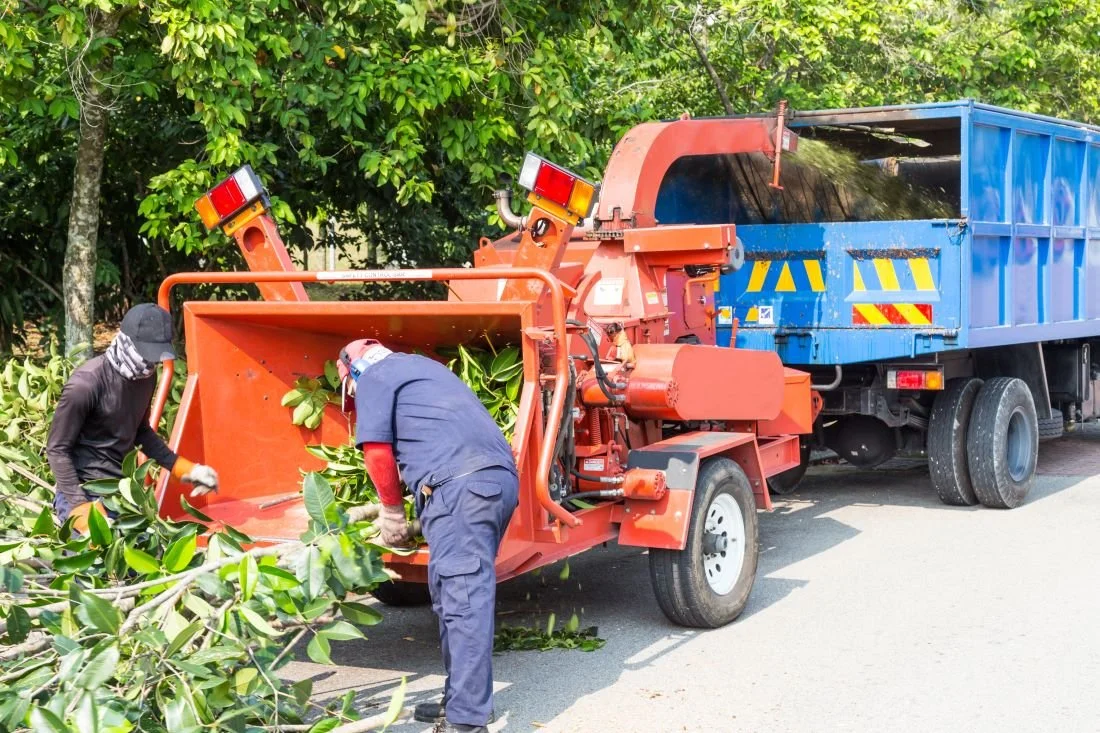
Tree care professionals regularly work with equipment that utilizes hydraulics: aerial lifts, stump grinders, and chippers, just to name a few.
Injuries from hydraulic fluid leaks are very serious and can result in amputation. These injuries occur when hydraulic fluid is lost through a small hole and comes in contact with the skin of a worker. The injury can at first look like a mild, small puncture wound – but the truth is that they are anything but minor.
Hydraulic fluids are toxic and act as a poison to the body. In almost all cases, treatment (surgery) is immediately required to save the workers limb.
Stump grinders, chippers, and other equipment that tree care professionals use commonly run at 4,000 PSI, and the pressure needed to penetrate your skin is only 100 PSI. So, it is vital that employees be trained on how to safely use hydraulic equipment.
Hydraulics safety trainings should include:
an overview and description of which equipment utilizes hydraulics;
proper techniques to check for leaks;
how to handle leaks;
how to handle injuries;
regular maintenance and upkeep on hydraulic hoses; and
the appropriate time to replace hydraulic hoses.
Make sure hydraulics safety is on your list of rotating topics that are regularly discussed with your crews at safety meetings.
For assistance with building your library of safety material for tailgate topics, reach out to me directly at (619) 486-6437 or randerson@ranchomesa.com.
SB 606 Broadens Cal/OSHA’s Enforcement Reach
Author, Sam Brown, Vice President, Human Services Group, Rancho Mesa Insurance Services, Inc.
California Governor Gavin Newsom recently signed into law Senate Bill 606 (SB 606), greatly expanding Cal/OSHA’s enforcement powers and monetary penalty amounts. The new law will take effect January 1, 2022, so California employers have only a few months to tighten their safety practices or face steep monetary fines.
Author, Sam Brown, Vice President, Human Services Group, Rancho Mesa Insurance Services, Inc.

California Governor Gavin Newsom recently signed into law Senate Bill 606 (SB 606), greatly expanding Cal/OSHA’s enforcement powers and monetary penalty amounts. The new law will take effect January 1, 2022, so California employers have only a few months to tighten their safety practices or face steep monetary fines.
The new law could be especially damaging to employers with multiple worksites. SB 606 creates a rebuttable presumption that an employer with multiple worksites has committed an “enterprise-wide” violation, if Cal/OSHA determines either of the following is true:
The employer has a non-compliant written policy or procedure.
Cal/OSHA "has evidence of a pattern or practice of the same violation or violations committed by that employer involving more than one of the employer's worksites."
This change creates the possibility that a California employer adhering to a written program applicable to all locations can be cited for each California worksite.
Cal/OSHA will also have the authority to seek a temporary restraining order and an injunction against any employer suspected to have committed an enterprise-wide violation.
The far-reaching second part of the law states that if Cal/OSHA determines an employer has “willfully and egregiously” committed a violation, the employer may receive a citation “for each egregious violation” and “each instance of any employee exposed to that violation shall be considered a separate violation for purposes of the issuance of fines and penalties.”
The law details seven bases for “egregious” conduct. Proof of only one will be sufficient to justify a citation.
California employers must prioritize a full review of safety policies, procedures, and practices to reduce the likelihood of an “enterprise-wide” or “egregious” conduct violation. Cal/OSHA’s Consultation Branch offers free on-site visits to proactively address any potential violations.
For helpful safety resources and compliance information, please contact me at (619) 937-0175 or sbrown@ranchomesa.com.
Mitigate Janitorial Industry’s Employee Theft Exposure
Author, Jeremy Hoolihan, Account Executive, Rancho Mesa Insurance Services, Inc.
Employee theft can be detrimental to any business and can come in many forms. Janitorial businesses, in particular, have an inherent risk of employee theft as employees often work alone at the client’s property with little to no supervision and access to valuables. Employee theft can start with smaller items that are easily overlooked and can quickly escalate. These types of losses are not only a financial burden, but can also tarnish the business’ reputation.
Author, Jeremy Hoolihan, Account Executive, Rancho Mesa Insurance Services, Inc.

Employee theft can be detrimental to any business and can come in many forms. Janitorial businesses, in particular, have an inherent risk of employee theft as employees often work alone at the client’s property with little to no supervision and access to valuables. Employee theft can start with smaller items that are easily overlooked and can quickly escalate. These types of losses are not only a financial burden, but can also tarnish the business’ reputation.
Insurance companies typically break employee theft into two categories: 1st party and 3rd party theft or crime. When an employee steals directly from the employer, it is called 1st party crime. Examples of this include embezzlement, inventory theft, theft of supplies, and more. Third party crime occurs when an employee steals property from the employer’s client or vendor. Examples of this would include stealing property from a client’s premises such as laptops, cash, etc.
It is important to note that most insurance policies do not automatically cover employee theft. Those that extend coverage typically only offer 1st party crime via an endorsement and provide lower limits than stand-alone policies.
Janitorial companies can protect themselves from theft exposure by securing a fidelity bond or business services bond, a commercial crime policy, or through obtaining a specialty enhancement endorsement which adds 1st and 3rd party crime coverage to a package policy.
A fidelity bond protects a company if employees commit theft, fraud, or other dishonest acts. Most insurance policies exclude dishonest and malicious acts which includes employee theft.
A commercial crime policy and fidelity bond are similar in some respects, but they differ in that commercial crime insurance covers a wider range of threats, while fidelity bonds offer more targeted coverage. In addition to the offerings listed above, a commercial crime policy could cover crimes by people outside of the company, including burglary, theft, and forgery.
As mentioned, a third option is purchasing a 1st and 3rd party crime enhancement endorsement to the package policy. This is typically the most cost effective; however, these endorsements are usually only available through specialty programs specific to niche industries like janitorial and typically have limited access. Rancho Mesa’s MaintenanceOne™ Janitorial Program has access to markets that provide these specific endorsements.
To discuss these options in further detail, please reach out to me at 619-937-0174 or at jhoolihan@ranchomesa.com.
Experience Mod KPI Provides Trend Analysis, Opportunity Assessment, and Vital Management Tools
Author, Drew Garcia, Vice President, Landscape Group, Rancho Mesa Insurance Services, Inc.
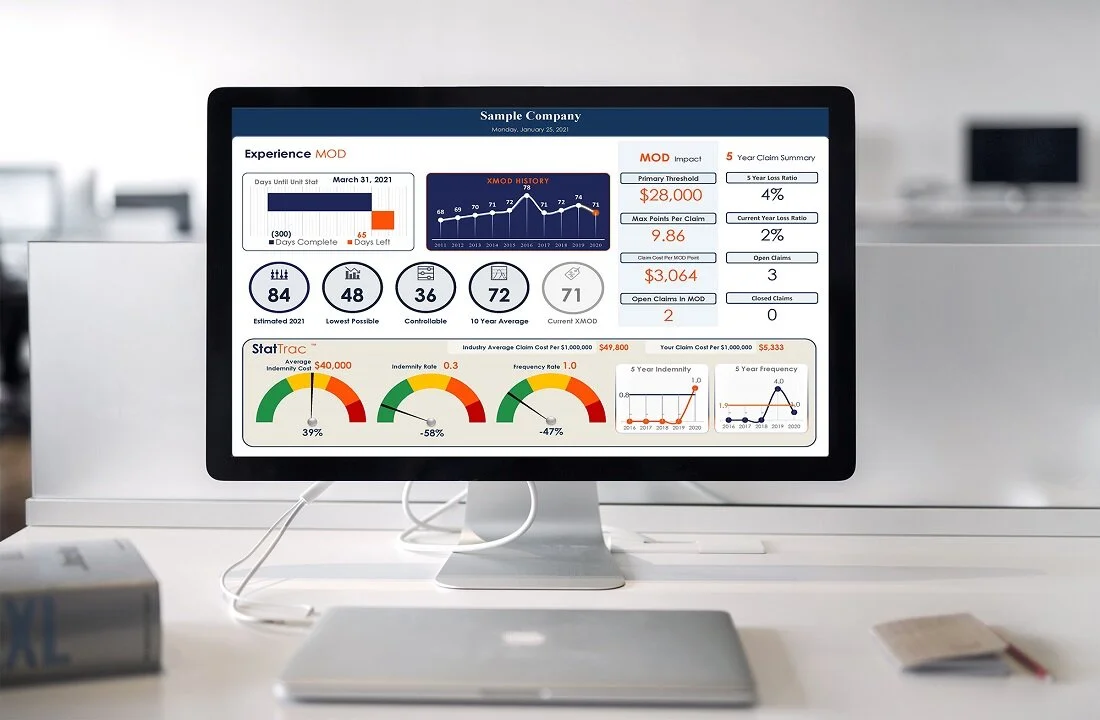
In January 2021, we launched the Safety Key Performance Indicator (KPI) Dashboard to provide a tool for our customers to use as a bridge between their experience mod and safety performance.
Author, Drew Garcia, Vice President, Landscape Group, Rancho Mesa Insurance Services, Inc.

In January 2021, we launched the Safety Key Performance Indicator (KPI) Dashboard to provide a tool for our customers to use as a bridge between their experience mod and safety performance.
Our primary goals were to:
Eliminate surprises
Simplify concepts
Track performance
Highlight the positive and negative trends
Benchmark safety performance against industry competitors
An experience mod above 100 can limit a landscape company’s ability to be awarded jobs or maintain contracts, increase insurance premiums, and have other significant financial implications.
Our dashboard is a tool companies can use to strategically manage the underlying components that directly impact the experience mod and help project future experience mod deviations. Rancho Mesa can help interpret the results and provide insights to help improve your performance.
Not a Rancho Mesa client but interested in seeing what your dashboard looks like? Complete our new KPI Dashboard quick form, to see how your company measures up.
Top Three Professional Liability Exposures for Tree Care Companies
Author, Rory Anderson, Account Executive, Rancho Mesa Insurance Services, Inc.
Professional tree care companies must have a general liability policy that will cover incidents that cause bodily injury or property damage resulting from their operations. However, there are situations that will not be covered under a typical general liability policy and would require professional liability coverage, or, in the tree care industry it would specifically be Arborist Errors and Omissions coverage. Here are three exposures that tree care companies face that a professional liability policy would address.
Author, Rory Anderson, Account Executive, Rancho Mesa Insurance Services, Inc.
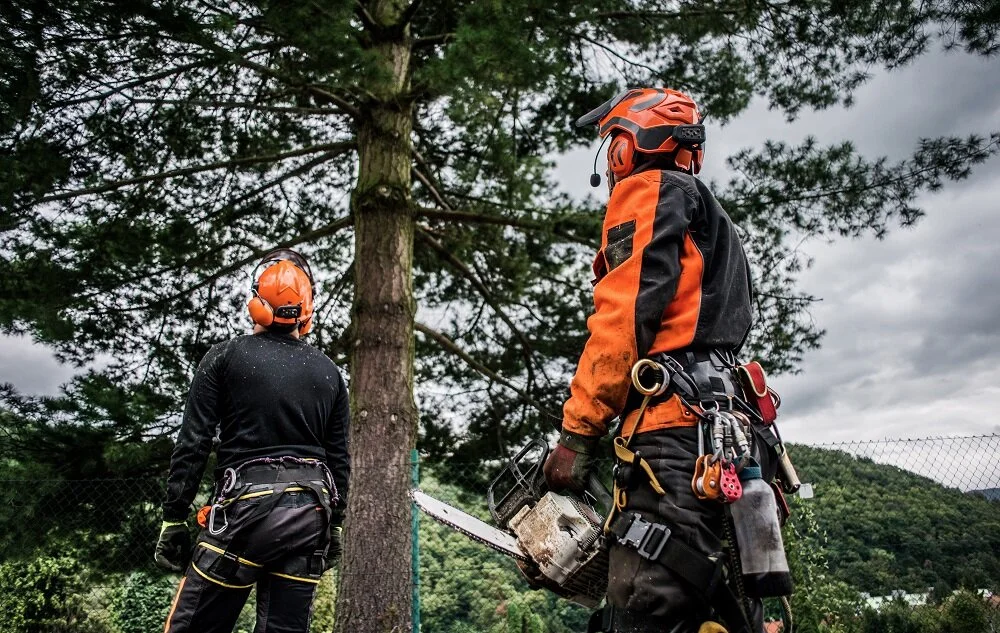
Professional tree care companies must have a general liability policy that will cover incidents that cause bodily injury or property damage resulting from their operations. However, there are situations that will not be covered under a typical general liability policy and would require professional liability coverage, or, in the tree care industry it would specifically be Arborist Errors and Omissions coverage. Here are three exposures that tree care companies face that a professional liability policy would address.
Tree Work
At times, tree care companies could inadvertently remove the wrong tree or prune a tree incorrectly causing various issues. As a result, the client may bring action against the tree care company for a number of reasons, including:
The loss of the intrinsic value the tree provided – shade, design, look, etc.;
The dollar value of the tree for replacement;
Mental distress suffered by the client.
Adjacent Trees
A professional tree care company can also be held responsible for damage caused by a failed tree that they did not even touch, but was on or nearby a recent jobsite. To be held liable for a failed tree (when a tree experiences structural collapse or breakage of any part of the tree: trunk, roots, or limbs) that they did not perform work on may seem unfair, but the client may claim that the arborist is the specialist and has a responsibility to point out any trees on a jobsite that could be dangerous.
Professional Tree Advice (Consulting)
Most tree care companies have a certified arborist who offers tree consulting and will give a professional opinion on whether or not a tree is safe. This leaves the tree care company potentially responsible in the event a tree that was deemed safe actually fails and causes property damage, or even worse, bodily injury to a human.
Tree work, adjacent trees and consulting are three common exposures not typically covered by a general liability policy; therefore, professional tree care companies must strongly consider some form of professional liability coverage. Work with your trusted insurance advisor and have them thoroughly assess your exposure to these concerns. To learn more about professional liability coverage for the tree care industry, listen to our StudioOne™ Safety and Risk Management Podcast Episode 99.
Contact me for a complete risk analysis of your operations at randerson@ranchomesa.com or (619) 486-6437.
Implementing an Effective Fall Safety Program Can Have Serious Impacts
Author, Casey Craig, Account Executive, Rancho Mesa Insurance Services, Inc.
Year after year, falls are among the leading type of workers’ compensation claims and generate the highest claim costs. They account for multiple infractions on the top 10 most frequently cited standards, according to the Occupational Safety and Health Administration. How can you, as a business owner, control your exposure and keep your employees productive and healthy?
Author, Casey Craig, Account Executive, Rancho Mesa Insurance Services, Inc.

Year after year, falls are among the leading type of workers’ compensation claims and generate the highest claim costs. They account for multiple infractions on the top 10 most frequently cited standards, according to the Occupational Safety and Health Administration. How can you, as a business owner, control your exposure and keep your employees productive and healthy?
Prevention
According to the Centers for Disease Control, “27% of the 900,380 nonfatal work injuries resulting in days away from work in 2018 were related to slips, trips, and falls.” That’s a shockingly large number especially when 100% of falls are preventable if you take the time to plan, according to the National Safety Council (NSC). The NSC recommends:
Walking a job before employees get there to ensure proper set up is achievable with the equipment you are bringing for that job.
Pay attention to environmental conditions such as wind, rain, or excessive heat.
Check your equipment frequently to ensure nothing is worn down or damaged.
Make sure employees are wearing the proper foot wear and other Personal Protective Equipment (PPE) items required for the individual job needs.
Having employees working on ladders or scaffolding is essential for some jobs, and fortunately is a risk you can control. In addition to evaluating the work site, the equipment, the environmental factors, and PPE needed, you should also evaluate the health and fitness of all employees. Factors to consider should include the employee’s:
Experience
Fitness level
Age
Height Matters
A fatal fall can happen at almost any height. According to the NSC, only 16% of fatal falls in 2016 occurred as a result of a fall from over 30 feet; however, 53% of fatal falls that year resulted from below 20 feet. Given this data, best practices would dictate that construction companies should step back and reevaluate the safety procedures they have in place and determine if any changes need to be made, particularly for jobs that are considered the lower heights.
RM365 Advantage Safety Star™ Program
To get your employees properly trained, we recommend enrolling in our RM365 Advantage Safety Star™ program that includes Fall Prevention training. This program includes fundamental safety topics that allows your foreman or key management team to go through internet-based safety trainings and earn their Safety Star certification. This program has shown to improve safety while helping to reduce your workers’ compensation premiums. Register to start your RM365 Advantage Safety Star™ program, today.
Rancho Mesa understands the exposure our clients face on a daily basis and can help implement safety procedures to mitigate these risks. Underestimating a project’s risk or undertraining employees is an exposure you can address.
If you would like help in reviewing your safety protocols and procedures or if you have further questions, do not hesitate to reach out to me at (619) 438-6900 or email me at ccraig@ranchomesa.com.
The Construction Risk Management Guide
Author, Daniel Frazee, Executive Vice President, Rancho Mesa Insurance Services, Inc.
As a business or firm, you are most likely aware of many risks that come with construction projects. Whether it is meeting the terms of a contract, maintaining employee safety on the job site, or dealing with natural disasters, every project has its own set of hazards. If not managed, these risks can compromise your projects and prove fatal to your bottom line.
Author, Daniel Frazee, Executive Vice President, Rancho Mesa Insurance Services, Inc.

As a business or firm, you are most likely aware of many risks that come with construction projects. Whether it is meeting the terms of a contract, maintaining employee safety on the job site, or dealing with natural disasters, every project has its own set of hazards. If not managed, these risks can compromise your projects and prove fatal to your bottom line. Thus, construction risk management is a must-have for any company, but an effective plan must have easy-to-follow, yet detailed processes to help you control the risks, make decisions on how to deal with them, and turn them around to uplift your company. With the presence of rising material costs, more complex projects and increased safety concerns, having a risk management plan is more crucial than ever.
What is Construction Risk Management?
Risk management is the process of determining the risks present in your business and evaluating the procedures to minimize their impact. In the construction world, the process involves planning, monitoring and controlling instances of risk. At the center of this process is your risk management plan, a formal document that details the risks and your processes for addressing them.
Sources of construction risks may include:
Safety Risk - any risks or hazards that can lead to worker accidents at a construction site;
Financial Risk - internal and external factors like sales, problems with the economy, unexpected cost increases and competition from other firms;
Legal Risk - disputes in the fulfillment of contracts with clients;
Project Risk - hazards such as poor management of resources, miscalculation of time, lack of proper policies, etc.; and
Environmental Risk - natural phenomena that damage construction sites like floods and earthquakes.
How to Manage Risks
Before you can manage risk, companies must develop a risk management plan. This process can be broken down into six steps.
Identify the Risks
Risk identification should take place during the preconstruction phase of a project to allow ample time to manage any potential risks before accepting them. One effective way is to hold brainstorming sessions with your project team with an emphasis on identifying all the possible scenarios that could impact the project at hand. Once the brainstorm is complete, hold regular meetings to continually identify new risks that develop.Prioritize Risks in Order of Importance
High-probability risks should be handled first while low-impact, low probability risks should be addressed last. As an example, an unexpected price increase in the materials for your project can severely hurt your profit margins and might be considered a high priority.Determine your Response Strategy
Once you have evaluated the priority of risks, your team must decide a response strategy for each hazard. You can avoid the risk altogether, mitigate the risk, transfer the risk if possible via insurance and/or performance bonds, or accept the risk.Execute the Plan
Much like a sports team on game day, your company now has to execute the plan after you have developed your strategy. Your plan must detail crucial information for each team member and provide specific solutions to mitigate, transfer, or accept risks.Involve Members of the Team
Great plans are developed with multiple opinions, involving contribution from all team members typically including the ownership group, the financial officers, and the field team. Members are managing cash flows, schedules, inspections, project logs, contracts and regulatory documents.Create Contingencies and Revise
Strong risk management programs have contingency plans. That is, alternative methods for finishing a project despite accepting the risk. Consistent monitoring and revisions to your plan will help increase resilience against any possible risk and ensure that your “document” evolves and changes over time.
Benefits of Risk Management in Construction
Along with the actual building process, risk management should be seen as one of the most critical steps of a construction project. Identifying, assessing, controlling and monitoring risks strengthen awareness and teamwork among those key members of your organization. Working in step with your insurance broker for resources, templates, and feedback can be key to integrating your plan with the company’s safety initiatives. Request a sample Accident Prevention Template to start your Construction Risk Management plan. And, in turn, communicating an effective and tested plan to the insurance marketplace can position you and your broker to leverage the most competitive terms and pricing within your renewal cycle.
For more information or questions related to this article, please contact me at 619-937-0172 or via email dfrazee@ranchomesa.com.
Can Employers Mandate a COVID-19 Vaccination Policy?
Author, Sam Brown, Vice President of the Human Services Group, Rancho Mesa Insurance Services, Inc.
As COVID-19 vaccinations become more available and the positive results of our efforts are realized, employers may ask how this impacts the workforce and a full-scale return to the workplace. More specifically, they may ask if an employer can mandate a COVID-19 vaccination policy.
Author, Sam Brown, Vice President of the Human Services Group, Rancho Mesa Insurance Services, Inc.

As COVID-19 vaccinations become more available and the positive results of our efforts are realized, employers may ask how this impacts the workforce and a full-scale return to the workplace. More specifically, they may ask if an employer can mandate a COVID-19 vaccination policy.
The laws are complex, so please do not rely on this article as legal advice. Please consult your labor law attorney before deciding how to proceed.
The short answer is yes, employers can mandate a COVID-19 vaccination for employees, when it makes sense.
The 1905 court case Jacobson v. Massachusetts forms the U.S. Equal Employment Opportunity Commission’s (EEOC) basis for guidance. Following a deadly smallpox outbreak in New England in 1901, the Supreme Court ruled that the government may impose “reasonable regulations” to protect the “safety of the general public.” The EEOC makes clear that employers may implement similar demands.
According to the EEOC, an employer can implement a mandatory vaccination policy if there is a job-related need for it or if non-vaccination threatens the health of other employees, customers or themselves. The EEOC’s guidelines date back to the 2009 outbreak of H1N1, and was updated in March 2020.
A mandatory COVID-19 vaccination policy would commonly be used in a health care environment or in emergency services where the likelihood of exposure may be higher based on the nature of the work, opposed to the average office environment that is following the Centers for Disease Control COVID-19 guidelines along with implementing a COVID-19 Prevention Plan.
Employers should take caution when deciding whether or not to implement such a policy and whether it makes sense for their industry and organization. According to OSHA’s January 2021 Guidance on Mitigating and Preventing the Spread of COVID-19 in the Workplace, employers should not distinguish between workers who are vaccinated and those who are not. All employee should follow the same safety precautions regardless of vaccination status.
Essential workers in sectors like construction and landscaping, community-based organizations and financial services to name few, can operate under the provided guidance without requiring their employees to get the COVID-19 vaccine in order to resume normal business operations.
Some employers are waiting to impose a mandatory vaccination policy, choosing instead to offer employees incentives for getting vaccinated. These incentives may include a vacation day, a few hours of regular pay, or a cash bonus. To avoid discrimination, an employer may offer the incentive to all employees if the company’s work force meets a vaccination goal. Whatever path you decide, make sure to include the policy in your employee handbook or COVID-19 Prevention Plan.
Considering a recent Kaiser Family Foundation survey, 27% of Americans are “vaccine hesitant.” So, the employer will need to decide if a COVID-19 vaccination policy is right for their organization. Questions regarding mandatory vaccinations will continue to present a challenge to employers.
For specific questions about your company’s vaccine policy, consult our RM365 HRAdvantage™ portal’s live HR experts.
The Heart of Rancho Mesa
Author, Daniel Frazee, Executive Vice President, Rancho Mesa Insurance Services, Inc.
If you are reading this article, listening to our podcasts, and taking advantage of the meaningful risk management content we share weekly, you and your business likely find some degree of value in what is produced. While much of this content originates from our Media Communications Group, they, with other Rancho Mesa family members join together as the backbone of our operation.
Author, Daniel Frazee, Executive Vice President, Rancho Mesa Insurance Services, Inc.

If you are reading this article, listening to our podcasts, and taking advantage of the meaningful risk management content we share weekly, you and your business likely find some degree of value in what is produced. While much of this content originates from our Media Communications Group, they, with other Rancho Mesa family members join together as the backbone of our operation. Our Certicians®, Account Coordinators, Benefit Analysts, Claim Advocates, Associate and Account Managers, and Sales Executives are the beating heart of our company. That core focuses on three main principles that guide our values, shape our decisions, and directly influence our daily interaction with clients and one another. They include Developing Solutions, Protecting Clients, and Building Trust.
Developing Solutions
A solution is defined as the act, method or process of solving a problem. Our clients face daily challenges and problems as they manage their organizations and continually look for competitive advantages. They rely on us to provide complete solutions but those can look far different across our many departments. Here are a few examples:
One of our Sales Executives might recommend higher limits of coverage or adjusting deductibles to meet new exposures.
Our Workers’ Compensation Claim Advocate might deliver a quarterly status to a company’s Safety Committee and make recommendations on return-to-work options.
It might also include an Account Manager reviewing contractual requirements for a client bidding a new job.
And lastly, an Account Manager in our Benefits department might help to resolve a sensitive claim issue with a member.
These actions are just a few of the many day-to-day priorities that are centered entirely on serving our customers. We remain fearless in our approach to problem solving!
Protecting Clients
Risk comes in all shapes and sizes. Protecting our clients with insurance is one vehicle we may use to transfer some or all of that risk to a third-party. But, that process can only be effective when our team actively listens to clients and prospective clients through regular interaction at policy audits, pre-renewal meetings, claim reviews, stewardship reports, and renewal meetings.
A key part of that protection are the resources we offer internally that help mitigate risk and reduce overall exposure to claims across all lines of coverage. Those resources include our:
Weekly Educational Newsletter and Podcasts,
Our clients can use these tools for risk management trainings, HR issues and concerns, safety certifications, and consistent risk management education and guidance.
These examples represent a very small sample of what is available from our organization. Building a risk management program that centers on controlling losses by implementing the proper protocols and best practice techniques is ultimately our vision for protecting clients.
Building Trust
We cannot develop solutions and properly protect our clients without building customer relationships based on a deep level of mutual trust. And, we view a distinct difference between establishing trust and maintaining it over the course of our partnership. While we are proud that our customer retention ranks in the top percentile across the nation, we recognize that trust is the key component to our success. And so, our work is never done. We continually expect more from ourselves, our team members, and our carrier partners to maintain, and ultimately, exceed customer expectations. It is simply how we were built and what we stand for. We see No Limit to what we can do.
To learn more about Rancho Mesa Insurance, subscribe to our weekly newsletter and podcast.
Four Factors that Shape your Risk Profile
Author, Drew Garcia, Vice President, Landscape Group, Rancho Mesa Insurance Services, Inc.
How do you differentiate your company from your local competitors? Product, customer service, delivery, etc. The same can be said for your risk profile and insurance costs. Why are my insurance rates high when my competitors are low? This article breaks down four factors that influence your risk profile and impact pricing.
Author, Drew Garcia, Vice President, Landscape Group, Rancho Mesa Insurance Services, Inc.
How do you differentiate your company from your local competitors? Product, customer service, delivery, etc. The same can be said for your risk profile and insurance costs. Why are my insurance rates high when my competitors are low? Here are four factors that influence your risk profile and impact pricing:
FREQUENCY OF CLAIMS
The frequency is the number of workers’ compensation claims you average.
Calculation – # of claims / basis
Evaluate – How often are you having workers’ compensation claims and how does that compare to other landscape companies in your region or state? If frequency is high, a line can be drawn to conclude that your high frequency will lead to more lost time or severe injuries.
Action – If you are having a frequency issue, you need to assess:
Injury Type (back, hand, wrist, knee…)
Root Cause (lifting, punctures, slips…)
Implement corrective actions to help mitigate the risks associated with your claims.
Take it to the next level and evaluate “near misses.” Treat a “near miss” as if it were a claim and strategize a corrective action to prevent it from happening in the future.
Use our Risk Management Center to assign a training to the foremen or supervisor and injured employee to help prevent this from occurring in the future.
Indemnity (Lost Time) Claims
Indemnity is the number of lost time claims your company experiences.
Calculation – # of lost time claims / basis
Evaluate – How often are you having indemnity claims that result in lost time and how does that compare to other landscape companies in your region or State?
Action – If you are having an Indemnity issue, you need to assess:
Injury Type (back, hand, wrist, knee…)
Root Cause (lifting, punctures, slips…)
Implement corrective actions to help mitigate the risks associated with your claims.
Establish a “return-to-work” program which allows your injured employees an opportunity to come back to work on limited duty.Improve accident investigation, documentation, and claim reporting protocols to equal best practices.
Experience Rating
Your experience rating is a combination of your loss data and total payroll when compared to your industry typically over a three year period. Your experience rating will either credit or debit your workers’ compensation premium accordingly.
Calculation – Project your Experience Modification (XMOD) 6 months early at your Unit Stat filing.
Evaluate – Determine the impact changes in your Expected Loss Rate (ELR) and Primary Threshold will have on your next XMOD.
Action – Controlling your frequency of claims and number of indemnity claims will lower your Experience Modification.
Operations
Heavier operations would include hardscape construction, tree trimming, and snow removal in which generally heavier machinery and product is used, thus a higher exposure to injury. Compare these types of landscape operations to a lighter exposure such as landscape maintenance, mowing, edging and pruning.
Calculation – Determine the percentages of your operations that fall into the various landscape work areas.
Evaluate – Identify the exposures that are unique to each area of your operations.
Action – Implement safety programs catered to your exposures that will mitigate risk and help protect your employees. Although your operations might be heavier, you have the ability to implement tactics to reduce or prevent the claims from happening, thereby subjectively and objectively making your risk profile more appealing.
We have seen 100% landscape construction firms achieve industry low experience XMODs and the markets most aggressive rates. Don’t wait for the injury to occur; be proactive and stop the claim before it transpires.
Your risk profile has already been created whether you know it or not. The opportunity for you to own it and improve it is always available.
With one click of the mouse, you can see how you stack up against your competitors through our Key Performance Indicator (KPI) dashboard, today.
Contact me to get a customized KPI dashboard at (619) 937-0200 or drewgarcia@ranchomesa.com.
Total Cost of Risk
Author, Rory Anderson, Account Executive, Rancho Mesa Insurance Services, Inc.
The total cost of risk is the sum of the measurable expenses that are associated with managing risk within any organization. Every successful business has a process for tracking and measuring performance to improve results. It is important for business owners to keep a pulse on key performance indicators. But, how are you measuring risk related costs? Some people may think that insurance premiums are the only cost associated with risk, but we need to look at the bigger picture.
Author, Rory Anderson, Account Executive, Rancho Mesa Insurance Services, Inc.

The total cost of risk is the sum of the measurable expenses that are associated with managing risk within any organization. Every successful business has a process for tracking and measuring performance to improve results. It is important for business owners to keep a pulse on key performance indicators. But, how are you measuring risk related costs? Some people may think that insurance premiums are the only cost associated with risk, but we need to look at the bigger picture.
In fact, insurance premiums only make up one fifth of an organizations total cost of risk. If you are only considering insurance premiums as a way of quantifying your company’s risk related costs, you are missing costs that you have control over. All risk-related costs can be observed and monitored. Also, there are certain strategies that, once implemented, will reduce those costs if executed correctly. That’s what total cost of risk is all about. There are five components that make up an organization’s total cost of risk: insurance premiums, retained losses, internal risk management costs, outside vendor fees, and indirect claim costs.
Insurance Premiums
An insurance premium is the payment that a company agrees to pay in order to have insurance. It is the most obvious component that makes up the total cost of risk and represents an important piece of the puzzle.
Retained Losses
There are two types of retained losses, active and passive. An active loss is simply when you have a deductible. If you have a deductible, you made a decision on the front end to take on (or retain) some of the risk, and pay a specified out of pocket amount for situations involving claims. On the other hand, a passive loss is any loss that is unexpected and not accounted for anywhere else. It could be a loss that is not covered by insurance and therefore must be covered out of pocket by the organization. Retained losses, active or passive, must be included when factoring total cost of risk.
Internal Risk Management Costs
Consider internal risk management costs as well. Maybe you have a full-time safety director. What is their salary? What about the person who is responsible for keeping track of the workers’ compensation claims, or the HR person who is in charge of managing and updating the employee handbook every time a new state law is passed? Calculate the internal hours that are spent looking at safety and risk management, and assign a dollar amount. These are costs that typically can be overlooked.
Outside Vendor Fees
You cannot forget to allocate any potential outsourced costs into the total cost of risk. Maybe you hired an outside firm to complete anti-harassment or First Aid/CPR training for your employees. Did you bring in outside safety consultants? These costs add up and need to be considered, as well.
Indirect Claim Costs
The last factor that makes up the total cost of risk are indirect costs associated with claims. These are secondary costs that are linked to claims. For example, with workers’ compensation insurance, the direct costs such as medical costs, indemnity payments, and legal services are just the tip of the iceberg. Some examples of indirect costs that are not covered by insurance are OSHA fines, accident investigation, implementation of corrective measures, hiring replacement workers, loss of productivity, etc.
Total cost of risk is critical for organizations to understand for several reasons. First, it helps you make educated and informed risk management decisions. You may want to invest into new equipment or bring in additional safety training from the outside. If you don’t know the total cost of risk and the ultimate impact in terms of upfront expense and projected return, how can you make the best decision?
Understanding your organization’s total cost of risk also helps you benchmark your progress towards your financial goals and objectives. It’s a quantifiable, controllable number that can be identified and reduced. It’s a metric that must be used to evaluate the overall success of your risk management process. When an organization is looking at their total cost of risk, they are focusing on the entire risk management function, which ultimately can lead to stronger safety programs and a reduction in frequency and severity of claims.
For questions about how your company can account for its total cost of risk, contact me at (619) 486-6437 or randerson@ranchomesa.com.
4 Key Factors in Developing a Motor Vehicle Report Program
Author, Jeremy Hoolihan, Account Executive, Rancho Mesa Insurance Services, Inc.
Auto liability is often one of the most substantial risks a business will have. Driver selection is one of the most important evaluations a business can do to prevent accidents. It’s been proven that drivers with a history of moving violations and accidents pose a higher risk for organizations. Best practices for reducing this risk allow only safe drivers to operate a company vehicle.
Author, Jeremy Hoolihan, Account Executive, Rancho Mesa Insurance Services, Inc.

Auto liability is often one of the most substantial risks a business will have. Driver selection is one of the most important evaluations a business can do to prevent accidents. It’s been proven that drivers with a history of moving violations and accidents pose a higher risk for organizations. Best practices for reducing this risk allow only safe drivers to operate a company vehicle. In order to manage this process, a business should develop a Motor Vehicle Records (MVR) Program as part of their Fleet Safety Program to ensure safe employees are driving company vehicles. There are four key factors in developing an MVR Program
Obtaining the MVR.
Evaluating the MVR.
Applying the MVR.
Documenting the MVR.
Obtaining the MVR
Obtaining the MVR is the first step of determining whether a driver meets acceptability standards. Best practices recommend that all employees who drive on company time, whether that is driving a company vehicle or their own, should have their MVR requested and evaluated at least on an annual basis. Some companies choose to obtain the MVR of those employees who drive regularly and not those that drive on an incidental basis. It’s best to consult your attorney but many believe at least verification that a license is valid should be established for incidental drivers.
Evaluating the MVR
Now, the employer has obtained the MVR and it needs to be evaluated. Many insurance companies evaluate a MVR based on three criteria:
The age of the driver. The minimum age for a driver varies by insurance company. Generally speaking, the minimum age to be eligible to drive on a commercial auto policy is 21-23 years old. It is strongly recommended that your MVR Program adheres to a minimum age requirement because there is a much higher percentage of accidents by young inexperienced drivers.
The length of time driver has maintained a valid license. Driver experience is another factor that should be strongly considered while evaluating a MVR. Most insurance companies are looking for at least three years of driving experience. With younger generations obtaining their licenses later and later, you may run into issues of drivers not meeting the minimum experience requirement. There may also be drivers that have been licensed in other states, which would show little experience in the state where they are now licensed. It may be necessary to verify a driver’s previous license status in another state.
The number of violations and infractions the driver has on their license. This could be the single most important factor in establishing driver eligibility. Drivers who have a history of moving violations and accidents pose a higher risk to an organization. When evaluating a MVR report, it’s important to establish consistent requirements that are agreed upon by the organization and insurance company. A common acceptable MVR includes:
a. No more than two minor moving violations and one preventable accident in a three-year period. A minor moving violation includes speeding (i.e., 1-14 mph over posted limit), improper lane change, failure to yield, failure to obey traffic signal or sign, and an accident.
b. No more than two zero-point infractions such as cell phone ticket, seat belt ticket, and texting in the last three years.
c. No major violations in the past five years such as a DUI, leaving the scene of an accident, excessive speeds over 20 mph over limit, reckless driving, felony involving the use of a vehicle, and license suspension or revocation resulting from accidents or moving violations.
Applying the MVR
Once the MVR has been evaluated, it’s time to determine which drivers are eligible and which are not. This can certainly pose a problem when implementing a new MVR Program with existing employees and drivers. A company may have to evaluate whether an employee’s driving responsibilities are suspended, if they need to be re-assigned to a non-driving position, or in certain circumstances might have to be terminated (such as a delivery driver). It’s also possible to consider a transitional period for those that are now considered ineligible. It is also important to consult the HR Department and company attorney when making these transitions.
Documenting the MVR
Proper documentation of a company’s MVR process should be consistent and contained in each employee’s file. The employee’s file should have any applications, the MVR, warnings or corrective actions taken, annual MVR reports, and any signed release forms.
A formal MVR Program is a vital piece to a successful Fleet Safety Program. It creates a barrier of minimum requirements that can often weed out potential unsafe drivers and future liability. If you need assistance in developing a Fleet Safety and MVR Program, please feel free to reach out to me at (619) 937-0174 or jhoolhan@ranchomesa.com.
Safety Programs Can Reduce Workers’ Compensation Premiums
Author, Daniel Frazee, Executive Vice President, Rancho Mesa Insurance Services, Inc.
As California business owners continue incurring costs as they work their way through the maze of ever-changing COVID-19 regulations and protocols, prioritizing critical elements of your internal safety program can directly lower your insurance costs. Refocusing on key areas below will help present an effective, detailed submission to the marketplace that will lead to talking points with an underwriter for schedule credits and ultimately, lower rates and premiums.
Author, Daniel Frazee, Executive Vice President, Rancho Mesa Insurance Services, Inc.
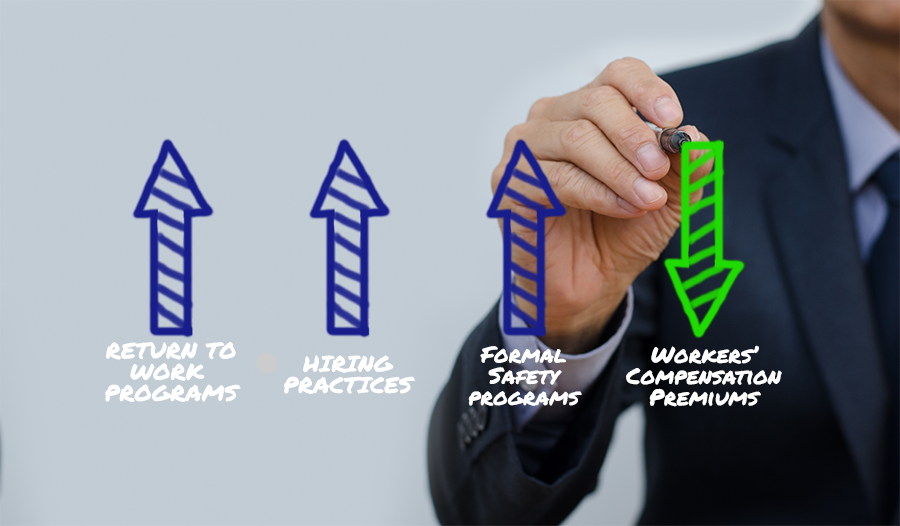
As California business owners continue incurring costs as they work their way through the maze of ever-changing COVID-19 regulations and protocols, prioritizing critical elements of your internal safety program can directly lower your insurance costs. Refocusing on key areas below will help present an effective, detailed submission to the marketplace that will lead to talking points with an underwriter for schedule credits and ultimately, lower rates and premiums.
Employee Benefits
Workers’ compensation underwriters pay close attention to employee benefit plans from a submission they are reviewing to quote. A deeper dive will create inquiries on overall employee participation, employer’s contribution to the plan, and whether established “wellness” plans are made available. High participation and contribution can show underwriters that employees value the benefits being offered and that the employer is investing in their most important asset, the employees. Lastly, industry professionals commonly link reduced fraudulent workers’ compensation claims to more robust, supported employee benefit programs.
Formal Safety Program
Developing a formal, documented Injury and Illness Prevention Program (IIPP) is truly just a baseline for managing risk for any business. The IIPP must be a living, changing document that contemplates random/periodic inspections, regular meeting intervals, safety orientation for new employees, and detailed investigative reports performed by field and management. Your program can be compared to a book that sits on the shelf and develops dust. Or, if you are focused on best practice techniques, it can be used as a tool for education, training, and risk mitigation. It should change as your company changes and incorporate the safety priorities instilled from the top down. Additionally, incorporating safety programs like Rancho Mesa’s RM365 Advantage Safety Star™ training program for foreman and supervisors help make your safety program go to the next level and really stand out in the insurance marketplace. Dynamic IIPPs stand out in a workers’ compensation submission process. They provide much needed detail to simple Yes/No questions on a supplemental application and show just how important safety is to the organization that is being underwritten.
Return to Work Program
Companies of all types will share that they support a return to work program when their injured employee is cleared for modified duty. That support needs to be taken a few steps further to improve your program. Create job descriptions for potential modified positions. Identify and engage with specific doctors within your network and ensure that these job descriptions are on file. This process can often help expedite employees back to the field, warehouse, office, etc. and ultimately lower temporary disability payments which can lower claim reserves. Use Rancho Mesa’s RM365 HRAdvantage™ portal to generate job descriptions and manage employee’s modified duty in the Risk Management Center.
Hiring Practices
Developing “gates” in the hiring process are often overlooked as too expensive or time consuming. But, the costs of bad hiring decisions can linger for years, impacting your bottom line and employee morale. Employers must strongly consider pre-employment physicals and drug testing, typically performed post interview and before an offer is made. As the Compliance Director for Current Consulting Group LLC, Andrew Current said, “The average cost of a pre-employment drug test is $45. The average turnover cost for an entry level employee is $6,600.” There is added benefit with workers’ compensation underwriters who view pre-employment checks as key controls to minimizing claim frequency and severity. Take advantage of the New Employee Onboarding Checklist and other resources in the RM365 HRAdvantage Portal.
Website Development
Most, if not all, workers’ compensation underwriters begin their review process by accessing the company in question’s website to learn more about their operation, exposures, risks, etc. Therefore, seeing your website through this same filter and utilizing your broker as an additional soundboard of information, consider these possible edits and/or redesign of your website:
Add a “Safety” link or tab, allowing space for sharing your company’s philosophy on managing risk.
Include a section on any safety awards or recognition that you may have received.
Remove any pictures on your website that might create confusion or concern about your operation as it relates to safety and risk.
Include examples of safety protocol that are unique to your operation (e.g. proper use of machinery, ladder usage, cleanliness of operating areas, etc).
Like any potential internal investment, companies must always balance whether the time and resource commitment will ultimately benefit their company. Many of the above recommendations require minimal resources and can pay huge dividends in consistently securing the most competitive workers’ compensation pricing, often a significant line item on a profit and loss statement. You may find cost savings in areas you did not know were possible that can help your business survive and remain profitable in these difficult times.
To discuss how your company’s safety program can affect your workers’ compensation premium, contact me at (619) 937-0172 or dfrazee@ranchomesa.com.
Risk Management and the Virtual Workforce
Author, Sam Brown, Vice President, Human Services Group, Rancho Mesa Insurance Services, Inc.
As American employers navigate the Coronavirus Pandemic, many business leaders quickly adapted to a virtual office and virtual workforce. While many organizations anxiously wait for the day employees can all safely head into the office Monday through Friday, employers must adjust risk management practices to account for the virtual workforce.
Author, Sam Brown, Vice President, Human Services Group, Rancho Mesa Insurance Services, Inc.

As American employers navigate the Coronavirus Pandemic, many business leaders quickly adapted to a virtual office and virtual workforce. While many organizations anxiously wait for the day employees can all safely head into the office Monday through Friday, employers must adjust risk management practices to account for the virtual workforce.
Cyber Crime
Prior to the pandemic, the FBI would routinely receive 1,000 cybersecurity complaints, daily. Since the COVID-19 outbreak began, the number of complaints has increased to 3,000 to 4,000 every day according to Tonya Ugoretz, deputy assistant director of cyber division of the FBI in a webinar hosted earlier this year. The most commonly targeted industries are health care, manufacturing, financial services, and public sector organizations. Stated plainly, cyber criminals are successfully exploiting weak virtual cybersecurity and poor execution on the part of remote employees.
Brett Landry of Landry IT, recently stated that 85% of employees circumvent “acceptable use” policies when using a company owned device, reinforcing the need for increased employee training.
Mr. Landry highly recommends employers update security patches on all devices, adopt a higher standard for password security, utilize two-factor authentication, and train employees how to recognize phishing and social engineering efforts.
How will a cyber liability insurance policy respond to this new threat?
Important questions to ask:
Will my policy cover a remote exposure?
Will my policy cover incidents involving personal devices?
Is Social Engineering covered?
Will my policy respond if an employee does not follow company procedures?
Workers’ Compensation
Allowing employees to work from home has resulted in some employees moving out of state. When this occurs, the employer should report the new working address to the insurance company to ensure the workers’ compensation insurance policy will cover an injury. In some cases, the insurance company can add the new location. If not, then the employer may need to purchase a separate workers’ compensation policy for that employee’s new state.
In an effort to manage the risk of employee injury, employers should design and implement work-from-home policies. Effective policies will clearly define work hours, communicate standards for a home office, train employees on ergonomics, reinforce work and safety rules, and remind employees of the claim reporting process. Establishing the above expectations may help employees avoid injury and legal disputes over compensability.
Directors & Officers Liability
Remember that a Directors & Officers Liability policy protects individuals from personal losses if sued for their role as a director or an officer of a company and not indemnified by the company. While a move to a virtual workforce doesn’t inherently put a board member at risk, big changes to company policy can result in missteps if employees do not receive proper communication and training. Ultimately, directors and officers are held accountable if company policies are not followed, highlighting the need for diligent execution of important company changes.
Rancho Mesa supports clients in developing employee manuals, work-from-home policies, and 2021 changes to labor law. Please contact me at (619) 937-0175 to discuss how Rancho Mesa can support your business or mission.
CA Anti-Harassment Training Deadline Quickly Approaches
Author, Alyssa Burley, Media Communications and Client Services Manager, Rancho Mesa Insurance Services, Inc.
Lately, we've been getting a lot of questions about California's required anti-harassment training, who has to complete it, when it's due, and how much it costs. This article will clear up any confusion; covering the history of the requirement, training conditions and deadlines, and the online training offered to Rancho Mesa clients.
Author, Alyssa Burley, Media Communications and Client Services Manager, Rancho Mesa Insurance Services, Inc.

Lately, we've been getting a lot of questions about California's required anti-harassment training, who has to complete it, when it's due and how much it costs.
In September 2004, Assembly Bill 1825 set in motion the sexual harassment prevention training requirement for many California supervisors. In September 2018, former California Governor Jerry Brown approved Senate Bill 1343 (SB 1343) which expanded the requirement and launched a series of anti-harassment bills that now require those who employ “five or more employees, including temporary or seasonal employees, to provide at least two hours of anti-harassment training to all supervisory employees and at least one hour of anti-harassment training to all non-supervisory employees.”
History of the Requirement
Over the last several years, additional senate bills have been passed that modifies or clarifies the SB 1343 training requirements. Instead of giving you a play-by-play on how each bill has changed the requirements, I'm just going to tell you what is required as of today, November 2020.
You've probably noticed that we now refer to this new training as “anti-harassment training” instead of the old term, “sexual harassment prevention training.” The change came as a result of several bills that expanded the required content to include abusive conduct, unlawful employment practices of discrimination, and harassment of both a sexual and non-sexual nature. So, the anti-harassment training for California managers replaces previous versions of the sexual harassment and abusive conduct prevention training, developed prior to the passage of SB 1343 and Senate Bill 1300 (SB 1300).
For more information on the progression of the current requirements, read “California SB 1343 Expands Sexual Harassment Training Requirements,” published November 15, 2018, “California SB 1343 Expands Sexual Harassment and Abusive Conduct Prevention Training Requirements,” published on January 17, 2019, “Ensuring CA Sexual Harassment and Abusive Conduct Training is SB 1343 Compliant,” published on February 7, 2019, “Rancho Mesa Offers Free CA-Required Supervisor and Employee Anti-Harassment Training” published on May 8, 2019, “Providing Anti-Harassment Training Is the Employer’s Responsibility,” published on August 22, 2019, and “Senate Bill 778 Extends Anti-Harassment Training Deadline,” published on September 12, 2019.
Training Requirements and Deadlines
To make a long story short, for employers with five or more employees, supervisory employees must take the two-hour anti-harassment training every two years and non-supervisory employees must take the one-hour anti-harassment training every two years. This sounds simple enough. However, since we had multiple bills that added content to the requirements and extended deadlines (Senate Bill 778), it's not necessarily straightforward.
For example, if you have a supervisory employee who completed the old sexual harassment and abusive conduct prevention training in 2019, their next anti-harassment training is due in 2021. However, if they took any similar trainings prior to 2019, they must complete the new anti-harassment training by January 1, 2021. This also applies to non-supervisory employees. If a non-supervisory employee took the training in 2019, their next due date will be in 2021. However, if the non-supervisory employee has not taken the training or took a similar training prior to 2019, they are required to complete the anti-harassment training no later than January 1, 2021.
New employees must be trained within six months of hire and temporary employees must be trained within 30 days of hire.
Online Training
Rancho Mesa offers its clients free 100% online anti-harassment training for both supervisory employees and non-supervisory employees.
“It’s amazing Alyssa and her team have trained nearly 7,000 of our clients’ employees over the last 24 months and have been able to do that at no cost to them,” says Dave Garcia, President of Rancho Mesa. “Yes, it’s expensive, but we just feel it’s doing the right thing for our clients.”
The online training can be accessed from a computer, tablet or smartphone. This means our clients can get their required trainings from anywhere with an internet connection.
“It’s not only the cost savings for our clients that’s important, it’s also the way we are able to do the training utilizing any internet connected device,” says Garcia. “Our clients’ productivity isn’t impacted by having to bring their workforce into a training area and out of the field, creating a loss of productivity. Additionally, with COVID-19, large training meetings would not be permitted.”
Since the anti-harassment training is completed online through the Risk Management Center, it provides automated recordkeeping and offers rescheduling to ensure as soon as an employee completes the training, they can be automatically rescheduled to complete the training again in two years. It also allows administrators to archive employee training records when an employee leaves the company and reactivate the records if they are rehired.
Recordkeeping
Recordkeeping for anti-harassment training is important when there is an allegation of harassment or if an employee reports the employer for non-compliance. The Department of Fair Employment and Housing (DFEH) “accepts complaints from employees that their employers have not complied with the law." So, make sure you are providing the training and keeping records. It is also a best practices to train all employees, regardless if they have a certificate of completion from another employer, since it's the current employer's responsibility to make sure the employee is trained.
We offer an on-demand webinar that explains how to setup your employees in the Risk Management Center and assign the anti-harassment training.
For questions about the anti-harassment training requirements or to enroll your supervisors and employees, contact Rancho Mesa’s Client Services Department at (619) 438-6869 or send an email to aburley@ranchomesa.com.
Safe Cloud Computing for Contractors
Author, Drew Garcia, Vice President, Landscape Group, Rancho Mesa Insurance Services, Inc.
Even prior to the COVID-19 pandemic, many construction companies were utilizing some form of cloud-based systems to effectively streamline business operations and increase accessibility of information. While hosting sensitive data in the cloud has many benefits like shared access to data, applications and storage, there are some risks contractors should take into account before relinquishing their data to the cloud.
Author, Drew Garcia, Vice President, Landscape Group, Rancho Mesa Insurance Services, Inc.

Even prior to the COVID-19 pandemic, many construction companies were utilizing some form of cloud-based systems to effectively streamline business operations and increase accessibility of information. While hosting sensitive data in the cloud has many benefits like shared access to data, applications and storage, there are some risks contractors should take into account before relinquishing their data to the cloud.
A leading provid//er of Cyber Liability insurance, CNA references three key risks companies utilizing cloud technology need to be aware of in an recent article, “Cloud computing 101: Getting clear about the cloud.” CNA explains data protection, data loss/disruption and inappropriate access are risks business take on in exchange for the benefits of cloud computing.
Data Protection
Protecting data is essential for any organization. Customers’ personal and payment information may be stolen by hackers once the data is stored in the cloud or even while in transit. So, your data in the cloud must be secured through encryption to prevent the data from being usable if stolen. As the cloud customer, the company should manage the encryption keys to ensure only authorized users can decrypt the data.
Data Loss / Disruption
You may be thinking about moving your data to the cloud as a way to protect it from electrical outages, fire, flood and other natural disasters. However, your cloud hosting provider can be left inoperable due to similar calamities. Before hosting your data in the cloud, review your host’s back-up and redundancies to ensure there will be a copy of your data available if something should happen to the host’s servers. Have a plan in place to help navigate your most critical information in the event something like this occurs.
Inappropriate Access
When storing data in the cloud, it is imperative the company ensures stringent and complex user authentication. This may mean passwords are changed frequently or two-factor authentication is deployed to ensure hackers can’t find their way to your data. When you manage a large user-base, the risk rises. Ensure former employees no longer have access to your data by changing security rights or disabling their account. Complex user authentication can be an effective deterrent to keep those who should not have access to your information from finding their way into your network.
Assuming your information is safe and secure in the cloud is misleading. Be proactive in protecting your information and round out your risk management program with a strong cyber liability program that can fulfill your cloud based risk needs.
For more information about the CyberOne™ program, contact Rancho Mesa.
Article edited 4/19/2021.
Strengthen Your Risk Profile During COVID-19
Author, Jeremy Hoolihan, Account Executive, Rancho Mesa Insurance Services, Inc.
While the effects of COVID-19 on the workers’ compensation marketplace vary among the different business sectors, the Workers’ Compensation Insurance Rating Bureau (WCIRB) has approved a filing that will increase the 2021 pure premium advisory rates by 2.6%. With impending rate increases on the horizon, it’s more important now than ever to be proactive when it comes to your company’s risk management program. Carriers are already tightening up their underwriting guidelines and limiting schedule credits. In order to earn the most competitive pricing possible, a business must differentiate itself from other businesses. Below are three strategies you can use to strengthen your risk profile during COVID-19.
Author, Jeremy Hoolihan, Account Executive, Rancho Mesa Insurance Services, Inc.

COVID-19 continues to have a stronghold on the US economy and it is likely that we will see the impact for many years to come. While the effects of COVID-19 on the workers’ compensation marketplace vary among the different business sectors, the Workers’ Compensation Insurance Rating Bureau (WCIRB) has approved a filing that will increase the 2021 pure premium advisory rates by 2.6%. Understand that this recommended rate increase comes against a backdrop of record profits in workers’ compensation prior to COVID-19. There are also three COVID-19 presumption Bills (AB 196, AB 644, and SB 1159) that could create presumptions that cases of COVID-19 are a compensable consequence of work, which will likely cause additional turmoil in the marketplace.
With impending rate increases on the horizon, it’s more important now than ever to be proactive when it comes to your company’s risk management program. Carriers are already tightening up their underwriting guidelines and limiting schedule credits. In order to earn the most competitive pricing possible, a business must differentiate itself from other businesses. Below are three strategies you can use to strengthen your risk profile during COVID-19.
Improve the Safety Program
Now is not the time to take your focus off of safety in the workplace. In fact, I would argue that there should be even more focus on safety. Some items to focus on relating to a safety program include:
Update your Injury and Illness Protection Program (IIPP) and have it reviewed by a labor attorney.
Establish a safety committee consisting of ownership, supervisors, managers, your insurance broker, and insurance company (i.e., loss control representative). This will assist with identifying workplace hazards, discussing claims or near misses that have occurred and creating safety meeting topics that can be discussed at future employee safety meetings.
Ensure that safety meetings are occurring at least every 10 working days, but preferably weekly. Using safety topics identified by the safety committee, managers can pinpoint proper trainings for employees.
Update Employee Handbook
With employment requirements, policies and procedures continually changing, it’s easy to fall behind on new regulations like adding an Emergency Paid Sick Leave Policy or Expanded Family and Medical Leave Policy, in your employee handbook. Rancho Mesa offers access to a living handbook builder through the RM365 HRAdvantage™ portal. By creating a living employee handbook through the portal, updating the document with new policies is as easy as reviewing and approving the suggested changes provided by experienced human resources professionals.
Continue Your Risk Management Education and Certifications
With many businesses slowing during COVID-19, consider filling that down time with required accreditations and continued education courses. Some examples include:
Anti-harassment Training: By the end of 2020, businesses with 5 or more employees are required to provide Anti-harassment training to all employees. Owners, supervisors, and management are required to complete the two-hour course, while all other employees must complete a one-hour course. Rancho Mesa offers free online Anti-harassment training for both supervisors/managers and employees. The courses can be accessed by computer, tablet, and a smart phone.
Continued education or achieving professional designations: It’s also a good time to consider working on continued education courses such as renewing forklift certifications, OSHA trainings, as well as any professional designations. To reinvest your efforts in continued education, now, while business is still slow due to COVID-19, could position your business to hit the ground running when the economy opens up again.
Safety Star Certification – With underwriting guidelines tightening and worker’s compensation premiums expected to increase due to COVID-19, Rancho Mesa’s RM365 Advantage Safety Star Program™ can build your risk profile and differentiate your business from others. The program is designed for supervisors, foreman, safety coordinators, upper management, administrators, and directors of human resources. To earn the Safety Star certification in Construction Safety, you must complete the required Incident Investigation and Analysis online module plus at least two other modules of your choice from the approved list. This certification is also a marketing tool your broker can use to show your commitment to safety.
Proactively improving your safety program, employee handbook, and continuing education during the pandemic will allow you to hit the ground running once COVID-19 restrictions are lifted. It can also position your business to mitigate increasing premiums with the ever tightening workers’ compensation marketplace.
If you need any assistance in implementing a sound risk management program, please reach out to me at (619) 937-0174.
Topics Your COVID-19 Training Should Cover
Author, Lauren Stumpf, Media Communications Coordinator, Rancho Mesa Insurance Services, Inc.
As states begin to lift COVID-19 restrictions and move into later phases of reopening plans, and companies begin to bring back their employees, it is important to take the necessary health and safety precautions in the workplace. Your staff should be well informed about safety precautions and resources to keep one another safe. When choosing a COVID-19 employee training, make sure it is comprehensive and includes all the necessary topics recommended by local, state and federal agencies.
Author, Lauren Stumpf, Media Communications Coordinator, Rancho Mesa Insurance Services, Inc.



As states begin to lift COVID-19 restrictions and move into later phases of reopening plans, and companies begin to bring back their employees, it is important to take the necessary health and safety precautions in the workplace. Your staff should be well informed about safety precautions and resources to keep one another safe. When choosing a COVID-19 employee training, make sure it is comprehensive and includes all the necessary topics recommended by local, state and federal agencies.
The Risk Management Center offers a 10-15 minute training designed to ensure compliance with COVID-19 safety guidelines. This general awareness course on COVID-19 covers tips on how to reduce the risk of contracting the virus by using best practices. In addition, the course covers COVID-19 characteristics and related health and safety concerns.
The COVID-19 General Awareness Online Training topics include:
COVID-19 Characteristics
CDC-Recommended Basic Precautions
Tips for Limiting Exposure
Proper Hand Washing
Social Distancing
Personal Protective Equipment (PPE)
Cross Contamination
Employer Responsibilities
Employee Temperature Checks
Face Masks
Importance of proper disinfecting and sanitation
Recommended Chemicals
What to Clean and Disinfect
Working-from-Home Ergonomics
Federal Assistance for COVID-19 Related Leave
Families First Coronavirus Response Act (FFCRA)
Paid Sick Leave
Family and Medical Leave Act (FMLA)
This online training is offered for free to Rancho Mesa clients. Contact the Client Services department at (619) 438-6869 to learn more about the COVID-19 General Awareness training.
For up-to-date COVID-19 information and HR resources please visit Rancho Mesa’s COVID-19 Information Page.