

Industry News

Creating a Safer Workplace Through Effective Violence Prevention Planning
Author, Jadyn Brandt, Client Communications Coordinator, Rancho Mesa Insurance Services, Inc.
Workplace violence is a serious safety threat affecting employees across all industries. In 2023, the U.S. Bureau of Labor Statistics (BLS) recorded 740 fatalities due to violent acts in the workplace. Preventing fatalities and injuries is a top concern when addressing workplace violence; however organizational, financial, and emotional consequences can also arise from violent incidents in the workplace. Employers should implement a clear Workplace Violence Prevention Plan to keep employees and their organization safe.
Author, Jadyn Brandt, Client Communications Coordinator, Rancho Mesa Insurance Services, Inc.

Workplace violence is a serious safety threat affecting employees across all industries. In 2023, the U.S. Bureau of Labor Statistics (BLS) recorded 740 fatalities due to violent acts in the workplace. Preventing fatalities and injuries is a top concern when addressing workplace violence; however organizational, financial, and emotional consequences can also arise from violent incidents in the workplace. Employers should implement a clear Workplace Violence Prevention Plan to keep employees and their organization safe.
What is Workplace Violence?
The Occupational Safety and Health Administration (OSHA) defines workplace violence as, “any act or threat of physical violence, harassment, intimidation, or other threatening behavior that occurs at the work site.” Employees, clients, customers, and visitors can all be affected by and involved in incidents of workplace violence.
Employees in healthcare, retail or transportation are especially at risk because of the public nature of their work. BLS data shows healthcare and social assistance workers “accounted for 73% of all nonfatal injuries and illnesses due to violence in 2018.”
How Can Employers Protect Their Employees?
The best way to protect employees is through the implementation of clear and well-enforced violence prevention guidelines, often in the form of a Workplace Violence Prevention Plan. These plans set a zero-tolerance precedent toward workplace violence for all workers, contractors, clients, patients, and visitors. Cal/OSHA mandates employers “establish, implement, and maintain a Workplace Violence Prevention Plan;” however, regulations may vary by state so be sure to check with your specific state guidelines.
When building a Workplace Violence Prevention Plan, Cal/OSHA requires the plan include:
Prohibiting employee retaliation
Accepting and responding to reports of workplace violence
Employee workplace violence training and communication.
Emergency response
Workplace violence hazard assessments
Other requirements, such as maintaining a Violent Incident Log.
Although there are no current specific OSHA standards for workplace violence at the federal level, OSHA recommends a Workplace Violence Prevention Program “ensure that all workers know the policy; are trained on prevention methods, signs for potential violent behavior, and how to effectively react when an incident occurs; and understand that all claims of workplace violence will be investigated and remedied promptly.”
What Steps Should Employers Take Following a Workplace Violence Incident?
A Workplace Violence Prevention Program is an excellent proactive step in keeping your employees and organization safe. However, there may be times when employers will need to be reactive following a violent incident.
Employers should provide prompt medical evaluation and treatment for all injured and affected persons. Violent incidents should be reported to local law enforcement. Victims should be informed of their legal avenues for prosecution and violent incidents should be investigated by the organization. Employers should also communicate with staff honestly about the incident and discuss ways to avoid similar situations, including reviewing and updated workplace policy.
Violent incidents should be recorded in an employer’s OSHA 300 logs.
Resources
While every Workplace Violence Prevention Plan is unique to its organization, Rancho Mesa offers a variety of sample policies, and online trainings through the RM365 HRAdvantage™ Portal and SafetyOne™ platform.
Introducing SafetyOne™ AI: Smarter Safety Insights for Better Decision-Making
Author, Jadyn Brandt, Client Communications Coordinator, Rancho Mesa Insurance Services, Inc.
SafetyOne™ Administrators now have access to SafetyOne AI Data Analytics. AI analysis capabilities are now available on the Observations and Mobile Forms screens. By analyzing your organization’s operational data stored in the platform, SafetyOne AI can produce relevant insights to streamline safety practices. Summarize inspections and observations, identify trends and recurring risks, compare projects, and draft toolbox talks in minutes to save time and resources while making faster and more informed safety decisions.
Author, Jadyn Brandt, Client Communications Coordinator, Rancho Mesa Insurance Services, Inc.

SafetyOne™ Administrators now have access to SafetyOne AI Data Analytics.
AI analysis capabilities are now available on the Observations and Mobile Forms screens. By analyzing your organization’s operational data stored in the platform, SafetyOne AI can produce relevant insights to streamline safety practices. Summarize inspections and observations, identify trends and recurring risks, compare projects, and draft toolbox talks in minutes to save time and resources while making faster and more informed safety decisions.
How to Use SafetyOne AI
SafetyOne Administrators can access AI functions on the SafetyOne website.
To access AI functions within Mobile Forms or Observations, navigate to the Mobile Form Reports page or the Observation Reports page and click the View tab at the top of the page. Then, select the data sets (i.e., reports) from the list that you want to analyze.
A chat will open where questions (or requests) can be submitted about the selected data set
Using AI Tokens
AI analytics uses tokens to process each request. The number of tokens deducted from your SafetyOne account will depend on the complexity of the request and the size and amount of data is being analyzed. Token count can be viewed by Administrators on the menu panel on the SafetyOne web browser. To purchase more tokens, contact your Client Technology Team.
Ways to Use and Implement SafetyOne AI
SafetyOne AI is easy to use and can be prompted using plain English. Ask SafetyOne AI questions such as:
“What hazards are increasing this month?”
“Summarize this inspection.”
“Show me recurring forklift problems.”
“Generate a Toolbox Talk from today's observations.”
It can generate toolbox talks from incidents and observations focused on actual conditions affecting your workforce.
Safety and Accuracy
SafetyOne AI analyzes the information available within your organization's SafetyOne dashboard. It does not permanently "learn" from individual conversations in a way that changes future behavior. Your AI interactions are not shared with other organizations using SafetyOne.
SafetyOne AI is designed to assist safety professionals, not replace them. Training recommendations should always be checked to ensure they are following local, state, and federal guidelines.
Additional Resources
SafetyOne AI provides organizations with the tools needed to transform their existing safety data into actionable insights to identify risks, improve decision-making, and enhance workforce safety. Thorough analysis, customized toolbox talk generation, and strong data security supports safety professionals in creating safer, more proactive workplaces.
Success with SafetyOne™: A Fundamentals Refresh for Administrators
Author, Jadyn Brandt, Client Communications Coordinator, Rancho Mesa Insurance Services, Inc.
Rancho Mesa’s SafetyOne™ platform is built to support and enhance the implementation of an effective safety program. Real-time data insights, industry-specific safety trainings, and intuitive technology empower organizations and administrators to make safety a priority on the job.
Author, Jadyn Brandt, Client Communications Coordinator, Rancho Mesa Insurance Services, Inc.

Rancho Mesa’s SafetyOne™ platform is built to support and enhance the implementation of an effective safety program. Real-time data insights, industry-specific safety trainings, and intuitive technology empower organizations and administrators to make safety a priority on the job.
Company News
The company news function simplifies communication, making it easy to communicate important information with your entire organization or groups of people working on a specific project, or program. Administrators can utilize this function to share jobsite information, required forms, procedural reminders or toolbox talk topics to SafetyOne app users and send notifications straight to their mobile device.
File Cabinet
The file cabinet in SafetyOne is where administrators can store important documents. Rancho Mesa recommends using this function to store items including, certificates of insurance, employee handbooks, IIPP/HIPP, and safety data sheets so that they are easily accessible to mobile app users.
Mobile Forms
Mobile form templates can be used in a variety of ways to streamline data collection from the jobsite and in the workplace. Templates can be used to document reports like accident investigations, daily inspections, client visits, and visitor logs. The uses are endless.
SafetyOne administrators can then use the Mobile Forms “Reports” function to analyze the data collected from mobile forms. This can enhance the implementation of better safety practices and address recurring issues.
Observations
Observations streamline the assessment and reporting of possible risks and hazards in the workplace. Mobile app users can document issues using written and photographic data. Existing open issues can be assigned to employees and solutions can be tracked and stored within SafetyOne. Report data can be analyzed to improve safety practices.
Policies
SafetyOne ensures your mobile app users have access to your organization’s policies for workplace safety and best practices. From fall protection to drug and alcohol testing, having clear policies easily accessible keeps employees informed and compliant.
Toolbox Talks
Toolbox talks are a great way to ensure your safety program is proactive, rather than reactive. Hundreds of templates are available for use in both English and Spanish, and industry-specific topics are also available for landscape, tree care, and company drivers.
Integrating the SafetyOne platform into your organization’s safety practices is a small step that can make a big difference. Storing and collecting data allows for personalized safety responses, supported by easily accessible training. And, our platform is regularly updated with new content and technology to ensure you have the tools to administrator an effective safety program.
A complete list of SafetyOne app user guides can be found on our website.
If you have a SafetyOne account with Administrator privileges and want so help getting started, register for our upcoming “The SafetyOne™ Advantage: Mastering Rancho Mesa’s Safety Platform” for a hands-on workshop.
Back to School Traffic Safety: Protecting Students and Drivers
Author, Jadyn Brandt, Client Communications Coordinator, Rancho Mesa Insurance Services, Inc.
August marks the start of a new school year and an increase of traffic risks for company drivers. The National Safety Council (NSC) reports motor-vehicle fatalities often increase in the month of August. Daily driver routes can be impacted by new drivers, students on e-bikes, and school zones. It is important to prepare and train company drivers for potential hazards they will face on the road.
Author, Jadyn Brandt, Client Communications Coordinator, Rancho Mesa Insurance Services, Inc.

August marks the start of a new school year and an increase of traffic risks for company drivers. The National Safety Council (NSC) reports motor-vehicle fatalities often increase in the month of August. Daily driver routes can be impacted by new drivers, students on e-bikes, and school zones. It is important to prepare and train company drivers for potential hazards they will face on the road.
As children and teens head back to school, campuses and neighborhoods will see an increase in pedestrian traffic. Drivers should be aware of children crossing the road, sometimes unexpectedly, and be prepared to stop quickly if needed. School zones also have slower speed limits than other parts of the neighborhood and drivers should be prepared to follow all additional school-zone laws. Morning drop-off and afternoon pick-up times will be especially busy, and organizations should be reminding their drivers to remain alert at all times.
Company drivers should also be aware that they will be sharing the roads with inexperienced teen drivers and students riding bikes, e-bikes, scooters, and skateboards. Drivers and riders with limited experience can make unpredictable moves on the road. Educating employees on defensive driving tactics can help prepare them to avoid hazards and prevent possible accidents.
The best type of safety training is proactive, not reactive. Preparing company drivers before school resumes is key to enforcing safe habits on the road. Building and implementing a fleet safety program is a necessity to train new drivers and remind seasoned employees of proper driving habits. A fleet safety program can include trainings on defensive driving, route planning, and avoiding distractions to help reduce the risk of collisions.
Rancho Mesa provides clients with a number of fleet safety resources in the SafetyOne™ website and mobile app.
SafetyOne Resources:
Comprehensive Online Driver Safety Training
52 Driver-Specific Toolbox Talks
Automobile Accident Report
Register to watch our on-demand webinar “Building a Fleet Safety Program with Rancho Mesa’s Tools and Resources.”
For more information, contact your client technology team.
Improving Hiring Practices in a Tight Labor Market
Author, Jadyn Brandt, Client Communications Coordinator, Rancho Mesa Insurance Services, Inc.
Hiring practices are an overlooked aspect of an organization’s safety culture. Who you choose to employ can play an important role in the success of your business. Poor hiring practices can lead to a higher risk of injuries or claims from inexperience workers, damaged equipment and vehicles, and costly lawsuits which can negatively affect an employer’s bottom line. Even in a tight labor market, there are steps employers can take to improve hiring practices.
Author, Jadyn Brandt, Client Communications Coordinator, Rancho Mesa Insurance Services, Inc.

Hiring practices are an overlooked aspect of an organization’s safety culture. Who you choose to employ can play an important role in the success of your business. Poor hiring practices can lead to a higher risk of injuries or claims from inexperience workers, damaged equipment and vehicles, and costly lawsuits which can negatively affect an employer’s bottom line. Even in a tight labor market, there are steps employers can take to improve hiring practices.
Attracting Qualified Candidates
Building a strong talent pool to hire from increases the likelihood of adding successful, long-term employees to your organization. Clear job descriptions, targeted recruiting efforts, and a positive employer reputation can attract candidates whose skills and experience best align with the role.
Selecting Fairly and Effectively
Once you have built a pool of qualified talent to choose from, a fair and effective selection process is the next step in hiring the right candidate for the role. Using an assessment structure and evaluation criteria that are consistent among all candidates, and remaining objective throughout the hiring process can improve hiring decisions.
Creating a Strong Candidate Experience
When searching for the best fit for your organization, remember that you are also working to uphold the company’s reputation. Keeping candidates engaged through clear and timely communication and respectful interactions can make candidates feel valued throughout the process. Positive experiences can increase offer acceptance rates and maintain interest for future opportunities.
Retaining Talent Post‑Hire
Strong hiring practices don’t end when a candidate accepts an offer. Efficient onboarding, opportunities for career growth, and employee support systems help retain talent and build stability within your team. Focusing on post-hire retention can reduce costs associated with employee turnover.
Staying Compliant
Continuous compliance with employment laws and regulations is a necessity to protect your organization from legal risks. Ensure your business’ hiring practices promote transparency and fairness for all candidates. Staying compliant can help avoid hiring delays and can build trust in your organization.
Resources
Rancho Mesa’s RM365 HRAdvantage™ portal, provides clients with access to a number of tools and trainings that can be used to improve hiring practices. Some of the tools and trainings include:
Tools
Job description Builder
Salary Comparison Tool
Cost Per Hire Calculator
Employee Turnover Calculator
Smart Employee Handbook
Trainings
Evaluating Your Onboarding Process
Interviewing Skills for Managers: Conducting an Interview
Legal Aspects of Interviewing and Hiring
Employment Discrimination: Maintaining a Fair Workplace (US)
Reasonable Accommodations
Americans with Disabilities Act
Strong hiring practices are more than just a human resource function, they are a critical component of a strong safety culture and best practice of successful companies. By investing in effective hiring, onboarding, and retention strategies, employers can reduce risk while strengthening their organization’s long-term health. Utilizing Rancho Mesa’s resources can help employers make informed hiring decisions that positively affect both the employee and the company.
Contact your client technology team to learn more about using the HR portal to support hiring practices.
Supplement Electronic Visit Verification Data with SafetyOne™
Author, Jadyn Brandt, Client Communications Coordinator, Rancho Mesa Insurance Services, Inc.
Federal law mandates Medicaid-funded personal care services and home health service companies use the Electronic Visit Verification (EVV) system to ensure patients actually received the care they need. However, companies providing these service may want to collect additional information above and beyond the minimum that is required.
Author, Jadyn Brandt, Client Communications Coordinator, Rancho Mesa Insurance Services, Inc.

Federal law mandates Medicaid-funded personal care services and home health service companies use the Electronic Visit Verification (EVV) system to ensure patients actually received the care they need. However, companies providing these service may want to collect additional information above and beyond the minimum that is required.
The 21st Century Cures Act requires caregivers to digitally clock in and out of a home visit and collect and verify six pieces of information from each visit. The information can be collected via GPs-enabled mobile applications, interactive voice response or telephonic systems, or in-home devices. Then, the data must be submitted to the state’s designated EVV system.
In California, employers can use CalEVV or an alternate EVV system. Each state manages EVV differently, so be sure to check your state’s requirements to ensure compliance.
The employee conducting the visit is required to document the following data:
Type of service performed
Who is receiving the service
Date of the service
Location of the service
The individual providing the service
The time the service begins and ends
Use SafetyOne™ to Supplement EVV Data
Rancho Mesa’s SafetyOne Platform allows clients to easily collect supplemental data about in-home visits.
Using custom mobile forms, Rancho Mesa clients create patient-specific QR codes that are placed at a patients’ residence, room, or bedside. Caregivers scan the patient-specific QR code using a mobile device to record supplemental information like cognitive condition, diet, incidents, mobility, mood, vital signs, or any other data that is needed.
Using these QR codes, employers can verify that the caregiver is awake throughout the shift automatic date and time-stamped reports.
Built-in user security ensures only authorized users have access to patient data on the platform once data is submitted.
Any caregiver can scan the patient-specific QR code and complete the check-in data without being a platform user, eliminating the need to manage a flexible workforce.
Contact your client technology team to learn more about using the mobile forms in SafetyOne to document supplemental patient visit data.
Safety First: Protecting New Employees from Day One
Author, Jadyn Brandt, Client Communications Coordinator, Rancho Mesa Insurance Services, Inc.
As high schools and colleges let out for the summer months, your organization may be looking to hire young workers as interns or full-time employees. For many of these individuals, it may be their first job, or first time working in a professional setting. So, it will be necessary to ensure they understand the potential hazards they may face, their rights in the workplace, and how to address safety concerns that may arise.
Author, Jadyn Brandt, Client Communications Coordinator, Rancho Mesa Insurance Services, Inc.

As high schools and colleges let out for the summer months, your organization may be looking to hire young workers as interns or full-time employees. For many of these individuals, it may be their first job, or first time working in a professional setting. So, it will be necessary to ensure they understand the potential hazards they may face, their rights in the workplace, and how to address safety concerns that may arise.
Proper Training and Education
Young workers entering a jobsite or office environment for the first time will not have experienced most of the training and preparation seasoned employees may take for granted. Employers should ensure thorough training is provided to new employees before they face any potential hazards.
For example, in California all employees, no matter the industry, must be trained in Sexual Harassment Prevention and Workplace Violence Prevention.
In addition, Cal/OSHA also requires employers to provide training on job-specific hazards to all employees.
Industry-specific safety trainings can be assigned to both new and seasoned employees through the SafetyOne™ platform’s Learning Management System. And, weekly toolbox talks can be used to reinforce proper safety practices.
Rights in the Workplace
Employers are required to notify employees of their rights in the workplace, often through a combination of written notices and posters displayed in the workplace.
State-specific recruiting and new hire toolkits are available through the RM365 HRAdvantage™ portal. These toolkits include payroll documents, benefits notices, discrimination and accommodation notices, leave notices, and more.
Federal law also requires employers to report basic new-hire information within 20 days of hire, although some states require it sooner. New hire reporting resources are also available through the HR portal.
Addressing Safety Concerns
New employees should understand the process your organization has in place for reporting unsafe conditions. New employees should be encouraged to report any hazards they may see on the job without fear of retaliation.
Employees can use the SafetyOne’s QR Code-enabled forms to report issues.
Proper training, notification of workplace rights, and a well-established reporting process are three key pieces of a strong workplace safety culture. Employers should prioritize establishing and communicating the importance of safety to new employees at the start of employment to get them up to speed. Regular training and reminders should then be implemented following initial trainings to ensure all employees stay safe on the job.
Time Off from Work: Principles for Structuring PTO Policies
Author, Jadyn Brandt, Client Communications Coordinator, Rancho Mesa Insurance Services, Inc.
Paid time off (PTO) policies play an important role in how employers structure and support time away from work. Clear and well-documented PTO policies are a necessity for organizations to stay compliant, avoid employee confusion, and ensure proper use of leave time.
Author, Jadyn Brandt, Client Communications Coordinator, Rancho Mesa Insurance Services, Inc.

Paid time off (PTO) policies play an important role in how employers structure and support time away from work. Clear and well-documented PTO policies are a necessity for organizations to stay compliant, avoid employee confusion, and ensure proper use of leave time.
In California, the Department of Industrial Relations maintains that there is no legal requirement for an employer to provide PTO to employees (i.e., vacation time), not to be confused with California’s required paid sick leave. However, if an employer chooses to provide PTO, they must adhere to certain restrictions including: PTO accrues as it is earned, and “cannot be forfeited, even upon termination of employment, regardless of the reason for the termination.”
Employers can place a “reasonable cap” on PTO benefits and, “unless otherwise stipulated by a collective bargaining agreement, upon termination of employment all earned and unused vacation must be paid to the employee at his or her final rate of pay.”
Additional California exceptions to PTO:
Employers can prevent employees from earning PTO during a specific period of time at the start of employment.
Employers can exclude certain classes of employees including part-time, seasonal, or probationary workers.
Employers can control the amount of PTO taken at a particular time.
Employers can pay out employees for all PTO not taken at the end of each year.
Additional California restrictions to PTO:
Employers cannot enforce “use it or lose it” policies in regards to PTO, the unused balance must either be paid out or rolled over into the following year. However, employers may limit PTO accrual once an employee has hit the established cap.
Employers cannot deduct “advanced” vacation from an employee’s final paycheck if they quit/are terminated before that vacation is accrued.
Rancho Mesa’s RM365 HRAdvantage™ portal provides PTO resources for businesses across all states. Sample policies are available to be customized to your organization’s protocols and state regulations. Individual states may have additional requirements, so consult an HR expert or attorney who is knowledgeable about your state’s laws.
Frontline Safety: Working in Wildfire Conditions
Author, Jadyn Brandt, Client Communications Coordinator, Rancho Mesa Insurance Services, Inc.
Rising temperatures in the summer months bring a greater risk of wildfires across the country. California in particular is especially vulnerable to high heat and dry conditions, making wildfire preparedness a necessity for employers who work outdoors.
Author, Jadyn Brandt, Client Communications Coordinator, Rancho Mesa Insurance Services, Inc.

Rising temperatures in the summer months bring a greater risk of wildfires across the country. California in particular is especially vulnerable to high heat and dry conditions, making wildfire preparedness a necessity for employers who work outdoors.
Working in areas where wildfires are burning exposes employees to unhealthy air conditions including smoke containing harmful chemical or fine particles. Even after a wildfire has been extinguished, workers can still be exposed to electrical hazards caused by power outages.
Proper training and identification of harmful exposures along with providing employees with the correct personal protective equipment (PPE) when necessary can help reduce injury and illness in the case of a wildfire.
Cal/OSHA requires employers to implement protections for their workers if the current Air Quality Index is greater than 151, or if employees are expected to be exposed to wildfire smoke. This includes creating and administering a system for hazard communication, providing adequate training, implementing engineering controls, and providing proper respiratory protection equipment. Specific training and PPE guidelines can be found on the DIR website.
Employers with indoor workers may also be required to adhere to specific ventilation requirements. Maintaining HVAC systems is an important but often overlooked part of protecting workers from wildfire smoke.
Wildfire safety regulations may differ by region, so be sure to check individual state guidelines for clarification. For additional safety information, register for Rancho Mesa’s Wildfire Prevention and Wildfire Smoke Regulations webinar.
Employee Health Insurance Benefit Protections under the Family and Medical Leave Act
Author, Jadyn Brandt, Client Communications Coordinator, Rancho Mesa Insurance Services, Inc.
When an employee takes leave provided to them by the Family Medical Leave Act (FMLA), an employer may be left with a number of questions concerning what protections they are required to give to said employee.
Author, Jadyn Brandt, Client Communications Coordinator, Rancho Mesa Insurance Services, Inc.

When an employee takes leave provided to them by the Family Medical Leave Act (FMLA), an employer may be left with a number of questions concerning what protections they are required to give to said employee.
The FMLA allows employees to take up to 12 weeks of leave from work for personal or family medical reasons, and return to the same job or an “equivalent job” when their leave ends. An equivalent job is a role where the pay, benefits, employment terms, and often schedule and location are identical to the employee’s original job.
FMLA leave is unpaid leave, but employee health insurance benefits can continue while the employee is on leave, so long as the employee continues to make regular contributions to insurance premiums.
The U.S. Department of Labor states these contributions can be made by the employee in a number of ways. Most commonly, these payments are made through payroll deductions when an employee has elected to take paid leave along with FMLA leave. If an employer does not require an employee take paid leave and the employee opts to take only FMLA leave, an employer may make payments on the employee’s behalf that the employee will then need to repay upon returning to work.
The terms under which an employee receives health insurance coverage through an employer must also remain the same while on FMLA leave. For example:
Employees who have family member coverage must continue to receive family member coverage.
All forms of benefit coverage including medical care, surgical care, hospital care, dental care, eye care, mental health counseling, and substance abuse treatment must adhere to pre-FMLA leave terms.
Employees must be notified and given the opportunity to make changes to plans or benefits.
An employee can also elect not to continue coverage through an employer’s group health plan. However, upon returning to work the employee has the right to return to the same coverage levels as before and, “no qualifying periods or physical examinations may be required, and no exclusions based on pre-existing conditions may be applied.”
An employee returning from FMLA leave must also be allowed to resume receiving benefits at the same level and manner as before the FMLA leave began including: life insurance, disability insurance, sick leave, vacation, educational benefits, pensions, and retirement or 401(k) benefits.
For more information on FMLA leave requirements, login to the RM365 HRAdvantage™ portal or visit the U.S. Department of Labor website. Individual states may have additional requirements, so consult an HR expert or attorney who is knowledgeable about your state’s laws.
For a list of Rancho Mesa FMLA resources, read or listen to FMLA Made Easier: Tools and Resources for Employers Navigating Leave Laws.
2026 National Safety Month: Protecting People, Preventing Risks
Author, Jadyn Brandt, Client Communications Coordinator, Rancho Mesa Insurance Services, Inc.
Since 1996, June has been recognized by the National Safety Council (NSC) as National Safety Month. National Safety Month is a reminder that workplace injuries and fatalities are often preventable. In 2024, preventable injuries were the third leading cause of death in the United States, with falls and motor vehicle accidents showing some of the highest concentrations among the most frequent and deadly incidents.
Author, Jadyn Brandt, Client Communications Coordinator, Rancho Mesa Insurance Services, Inc.
Since 1996, June has been recognized by the National Safety Council (NSC) as National Safety Month.
National Safety Month is a reminder that workplace injuries and fatalities are often preventable. In 2024, preventable injuries were the third leading cause of death in the United States, with falls and motor vehicle accidents showing some of the highest concentrations among the most frequent and deadly incidents.
June is an opportunity for employers and employees to address common causes of preventable injuries at work. The NSC offers free safety resources through the month of June that can be used independently or alongside regular weekly safety trainings.
Week 1 (June 1-6): Moving Safety Forward
Advance a culture of safety with forward-thinking strategies and tools.
Rancho Mesa provides our clients with the necessary resources to be proactive rather than reactive when it comes to addressing jobsite risk. Conducting proper safety training using the RM365 HRAdvantage™ portal and SafetyOne™ platform.
Week 2 (June 7-13): Staying Safe on the Roads
Help reduce crashes with practical guidance for drivers, pedestrians and fleets.
A strong fleet safety program is one of the best ways to protect employees from motor vehicle accidents. This can include regular trainings, updated policies, and data collected from telematics. Rancho Mesa’s library of 52 driver-specific toolbox talk topics can be used for weekly training. For an in-depth overview on building a fleet safety program using Rancho Mesa’s tools and resources, watch our latest webinar.
Week 3 (June 14-20): Promoting Holistic Worker Health
Support total worker wellbeing with insights on mental, physical and emotional health.
Worker health encompasses more than just safe practices on the jobsite. Mental health resources are available through the RM365 HRAdvantage™ portal, including Q&As and ways to support employees’ mental health. Listen to our Mental Health Awareness Month podcast episode for more ways to support overall wellness in your organization.
Week 4 (June 21-20): Preventing Slips, Trips, and Fall
Reduce common workplace and home hazards with targeted prevention resources.
Slips, trips, and falls are one of the most common causes of workplace injury. But the good news is, they are often preventable. Fall prevention and protection toolbox talks are available through the SafetyOne™ platform. Rancho Mesa’s Ladder Safety workshop also address common causes of ladder-related falls and how to prevent them.
In addition to the resources offered by Rancho Mesa, the NSC offers free safety tools and resources including:
Campaign Poster & Participant Guide
Weekly Fact Sheets & 5-Minute Safety Talks
Weekly Curated Videos, Articles and Research
Go Green for Safety Sign
SafeAtWork Pledge
Member Exclusive Webinars
Staying Safe in the Heat: Preventing Heat Illness for Employees
Author, Jadyn Brandt, Client Communications Coordinator, Rancho Mesa Insurance Services, Inc.
As we enter into the summer months, warm weather conditions create a new level of risk for employers. High temperatures and greater sun exposure can pose a danger to employees working both outdoors and indoors. Proper heat protection and preparation are necessary to keep employees safe.
Author, Jadyn Brandt, Client Communications Coordinator, Rancho Mesa Insurance Services, Inc.

As we enter into the summer months, warm weather conditions create a new level of risk for employers.
High temperatures and greater sun exposure can pose a danger to employees working both outdoors and indoors. Proper heat protection and preparation are necessary to keep employees safe.
The Occupational Safety and Health Administration (OSHA) reports over 70% of fatalities from heat illness occur in the first week of work. OSHA attributes this statistic to a lack of acclimatization, or proper adjustment to the changing temperatures.
Training employees on how to build tolerance to and protect themselves from the heat, and what to do if a person is showing signs of heat illness is essential when temperatures are high.
Rancho Mesa has a number of training and reporting resources available for clients through the SafetyOne™ platform and the RM365 HRAdvantage portal. These resources include:
SafetyOne™
Heat Stress Online Training Courses
Toolbox Talks for weekly safety training
Observation Reports for documentation and issue identification
Mobile Forms to collect safety data
Heat Advisories that can be sent through the Company News function
RM365 HRAdvantage™ Portal
OSHA 300 logs for incident documentation
Register to attend Rancho Mesa’s Heat Illness Prevention workshop on June 12th, 2026 at 9:00 am.
Completing this training counts towards earning the RM365 Advantage Safety Star™ Program certificate.
Rising Impact of Cumulative Trauma Claims in California Workers’ Compensation System
Author, Jadyn Brandt, Client Communications Coordinator, Rancho Mesa Insurance Services, Inc.
Claims involving Cumulative Trauma (CT) injuries are growing significantly, across California. Data collected by the Worker’s Compensation Insurance Rating Bureau (WCIRB) shows growth of these types of claims accelerated in 2022, 2023 and 2024. The WCIRB now estimates that more than 25% of indemnity claims involve CT.
Author, Jadyn Brandt, Client Communications Coordinator, Rancho Mesa Insurance Services, Inc.

Claims involving Cumulative Trauma (CT) injuries are growing significantly, across California.
Data collected by the Worker’s Compensation Insurance Rating Bureau (WCIRB) shows growth of these types of claims accelerated in 2022, 2023 and 2024. The WCIRB now estimates that more than 25% of indemnity claims involve CT.
The Los Angeles area continues to see the largest concentration of CT claims; however, the recent increases have been observed state-wide.
Most CT claims are filed after an employee is terminated. Based on WCIRB claim survey data, approximately 60% of recent CT claims were filed post-termination, that’s an increase from prior studies which indicated only 40% of CT claims were filed post-term.
The rise in claims involving CT is having real effects on costs to employers, and underwriting losses.
The WCIRB reports combined ratios have exceeded 100% for the last six years and have been above 125% for the last two years. In accident year 2025, higher claim frequency, rising average medical costs, and increasing average allocated loss adjustment expenses (ALAE), led to a combined ratio of 129%, marking the highest ratio in over 15 years.
Rancho Mesa is seeking to reform California’s CT claims situation by drafting and sending letters to legislators asking for reform. If you are interested in taking action, templates are available addressed to California Senator Lola Smallwood-Cuevas and California Assembly Member Lisa Calderon at both their regional and capitol offices.
“All in Together”: Construction Safety Week 2026 Kicks Off May 4
Author, Jadyn Brandt, Client Communications Coordinator, Rancho Mesa Insurance Services, Inc.
May 4-8 is Construction Safety Week. The annual event is designed to improve industry safety culture through increased awareness and access to resources.
Author, Jadyn Brandt, Client Communications Coordinator, Rancho Mesa Insurance Services, Inc.
May 4-8 is Construction Safety Week. The annual event is designed to improve industry safety culture through increased awareness and access to resources.
This year’s theme is “All in Together,” with a focus on three pillars: Recognize, Respond, and Respect all with the goal of preventing serious injuries and fatalities on high energy, high hazard job sites.
Recognize
The first step in addressing serious risks is identification. The Construction Safety Research Alliance finds construction workers identify only 45% of the hazards they face during typical planning briefings. Increasing recognition of high energy and high hazard activities can improve ability to respond quickly to a dangerous situation, and ultimately prevent serious injuries or death.
Respond
Once hazards have been identified, the next step is to respond. That means putting direct controls in place before any work begins. When planning turns into prevention, teams are able to eliminate, substitute, or engineer out serious risks.
Respect
Respecting job site hazards means taking seriously all potential risks to health and safety. Taking the time to plan and implement direct controls, and adapting to changes as they arise builds and strengthens a safety culture that lasts.
Digital safety resources are available for organizations participating in Construction Safety Week.
A Planning Playbook is available for download and includes information on how to organize events and communicate goals with leadership and employees. Sample agendas, social media resources, and daily toolbox talks are available throughout the week.
Toolbox talks and safety observations are also available through Rancho Mesa’s SafetyOne™ platform.
Well‑Being at Work: Observing Mental Health Awareness Month
Author, Jadyn Brandt, Client Communications Coordinator, Rancho Mesa Insurance Services, Inc.
Since 1949, May has been recognized as Mental Health Awareness Month. It is a time to raise awareness on mental health and share resources within your organization.
Author, Jadyn Brandt, Client Communications Coordinator, Rancho Mesa Insurance Services, Inc.

Since 1949, May has been recognized as Mental Health Awareness Month. It is a time to raise awareness on mental health and share resources within your organization.
According to the Centers for Disease Control and Prevention, over 50% of the people in the United States will be diagnosed with a mental illness at some point in their lives. And, the World Health Organization (WHO) reports conditions like anxiety and depression lead to a trillion dollars of lost productivity worldwide, every year.
Both employers and employees benefit when mental health is addressed in the workplace, and when proper resources are available to support staff members. In fact, the WHO also found that for every $1 invested into treatment for depression and anxiety, there is a return of $4 in improved health and ability to work.
Mental Health resources are available in the RM365 HRAdvantage™ portal, including law breakdowns detailing what kind of mental health coverage employers are required to offer, Q&As that cover common questions about employee mental health, and guides outlining ways to support employees’ mental health.
Some of the ways our HR experts recommend employers provide support to their employees include:
Providing time for employees to slow down and rest
Offering paid time off, mental health benefits, and flexible schedules
Offering an Employee Assistance Program (EAP)
Making accommodations when possible
Creating spaces for non-work related connection
Promoting good mental and physical health in the workplace
For assistance accessing these resources, contact your client technology team. Rancho Mesa clients can also submit HR questions to a live expert through the HR portal.
New State Overview Screen in the RM365 HRAdvantage™ Portal
Author, Jadyn Brandt, Client Communications Coordinator, Rancho Mesa Insurance Services, Inc.
Staying in compliance with state laws is key to an organization’s success. Rancho Mesa’s RM365 HRAdvantage™ portal is making compliance easier for business owners and HR managers through the new State Overview screen.
Author, Jadyn Brandt, Client Communications Coordinator, Rancho Mesa Insurance Services, Inc.
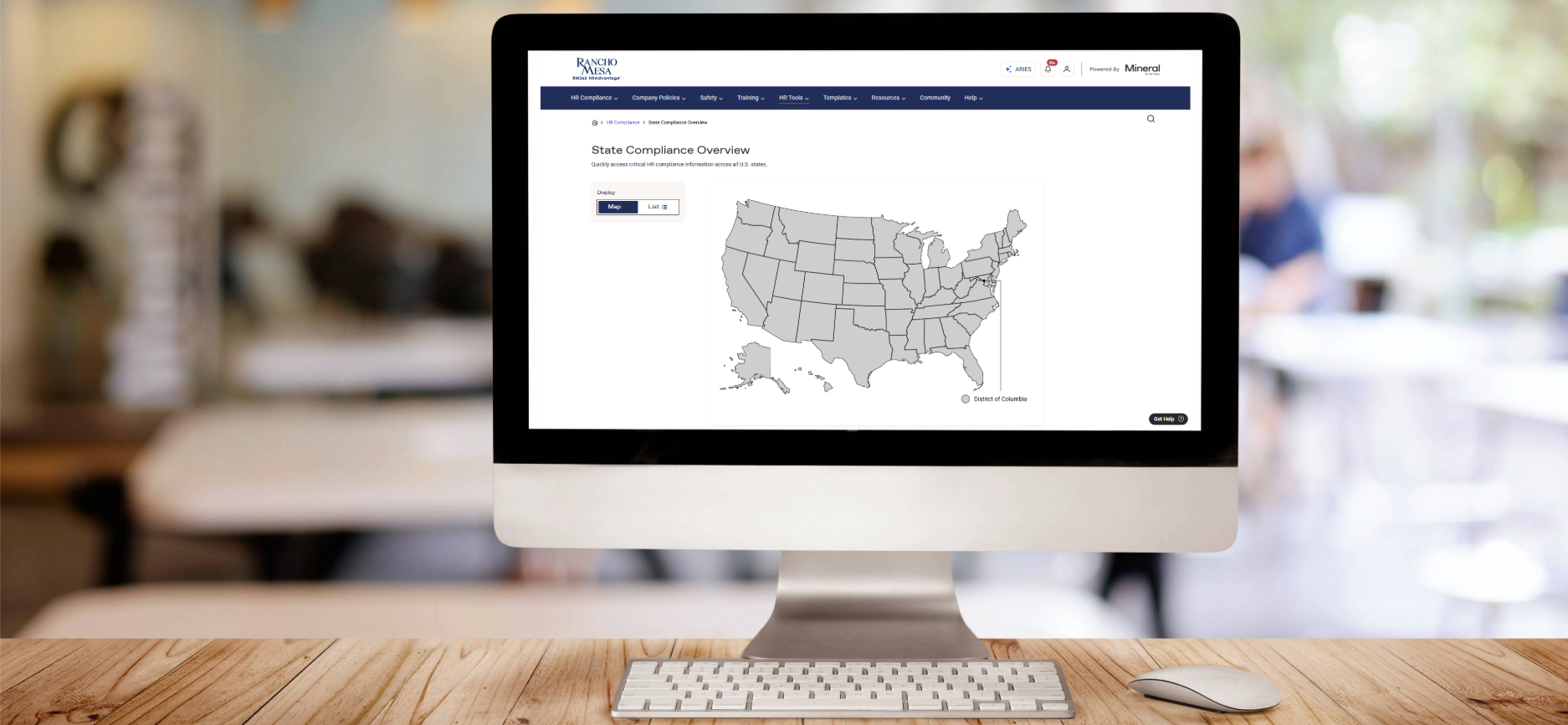
Staying in compliance with state laws is key to an organization’s success. Rancho Mesa’s RM365 HRAdvantage™ portal is making compliance easier for business owners and HR managers through the new State Overview screen.
Accessing the State Overview Screen
The State Overview screen can be found under the HR Compliance tab.
Hover over the “HR Compliance” in the navigation bar and click on “State Overviews.”
You will then see an interactive map of the United States. On the left side of the screen, you can switch between a Map and a List view.
Select the state you want to view an overview of.
State Overview
Select a state from the map or list to view the overview.
The overview includes:
State minimum wage rates and laws
Key laws specific to the state you have selected
Toolkits for hiring, recruiting, and termination
Recent law alerts and updates
List of all state-specific laws available in the portal library
For questions about accessing State Overviews or other HR portal resources, contact your client technology team member.
Managing and Preventing Workplace Violence Involving Non‑Employees
Author, Jadyn Brandt, Client Communications Coordinator, Rancho Mesa Insurance Services, Inc.
When employers seek to address workplace violence, trainings are often centered around preventing violent acts from occurring in an office environment. But, serious occurrences of workplace violence can also happen outside of an office setting.
Author, Jadyn Brandt, Client Communications Coordinator, Rancho Mesa Insurance Services, Inc.

When employers seek to address workplace violence, trainings are often centered around preventing violent acts from occurring in an office environment. But, serious occurrences of workplace violence can also happen outside of an office setting.
Utility or maintenance workers performing jobs late at night, social service workers dealing with patients experiencing mental health crises, or construction workers staffed in high-crime areas are some examples of employees who may be vulnerable to violence by non-employees.
These types of incidents are often recordable under the Occupational Health and Safety Administration (OSHA) guidelines. Section 1904.5(b)(6) of OSHA's recordkeeping regulation states injuries and illnesses are recordable if they occur while the employee was taking part in activities "in the interest of the employer."
If an employee is traveling to and from a jobsite, performing work on a jobsite, or dealing with clients, vendors, or outside contractors when the violence occurs, the incident will likely be OSHA recordable.
Precautionary actions can be taken in order to keep employees safe and reduce the likelihood of a violent incident. OSHA recommends employers establish a zero-tolerance policy. The policy should, “cover all workers, patients, clients, visitors, contractors, and anyone else who may come in contact with employees.”
No matter how you choose to incorporate a workplace violence prevention program into your company policies, training and clear communication are key for proper implementation. OSHA advises employers to “ensure that all workers know the policy; are trained on prevention methods, signs for potential violent behavior, and how to effectively react when an incident occurs; and understand that all claims of workplace violence will be investigated and remedied promptly.”
Workplace violence prevention training can be found in both Rancho Mesa’s SafetyOne™ Platform and RM365 HRAdvantage™ portal.
Other workplace violence prevention resources can also be found on the OSHA website, including specific guidance for health and human services workers.
Understanding Payment Fraud: Common Risks and Tools to Protect Your Business
Author, Jadyn Brandt, Client Communications Coordinator, Rancho Mesa Insurance Services, Inc.
Payment fraud is a threat to businesses of all sizes and can have a significant impact on a company’s bottom line.
Author, Jadyn Brandt, Client Communications Coordinator, Rancho Mesa Insurance Services, Inc.

Payment fraud is a threat to businesses of all sizes and can have a significant impact on a company’s bottom line.
Protecting your business from payment fraud is increasingly important, as scamming tactics continue to adapt to new technology. The Association for Financial Professionals (AFP) reports 79% of organizations included in their annual payments fraud survey reported have been victims of payments fraud attacks or attempts in 2024.
The same survey found that 63% of respondents reported their organization faced check fraud, making it the most common fraudulent payment method in 2024.
Wire transfers were reported as the payment type most vulnerable to business email compromise (BEC).
According to the AFP, BEC scams like phishing attacks commonly include impersonation of a senior executive, vendors or a third-party. These scams use falsified identity to attempt to gain access to sensitive information including passwords, bank information, or credit card numbers.
Effective fraud protection strategies can help insulate your business from these risks, and starts with proper training for employees. When employees know how to spot BEC scam tactics, they are less likely to share sensitive information and put the organization at risk.
Cybersecurity Awareness trainings are available through Rancho Mesa’s RM365 HRAdvantage™ portal. Participants will be taught how security breaches can occur and how to limit these risks.
Join us on Friday, May 1, 2026 from 9:00 am – 9:30 am for the Safeguarding Your Business: Fraud Protection & Smart Payment Strategies webinar.
April is National Distracted Driving Awareness Month
Author, Jadyn Brandt, Client Communications Coordinator, Rancho Mesa Insurance Services, Inc.
April is National Distracted Driving Awareness Month, and a good reminder to reevaluate your company’s driver safety policies and enforcement.
Author, Jadyn Brandt, Client Communications Coordinator, Rancho Mesa Insurance Services, Inc.

April is National Distracted Driving Awareness Month, and a good reminder to reevaluate your company’s driver safety policies and enforcement.
The National Highway and Traffic Safety Administration (NHTSA) leads the yearly effort to minimize distracted driving, and the dangers that come from failing to pay attention to the road.
In 2023, the NHTSA reported 3,275 deaths caused by distracted driving, including using a mobile phone, eating or drinking, changing the radio station, or talking to passengers.
An increased law enforcement presence will be out on roadways from April 10 through 14 as part of the national Put the Phone Away or Pay campaign.
Rancho Mesa has resources available for companies looking to train new drivers or remind company drivers of safe practices.
Driver-specific toolbox talks and online driver training are available through the SafetyOne™ platform that can be used to company drivers. And, for employers whose employees drive company vehicles daily or weekly, Rancho Mesa offers a weekly Driver Safety Toolbox Talk subscription, where each week, subscribers will receive an email containing one of Rancho Mesa’s 52 driver-specific toolbox talks in both English and Spanish.
Register to attend our Fleet Safety workshop, hosted at the Rancho Mesa office on April 24, 2026.
New RM365 HRAdvantage™ Law Comparison Tool
Author, Jadyn Brandt, Client Communications Coordinator, Rancho Mesa Insurance Services, Inc.
A new tool has been added to Rancho Mesa’s RM365 HRAdvantage™ portal for businesses that operate in multiple states. The new Law Comparison Tool simplifies multi-state compliance, allowing users to compare employment laws across multiple U.S. states and identify legal differences.
Author, Jadyn Brandt, Client Communications Coordinator, Rancho Mesa Insurance Services, Inc.
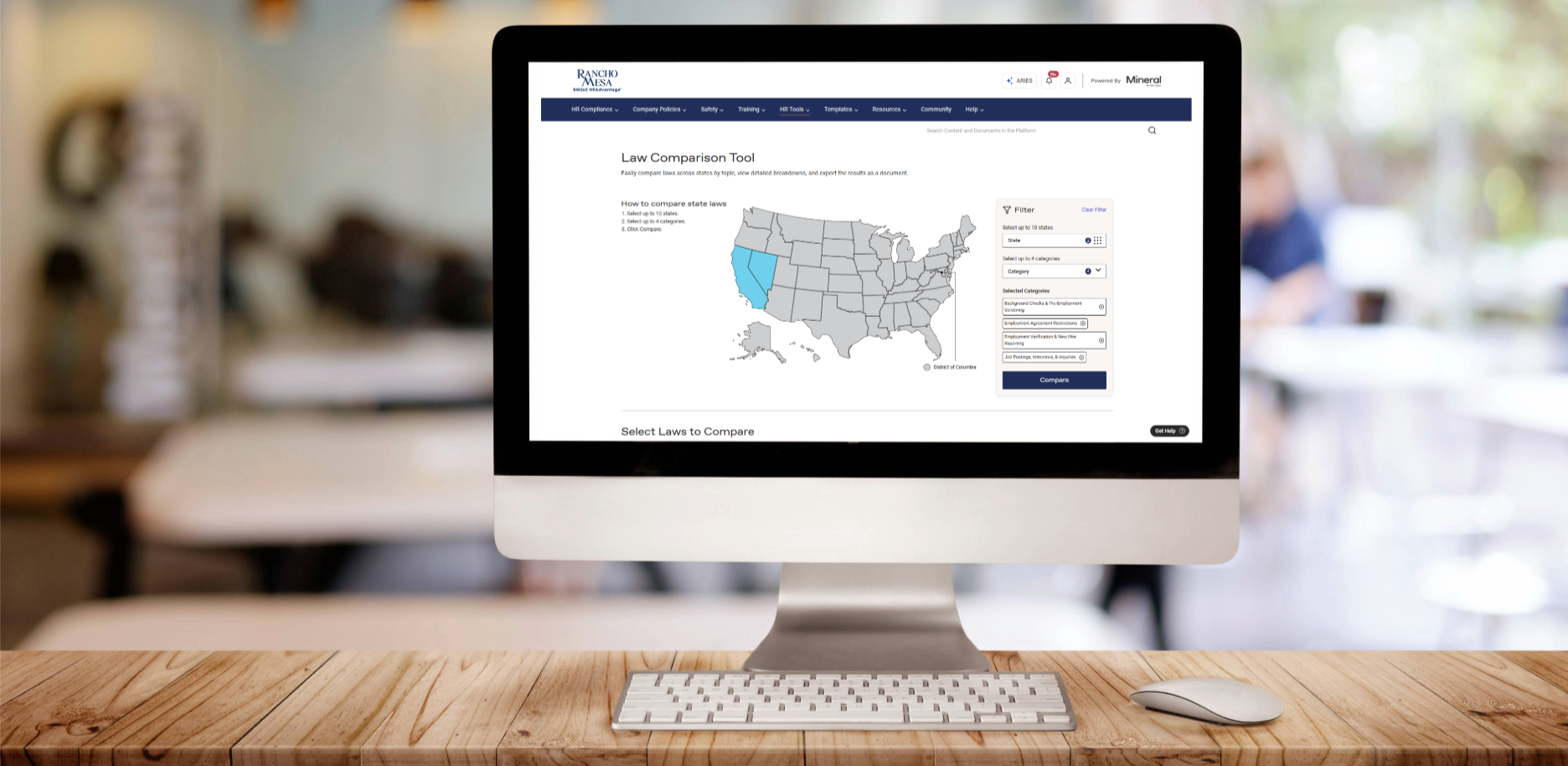
A new tool has been added to Rancho Mesa’s RM365 HRAdvantage™ portal for businesses that operate in multiple states.
The new Law Comparison Tool simplifies multi-state compliance, allowing users to compare employment laws across multiple U.S. states and identify legal differences.
Users of the HR portal can now:
Compare laws from up to 10 states and 4 law categories
Sort by specific law categories or subcategories
Export results in Word or Excel
How to Use the Law Comparison Tool
The Law Comparison Tool can be found under the “HR Tools” dropdown menu in the Navigation bar in the HR portal.
Using either the interactive map or the filters on the right-hand side of the page, select up to 10 states and up to four law categories, then click the “Compare” button.
The page will generate a list of corresponding laws in each state you have selected. Use the check box next to each law to select up to 10. Some laws will be state-wide, while others are specific to a city or county.
The portal will display your selected laws side-by-side for easy comparison. Click the “Email Comparison Download” button to generate a Word document or Excel spreadsheet comparison.
Contact your client technology team with any questions about accessing the HR Portal or Law Comparison Tool.