

Industry News

Ensure You’re Not Under Covered and Overpaying for Auto Insurance
Author, Casey Craig, Account Executive, Rancho Mesa Insurance Services, Inc.
Auto insurance prices are continuously rising. What is the reason for this and what can be done to cut back on the cost? There are many factors that lead to the carriers needing to increase their rates. We are going to discuss exactly what some of the reasons for the increases are; and more importantly, what business owners can do to offset price increase as much as possible while receiving adequate coverage.
Author, Casey Craig, Account Executive, Rancho Mesa Insurance Services, Inc.

Auto insurance prices are continuously rising. What is the reason for this and what can be done to cut back on the cost? There are many factors that lead to the carriers needing to increase their rates. We are going to discuss exactly what some of the reasons for the increases are; and more importantly, what business owners can do to offset price increase as much as possible while receiving adequate coverage.
Distracted drivers are causing more claims every year. Repairing a vehicle has become more costly as newer models have technology features such as sensors and back-up cameras. People using their cell phones while driving can cause them to have a diminished reaction time, which is leading to more severe high impact accidents. This is pushing medical costs up at a rapid rate, leading to an increase of claims dollars. Implementing a “No Phones While in a Vehicle” policy could reduce claims drastically and keep your employees safe.
There are many ways that carriers can get out of covering a loss, and employees driving their vehicles to and from job sites can really come back to haunt you if they do not have adequate coverage limits. Make sure that you have Hired and Non-Owned Coverage! Hired and Non-Owned is the coverage needed for the carrier to cover losses on vehicles that are not on the company’s policy, such as rented or employee owned vehicles. Employers need to make sure that employees have adequate personal auto insurance limits. The California minimum coverage limits of $15,000/$30,000/$5,000 can get exhausted very quickly in a serious accident, and lawyers are getting very good at finding grey areas to drag the employer in. You should consider reimbursing your employees to offset the increase in premium for them. Some carriers will apply subjective credits to your company auto premium if they know your employees need to have higher limits to drive for you.
One of the biggest gaps that brokers see when they audit policies for prospects is they are using the wrong symbols, thinking they are covered for a claim, and end up not having correct coverage. Most reputable carriers will offer Symbol 1 for your liability insurance and it is imperative that you use Symbol 1 vs. Symbol 7. Symbol 7 only covers vehicles described in the declaration and leaves limited coverage for vehicles acquired after your policy begins.
Rancho Mesa Insurance Services is a National Best Practices Agency 13 years in a row. We strive to make sure that our clients are without gaps in their coverage. Call (619) 934-0164 to ask about Rancho Mesa’s proprietary programs that help maintain clients’ safety and get them the lowest premiums possible. Register here for the free Fleet Safety webinar to learn how to increase vehicle safety, control vehicle accidents, safeguard long-term profitability, and ensure that your fleet safety & accident prevention programs are up-to-date.
California Wildfires Distress Insurance Market
Author, Chase Hixson, Account Executive, Human Services Group, Rancho Mesa Insurance Services, Inc.
2018 saw the most destructive wildfire season ever recorded in California. Over 1.8 million acres were burned; 22,751 buildings were destroyed and over 100 lives perished. As a result, insurance claims have exceeded $12 billion and are expected to rise.

2018 saw the most destructive wildfire season ever recorded in California. Over 1.8 million acres were burned; 22,751 buildings were destroyed and over 100 lives perished. As a result, insurance claims have exceeded $12 billion and are expected to rise.
Many in the industry expect we are on the verge of a crisis and from what I’ve seen so far, I’d have to agree. The marketplace is in frenzy as carriers aren’t sure what their overall financial hit will be. Furthermore, catastrophic losses like this affect the reinsurance marketplace, which causes pressure downstream to insurers.
Below is a look at what we are seeing in the marketplace.
Non-Renewals
Most carriers are non-renewing their entire books of business who are at risk of wildfires. Even if the client has been with the carrier many years with no losses, they are simply non-renewing properties on accounts in certain areas prone to wildfire. This is essentially leaving the marketplace with very few players.
Significant Premium Increases
Those carriers still willing to write property accounts are hiking up premiums significantly. We’ve heard of increases 5-10 times the previous year’s premiums. We recently spoke to an insured in the Riverside area whose insurance premium went from $85,000 to $500,000 a year.
Increased Deductibles for Wildfires
On top of the significant premium increases, most carriers are offering increased deductibles for wildfires. It’s not uncommon to now see $150,000, $250,000 and $500,000 deductibles depending on the value of the building(s).
What Can Business Owners Do?
Business owners need to act early and quickly. Speak with a broker to plan ahead because it looks like there will be a significant financial burden and risk (per increased deductible) moving forward. The marketplace is inundated with excessive submissions, so the need to submit as early as possible is imperative. There are alternative insurance programs that can act as a temporary solution while helping alleviate cost burdens. Some declinations can be avoided by proper abatement of brush and trees or installation of fire suppression systems. Regardless of when the insurance policy renews, I suggest getting started on this as soon as possible. The marketplace could take several years to stabilize.
For help understanding how wildfires can affect your organization’s insurance premium, contact Rancho Mesa Insurance Services at (619) 937-0164.
Maximize Your Bond Line of Credit by Collecting Account Receivables
Author, Matt Gaynor, Director of Surety, Rancho Mesa Insurance Services, Inc.
We often hear the term “cash is king” in the construction business. When referring to our contractor clients’ bond line of credit, this term is paramount. The various sources of cash listed on a balance sheet (i.e., cash in the bank, accounts receivable, available bank lines of credit) will largely influence the bond company’s calculation of the bond credit line. Let’s focus on accounts receivable.
Author, Matt Gaynor, Director of Surety, Rancho Mesa Insurance Services, Inc.

We often hear the term “cash is king” in the construction business. When referring to our contractor clients’ bond line of credit, this term is paramount. The various sources of cash listed on a balance sheet (i.e., cash in the bank, accounts receivable, available bank lines of credit) will largely influence the bond company’s calculation of the bond credit line. Let’s focus on accounts receivable.
When we provide the bond company a financial statement from a client, they will often request we include a Schedule of the Accounts Receivable and Accounts Payable statement. Generally, the schedule breaks out the receivables by 30, 60, and 90 day increments. Regarding the open receivable balances scheduled as “over 90 days past the invoice date,” the bond company will subtract this amount from the equity and working capital analysis because they feel that a greater risk exists in the collection of these receivables.
The over 90-day receivables become very important since the collection of these receivables can mean the difference between a bond company approving or declining a specific bid request (for a project which our contractor may already be heavily invested). The bond underwriter wants to ensure that the contractor has sufficient cash coming in the door to pay the labor, suppliers, and subcontractors on current projects – and may not want to take on additional risk if they are concerned about receivable collections needed to pay for these costs.
Being awarded a contract, whether bid or negotiated, is extremely important to a contractor’s success. But right behind the importance of winning and executing the contract, is the contractor’s ability to collect the money to ensure they are getting paid for the work they do. Make sure you have a good receivables team in place so that paperwork is issued correctly/timely, and consistently follow up on late payments to collect your money.
If you would like a better understanding of how the accounts receivable collection process affects your bond line of credit, feel free to contact me at (619) 937-0165 or mgaynor@ranchomesa.com to discuss ways to ensure your bond program is efficient as possible.
Workers’ Compensation Fraud Is Not a Victimless Crime
Author, Jim Malone, Workers’ Compensation Claims Advocate, Rancho Mesa Insurance Services, Inc.
Fraud can happen in every industry, including workers’ compensation. Within workers’ compensation claims, fraud is a term that can be overused by employers who may not agree with a claim, or a condition that has been considered work-related/work-aggravated. Many times, instead of fraud, there is simply a difference of opinion as to whether a specific work incident caused an injury.
Author, Jim Malone, Workers’ Compensation Claims Advocate, Rancho Mesa Insurance Services, Inc.

Fraud can happen in every industry, including workers’ compensation. According to standard definitions, “in law, fraud is intentional deception to secure unfair or unlawful gain, or to deprive a victim of a legal right. Fraud can violate civil law, a criminal law, or it may cause no loss of money, property or legal right but still be an element of another civil or criminal wrong. The purpose of fraud may be monetary gain or other benefits, for example by obtaining a passport, travel document, or driver's license, or mortgage fraud, where the perpetrator may attempt to qualify for a mortgage by way of false statements.”
Within workers’ compensation claims, fraud is a term that can be overused by employers who may not agree with a claim, or a condition that has been considered work-related/work-aggravated. Many times, instead of fraud, there is simply a difference of opinion as to whether a specific work incident caused an injury. For these disputes, it usually comes down to a medical opinion addressing whether something is work-related or work-aggravated.
Examples of Workers’ Compensation Fraud
A claim can become fraudulent when the employee lies about how the injury occurred or about their ability to work. The treating physician may be asked to provide their opinion as to whether the injured worker mislead them about how their injury occurred, and the significance of their complaints or physical capabilities. The doctor is provided records or sub rosa videotape contradicting information previously provided by the injured worker. Fraud can also occur when the injured worker lies under oath during a deposition, thus becoming a felony.
Workers’ compensation fraud is not limited to employees, but others within the system can also knowingly participate in the fraud. Physicians can be fraudulent in their billing for services not rendered, for accepting kick-backs, or realizing financial benefit for referrals to and from other physicians, vendors or other entities. Employers can commit insurance fraud by understating their number of employees, under-reporting payroll or misclassifying employees into cheaper job/class codes in order to secure cheaper insurance policy rates and premiums. Vendors can commit fraud by billing insurance carriers for products or services never provided. Attorneys can use illegal capping schemes to retain injured workers for clients.
Combating Workers’ Compensation Fraud
Each insurance company is now required to have a Special Investigative Unit (SIU) that provides ongoing monitoring and investigation of questionable activities related to claims. Fraud continues to cost tax-payers millions of dollars (some estimates are up to $80,000,000) per year. The money and resources the employers and insurance carriers are spending to combat fraud are also increasing each year.
In the event of a fraud conviction, fines or assessments, prison sentences, or restitution can be ordered. Workers’ compensation fraud is not a victimless crime; from the losses caused by fraudulent activities, to the money used to combat and prosecute fraud. The money lost to workers’ compensation fraud can never be replaced, but we are all responsible to do our part in remaining vigilant and reporting suspected fraud to the appropriate person or agency.
Senate Bill 778 Extends Employee Anti-Harassment Training Deadline
Author, Alyssa Burley, Media Communications and Client Services Manager, Rancho Mesa Insurance Services, Inc.
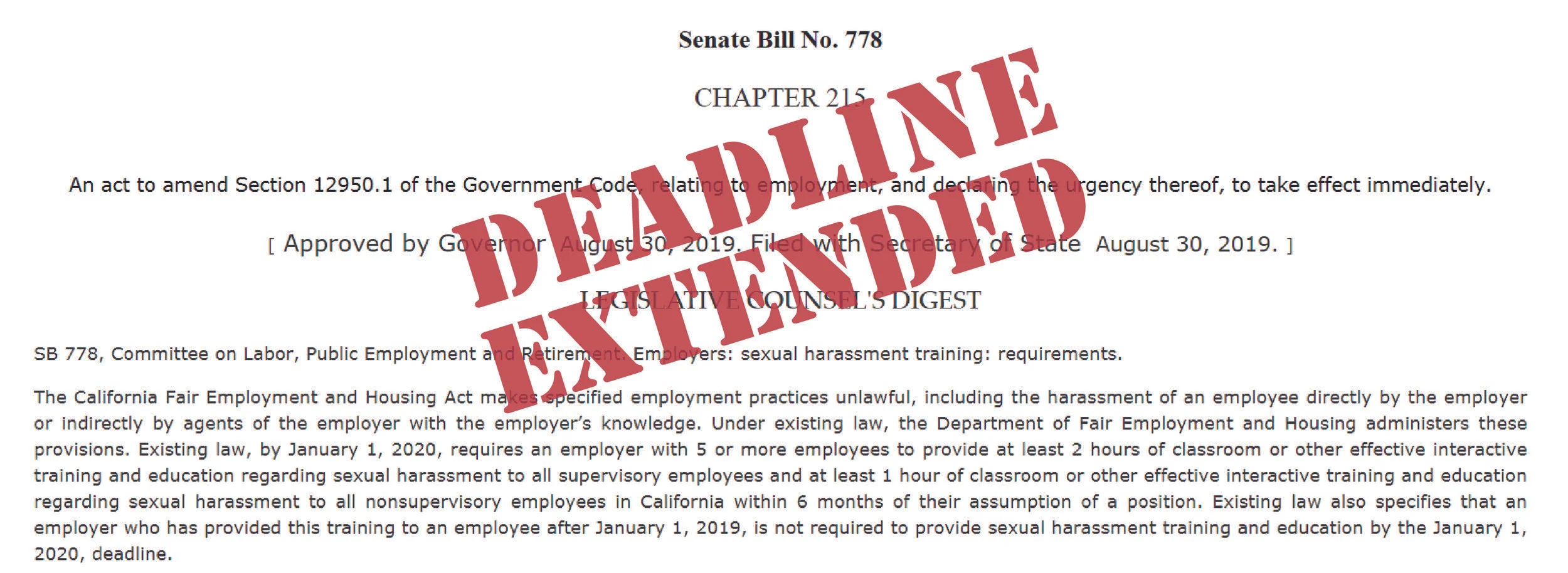
Newly passed Senate Bill 778 (SB 778) extends the deadline set in Senate Bill 1343 for California’s mandatory Anti-Harassment Training from January 1, 2020 to January 1, 2021. The bill also addresses concerns about supervisory employees and clarifies when temporary workers must be trained. California Governor Newsom signed the bill into law on August 30, 2019, which included an urgency clause that allows the bill to go into effect immediately.
Author, Alyssa Burley, Media Communications and Client Services Manager, Rancho Mesa Insurance Services, Inc.
Newly passed Senate Bill 778 (SB 778) extends the deadline set in Senate Bill 1343 for California’s mandatory Anti-Harassment Training from January 1, 2020 to January 1, 2021. The bill also addresses concerns about supervisory employees and clarifies when temporary workers must be trained. California Governor Newsom signed the bill into law on August 30, 2019, which included an urgency clause that allows the bill to go into effect immediately.
What SB 778 Means to CA Employers
The changes made by SB 778 not only extends the deadline for non-supervisory employee Anti-Harassment training, but also allows supervisory employees to stay on their existing two-year training schedule. For example, if a supervisory employee completed Anti-Harassment training in 2018, their next training, with the SB 1343 compliant content, will be due in 2020 - two years from their last training date, which is before the new deadline. Likewise, if a supervisory employee was trained in 2019, their next training due date will be in 2021.
Non-supervisory employees will need to complete their initial 1-hour Anti-Harassment training by January 1, 2021. For those who have already taken the training in 2019, we recommend they maintain their two-year schedule, and complete the training again in 2021.
Both supervisory and non-supervisory employees must be trained within six months of hire. However, temporary or seasonal workers who are hired for less than six months must be trained within 30 days of hire.
For questions about this training requirement or to learn how to enroll your supervisors and employees, register for the “How to Enroll Supervisors and Employees in the Online Anti-Harassment Training” webinar or contact Rancho Mesa’s Client Services Department at (619) 438-6869.
California Workers’ Compensation Dual Wage Thresholds Increases Approved for Construction Classes in 2020 – Bottom Line Hit Hard
Author, Sam Clayton, Vice President, Construction Group, Rancho Mesa Insurance Services, Inc.
In an effort to keep you informed, so that you can begin to budget for 2020, we wanted to let you know of the approved changes in the dual wage classifications effective January 1, 2020.
Originally published May 23, 2019.
Updated September 19, 2019.
Author, Sam Clayton, Vice President, Construction Group, Rancho Mesa Insurance Services, Inc.

In an effort to keep you informed, so you can begin budgeting for 2020, we want to let you know of the approved changes in the dual wage classifications effective January 1, 2020.
The increases range from $1.00 to $3.00 per hour, to keep the thresholds in line with inflation. However these changes will have an immediate effect on your bottom line.
In the classes of business that are facing a $3 increase, this equates to a low of 9.3% to a high of 10.3%. See the chart below for the actual approved changes. Not only does this have an impact on wages, payroll taxes, and your bottom line, it may also have an impact on your workers compensation premiums. If you find yourself in a situation where the wage increase is not practical, this will push those employees into the under classification which will have a substantially higher workers compensation rate. In either case, proactive planning will be required so you’re not caught unprepared.
Following are the individual classes and approved changes:
Dual Wage Thresholds
| Classification | Current Threshold | 2020 Threshold | Threshold Difference | Last Changed |
|---|---|---|---|---|
| 5027/5028 Masonry | $27 | $28 | $1 | 2013 |
| 5190/5140 Electrical | $32 | $32 | $0 | 2018 |
| 5183/5187 Plumbing/Heating/Refrigeration | $26 | $28 | $2 | 2014 |
| 5185-5186 Fire Sprinkler | $27 | $29 | $2 | 2009 |
| 5201-5205 Concrete or Cement Work | $25 | $28 | $3 | 2018 |
| 5403/5432 Carpentry | $32 | $35 | $3 | 2018 |
| 5446/5447 Wallboard Application | $34 | $36 | $2 | 2018 |
| 5467/5470 Glaizers | $32 | $33 | $1 | 2019 |
| 5474/5482 Painting/Waterproofing | $26 | $28 | $2 | 2018 |
| 5484/5485 Plastering or Stucco Work | $29 | $32 | $3 | 2018 |
| 5538/5542 Sheet Metal Work | $27 | $27 | $0 | 2014 |
| 5552/5553 Roofing | $25 | $27 | $2 | 2018 |
| 5632/5633 Steel Framing | $32 | $35 | $3 | 2018 |
| 6218/6220 Excavation/Grading | $31 | $34 | $3 | 2018 |
| 6307/6308 Sewer Construction | $31 | $34 | $3 | 2018 |
| 6315/6316 Water/Gas Mains | $31 | $34 | $3 | 2018 |
In an effort to help control workers compensation costs, we have developed several proprietary programs including the RM365 Advantage Safety Star Program™ and RM365 StatTrac™ that can help control these increases. Please reach out to me at sclayton@ranchomesa.com to ask any questions about the above or to learn more about our proprietary programs.
3 Benefits to Working with an Insurance Specialist vs. Generalist
Author, Jeremy Hoolihan, Account Executive, Rancho Mesa Insurance Services, Inc.
Most insurance agencies welcome any and all types of businesses, paying little attention to the type of business the prospect is running. These accommodating professionals will commit to quote virtually any person or business looking for insurance coverage. With this type of approach, inevitably the buyer will be working with a jack of all trades, but a master of none.
Author, Jeremy Hoolihan, Account Executive, Rancho Mesa Insurance Services, Inc.

Most insurance agencies welcome any and all types of businesses, paying little attention to the type of business the prospect is running. These accommodating professionals will commit to quote virtually any person or business looking for insurance coverage. With this type of approach, inevitably the buyer will be working with a jack of all trades, but a master of none. Working at Rancho Mesa Insurance for nearly 16 years, I’ve learned the importance of focusing on a niche or vertical market, rather than attempting to write insurance for anything with a pulse. The two vertical markets I focus on are the janitorial and construction industries. Below are three reasons why I believe a business owner should consider working with a specialist rather than a generalist.
Avoid Gaps in Coverage:
Having a trusted advisor that is a specialist in your industry can truly minimize potential gaps in coverage that otherwise might get overlooked by someone dabbling in your industry. Some examples include:
Allowing an exclusion of coverage to a policy where the insured has exposure: Unfortunately I see this all too often when I audit a prospects policy. I once reviewed a residential general contractor’s (GC) insurance policy and found a subsidence exclusion. This posed a serious concern because the GC builds foundations. If they were ever served with a claim relating to a foundation sinking or failing, there would likely be no coverage. I’ve also seen residential GC’s who build new homes with a residential exclusion. It’s these types of errors that can put a business in tremendous jeopardy.
Missing key coverage’s to plug gaps in coverage: Most contractors are required to carry workers’ compensation and general liability insurances. However there are many exposures that a contractor has in their operations that would be excluded without additional coverage’s in place. One example is pollution liability. If a plumber installs a faucet that leaks over time, undetected, and causes mold or fungus to develop, you will likely run into a pollution liability claim for bodily injury and/or property damage. Most general liability policies have a pollution exclusion. Without the knowledge of placing a separate pollution liability policy in place, the plumbing contractor would be faced with a gap in coverage.
Knowledge of Specialty Coverage’s and Markets:
Brokers who understand the operations and challenges faced by a particular vertical market have an opportunity to position themselves as risk management and coverage expert in that field. Specialization can also lead to specialty markets seeking brokers out to work with. Specialty markets seek brokers with expertise in their specific niche because they know the marketplace, and proper coverages can provide a steady flow of business. These relationships often lead to a much more comprehensive policy at an aggressive price. In addition, these programs include coverages that you would normally purchase individually that come standard to the program.
In the janitorial industry, one example is 3rd party crime coverage. Many of your standard market package policies will include 1st party crime coverage for employee theft. While this coverage is very important against an employee stealing from an employer, it does not cover theft of a client’s property from an employee. In order to cover this exposure, a policy needs to have 3rd party crime coverage.
Industry Specific Resources:
Partnering with a broker and agency, like Rancho Mesa Insurance, will also provide industry specific resources that generalist agencies will not. Below are a few examples of what you should expect when working with a specialist like Rancho Mesa.
Industry Specific Workshops – such as OSHA 10 Certification, Mobility & Stretch, Heat Illness Prevention, Fleet Safety, Fighting Fraud in CA Workers’ Compensation, etc.
Industry Specific Training Materials – extensive training library of over 3,000 titles in both online and in-person formats, available in English and Spanish
A dedicated Workers’ Compensation Claims Advocate to aggressively work on a client’s existing claims.
HR Benefits – rely on a team of HR experts who can quickly answer complex human resource and compliance questions over the phone or via email.
Comprehensive Living Employee Handbook – create and maintain your customizable employee handbook plus receive suggested updates when laws change.
Client Services Advocacy – In house dedicated client services coordinator to assist with implementation of risk management services.
Rancho Mesa Insurance is dedicated to becoming a trusted advisor to their clients by providing a 365 day approach to Risk Management. Our laser focus on specific industries has allowed us to build comprehensive programs that our clients are able to benefit from. If anything in this article resonates with you, please feel free to reach out to Rancho Mesa Insurance at (619) 937-0164.
Providing Anti-Harassment Training Is the Employer’s Responsibility
Author, Alyssa Burely, Media Communications and Client Services Manager, Rancho Mesa Insurance Services, Inc.
Many industries like construction utilize a semi-transient workforce that can shift from company to company as labor needs change throughout the project’s life cycle. Employees may work a few months for one employer, then move on to another employer when the project is completed. This scenario poses a dilemma for California employers looking to comply with Senate Bill 1343 (SB 1343). Providing training to an ever-changing workforce can be a challenge.
Editor’s Note: This article was originally published on August 22, 2019 and has been updated for accuracy on September 12, 2019.
Author, Alyssa Burely, Media Communications and Client Services Manager, Rancho Mesa Insurance Services, Inc.

Many industries like construction utilize a semi-transient workforce that can shift from company to company as labor needs change throughout the project’s life cycle. Employees may work a few months for one employer, then move on to another employer when the project is completed. This scenario poses a dilemma for California employers looking to comply with Senate Bill 1343 (SB 1343). Providing training to an ever-changing workforce can be a challenge.
“The current employer must provide the Anti-Harassment training to new employees within six months of hire, regardless if the employee was trained and has a certificate of completion provided by a previous employer or labor union.”
SB 1343 requires California employers with five or more employees to provide Anti-Harassment training to all supervisors and employees. The passing of Senate Bill 778, on August 30, 2019, extends the deadline for this training to January 1, 2021. The training must be completed every two years. For example, if an employee was trained in 2019, their next training due date will be in 2021. New employees must be trained within six months of hire. This means the current employer must provide the Anti-Harassment training to new employees within six months of hire, regardless if the employee was trained and has a certificate of completion provided by a previous employer or labor union. Every time a worker begins employment at a new company, they should expect to receive Anti-Harassment training within the first six months. However, temporary or seasonal workers who are hired for less than six months must be trained within 30 days of hire. This requirement ensures the current employer is able to maintain accurate training records.
Recordkeeping for Anti-Harassment training is important when there is an allegation of harassment or if an employee reports the employer for non-compliance. The Department of Fair Employment and Housing (DFEH) “accepts complaints from employees that their employers have not complied with the law…If DFEH finds that the law has been violated, it will work with employers to obtain compliance with the law,” according to the DFEH’s “Sexual Harassment and Abusive Conduct Prevention Training Information for Employers” document.
Rancho Mesa offers free online Anti-Harassment training for supervisors and employees to all of its clients. The training can be accessed from a computer, tablet or smartphone. The online platform provide automated recordkeeping and rescheduling to ensure as soon as an employee completes the training, they are automatically scheduled to complete it in two years. It also allows administrators to archive employee training records when an employee leaves the company and reactivate the records when/if they are rehired. To learn more about the trainings, visit our website or contact the client services department at (619) 438-6869.
SB 1343 requires employers take responsibility for providing Anti-Harassment training to all of their employees and supervisors. Take advantage of Rancho Mesa’s Anti-Harassment training and ensure your company stays compliant.
OSHA Offers Grant Programs to Nonprofits
Author, Sam Brown, Vice President, Human Services Group, Rancho Mesa Insurance Services, Inc.
Nonprofit leaders who want to make workplace safety training more accessible may be surprised to learn about a unique grant program through the Occupational Safety and Health Administration (OSHA). Since 1978, OSHA has offered grants to nonprofit organizations for safety training. Specifically, grants are awarded on a competitive basis to provide employees with training on the recognition and prevention of safety/health hazards in the workplace. The intent of the program is to reach audiences who might not otherwise receive safety training.
Author, Sam Brown, Vice President, Human Services Group, Rancho Mesa Insurance Services, Inc.

Nonprofit leaders who want to make workplace safety training more accessible may be surprised to learn about a unique grant program through the Occupational Safety and Health Administration (OSHA).
Since 1978, OSHA has offered grants to nonprofit organizations for safety training. Specifically, grants are awarded on a competitive basis to provide employees with training on the recognition and prevention of safety/health hazards in the workplace. The intent of the program is to reach audiences who might not otherwise receive safety training. OSHA renamed the program the Susan Harwood Training Grant Program, in 1997.
Grant applications in the past have typically fallen into three categories:
Capacity Building: OSHA awards these grants to help an organization grow or build its capacity to provide safety and health training to target audiences; small business employees, hard-to-reach or low-literacy workers, and workers in vulnerable and high-hazard industries.
Targeted Topic: These grants focus on occupational safety and health hazards associated with one of the OSHA selected training topics.
Training Materials Development: Grantees develop training materials on one of the OSHA selected training topics.
Although state or local government agencies are not eligible to apply, nonprofit organizations, including qualifying community and faith-based organizations, employer associations, and labor unions may submit applications.
The Harwood solicitation for grant applications can be found on the government-wide Grants.gov website.
Surety Bonds: What Are They, What Do They Do, and Why Am I Required to Get Them?
Author, Andy Roberts, Account Executive, Surety Division, Rancho Mesa Insurance Services, Inc.
When we have clients that are required to bond for the first time, often their first questions are what is a surety bond, how do they work, and why am I being required to provide one.
In its basic form, a surety bond is a three party agreement between the contractor, called the principal, the project owner, called the obligee, and the surety company. The surety company provides a financial guarantee to the obligee that the principal is both qualified and capable of performing the contracted job.
Author, Andy Roberts, Account Executive, Surety Division, Rancho Mesa Insurance Services, Inc.

When we have clients that are required to bond for the first time, often their first questions are what is a surety bond, how do they work, and why am I being required to provide one.
In its basic form, a surety bond is a three party agreement between the contractor, called the principal, the project owner, called the obligee, and the surety company. The surety company provides a financial guarantee to the obligee that the principal is both qualified and capable of performing the contracted job.
It is important to note, that while surety is an insurance product, it doesn’t function in the same way that traditional insurance does. Unlike insurance, which protects who obtains it, surety bonds are put in place for the benefit, or protection, of the obligee. As mentioned previously, the bond provides financial assurance to the obligee that the contractor is qualified and capable of completing the job per the terms stipulated in the contract. If the contractor were to default, the surety would be responsible for stepping in and making sure the project gets finished.
When and Why Are Surety Bonds Required?
Surety bonds are required on most public works projects that are led by federal, state, or local government agencies due to the Miller Act, which was passed in 1935. The Miller Act is designed to protect tax payer dollars, by requiring performance and payment bonds on all federal projects in excess of $150,000 and payment bonds for federal contracts between $35,000 and $150,000. Most states have similar legislation, known as “Little Miller Acts,” although the bond threshold varies from state to state. In addition to these jobs that require bonding, an increasing number of private owners and construction lenders are requiring surety bonds as well, in order to provide protection on their private jobs.
This article serves as a basic overview of performance and payment bonds, what they do, and why they are required on certain jobs. For additional information about these topics or additional information about the process of getting bonding for a job, please contact us at (619) 937-0166.
Additionally, we will be hosting a webinar, “Surety 101: Bond Basics” on August 27, 2019. I will dive deeper into the different types of contract and commercial bonds that are often required of contractors, and also the process of what is needed in order to get a surety bond program established with a surety.
Home Care Dishonesty Bonds and Client Property Theft Coverage Are Not Created Equal
Author, Chase Hixson, Account Executive, Rancho Mesa Insurance Services, Inc.
A common misconception in the home care industry is assuming a Home Care Dishonesty Bond is the same as having coverage for theft of client property. Many business owners don’t realize that Home Care Dishonesty Bonds, following the payment of a claim, will seek reimbursement from the business owner. That means the business owner is ultimately going to pay the claim if they don’t have an insurance policy to cover this type of act.

A common misconception in the home care industry is assuming a Home Care Dishonesty Bond is the same as having coverage for theft of client property. Many business owners don’t realize that Home Care Dishonesty Bonds, following the payment of a claim, will seek reimbursement from the business owner. That means the business owner is ultimately going to pay the claim if they don’t have an insurance policy to cover this type of act.
A bond is different from traditional insurance in that a bond is in place to protect the consumer (i.e. the client) in the event that a business becomes insolvent or refuses to pay a claim. In the case of home care dishonesty bonds, the bonding company acts as a safeguard for the client. In the event of a proven loss, the bonding company steps in to pay the client, and then seeks reimbursement from the business.
There are insurance companies that provide Theft of Client Property Coverage (sometimes called Third Party Coverage) under the general liability insurance form. This acts on behalf of the business owner. Should someone accuse their employee of stealing, this insurance would pay the claim and not seek any reimbursement from the business owner.
It is worth looking into your current general liability policy to see whether or not your company is truly covered for theft of client’s property rather than be surprised when you receive an invoice from the bonding company.
If you have any questions about this topic, please contact Rancho Mesa Insurance Services at (619) 937-0164.
CAL/OSHA Emergency Rule Adopted for Wildfire Smoke
Author, Drew Garcia, Vice President, Landscape Group, Rancho Mesa Insurance Services, Inc.
Author, Steve Hamilton, Loss Control Supervisor, Berkshire Hathaway Homestate Companies.
On Thursday, July 17 2019, the California Occupational Safety & Health Standards Board voted to adopt an emergency standard requiring employers to take action when air quality particulate matter measures greater than 150 and when there is reasonable expectation that employees will come in to contact with wildfire smoke.
Author, Drew Garcia, Vice President, Landscape Group, Rancho Mesa Insurance Services, Inc.
Author, Steve Hamilton, Loss Control Supervisor, Berkshire Hathaway Homestate Companies.
On Thursday, July 17 2019, the California Occupational Safety & Health Standards Board voted to adopt an emergency standard requiring employers to take action when air quality particulate matter measures greater than 150 and when there is reasonable expectation that employees will come in to contact with wildfire smoke.
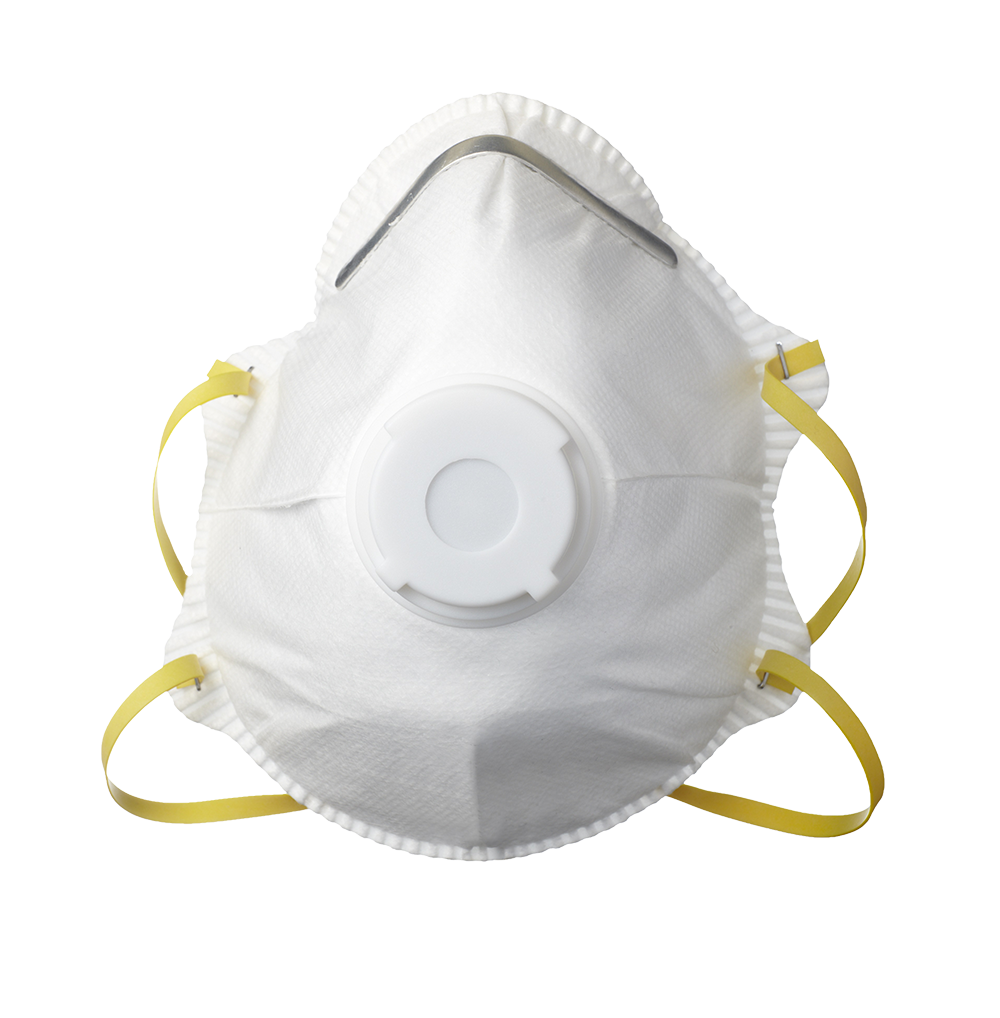
While this may seem new to many employers, it is technically an extension of regulations currently in place including the respiratory protection standards for employees and the need to address identified hazards in the workplace. As an employer it is critical that you follow the hierarchy of controls to ensure your employees’ safety in the field. If possible, eliminate the hazard by shutting down the workforce for the day. Employees should remain indoors until particulate levels fall to acceptable. If this is not possible, try to limit the workday by rotating employees who must work outdoors, remaining cognizant of the hazards in the air and allowing employee’s time to recover in appropriate indoor areas. If neither of these options are possible, consider providing N95 respiratory protection masks.
Please remember that any type of respiratory protection provided to employees must also be accompanied by applicable training, pulmonary exams, communication on proper usage/storage and others. Links to the applicable programs can be found at this address along with sites to help you monitor air quality: https://www.dir.ca.gov/dosh/Worker-Health-and-Safety-in-Wildfire-Regions.html
This site has additional training resources in English and Spanish, handouts on proper usage of N95 masks and the history of the standard as it has been submitted. Cal/OSHA wants you to have the resources you need to effectively address the risk potential.
At this point, the regulation is on its way to the Office of Administrative Law for approval and if deemed compliant, it will go into effect 10 days after it is received. This would mean the regulation could go into effect before August.
An advisory committee will meet August 27, 2019 to begin work on a permanent version of the regulation.
If you have any questions about ways to enhance regulatory compliance, please reach out to your local resources including your insurance agent, workers’ compensation insurance safety professionals, and Cal/OSHA Consultation.
Steps to Understanding and Managing Subrogation
Author, Daniel Frazee, Executive Vice President, Rancho Mesa Insurance Services, Inc.
Author, Jim Malone, Workers’ Compensation Claims Advocate, Rancho Mesa Insurance Services, Inc.
Subrogation crosses into many areas of the insurance world including workers compensation, general liability, property, and auto. As an employer, developing an effective Incident Investigation Plan is a key first step to managing the potential impacts of subrogation on your organization.
Author, Daniel Frazee, Executive Vice President, Rancho Mesa Insurance Services, Inc.
Author, Jim Malone, Workers’ Compensation Claims Advocate, Rancho Mesa Insurance Services, Inc.

Definition
Subrogation is defined as the substitution of one person or group by another in respect of a debt or insurance claim, accompanied by a transfer of any associated rights and duties. It occurs in property/casualty insurance when a company pays one of its insured’s for damages, then makes its own claim against others who may have caused the loss or contributed to it. Subrogation crosses into many areas of the insurance world including workers compensation, general liability, property, and auto. As an employer, developing an effective Incident Investigation Plan is a key first step to managing the potential impacts of subrogation on your organization.
Employer Level Investigation
Identifying the potential for subrogation should occur immediately after an injury or accident occurs with an employer-level investigation. This includes visiting and securing the scene of the accident. If there are hazards or dangerous conditions still present, address them by taping off the area or removing the hazardous element. All potential witnesses need to be identified with securing their name, employer, telephone number, address, copy of their driver’s license, etc. These witnesses should be provided a witness statement for their completion.
It is also imperative that the employer preserve the evidence by taking possession of the tool or equipment that caused the injury. If a ladder broke causing a fall and injuries, take possession of the ladder and keep it secure until needed later. If a tool malfunction is the cause of injury, take possession of that tool until it is needed for the next step of the investigation. Removing the injury-causing item prevents the chance of additional injuries or accidents.
Additionally, take photographs or measurements of the entire area, building as much visual evidence as possible. Be aware too that changes can and will occur to the scene of the accident within minutes or hours of the incident. Entire crews are known to be removed from the area to avoid being identified as potential witnesses of an at-fault third party incident.
Referring a Claim and Protecting the 2 year Statute
As you continue with your internal investigation, ensure that the claim’s assigned adjuster sends your third party information to the insurance company’s subrogation department. Most claim professionals do not have experience nor handle the details of subrogation cases. As a subrogation adjuster and attorney build their respective files, they will benefit significantly from the information obtained in a thorough post-injury investigation. They can then focus on obtaining additional discovery that can solidify their subrogation efforts. Reach out promptly to your subrogation adjuster and attorney as they will value your contribution to the investigation. We also recommend requesting regular updates, which would include participating in regular interval claim reviews.
Be aware that the California Statute of Limitations for personal injury cases is 2 years from the date of the injury and/or accident. “Protecting” this statute means ensuring your insurance company formally files a civil lawsuit against the identified third party in a timely fashion.
Pursuing Subrogation
While injured employees are barred from suing their employer for their workers compensation injury due to the Exclusive Remedy Rule, that same employee may still bring a personal injury claim against a third party who shares responsibility for the injury. The employer also has the right to bring a civil claim against a third party to be reimbursed for the workers compensation benefits it is providing. If the employee pursues the third party, the workers compensation carrier can join as a party to this litigation. In this scenario, the workers compensation carrier simply provides a summary of their costs, or their workers compensation lien. The carrier then has first lien rights once a judgment is reached against the at-fault party.
As subrogation cases move toward settlement, there are many factors impacting the net recovery for the injured worker and insurance company (employer). Many incidents have shared negligence alleged by the employer and even by the employee. The civil arena does not have the same thresholds or tolerances for extent of injury, need for medical care, resulting temporary disability, permanent disability and / or future medical care as does the workers compensation system. Many times the workers compensation liens are considered liberal and excessive by the civil arena. Therefore, it is difficult for the workers compensation carriers to be fully reimbursed for the total costs of their claims.
Waiver of Subrogation
In the Construction space, many trade contractors are asked via contract to provide waivers of subrogation in conjunction with other insurance requirements. Waivers do not prevent a subcontractor’s injured worker from filing suit against the general contractor. The waiver bars the subcontractor's workers compensation carrier from pursuing subrogation in the event the employee does not pursue relief from the aggrieved party. If the employee files suit, the subcontractor’s work comp carrier can then join the action. If the employee does not file suit, then the subcontractor’s carrier cannot pursue subrogation on its own against the General. Consider this example: A general contractor responsible for erecting scaffolding on a jobsite subcontracts drywall work to a subcontractor who will use the scaffolding in the scope of their work. An employee of the drywall contractor falls from the scaffolding and it is later determined that the General did not secure the base of scaffolding properly. Typically, the employer’s workers compensation carrier could look to subrogate the costs of the work comp injury claim incurred by the injured worker from the general contractor. However, the drywaller provided a waiver of subrogation to the general as a condition of securing the contract. Therefore, their right to subrogate against a general contractor has been waived. Subrogation between subcontractors; however, remains a viable avenue of subrogation if the involved parties are subcontractors.
Closing
Becoming comfortable with the many facets of subrogation is crucial as your team builds an overall plan to manage risk. This process includes incorporating third party questions into your Incident Investigation Plan, overseeing the claim and recovery process, creating reasonable expectations as settlement draws near and paying closer attention to waiver requirements. While these are only initial steps, they represent a solid base to building a greater awareness and deeper understanding of subrogation.
To learn more, email Daniel Frazee at dfrazee@ranchomesa.com or Jim Malone at jmalone@ranchomesa.com.
Fraudulent Claims Could Be on the Rise
Author, Casey Craig, Account Executive, Rancho Mesa Insurance Services, Inc.
California is in the middle of a construction boom. There is more work than qualified employees and contractors need people on their job sites. While fraudulent workers’ compensation claims are relatively low right now, California contractors are asking what will happen when there is not enough work to keep everyone busy?
Author, Casey Craig, Account Executive, Rancho Mesa Insurance Services, Inc.

California is in the middle of a construction boom. There is more work than qualified employees and contractors need people on their job sites. While fraudulent workers’ compensation claims are relatively low right now, California contractors are asking what will happen when there is not enough work to keep everyone busy?
Fraudulent workers’ compensation claims peak when steady work dries up and opportunities diminish. When an employee doesn’t know if they will be employed next week, they can panic and consider making a fraudulent workers’ compensation claim to ensure a compensation check. Regardless of the size of your company, consider how you may be able to create growth opportunities for your employees. Even if an employee is with your company for a short time, it is important to show them there are opportunities for promotions and pay raises. Keeping your employees happy and goal oriented is extremely effective in reducing fraudulent workers’ compensation claims.
According to Chris Dill, Special Investigations Unit Manager for ICW Group Insurance Companies, millennial’s are two to three times more likely to commit workers’ compensation fraud compared to older employees. That is not to say you shouldn’t hire a millennial, just make sure they know there is a path to move up in the company, have job descriptions, and promotions available with new titles. This is essential to keeping their interest and dedication to your company. Make sure to have meetings where every employee can speak freely in an open forum, so their voices are heard. If an employee feels valued and a member of a cohesive team, they are less likely to create false claims, which can lead to a more profitable company.
When bidding for a job, it is next to impossible to account for injuries that may happen and how those injuries will cut into your net profit. If your only goal is revenue, profit is hard to attain and growth is only sustainable if your profit remains consistent. Keeping workers’ compensation claims to a minimum is a contributing factor to achieve consistent profit.
There are many ways to decrease the likelihood of fraudulent workers’ compensation claims. Rancho Mesa Insurance Services offers strategies to help clients stay ahead of this problem, including our upcoming workshop “Fighting Fraud in CA Workers’ Compensation System” on September 19, 2019. Please contact us at (619) 438-6889 or ccraig@ranchomesa.com for more information on how to prevent fraudulent claims, or with any questions you have regarding your policy.
RM365 Safety Star Program May Lower Risk of Receiving OSHA’s Most Frequently Cited Violation
Author, Kevin Howard, CRIS, Account Executive, Rancho Mesa Insurance Services, Inc.
Rancho Mesa Insurance Services’ RM365 Advantage Safety Star Program™ checks several boxes for contractors who are looking to improve their safety culture and lower risk. The program provides safety training designed to reduce an organization’s probability of work-related injuries; thus, minimizing the likelihood of an OSHA citation when used in conjunction with the Risk Management Center tools.
Author, Kevin Howard, CRIS, Account Executive, Rancho Mesa Insurance Services, Inc.

Rancho Mesa Insurance Services’ RM365 Advantage Safety Star Program™ checks several boxes for contractors who are looking to improve their safety culture and lower risk. The program provides safety training designed to reduce an organization’s probability of work-related injuries; thus, minimizing the likelihood of an OSHA citation when used in conjunction with the Risk Management Center tools.
Encouraging a safety culture through proper training makes sense for employers. Fed OSHA’s, maximum fine for a non-serious violation is $12,600. A willful repeat violation, however, can cost an employer anywhere from $70,000 - $126,000.
According to the United States Department of Labor, the top 10 most frequently cited standards are:
Fall protection, construction
Hazard communication standard, general industry
Scaffolding, general requirements, construction
Respiratory protection
Control of hazardous energy (lockout/tagout), general
Ladders, construction
Powered industrial trucks, general industry
Fall Protection–Training Requirements
Machinery and Machine Guarding, general requirements
Eye and Face Protection
Avoiding OSHA’s #1 Violation
With Fall Protection being at the top of OSHA’s citation list, and one of the most frequent causes of workplace fatalities in construction, it is of the upmost importance to focus on it when developing a safety program.
Rancho Mesa’s Risk Management Center offers a number of safety trainings that cover all 10 of the most frequently cited standards listed above. Fall Protection is one of five modules, within the RM365 Advantage Safety Star Program that could potentially help avoid a severe injury and OSHA fines.
When Century Painting’s Eddie Lopez was asked to give his thoughts on becoming RM365 Safety Star certified, his response was sincere.
“Obtaining my RM365 Safety Star Certificate was not only fulfilling and educational as a safety manager, but it also helped me navigate through safety criteria that OSHA is expecting us to follow regardless,” said Eddie Lopez, Safety Manager for Century Painting Corp.
RM365 Advantage Safety Star Program™ is a comprehensive tool for contractors that are hoping to package several advantages into one single task. To learn more about how to enroll, please visit the Safety Star Program™ page or contact Rancho Mesa Insurance Services at (619) 937-0164.
To learn more about the Fall Protection in Construction requirements, visit Cal OSHA’s Safety & Health Fact Sheet. You will notice links dedicated to each industry down the left side of the page. This information can further help companies avoid a potential OSHA fine, and more importantly, protect employees.
Top 5 Free Safety Apps for Landscape Contractors
Author, Drew Garcia, Vice President, Landscape Group, Rancho Mesa Insurance Services, Inc.
Mobile devices have become an invaluable tool for many people, on the job. They provide access to contacts, email and applications (i.e., apps) that can make work a lot simpler and safer for landscapers. We researched the top apps that boost worker safety. In no particular order, here are the top 5 free safety applications for the landscape industry.
Author, Drew Garcia, Vice President, Landscape Group, Rancho Mesa Insurance Services, Inc.





Mobile devices have become an invaluable tool for many people, on the job. They provide access to contacts, email and applications (i.e., apps) that can make work a lot simpler and safer for landscapers. We researched the top apps that boost worker safety. In no particular order, here are the top 5 free safety applications for the landscape industry.
OSHA-NIOSH Heat Safety Tool
This app allows workers and supervisors to monitor the heat index for any jobsite. By utilizing the apps features any user can get a reminder about the proper safety precautions and proactive measures that should be taken under the given conditions. It is available in both English and Spanish (to access Spanish, set phone language to Spanish).
Red Cross First Aid
This app provides access to information on how to properly handle first aid emergencies. It is available in both English and Spanish.
Chemical Safety Data Sheets - ICSC
This concise app offers searchable information on substances, delivered in a simple manner. It is only available in English.
NIOSH Sound Level Meter
This app quickly monitors the level of noise exposure in order to judge and evaluate if further testing is needed. It is available in both English and Spanish.
NIOSH Ladder Safety
This interactive ladder safety application is used to assist the worker in positioning a ladder at an optimal angle. It is available in both English and Spanish.
There are many applications employers can use on devices to help improve their safety program, formalize trainings, and consolidate information.
If you use an application (with or without a fee), we would like to hear about it, so we can share with all of our safety-minded clients. Please send your feedback to Alyssa Burley, aburley@ranchomesa.com.
Employers Prepare As Reports of Sexual Harassment Spike
Author, Alyssa Burley, Media Communications and Client Services Manager, Rancho Mesa Insurance Services, Inc.
Americans are all too familiar with the #MeToo movement that has shed light on sexual harassment in the workplace. Outspoken celebrities and prominent public figures have brought this topic to the forefront in the media. With all the publicity surrounding sexual harassment allegations, people are empowered to speak out and report unwanted behaviors in the workplace. This leaves many employers asking what they can do to prevent harassment and prepare for possible harassment allegations.
Editor’s Note: This article was originally published on June 27, 2019 and has been updated for accuracy on September 12, 2019.
Author, Alyssa Burley, Media Communications and Client Services Manager, Rancho Mesa Insurance Services, Inc.
Americans are all too familiar with the #MeToo movement that has shed light on sexual harassment in the workplace. Outspoken celebrities and prominent public figures have brought this topic to the forefront in the media. With all the publicity surrounding sexual harassment allegations, people are empowered to speak out and report unwanted behaviors in the workplace. This leaves many employers asking what they can do to prevent harassment and prepare for possible harassment allegations.

Charges Alleging Sexual Harassment FY 2010 - FY 2018
The United States Equal Employment Opportunity Commission (EEOC) released its “Charges Alleging Sexual Harassment FY 2010 - FY 2018” report. The data shows from 2010 to 2017 reports of alleged sexual harassment incidents actually declined 15.7%, over the seven-year span. However, based on the data, it is difficult to know if incidents of sexual harassment declined or just the reporting of incidents declined.
However, during 2018 there was an increase of 13.6% in alleged sexual harassment incidents, which accounted for over 7,600 claims at a cost of $56.6 million dollars in damages.
| Year | 2010 | 2011 | 2012 | 2013 | 2014 | 2015 | 2016 | 2017 | 2018 |
|---|---|---|---|---|---|---|---|---|---|
| Percentage Change Over Previous Year Number of Charges |
NA 7,944 |
-1.4% 7,809 |
-3% 7,571 |
-4.2% 7,256 |
-5.7% 6,862 |
-0.6% 6,822 |
-0.9% 6,758 |
-0.9% 6,696 |
13.6% 7,609 |
| Percentage Change Over Previous Year Damages (In Millions) |
NA $41.2 |
9.5% $45.1 |
-4.7% $43 |
3.7% $44.6 |
-21.5% $35 |
31.4% $46 |
-11.5% $40.7 |
13.8% $46.3 |
22.2% $56.6 |
EEOC. Charges Alleging Sexual Harassment FY 2010 - FY 2018. https://www.eeoc.gov/eeoc/statistics/enforcement/sexual_harassment_new.cfm.
California’s Senate Bill 1343 (SB 1343) now requires employers with 5 or more employees to provide 2-hour Anti-Harassment training to supervisors and 1-hour training to employees, every two years. As part of this new requirement, the initial training must be completed for all employees and supervisors by January 1, 2021, according to Senate Bill 778, approved on August 30, 2019, which extends the training due date. The changes made by SB 778 not only extends the due date to January 1, 2021, but also addresses concerns about supervisory employees and clarifies when temporary workers must be trained. Read about the changes here.
It’s our belief that as more people are trained to recognize harassment in its many forms, we expect to see the number of reported alleged harassment incidents increase in the coming years. So, what should California employers do to mitigate this increased risk?
Course of Action
For employers, the best course of action is two-fold. Make sure you are compliant by training your employees and supervisors; second, make sure you have Employment Practices Liability Insurance (EPLI) as part of your risk management portfolio.
Training Supervisors and Employees
Understanding the confusion, time and financial burden SB 1343 puts on all California employers, Rancho Mesa offers its clients SB 1343-compliant free online supervisor and employee Anti-Harassment training. Supervisor and employee trainings can be completed 100% online via a computer, tablet or mobile device.
California employers who are not clients of Rancho Mesa can find this training through 3rd party vendors that work in the Human Resource arena and will need to contract with them directly to meet this requirement.
Employment Practices Liability Insurance (EPLI)
EPLI is “a type of liability insurance covering wrongful acts arising from the employment process. The most frequent types of claims covered under such policies include: wrongful termination, discrimination, sexual harassment, and retaliation,” according to the International Risk Management Institute, Inc.
If your organization currently does not have EPLI, or you are unsure about what is covered in your policy, we recommend you contact your insurance broker or call us to get clarification. With the projected increase in these types of claims, not having this vital coverage in place could expose your company to severe negative financial impacts.
Whether the increase in reported alleged sexual harassment incidents is a result of more incidents or simply more people feeling comfortable reporting the harassment, every employer should be prepared to properly train their employees and supervisors, while actively working to prevent and stop all forms of harassment in the workplace.
Contact the Rancho Mesa Insurance Services Client Services Department at (619) 438-6869 or aburley@ranchomesa.com for more information about free anti-harassment training for supervisors and employees, or learn more through our other articles on the topic.
Alyssa Burley is NOT a licensed insurance professional. Informational statements regarding insurance coverage are for general description purposes only. Contact a licensed insurance professional for specific questions.
Fleet Management: Driver Behavior Counts
Author, Sam Clayton, Vice President, Construction Group, Rancho Mesa Insurance Services, Inc.
When you give the car keys to your teenager for the first time, you wish you were sitting in the back seat controlling how they drive. Unfortunately, you have very limited control and the consequences of poor driving can be disastrous. It’s time to think of your employee drivers in a similar manner; these principles apply to your company’s fleet management program.
Author, Sam Clayton, Vice President, Construction Group, Rancho Mesa Insurance Services, Inc.

When you give the car keys to your teenager for the first time, you wish you were sitting in the back seat controlling how they drive. Unfortunately, you have very limited control and the consequences of poor driving can be disastrous. It’s time to think of your employee drivers in a similar manner; these principles apply to your company’s fleet management program.
To gain some sense of control, you regularly perform fleet inspections and driver trainings. You also hire and manage according to driving records, which provides a picture of the employee’s past driving history. Though, if you are honest with yourself, you too have driven over the speed limit many, many times before you received your speeding ticket. So, a driving record is not the only way to gauge a driver’s behavior.
If you had an effective and efficient way to impact your driver’s behavior before a ticket or accident occurs, you would feel more confident about managing your fleet.
There are Global Positioning Systems (GPS) that can monitor some of the problem behaviors like speeding; however, the onus is on you (the employer) to analyze the information then act on it. Another problem with this type of system is willful negligence. What happens if you have the data, know of a problem, but don’t act? This could cause a major problem when an accident occurs because you knew of a driver’s poor behavior but did nothing specifically to correct it.
The insurance industry is in a commercial auto claims crisis. The cost of vehicle repairs have increased and whether you employ safe drivers or not the price to insure a vehicle is skyrocketing. Simply, the claims have exceeded the premiums collected and the carriers are trying to recover the loss. So, steering driver behavior is more important than ever for your bottom line.
To the degree you can control auto claims created by your employee drivers, the better your premiums will be. Fewer claims equal lower premiums — simple as that. Claims are caused from poor driving behavior. Improve drivers’ behavior on any given day, and you’ll reduce the number of accidents.
But, how do you do that? Logistically, you can’t physically ride along with every employee to ensure they are driving safely, and offer real-time corrective guidance when they make mistakes.
As mentioned, there are GPS devises that measure driver behavior and performance. The devices will consolidate the information; but, it is up to the employer to analyze and act on the information.
Ask yourself, do I have enough time to consistently review this information and implement the correct plan of action? Do I have the resources available to manage this process?
If you are unsure and would like to learn about automated ways to track, manage and correct behaviors likes seatbelt usage, speeding, harsh braking, acceleration and corning, join us at our upcoming Fall workshop, “Driver Behavior is What Counts” and learn how to effectively and efficiently improve your fleet management practices and reduce premiums using smart technology.
In the meantime, if you have any questions, please contact Sam Clayton at (619)937-0167.
Time To Renew Your Bond Line of Credit
Author, Matt Gaynor, Director of Surety, Rancho Mesa Insurance Services, Inc.
The majority of Rancho Mesa’s contractor clients have a fiscal year, end of December 31, for their company financial statements. During March, April, and May we collect a variety of financial information from our contractors to update the bonding company. The underwriting items we request include the 12/31 CPA financial statement, along with the work in progress and closed contract schedules. We also request an updated bank letter, account receivable/account payable schedules, and a personal financial statement from the owner.
Author, Matt Gaynor, Director of Surety, Rancho Mesa Insurance Services, Inc.

The majority of Rancho Mesa’s contractor clients have a fiscal year, end of December 31, for their company financial statements. During March, April, and May we collect a variety of financial information from our contractors to update the bonding company. The underwriting items we request include the 12/31 CPA financial statement, along with the work in progress and closed contract schedules. We also request an updated bank letter, account receivable/account payable schedules, and a personal financial statement from the owner.
Once this information is collected, submitted to, and reviewed by the bond company, they may follow up with questions or require additional information to explain what has been submitted. They will also ask the bonding agent to request single bond and aggregate bond program “parameters” based on the contractor’s estimate of work over the next 12 months. This information forms the basis for the bond agent’s line of authority that the bond company will provide to the bond agent.
The line of authority provides the agent with approval to execute the bid, payment, and performance bonds for their contractor client within the negotiated single and aggregate limits. The bond agent line of authority also includes certain conditions that would fall outside the agent’s authority to approve the bond request; therefore, the agent would need to submit the request to the bond company for approval. Some of the conditions that fall outside automatic approval include:
a.) a bid spread in excess of 10% between the first and second bidder.
b.) a project located outside the contractors’ normal geographic area for work.
c.) the contractor taking over work of a defaulted contractor, etc.
The agent line of authority is an efficient way for the bond agent to service their contractor client accounts without requiring approval from the bond company for every project. Upon receipt of a new bond request, the agent will review the project information to ensure it falls within their authority, and then they will execute the bid or performance bond and deliver the bond to their client. The line will usually expire on April 30th of the following year – which restarts the process to collect the financial information for the bond company to renew the agent’s line for another year.
If you would like a better understanding of how the bond line of authority affects your bond program, please contact Matt Gaynor, at (619) 937-0165.
Promoting Safe Behaviors in the Workplace
Author, Jeremy Hoolihan, Account Executive, Rancho Mesa Insurance Services, Inc.
Safety awareness is one of the most important factors in reducing workplace injuries. There are approximately three million workplace injuries, every year. This amounts to roughly 8,000 injuries per day, 350 per hour, or 6 injuries per minute. Many of these injuries are preventable. Unsafe behaviors or decisions are usually the most common contributing factors. If employees are unaware of hazards or not motivated to follow safety protocol, their behavior will expose them even more.
Author, Jeremy Hoolihan, Account Executive, Rancho Mesa Insurance Services, Inc.

Safety awareness is one of the most important factors in reducing workplace injuries. There are approximately three million workplace injuries, every year. This amounts to roughly 8,000 injuries per day, 350 per hour, or 6 injuries per minute. Many of these injuries are preventable. Unsafe behaviors or decisions are usually the most common contributing factors. If employees are unaware of hazards or not motivated to follow safety protocol, their behavior will expose them even more.
Promoting safe behavior in the workplace can be one of the most impactful ways of reducing injuries. I encourage business owners to go above and beyond the required controls and measures such as engineering, administrative, and personal protective equipment (PPE) and promote safe behaviors and a safe work environment. Below are examples of ways ownership and management can promote safe behaviors.
Conduct frequent safety meetings with employees and encourage participation. Discuss previous injuries or near misses with your employees to identify the root cause and any corrective actions that are necessary. Be aware that not all corrective actions are readily accepted by employees, especially those seasoned employees that are set in their ways. It is important to listen to their concerns, analyze and modify the procedure or task so that the employee will buy into the changes and not be tempted to break the rules and work unsafely.
Give recognition to employees who are performing tasks safely and demonstrate proper behaviors. A little bit of recognition amongst your peers can be extremely influential and can further promote safety in the workplace.
Involve the employees in identifying and correcting hazards in the workplace. This can promote self-worth in an employee. Your employees are your eyes and ears in the field and they may identify an overlooked workplace hazard. It is especially impactful when the corrective action was a hazard they identified on their own.
Perform safety observations to encourage safe behaviors. While supervisory observations are important, business owners should also consider peer to peer safety observations. By collaborating with employees and involving them in the safety program, it will help them buy into any changes that are necessary further promoting workplace safety.
Having ownership and management consistently express their concerns for their employees well-being and safety is another way to promote safe behaviors. As a business owner, communicating to your employees that your main concern is their safety can drastically change the culture of a business. Reminding your employees that you want them to go home safely each day, goes a long way.
Promoting safe behaviors in the workplace starts with ownership and management, but is executed daily by the workforce. Providing sound policies and procedures relating to safety, along with a strong collaboration between ownership, management, and staff can drastically improve safety in the workplace and promote a safety culture.
Rancho Mesa Insurance Services, Inc. is a strong advocate for workplace safety. We like to take a risk management approach with our clients and prospects to develop a program that fits their needs. Please feel free to reach out to me, Jeremy Hoolihan, at (619) 937-0174 to see how Rancho Mesa can improve your risk profile.