

Industry News

Closing the Installation Floater Coverage Gap for Landscape Contractors
Author, Drew Garcia, Vice President, Landscape Group, Rancho Mesa Insurance Services, Inc.
Landscape contractors have varying levels of exposure when it comes to installation projects. However, they virtually all share the same common coverage gap for trees, plants, shrubs, and lawns.
Author, Drew Garcia, Vice President, Landscape Group, Rancho Mesa Insurance Services, Inc.

Landscape contractors have varying levels of exposure when it comes to installation projects. However, they virtually all share the same common coverage gap for trees, plants, shrubs, and lawns.
An installation floater covers property being installed by a contractor. For landscapers, this could be a number of different items depending on the scope of work: irrigation systems, hardscape, low voltage lighting, and plant material to name a few. Most installation floaters will exclude plants, trees, shrubs, and lawns within the policy under “property not covered.”
The property being installed is generally insured under a few different scenarios. Temporary storage at the yard, at the jobsite, in transit, and installation at the jobsite. Common losses include fire, theft, and accidental damage.
The obvious concern is a scenario in which plant material is damaged or stolen and the insurance policy denies the claim due to the common exclusion.
When considering the limit for your installation floater, you will want to estimate your average job value for material cost and labor cost to install the product. You will also need to know if the policy is written on blanket coverage or scheduled location. If a project comes up that is out of the ordinary, you can always increase the limit for that specific project by engaging your insurance provider in advance of take-off.
The cost of plant material and labor changes each year. The broker price index for the nursery, garden, and farm supply stores has increased by about 43% since 2019. Wage inflation has continued to drive payroll cost. Be sure to re-evaluate your exposure and ensure that plants, trees, shrubs, and lawns are covered for your installation exposure by working with your insurance professional and carrier to remove the exclusion completely, or amend the limit to provide a max dollar amount per tree, plant, shrub, or lawn being installed.
To discuss this coverage or review your current policy, contact Drew Garcia at (619) 0200 or drewgarcia@ranchomesa.com.
Don’t Overlook the Importance of Fleet Safety
Author, Greg Garcia, Account Executive, Rancho Mesa Insurance Services, Inc.
From an insurance premium standpoint, one of the largest cost for any landscape company would be the auto policy, and for good reason. According to the National Highway Traffic Safety Administration, a motor vehicle crash happens every 12 minutes. Of course, not all those accidents are from landscapers, but it’s still a staggering statistic none the less.
Author, Greg Garcia, Account Executive, Rancho Mesa Insurance Services, Inc.

From an insurance premium standpoint, one of the largest cost for any landscape company would be the auto policy, and for good reason. According to the National Highway Traffic Safety Administration, a motor vehicle crash happens every 12 minutes. Of course, not all those accidents are from landscapers, but it’s still a staggering statistic none the less.
For all auto insurers, their combined ratios (claims dollars/premium) for this line of insurance is typically above 130%. Thus, for every dollar collected in premium they are on average paying out $1.30 in claim costs. These high claim costs are due in part to larger settlements being paid out for bodily injury, higher replacement costs (parts/labor) for the vehicles, etc. As a result, auto insurance premiums are rising overall and in some cases those increases are significant.
While an individual company can have little impact on the industry as a whole, there are a few areas landscape or other businesses can be aware of that will help defer or reduce premium increases for them.
The following are a few common mistakes landscape drivers are making to create an unsafe driving environment:
Distracted Driving – This is by far the most common mistake any driver can make. It is imperative that your employees remain focused while operating a vehicle. The number one cause of distracted driving comes from cell phone use while driving a vehicle.
Traveling at unsafe speeds
Following too closely behind another vehicle
Best in class landscape companies understand the importance of fleet safety and really hone in on their fleet safety procedures.
Some of the things the top landscape companies are doing to help keep auto accidents to a minimum include:
Maintain your vehicles - Always take care of your vehicles, making sure everything is running properly. Complete regular inspections (daily, weekly, and monthly). Keep accurate maintenance logs and check for tire and brake wear. Vehicle maintenance and care is an important safety component, and helps reduce the chance of an auto accident.
Fleet Safety Program - Create a written company Fleet Safety Program and provide driver safety trainings to all employees. The Fleet Safety Program must detail leadership’s expectation of what is required to be a driver for the company and what the consequences will be if the procedures are not met. Driver trainings should not be a “check list” item, meaning you do it once and then you forget about it.
For the Fleet Safety Program and the driver trainings to be effective and successful, they need to be a recurring training topic.
Watch our Fleet Safety: Above and Beyond Compliance webinar to help you get started with your Fleet Safety Program. Your Client Services Coordinator will be happy to provide tools to help assist you in building your program.
By taking a serious look at your current fleet safety procedures and making necessary changes, you will not only lower your annual premiums on your auto policy, but you will also create a safer environment for your employees.
If you have any questions or want to discuss your risk management needs further, please reach out to me at ggarcia@ranchomesa.com and I will be happy to help you.
Safety and Training Make It Easy to Do the Right Thing
In this podcast episode Joe and Rancho Mesa’s Landscape Group Leader Drew Garcia discuss the importance of making it easy to do the right thing when it comes to safety and training.
Joe Lewis is the COO of Yard Solutions, a design build and maintenance company servicing residential and commercial customers in and around the Groveport, Ohio region. He also serves as the head chair of the National Association of Landscape Professionals’ (NALP) Safety Committee.
Joe brings unique perspective to the landscape industry due to his previous career in the Unites States Marines from 1997 to 2014.
In this podcast episode Joe and Rancho Mesa’s Landscape Group Leader Drew Garcia discuss the importance of training that makes it easy for employees to do the right thing in safety.
You will hear Joe explain instilling sound habits for safety, reinforcing these habits through engaged leadership and relevant feedback, and then validating them based on the company’s resulting performance in safety, profitability, and quality.

ELEVATE 2022: A Pre-Conference Discussion with NALP CEO Britt Wood
Rancho Mesa's Vice President of the Landscape Group Drew Garcia interviewed the National Association of Landscape Professionals (NALP) CEO Britt Wood about the upcoming ELEVATE 2022 conference event in Orlando, FL on September 18-21.
Rancho Mesa's Vice President of the Landscape Group Drew Garcia interviewed the National Association of Landscape Professionals (NALP) CEO Britt Wood about the upcoming ELEVATE 2022 conference event in Orlando, FL on September 18-21, 2022.
ELEVATE, previously known as LANDSCAPES, is thee event for the leading landscape and lawn care professionals. ELEVATE is designed for owners, and the individuals who will help drive their businesses forward. ELEVATE is venturing outside of its longtime Louisville, Kentucky home to Orlando, Florida, and will be heading to a new location each year.
With over 48 contractor lead sessions, ELEVATE is full of learning and the exchanging of ideas amongst industry leaders. It is NALP’s goal to have attendees become inspired, take what they have learned and apply their new knowledge to elevate their business.
A dedicated expo hall will feature industry suppliers who are showcasing the latest and greatest. There will also be time for fun with influential speakers, music entertainment, and The Wizarding World of Harry Potter™ rented out exclusively for ELEVATE attendees!
When:
September 18-21, 2022
Where:
Gaylord Palms Resort & Conference Center
Orlando, Florida
Register:
www.landscapeprofessionals.org/elevate
About NALP
The National Association of Landscape Professionals is the national trade association representing nearly 100,000 landscape industry professionals in the United States, with additional members in Canada and overseas. Member companies specialize in lawn care, landscape design and installation, landscape maintenance, tree care, irrigation and water management, and interior plantscaping. Members also include students, consultants, industry suppliers, state associations and affiliate members. For more information, visit www.landscapeprofessionals.org.
Automobile Rental Reimbursement for Tree Care Companies
Author, Rory Anderson, Account Executive, Rancho Mesa Insurance Services, Inc.
A tree care company’s auto fleet includes specialty vehicles like bucket and box trucks. These vehicles are important assets for the company and critical for completing jobs. Getting into an auto accident is already stressful, but what can add more grief is if the vehicle that gets damaged is vital for your business. In this case, you will be looking to rent a replacement vehicle during the repair window so that your business can maintain productivity and profitability. With this in mind, rental reimbursement coverage helps cover the rental cost incurred while your vehicle is repaired after a covered loss.
Author, Rory Anderson, Account Executive, Rancho Mesa Insurance Services, Inc.
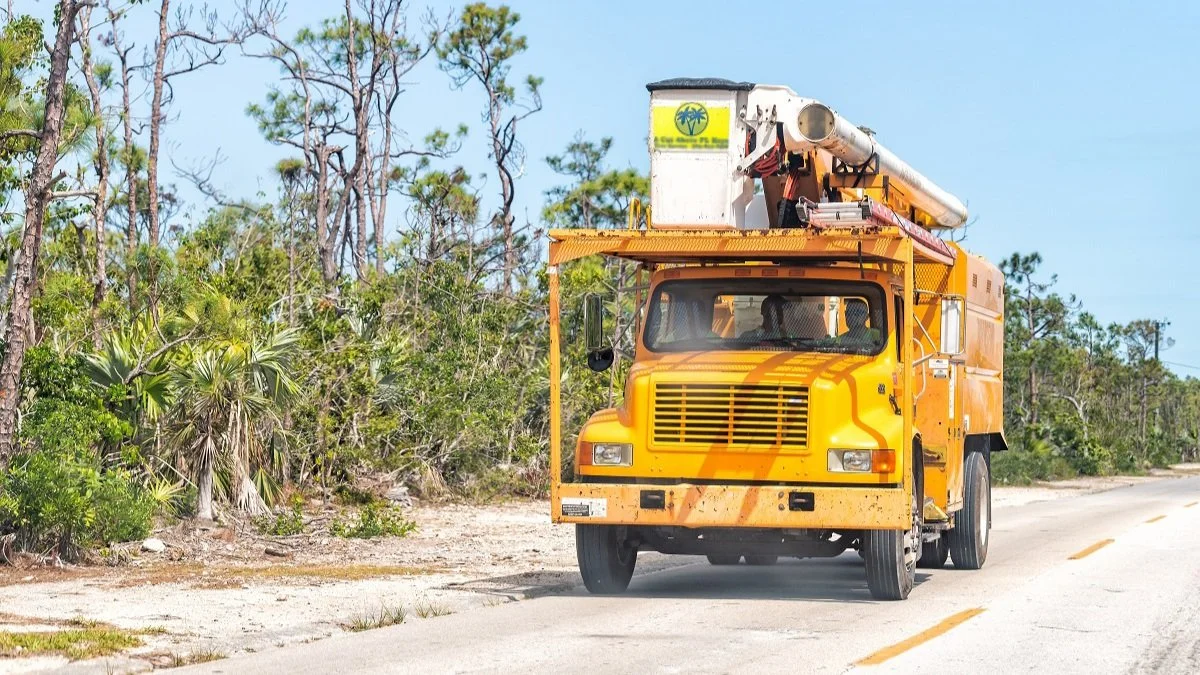
A tree care company’s auto fleet includes specialty vehicles like bucket and box trucks. These vehicles are important assets for the company and critical for completing jobs. Getting into an auto accident is already stressful, but what can add more grief is if the vehicle that gets damaged is vital for your business. In this case, you will be looking to rent a replacement vehicle during the repair window so that your business can maintain productivity and profitability. With this in mind, rental reimbursement coverage helps cover the rental cost incurred while your vehicle is repaired after a covered loss.
In the tree care business, renting a specialty truck is no easy task. Rental bucket and box trucks are expensive and limited. Renting these specialty trucks can cost up to $600 per day. In addition to the cost, the COVID-19 pandemic continues to cause problems with the supply chain of products, including auto parts. So, not only is it expensive to rent these specialty trucks, but it is also taking longer than normal to get vehicles repaired.
The standard rental reimbursement coverage will offer between $50 and $100 per day for 30 days. With how costly the tree care specialty trucks are and with the amount of time it is taking to repair these trucks, you can see how you might find yourself in a sticky situation if one of these key trucks goes down. However, certain insurance carriers will offer to increase the per day amount as well as extend the period of rental reimbursement coverage, if needed.
Partnering with an insurance professional who specializes in the tree care industry is important to make sure that your bucket and box trucks have the correct rental reimbursement coverage in the case of an auto accident.
To discuss this potential gap within your current insurance program or any other commercial insurance for your tree care business, contact me at (619) 486-6437 or randerson@ranchomesa.com.
Three Changes to Your Routine That Increases Safety
Author, Greg Garcia, Account Executive, Landscape Group, Rancho Mesa Insurance Services, Inc.
Every landscape company wants to be safe. So, I want to discuss three ways to improve safety in your workplace starting today: routine equipment maintenance, personal protective equipment (PPE) checks, and finally, assessing job site hazards.
Author, Greg Garcia, Account Executive, Landscape Group, Rancho Mesa Insurance Services, Inc.

Every landscape company wants to be safe. So, I want to discuss three ways to improve safety in your workplace, starting today.
1) Routine Equipment Maintenance
Routine maintenance and cleaning of equipment is essential for any landscape company wanting to make sure all of their equipment is running properly and is ready for a day’s work. From a safety standpoint, we see the biggest risk comes from those companies who use sprayers to fertilize lawns and plants for their clients. By not cleaning the sprayers out daily, landscape companies are putting their employees at risk of being exposed to pesticides and herbicides, which can be detrimental to the employee’s heath. Therefore, routinely checking and cleaning pieces of equipment can not only improve your productivity and profitability by making sure equipment is ready for work, but can also lead to a much safer working environment for your employees.
2) personal protective equipment (PPE) checks
Personal protective equipment is one of the most important things landscape employees can use to protect themselves while they work. Whether it be thorny bushes to cut back, the use of loud chainsaws or mowers, or just the effects of being out in the sun, it is important to assess the job site hazards and make proper PPE choices. A few examples that landscape companies are doing to help their employees fight the effects of being exposed to the sun are: wearing long sleeve shirts, wearing sun hats that provide shade to the face and neck, and wearing proper sunglasses to help with the heavy glare. Always keeping up to date and staying informed on proper PPE will ensure that your landscape company is doing all they can to stay safe.
3) assessing job site hazards
Finally, addressing job site hazards is vital for companies in the landscape industry. The safety manager, supervisor or foreman need to get out to job sites and really see what hazards are out there. For example, look to see if there are any poisonous plants at the jobsite and/or any pieces of debris or puddles in the walk ways that could create a trip and fall hazard. All of these exposures need to be noted to ensure everyone is aware of potential risks. Every jobsite is different, so it is crucial that your team remain proactive and really hone in on the potential risks at each particular jobsite.
If equipment checks, PPE checks, and job site checks are not currently in your landscape company’s safety routine, I would strongly suggest starting that routine, today.
Subscribe to our weekly landscape-specific safety emails to ensure you are getting relevant training materials every week.
If you have questions about how to mitigate your company’s risk, reach out to Greg Garcia at (619) 438-6905 or ggarcia@ranchomesa.com.
WCIRB Proposes Expected Loss Rate Decrease for Landscape Industry
Author, Drew Garcia, Vice President, Landscape Group, Rancho Mesa Insurance Services, Inc.
The Workers’ Compensation Insurance Rating Bureau (WCIRB) has proposed a 2% decrease (from $2.42 to $2.37) in the expected loss rate for the landscape class code 0042.
Author, Drew Garcia, Vice President, Landscape Group, Rancho Mesa Insurance Services, Inc.
The Workers’ Compensation Insurance Rating Bureau (WCIRB) has proposed a 2% decrease (from $2.42 to $2.37) in the expected loss rate for the landscape class code 0042.
The proposed $2.37 would impact Experience Modifications (ExMod) for all workers’ compensation policies that take effect on or after September 1, 2022.
The expected loss rate is used to calculate each company’s individual ExMod within the industry. A decrease in the rate would generate lower expected losses and lower primary thresholds. So, the lower number puts pressure on the ExMod to increase. Whereas, an increase in the expected loss rate would help provide some potential ExMod relief.
The proposed decrease would impact the lowest possible ExMod for landscape companies by increasing it about 5% or 2 to 3 ExMod points.
So, landscapers need to implement effective safety programs to ensure losses don’t exceed the new lower expected loss rate for the industry.
To help landscape businesses manage their individual ExMod, Rancho Mesa introduced the KPI Dashboard in January 2021 to provide insights that help organization leaders stay informed and prepare for future changes like these.
If you’re not a Rancho Mesa client, and are a landscape business in California, we would welcome the opportunity to forecast your ExMod to help you better prepare. Contact me to request your customized KPI Dashboard.
Signing Up for Safety
Author, Greg Garcia, Account Executive, Landscape Group, Rancho Mesa Insurance Services, Inc.
There are many tips, ideas, and systems involved in creating a safe culture in the landscape industry. The most common practice landscape companies implement with regards to safety are regular safety meetings.
Author, Greg Garcia, Account Executive, Landscape Group, Rancho Mesa Insurance Services, Inc.

There are many tips, ideas, and systems involved in creating a safe culture in the landscape industry. The most common practice landscape companies implement with regards to safety are regular safety meetings.
For these meetings to be effective, you need to ask yourself three questions:
What should be discussed during these safety meetings?
How often do we really need to have these meetings?
Where can I find content for these meetings?
Let’s take a look at each question in more detail.
What should be discussed in these safety meetings? The easy answer is we will just talk about an accident that has recently occurred. That seems like a good approach, but it’s more of a reactive approach than proactive. Make no mistake about it, it is very important to go over safety regarding a previous incident, and take the necessary steps to help prevent that incident from happening again. However, a great safety culture includes a more proactive approach by covering safety topics before an incident occurs. Examples of good topics for safety meetings include something as simple as “Operating a Leaf Blower” to more pressing issues like “Handling Medical Emergencies and Jobsite Injuries.”
Secondly, how often do we need to hold these meetings? The quick answer as often as possible, but we recommend weekly safety meetings as they are the best way to create and change culture for the better. Weekly meetings build consistency. And, these good habits create a safety first culture by emphasizing safety and showing your employees that their wellbeing is a top priority. Plus, OSHA requires safety meetings at least every ten working days, so scheduling them weekly ensures you are meeting that requirement.
Finally, and what seems to be the most important question, is where can I find content for these safety meetings? Rancho Mesa wants to help provide that content. We publish a weekly landscape specific safety tailgate email. These emails arrive in your inbox every Tuesday and range from proper equipment use like “Avoiding Mower-Related Injuries,” to specific injury topics such as “Preventing Heat-Related Illness.” Our 52-week tailgate topics are not only landscape specific, but they correspond to the seasons, as well. So, you will not be receiving a topic on Heat Illness in the middle of winter, instead that topic is more likely to come out in the summer months. There are both English and Spanish versions of these tailgate topics that can be downloaded. These safety emails are something that our clients are taking full advantage of, and is a great way to take the burden of finding landscape specific safety topics off your plate, every week.
In an effort to serve and support the overall health and safety of the landscape community, we offer these trainings without charge to any landscape company that is interested in receiving them. Sign up to receive these trainings every week.
If you have any questions or would like more assistance in developing your safety program, contact me at 619-438-6905 or email me at ggarcia@ranchomesa.com.
OSHA Posting and Submitting Guide
Author, Alyssa Burley, Media Communications and Client Services Manager, Rancho Mesa Insurance Services, Inc.
Rancho Mesa Insurance Services, Inc. would like to remind its clients that February 1, 2022 marks the start of the OSHA Form 300A Summary posting period. The OSHA Form 300A is a summary of the company's annual work-related injuries and illnesses. It must be posted from February 1, 2022 to April 30, 2022.
Author, Alyssa Burley, Media Communications and Client Services Manager, Rancho Mesa Insurance Services, Inc.

Rancho Mesa Insurance Services, Inc. would like to remind its clients that February 1, 2022 marks the start of the OSHA Form 300A Summary posting period. The OSHA Form 300A is a summary of the company's annual work-related injuries and illnesses. It must be posted from February 1, 2022 to April 30, 2022.
To learn more about maintaining all the OSHA logs, listen to Rancho Mesa's StudioOne™ podcast episode 168 where Alyssa Burley and Megan Lockhart discuss the Forms 300, 300A and 301.

REQUIRED TO POST
According to Cal/OSHA, “If your company had more than ten (10) employees at any time during the last calendar year, you must keep Cal/OSHA injury and illness records unless your establishment is classified as a partially exempt industry under Section 14300.2.”
POST FORM 300A SUMMARY
The Form 300A Summary must be posted in a conspicuous place at each workplace, where notices to employees are usually displayed. Make sure that the posted annual summary is not altered, defaced, or covered by other material. Employers must send a copy of the summary to employees who do not report to the workplace on a regular weekly basis.
NO RECORDABLE INJURIES
Companies with no recordable injuries or illnesses in 2021 must post the OSHA Form 300A Summary with zeros on the “total” lines.
HOW TO GENERATE THE FORM 300A SUMMARY
Through Rancho Mesa's Risk Management Center, clients can generate the OSHA Form 300A Summary using the incident tracking feature. Individual employers are required to maintain the OSHA Forms 300, 300A and 301 throughout the year. So, when it is time to generate the Form 300A Summary, it can be printed from the Risk Management Center, as long as the employer has been documenting the information in the platform throughout the year.
To print the OSHA Form 300A Summary, login to the Risk Management Center and navigate to Incident Track. Ensure you have entered all your incident information, then go to the Reports section and choose the Form 300A Summary from the available list. You'll be able to choose the year and locations (Sites) that you want to print.
SUBMITTING THE FORM 300A SUMMARY TO FEDERAL OSHA
In addition to posting the Form 300A Summary in your workplace, the data must also be submitted to Federal OSHA by March 2, 2022. If you have entered your incident data into the Risk Management Center, you'll be able to generate the electronic .CSV file that is used to upload the data to the Federal OSHA website. Watch out short video on how to generate the electronic Form 300A Summary.
Data Entry and Generating the Electronic Form 300A Summary
There are some minor differences between Cal/OSHA and Federal OSHA requirements. Check with your state’s OSHA division for specific differences for your state.
Visit the California Recordkeeping Standard or Injury & Illness Recordkeeping Forms webpages for more information.
2022 Workers' Compensation Expectations for CA Landscape Industry
Rancho Mesa's Alyssa Burley and Drew Garcia, Vice President of the Landscape Group set the stage for insurance expectations in 2022.
Transcript
Alyssa Burley: Welcome back, everyone. My guest is Drew Garcia, Vice President of the Landscape Group with Rancho Mesa. Today, we're going to set the stage for insurance expectations for 2022. Drew, thank you for joining us.
Drew Garcia: Alyssa, thanks for having me.
AB: Since you specialize in the landscape industry, what do you see for the insurance marketplace, for these companies as we move into 2022?
DG: Great question, and I think a lot of companies are always wondering this each year as they come up for renewal. So what I want to do is just, I'll give you a little insight to all the lines of insurance that most landscape companies are going to be renewing in 2022.
And this is basically what we do at a pre renewal, very low level. But I'll start with work comp, which has been a soft market now for four or five years where there's been pressure for rates to continue to go down as a group, as a whole.
And each company's obviously individually underwritten by a carrier, and they're looking at the losses for that particular company. But in general, the work comp market has been soft and that's led to, you know, general decreases for most businesses over the last four or five years.
We think that trend is going to continue in 2022, and we'll see if there's any change in 2023. But for the foreseeable future through this policy period, we do believe that the work comp market is going to stay relatively soft, and that just means rates are going to stay down as a whole.
Again, there could be some individual things that you're experiencing as a landscape business that's causing your pricing to increase, whether that's your ex mod or you've got claims in the current year that haven't gone into the mod calculation or you've changed operations, things like that could impact your own pricing.
But as a group, we feel like the market's going to stay relatively soft. And I'm going to share a little detail that we do individually, myself and Greg, who helps me here with the landscape group at Rancho Mesa. We track a lot of industry data and then we use that when we're having our conversations with our customers.
So one thing we like to pull is we measure every contractor that has a C-27 license in California. There's about 5,465 of those companies that have work comp policies, and that's businesses that are landscape companies that only carry that license. They don't also have other licenses so strictly landscape, which helps us keep our data clean when we're looking at it. So there's 5,465 of those companies, 125 carriers, insurance carriers for work comp, right? At least one policy for all of those companies.
So there's 125 insurance carriers writing at least one landscape policy. Now there's only 25 carriers that have more than 20 policies, so we really start to limit down, you see carriers become niche when trying to write a particular business, in this case, landscape. Of those 125, only 25 of them have more than 20 policies. So there's probably a little bit of an appetite there that's aligning for those carriers. And then when we really might it down, there's only ten carriers they have more than 150 policies, and those are the bulk of the businesses of the insurance carriers riding the business or writing work comp policies for landscape companies in California. The top five are going to be familiar names, Berkshire Hathaway, Insurance Company of the West, State Fund, Markel and then Am Trust.
Those are the top five carriers in terms of market share writing those 5,465 C-27 license landscape companies that have work comp policies. So a little bit of an insight into the market and what carriers are interested in writing business or work comp policies for landscape companies.
And then when we look at the numbers, we always like to watch the pure premium rate for the 0042 class code and just a quick refresher on pure premium. Every year the bureau, the rating bureau, will recommend a rate that the carriers should charge per $100 in payroll for every particular class code to strictly just cover claim costs. So, this rate doesn't include carrier overhead or expense. So, that number went from $4.93 last year to $4.57 this year, effective September the first of 2021. That's a 7% decrease, and when you're watching that recommendation come from the bureau to the insurance carriers, what happens next is insurance carrier’s base rates come down a little bit. Normally, the rates should come down a little bit on the base rate side, and last year, the average base rate for an insurance carrier, which is the rate that they're going to start at when they're going to underwrite a landscape business, and that rate is going to be different for every insurance carrier. The average rate that they started at was $9.92. That's down to $9.52 on average. So 4% down on the base rate for work comp carriers. Again, those are indicators to us that the market is still soft.
There's still plenty of carriers trying to write the business and that, we should see rates stay relatively down for 2022 as a whole. Again, we talked about the individual aspect of underwriting, but as a whole, those are good indicators that the market still is pretty soft.
And I'm going to share my screen really quick. This is a factor here that nobody really talks about. But California is so diverse with how work comps are handled throughout the state. So there's individual territory factors that most carriers apply when they're underwriting based on where you're doing your business and the reason why they use territory factors is because the claim outcomes, the claim activity can be higher in certain areas than in others. So the screen that you're looking at right now shows Berkshire Hathaway's territory factors based on 2021 and then 2022. And what I did is you can see, based by zip code, I've got different colors indicating the severity of territory factors that could be applied depending on where you're doing your business. So the lighter colors that you're seeing, the more yellow, lighter yellow that you see, those are the preferred areas and then the heavier, darker red that's going to be where maybe there's some territory debits that increase, and most carriers are using something like this when they're underwriting and looking at the business, but you can see some movement in some of the color from last year to this year. You can see San Diego's lightened up a little bit as a territory, so rates are probably a little bit more favorable in San Diego.
But there really is always been some heavy focus on L.A., Orange County, Riverside County, San Bernardino, where carriers really look at implying a debit on territories just because of claim outcomes and claim activity in those in those particular regions.
And then San Jose in Northern California, those have always been generally lighter intel. There's a less territory factor that that happens up there based on better claim activity and claim outcomes that are associated with the zip codes up in that area.
So I wanted to share that, I'll pull that screen down. And then now exiting work comp kind of just highlighting a couple of the other lines of insurance that we think are going to be impacted in 2022. And we've talked about it for many years with our customers, but the auto market is still very difficult.
And if you're a landscape maintenance company, you have a heavy fleet and a lot of vehicles. So it's really important for you to continue to monitor your cost per unit. And we wrote that article a few weeks back, measuring your cost per unit at each renewal so you can kind of see where your insurance has gone over the years. And so landscape companies really need to pay attention to their cost per unit because we do believe there's still more pressure on the auto market for rates to continue to increase. There's a lot of things that Rancho Mesa provides, and so many of our landscape companies are taking advantage of our Fleet Safety trainings that we have in the Risk Management Center and client services on our end has done a great job when we've had claimed activity with our customers to recommend certain driver trainings, you know, as a result of those claim outcomes - or those accidents that have occurred.
So, we've been happy with how we're helping our customers manage the auto side and then really everyone should watch out on the excess or the umbrella layer of their insurance that's really taking its toll and we've seen rate increases coming on that line in particular. A lot of carriers are limiting their capacity, so a lot of carriers usually go up to 10 million for that limit. But now it seems five is the most that any one carrier wants to go to.
So if you carry more than 5 million, you're probably going to need to stack that with multiple carriers to achieve that limit, which could be different than what you've seen in the past, and also watch out for wildfire exclusions. A lot of excess of reinsurance carriers are trying to apply a wildfire exclusion to landscape companies in California, which would be a detriment to your policy if you have it. So always pay attention for that. You can also look out for that wildfire exclusion on your general liability policy. Those are new things that are potentially coming to the liability side. There are still carriers out there that don't offer that exclusion, so you would want to make sure that you're aligned with a carrier that's doing that. But for the general liability property inland marine policies, we think rates are staying relatively flat.
So we don't see a lot of movement coming there. More of the pressures coming on the auto and excess lines. And I think we'll see that for the next couple of years, there should be should remain some pressure on those lines.
That basically wraps it all up for us, covers the basic lines that most companies are looking at. And again, kind of an overview, but hopefully it gives some insight to business as they're moving into 2022, what to expect and where to focus their attention when it comes to their renewal.
AB: Drew, if listeners have questions about their workers compensation insurance, what's the best way to get in touch with you?
DG: Email, they can email me at drewgarcia@ranchomesa.com, call my office (619) 937-0200, and then I'd also encourage them just to check out our website, we've got a ton of content that we've created, all designed for landscape companies to help them better manage their risk. And we have, you know, different tools that aren't really available online that we'd be happy to introduce to companies and let them use to better manage their risk.
AB: Drew, thank you so much for joining me in StudioOne™.
DG: Thanks for having me, Alyssa.
A Deep Dive into Workers’ Comp Claims in the Landscape Industry
Author, Greg Garcia, Account Executive, Rancho Mesa Insurance Services, Inc.
Workers’ compensation premiums typically represent one of the largest overhead expenses for landscape companies. Premium costs are driven by the number and severity of claims a company has had over a five-year period. Thus, fewer claims often equate to a lower premium paid for workers’ compensation insurance.
Author, Greg Garcia, Account Executive, Rancho Mesa Insurance Services, Inc.
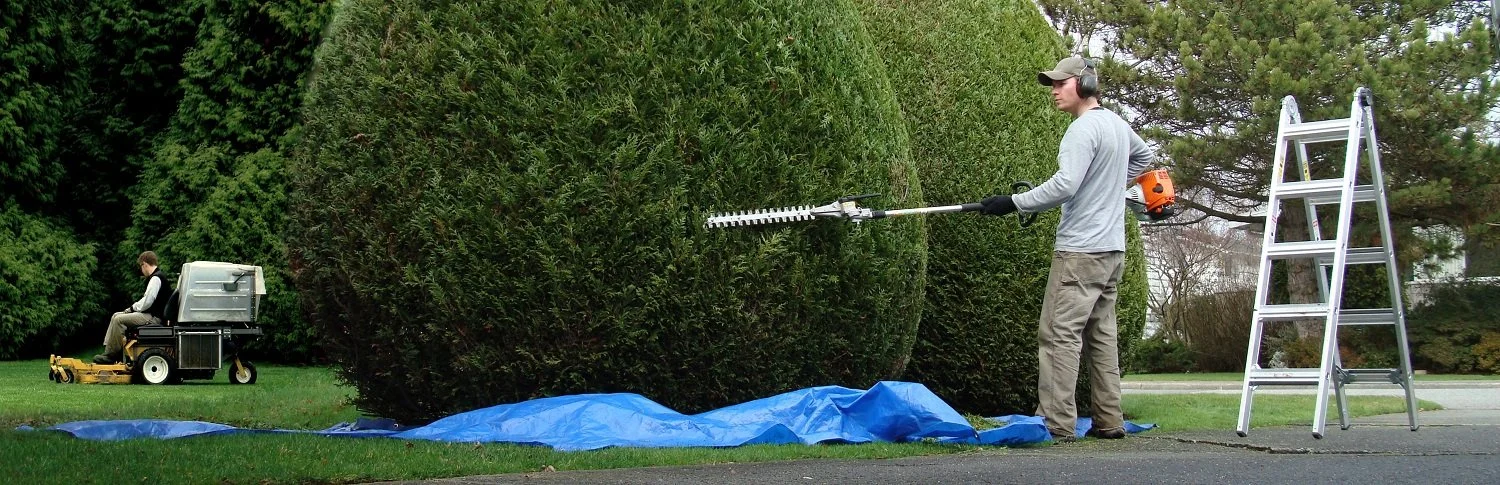
Workers’ compensation premiums typically represent one of the largest overhead expenses for landscape companies. Premium costs are driven by the number and severity of claims a company has had over a five-year period. Thus, fewer claims often equate to a lower premium paid for workers’ compensation insurance.
The National Institute for Occupational Safety and Health (NIOSH) takes a closer look at the landscape industry, detailing where claim frequency is increasing and decreasing.
When analyzing the claims data, a couple of areas stand out as contributors to higher premiums.
Most notably, 50% of all serious claims occur during the first year of an employee’s tenure. Employees under the age of 34 are also more susceptible to a serious claim occurrence. Therefore, it is best to provide new hires with immediate and comprehensive safety training when they first start and continue to emphasize a safety culture throughout their tenure to minimize claims. As employees gain experience, they become more likely to take safety seriously.
The data also shows that loading and unloading trucks and trailers causes roughly 20% of all serious claims. This includes loading and unloading materials, tools, and equipment. Although a seemingly simple task, it’s often overlooked, yet statistics confirm that improved attention to safety when performing these tasks can significantly reduce serious claims.
The industry has seen a considerable decline in claims from overexertion injuries such as back sprains and disc disorders which were once a large contributor to higher premiums. The improvement of lifting techniques and implementation of programs such as Rancho Mesa’s Mobility & Stretch/A.B.L.E. Lift Program, have played a key role in reducing these claims. Programs such as these ensure employees are lifting properly while also stretching their muscles before they begin work.
Reducing workers’ compensation claims should be a top priority for any landscape company. Not only does it protect employees from harm but it also can benefit the company’s bottom line. As an added resource to reducing workers’ compensation claims, Rancho Mesa encourages landscape businesses to take advantage of available safety trainings for new and experienced employees, implement safety measures for loading and unloading trucks, and utilize the Mobility & Stretch/A.B.L.E. Lift Protocol.
In order for you to take your safety program to another level, sign up and receive our weekly safety training tailgate talks specifically designed for the landscape industry.
To start a conversation about how Rancho Mesa can assist your company, contact me at (619) 438-6905 or ggarcia@ranchomesa.com.
Premium Cost Per Vehicle Continues to Increase for Landscape Professionals
Author, Drew Garcia, Vice President, Landscape Group, Rancho Mesa Insurance Services, Inc.
Commercial auto premiums for landscape companies continue seeing heavy increases, and there is no end in sight.
Author, Drew Garcia, Vice President, Landscape Group, Rancho Mesa Insurance Services, Inc.

Commercial auto premiums for landscape companies continue seeing heavy increases, and there is no end in sight.
Knowing your cost per unit (CPU) is a critical component landscape owners and CFO’s must follow to properly monitor, budget, and forecast fleet related premium. Landscape companies with the lowest CPU’s minimize accident frequency and severity by practicing proactive and reactive risk management techniques.
Proactive management can include routine MVR checks, continuous driver monitoring, and ongoing driver training.
Reactive management can consist of reporting, analyzing, and correcting both near miss and post-accident incidents.
Fortunately for companies working with Rancho Mesa, we offer a number of video training series in English and Spanish including accident prevention, defensive driving, distracted driving, and more.
When an auto accident occurs, Rancho Mesa’s client services department will analyze the incident and recommend specific training back to our landscape customers, encouraging proactive safety and helping to mitigate future accidents.
What is your CPU, are you addressing accidents with training, and is your program leaking premium dollars?
For more information on how to help control rising premium costs, contact Drew Garcia at (619) 937-0200 or drewgarcia@ranchomesa.com.
One Easy Step Can Improve Your Equipment Theft Prevention Program
Author, Drew Garcia, Vice President, Landscape Group, Rancho Mesa Insurance Services, Inc.
A piece of heavy equipment like a skid steer, backhoe, or excavator can be a vital tool for a landscape company and is expensive to replace, if stolen. According to the National Equipment Register (NER), heavy equipment is nine-times more likely to be stolen than vandalized and five-times more likely to be stolen than encounter fire damage. These statistics are alarming and prove theft of heavy equipment has now become a billion dollar illegal industry.
Author, Drew Garcia, Vice President, Landscape Group, Rancho Mesa Insurance Services, Inc.
A piece of heavy equipment like a skid steer, backhoe, or excavator can be a vital tool for a landscape company and is expensive to replace, if stolen. According to the National Equipment Register (NER), heavy equipment is nine-times more likely to be stolen than vandalized and five-times more likely to be stolen than encounter fire damage. These statistics are alarming and prove theft of heavy equipment has now become a billion dollar illegal industry.
When confronted with these realities, business owners are comforted that they’ve purchased an inland marine insurance policy to cover the loss of a piece of heavy equipment. But, there is another step companies can take to reduce the likelihood that a piece of their equipment will be stolen or increase the chance that stolen equipment will be recovered.
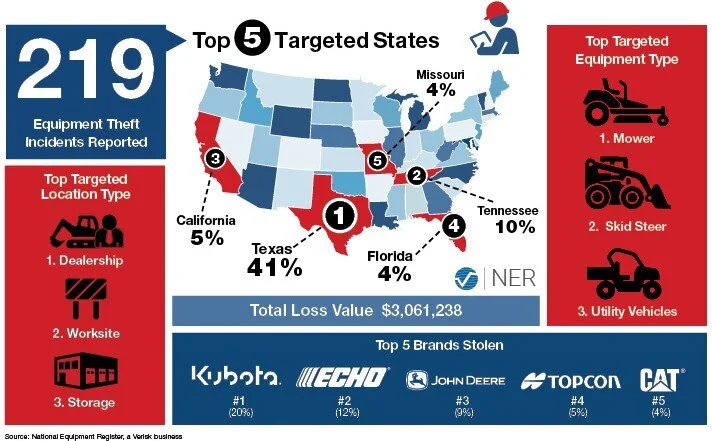
HELPtech (i.e., heavy equipment loss prevention technology), is an online database that tracks heavy equipment. Law enforcement officials are able to utilize the information from the database to track and recover stolen equipment. Decals on the equipment alert would-be thieves that stealing this equipment and trying to sell it will be more trouble than it’s worth.
In some cases, insurance carriers are willing to waive the policy theft deductible, if the equipment that was stolen is actively registered through the NER - HELPtech database.
The NER also provides updated theft trends and security tips for best practices to help companies stay informed and up to date on activity across the country.
In partnership with the NER, Rancho Mesa can offer clients a 20% discount when utilizing HELPtech. Register your equipment, today.
To learn more about your heavy equipment exposure, contact me at (619) 937-0200 or drewgarcia@ranchomesa.com.
Cyber Attacks Threaten One-in-Six Firms’ Survival
Author, Sam Brown, Vice President of the Human Services Group, Rancho Mesa Insurance Services, Inc.
The dramatic increase in cyber-attacks since 2020 has resulted in employer pain and made headlines as the economic cost skyrockets. The recent Hiscox Cyber Readiness Report 2021 states that the number of firms attacked rose from 38% to 43%. Not surprisingly, more than 28% of those employers suffered multiple cyber-attacks.
Author, Sam Brown, Vice President of the Human Services Group, Rancho Mesa Insurance Services, Inc.

The dramatic increase in cyber-attacks since 2020 has resulted in employer pain and made headlines as the economic cost skyrockets. The recent Hiscox Cyber Readiness Report 2021 states that the number of firms attacked rose from 38% to 43%. Not surprisingly, more than 28% of those employers suffered multiple cyber-attacks.
Determining the cost of a breach can be difficult, but the report states that one-in-six firms’ survival was threatened. Over 58% of firms hit with a ransom paid the threat-actors to regain access to the computer system and vital information. In 2020, the standalone cyber loss ratio increased to 73%, its highest level since separate cyber data were included in financial reporting, six years ago.
The increase in cyber-attacks and claim payouts is causing alarm in both insurance companies and businesses. According to the Insurance Journal, insurance companies are quoting significant premium rate increases and tighter coverage terms to improve underwriting performance and profitability. The average cyber renewal premium rate increased 11%. Meanwhile, written premiums for standalone cyber coverage increased 29% in 2020, a sign of growing demand.
The shift to a remote workforce and an increase in phishing email has tested network security systems. Fortunately, many insurance carriers now offer a cyber readiness assessment to help policyholders address vulnerabilities and avoid cyber-attacks.
As cyber-attacks continue, it is important for all employers to learn more about the specific exposures that cyber insurance coverage can cover along with ways to improve cyber security.
We will be offering a Cyber Liability workshop in the coming weeks, so be sure to look for that information on our workshops and webinars webpage.
Please contact me at (619) 937-0175 or sbrown@ranchomesa.com to discuss our process of developing competitive quote options.
Experience Mod KPI Provides Trend Analysis, Opportunity Assessment, and Vital Management Tools
Author, Drew Garcia, Vice President, Landscape Group, Rancho Mesa Insurance Services, Inc.
In January 2021, we launched the Safety Key Performance Indicator (KPI) Dashboard to provide a tool for our customers to use as a bridge between their experience mod and safety performance.
Author, Drew Garcia, Vice President, Landscape Group, Rancho Mesa Insurance Services, Inc.

In January 2021, we launched the Safety Key Performance Indicator (KPI) Dashboard to provide a tool for our customers to use as a bridge between their experience mod and safety performance.
Our primary goals were to:
Eliminate surprises
Simplify concepts
Track performance
Highlight the positive and negative trends
Benchmark safety performance against industry competitors
An experience mod above 100 can limit a landscape company’s ability to be awarded jobs or maintain contracts, increase insurance premiums, and have other significant financial implications.
Our dashboard is a tool companies can use to strategically manage the underlying components that directly impact the experience mod and help project future experience mod deviations. Rancho Mesa can help interpret the results and provide insights to help improve your performance.
Not a Rancho Mesa client but interested in seeing what your dashboard looks like? Complete our new KPI Dashboard quick form, to see how your company measures up.
California’s Landscape Industry Prepares for Ex-Mod Changes
Author, Drew Garcia, Vice President, Landscape Group, Rancho Mesa Insurance Services, Inc.
For the first time in several years the Expected Loss Rate for class code 0042 has increased from $2.38 to $2.42, a 2% increase.
Bottom line, although very minimal, this should help bring the experience mod down.
Author, Drew Garcia, Vice President, Landscape Group, Rancho Mesa Insurance Services, Inc.

For the first time in several years the Expected Loss Rate for class code 0042 has increased from $2.38 to $2.42, a 2% increase.
Bottom line, although very minimal, this should help bring the experience mod down.
This information will impact any landscape company who has a policy effective date of September 1, 2021 and beyond.
Based on a couple of projection comparisons, we have seen an impact of 1 to 4 points come off the experience mod for landscape companies.
Landscape companies working with Rancho Mesa with policy effective dates after 9/1/2021 will see updated information on their KPI Dashboard, at the next review.
For landscape companies not working with Rancho Mesa, you can request a custom KPI Dashboard today by reaching out to Drew Garcia.
The Construction Risk Management Guide
Author, Daniel Frazee, Executive Vice President, Rancho Mesa Insurance Services, Inc.
As a business or firm, you are most likely aware of many risks that come with construction projects. Whether it is meeting the terms of a contract, maintaining employee safety on the job site, or dealing with natural disasters, every project has its own set of hazards. If not managed, these risks can compromise your projects and prove fatal to your bottom line.
Author, Daniel Frazee, Executive Vice President, Rancho Mesa Insurance Services, Inc.

As a business or firm, you are most likely aware of many risks that come with construction projects. Whether it is meeting the terms of a contract, maintaining employee safety on the job site, or dealing with natural disasters, every project has its own set of hazards. If not managed, these risks can compromise your projects and prove fatal to your bottom line. Thus, construction risk management is a must-have for any company, but an effective plan must have easy-to-follow, yet detailed processes to help you control the risks, make decisions on how to deal with them, and turn them around to uplift your company. With the presence of rising material costs, more complex projects and increased safety concerns, having a risk management plan is more crucial than ever.
What is Construction Risk Management?
Risk management is the process of determining the risks present in your business and evaluating the procedures to minimize their impact. In the construction world, the process involves planning, monitoring and controlling instances of risk. At the center of this process is your risk management plan, a formal document that details the risks and your processes for addressing them.
Sources of construction risks may include:
Safety Risk - any risks or hazards that can lead to worker accidents at a construction site;
Financial Risk - internal and external factors like sales, problems with the economy, unexpected cost increases and competition from other firms;
Legal Risk - disputes in the fulfillment of contracts with clients;
Project Risk - hazards such as poor management of resources, miscalculation of time, lack of proper policies, etc.; and
Environmental Risk - natural phenomena that damage construction sites like floods and earthquakes.
How to Manage Risks
Before you can manage risk, companies must develop a risk management plan. This process can be broken down into six steps.
Identify the Risks
Risk identification should take place during the preconstruction phase of a project to allow ample time to manage any potential risks before accepting them. One effective way is to hold brainstorming sessions with your project team with an emphasis on identifying all the possible scenarios that could impact the project at hand. Once the brainstorm is complete, hold regular meetings to continually identify new risks that develop.Prioritize Risks in Order of Importance
High-probability risks should be handled first while low-impact, low probability risks should be addressed last. As an example, an unexpected price increase in the materials for your project can severely hurt your profit margins and might be considered a high priority.Determine your Response Strategy
Once you have evaluated the priority of risks, your team must decide a response strategy for each hazard. You can avoid the risk altogether, mitigate the risk, transfer the risk if possible via insurance and/or performance bonds, or accept the risk.Execute the Plan
Much like a sports team on game day, your company now has to execute the plan after you have developed your strategy. Your plan must detail crucial information for each team member and provide specific solutions to mitigate, transfer, or accept risks.Involve Members of the Team
Great plans are developed with multiple opinions, involving contribution from all team members typically including the ownership group, the financial officers, and the field team. Members are managing cash flows, schedules, inspections, project logs, contracts and regulatory documents.Create Contingencies and Revise
Strong risk management programs have contingency plans. That is, alternative methods for finishing a project despite accepting the risk. Consistent monitoring and revisions to your plan will help increase resilience against any possible risk and ensure that your “document” evolves and changes over time.
Benefits of Risk Management in Construction
Along with the actual building process, risk management should be seen as one of the most critical steps of a construction project. Identifying, assessing, controlling and monitoring risks strengthen awareness and teamwork among those key members of your organization. Working in step with your insurance broker for resources, templates, and feedback can be key to integrating your plan with the company’s safety initiatives. Request a sample Accident Prevention Template to start your Construction Risk Management plan. And, in turn, communicating an effective and tested plan to the insurance marketplace can position you and your broker to leverage the most competitive terms and pricing within your renewal cycle.
For more information or questions related to this article, please contact me at 619-937-0172 or via email dfrazee@ranchomesa.com.
How to Choose a Workers’ Compensation Carrier Partner
Author, Dave Garcia, President, Rancho Mesa Insurance Services, Inc.
Many years ago, when I was a young producer, one workers’ compensation carrier legend pulled me aside and told me never to forget that a workers’ compensation decision is not a one-year decision, but at least a 4-year decision. Of course, policies are only written on a one-year basis but what he was teaching me was that the carrier you choose will handle all the claims you have through your Experience Modification cycle. So, evaluating and recommending a workers’ compensation partner for my clients just became a much more thorough analysis of many critical factors beyond just the premium.
Author, Dave Garcia, President, Rancho Mesa Insurance Services, Inc.

Many years ago, when I was a young producer, one workers’ compensation carrier legend pulled me aside and told me never to forget that a workers’ compensation decision is not a one-year decision, but at least a 4-year decision. Of course, policies are only written on a one-year basis but what he was teaching me was that the carrier you choose will handle all the claims you have through your Experience Modification cycle. So, evaluating and recommending a workers’ compensation partner for my clients just became a much more thorough analysis of many critical factors beyond just the premium.
I understand and want to acknowledge that competitive pricing is very important, yet other than price, most business owners are not sure what to look for when comparing carriers. All businesses should consider the following in their evaluation of a workers’ compensation carrier:
What is the A.M. Best rating of the carrier?
How long have they been in the State workers’ compensation marketplace?
What is their premium volume within the State?
What “in-house” services does the carrier provide? Two services for special consideration are:
The Claims Department
Loss Control Service
How does their medical cost containment numbers compare to the industry averages?
How does their claim closing rates compare to the industry average?
Are the following services available?
Telemedicine
Nurse Triage
For any businesses that pay above $250,000 in annual premium, should consider these additional questions:
Does the carrier offer a dedicated indemnity claims examiner for your business?
Does the carrier offer Claim Review Meetings?
Does the carrier offer a Client Services coordinator?
Does the carrier offer on-line claim status information?
What loss sensitive programs do they offer?
Further, for any businesses that are exploring loss sensitive programs (usually above $400,000 in annual premium) like deductible workers’ compensation, they should evaluate the following:
What are the terms of the letter of credit required?
Is there a Loss Conversion Factor (LCF)?
Is a Loss Fund required?
How are Allocated Loss Adjustment Expenses (ALAE) handled?
Is there a policy deductible aggregate?
Are there any claims handling charges?
Are there Medical Cost Containment charges?
Since many of the concepts and terms above require a deeper understanding and explanation, listen to my podcast episodes where I examine this topic in greater detail.
Also, consider attending one or both of my live webinars that cover this topic and afford you the opportunity to ask questions. Register for our Thursday April 1, 2021 webinar where I will focus on businesses with annual premiums below $400,000, and/or register for my Thursday April 8, 2021, webinar where I will deal specifically with deductible workers’ compensation. Both webinars will be 30 minutes in length.
If you would prefer to speak with me directly, I can be reached at (619) 937-0170 or email me at dgarcia@ranchomesa.com.
I wish you all a safe and profitable 2021.
How Rising Pure Premium Rates Will Impact the Tree Care Industry
Author, Rory Anderson, Account Executive, Rancho Mesa Insurance Services, Inc.
In California, each workers’ compensation insurance company has its own set of base rates for each class of business. In order to come up with their base rate for each class code, the insurance carrier applies their Loss Cost Multiplier (LCM) to the Workers’ Compensation Insurance Rating Bureau’s (WCIRB) pure premium rates.
Author, Rory Anderson, Account Executive, Rancho Mesa Insurance Services, Inc.

In California, each workers’ compensation insurance company has its own set of base rates for each class of business. In order to come up with their base rate for each class code, the insurance carrier applies their Loss Cost Multiplier (LCM) to the Workers’ Compensation Insurance Rating Bureau’s (WCIRB) pure premium rates.
Pure premium rates are determined by the WCIRB and include the loss cost of claims for that particular class of business. Those costs include:
The cost of the claim itself (i.e., indemnity, medical and expense payments)
Loss adjustment expenses
Future loss adjustment expenses (e.g., fees for expert witnesses and salary/overhead for outside legal counsel)
A pure premium rate reflects the amount of losses that an insurance carrier can expect to pay out in claims for that class of business. Every 6 months, the WCIRB submits pure premium rates to the California Department of Insurance for approval. These pure premium rates are based on loss and payroll data submitted to the WCIRB by all the insurance companies in California.
A carrier’s LCM will include those additional expenses separate of the pure premium rate considerations. These would include a carrier’s:
General overhead expenses (e.g., rent, payroll, employee benefits, etc.)
Sales and Marketing
Taxes, licenses and fees
Profit
The 2021 pure premium rate in the tree care industry (class code 0106) has increased to $10.50 per $100 in payroll, which is roughly a 3.5% increase from last year’s $10.15. This means that the overall workers’ compensation claim activity in the tree care industry is up about 3.5%, and the WCIRB is recommending that workers’ compensation insurance carriers increase their base rates to address this change.
As a tree care professional, what can your company do to prepare for this change and mitigate the impact to your business? Reviewing your claims experience, benchmarking your company with the tree care industry, looking for root causes of the claims, and then implementing best practices safety trainings will go a long way in providing you a path to insulate you from future changes like these.
As part of our proprietary TreeOne™ program, we have created a Key Performance Indicator (KPI) dashboard for the tree care industry that puts this information at your fingertips. To see how you compare with your peers, request the KPI Dashboard for your company.
For more information on rising pure premium rates, contact me at (619) 486-6437 or randerson@ranchomesa.com.
A Hardening Employment Practices Marketplace Likely to Impact Many Businesses
Author, Jeremy Hoolihan, Account Executive, Rancho Mesa Insurance Services, Inc.
The Employment Practices Liability Insurance (EPLI) marketplace has faced a number of factors that are contributing to skyrocketing premiums and deductibles. Many insurance companies are facing the choice of whether to remain in the marketplace or exit altogether. Those willing to remain are then faced with having to consider the following changes…
Author, Jeremy Hoolihan, Account Executive, Rancho Mesa Insurance Services, Inc.

The Employment Practices Liability Insurance (EPLI) marketplace has faced a number of factors that are contributing to skyrocketing premiums and deductibles. Many insurance companies are facing the choice of whether to remain in the marketplace or exit altogether. Those willing to remain are then faced with having to consider the following changes:
Increase their premiums to offset increased claim activity
Increase their deductibles
Consider adding exclusions of previously covered exposures
Consider only renewing existing clients’ policies
Pulling out of certain business segments such as retail, hospitality, leisure, and transportation which is currently being impacted the most from COVID-19.
Below are some of the main factors causing the hardening EPLI marketplace. As you will see, they vary significantly but combined they have created a perfect storm.
COVID-19
These are unprecedented times with businesses being forced to shut down for months due to COVID-19, employees having to work remotely and our economy seemingly coming to a standstill. Couple this with a significant increase in layoffs, severance packages, furloughs, and unemployment, and we have seen a significant increase in claims filed. By January 2021, the plaintiff’s bar had filed over 1,200 COVID-19 related employment lawsuits. These types of lawsuits have continued to grow each month since the pandemic began.
We have also seen the unemployment rate spike from 3.5% in March of 2020 to 14.7% in April 2020. Currently the unemployment rate has settled to about 8% but this still represents a double digit increase from2019.
EPLI claims often follow large changes in workforce, including reductions, promotions and demotions. Three areas of particular growing concern include:
Sexual Harassment
Privacy
Retaliation
Sexual Harassment
The heightened awareness and increased public intolerance for harassment developed in part from the #MeToo movement has given a voice to people that are now not only speaking out but filing lawsuits against their employer for sexual harassment. This national attention has also altered the legal environment surrounding these types of claims, often leading to much higher settlements outcomes.. Industry wide, the total monetary benefits awarded to sexual harassment victims has increased 68% from 2016 to 2019 according to the U.S. Equal Employment Opportunity Commission.
Privacy
In addition to discrimination and sexual harassment claims, insurance carriers also anticipate privacy-related claims. As businesses begin to reopen, there are new policies and procedures in place that require a Human Resources department to question employees about their personal health, their health history, and their family’s health history. The nationwide Health Insurance Portability and Accountability Act (HIPAA) and other state-specific laws like the Illinois Biometric Information Privacy Act (BIPA) regulates how companies collect, store, use, and share biometric information. With temperature-taking requirements and a certification form filled out, there is a concern that some employees may feel their privacy has been invaded.
Retaliation
There is also a growing concern that there will be more retaliation type claims relating to an employee’s use of social media. With COVID-19 in mind, employees are already expressing their concerns via social media about their employers’ lack of safety measures or personal protective equipment (PPE). It’s reasonable to consider that if these employees are terminated that they may feel they were retaliated against because of their posts.
Retaliation could also be a result of employees exercising their rights under Family Medical Leave Act (FMLA) or other benefits such as workers compensation or paid sick leave.
US Supreme Court LGBTQ Decision
The Supreme Court ruled in June 2020 that Title VII of the 1964 Civil Rights Act protects employees from discrimination based on sexual orientation and gender identification.
Previously only 28 States awarded such protections. Now that these protections are law in all 50 states, we will likely see additional claims alleging employment discrimination based on gender identity and sexual orientation.
In conclusion, running a business remains a challenge under normal circumstances. Add in the many side effects of the pandemic and it can feel overwhelming. EPLI-related claims can result in catastrophic financial impacts to a company’s balance sheet. The cost of defending your business alone can potentially put a company out of business. While EPLI premiums continue to rise, so does your exposure to a myriad of claims that fall under this coverage umbrella. Having EPLI in place can mean the difference between absorbing fair and reasonable claim costs or forcing an uninsured business to close their doors. To learn more about EPLI coverage and ways to construct a policy that meets your needs, please reach out to me at 619-937-0174 or jhoolihan@ranchomesa.com.