

Industry News

3 Steps to Protect Your Employees from San Diego’s Recent Hepatitis A Outbreak
Author, Alyssa Burley, Client Services Coordinator, Rancho Mesa Insurance Services, Inc.
Whether you work in the human services sector like healthcare, community outreach, or schools, or you are in the construction industry working in areas like downtown San Diego, your employees may come in contact with the Hepatitis A virus.
Author, Alyssa Burley, Client Services Coordinator, Rancho Mesa Insurance Services, Inc.

Whether you work in the human services sector like healthcare, community outreach, or schools, or you are in the construction industry working in areas like downtown San Diego, your employees may come in contact with the Hepatitis A virus (HAV).
As cities throughout San Diego County actively work to stop the spread of the recent Hepatitis A outbreak, some employers are asking how they can protect their employees who may be exposed to the virus.
According to the Center for Disease Control (CDC), the Hepatitis A virus is spread by “person-to-person transmission through the fecal-oral route (i.e., ingestion of something that has been contaminated with the feces of an infected person) is the primary means of HAV transmission in the United States.”
While the local and national media have primarily focused on the concentration of homeless and drug users who have contracted the virus, about 20% of the recent reported cases are not included in that population, according to the “Hepatitis A Outbreak in San Diego, CA” interview by Dennis Stein, linked to on the County of San Diego’s website. However, about half of the 20%, can trace their infection back to working with at risk populations. Thus, the Hepatitis A outbreak should be everyone’s concern, not just those included in the homeless population and drug users.
The “Hepatitis A vaccination is the best way to prevent the disease,” wrote Wilma J. Wooten, Public Health Officer and Director for the County of San Diego Public Health Services, in a letter to emergency responders, businesses, homeless providers and substance abuse treatment providers. While vaccination is an option to prevent infection, good hygiene is also highly effective.
Follow the steps below to help prevent the spread of the Hepatitis A virus to your employees:
1. Wash Hands
First and foremost, instruct employees to frequently wash their hands with soap and warm water after using the restroom, before eating, and after touching handrails, door handles, tools, and other surfaces that are frequently used by others.
Handwashing is “integral to Hepatitis A prevention, given that the virus is transmitted through the fecal–oral route,” according to the CDC’s website.
2. Sanitize
It may be necessary to regularly sanitize your facility or equipment. “Maintain routine and consistent cleaning of bathrooms for employees and the public, using a chlorine-based disinfectant (bleach) with a ratio of 1 and 2/3 cup of bleach to one gallon of water. Due to the high bleach concentration of this mix, rinse surfaces with water after 1 minute of contact time and wear gloves while cleaning,” suggests Wooten.
3. Educate
Awareness and education about the Hepatitis A outbreak is key to preventing the spread of the virus. Based on knowing the facts about how the virus is spread, employees may decide to wear disposable gloves, wash hands more frequently, or change the way they perform their job duties to prevent exposure.
The Risk Management Center provides a variety of training materials to Rancho Mesa clients on Hepatitis A and other bloodborne pathogens. Through online courses, training shorts, videos and other training materials, help educate your employees before there is an infection.
The County of San Diego also provides Hepatitis A information in the form of guidelines, cards, posters, videos and more.
Contact Rancho Mesa Insurance Services at (619) 937-0164 for more information.
3 Topics to Discuss with Vendors, Independent Contractors, and Partner Agencies Prior to Working Together
Author, Chase Hixson, Account Executive, Human Services, Rancho Mesa Insurance Services, Inc.
Recently, a non-profit client of mine asked the question: What are the steps I should take with vendors, contracted professionals and partner agencies to make sure my organization is protected should a claim arise as a result of their work? This is a common exposure to many of our clients, and there are several steps that can be taken to protect your business.

Recently, a non-profit client of mine asked the question: What are the steps I should take with vendors, contracted professionals and partner agencies to make sure my organization is protected should a claim arise as a result of their work? This is a common exposure to many of our clients, and there are several steps that can be taken to protect your business.
1. Verify the Proper Insurance is in Place
Any person/organization that you consider working with should be fully insured and able to provide you with a Certificate of Insurance, which lists the coverages, carriers and limits of insurance they have in place. Without their own insurance in place, your company is now assuming full responsibility for anything that may occur as a result of their negligence. Depending on the nature and scope of the work being performed, different types of insurance will be required. An insurance professional can help you determine the specific coverage needed.
Example: A charter school has hired a local animal shelter to bring animals to their students and teach about conservation. One of the animals bites a student. If the animal shelter does not have the proper insurance, the charter school’s insurance will be liable for any action taken against the school.
2. Name Your Business as Additional Insured
In addition to verifying that the correct coverages and limits are in place, you should also require they name your company as an additional insured on their policy. By doing this, your organization will now be indemnified under their policy for claims arising as a result of their work, in which you are named.
Example: In the example where a charter school has hired a local animal shelter to bring animals to their students and one of the animals bites a student, by requiring the animal shelter to name the charter school as an additional insured, the school is covered under the animal shelter’s insurance.
3. Provide a Waiver of Subrogation
A waiver of subrogation means an insured (and their insurance company) are waiving their right to subrogate against another party, should their employee suffer an injury on your premises. Most independent contractors aren’t required to carry insurance, so this wouldn’t apply to them. However, if employees of another company are performing work on your premises, it is wise to have them waive their right to subrogate against your workers’ compensation carrier.
Example: A charter school has hired a local animal shelter to bring animals to their students and teach about conservation. While presenting, an employee of the shelter trips and injures their knee. A waiver of subrogation would void the animal shelter’s workers’ compensation provider from seeking subrogation against the charter school’s workers’ compensation policy. The employee will still be treated, but you won’t suffer the penalty for it.
I strongly recommend reviewing your processes regarding vendor, independent contractors and partner agencies to see what is currently in place. Far too often steps are skipped and businesses are unaware of the liability they are assuming. If you have any question about a specific circumstance, please don’t hesitate to give Rancho Mesa a call at (619) 937-0164, we are happy to assist.
5 Steps to Avoiding Workers’ Compensation Claim Litigation
Author, Jeremy Hoolihan, CRIS, Janitorial Group Leader, Rancho Mesa Insurance Services, Inc.
Workers’ Compensation claims can cost a company time, money, employee productivity, and morale. Litigation is one of the most costly results of a workers’ compensation claim. Once an employee hires an attorney, the time and money it takes for the claim to close drastically increases.
Author, Jeremy Hoolihan, CRIS, Janitorial Group Leader, Rancho Mesa Insurance Services, Inc.

Workers’ Compensation claims can cost a company time, money, employee productivity, and morale. Litigation is one of the most costly results of a workers’ compensation claim. Once an employee hires an attorney, the time and money it takes for the claim to close drastically increases.
There are several reasons why an employee will find the need to hire an attorney. Practicing a sound Risk Management Program can dramatically reduce the likelihood of litigation. Here are some ways you can prevent most workers’ compensation claims from ever reaching that point:
- Acknowledge why employees hire attorneys. The employee/employer relationship is a critical factor in determining if a workers’ compensation claim results in litigation. Employees who feel threatened in some way are more likely to hire an attorney. A few key reasons are:
a. The employee is concerned they will be fired because of the injury and/or ownership or management doesn’t truly feel the injury was work related.
b. The employee feels they will face retaliation for reporting the claim.
c. There is a lack of understanding of the workers’ compensation claim process. For those employees that are faced with a workers’ compensation injury, it can be a very stressful time.
d. There is a fear the claim will be denied or they will be treated unfairly. Attorneys can prey on vulnerable injured employees. Radio and television ads imply injured employees need their assistance in order to get proper treatment and/or a huge settlement they deserve.
- Keep lines of communication open with your employee. Reassure the employee that he or she will have a job when they are able to return to work. In addition, show some compassion and stay in regular contact with the individual. An employee is far more likely to hire an attorney if they are concerned about losing their job or no longer of value to the company.
- Consider the ramifications before firing an injured employee. Termination of an employee after they have been injured on the job can put the company at risk of a lawsuit (Section 132 claim). In addition, terminating an injured worker could cost the company more in wage loss benefits; an injured employee will continue to draw from the workers’ compensation policy if they are unable to return to work, regardless if the company continues to employ them or not. Often, employees are released to modified duty (Return To Work Program). If an employer can accommodate the work restrictions, the employee’s temporary benefits are reduced or eliminated. This can significantly reduce the total cost of the claim.
- Act before a problem employee becomes injured. Once an injury has been reported, it becomes extremely risky to discipline or terminate a problem employee. Address and deal with the employee immediately and be consistent with your documentation.
- Train your supervisors!!!! It is vital that supervisors are trained in reporting and handling claims. They are your first line of defense in preventing claim litigation. Businesses should have a formalized Accident Investigation Program in place. Rancho Mesa provides a Supervisor’s Report of Accident or Near Miss form and a Witness’ Accident Statement form to assist in the investigation process. In addition to all the formal documentation, there are other key strategies a supervisor can use:
a. Do not accuse the injured employee of fraud, even if you know fraud is involved. Supervisors should simply document the facts. If there is suspicion of fraud, make sure you document any supporting evidence in the report and inform the adjuster.
b. Do not negotiate the injured worker’s treatment or return to work schedule. Leave that determination to the claims adjuster.
c. Keep in touch. Instruct the supervisor to check on the injured worker from time to time. Show some compassion and build trust. Assure the employee that their job is secure.
While there is no surefire way to eliminate litigated claims, by following these five steps you should see results. With the average litigated claim costing 30% more than a non-litigated claim, the savings over time could be significant. To discuss implementing this strategy within your company’s Risk Management Program, please contact Rancho Mesa Insurance Services, Inc. at (619) 937-0164.
Assembly Bill 72 Passes to Limit Unexpected Medical Costs to Californians
Effective July 1, 2017, Assembly Bill 72 (Bonta) went into effect by protecting Californians from unexpected medical bills when visiting in-network facilities (i.e., hospitals, labs, and imaging centers). No longer can providers who aren’t contracted with a patient’s health plan step into the operating room, for instance, and charge the patient more than the patient would have expected to pay an in-network provider. Furthermore, the patient can only be billed for his or her in-network cost-share, meaning in-network benefits apply to all providers seen, and services rendered, in an in-network facility.

Effective July 1, 2017, Assembly Bill 72 (Bonta) went into effect by protecting Californians from unexpected medical bills when visiting in-network facilities (i.e., hospitals, labs, and imaging centers). No longer can providers who aren’t contracted with a patient’s health plan step into the operating room, for instance, and charge the patient more than the patient would have expected to pay an in-network provider. Furthermore, the patient can only be billed for his or her in-network cost-share, meaning in-network benefits apply to all providers seen, and services rendered, in an in-network facility.
Over the course of my career, I’ve had to help many clients understand and appeal surprise charges from out-of-network doctors, anesthesiologists, etc., who’ve charged patients separately from the in-network facility, and I have experienced this myself when receiving care. With many/most Preferred Provider Organization (PPO) plans, there is a separate deductible that a member has to satisfy for care received from out-of-network providers, after which, there is less coverage than in-network providers, and the member can be “balance-billed” between what the insurance company pays and what out-of-network providers charge. AB 72 goes a long way toward eliminating such surprise charges.
As always, it’s important to review the Explanations Of Benefits (EOB’s) you receive from your insurance company, to make sure that your benefits have been applied correctly, according to your plan. This is a smart piece of legislation that will help prevent unsuspecting patients in California from getting charged more from out-of-network providers, at least not without prior written consent.
For more information, contact Rancho Mesa at (619) 937-0164.
Surviving an Active Shooter Event: Recognize, React and Prevent Workplace Violence
Author, Sam Brown, Vice President of Human Services Group, Rancho Mesa Insurance Services, Inc.
In the ongoing effort to keep employees safe from workplace violence, it is very important to train workers how to recognize, react to and prevent active shooter events. In most cases, simply having a plan can mean the difference between life and death.
Author, Sam Brown, Vice President of Human Services Group, Rancho Mesa Insurance Services, Inc.

In the ongoing effort to keep employees safe from workplace violence, it is very important to train workers how to recognize, react to and prevent active shooter events. In most cases, simply having a plan can mean the difference between life and death.
PLAN FORMATION
When forming a workplace violence emergency plan, try to answer the following questions:
- How will first observers/responders communicate the threat and to whom?
- How will the threat be communicated to everyone in the facility? Through code words?
- Should the facility be locked down or evacuated?
- Has your security been trained in providing guidance to employees for this type of emergency?
- If your site does not have security, are your workers trained for this type of emergency? Do they know who to call if something happens?
- Do you have site-specific emergency plans in place?
- Do you have the capability to lock down your buildings remotely or deactivate card readers?
PREVENTION
Preventing workplace violence is your first line of defense. Try the following tips to defuse a situation:
- Don't pick fights. Loud and aggressive arguments can easily escalate into physical fights.
- Take verbal threats seriously. Do not aggravate the situation with a threatening response. Report all threats to your supervisor or the company's security department.
- Report any suspicious person or vehicle to security personnel, especially at night. The suspect could be casing the place for a break-in. Or, the person could be stalking an ex-spouse who works with you.
- Also, watch for unauthorized visitors who appear to have legitimate business at your plant. Crimes have been committed by people posing as employees, contractors and repair persons.
- Observe your company's rules prohibiting drugs and alcohol at work. Many violent incidents at work can be traced to the use of these substances.
- Be aware of the neighborhood in which you work and the areas you drive through on your commute. Gang activity and other violence does not always stop at the gate to your plant. Keep to well-traveled and well-lighted areas as you drive to and from work.
- If you drive on the job, don't pick up hitch-hikers. The most important reason for this rule is your personal safety.
- Keep your keys in a secure place so they cannot be stolen or copied. Notify plant security if you have lost your key to the premises.
- Learn how to contact help in an emergency. Speed-dialing numbers should be programmed into phones and emergency numbers should be listed at each phone.
- Some workplaces also have pre-determined code words so one employee can tell another about a dangerous customer or visitor without tipping off the suspect. Learn the distress signals used in your workplace.
- Follow lockup procedures. Wear your identification badge as you are instructed. Never lend your key or entry card to anyone. Keep your entry password a secret by memorizing it instead of writing it down.
TIPS TO SURVIVING A WORKPLACE SHOOTING
RUN: First and foremost, try to escape.
- If there is an escape path, attempt to evacuate.
- Evacuate whether others agree to or not.
- Leave your belongings behind.
- Help others escape if possible.
- Prevent others from entering the area.
- Call 911 when you are safe.
HIDE: If you cannot escape safely, find a place to hide.
- Lock and/or blockade the door.
- Silence your mobile phone.
- Hide behind large objects.
- Remain very quiet.
The hiding place should:
- Be out of the shooter’s view.
- Provide protection if shots are fired in your direction.
- Not trap or restrict your options for movement.
FIGHT: As a last resort, if your life is at risk, act with aggression.
- Attempt to incapacitate the shooter.
- Act with physical aggression.
- Improvise weapons.
- Commit to your actions.
The U.S. Department of Labor Occupational Safety and Health Administration (OSHA) also offers Guidelines for Preventing Workplace Violence for Healthcare and Social Service Workers to help employers prevent such incidents.
For additional resources on Workplace Violence and Active Shooter Preparedness, visit the Rancho Mesa Risk Management Center or contact us at (619) 937-0164.
OSHA Launches Electronic Reporting System
Author, Alyssa Burley, Client Services Coordinator, Rancho Mesa Insurance Services, Inc.
It is official – the Occupational Safety and Health Administration (OSHA) released its website for the electronic submission of employers’ injury and illness records (i.e., OSHA 300 logs).
Author, Alyssa Burley, Client Services Coordinator, Rancho Mesa Insurance Services, Inc.
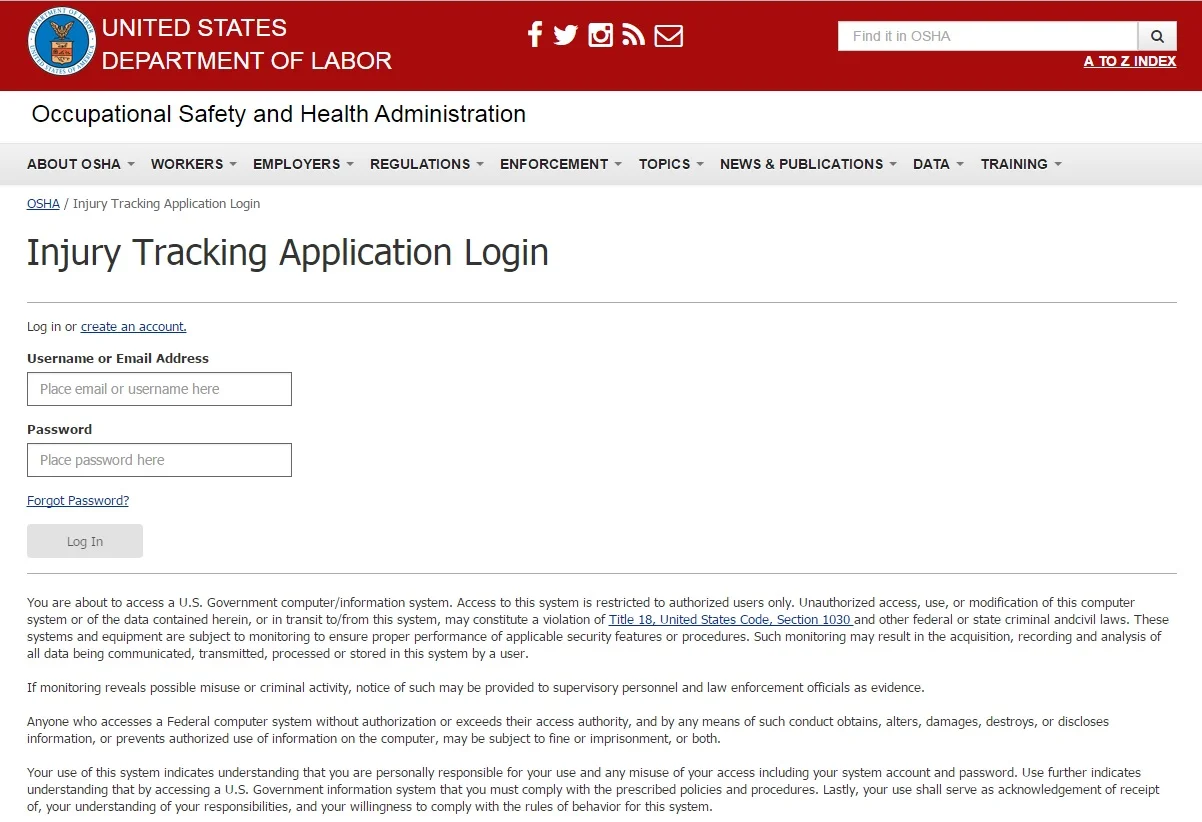
It is official – the Occupational Safety and Health Administration (OSHA) released its website for the electronic submission of employers’ injury and illness records (i.e., OSHA 300 logs).
After a delay, the Injury Tracking Application website is now available to employers. According the OSHA.gov, “certain employers are required to submit the information from their completed 2016 Form 300A electronically from July 1, 2017 to December 1, 2017.” This means employers have about four months to submit their reports online.
The new requirement was designed to make OSHA records publicly available on the internet in hopes that it would encourage employers to maintain safer working environments.
On the website, employers will be able to manually enter data into a web form, upload a .CSV file, or utilize an automated recordkeeping system with the ability to transmit data electronically via an API (application programming interface).
Rancho Mesa clients who are using the Risk Management Center can expect a .CVS export to be available in October 2017. As long as you have the information in the Risk Management Center, you will be able to generate the .CVS file and upload the reports to the OSHA website.
For those who are not currently using the Risk Management Center to track your incidents, now is a great time to enter the data from 2016, so it is archived in the system and you’ll be able to transfer it once the export is available.
For details regarding who must keep and report OSHA records, visit www.osha.gov/injuryreporting.
Hired and Non-Owned Liability Coverage: The Sleeping Giant
Author, Daniel Frazee, Vice President, Rancho Mesa Insurance Services, Inc.
Could your company have underlying Auto related exposures that you are not aware of? Let’s assume you have taken several precautions to properly manage the safety of your fleet. But has your management team contemplated potential losses arising from employees operating their own personal vehicles as they relate to your business?
Author, Daniel Frazee, Vice President, Rancho Mesa Insurance Services, Inc.

Could your company have underlying Auto related exposures that you are not aware of? Let’s assume you have taken several precautions to properly manage the safety of your fleet. But has your management team contemplated potential losses arising from employees operating their own personal vehicles as they relate to your business?
Consider the following examples where an employer can be held accountable as a result of actions of your employees using their own vehicles:
- Field employees on the way to or leaving a jobsite
- Administrative employees running errands to the bank, supply store or post office
- An employee runs out to pick up lunch and/or supplies for the team
- An owner or manager decides to rent a vehicle at an out of town conference
- Outside sales reps are provided a car allowance for business use of their personal autos
- A foreman leaves a jobsite and runs to Home Depot for some tools
If an employee in any of these situations is in an at fault accident while driving their own vehicle, the employer can be held responsible for all damages. Typical Auto liability policies only cover employees while they operate company-owned vehicles that are being used for business purposes. Since this coverage does not contemplate nor cover the use of a hired (rented) or non-owned vehicle, a gap in coverage is created. This gap can be filled for a nominal additional premium, by adding hired and non-owned liability coverage. Specifically, these coverages respond when a company is found legally liable for damages after the employee’s personal auto insurance is exhausted. The employee’s personal auto coverage will always be primary to both the employee and the business assuming it was found that the employee at fault while using their vehicle in the course of employment. Without hired and non-owned liability coverage, a company remains exposed to significant costs depending on the degree of bodily and/or physical damage to the vehicle and other parties involved.
Many employers are simply unaware or unwilling to address this ticking time bomb that is non-owned liability. Several “best practice” control measures can be implemented to reduce this exposure:
- Designate a person within the company that will oversee those employees with a non-owned vehicle exposure
- On a bi-annual or annual basis, require employees driving personal vehicles to provide the proof of valid auto insurance
- Consider establishing company mandated minimum limits that are higher than the CA statutory minimum of $15,000/$30,000/$5,000.
- Consider reimbursing employees for any additional premium incurred for increasing limits on their personal policy to reach minimum limits set by the company
- Enroll all employees driving company and/or personal vehicles in the DMV’s employer pull notice program.
In summary, take time to learn more about hired and non-owned liability coverage and how it can impact your bottom line with exposure to severe auto losses. As a National Best Practice Agency 11 years running, Rancho Mesa takes pride in thorough and exacting policy audits that uncover these and many other silent exposures. Through their continually developing Risk Management Center, they offer clients unmatched support with topical safety resources, monthly workshops & trainings, and valuable content.
Contact Rancho Mesa if you have questions about your auto policy.
7 Tips to Protect Your Business from a Fire
Author, Alyssa Burley, Client Services Coordinator, Rancho Mesa Insurance Services
As San Diego’s East County battles a series of wild fires, it is a perfect time for business owners to review their insurance policies and proactively manage their fire risk, especially those who are located in semi-rural and rural areas.
Author, Alyssa Burley, Client Services Coordinator, Rancho Mesa Insurance Services

As San Diego’s East County battles a series of wild fires, it is a perfect time for business owners to review their insurance policies and proactively manage their fire risk, especially those who are located in semi-rural and rural areas.
Wildfires can quickly turn into structure fires, which can devastate a business. Unfortunately, San Diego County’s fire season has already begun. With scorching temperatures and an abundance of dry brush left over from last year’s rains, this season is particularly dangerous.
In an instant, you can lose everything you have built. Let us make sure you are covered. And, let us help you protect your business with these easy and effective steps:
- Review your insurance policy with your broker.
- Comply with all fire safety codes – we can provide a fire safety company referral, if one is needed.
- Schedule regular landscaping around your building which includes lawns, brush and trees – we would love to introduce you to some of our landscape clients, if you need a referral.
- If a fire threat is issued in your immediate area, run the exterior sprinklers or dampen the building and landscaping with a hose.
- Keep fully charged fire extinguishers on site at all times and have your fire detection and suppression systems tested – we can provide a fire safety company referral, if one is needed.
- Train employees on what to do if there is a fire, including calling 911 and where to access a fire extinguisher – the Risk Management Center has training materials for fire prevention and fire extinguisher use.
- Have a formalized evacuation plan – the Risk Management Center has a great template to help get you started.
These steps are simple and effective ways to help protect your business from fires.
Contact Rancho Mesa with questions about your coverage.
Uninsured and Underinsured Motorists Coverage - Are Your Limits Adequate? - Be Careful!
Author, David J. Garcia, A.A.I., CRIS, Rancho Mesa Insurance Services, Inc.
Earlier in the year, we published the article "Commercial Auto Premiums Are Rising - What’s Driving the Increases?," which addresses how insurance companies are all experiencing adverse loss experience within their commercial automobile books of business. The result of these mounting losses is causing a dramatic rise in commercial Auto premiums for most policyholders.
Author, David J. Garcia, A.A.I., CRIS, Rancho Mesa Insurance Services, Inc.

Earlier in the year, we published the article "Commercial Auto Premiums Are Rising - What’s Driving the Increases?," which addresses how insurance companies are all experiencing adverse loss experience within their commercial automobile books of business. The result of these mounting losses is causing a dramatic rise in commercial Auto premiums for most policyholders.
As a result of this trend, we are seeing many carriers and brokers reducing coverage limits and terms on certain lines of automobile coverage. This represents a major concern for any business owner that has any size fleet of vehicles. Reducing limits and/or modifying terms of coverage simply transfers more claim exposure directly to the business owner. And, unfortunately, in many cases, business owners are unaware of the change or ill informed.
One specific line of coverage that we are seeing this occur, and creates great concern, is uninsured/underinsured motorist coverage. The number of uninsured motorists nationwide is alarming and here in California there are between 3.6 million and 4.1 million uninsured drivers, or 14.7 percent of all drivers. Additionally, the minimum limit of insurance in California is only $15,000. So, while many motorists may have insurance, they are woefully “underinsured.” These factors pose potential catastrophic exposures to any business. To illustrate this point, we will briefly define these coverage’s and then look further into how these lower limits of coverage terms may impact the health of your business.
Uninsured Motorists Coverage
Uninsured Motorist Coverage (UM) helps pay your, your employees and your passenger’s medical expenses, lost wages and related property damages if you're in an accident caused by a driver who doesn't have liability insurance.
Underinsured Motorist Coverage
Underinsured Motorist Coverage (UIM) helps pay your, your employees and your passenger’s medical expenses, lost wages, and related property damages, if any of you are hurt in a car accident caused by someone with liability insurance, but whose coverage limits are lower than those you choose for this coverage, and aren't high enough to pay the damages.
Best practices suggests anything less than $1,000,000 limit for uninsured/underinsured coverage is inadequate and puts the business at extreme financial risk. Let me explain by sharing just two, of many real-world, examples of how this could occur. The following examples assume the accident is the fault of an uninsured or underinsured driver:
Example 1. If one of your employees is involved in an automobile accident by either an uninsured or underinsured motorist and it involved the use of a vehicle for business purposes, the resulting medical and indemnity costs would be covered under your company’s workers' compensation policy. Two negative consequences to your overall insurance program develop as a result of this incident. First, your workers' compensation claims experience (loss ratio and EMR) will be negatively impacted. Second, since the “at fault” driver is either uninsured or underinsured, subrogation (or the recovery of the claim dollars from the responsible party) is ruled out as a viable option to your workers' compensation carrier.
Therefore, the auto loss described above would not only negatively affect your auto insurance experience but also your workers' compensation experience, as well. By having a minimum of $1,000,000 UM/UIM limits, you would have allowed you workers' compensation carrier to subrogate the costs of the claim to the auto carrier and thereby reduce the impact to your workers' compensation loss ratio and EMR
Example 2. Let’s assume you have a non-employee in the vehicle and they are involved in an accident involving an uninsured/underinsured motorist and they are injured. Since this is a non-employee, their injuries would not be eligible for coverage under your workers' compensation policy and rest solely on your automobile insurance limits and coverages. Thus, these injuries, once the uninsured/underinsured limit of your automobile policy is exhausted, would become the responsibility of the business. By having a minimum of $1,000,000 UM/UIM limits, you would fill the gap created by the uninsured/underinsured motorist's lack of coverage and protect your business from this catastrophic loss.
These examples have only touched on the medical and indemnity portion of the loss. Consider there may be property damage involved as well, which only further increases the potential of out of pocket expenses a business might be responsible for paying. Additionally, keep in mind that any excess liability policy you may have in place does not cover uninsured/underinsured motorist claims.
In summary we recommend that you review your coverage limits and terms for adequacy concerning these critical coverages. At a minimum, you should have a limit of no less than a $1,000,000 for these coverages. The premium savings by lowering this limit or modifying its coverage terms is insignificant to the catastrophic loss you are exposing your business to. Do not allow one terrible incident to take your business from you when the cost to transfer this risk is marginal.
If you have any questions or need help in accessing your exposures, please call our Rancho Mesa Team. We offer full policy audits as part of our RM365 Advantage Program that helps you to identify any gaps in coverage and provide you with Best Practices risk management recommendations.
OSHA Launches Inaugural Safe + Sound Week
Author, Alyssa Burley, Client Services Coordinator, Rancho Mesa Insurance Services, Inc.
The Occupational Safety and Health Administration (OSHA) launched its inaugural Safe + Sound Week, which runs from June 12 - 18, 2017. According to OSHA, Safe + Sound week is "a nationwide event to raise awareness and understanding of the value of safety and health programs that include management leadership, worker participation, and a systematic approach to finding and fixing hazards in workplaces."
Author, Alyssa Burley, Client Services Coordinator, Rancho Mesa Insurance Services, Inc.
The Occupational Safety and Health Administration (OSHA) launched its inaugural Safe + Sound Week, which runs from June 12 - 18, 2017. According to OSHA, Safe + Sound week is "a nationwide event to raise awareness and understanding of the value of safety and health programs that include management leadership, worker participation, and a systematic approach to finding and fixing hazards in workplaces."
Why should your company participate?
Workplace safety and health programs can help companies proactively identify and manage workplace hazards before they cause injury or illness. That is good news for companies and employees.
How can businesses participate?
There are three easy steps to participating in Safe + Sound Week. Visit OSHA's Safe + Sound Week webpage for more information on each of these steps:
Step 1: Select the activities you would like to do at your workplace. There are three activities to choose from: Management Leadership, Worker Participation, and Find and Fix Hazards.
Step 2: Plan and promote your events. OSHA has provided Event Tools, Graphics & Signage, Customizable Communications materials, Social Media (#SafeAndSound), and Recruitment Tools.
Step 3: Get recognized for your participation. Complete the online form to generate a Safe + Sound Week Certificate of Recognition and web badge for your organization.
Timely Claim Reporting Lowers Work Comp Claims Costs and Improves Your Bottom Line
Author, David J. Garcia, A.A.I., CRIS, President, Rancho Mesa Insurance Services, Inc.
Studies have shown, by reporting your workers compensation claims in a timely basis, not only will your injured employee receive better medical treatment, it will boost company morale. Both the injured worker, as well as other employees, will see your sincere concern for their wellbeing. In addition, timely reporting practices will also improve your risk profile through reducing the overall cost of the claim, which leads to lower loss ratios and lower experience modifiers, thus, resulting in lower premiums and improvement in your bottom line.
Author, David J. Garcia, A.A.I., CRIS, President, Rancho Mesa Insurance Services, Inc.
Studies have shown, by reporting your workers compensation claims in a timely basis, not only will your injured employee receive better medical treatment, it will boost company morale. Both the injured worker, as well as other employees, will see your sincere concern for their wellbeing. In addition, timely reporting practices will also improve your risk profile through reducing the overall cost of the claim, which leads to lower loss ratios and lower experience modifiers, thus, resulting in lower premiums and improvement in your bottom line.
The following are four areas that support the early and timely reporting of claims:
- Manage Claims More Efficiently Reporting a claim quickly allows the claims examiner:
- To determine whether or not the claim is compensable.
- To meet state regulations that prohibit denial of claims after a specified time period.
- To secure appropriate treatment for the injured worker.
- To conduct an investigation and determine if fraud is suspected.
- To receive timely witness statements and pictures of the incident.
- Keep The Claim Costs Down – Improve Loss Ratio – Improve Experience Modifier Delayed reporting can significantly increase workers’ compensation claim costs, according the National Council on Compensation Insurance.
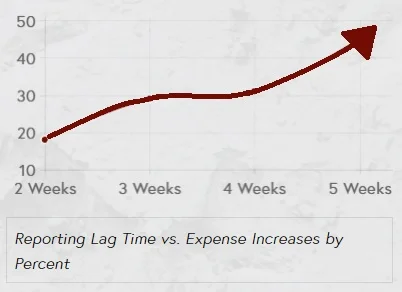
- Claims reported after 2 weeks of occurrence are 18% more expensive than those reported within 1 week of occurrence.
- Claims reported after 3-4 weeks of occurrence are 30% more expensive than those reported within 1 week of occurrence.
- Claims reported 1 month of occurrence are 45% more expensive than those reported within 1 week of occurrence.
- Most significantly, back injuries, as a group, are 35% more expensive if not reported within the first 7 days post-injury.
- Reduce Litigated Claims
- 47% of all claims reported after 4 weeks become litigated, which on average increase claims costs by 30%.
Source: NCCI’s Detailed Claim Information data for Report Years 2010 and 2011 case incurred losses valued as of 18 months after report date; not developed to ultimate - Close Claims Faster
- 50% of claims that are reported within the first two weeks close within 18 months.
- Only 29% of claims that are reported more than a month after the accident close within the same timeframe.
Source: NCCI’s Detailed Claim Information data for Report Years 2010 and 2011 case incurred losses valued as of 18 months after report date; not developed to ultimate.
| Reporting (Lag) Time | Expense Increase |
|---|---|
| 2 Weeks | 18% |
| 3 Weeks | 29% |
| 4 Weeks | 31% |
| 4 Weeks | 31% |
| 5 Weeks | 45% |
If you’re not currently reporting your claims timely, we strongly encourage you to adopt this “Best Practice” and make it a part of your company’s overall risk management program. Reporting your claims on a timely basis will get your injured employee the proper treatment quicker, provide your carrier the controls they need to manage the claim effectively, improve your risk profile, and lower your insurance costs.
OSHA Not Prepared to Accept Electronic Submissions
Author, Alyssa Burley, Client Services Coordinator, Rancho Mesa Insurance Services, Inc.
For over a year, the Occupational Safety and Health Administration (OSHA) have championed the upcoming electronic submission of injury and illness records (i.e., OSHA 300 logs) through its website. The new requirement was designed to make OSHA records publicly available on the internet in hopes that it would encourage employers to maintain safer working environments. The electronic submissions of the 2016 reports were supposed to be due by July 1, 2017.
Author, Alyssa Burley, Client Services Coordinator, Rancho Mesa Insurance Services, Inc.

For over a year, the Occupational Safety and Health Administration (OSHA) have championed the upcoming electronic submission of injury and illness records (i.e., OSHA 300 logs) through its website. The new requirement was designed to make OSHA records publicly available on the internet in hopes that it would encourage employers to maintain safer working environments. The electronic submissions of the 2016 reports were supposed to be due by July 1, 2017.
However, in a mid-May announcement, the government agency’s website declares “OSHA is not accepting electronic submissions of injury and illness logs at this time, and intends to propose extending the July 1, 2017 date by which certain employers are required to submit the information from their completed 2016 Form 300A electronically.”
According to an article on Front Page News, “several business groups, including the Associated Builders & Contractors, Association of General Contractors, and National Association of Home Builders, had challenged the 2016 Occupational Safety and Health Administration regulation in court and lobbied the administration to jettison it on grounds that it could unfairly damage the reputation of some of their members.”
In preparation of the anticipated electronic submission requirement, developers of Rancho Mesa’s Risk Management Center, an online platform designed for risk management, workplace safety and compliance have been ready and waiting for the details of OSHA’s API (application programing interface) in order to build a seamless integration between the two websites. Rancho Mesa will keep its clients up to date on the development of this integration, if and when it becomes operational on the OSHA website.
As for now, Rancho Mesa is urging its clients to continue to track incidents in the Risk Management Center so they may take advantage of its trending tools and reports.
For details regarding who must keep and report OSHA records, visit www.osha.gov/injuryreporting.
Sources:
“Injury Tracking Application: Electronic Submission of Injury and Illness Records to OSHA.” United States Department of Labor. Retrieved from: https://www.osha.gov/injuryreporting/.
“OSHA suspends rule requiring firms report injury, illness data electronically.” Front Page News. Retrieved from: http://www.advisen.com/tools/fpnproc/news_detail3.php?list_id=26&email=kvasquez@ranchomesa.com&tpl=news_detail3.tpl&dp=P&ad_scale=1&rid=283636777&adp=P&hkg=5cY58Bd37J
Cyberattacks Threaten Small Businesses: Help Protect Your Company's Data by Following These Steps
Author, Alyssa Burley, Client Services Coordinator, Rancho Mesa Insurance Services, Inc.
With the recent cyberattacks spreading across the globe, Rancho Mesa would like to remind its clients to take the necessary precautions to protect their business’s data.
Author, Alyssa Burley, Client Services Coordinator, Rancho Mesa Insurance Services, Inc.
With the recent cyberattacks spreading across the globe, Rancho Mesa would like to remind its clients to take the necessary precautions to protect their business’s data.
We have supplied two documents to help you prevent a cyberattack: "Cybersecurity for Small Businesses” and “Cyber Security Planning Guide.” Each of the documents may also be found in the Risk Management Center’s Library.
For questions about Cyber Liability insurance, contact us at (619) 937-0164.
Cybersecurity for
Small Businesses

Cyber Security
Planning Guide

Taking Your Safety Program to the Next Level: Form a Safety Committee
Author, Daniel Frazee, ARM, CRIS, Executive Vice President, Rancho Mesa Insurance Services, Inc.
Establishing a safety committee within your company will enhance the effectiveness of your safety program by identifying hazards and appropriate controls, implementing specific measures, developing clear safe work practices and communicating clearly through all levels within your organization.
Author, Daniel Frazee, ARM, CRIS, Executive Vice President, Rancho Mesa Insurance Services, Inc.

"The committee must be prepared to promote the #1 goal of any organization…accident prevention."
Establishing a safety committee within your company will enhance the effectiveness of your safety program by identifying hazards and appropriate controls, implementing specific measures, developing clear safe work practices and communicating clearly through all levels within your organization.
As your company looks to build a new committee or perhaps re-build an existing committee, consider the following as some more specific responsibilities that the group can develop:
- Promoting the importance of accident prevention
- Setting attainable goals for safe work practice
- Building a safety program that is a constant work in progress with regular updates and performance evaluation among departments
- Learning root causes through accident investigation
The committee must be prepared to promote the #1 goal of any organization…accident prevention. Employers want their employees to go home every evening to their loved ones. That goal has to permeate through all ranks and be maintained as the culture from the top down. With that as a primary goal, reasonable expectations have to be set for safe work practices that allow the company to maintain their level of productivity. Best Practices dictates that the safety committee must be willing to constructively critique themselves, the safety program and each department with an objective eye toward constant improvement. Establishing root causes for both “near misses” and accidents without prematurely assigning responsibility to a specific person, can build a more open approach to tracing claim frequency and severity trends. This is the critical piece to learning from mistakes or actions to ensure similar events do not recur.
Some final points to consider for a more effective safety committee:
- Participants should encompass all divisions, departments, and levels within an organization. A minimum of one representative/member from each part of the company should sit on the committee.
- Consider having more employees than supervisors which will build a more ground up approach from those people who know the day to day operations and tasks the best.
- Rotate the safety committee chairperson on a regular interval, whether that be every year or every other year. This will allow opportunity for more people to have a voice and continually change the committee in a positive way.
- Identify a clear schedule and recurring time/day for meetings throughout the year. The chairperson should provide an Agenda in advance of meetings so members can prepare accordingly. That chairperson should also recap each meeting with notes, review of recommendations, previous incidents, and/or trainings that have occurred.
- Include a representative from your insurance company’s loss prevention department to help provide perspective, resources and analysis.
Accept the challenge of taking your Safety Program to the next level, reduce your exposure to claims and improve both your risk profile and bottom line.
Learn more by sending follow up questions to dfrazee@ranchomesa.com.
Additional Resource
“Safety Committee Development: Consider the time required, the budget, needed, and the desired outcomes, and then facilitate the committee’s efforts using these triple constraints as boundaries,” by Michael E. Bingham, Occupational Health & Safety, www.ohsonline.com.
Is Your Business Protected from Data Breach Costs and HIPAA Violations?
Author Chase Hixson, AAI, Human Services Group, Rancho Mesa Insurance Services, Inc.
As technology and the common usage of the internet in business grow, Cyber Crime is an ever increasing exposure for businesses. Most businesses carry large quantities of sensitive data that if breached, can create a financial and administrative headache. Many business owners are unaware of the real exposures they have should their information be compromised, whether directly or indirectly.

As technology and the common usage of the internet in business grow, Cyber Crime is an ever increasing exposure for businesses. Most businesses carry large quantities of sensitive data that if breached, can create a financial and administrative headache. Many business owners are unaware of the real exposures they have should their information be compromised, whether directly or indirectly. Here are two of the most common costs:
Required Notifications under HIPAA
Businesses are required to notify affected individuals following the discovery of a breach. If more than 500 individuals are affected in a given state or jurisdictions, they are required to notify the media as well. A 2015 article from the HIPAA Journal estimated the average cost per record is $154. That means if you had a known breach resulting in 100 clients’ information being breached (regardless of what they do with the information) you would be paying roughly $15,000 just to notify the public. This does not include the added IT costs needed to further investigate/mitigate any losses.
Violations Under HIPAA
Violations vary depending on the degree to which a business is found negligent. The mildest violation is a Category 1, while the most severe is a Category 4. In the case of a Category 1 violation, a business will be penalized $100 per violation, even if they were unaware and reasonably could not have avoided a breach. Category 4 violations can be up to $50,000 per violation.
This is an ever growing exposure that is often overlooked until it happens and then the realization of what’s required hits home. However, there is a way for companies of all sizes to protect themselves from these exposures by including Cyber Liability coverage as a part of their risk management program. This coverage is available and will step in and pay some of the costs associated with a breach. These costs include HIPAA fines, notification costs, credit protection costs and forensic investigation.
This is such a growing area of concern that we have scheduled a “Cyber Liability” workshop for May 10th where an expert on this topic from Philadelphia Insurance Company will lead the workshop and provide both an overview of the trends and threats as well as answering specific questions. If you or someone from your company is interested in attending this workshop, you can register for it below.
Contact our Rancho Mesa staff to learn more about Cyber Liability.
What is SB 562 all about?
It may be of interest, if not importance, for all Californians to know about current proposed legislation, sponsored by Senator Ricardo Lara of Bell Gardens and Senator Toni Atkins of San Diego. The proposed bill would significantly expand the role of the state government within the healthcare system, by essentially establishing a single-payer system.

It may be of interest, if not importance, for all Californians to know about current proposed legislation, sponsored by Senator Ricardo Lara of Bell Gardens and Senator Toni Atkins of San Diego. The proposed bill would significantly expand the role of the state government within the healthcare system, by essentially establishing a single-payer system.
Under Senate Bill 562 (SB 562), the State would cover all medical services for every resident regardless of income or immigration status, including inpatient, outpatient, emergency, dental, vision, mental health, and nursing home care. Furthermore, insurers would be prohibited from offering benefits that cover the same services, potentially resulting in their choice to exit the marketplace. While the proposed bill touts that the program would eliminate co-pays and deductibles, and the need to obtain referrals, there is no mention of how it would be funded, except through “broad-based revenue.”
Obviously, many people ask me about the direction healthcare is headed in California and the Country; to which, I do my best to eliminate my interest in the subject since I make my living guiding companies through the insurance process. But, I do offer up some food-for- thought in terms of evaluating such a proposal, including citing the increasing shortfall of funding for Medicare, and the VA as examples of government-run healthcare, as it seems to me the former is going to require an eventual increase in payroll taxes, which effects everyone, employers and employees alike, and the latter is a good example of inefficiency and lack of innovation when there is no competition.
Personally, I believe that healthcare is both a right and a responsibility. As out-of-whack as the current system seems, or let’s face it, is, I just don’t know how we go about funding such a proposal without breaking the proverbial bank. The financial and economic realities have to be weighed with the politics, which is why it’s a bit of a relief that Governor Jerry Brown has asked the question in return, “Where do you get the extra money? This is the whole question?”
Whatever my thoughts, it is certainly a complex and vexing economic, social, and political issue for our times, one that will continue to be hotly debated and legislated, so there is much more to come.
Commercial Auto Premiums Are Rising - What’s Driving the Increases?
Author David J. Garcia, C.R.I.S., A.A.I., President Rancho Mesa Insurance Services, Inc.
The insurance industry is experiencing record losses on their commercial auto books of business, which is dramatically driving up insurance premiums for business owners. There are many factors that are contributing to this increase in losses; let’s take a look at six of the most prevalent.
Author David J. Garcia, C.R.I.S., A.A.I., President Rancho Mesa Insurance Services, Inc.

The insurance industry is experiencing record losses on their commercial auto books of business, which is dramatically driving up insurance premiums for business owners. There are many factors that are contributing to this increase in losses; let’s take a look at six of the most prevalent.
1. Distracted Drivers. This one factor is now contributing over 30% of all accidents reported. This is the single most significant issue facing not only the commercial insurance marketplace, but personal auto usage as well. Whether it’s talking on the phone, viewing and answering emails, or texting, these trends are escalating at alarming rates.
2. Higher Auto Repair Costs. This is one of the hidden “new” claim costs that insurance companies are facing. Record auto sales of newer vehicles that include sensors, cameras and other new electronics are bringing the cost of repairs to higher levels than ever before. As an example, minor fender repairs might have been a few hundred dollars in the past, but now with sensors and cameras built into most new vehicle bumpers, this cost has risen into the thousands of dollars.
3. Increase in Miles Driven. Since recovering from the recession, a healthier economy has lead businesses to expand and hire more employees. Now, with an increased need for more company-owned vehicles, more miles are driven which leads directly to an increase in accidents.
4. Rising Medical Costs. The medical costs associated with treating auto accident victims is rising 1.5 times faster than any other cost associated with auto incidents. While this probably comes as no surprise given the state of our health care costs, in general, it plays a major role in driving up commercial auto losses, and thus, premiums.
5. Fatalities and Severe Accidents Increasing. With an increase in miles being driven and the distracted driving epidemic, the severity of accidents has grown proportionately.
6. Less “Skilled Driver” Availability. The growth in business and the need for more drivers has resulted in a shortage of skilled commercial drivers. The lack of availability has also increased the likelihood for more auto accidents to occur.
As a business owner, what can you do to minimize this exposure and help control your present and future auto premiums? The process starts with having a formal written “Vehicle Safety Program” in place that is specific to your company’s needs and exposures. The following will outline major areas that the Vehicle Safety Program should address.
- Management Commitment – strong management involvement and concern must be evident
- Vehicle Operator Responsibilities – distracted driving guidelines and consequences, a description on how the vehicle may and may not be used, etc.
- Driver Selection - established criteria in order to be eligible to drive, should include age, MVR history, etc.
- Accident Investigation – formal written process for documenting, reporting and the resulting training to prevent similar accidents
- Vehicle Maintenance – establish a process for regular and consistent care of the vehicles tires, brakes, oil, etc.
In addition to the above, there are other areas that need to be addressed in more detail in order for you to build your own comprehensive Fleet Safety Program. In order to get started, you may want to reach out to your existing auto insurance carrier, as many carriers will offer assistance to their policyholders for creating a safety program.
Furthermore, Rancho Mesa has a proprietary template for our clients, as they design new and re-design existing Fleet Safety Programs. We also offer Fleet Safety Training workshops twice a year to assist in this process. Our workshops are free of charge and offered to current and prospective clients.
Should Union Janitorial Employers have a lower Workers’ Compensation rate than Non-Union Employers?
Author Jeremy Hoolihan, CRIS, Janitorial Group Leader Rancho Mesa Insurance Services, Inc.
A recent study by the Commission on Health, Safety and Workers’ Compensation made an argument that the janitorial industry should be split into two workers’ compensation class codes. This change would be similar to how many construction operations field class codes are separated between an over and under dollar amount per hourly wage. As an example, an electrical contractor’s field wages are split at over and under $30/hour.
Author Jeremy Hoolihan, CRIS, Janitorial Group Leader Rancho Mesa Insurance Services, Inc.

A recent study by the Commission on Health, Safety and Workers’ Compensation made an argument that the janitorial industry should be split into two workers’ compensation class codes. This change would be similar to how many construction operations field class codes are separated between an over and under dollar amount per hourly wage. As an example, an electrical contractor’s field wages are split at over and under $30/hour. Why does this matter? It matters, because the workers’ compensation marketplace perceives the higher-wage-earner to be a safer risk (the thinking being - a higher-wage-earner is more experienced and less likely to sustain injury), thus, the workers' compensation premium rates are less for those in the “above” threshold category. However, the BIG difference between this rationale and the study is that rather than basing the split rates on pay scale, the study proposes the split be between Union and Non-Union companies.
The study’s line of reasoning is that Union firms have fewer injuries and as a whole have a much lower loss ratio than Non-Union firms. However, many industry experts disagree and believe that the figures are skewed and not representative of the true industry experience. Clearly with the varying opinions and so much at stake, much more research and discussion needs to take place before anything is implemented.
With that said, in order to remain relevant and competitive, all janitorial companies need to stay well informed and be prepared for any changes should they occur. Rancho Mesa’s janitorial department will keep a close eye on any new developments and continue to help improve your company's risk profile, so you will be well informed and prepared for any changes. If you have any questions please feel free to contact us
Help Control Your Workers’ Compensation Claim Costs through Accident Investigation
Authors, Dave Garcia, AAI, CRIS, President and CEO, and Drew Garcia, NALP Program Director from Rancho Mesa Insurance Services, Inc.
When a workers’ compensation claims occurs, in order to both control the costs of the claim and look for preventive measures to reduce or eliminate similar claims from reoccurring, it is vital that a thorough accident investigation report is completed.
Authors, Dave Garcia, AAI, CRIS, President and CEO, and Drew Garcia, NALP Program Director from Rancho Mesa Insurance Services, Inc.
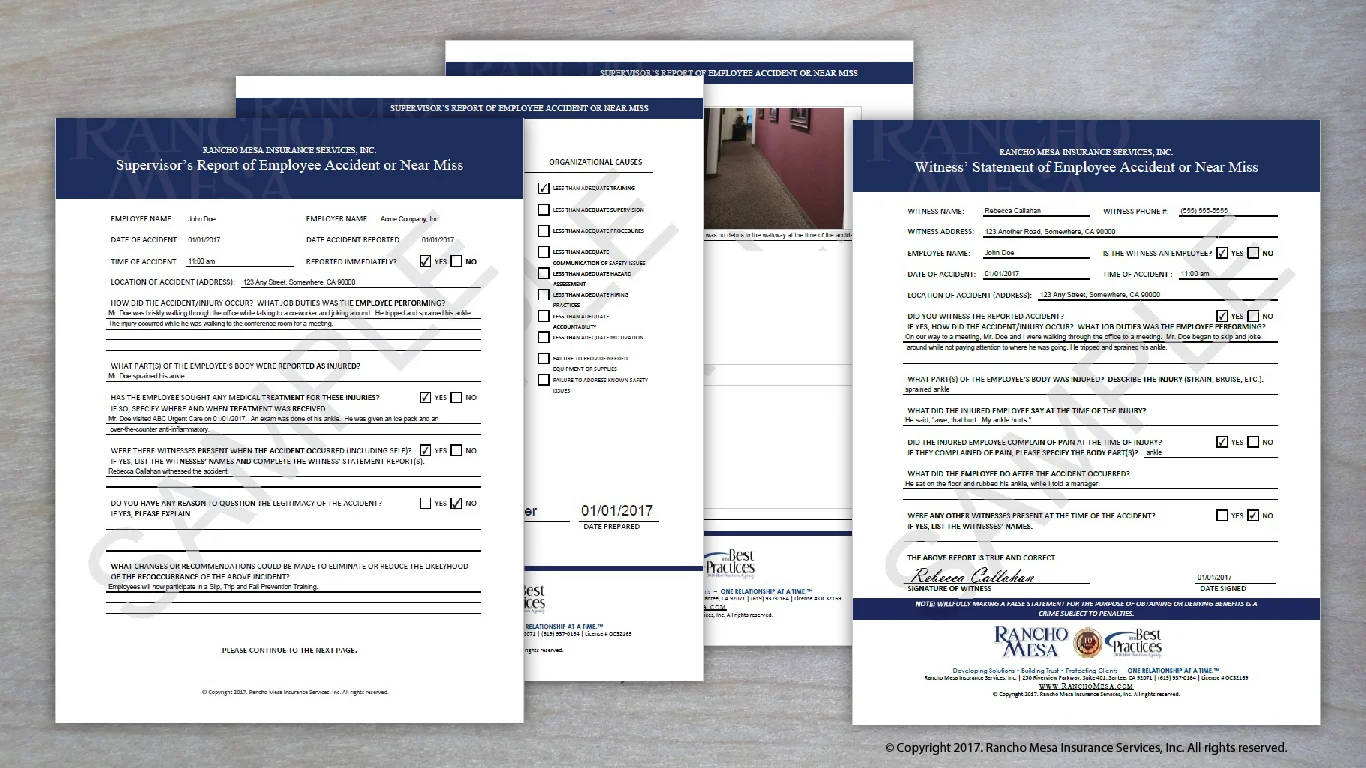
When a workers’ compensation claims occurs, in order to both control the costs of the claim and look for preventive measures to reduce or eliminate similar claims from reoccurring, it is vital that a thorough accident investigation report is completed. The accident investigation report should be completed at the time of the accident, by the supervisor overseeing the injured employee, and contain the following information:
- Employee name, date, time and location of the accident,
- A description of how the injury occurred and the job duties the employee was performing when they were injured,
- The employee’s body part(s) that were reported as injured,
- If witnesses were present when the accident occurred, document their names and statements using the Witness’ Statement of Employee Accident or Near Miss Report,
- Pictures of the injury and accident area,
- Recommendations or changes that could be made to eliminate or reduce the potential for a similar claim in the future.
The goals of this process are:
- To have a timely and accurate record of the accident or incident that allows the claim to be reported to the insurance carrier in a timely manner.
- To help you to reduce the chance of fraudulent claims through documentation, pictures and witness statements.
- To analyze the root cause of the accident or near miss and implement the needed recommendations to reduce or eliminate the likelihood of future claims.
As a 10-time National Best Practices Agency, Rancho Mesa Insurance Services, Inc. understands the importance of implementing the highest standards of Risk Management practices for our clients. So, as part of our RM365 Advantage™ program, we have developed our own proprietary Employee Accident Report and Witness Statement to assist our clients with documentation of their accidents or near misses.
How to Prevent Back Injuries in the Landscape Industry
Author, Drew Garcia, with Rancho Mesa Insurance Services, is the program director for NALP’s Worker’s Compensation Program.
According to the Workers Compensation Insurance Rating Bureau (WCIRB), in the last 5 years, over a quarter of a billion dollars in back injury claims, on behalf of the landscape industry, have been paid out by carriers in California. The back claim is by far the most costly injury at $22,000 over the last five years and the second highest in terms of frequency (behind hand, wrist and finger injuries), and the leading claim resulting in an employee's time away from work.
Author, Drew Garcia, with Rancho Mesa Insurance Services, is the program director for NALP’s Worker’s Compensation Program.
According to the Workers Compensation Insurance Rating Bureau (WCIRB), in the last 5 years, over a quarter of a billion dollars in back injury claims, on behalf of the landscape industry, have been paid out by carriers in California. The back claim is by far the most costly injury at $22,000 over the last five years and the second highest in terms of frequency (behind hand, wrist and finger injuries), and the leading claim resulting in an employee's time away from work.
Consider
- Back claims are most costly.
- They are the second most frequent claim reported.
- They are the leading claim resulting in an employee losing time away from work.
Reflect
- Has your company had a back injury in the past?
- What are you doing to protect the backs of your employees?
- Would it be worth your time to consider ways to mitigate this exposure?
Solution
Implementing a pre-work stretch, when done properly, is a quick and effective solution to reduce the likelihood of back injuries. The following stretch program was designed to stretch the back with Professional Landscapers in mind. The program can be executed in minimal time, at any location (yard or on-site) and will not only help employees warm up for the day, but also strengthen their back to help maintain a healthy career.
Benefits
By implementing a stretch you are:
- Showing your employees that you care about their health and have explored an option to help keep them safe.
- Differentiating your companies risk profile against the industry to help enforce aggressive underwriting.
- Looking for a way to improve employee productivity while potentially decreasing insurance cost directly related to claims.
