

Industry News

Construction Change Orders: What Contractors Should Know
Rancho Mesa’s Surety Relationship Executive Anne Wright and Pam Scholefield of Scholefield Law in San Diego, discuss what affects subcontractors and prime contractors when changes occur in their contract.

Rancho Mesa’s Surety Relationship Executive Anne Wright and Pam Scholefield of Scholefield Law in San Diego, discuss what affects subcontractors and prime contractors when changes occur in their contract.
Anne Wright: Welcome to Studio One. This is Anne Wright, surety executive here with Rancho Mesa Insurance. And I have again as my guest Pam Schofield. We met a couple months ago and talked about prime contract provisions and how they affect or impact subcontractors and what to look for. Very well received. So now we thought we'd try our hand at talking about change orders. We are going to talk about a few things that affect the subcontractors and prime contractors.
When it comes to changes in the contract, what you need to know, what you should look for and how you can potentially negotiate those within those contracts. So a few contracts will run from start to finish without change orders for different reasons. It could be poor plans, designs, scheduling, et cetera.
So Pam, let's remind the audience just a little bit about your background and then we'll get started.
Pam Schofield: Okay, thanks, Anne. I appreciate you letting me come back.
I started my career many decades ago as an engineer for General Electric Power Distribution and Controls Division, and at that point in time, that's when I started working with contractors in the industry. And then I ended up going to law school, and naturally I started representing contractors and subcontractors in the industry I already knew.
I had a little different perspective, but was able to develop my practice based on the skills and contacts I had from when I worked, was in the trenches with them. So I enjoy this industry, this is a great industry, and that's why I'm still here.
Now I help subcontractors and contractors, obviously with a lot of contract issues. So I'm happy to be here to share any bits of knowledge that I can.
AW: Well, you're uniquely qualified to do that, so we certainly appreciate it.
When talking about change orders, there's kind of a start to finish process with that whole thing. Again, if you enter a contract thinking there's not gonna be changes, you've probably had some different experiences than the majority of contractors out there.
So in the world of disputes, which will likely occur again for these various reasons, can we talk a little bit about how you can avoid them and what you should look for that are the key points in documenting your file and working to make sure that your change orders are recognized and ultimately approved?
PS: Sure. So you're right. If you believe that you will not have changes in a job, you either are very, very new or have had an unusual experience as a contractor. And I'm glad you talked about the contract itself because that is the most important place to look. Every contract, every subcontract has a process that you have to follow as the contractor or the sub in order to present any changes that you want. And in a change order or reason for a contractor to seek extra time or extra money is anything, honestly.
Some contracts have a list of what would trigger the contractor's responsibility to tell its customer. So when I say its customer, when a contractor tells the owner or the sub tells the contractor, the important thing there is that they want to know as soon as possible if something happened to cause more money or more time to your work. And that's the whole point, what we call the notice provisions.
And so anything I tell people, whether it's listed in your contract or not, that would cause you more time or more money, that is when to give your customer notice that, "Hey, this is happening. You've asked for a change. I've run into something unexpectedly. There's another trade in my way. The job site is not ready for my work or the owner came and asked me to do this. So let me talk about that.
Contractors should not do changed work or extra work or different work or any way you want to describe it just by a verbal request by an owner or even their own contractor. If you're a sub, you don't do anything orally. When the project's going along fine, you might get in a situation where people get casual as they get through changes, and they're paying change or all that, when it's something that's more controversial, like a big money, a delay to the project, or there's a dispute as to whether or not whatever's happening is really extra work for the contractor or sub. That's when people dig into the contract and they say, did you or did you not, as the contractor asking for extra money, follow the process in the contract.
So what I tell my clients, and when I give my own seminars, is that before you start the work, you need to know what that process is. And the reason is, is because many contracts will say, hey, you've got two days, 48 hours from whatever that event is that's causing extra money or delaying you to let us know about it. And that's a very, very short deadline, especially in the heat of construction.
And as a subcontractor, you may have deadlines in there, but because we talked last time about how the subcontract incorporates the prime contract terms and conditions, you still need to know what the prime contract requires because you don't want to cause your general contractor to miss those deadlines.
So again anything that would cause extra money or extra time is a situation where you want to start that process.
AW: And is it typical that the contract will indicate whom you need to communicate with?
PS: Often it does, not all the time. And that's very, very important because sometimes a contract will say that it has to be a vice president level or above. And as the subcontractor, you're like, well, that very rarely happens. We don't communicate at that level. It's usually the project manager or the project engineer that you talk these things through.
It's very important on a public project. So I'm really glad you brought that up because public projects often say, tell you who can authorize. And being a public entity, it's extremely important that you only do extra work when it's been authorized by the right person, because that deals with public money, obviously. And so you don't want to just go scurrying along and doing extra work, because somebody said, oh, sure, do this, or I'll sign off on it, because they may not have the actual authority to let you do that work.
So that is a very important part. Again, if it's not listed somewhere then probably a project manager but a lot of contracts these days do say who has the authority. And you need to know that out of the gate.
AW: Right, yes. Again, it's all about setting up your job file, having your checklist, making sure everybody involved with processing the work knows what those procedures are and this is important.
PS: It is very important, especially on the bigger ones.
AW: And to your point about, you know, the timelines in which you need to submit them, I have seen and or heard stories in my career about contractors, generals or subs that, you know, don't want to rock the boat, right? So they're just going to keep doing what they're doing. And like you said, sometimes it's very casual and they feel like it's a great relationship and they're moving along with the job and they'll just submit the change orders at the end of the job.
PS: Right.
AW: And especially if you're a public owner, you've got a contingency that only gives you so much money.
PS: Yeah.
AW: So you could run out of money if you wait until the end of the job, never the best practice.
PS: Right. And that's one of those, you know, no good deed goes unpunished because if you're going to wait until the end of the project, you likely will not get those paid. And that usually starts happening when the project people start talking about these changes or, things happening on the job site at project meetings. Or, they document it in a request for information and a response comes back and the contractor says, “Okay, well the engineer says that this is how to fix it. Okay, I'll go ahead and do it that way.” But if it costs extra money or time and they don't document it before they do the work or they don't get permission and writing, before they do the work, at the end of the project you're not going to. You're right because there might be a contingency for certain amounts. You may have to go to another level of authorization within the company that you're dealing with or the municipality without realizing it. And you definitely don't want to wait until the end of the project.
One of the other practical reasons, financial reasons, you don't want to wait until the end of the project as a subcontractor or as a contractor, is because you financed it. You had to pay your people. You had to pay the materials. Do you really want to drag a $150,000-$200,000 change order along to the end of the project for many, many months? I mean, you should try to get your money back as soon as you can.
And you do have to stay on top of it. And you're right. They want to be good team players. They want to be friends with the contractor, like the sub to the general.
AW: They don't want to risk not getting that next job.
PS: Exactly. They don't want to risk not getting that next job. And that is used as a carrot many, many times, like can you cut the change order in half or something. But the reality is, and as long as let's say you're a subcontractor and you're concerned because you've not done work with that general before and you finally got in the door, right? And you don't want to rock the boat. But the reality is, is that you can do the proper paperwork and document it in a very professional way. Even if you just think something's going to cost you more money. You need to start documenting it and giving that notice.
You'll call the person up to say, "Hey, this happened. I'm not sure how much it's going to do, but I'm going to be sending you an email.” or whatever the proper way is that you're communicating, “I'm just giving you heads up. I'm going to send you an email because I want to let you know this is happening. I don't know if it's going to cost me any money, but let's just document it." And if you do it that way, it tends to, again, strengthen that relationship because you're having more conversations in general.
And you're giving them a heads up. You're being very professional about it. So that's helpful. And a lot of times a subcontractor or contractor gets in the situation where a bunch of little things start happening. Like maybe an owner's rep or a construction manager has the tendency to waltz around the job site and chat with the people out there and you know the workers want to be friendlies but maybe they chat for 10 minutes maybe it happens two three times a week and there's five of your people every time it happens. That starts to add up you know, and then a month goes by you're like wow why is my labor, why are we not done with these tasks yet?
And so again giving warning that hey you know, “while we appreciate the interest of the owner's rep, I just want to let you know it is disruptive you know. How do you want us to handle this?” like if you're a subcontractor. And then start documenting it per what the contract says you have to document.
AW: Again, critical.
PS: It is critical, right?
AW: So some change orders are going to be, again, those that are presented timely and appropriately, you know, a lot of change orders just kind of happen and they get paid and everybody's fine and happy, but a lot of times they're disputed.
So what's the best practice for when it's time to dispute a change order? When would they bring in legal counsel or what do they need to know?
PS: It definitely depends on the situation and the value. Some contracts actually have a separate change order process versus claims process. And that's where it gets a little tricky.
You may have a prime contract that just calls everything a claim. And so you go immediately to their claim process, even though you've not even submitted the first request for a change.
Other contracts have a very detailed process that you have a certain amount of time to do a request for a change order, a C-O-R, or a request for equitable adjustment, whatever it calls it. And so you really do need to look at that process. But I'm advocating and it's unusual, but if you have change orders that are worse than money, you don't have to wait to the end of the project like we're talking about. You would start following the process and then eventually, if it's not getting paid, you go, okay, what's the dispute resolution process? Do we go to mediation first? Do we have to get an arbitrator? And that's going to be up to the person so long as you've followed the steps to initiate that final way to solve that dispute.
If you're in a public arena, it's usually in the public arena, there's often time frames, like okay, if the engineer of record does not respond in 30 days, assume they rejected it. So now you have to do the next step, and that catches people off guard too, because they'll submit it and don't hear from it for months, but they don't follow it.
And so I'm an advocate of early resolution. Because if you don't, the parties start being, like they feel like they're not being treated fairly.
AW: Yeah, tense.
PS: It gets tense, yeah. And then, I mean, if it requires upper management to get involved, get them involved.
And again, you can warn the project manager you're dealing with saying, "You know, we're going to go to the next step. I don't want to, but it's been out there too long. We're financing this thing. I'm just giving you the heads up. You know, we're going to take the next step because we're following your contract and this is what I have to do.”
AW: Well, he who speaks last loses.
PS: That's true.
AW: Got to let him know what's going on.
PS: And when a contractor follows the contract step by step, it demonstrates that A, you know what the contract says and B, it really looks like you have your act put together. It's a more believable change request. So whoever you're giving the change request to or the change order request to, they're thinking to themselves, wow, this person has gained some credibility. And the more credibility you can gain when you're looking for money and extra money the better off you are.
AW: Right. It helps that owner or general contractor’s rep, too, process what the channel they've got to go through.
PS: True
AW: If you got everything documented and organized and you know.
PS: And sometimes that's the bottleneck. It's the person who you submitted yours to. Because when you're a sub, especially in a chain, let's say a design change comes down the road and they've made changes and it might affect several trades, so you feel that your part was pretty straightforward and you get frustrated, “why hasn't the general contractor submitted my change yet?”. Well they're putting all the trades together and putting in a big change order and so that's why it's important to follow that process.
AW: And communicate.
PS: Communicate, absolutely that's the number one thing so.
AW: Well to sort of recap and go back to the beginning, it's know your contract, right, set up the job file, have everything documented, and follow procedures.
PS: Exactly. Sounds easy, but it's not that easy during the heat of the moment.
AW: I'm glad I don't have to do it.
PS: Exactly.
AW: I have a lot of respect for our clients that deal with this every day.
PS: Oh, absolutely.
AW: Okay. Well, thanks again for joining us. And if anyone has any questions beyond this, I can be reached at awright@ranchomesa.com or call me at (619)486-6570. And Pam, your contact info?
PS: Yes, my email is pam@construction-laws.com. The easiest way to get ahold of me honestly these days is probably my cellphone. We do still have office phones, but my direct line is (619)818-6240.
AW: Well Thank you for sharing that.
PS: Well, thanks for having me. Have a good day.
AW: Until next time.
Alyssa Burley: This is Alyssa Burley with Rancho Mesa. Thanks for tuning in to our latest episode produced by Studio One. For more information, visit us at RanchoMesa.com and subscribe to our weekly newsletter.
Putting Your Best Foot Forward: Slip and Fall Preparedness
Author, Jadyn Brandt, Client Communications Coordinator, Rancho Mesa Insurance Services, Inc.
With winter fast approaching, it’s important that employees are prepared to handle potential hazards caused by the change in weather. Slip and fall prevention is essential for any businesses operating in areas where employees will encounter rain, ice, and snow during the workday.
Author, Jadyn Brandt, Client Communications Coordinator, Rancho Mesa Insurance Services, Inc.

With winter fast approaching, it’s important that employees are prepared to handle potential hazards caused by the change in weather. Slip and fall prevention is essential for any businesses operating in areas where employees will encounter rain, ice, and snow during the workday.
Wet or icy surfaces and snow build-up can increase the likelihood of slip and fall accidents. Unfortunately, it is not always easy to spot ice that has formed on walkways, stairs and building entrances. Workers may unknowingly step on dangerously slick spots, and snow build-up on pathways can obscure tripping hazards like curbs or cracks in the sidewalk.
One way to raise employee awareness all winter long is through a safety campaign. Regular safety reminders and updates can help keep slip and fall prevention on an employee’s radar, until temperatures warm up again.
Employers can communicate potential hazards to their team through physical signage, email alerts, and proper safety training. Signage can be posted in employee common areas, as well as in places where snow or ice may accumulate, alerting workers to the potential hazards around them. Safety trainings should be assigned to team members who will be working in these winter conditions. Regular email reminders should also be sent to team members to caution against dangerous behaviors.
There are a number of safety tips that employers can provide to their staff members either in a training or through email reminders. Here are a few examples:
Proper Footwear: Boots with enough tread or ice cleats should be worn when working outside in winter conditions.
Walk Carefully: Adjust your gate when walking on a slippery area. Take slow, small steps and pay attention to the ground in front of you.
Precipitation: Stay informed about current weather expectations. Be aware of the potential for rain or snow before heading to work each day.
Choose a Safe Route: Follow marked routes to building entrances. Obey signage and don’t take short cuts because they could be dangerous.
Keep Your Hands Free: Make sure your hands and arms are free to help keep you stable while walking. Use bags or backpacks to free up your arms and avoid carrying heavy loads long distances.
Know How to Fall: Knowing how to brace yourself after a fall can reduce the risk of injury. Stay informed on how to protect your body in case things go wrong.
Employers should always make sure their staff are educated about the specific risks of winter weather. Proper training should be provided on adequate footwear, how to walk safely on icy surfaces, and how to lessen or avoid injury if a fall does occur.
Preventing slips and falls requires a proactive approach from both employers and employees. Building awareness in the workplace can reduce the risk of serious injuries and foster a culture of safety in the workplace.
Rancho Mesa has a variety of toolbox talks available through the SafetyOne™ platform that can be utilized in order to prepare them for winter-related hazards. If you have questions about the available safety trainings, contact your Client Technology Coordinator.
Five Tips to Protect Your HVAC and Plumbing Vehicles from Break-Ins
Author, Matt Gorham, Account executive, Rancho Mesa Insurance Services, Inc.
Contractors’ vehicles have long been a preferred target for thieves. Due to their distinct shapes and often eye catching branding, contractors’ vehicles are generally easy to identify, and they often contain thousands of dollars’ worth of tools, equipment, and materials.
Author, Matt Gorham, Account Executive, Rancho Mesa Insurance Services, Inc.

Contractors’ vehicles have long been a preferred target for thieves. Due to their distinct shapes and often eye catching branding, contractors’ vehicles are generally easy to identify, and they often contain thousands of dollars’ worth of tools, equipment, and materials.
Heating, ventilation, air conditioning (HVAC) and plumbing business owners that allow their employees to drive their work vehicles home face an especially difficult challenge to keep their tools and equipment safe. And, the cost of a vehicle break in goes far beyond the financial cost of replacing what has been stolen.
Being the victim of a vehicle break-in will lead to delays in your operations, it can cause frustrated customers, and the affected employees can suffer psychologically, especially if they have had their own personal tools stolen.
Here are the top 5 tips to help navigate the risk of vehicle break-in’s at an employee’s home:
1. Have clearly defined policies and discuss them with your employees.
Before allowing employees to drive their vehicle home, ensure that they understand what is expected of them. Having policies to avoid or minimize losses are only effective if the driver is held responsible for actually following them.
And drivers are more likely to follow the policies if they:
Are aware of them
Clearly understand them
Are accountable for implementing them
2. Leave expensive equipment, tools, and materials at the shop.
While it may be inconvenient for your techs to unload their trucks at the end of the day, creating and reinforcing a habit of securely storing expensive equipment at the shop is much more likely to prevent theft of that equipment.
If taking the equipment home is unavoidable or impractical, discuss with them if it is preferred to bring the equipment inside their home overnight.
Capreece Serna, Senior Safety Services Consultant with Sentry Insurance, offers an important reminder: Anything that is kept in the truck should be placed out of sight from the outside, and do not leave the keys in the ignition, on the seat, or tucked in the visor. Leaving electronics, keys, garage door openers, security badges, wallets, purses, or expensive tools in plain sight to potential criminals can encourage them to break into the vehicle.
It is also important that your techs know what is on their trucks. Having them conduct a quick inventory check at the start and end of their shift can help increase security of your tools and equipment, as well as theirs.
In the event that you ultimately experience a vehicle break-in, having an inventory of what was on the truck will help expedite the process of getting tools and equipment replaced.
3. Lock your vehicles and set your alarms.
This may sound basic, but locks are one of the most effective ways of securing your vehicle. Keep in mind that many technicians are getting in and out of their trucks repeatedly throughout the day, often times without locking their vehicles. This can lead to a false sense of security and unconscious habit of leaving a vehicle unlocked overnight. Having security bars or grates on the interior of the windows or doors will provide little security if the doors themselves are unlocked.
It is also important to recognize that there are different types of locks available. While not fail safe, aftermarket locks can provide an added layer of security on either the exterior or interior of a vehicle. As an example, puck locks are commonly found on the exterior, while cable locks or chain locks can be used in the interior to secure tools, tool cases, or equipment to mounted shelving.
Having an alarm system installed on each vehicle that gets driven home can be another effective deterrent. Would-be thieves are much less likely to target a vehicle with an alarm. However, if they are undeterred, the attention that an alarm system attracts in the event of a break-in can substantially reduce the amount of time they have to find and take anything.
4. Be aware of and monitor surroundings.
There are a number of environmental factors that employees can leverage or put in place to increase the security of the company vehicle. Serna offers the following suggestions whenever possible:
Parking inside the employee’s garage or behind a security gate,
If in the driveway, backing up to the garage door to prevent the vehicle doors from opening fully,
If in the street, parking in a well-lit area or using a physical obstacle to limit door access,
Making use of motion activated lights or cameras pointed at the vehicle,
Placing a camera inside the vehicle facing tools and equipment.
5. Review coverage for tools, equipment, materials, and employees’ tools with your insurance broker.
Each of the above tips will help reduce the risk and severity of break-ins. However, eliminating the risk of a break-in altogether is impossible.
Serna points out, “When thieves decide to commit their crime, they are looking for the biggest payoff with the lowest potential for getting caught. The focus of your practices should be to minimize the appeal of your vehicles to thieves, which will also minimize the loss to your business.”
Talk with your insurance broker to develop a coverage strategy that aligns with your appetite for risk and have the carrier take on the remaining risk.
A unique advantage for Rancho Mesa clients is their access to the SafetyOne™ mobile app. Within it, business owners are able to make their vehicle policies available to their employees digitally, as well as provide security checklists through a QR code, while also being able to take pictures of their parked vehicle at the end of the work day, helping to reinforce safe practices, accountability, and employee implementation.
For a complimentary review of your current tool and equipment coverages, as well as your safety practices, you can contact me at (619) 486-6554 or mgorham@ranchomesa.com.
Most Commonly Reclassified Lawn Care and Landscape Workers Compensation Governing Codes
Author, Drew Garcia, Vice President, Landscape Group, Rancho Mesa Insurance Services, Inc.
The year 2025 will mark my 10th year working with landscape, lawn care and tree care professionals across the country. This long-term approach allows our team the time to learn and grow with the industry. Being able to understand landscape operations and accurately relay this information to the insurance carriers is a critical component to the overall insurance program we put together for our clients.
Author, Drew Garcia, Vice President, Landscape Group, Rancho Mesa Insurance Services, Inc.

The year 2025 will mark my 10th year working with landscape, lawn care and tree care professionals across the country. This long-term approach allows our team the time to learn and grow with the industry. Being able to understand landscape operations and accurately relay this information to the insurance carriers is a critical component to the overall insurance program we put together for our clients.
Insurance carriers almost always audit policies at the completion of the term to reconcile estimated payroll versus earned payroll, and return or collect any additional premium. For workers’ compensation purposes, in states that are under the National Council on Compensation Insurance (NCCI) rating bureau (in which there are currently 35), the two major class codes used by landscape professionals are 0042 Landscape Gardening and 9102 Lawn Care Services. Each code applies to specific job duties; they have different rates per $100 of payroll; and, when the employer can clearly allocate payroll, both codes can be used. Without clear payroll records, however, the insurance carrier can consider summing all payroll into the higher tier.
The 0042 Landscape Gardening classification is considered a construction code and should be used for the new installation of landscapes. However, 9102 Lawn Care Services is not a construction code and should be used for the maintaining and servicing of existing landscapes. The difference in rate, depending on the state(s) in which you operate, can nearly be double for 0042 versus 9102. It is critical to clearly understand when to use each class code to avoid any misclassification that could disrupt cash flow during the policy or surprise you at audit with an additional owed premium.
The nuance of class codes for workers’ compensation does not stop here. Landscape professionals within NCCI states have nearly five or six other codes to consider for their operations, all with specific duties and varying rate. In addition to workers’ compensation codes, general liability policies use a similar system to differentiate services in order to collect adequate premium.
So, in order to avoid reclassification of payroll at the end of a workers’ compensation policy term, keep accurate records and talk to your insurance advisor.
For a more detailed discussion about your operations and the corresponding class code assignments, please reach out to me at (619) 937-0200 or drewgarcia@ranchomesa.com.
Advising Indemnification Agreements with Charles Stec, J.D.
In the second episode of a special two-part series, Executive Vice President Daniel Frazee interviews Charles Stec, J.D., accomplished attorney at Lanak & Hanna, to advise construction companies on what to include in indemnification agreements.

In the second episode of a special two-part series, Executive Vice President Daniel Frazee interviews Charles Stec, J.D., accomplished attorney at Lanak & Hanna, to advise construction companies on what to include in indemnification agreements.
Daniel Frazee: Welcome back to StudioOne™ everybody. We're happy to be joined again by Charles Stec from Lanak and Hanna. We're going to change the conversation a little bit. Charles was nice enough to talk with Drew Garcia, our landscape leader about sub-contract agreements. We're going to shift into indemnification So, welcome back to the studio, Charles, and thanks again for joining us.
Charles Stec: Thanks for having me back. It's my pleasure.
DF: Okay, well, let's talk about indemnification agreements. More specifically, tell our listeners what should go through their minds when they hear that word indemnification and how it may impact them in construction?
CS: So indemnification is a big legal word that simply means a promise to pay for damages or defects that arise from your work. The bigger concern lately because of the cost of litigation is that there is a duty to defend also included with a duty to indemnify. What that really means is that if there's a claim, you end up being responsible to pay for the legal fees and costs of the person that's making that claim against you. And those costs, especially in smaller claims, can sometimes exceed the value of the actual damages at issue.
So an indemnification provision in a contract can be used to really define who is going to be responsible and to tell a subcontractor that they're responsible for damages that arise from their work. But how we write that provision can very much impact how it will be interpreted and what your actual allocation of responsibility will be.
DF: Okay. So, furthering that part of what you're talking about, can you provide us with an example how indemnification, when worded a specific way, can negatively impact, let's say, a lower tier trade that we might represent?
CS: Sure Daniel. Let’s take a drywall subcontractor as our example. If our drywall subcontractor has an indemnification provision as contract, that ultimately says that he is responsible to defend and indemnify for claims arising from or any way related to his work, then if we had a scenario where there was a water leak from the roof, from plumbing, whatever it is, and it ultimately results in the wall that's dry walled having buckling or mold, then in the event of a claim, that drywall subcontractor could arguably be responsible to indemnify and defend because our provision says in any way relating to his work.
But if we rewrite that position to just say he's only responsible for claims that arise from the negligent performance of his work. Now, in our scenario of the water leak, his duty to indemnify and to defend won't be triggered because the claim ultimately comes from a water leak, not from something wrong with how the drywall work was installed
DF: Okay, that makes sense. And I'm going to go a little off cuff with you, but I want to better understand because I think we have a lot of clients that have concern with redlining contracts, right? They're working with a preferred contractor, a really solid relationship. They don't want to disrupt that. So in your experience, when there is pushback, when there is redlining of contracts, how do most general contractors respond to that when you insert that type of wording. Does it depend on the general or is there some reasonable compromise that you've seen?
CS: So I've actually seen mostly reasonable compromise. I think everybody knows that a contract is ultimately supposed to be negotiated at arm's length. It's supposed to be the two parties are negotiating their position. What people are afraid of as a subcontractor is, "Oh, I'm not going to get the work because I'm not just accepting the contract as it is." But in that scenario, that contractor is running the risk that you're going to argue later that this was a contract of adhesion. Take it or leave it and therefore it's not enforceable. So they're typically open-minded and I have many, many a times in my recent past found myself on the phone with the general contractor's lawyer and we negotiate the few positions that are disputed in a contract. They expect it and for the most part if your requests for revisions are reasonable, they're going to get accepted.
DF: Very helpful. That's very helpful. So let's continue looking at indemnification clauses from a subcontractor's perspective. Walk us through what they may see in a typical contract and some specific examples, again, back to redlining or changing language that can minimize their exposure.
CS: So all contracts are a little different, and every one of these indemnity provisions has been written by different lawyers, so they're all a little different, but I'll give you kind of a general idea of what one normally sounds like. So my example is, “subcontractor agrees to indemnify and hold harmless the owner, contractor, and their agents, and any entity or person for which the contractor is responsible per the contract documents, from and against any claims, damages, or losses, including attorney's fees and costs arising from or in any way related to the subcontractor's work.”
So using my example, there's a few things that you would want to consider redlining with that provision. The first is the vague description of who you're promising to either defend or to indemnify. So in our example it said any entity or person for which the contractor is responsible. Well that's not defined and that creates a very real possibility that you could find yourself either having to provide defense fees for--or indemnity--to parties you've never even met and having to pay potentially multiple defenses. So in that case, I would strike that language in its entirety and instead make sure that each of the people that you were agreeing to identify are clearly defined. Normally that's going to be the prime contractor and the owner only. There may be some scenarios on certain jobs where you would agree to someone else, but it should be defined so you know who and what responsibility you're taking on.
DF: Okay.
CS: In our same example, another consideration is you could add language excluding liability for the owner or the general contractor's negligence. So let's talk about what that would be. For example, if the owner knows there's an unsafe condition there, there's a hole in the ground, a bad step, whatever the case may be, he doesn't tell anybody about it and leaves it there and one of your employees gets injured. Excluding that liability would make sure that the owner becomes responsible and you're not indemnifying the owner for your employee or some other person's injury that's actually coming from a condition the owner knew about and left there and didn't tell anybody.
Similarly, if another contractor on the job has done something that is so poor that it is potentially a danger either to other work or to cause injury. Let's say framing was done with a too small of a header and nobody knows that one day comes crashing down. That would be an example that if the contractor knew that their other sub had put in that bad header and didn't tell anybody that you would want to exclude that damage. So I definitely recommend adding language, excluding the gross negligence of either the owner or the contractor.
DF: Okay, all right.
CS: And a final example, it goes back to the defense costs. So in every contract for indemnity, the law implies this duty to defend. And the duty to defend arises at the time that they tender it to you, they say we've got a claim against us. And so you're now paying the legal fees of somebody else before the claims ever resolved and it's determined whether or not you did anything wrong.
Now, in our example, it said attorney’s fees and costs and you could imply that that is that duty to defend, but simply striking that wouldn't be enough, because the law actually implies the duty in to any contract of indemnity. So you have to specifically excluded it. So what you could say is I have no duty to defend a lot of times though Your contractors and owners might reject that. So what we could also consider is limiting what that duty to defend to be.
Two possibilities you could talk about is; saying that you will only agree to pay your proportionate share of the potential defense costs based on your proportionate share of the potential damages so that it's now shared amongst other subcontractors or of the contractor whoever else might be involved in the particular accident or event. The other would be to put a limitation of liability provision in where you could say our liability is either limited to what insurance proceeds pay or even to a specific dollar amounts. I've seen people say let's put it to the total amount that I was paid on the project or a set number like $100,000. Those types of provisions can help limit that defense cost that you ultimately could see picking up from an alleged accident.
DF: Okay, all right. Thanks for kind of going into that detail. Very helpful for our subs to understand some areas to be focusing on. So, if you look at indemnification clauses from a direct contractor's perspective on commercial and service contracts, what should they be watching out for and how can they redline or a change language that can minimize their exposure?
CS: Sure. So, obviously, when you're talking about these direct contractors, those on a commercial or a service agreement, their relationship is a little bit different. So they're now no longer a subcontractor lower down in the chain, but they're in a direct contract, probably with the project owner. So a lot of our discussion before on subcontractors would still apply, but there's a few other things that you might want to look at as well.
First, I've seen in a lot of direct contracts lately that in the indemnification provision, one of the parties to indemnify that owners have been adding is the design team, either the architect or the engineer. Those should be excluded because as the contractor--unless we're talking about a wholly different subject, which is design build agreements--the contractor has no control over the design. They're not able to influence how it's done, how it's built, or most of the times the design's done long before they ever get there. So to indemnify the design team doesn't make sense because it's not someone that you ever had any ability to control the quality of that work. So I think that those should be excluded, be redlined out, and also you would consider adding a phrase that says something to the effect of the contractor is not responsible for claims that arise from design defects or design errors or emissions. You don't really want to be taking on liability for a designer that you didn't have any business with and you're not in contract with.
DF: That makes sense.
CS: Another example that I've seen is that a lot of these indemnification agreements with owners are very broad. They say all claims, damages, liabilities, or losses and the problem is it doesn't clarify for what claims. Are we talking about claims from the owner or claims made to the owner? So what I've been recommending lately is that in those broad indemnity provisions, that it be revised to say for third party claims. That way the owner can't sort of hodgepodge the indemnity provision into a requirement to you to pay their defense fees to sue you. So that's a revision that we've seen come up more often than not lately.
Another that really is beneficial and it sort of goes back into the design question from a minute ago is putting in a reverse indemnity provision. So in a lot of projects, the owner provides to the contractor a set of plans, maybe some reports, some geotechnical reports, whatever the case may be, and the contractor does their work based on those reports. In a reverse indemnity provision, the owner agrees to indemnify the contractor for errors and emissions in those reports. So let's take for example, you are doing, you know, subterranean grading and there is a retaining wall to hold in that subterranean dig if the design plans didn't build a big enough set of supports and you build what's in the design plans and it fails, you shouldn't be the one responsible for that failure because it's the design, not the construction. So the reverse indemnity provision would then make the owner responsible to go to that designer for that claim rather than come to you as the contractor.
DF: Okay, all right.
CS: Finally, there are a lot of other ancillary provisions in a contract that read together with the indemnity provision can help minimize your liability. We talked about two of them with the subcontractors. That's a consequential damages waiver, those indirect costs that may come up. And the other being excluding damages for latent defects. We talked about it in the underground, an unknown type, things you wouldn't know there, like utility or box. Those types of provisions you could consider having in there and they would define when your indemnity would kick in.
Others that you could talk about adding would be a clearly defined delay provision. If your project is running late, who's responsible for that or defining what the damages would be and maybe setting a liquidated damages amount on a daily rate or a monthly rate. So at least you could control your risk because you know what that potential damage would be if it runs late.
And finally, it would be a provision limiting what recoverable damages could be, either to insurance proceeds or the maximum amount of liability, like we discussed earlier.
So the main point is that every construction business is a little different. And it makes sense to tailor your contracts to the type of trade that you're in, the type of jobs that you're doing, they could be public, they could be private, and there's different risks and allocations that come with those different types of projects. So in my belief, a little bit of foresight in working with your contracts in advance can really help control your risks in the event that something does go wrong in the future.
DF: Well, and I think Drew alluded to it too, that your process of being out in front of this and proactive really aligns with how we interact with our clients trying to mitigate risk on the front end. But so often we get feedback that sometimes crosses that line of insurance to legal, where we can comment and provide some feedback, but we don't have the expertise that you do in the background that can really help them truly negotiate these contracts or just tighten up everything that they have with respects to sub-agreements and/or indemnification.
So these bullet points are so helpful for us and our team, and I can't thank you enough for sharing this. I know this is just the tip of the iceberg too. I know what you do for many of our clients is so effective. Tell us again, if people need to connect with you, what's a good way to start the dialogue?
CS: Well, again, thank you for having me here today. It's been a pleasure. You're absolutely right. It is the tip of the iceberg. There are so many different things we could talk about. We could have gone on for hours. I really do like to tailor to a specific contractor's needs. So the best thing to do is literally to reach out. We're available by phone, consultation is free, I can be reached at my office, it's 714-451-7919, send me an email, that's ckstec@lanak-hanna.com or you can go to our website, which is Lanak-Hanna.com.
I say it all the time and I'll say it again here, I think that a little bit of upfront attention, a small amount of money you spend consulting with a lawyer. If it saves you from one lawsuit, it's worth every penny.
DF: Agreed and I think that's been consistent with the clients that have partnered with you and I think they would say the same thing. So thank you again and thanks to our listeners for joining us again in this series and we'll see you next time.
Catch Up on Part 1
Market Update: Sexual Misconduct Liability in Healthcare Organizations
Author, Sam Brown, Vice President, Human Services Group, Rancho Mesa Insurance Services, Inc.
Rancho Mesa’s insurance brokers specializing in healthcare, education and non-profit organizations continue to navigate the hardening insurance marketplace, characterized by tighter underwriting guidelines, reduced limits of liability, increased deductibles, and higher policy premiums.
Author, Sam Brown, Vice President, Human Services Group, Rancho Mesa Insurance Services, Inc.

Rancho Mesa’s insurance brokers specializing in healthcare, education and non-profit organizations continue to navigate the hardening insurance marketplace, characterized by tighter underwriting guidelines, reduced limits of liability, increased deductibles, and higher policy premiums.
One of the sectors most impacted by the hardening market is healthcare and its ability to attain adequate insurance protection, specifically sexual misconduct liability insurance. Continued claim activity, social inflation, third-party litigation financing, and the increased cost of litigation all contribute to the hardening market conditions.
Consider the following data points in order to understand why the market is hardening. Several states have recently removed barriers to reporting abuse. Only five states maintain a criminal statute of limitations on claims of abuse. Nineteen states have eliminated statutes of limitations on civil claims. And, 30 states have enacted laws allowing victims more flexibility to revive claims of sexual abuse.
Additionally, according to the Institute for Legal Reform, from 2016 to 2020 the tort system’s direct economic costs grew 6% every year, exceeding both the inflation rate and GDP. That means more and more cases are litigated each year.
Not only are the number of cases increasing, but a 2023 report titled “Medical Malpractice Claims-Made Social Inflation and Loss Development Report” indicates that claims exceeding $1,000,000 continue to grow in frequency. So, the number of claims are increasing as the cost of claims are increasing.
An increase in third-party litigation financing, the practice of investors funding lawsuits in exchange for a portion of the settlement and return on the investment, can discourage prompt and reasonable settlements. This practice also reduces an attorney’s accountability to good faith standards and produces more lawsuits.
Impact to Sexual Misconduct Coverage and Healthcare Providers
Insurance companies are now reducing their financial risk for abuse exposures. This means medical professional liability underwriters may need additional underwriting information to quote limits in excess of $100,000. Additional underwriting measures may include issuing non-renewals, considering jurisdictional challenges, careful consideration of policies covering young patients, excluding all trafficking allegations, and adding a per victim or perpetrator deductible.
Risk Management Strategies for Healthcare Providers
Healthcare organizations can help mitigate some of the risk by:
Using chaperones to reassure patients of a procedure’s professional nature. The chaperone provides a witness to support the practitioner’s actions.
Performing examinations for a minor in the presence of a parent, guardian, or chaperone.
Educating the patient about the exam and its necessity prior to the patient’s appointment.
Documenting the exam’s medical necessity, the education provided to the patient, and the chaperone’s identity.
Maintaining boundaries by establishing proper practitioner-patient relationships.
Educating staff on proper patient interactions, professional boundaries and reporting of misconduct.
Ensuring familiarity with your state’s reporting obligations related to sexual misconduct and include the requirements in your policies and procedures.
The legal environment and claim trends add financial exposure for both healthcare providers and insurance companies. Rancho Mesa will continue to monitor these trends to better educate and advocate for clients. Please contact me at (619) 937-0175 or sbrown@ranchomesa.com to discuss possible insurance solutions.
Navigating Subcontract Agreements with Charles Stec, J.D.
In the first of a special two-part series, Construction Group Vice President Daniel Frazee and Landscape Group Vice President Drew Garcia, interview Charles Stec, J.D., accomplished attorney at Lanak and Hanna, to discuss how construction companies can best navigate subcontract agreements.

In the first of a special two-part series, Executive Vice President Daniel Frazee and Landscape Group Vice President Drew Garcia, interview Charles Stec, J.D., accomplished attorney at Lanak & Hanna, to discuss how construction companies can best navigate subcontract agreements.
Daniel Frazee: Welcome everyone and thanks for joining us. I am Daniel Frazee, the construction group leader and we're back in StudioOne™ with Drew Garcia, our landscape group leader. Welcome Drew.
Drew Garcia: Dan, good morning. How you doing?
DF: Doing fantastic. We're really excited to be joined by Charles Stec, an accomplished attorney supporting the construction industry with Lanak and Hanna. Charles is here to share his experience in representing California trade and general contractors, which includes several of our clients. And more specifically, I think we're going to get inside two important but very distinct topics, subcontract agreements and indemnification. Welcome, Charles, to StudioOne™.
Charles Stec: Thanks for having me, it's my pleasure.
DF: So before we get started, Charles, tell us more about yourself and how you became so focused in the construction industry?
CS: Well, I actually got my start in the trades. I worked as a roofer back in the 90s and 2000s and worked on a lot of different projects: residential, commercial, public projects. Ultimately I still have and maintain a general contractor's license and when I got into the law I ended up gravitating back to construction both because of my experience but also because I believed as a lawyer that I could help contractor clients navigate the pitfalls of the construction industry by getting involved earlier.
What I've noticed in my practice is that many contractors don't consult with an attorney until something goes wrong and they get sued. And at that point, they've already got the contract, says what it says, the facts are the facts. What I like to do is get involved earlier. And at that point, we can look at contracts, we can look at what's going on in a project, and try to assess risks and minimize risks. So the firm I work for, Lanak and Hanna, were really a one-stop construction shop. We handle everything that's related to a construction business. So from the outset, we handle, for example, the contracts, but also bids during the project, labor issues that might come up. And at the end, collections such as stop notices and mechanics liens, or in the event something goes wrong, defending against a defect or a damages claim.
DG: Very good. Yeah, I think we can relate with your guys’ proactive approach to business and how you're trying to kind of consult with your customers in advance of an issue and obviously when there is an issue reacting to it and making sure that you're there for them. We take a similar approach to the way that we do our business. And when we jump into subcontract agreements you know Rancho Mesa we've got a number of different businesses that we help support. We could have general contractors; we could have trade contractors that are a part of a project. We've also got service contractors that might be subbing out small portions of their work where it might not be as glaring or they might think there's not a need to have a subcontract agreement.
Obviously, it's important. Can you talk to us about why the sub contract agreement is an important step in the relationship between two service partners and how it provides clarity?
CS: Sure, Drew. Let's start with the basic, what is the purpose of a contract? Really the purpose of a contract is to allocate risk by defining the rights and responsibilities between your two service providers to avoid disputes that are caused by misunderstandings or to set forth what's going to happen if something actually does go wrong. So generally what we see a lot of in the most common disputes between contractors and subs or a service provider and their subcontractor is simple things like payments, or what happens when there's extra work. So a subcontract agreement can be used to put those things into writing and set forth those basic terms; what that subcontractor is going to get paid, what the specific items that are included in their scope are, so if there is extra, we can define what is and what isn't extra, and then how that subcontractor is going to get paid. Are they getting paid on a progress payment, or are they getting paid on a lump sum when it's done?
If something does go wrong, the subcontractor agreement also has the benefit of setting forth how it's going to be resolved. For example, if that subcontractor doesn't finish their work or they get terminated, who's responsible for the cost to complete that work? Another example would be if there's an injury or damages that come from their work, how do we apportion that responsibility? And another example after that would be If something does go wrong and we can't resolve it, what's the procedure going to be? Are we going to go to litigation and spend years in court? Are we going to consider arbitration, which might cost us a little more upfront, but could get to a resolution faster?
The main point is a subcontract agreement is giving you an opportunity to allocate your risks, which allows you to better bid a project. If you are taking on a lot more risk, you're probably going to want to charge a premium for that risk. On the opposite side if you are passing that risk on to your subcontractor perhaps then you might be able to bid at a tighter rate. So a subcontract agreement's big main purpose is to really define things so that we know what's going to happen rather than leaving it up in the air.
DG: Well, so that makes sense. And when somebody's putting together a subcontract agreement, maybe it's the first one that somebody like you is putting together for a business. Is it kind of a, “hey, this one agreement fits all types of work that you might subcontract” or should the business look at more of a focused approach in terms of the type of work that they're subbing out or the type of project that they're on? Would that bring any nuance to the subcontract agreement?
CS: It would. So there's really two answers to your question Drew. First, yes, there are many general provisions that you're going to use through all your different types of subcontractors. Those are going to be those basic provisions like price, payment methods, what's the scope of work, how do we handle change orders, what's that procedure and the notice, maybe schedule and your insurance requirements.
But second, there's going to be some provisions that really are specific to the type of work you're subbing out. So take for example, if you're subbing out work where people are working in the ground, they're doing digging, they're doing trenching, they're planting materials. There's a large possibility that you could have unknown obstructions, whether there's big rocks or boulders in the ground or there's an unidentified utility. You might want to have a provision then that's going to assign who's responsible for those unknown encounters? Is it going to be the subcontractor who's then going to price it higher to deal with their risk of the unknowns? Or is it going to be the general contractor? Or is it going to be the owner? And that's going to affect both your pricing and bidding on the project, but it's also going to affect when that comes up, how do you deal with that dispute? Having that provision in place allows you to have the answer so you don't actually have to have a dispute and go to litigation.
Comparatively let's imagine that your subcontracting out work like roofing or windows or plumbing. Those come with the possibility of a water intrusion claim, there could be a leak there could be a burst pipe. So first and foremost we think well damages from that would probably be covered by insurance but there are other things that aren't and that's going to be those incidentals. For example, if you have a plumbing leak and it's in a residence or in a business, there's a possibility that owner is going to make a claim for loss of use or for a loss of profits because they haven't been able to operate their business. What we would want to then consider is whether or not you should have a consequential damages waiver that essentially says if there's these other indirect costs like the loss of use or like the loss of profits, who's going to be responsible for that? Is that going to be the owner or is that going to be the contractor or the subcontractor that caused the damage? And again, that's going to allocate to you how do you want to price this project? Because your bid is probably going to be affected by how much risk you're taking on. So those are two possible provisions that you might want to make more specific to your individual subcontractors and the type of work that they're doing.
DG: Got it. So obviously having open dialogue with a professional like yourselves in terms of what the project might look like for the business helps to kind of cater to the subcontract agreement or the specific needs of that agreement.
So in general, how often should somebody relook at their, the general provisions of their subcontract agreement that might be unanimous across all of their agreements? Is it an annual thing, bi-annual? Is there a recommendation in terms of how and those things should be re-looked at and revisited?
CS: Well, we generally recommend having your contracts re-looked at yearly. Now, some years there might be nothing to change, but other years there could be. The issue is the law is constantly evolving. So what the regulations are out there, whether it's from the CSLB or it's going to be from decisions from the court, are going to change over the years.
Let's take example, most common thing, pay. In the last several years, we've seen many revisions. Going back, not long ago, if paid provisions were allowed, which essentially said that the contractor and the subcontractor would share the risk that the owner doesn't pay. California has since prohibited those and said, no, that's not reasonable., it's against public policy, we want subcontractors to get paid. So now those are prohibited. Yet I still see them in contracts all the time that haven't been updated.
Similarly, California does allow pay when paid, which says that the subcontractor’s payment can be delayed until the contractor is paid by the owner. We saw just in the last couple of years, the court come back though and find one scenario where it decided to limit those provisions. And specifically, it was a lot of these provisions were being written to say that if the owner and the prime contractor got into a dispute, that the subcontractor had to wait to get paid until that dispute, whether it was litigation or arbitration, was resolved. Courts came out and said, that's not reasonable because it potentially makes that subcontractor who may have nothing to do with the dispute have to wait for payment for even years until that litigation is resolved. So the court said now that “pay when paid” provisions have to be reasonable. So I've been recommending in the last couple of years’ revisions to contracts to define what that reasonable period is.
So the answer to your question is ultimately contracts should probably be reviewed yearly. Some years it's going to be more, some years it's going to be less, but you want to stay up to date with the current codes, the current decisions, and the CSLB rules that are ever changing.
DG: Very nice. Now that makes sense. Last question, last subcontract question for you. So obviously having them is important, making sure that they are catered towards the work that you guys are, that you're putting into place. You know, I think the answer is probably obvious on this, when should that subcontract agreement be signed? But I'd like you to comment on that, but also what are some pitfalls if they're not signed before the project takes off? What are some concerns or what could that create in terms of, you know, future issues or maybe more immediate issues if that agreement isn't in place before the project takes off?
CS: Well, I think starting off, I would say what we've been talking about assigning risk and responsibility is really going to impact your pricing. So I would recommend having those agreements signed early.
What a lot of my contractor clients have been doing is they're doing master subcontractor agreements where with the regular vendors that they're using, they have an overall agreement that sets forth the terms and conditions and their assignment of risk and how they're going to deal with problems that they typically would foresee in an agreement that gets signed long before there's ever a job in place. Then when there's a particular job, they'll issue a purchase order and that purchase order will just incorporate the terms and conditions of that master subcontractor agreement. That's a really good place to be because then when you are bidding on a project, you already know how you are allocating risk amongst yourself, your subcontractor, and the owner, and you can price accordingly.
DG: Yeah. Again, it makes total sense.
DF: Okay. Well, tell us if people need to connect with you, what's a good way to start the dialogue?
CS: Again, thank you for having me here today. I can be reached at my office, it's (714) 451 -7919. Send me an email, that's cksetc@lanak-hanna.com or you can go to our website, which is Lanak-Hanna.com.
DG: Thank you again and thanks to our listeners for joining us and we'll see you next time.
Continue to Part II
Recommended Strategies to Open Capacity for your Bond Program
Author, Matt Gaynor, Director of Surety, Rancho Mesa Insurance Services, Inc.
Most of our contractor bond accounts are provided a single bond/aggregate capacity program to determine the size of projects they can bid and the amount of capacity that is available in the program for future projects. The most effective way to ensure you have available capacity for an upcoming bid is to communicate with your bond agent well in advance of the bid date to ensure the project will be approved by the bond company. On certain occasions, an upcoming project may put you over the top of your approved capacity. This is the time your agent must work hard on your behalf to represent to the bond company why this project makes sense to add to the program.
Author, Matt Gaynor, Director of Surety, Rancho Mesa Insurance Services, Inc.

Most of our contractor bond accounts are provided a single bond/aggregate capacity program to determine the size of projects they can bid and the amount of capacity that is available in the program for future projects. The most effective way to ensure you have available capacity for an upcoming bid is to communicate with your bond agent well in advance of the bid date to ensure the project will be approved by the bond company. On certain occasions, an upcoming project may put you over the top of your approved capacity. This is the time your agent must work hard on your behalf to represent to the bond company why this project makes sense to add to the program.
Here are several useful strategies to make this happen:
1. Prepare a work in progress schedule on a quarterly basis and provide updates as work progresses to give your bond agent the best estimate of your cost to complete as of a certain period. This is important because the bond company will allow additional runoff to subtract from your current backlog to free up capacity prior to the actual start date of the new project.
2. When submitting your bid request, include a job cost breakdown on the new project and list the percentage of labor, materials, equipment, subcontractors, overhead and profit. Provide additional explanation of any key elements (for example, if a certain subcontracted trade represents a large portion of the project) and risk transfer protocols used to pre-qualify this particular subcontractor.
3. Have a status report completed by the owner whenever a bonded project is completing. Your agent can provide you this document. The bond company uses this information to remove that project from your backlog.
4. Have a discussion with your bank to determine if they can increase your line of credit to ensure available cash in support of anticipated costs during the initial few months of the new project.
5. Consider loaning personal money to the company for a short time period to provide additional working capital or equity. The loan may need to be subordinated to the bond company to ensure it is not paid back until certain conditions are met.
Both your agent and the bond company only generate income when they issue bonds to support your projects. Therefore, all parties involved want to try and find a way to allow you to add good projects to your bonded backlog.
If you would like more information to discuss additional ways to increase your bond capacity, please contact me at (619) 937-0165 or mgaynor@ranchomesa.com.
OSHA Tips to Protect Workers During the Holiday Season
Author, Jadyn Brandt, Client Communications Coordinator, Rancho Mesa Insurance Services, Inc.
As the holiday season approaches, many businesses will experience an increase in demand that can put an extra strain on a workplace and its employees. The surge in work often means more safety challenges for an employer. To deal with the additional strain, employers may be hiring new or seasonal employees, bringing in additional volunteers, and/or expanding their hours. Despite these changes, safety should still remain a top priority.
Author, Jadyn Brandt, Client Communications Coordinator, Rancho Mesa Insurance Services, Inc.

As the holiday season approaches, many businesses will experience an increase in demand that can put an extra strain on a workplace and its employees. The surge in work often means more safety challenges for an employer.
To deal with the additional strain, employers may be hiring new or seasonal employees, bringing in additional volunteers, and/or expanding their hours. Despite these changes, safety should still remain a top priority. Employers must work to train and prepare their employees and volunteers to recognize and prevent job hazards and enact safe work practices.
The Occupational Safety and Health Administration (OSHA) has shared a list of nine safety tips that employers should implement for the holiday season. Here’s what they recommend:
1. Train workers on safe practices in a language they speak and understand
It’s important that all workers are aware of necessary safety practices, rules and regulations. This can include basic safety policies or industry-specific safety trainings. Communicating these policies clearly and effectively is equally as important. Employers should regularly remind employees of safe practices in meetings and give trainings when needed.
2. Provide hands-on training for young and new workers on properly using equipment
New or seasonal workers should be given thorough explanations on all tasks they will perform. This is especially important if a worker will be operating equipment in a warehouse or will be sent out on deliveries. Encourage workers to look out for one another and assist newer hires if needed.
3. Delivery services and warehouse workers should wear bright, visible clothing
Longer hours could mean more workers will work late nights or early mornings. For some workers, that could mean part or all of their shifts are done in the dark. Be sure all workers are wearing the proper clothing and safety gear in order to be sure they are visible in all conditions.
4. Prevent injuries by properly stacking materials and making sure workers stand clear when doors are opened for unloading
Stocking inventory or loading and unloading delivery trucks can be dangerous if workers are unaware of proper lifting and handling techniques. Workers should be trained on these proper techniques before handling heavy items. Remind workers to stand clear of opening doors when unloading delivery trucks, to prevent any materials that may have shifted around in transit from falling on and injuring a person.
5. Create a detailed and flexible staffing plan to help reduce workplace stress
Accommodating everyone’s time-off requests during the holidays can be difficult. And workers may experience heightened stress due to the increased workloads and tight deadlines. Be mindful of each person’s wellbeing, and avoid overworking them during the holidays. Encourage taking regular breaks, and provide access to mental health resources. Keeping a detailed schedule will also help avoid any confusion on busy or unusual days.
6. When large crowds are expected, prepare an emergency plan
The holiday season means many businesses—especially in the retail or community services industry—may experience an increase in visitors. Whether you are a landscaper at a shopping mall or providing meals and health services to the community, larger crowds bring unique safety hazards, from crowd control to fire or medical emergencies. It is important to have a clear and well-communicated emergency plan in place to deal with these situations.
7. Make sure entrance and exit location signs are visible
Employers should ensure that all workers are familiar with emergency exits and evacuation routes. An evacuation plan should also account for disabled individuals, so that everyone can leave safely if necessary. Use clear signage to mark first aid stations, entrances, and exits. A communication system—like an intercom—should also be put in place to quickly convey information in place of emergency.
8. Encourage workers to report any safety and health concerns
Foster a workplace culture that is open to the reporting of any workplace accidents or health concerns. Create a clear and accessible reporting process, and be sure all workers are made aware of that process at the start of their employment. Make it clear to workers that they will not suffer retaliation if they do report an issue. If an issue is reported, act on it promptly and effectively. Staying aware of and prepared for any potential hazards or health problems can be a huge benefit to you and your team in the long run.
9. Remember: Seasonal workers have the same rights as full-time workers
During this time, many businesses may hire seasonal employees to meet increased demand. But it is important to remember that seasonal workers are entitled to the same rights and protections as permanent employees. Seasonal workers should not be excluded from safety trainings or benefits, and should be treated the same as full-time workers.
By following OSHA’s nine tips for holiday worker safety, businesses can help keep employees safe, healthy, and organized through the holiday season. Proper safety training, emergency preparedness and fostering a climate of safety can help keep a business running smoothly through the holidays. More safety resources and trainings can be found on Rancho Mesa’s SafetyOne™ Platform.
Umbrella vs. Excess Liability: The Key Differences Contractors Need to Know
Author, Sam Clayton, Vice President, Construction Group, Rancho Mesa Insurance Services, Inc.
When reviewing insurance requirements that contractors receive from municipalities and/or general contractors, two lines of coverage that are often misunderstood are umbrella and excess liability. These terms are commonly interchangeable in the contract, but have subtle differences. In addition, the limits required by contracts are increasing significantly.
Author, Sam Clayton, Vice President, Construction Group, Rancho Mesa Insurance Services, Inc.

When reviewing insurance requirements that contractors receive from municipalities and/or general contractors, two lines of coverage that are often misunderstood are umbrella and excess liability. These terms are commonly interchangeable in the contract, but have subtle differences. In addition, the limits required by contracts are increasing significantly.
Excess vs. Umbrella
An excess liability policy has two primary functions: it provides excess limits above the underlying liability insurance limits and replaces underlying insurance limits as aggregate limits are exhausted; the excess policy will be subject to the same coverage terms, conditions and exclusions as the underlying policies. This is what is called follow-form.
A commercial umbrella liability policy has three primary functions: it provides excess limits above the underlying liability insurance limits; replaces underlying insurance limits as aggregate limits are exhausted; and offers broader coverage than primary policies for certain losses which would be subject to an SIR or self-insured retention.
Why are they important?
A commercial umbrella or a properly structured excess policy will sit above a contractor’s existing policy’s general liability, auto liability and employers’ liability limit. This protects contractors from large unexpected losses that can have devastating financial impact on the company.
With the dramatic rise in costs of insurance claims the last few years, either from social inflation or third-party litigation funding, multi-million dollar settlements are becoming more frequent. For example, if one of your employees is in an auto accident that causes severe bodily injury to multiple people, the legal and medical costs incurred could very easily exhaust your primary auto liability limit very quickly. Umbrella or excess policy limits would be available cover those losses.
So, when reviewing a contract, pay close attention to the umbrella or excess insurance requirements, and ensure that you understand the subtle differences of how they can impact your bottom line if there is a claim.
To learn more about these specific coverages and how they can be incorporated into your current insurance program, reach out via email to sclayton@ranchomesa.com or (619) 937-0167.
Cal/OSHA Releases Top Safety Citations for 2024
Author, Jadyn Brandt, Client Communications Coordinator, Rancho Mesa Insurance Services, Inc.
The Occupational Safety and Health Administration (OSHA) recently released its Top 10 List of Most Frequently Cited Standards for fiscal year 2024. Each year, OSHA compiles a list of the most common workplace safety hazards. Understanding these new numbers can provide insight for employers on potential safety issues within their organizations. While OSHA’s list includes the top ten citations, we will focus on the top five critical violations.
Author, Jadyn Brandt, Client Communications Coordinator, Rancho Mesa Insurance Services, Inc.

The Occupational Safety and Health Administration (OSHA) recently released its Top 10 List of Most Frequently Cited Standards for fiscal year 2024.
Each year, OSHA compiles a list of the most common workplace safety hazards. Understanding these new numbers can provide insight for employers on potential safety issues within their organizations. While OSHA’s list includes the top ten citations, we will focus on the top five critical violations.
1. Fall Protection
Fall Protection (1926.501) was once again the leading cause of OSHA workplace violations. The administration reported over 6,000 violations this year; significantly more than any other reason for citation. There are a number of ways one can incur a fall protection violation including a lack of fall protection such as safety harnesses, hand rails or toe-boards. Regular training on fall hazards and how to properly use fall protection equipment is essential to keeping employees safe while at work.
2. Hazard Communication
Hazard Communication (1910.1200) violations were the second most common reasons for citation. OSHA guidelines require the hazards of the chemicals that a company produces or imports must be, “available and understandable to workers.” In order to avoid citations, employers must train employees on how to handle hazardous chemicals correctly, and must have safety labels displayed in the workplace.
3. Ladders
The number three violation for the year was Ladders (1926.1053). There are numerous requirements for the use of ladders on a job site, which can be found on the OSHA website. Those requirements range from the condition and spacing of ladder rungs, placement and weight limits, and manufacture date. Employers should ensure that all ladders are regularly inspected and maintained, and should make sure employees are trained on how to safely use a ladder on the job.
4. Respiratory Protection
Respiratory Protection (1910.134) was the fourth most-common type of violation. Oftentimes, contaminants in the air of a jobsite require respiratory protection. Some common contaminants that would require specific protection include harmful dusts, vapors, gases or sprays. OSHA also, “requires the employer to develop and implement a written respiratory protection program with required worksite-specific procedures and elements for required respirator use.” That program must then be administered by a trained program administrator.
5. Lockout/Tagout
Lockout/Tagout (1910.147) violations were fifth on the list of the most common safety violations for the year. These violations occur when the proper procedures for controlling hazardous energy releases are not followed when servicing machines or equipment. Proper lockout/tagout procedures are a must when performing machine maintenance, and employers should be sure to train their employees on how to protect themselves.
OSHA tracked safety violations beginning on October 1, 2023 and ending on September 5, 2024. The full list of violations include:
Fall Protection—General Requirements (1926.501): 6,307 violations
Hazard Communication (1910.1200): 2,888 violations
Ladders (1926.1053): 2,573 violations
Respiratory Protection (1910.134): 2,470 violations
Lockout/Tagout (1910.147): 2,443 violations
Powered Industrial Trucks (1910.178): 2,248 violations
Fall Protection – Training Requirements (1926.503): 2,050 violations
Scaffolding (1926.451): 1,873 violations
Personal Protective and Lifesaving Equipment – Eye and Face Protection (1926.102): 1,814 violations
Machine Guarding (1910.212): 1,541 violations
Violations of any of these OSHA guidelines can put employees in dangerous situations, and can lead to significant consequences for an employer. If the proper safety precautions are not put in place, serious injury and even death can occur on a worksite. Failing to comply with the administration’s regulations can also be incredible costly for an employer. The maximum financial penalty for an OSHA violation is currently $16,131 per violation, and the maximum penalty for willful or repeated violations is $161,323 per violation.
Rancho Mesa’s RM365 Advantage Safety Star™ program and the SafetyOne™ platform are both great resources to train employees on the top OSHA safety violations.
If you have questions about how best to prepare your team and implement necessary safety plans, contact your Client Technology Coordinator.
Maximizing the Value of Your Next Loss Control Visit
Author, Rory Anderson, Partner, Account Executive, Rancho Mesa Insurance Services, Inc.
There are a few different reasons for a carrier to schedule a loss control visit. Sometimes, a carrier may want to perform a loss control visit before they quote your insurance. However, for the purpose of this article, I’d like to focus on the loss control service offering provided directly from your current insurance carrier.
Author, Rory Anderson, Partner, Account Executive, Rancho Mesa Insurance Services, Inc.
There are a few different reasons for a carrier to schedule a loss control visit. Sometimes, a carrier may want to perform a loss control visit before they quote your insurance. However, for the purpose of this article, I’d like to focus on the loss control service offering provided directly from your current insurance carrier.
From the perspective of a tree care business owner, uncertainty, skepticism, and hesitation are often the most common initial reactions to an insurance carrier loss control visit. However, these visits should not be seen as a negative process. Instead, they present an opportunity for tree care business owners to enhance safety protocols, reduce risks, and ultimately improve their insurability.
Loss control specialists have dedicated their careers to understanding risk and safety, and are committed to make the workplace safer. By engaging with the loss control specialist and reviewing their recommendations as constructive guidance, tree care companies can make valuable changes that not only improve their risk profile, but also potentially lower insurance premiums.
To get the most out of a loss control visit:
Set clear objectives. Establish goals and determine what you would like to accomplish. Communicate your objectives of the visit with your team members and the loss control representative. It is a good idea to engage your key employees and involve your team. Your safety officer, fleet manager, and crew leaders should be present. This will encourage participation and help cultivate a culture of safety.
Share information. Have your safety programs, training records, maintenance records, and any other safety information ready to share. Discuss any safety incentive programs and/or initiatives set forth by management.
Maintain an open mind and practice humility. Welcome feedback and approach the visit with a positive attitude. View the loss control specialist as a partner and be open to recommendations.
Conduct a walkthrough and jobsite visit. Tour your facility and visit a jobsite, unannounced. It is best to drop in on your crews without them knowing you will be there. This will provide real insight into your operations, accountability, and identify gaps in safety compliance.
Document recommendations. Most of the time, your loss control representative will generate and send to you a report for your records. However, if that is not the case, make sure to record key points and suggestions.
Create an action plan and prioritize changes. After the visit, review the recommendations with your team and prioritize the changes and completion of your plan within a certain timeframe.
Build a relationship. Stay in touch after the initial visit and maintain communication with the loss control representative to discuss ongoing safety improvements and updates.
Maximizing a loss control visit strengthens your business by improving safety, reducing insurance costs, and maintaining a long-term relationship with your carrier partner. It is easy to view loss control visits as a chore or another task to check off the to-do list, but doing so overlooks the valuable insights the loss control representative can offer. Instead, try to view it as a partnership so you can leverage the representative’s knowledge to improve workplace practices and create a safer and more efficient operation.
To discuss how your tree care company can make the most of a loss control visit, contact me at (619) 486-6437 or randerson@ranchomesa.com.
Employer’s Guide to Handling Cumulative Trauma Claims
Author, Casey Craig, Account Executive, Rancho Mesa Insurance Services, Inc.
A growing thorn in employers’ sides has been the rise of worker’s compensation cumulative trauma (CT) claims. Cumulative trauma refers to the ongoing psychological and physical injuries that accumulate over time, often resulting from repetitive stress or exposure to adverse conditions. Employees missing time can lead to larger workers’ compensation claims, lower moral and less efficiency. It can be easy as an employer to take a defensive stance and fight every one of these but there are a few factors that need to be taken into consideration prior to deciding if you should settle or challenge these claims.
Author, Casey Craig, Account Executive, Rancho Mesa Insurance Services, Inc.

A growing thorn in employers’ sides has been the rise of worker’s compensation cumulative trauma (CT) claims. Cumulative trauma refers to the ongoing psychological and physical injuries that accumulate over time, often resulting from repetitive stress or exposure to adverse conditions. Employees missing time can lead to larger workers’ compensation claims, lower moral, and less efficiency. It can be easy as an employer to take a defensive stance and fight each one of these, but there are a few factors that must be taken into consideration prior to deciding if you should settle or challenge these claims.
Not every CT claim should to be fought. As hard as it is to hear, you can win the battle but lose the war. Sometimes the cost of gathering information, medical reviews, time spent away from operations and litigation can add up to more than it would have cost to settle these claims. This is extremely tough to achieve in construction as the burden is on the employer to prove that there is no way that their stated injuries could have happened while working for you.
Employers can proactively fight CT claims by staying ahead of the exposure as much as possible. This means making sure your workers have the safest, most ergonomic-friendly environment possible. Stress and repetitive motion are two of the largest causes of CT claims. Trying to keep your employees from doing the same repetitive task over and over is extremely important in keeping both moral high and frequency of claims lower. However, this can be difficult for most construction companies with the need to perform the same motion over and over, but it is necessary to have your employees switch up tasks if at all possible.
This does not mean that every cumulative trauma claim should be settled either. We are seeing younger and younger employees filing these once they have been let go or have chosen to leave. These post termination claims typically come attached with an applicant attorney and can include multiple body parts being named that appear initially as fraudulent statements. If it is determined that there truly was no record of injury and they are able to perform all normal duties, fighting the claim may make sense.
Each claim is unique and needs to be handled as such. Relying on your insurance broker and carrier claim consultant for guidance is critical in staying focused on the facts, not the frustration and emotions that often accompany these types of claims. While settling a claim that could be fraudulent can be frustrating and does have an impact on your experience modification rate, it can often be the best path towards minimizing costs and maintaining lower loss ratios that lead directly to lower renewal premiums, which is the ultimate goal.
If you have any questions about how to handle cumulative trauma claims, reach out to me at ccraig@ranchomesa.com or (619)438-6900.
How Healthcare Staffing Agencies Can Prevent Claims
Author, Jack Marrs, Associate Account Executive, Rancho Mesa Insurance Services, Inc.
Healthcare staffing agencies play a vital role in maintaining patient care standards. That is why it is critical for staffing agencies’ employees to be properly vetted, kept informed, and trained prior to being placed to reduce the likelihood of claims. Preventing such claims requires a collaboration between the healthcare staffing agency and the facility where employees are being placed. Healthcare staffing agencies can take steps to prevent claims and protect their operations.
Author, Jack Marrs, Associate Account Executive, Rancho Mesa Insurance Services, Inc.

Healthcare staffing agencies play a vital role in maintaining patient care standards. That is why it is critical for staffing agencies’ employees to be properly vetted, kept informed, and trained prior to being placed to reduce the likelihood of claims. Preventing such claims requires a collaboration between the healthcare staffing agency and the facility where employees are being placed. Healthcare staffing agencies can take steps to prevent claims and protect their operations.
Employee Screening
A best practice for preventing claims is to ensure that the healthcare professionals being placed are highly qualified and have the required credentials. Proper vetting includes verifying licenses, certifications, and prior work experience. If the potential employee is not properly screened and is hired, it not only is putting the patients in danger but it can result in malpractice claims.
Collective Intelligence, a professional screening service, states that “up to 30% of job applications contain false statements.” The company notes that “by using a healthcare professional screening service, you can rest assured that you are mitigating the risks associated with theft, negligent hiring lawsuits, poor employee retention and fees associated with non-compliance.”
Properly screening potential employees can reduce the risk of unintentionally bringing on unqualified people who could put the organization at risk.
Clear Communication of Job Roles and Responsibilities
Miscommunication or misunderstanding of job roles can lead to situations where healthcare professionals make decisions outside of their job roles. This not only puts the patient at risk but can also expose the agency to liability claims. To prevent this, the agency must clearly outline the roles, responsibilities, and limitations of the healthcare professionals that are being placed in the facility. Healthcare staffing agencies and the healthcare provider that hires them need to make sure that everyone involved knows exactly what the healthcare professional is responsible for at the facility.
Effective Safety Training
The healthcare industry is physically demanding, and healthcare professionals are prone to injuries, whether from lifting patients, long shifts, or a slip and fall. Healthcare staffing agencies are also prone to high turnover which can lead to workers being less familiar with their workplace and safety protocols, thus increasing the risk of accidents.
Healthcare staffing agencies must protect themselves from workers’ compensation, general liability, and medical malpractice claims. One way to do this is by partnering with the facilities where the employees are placed and formally agree to share responsibility for training and safety.
While staffing agencies should provide proper training, client facilities should also offer site-specific training related to their own operations and protocols. Clear agreements between the agency and the client facility regarding training responsibilities will help minimize the risk of claims.
Preventing claims in the healthcare staffing industry is an ongoing process that requires attention to detail, ongoing training, and partnerships with healthcare facilities. By taking these steps, agencies can protect themselves from the financial damage associated with claims and the general safety of their employees.
To learn more about how your healthcare staffing agency can reduce risk, contact me at jmarrs@ranchomesa.com or (619) 486-6569.
Navigating Halloween Costumes and Celebrations in the Workplace
Author, Jadyn Brandt, Client Communications Coordinator, Rancho Mesa Insurance Services, Inc.
Halloween is right around the corner, and while workplace holiday celebrations offer a chance for creativity and fun, there are a few things to keep in mind to avoid any HR violations.
Author, Jadyn Brandt, Client Communications Coordinator, Rancho Mesa Insurance Services, Inc.

Halloween is right around the corner, and while workplace holiday celebrations offer a chance for creativity and fun, there are a few things to keep in mind to avoid any HR violations.
Companies are not required to have a costume policy in place, but employers should consider instituting one, if they believe costumes could cause an unsafe situation for employees or clients. Examples of items that could lead to safety issues include fake blood, weapons or oversized props. Setting clear guidelines can help employees navigate the dos and don’ts of dressing up, and address the use of items that an employer determines to be a safety hazard.
Employers should also remind team members that professionalism is still a priority, while allowing for festive self-expression. Offensive or inappropriate costumes should not be worn to work. Outfits that show too much skin or depict religious, cultural or gender-related stereotypes are best avoided while working. It’s also best to steer clear from political costumes in the workplace.
It’s always good to take a proactive approach and remind employees of these rules and policies early on, especially if Halloween falls on a workday. Employers should send out a company-wide reminder highlighting workplace policies and guidelines to be sure the holiday festivities don’t make others feel uncomfortable. It’s also important to establish a process for reporting and handling issues, if an incident does occur.
Although plenty of people will enjoy participating in office costume contests and parties, employers should allow these things to be optional. If an employee chooses not to take part in Halloween activities, it may be for cultural or religious reasons, and it’s best not to push them to participate.
Rancho Mesa’s RM365 HRAdvantage™ is a great resource for Rancho Mesa clients who have additional questions about Halloween costume guidelines, how to strike the right balance between festive spirit and appropriate attire, or how to respond to a potential issue.
Exploring Innovation and Problem Solving in the Commercial Construction Industry
Author, Andy Roberts, Surety Account Executive, Rancho Mesa Insurance Services, Inc.
Surety Account Executive Andy Roberts sat down and interviewed Miggs Borromeo, Commercial Surety Underwriter for Merchants Bonding, and discussed the current climate of the commercial surety world in Southern California. They also covered the bonding trends most commonly seen today, and the programs that Merchants Bonding Company offers.
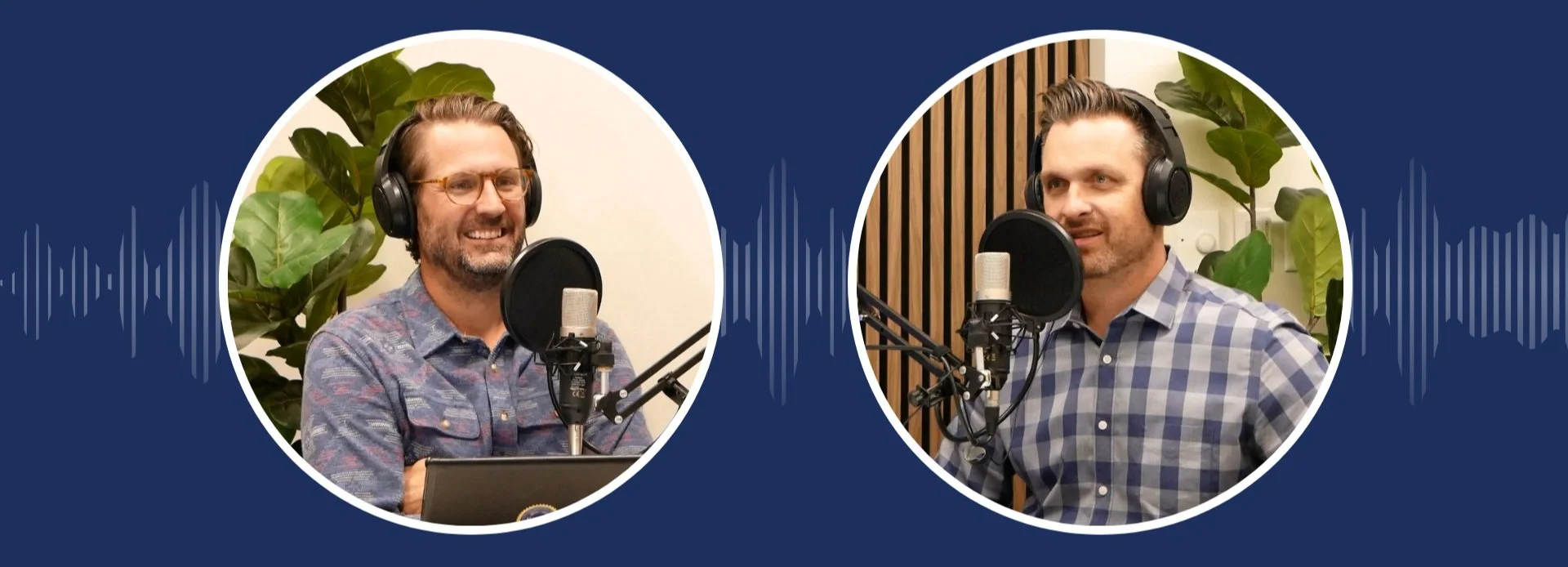
Kevin Howard, Partner with Rancho Mesa, interviews Jeremy Dentt of Dentt Properties Inc. and explores a range of topics relating to innovation and problem solving in the commercial construction world.
Kevin Howard: Welcome to StudioOne™. I'm Kevin Howard, Partner here at Rancho Mesa Insurance. Very excited to have our guest today, Jeremy Dentt. Jeremy, how are you doing?
Jeremy Dentt: I'm good. Thanks for having me. First time podcaster here.
KH: First time podcaster. I feel privileged. Jeremy Dentt is the owner of Dentt Real Estate Services. He's been specializing in the development, management, leasing, and sales of commercial real estate since 2004.
Jeremy, you mind if I go through your resume really fast? Geez, Louise. 19 years of experience in commercial real estate, which officially makes you a guru. San Diego State Aztec, and I'm looking through the development and management, you just have a ton of different types, a multitude of developments: commercial, habitational, gas stations. Which one of those was your favorite?
JD: I would have to say that my favorite is industrial. It's easier, four walls, some concrete, less chaos to the mix of the development where gas stations, carwashes; lots of moving parts, lots of different subs and smaller lots to build on.
KH: Makes more sense, it's more concise, less of a busy zone. And that would be your ideal build.
Well, we're going to go over some commercial real estate topics that I think.a lot of listeners are maybe asking themselves, you know, “What’s going on out there?” There’s been a ton of change since COVID, a ton of change nationally, internationally, so, just really excited to dive into this.
Let’s start with this question; if you could solve one major challenge in the commercial real estate industry today, what would that challenge be and what would you do?
JD: Well I think the biggest challenge we're still facing in commercial real estate, and just the building industry in general, is the escalating costs. We had huge spikes during COVID and we were hoping for a softening post-COVID but, some things have slowed down. It's still challenging to get material on time, costs are still going up, specifically switch gears are a year out from manufacturing to delivery to the site which presents just a major challenge to getting a project out of the ground.
KH: So you're estimating for a project to be, you know, six months, seven months, and you're way behind just because of how the economy is just so slow right now?
JD: Yeah, the supply chains are still on a significant delay for certain parts. Most of our projects that we started in the last three years, we ordered some of the important items like the switch gear and any large equipment six, seven months before even signing up a contractor.
KH: Right, frustrating, but what would you do to solve that problem? You know, you have a magic wand and you're like, "Hey, this is the big fix."
JD: That's a great question that I don't think there's one easy answer. I think having a little bit more manufacturing in the States would help. Some of the shipping logistics was the biggest challenge, getting it across seas. If we had more opportunity to manufacture some of these products locally, I think it would be easier for us to streamline the process.
KH: Totally agree. Your career spanning, you know, 20 plus years, what was the defining moment if you could just name one in your career so far, as far as a commercial real estate developer?
JD: Yeah, I think for me, I started my own project in 2019. It's an industrial complex, seven buildings in total, broken up into two phases. In the first phase, we got out of the ground in early 2019. And as you know, in 2020, March, we hit COVID and the world shut down. And I specifically remember the moment in this development when I was sitting there looking at my Excel spreadsheet with all my costs; my loan, which was a personal guaranteed loan of over $6 million and the world shutting down and wondering, what do I do next? And there's actually a funny picture of me laying in my backyard face down in, you know, March, where it's still 75 degrees here, I'm outside lying face down with a Patagonia jacket on just contemplating the decisions I've made.
KH: Yeah. “Where do we go from here?” Perfect timing, right?
JD: Yeah. I think for the defining moment side of it, it made me realize that I'd worked on this project since 2012 and we timed everything as best as we could. But there's so many factors in real estate and just anything you do that can come out of nowhere, that blindside you. And so having important economics to the deal is more important than ever because tomorrow something can change. And in that instance it was a global pandemic that I did not factor in my investment performance. But it was still a great project in a great location and luckily things turned and we did just fine but it was certainly one of those moments where it constantly changes your risk assumptions and how much risk you're willing to take on given that nothing's guaranteed.
KH: Right. Nothing is guaranteed. And obviously, that project is done. I've seen it. It's beautiful.
JD: It's done. It's insured by you, which is great. It's financed. So, yeah, it turned out to be a really good project for us.
KH: It worked out. Let's switch over to some innovation conversations. What innovations are you most excited about? I know there's just so much change with AI and, you know, remote workers What are you excited about when it comes to innovation?
JD: Well with innovation and construction and, you know, development of commercial property I've been really tracking more of the AR technologies that are coming out. Specifically, I've been working on a lot of construction projects where I'm out there, kind of old school, with a set of plans looking at details making sure the contractor built it right and I've lately come across these Apple goggles.
KH: Apple Vision Pro, the augmented reality. So cool, right?
JD: The augmented reality. Yeah those I really like and I've been tracking some of the programs that you can get where instead of the old school way of walking around with blueprints and checking the details making sure it's getting built right, the AR goggles you can build in the architectural plans with all the overlays of all the MEP sheets. And instead of looking down, they're essentially cast in front of you in the building and so if you had questions about, you know; the structural components behind it or what's behind that drywall or is that plumbing line supposed to be there? The plans are in front of you in these Apple goggles.
And I just think about how much efficiency will be brought to the construction industry when you're essentially staring at the plans while standing at the project. I think it's going to be huge for the construction industry in terms of not missing things. For instance, like right now I've got a project that I'm really concerned about some of the waterproofing and I can't get those layers pulled out. And I'm not sure that the details perfectly followed because there's some missing elements there. So now we're going to pull back some of the panels and make sure it's all there. However, if we had these technologies at the start, it'd provide one more opportunity for them to make sure that they're getting it right.
KH: That layer of comfort for you, right? Because you can see it.
JD: Absolutely.
KH: Yeah, I think that AR is definitely, it's going to come fast. It's going to affect how we train everybody in different industries, but it's definitely going to create more accuracy. You know, you can see it. It's right in front of you.
JD: Yeah, the technology doesn't just span construction. We're seeing it every year in the property management. You know, my company is unique where we do development, we do property management as well. It actually, the property management feeds itself from the development because understanding how the building is built is as important to managing it as well.
But, the technology there is constantly changing. Just coming into your office, looking at these elevator systems that have negative air systems now post-COVID, self -cleaning buttons. The property management software is changing, the connectivity between you and the tenant is easier than ever. It's really about streamlining that connection. And I always tell my clients that we incorporate these new technologies to connect us to the tenant, to get the rents paid, to get the tenants needs taken care of, but it's not to lose that connection with the manager. These types of technologies actually free up our time more so that we can be connected to the tenant base, which is important. They want to know their manager; they want to feel like they're being heard. And these programs are to kind of get rid of the minutia and streamline whatever it is, maybe a maintenance call, getting them connected to our vendor so that we can open lines of communications for other things.
KH: Right. It frees up the opportunity cost for you to go do other things, plug in your time. I mean, those are the advancements that we're so excited about.
JD: Yeah.
KH: I'm imagining listeners that are interested in commercial real estate would have some questions for you having to do with the future. What are you seeing in 20 years from now? You know, 20 years ago, if we talked about AR, augmented reality, we'd be like, “What?”
What's on the horizon and what would be really cool?
JD: Well, I think that one's more of a challenge for guys like you and I that are born and raised in San Diego. Perfect example, 25, 30 years ago, downtown San Diego was never on my radar. I didn't think there was any opportunity to develop. As you know, when we were kids, it wasn't the safest area to go. For me, I remember going down to Old Spaghetti Factory and my pops would drive up to that front door, open the minivan, say, “Get out, go inside.” Then he'd come in hour later, said, “Wait at the door,” minivan comes around, open, jam in. That was my understanding depiction of downtown, right? And then all of a sudden this ballpark comes in and everything explodes down there.
I think it's part of what I'm talking about of what 30 years looks like, density, right? We are out of land in San Diego. Single family homes, building them is a challenge. We just don't have big tracks to put it together. You'll get your small pockets here and there, but the reality is, is most of our housing is going to come from density. And you've seen it in downtown San Diego. You see constant sky rises going up. You're seeing it more in North Park than ever before with the cities updating their community plans for denser locations near freeways. And so I think that the 20, 30-year outlook for San Diego is just a completely different sky rise. The single family huts that we grew up in East County, all those areas will have to accommodate growth, and we’re out of land. So how do you do it? You go up.
And I think that's honestly, we're seeing it even in industrial. It hasn't hit San Diego, but in markets like Seattle, Oakland, New York, they're building two and three story industrial buildings now. Those same markets are constrained with land. And so how do you create more industrial space?
KH: Go up.
JD: You go up. It's expensive, but at some point it does make sense. So I think just a vertical skyline is going to be the future of San Diego.
KH: Right, and that reminds me of the book Ready Player One that I asked you to read years ago.
JD: Sure, what a great recommendation.
KH: And that story, the stacks are stacked high because of that same problem, right?
JD: Sure, hopefully, we don't lose the social interaction that is lost in that world, but the density, I agree.
KH: We shall see. We'll listen to this podcast later on in life and say, "We were way off," or "You nailed it." So, we've talked about innovation. We've talked about the future of commercial real estate, what are you doing for risk management? What are you doing out there to really mitigate major risk?
JD: Yeah, I think that's one of the biggest things where we constantly look into. First things first is hire a good insurance agent, like you, to ensure the entire portfolio and be as cost effective as possible.
At a property level, we're encouraging all of our owners and looking at our own assets and trying to add cameras. I think from a perspective of risk for litigation, having captured more data on your building; what people are coming and going, what happens when they're at their building, I think is one of the best things that you can do. It doesn't help proactive. Of course, we got to stay proactive with getting eyes on our property, checking to make sure that everything's in good order. We don't want broken concrete. We don't want tripping hazards, all the kind of normal checks. But inevitably things are going to happen, right? And so mitigation of that risk after it happened. Well, not to say anyone lies about trip and fall on a property, however, having an understanding of what happened can be a defensible situation for us. And so having cameras at our properties to pick up on any activity of what may or may not happen is something that we're trying to roll out across our portfolio. And we do it on our large properties, which cost a little bit more because you have a bigger area to capture, all the way down to the properties that we represent that are one and two units. And this can be achieved with even installing a ring camera that has the ability to just capture an area.
And what we found is in these situations if something arises, we understand what happened so we can defend or acknowledge the situation and oftentimes it's just using it as a defense opportunity. The risk perspective is, we got to hand it over insurance and then our insurance premiums go up, right? So, doing as much to the building as possible to protect us and keep our claims low.
KH: I think it's especially very timely as far as adding a control, adding something to invest in that will just pay benefits over the long run If you do have a claim like that. It’s the same with commercial auto right now like, “Hey, so what happened?” Is it he said, she said or oh, “Here's the footage, we have it right here.” So that's really smart.
JD: Great point. Yeah, it's no different than insurance policy to us. It helps after the fact of collecting the data and understanding. And on an amenity base for tenants, they're actually finding a lot of value in it.
So we've got two high traffic buildings, one in Chula Vista and one in Escondido. And now multiple times I've provided footage for a tenant or a client of the tenant that reached out and said, "Someone backed up into my car." And I provided them the make, the model of the vehicle and they were just blown away like, "This is fantastic. This is what my insurance needed. They know it's not me.”
KH: I love it.
JD: What they do with it, I don't know, but it at least helps them on their side.
KH: Right.
JD: And so, we've been really trying to push for a lot of that.
KH: This is really innovative and can't cost too much either, right?
JD: It's coming down in price. I remember when I started, you would look at it and it just didn't make financial sense. But with the wireless connectivity, which is the most challenging part, because you don't want to be running wires 600 feet down the building, right? In a conduit, it all starts adding up. But with the new wireless capabilities and the quality of these videos, it's cheaper than it's ever been.
You know, I do all these things, right? And I put in all these checks and balances for my buildings. My most recent project, that you're aware of, is the ESFR rated fire system. The best you can get. If anything catches fire there, that fire system is going to suppress. But, the industry in general, every year, not every year, I should say the last couple of years, we've seen it premium spikes. And the comments have been, “Well, there's been a lot of wildfires, there's been floods.” Nothing that's been extremely detrimental to my properties or in my location, but my premiums continue to go up. I'm curious is why are outside events affecting my properties?
KH: That's a really good question. I think that, you know, we see premiums go up and we're wondering, “Hey, time out. My portfolio was not affected, you know, I'm so far away from these fire zones.” In reality, you know, I have some statistics in front of me. In 2023, 7,127 wildfires. The year prior, 7,667 wildfires. Both years ranging $10 billion to $ 15 billion and paid out insurance costs.
So, your insurance companies, they're buying reinsurance. They're buying insurance on top of insurance. Those reinsurers, they're getting killed. Hurricane Milton, for example, has an estimated $60 billion payout. So when we have these disasters internationally that are taking a huge hit and these re-insurers are taking a huge hit. The pressure passes down to the insurers and ultimately the consumer, right? So we'll see the effect of Milton and Hurricane Helene. But that's the long and short of it is you can have the best controls in place, but because of what's going on with natural disasters, Unfortunately, you're seeing the effect.
And then one more added layer is the cost of goods. Like you mentioned, you know, gas prices being up, money costs more. If there is a situation where a building has to be rebuilt, it costs way more now than it did 10 years ago.
JD: Sure.
KH: So you combine those two together and, you know, that's why we're seeing premiums go up. And the best way for us to really help you fight, you know, at commercial real estate portfolios, you know, fight down those costs, is to communicate early with your insurance agent, make sure they know everything about those controls that you're talking about. Do you have the cameras? And what else are you doing that really helps us mention that to the marketplace and find savings where we can find savings?
JD: So my mitigation of risk can transfer over to their mitigation of risk and hopefully, maybe move the needle of premiums?
KH: I mean, for example, we talked about property premiums going up. General liabilities are usually a good portion of your total insurance costs. Can we push that down? Should we raise the deductible? Are we fighting for the best rate on that? We got to fight where we can fight right now when we have no control, we're completely powerless over what's happening in the property marketplace.
Similar to homeowners right now that live in these fire zones, paying five, six, seven thousand dollars a year in premiums. They weren't expecting that. They didn't budget for that. So we have to just hold tight, be as creative as possible, and really dig deep as far as how we market your account and how we fight for credits.
JD: Yeah, I agree.
KH: We've covered a lot of ground here. We've talked about how you're mitigating risk. We've talked about the implementation of new technology. With everything that you have under your belt, who can you help right now? Who's out there that might need your services?
JD: So our focus is twofold. We're looking for clients and partners that have land or a building that has some type of value-add lift that needs someone with expertise of construction, ownership, and management. And then also over the past five years, we've added multifamily into our portfolio. Which, the landscape of San Diego has changed from a few small developers and managers to multi-billion dollar companies. And so being just focused in one silo of commercial real estate presented challenge. So we pivoted and took what we experienced in commercial real estate, which is a higher level of care and trust for a building and added that to our multifamily portfolio.
So there's a lot of families out there that are self-managing their own portfolio, whether it's a three unit, four unit or a couple hundred units that the family was doing on their own. They're reaching that point of retirement where that building--it makes a nice cash flow for them--and to give up that management fee to shed all risk and just the risk of everything that's constantly changing. They don't have to stay on top of anymore giving passing that baton over to a company that stays on top of it works with the right people, the right insurance, the right GCs to keep that building running healthy for a long time is who we're really looking for. Someone that we can form a relationship with. We're not just there for just the management. We want to be a partner to it and provide them the highest level of service that we originally started our roots in, which is commercial real estate.
KH: Right. And it sounds like you'd bring a real peace of mind in that scenario where somebody's kind of at the end of where they want to manage their property and they want to hand it over to a pro.
And I'll vouch for Jeremy. I've known Jeremy my entire life. He's such a good guy. I really truly believe in what you're doing out there in the community for San Diego. Jeremy also contributes his time to Miracle League, which is a fabulous, very important part of San Diego as far as a nonprofit. And I'm just so proud to be your friend.
JD: Appreciate that. You know, we're here to help. I understand management comes at a cost. Oftentimes there's an opportunity to offset that expense that you see from management fees. So we're really pushing for families and owners that, looking for retirement, that want to hand over their asset that they worked really hard. And we're going to honor how hard they work to make that deal and to hold it for so long and carry out that legacy of management for them.
KH: That's a good point. It's a very good point. Well Jeremy if somebody wants to reach out to you. How can they get ahold of you?
JD: Yeah, we can attach my email to this post. It's jeremy@denttprop.com Happy to help.
KH: Very cool.
JD: Thanks so much for having me.
KH: Thank you for coming to StudioOne™.
JD: Great introduction to my first podcast.
KH: There you go. Appreciate it.
JD: Thanks.
Preparing Your Company for Winter Weather
Author, Jadyn Brandt, Client Communications Coordinator, Rancho Mesa Insurance Services, Inc.
Winter is on its way, and companies are preparing for the colder months still ahead. Lower temperatures, heavy rain, and illnesses caused by the cold can all take away from the safety and efficiency of a business or job site.
Author, Jadyn Brandt, Client Communications Coordinator, Rancho Mesa Insurance Services, Inc.

Winter is on its way, and companies are preparing for the colder months still ahead. Lower temperatures, heavy rain, and illnesses caused by the cold can all take away from the safety and efficiency of a business or job site.
Cold-weather related incidents are preventable if the proper steps are taken to ensure employee safety. That’s why it is important for employers to take necessary precautions, and prepare their employees for the seasonal changes.
To prepare for the winter weather, supervisors should be sure their workers are wearing the proper clothing in order to reduce body-heat loss, and are staying dry as much as possible; wet clothing can chill the body rapidly. It’s also important not to ignore shivering. Even if an employee says they are fine, persistent shivering is a sign it’s time to return indoors.
In addition to the cold weather, heavy rains, dense fog and substantial snowfall can decrease visibility on the job site, and on the road, which increases the likelihood of accidents with equipment or vehicles. If it is raining, the best thing to do is stay off of the roads. If avoiding the roads is not an option, be sure vehicles are equipped with properly inflated tires that are not bald or badly worn. This will improve traction and reduce the likelihood of losing control of the vehicle.
These are just some of the ways companies can mitigate weather-related incidents. If an accident does occur, SafetyOne™ users can complete an incident report mobile form. A tutorial on how to complete a mobile form can be found on the Rancho Mesa website. To help prevent accidents caused by a mechanical failure, SafetyOne users can file an inspection report for vehicles in need of service using the “Motor Vehicle” observation. A tutorial on how to complete an observation report can be found on the Rancho Mesa website.
Rancho Mesa also has a number of toolbox talks available for cold weather, including safety tips when using an industrial space heater and weather awareness for landscape contractors and tree care companies. To enable access to these weather-specific toolbox talks via the mobile app, Rancho Mesa recommends the SafetyOne administrator create a Winter Weather toolbox talk group specifically for these toolbox talks and assign the group to the desired projects or crews. This will make the winter weather-specific toolbox talks available to users in the mobile app.
Rancho Mesa recommends the following toolbox talks through SafetyOne:
Cold Weather
Driving in Wet Conditions
Effects of Weather
Hypothermia
LP Gas Salamander Heaters
Snow Removal
Temporary Heat Safety
Weather Awareness for Landscape Contractors
Weather Awareness for Tree Care Companies
To learn more about preparing for the winter weather or how to enable toolbox talks in SafetyOne, reach out to your client technology coordinator.
Best Practices Approach to Insuring Janitorial Companies
Author, Jeremy Hoolihan, Partner, Rancho Mesa Insurance Services, Inc.
Running a successful janitorial company in California can often be cut throat. With low profit margins, janitorial companies continue to face daily challenges like increased wages and material costs, as well as aggressive competition that continues to under bid contracts. It is natural for business owners to explore ways of cutting costs to help their bottom line, but insurance should not be one of them. In fact, they should be looking to add coverages that are unique to janitorial operations and protect the long term health and viability of the company.
Author, Jeremy Hoolihan, Partner, Rancho Mesa Insurance Services, Inc.

Running a successful janitorial company in California can often be cut throat. With low profit margins, janitorial companies continue to face daily challenges like increased wages and material costs, as well as aggressive competition that continues to under bid contracts. It is natural for business owners to explore ways of cutting costs to help their bottom line, but insurance should not be one of them. In fact, they should be looking to add coverages that are unique to janitorial operations and protect the long term health and viability of the company.
Following are a few key coverages and endorsements to consider that could help insulate a janitorial business from serious losses.
Crime Coverage (First and Third-Party)
A commercial crime policy can insure a janitorial company from an employee stealing from them (i.e., a first-party crime). These types of claims include, but are not limited to, forgery or alteration, funds transfer fraud, credit card fraud, and computer fraud.
Third-party crime includes theft of a client’s property. Many janitorial companies have employees cleaning after hours. If property on the client’s premises goes missing, it’s often the janitor that gets accused. This is when 3rd party crime coverage comes into place.
Lost Key Coverage
If you are operating a janitorial company and your employee misplaced or lost a master key for one of your client’s properties, are you prepared to replace all the keys and locks? Depending on the number of locks to replace, your business could be out tens of thousands of dollars. Lost key coverage is typically an endorsement that can be added to a general liability policy. Limits and deductibles often vary, depending on the customer’s request.
Limited Pollution Liability
With most janitors using chemicals, cleaning products, and power washers, it is highly recommended that the company has the limited pollution liability endorsement added to their policy (or better yet, a standalone pollution policy). Coverage for accidental job site pollution that may arise from chemical spills and accidental water runoff could prove extremely valuable.
Cyber Liability
Janitorial companies often store clients’ information and process payments online for their customers. This can be very enticing for hackers. Which is why business owners should consider carrying a cyber liability policy that can insure the company for data breaches, cyber-attacks, cyber extortion, business interruption, computer fraud, and much more.
Cyber-attacks can debilitate a business and bring it to a screeching halt. Cyber liability coverage can assist with keeping a business afloat during these very trying times.
Employment Practices Liability Insurance (EPLI)
EPLI insures a business when a current or former employee sues the employer for such things as wrongful termination, sexual harassment, retaliation, etc. An EPLI policy can also insure a business if a non-employee sues the business for other similar harassments. With defense costs and settlements commonly reaching well over six figures, these claims can easily put a company out of business. And to top it off, even if a company is proven innocent, the cost of defense alone could jeopardize its financial stability.
At the end of the day, insurance is simply risk transfer. Businesses elect to either transfer the risk to an insurance company or self-insure it. The key is knowing what risk transfer options are out there and what they cost. It starts with partnering with an insurance broker that has expertise in your industry.
I’ve been specializing in insurance for the janitorial and construction industries for over 20 years. If you have any insurance related questions, I am here to help! Contact me at jhoolihan@ranchomesa.com or (619) 937-0174.
New California Employment Laws for 2025
Author, Jadyn Brandt, Client Communications Coordinator, Rancho Mesa Insurance Services, Inc.
Starting January 1, 2025, a number of new laws will be on the books for employers in California. Here’s a look at two of the changes business owners need to be aware of at the start of the new year.
Author, Jadyn Brandt, Client Communications Coordinator, Rancho Mesa Insurance Services, Inc.
Starting January 1, 2025, a number of new laws will be on the books for employers in California. Here’s a look at two of the changes business owners need to be aware of at the start of the new year.
First, Senate Bill 1100 (SB 1100)bars employers from requiring a driver’s license for a job, unless that job satisfies a two-part test. Employers will only be able to include a driver’s license requirement in a job posting if they “reasonably expect driving to be one of the job functions for the position,” and “reasonably believes […] using an alternative form of transportation (including ride hailing, carpooling, walking or biking) would not be comparable in travel time or cost,” according to the law.
Another new law worth noting requires multiple updates to workers’ compensation and whistleblower posters in the workplace. Assembly Bill 1870 (AB 1870) requires employers to add new information to the informational poster titled “Workers’ Compensation Notice to Employees — Injuries Caused by Work.” Starting January 1, 2025, the poster must alert employees that they may take council from a licensed attorney for advice on their legal rights.
Additionally, employers will also need to display a whistleblower notice that discloses an employee’s rights and responsibilities under the state’s whistleblower laws.
It is important that employers across the state of California understand how to implement these new laws within their business, in order to avoid legal penalties and foster a fair and informed workplace. Managers should work with their human resources department to ensure their business is in compliance with these new laws.
Rancho Mesa’s RM365 HRAdvantage™ is a great resource for employers looking to make certain they are up to date with these changes.
These are just a few key laws California employers should keep in mind for the upcoming year.
For a full breakdown of the changing legal landscape, be sure to attend Rancho Mesa’s 2025 Employment Law Workshop, happening Friday, November 22, 2024 from 10:30 A.M. to 11:30 A.M. at the Mission Valley Library.
Exploring the Current Commercial Surety Climate
Author, Andy Roberts, Surety Account Executive, Rancho Mesa Insurance Services, Inc.
Surety Account Executive Andy Roberts sat down and interviewed Miggs Borromeo, Commercial Surety Underwriter for Merchants Bonding, and discussed the current climate of the commercial surety world in Southern California. They also covered the bonding trends most commonly seen today, and the programs that Merchants Bonding Company offers.
Author, Andy Roberts, Surety Account Executive, Rancho Mesa Insurance Services, Inc.

Surety Account Executive Andy Roberts interviewed Miggs Borromeo, Commercial Surety Underwriter for Merchants Bonding, and discussed the current climate of the commercial surety world in Southern California. They also covered the bonding trends most commonly seen today, and the programs that Merchants Bonding Company offers.
Andy Roberts: Welcome back, everybody to StudioOne™. My name is Andy Roberts and I’m a Surety Account Executive here at Rancho Mesa. Today, my guest is Miggs Borromeo who is a commercial surety underwriter in San Diego and working for Merchants Bonding Company. Today, we’re going to be talking about the commercial surety world.
Miggs, welcome to the show.
Miggs Borromeo: Thanks for having me, Andy. I’m excited to be part of the show.
AR: Awesome, so before we dive in, why don’t you give us a little bit of background about yourself.
MB: For sure. Hello everyone, my name is Miggs Borromeo. I’m the Commercial Surety Underwriter for Merchants Bonding, the eighth largest surety company on SFAA. I currently handle the Southern California territory, starting from Los Angeles all the way down to America’s Finest City, San Diego. I’ve been in the industry for about a year and a couple months, so there’s a lot to learn and many more years to go, as they say. I’m originally from Maryland but moved to California a couple years ago.
AR: Fantastic. So, how did you get involved in the industry?
MB: It’s always a funny story, because it all started with my friend’s dad being the head of surety at the company I interned for back in college. One day in the summertime he gathered all the interns to talk about surety bonds. And funny enough his name is Mike Bonds, so shout-out Mr. Mike for all the introductions. But, he talked about the surety industry and what it entailed. He talked about working with contractors, analyzing financial statements, and visiting and traveling with agents. And so, I thought that was a really cool industry, especially being a college student. The only profession I really knew was financial analyst, accounting, and investment banking. So, I started doing some research and once I graduated college I applied to become a surety underwriter in L.A. But, unfortunately, COVID happened that year, so, you know, a bunch of companies were having hiring freezes, so I had to put a pause in that dream for a little. But, fast-forward to a couple years later and I moved to San Diego, and thankfully, I had a friend named Andrew Shin who is their current contract underwriter referred me to the company he was working at that provided business loans. I started as an underwriter and switched around to sales, and one day I just wanted to update my resume, so, as you know, you search on Google “surety underwriting positions”.
AR: They’re looking for them all over the place.
MB: Yeah, exactly. So, I was lucky enough that Merchants popped up as the first link, so I clicked on it and read all about them. You know, they’ve been around for 90 years, focused on one product which was surety, so I really liked that. And then I saw that a bunch of their underwriters would travel every year for meetings and trainings and, so, I thought that was a great part of the culture, and I wanted to be a part of that. So, I applied, flew to good old Iowa, and luckily passed the test.
AR: So, basically like a dream come true, kind of circling back to what you said about your surety dream, earlier in that statement.
MB: Yeah, exactly. And, sometimes, you know, it takes a while to get to it, but I’m glad that I was able to kind of experience different roles to build up my skillsets to become a surety underwriter.
AR: Absolutely. And I feel like too, you know, I came from the insurance world where, you know, not a lot translates, but I had a good understanding of the insurance world. And that’s what really fed me into this job, and this role, and this opportunity that I’ve really grown to love. And, you know, it’s been a lot of fun that way.
So, kind of diving into your actual role as a commercial surety underwriter. You know, I know commercial surety has a vast range of bonds that kind of fall under that umbrella. You know, looking at your license bonds for contractors, or subdivision, or maintenance landscape. Can you talk to us about your experience with the variety, with all of those?
MB: Yeah, for sure. As you mentioned there’s definitely a wide variety of bonds. I look at our bond form library and there’s 3,000 bonds and, you know, it’s a lot. And there’s always new ones coming in, so I always handle different types of bonds, I never know which kind I’m going to get. But, luckily enough, Merchants has a great library that I mentioned about, where a bunch of underwriters from the past and current underwriters right now are just researching the bond types that they see, you know, summarizing guarantees, what the risk entails and, kind of, what information we need. And, it’s not only helpful for me but it’s also helpful for the agents that are seeing a bunch of different bonds that they’re not used to. We’ve gotten feedback that the library is very helpful, it helps them understand the bond. And, like you mentioned, I handle a different, wide variety from license permit to financial guarantee, so it’s just all about trying to understand what the bond is guaranteeing and what we need. Do we need credit reports; do we need financial statements; personal business indemnity? And, sometimes I see bonds that no one has seen before, so I have to, kind of, put a little more research into it; seeing the county, seeing what it entails and to see if we can support it. So, it’s been a learning experience.
AR: Yeah, well I feel too, like especially on your guys’ portal, you know, I get a request from a client for some random license bond that I’ve never heard of or seen, you can go in there and kind of figure out, “Well, Merchants is willing to write it in their portal.” So, you give a nice breakdown of everything that it is and what you guys need. So, that’s really, really helpful.
How long do you think, since you’ve been here for a little over a year, how long did it take for you to, kind of, get up to speed in this and really feel confident in engaging with agents and clients, and really knowing what was going on?
MB: I’d say it took me about nine months to year. There was definitely a lot of learning process, especially the first couple months when you have to learn about the system and really learn about the industry.
But, I think I was very fortunate enough to have a great team around me, starting from management position who’s had 15 plus years of experience, to my current teammates who have a wide variety of perspectives from the agency side and different markets, and to even our assistants who are always helping us out with our day-to-day activities. So, the first couple months was really understanding what the systems were all about. And then six to nine months we had a training program where they would sit us down and talk to us about how to properly plan the agency meetings, how to conduct them, specific questions that the agents might ask.
And so, it’s definitely a great experience to have that around me, but it’s also cool that there’s always new questions coming up, and so there’s always something to lean. And, we’re always improving, trying to improve, our technology and so, we’re always trying to focus on marketing those new things we come up with.
AR: Fantastic. How often do you have to go out to Iowa?
MB: I try to go about twice a year. One’s mandatory for the underwriting meetings, but, sometimes I like to stop by and say hello to everyone.
AR: Hopefully not in the wintertime.
MB: Yeah, no. Can’t get me out there in the wintertime, besides this time for November’s underwriting meetings.
AR: So, kind of circling back to the different bond types. So, are you seeing a lot of submissions on a certain type right now?
MB: Yeah, so, I’ve been seeing a lot of Motor Vehicle Dealer Bonds coming up, and I’ve also seen Immigration Consulting. But, it’s starting to really pick up with our Court and Probate bonds. I’ve been starting to see a lot of Non-Construction Performance Bonds, Landscaping Projects. The variety is starting to pick-up as the more visits I come in and really just tell what Merchants’ appetite is, I’m starting to see different types of submissions. And I think that’s the main idea of it, is that we haven’t had presence in Southern California, but now I’m around and I’m visiting agents, I’m letting them know that, “Hey give us a chance to review these files,” and that’s where the variety comes in.
AR: Yeah, no, absolutely. Kind of looking at the marketplace, and maybe this might be a tough question just because you guys have such a wide variety of bonds that you guys write on the commercial side, but what are some of the main challenges that you’re kind of seeing, and have you maybe seen any uptick in claims?
I know, because, especially, kind of, thinking of the license bonds for the contractors, you guys have really kind of stepped in and filled the void for a different surety that, kind of, left the marketplace. So, there’s probably been a lot more volume there.
MB: Yeah, there’s definitely a lot of claims activity that I’ve seen with the Motor Vehicle Dealer Bonds. Principles are going out of business so claims are rising. I’ve also seen challenges in the notary side. The Notary Bonds are tied in with the mortgage interest rates, and so, you know, not a lot of people are buying houses right now so there’s not a lot of need for notary.
And I’ve also seen that, just by, like, challenges, you know, I see a lot of agents talking about, they’ve been seeing a lot of smaller transactional bonds that’s been taking up their time. And so, as I mentioned earlier, Merchants is always trying to improve their technology, so we’ve recently rolled out Hub Express, where it allows agents to issue small transactional bonds with little touch. We recently updated our systems to allow California Contractor State License Bonds, so that allows agents to issue those pretty fast. And, it’s tax season so, tax repair bonds too are a big deal, it helps them out on that.
AR: Yeah, that’s fantastic. Is there anything else you want to talk about on the commercial side, or any questions you might have for me?
MB: Yeah, for sure. Before we end the show, would you happen to have any advice on any new underwriters or agents that’s entering the industry right now?
AR: What I think helped me a lot when I first got in, I’ve been doing this for six and a half years now, was I started participating in the Surety Association right away, because, industry wise, that really helps you to get to know everyone in town; all the different agents, all the different underwriters. Which, I mean, you’re already doing that so, that’s a good step. So, maybe your next step is to try and get on the board next time there’s a company position for there. I think that’s been really, really beneficial for me as well. So, I would recommend doing that.
Other than that, I would just say you’re doing the right thing in, like, getting involved in the industry and getting out in front of people. Surety is such, more relationship driven than the insurance side. So, as you’re going to start growing your book, both the underwriter side and the agent side, you just have to be out there in front of people, and building your relationships and just knowing that this is more of a longer play and not a short-term play.
MB: Yeah, I agree. Great advice. I know you mentioned joining the board, I guess until a position opens up I’ll still be the photographer for the events.
AR: Yeah, absolutely. Well, Miggs, thank you so very much for joining me in StudioOne™ today and giving us some background on yourself and some info on the commercial surety industry.
MB: Yeah, thanks so much for having me Andy, this was fun. It’s always a pleasure to see you and I’m excited for all the future events that I run into you at.
AR: Absolutely.