

Industry News

COVID-19 Business Shutdown: What Coverage Gaps Exist with Vacant Properties
Author, Daniel Frazee, Executive Vice President, Rancho Mesa Insurance Services, Inc.
In response to the COVID-19 pandemic and ensuing shelter in place restrictions, many non-essential businesses have been shuttered for several weeks. As those businesses deal with the massive revenue and employee losses, building owners must be cautioned to review their property policies closely for vacancy provisions and exclusions.
Author, Daniel Frazee, Executive Vice President, Rancho Mesa Insurance Services, Inc.
In response to the COVID-19 pandemic and ensuing shelter in place restrictions, many non-essential businesses have been shuttered for several weeks. As those businesses deal with the massive revenue and employee losses, building owners must be cautioned to review their property policies closely for vacancy provisions and exclusions.
Vacancy clauses can create exceptions from coverage if the property in question is vacated or unoccupied for a defined period of time (most often 60 days but often shorter). For example, there are some policies that will not provide coverage if a property sits vacant more than that fixed number of days but applies to only certain types of losses like vandalism, theft, or water damage. Additional limitations can include a reduction of losses by 15% or more for more typical covered causes of loss like a building fire and certain losses can be excluded altogether once a property is vacated depending on the insurance company’s form. Finally, there are still other policies that will, in fact, provide coverage for any types of losses but stipulate that the policyholder must inform them that the property has been vacated.
What qualifies as vacant or unoccupied? Some policies define these very specifically while others are broad and ambiguous, offering little comfort at the time of loss. Rather than wait until after a loss when coverage might still be in jeopardy, take the initiative now to contact your broker if your property is vacant or partially occupied as a result of the COVID-19 pandemic. Communicating with the insurance company will help clarify definitions and interpretations and allow you to plan appropriately for the potential of a property loss.
While this continues to be an unprecedented time, several insurance companies are now sending notices to policyholders that they will not consider a building to be vacant for the days during any period of occupancy that changed as a result of the government stay-at-home order or similar directive to COVID-19. Take time now to review your policies with your broker, learn more about your specific vacancy provision and whether your insurance carrier will waive some or all of this provision during this window of time.
Subscribe to our weekly newsletter and podcast to stay informed about what’s happening in the insurance industry during this pandemic.
CA Governor Issues Executive Order Making Workers’ Compensation Benefits More Readily Available to Essential Workers
Author, Sam Brown, Vice President, Human Services Group, Rancho Mesa Insurance Services, Inc.
On Wednesday, May 6 2020, California Governor Gavin Newsom issued an Executive Order making workers’ compensation benefits more readily available to essential workers.
Author, Sam Brown, Vice President, Human Services Group, Rancho Mesa Insurance Services, Inc.

On Wednesday, May 6 2020, California Governor Gavin Newsom issued an Executive Order making workers’ compensation benefits more readily available to essential workers.
The Executive Order states “any COVID-19-related illness of an employee shall be presumed to arise out of and in the course of employment for purposes of awarding workers’ compensation benefits if all of the following requirements are satisfied:
a. The employee tested positive for or was diagnosed with COVID-19 within 14 days after a day that the employee performed labor or services at the employee’s place of employment at the employer’s direction;
b. The day referenced in subparagraph (a) on which the employee performed labor or services at the employee’s place of employment at the employer’s direction was on or after March 19, 2020;
c. The employee’s place of employment referenced in subparagraphs (a) and (b) was not the employee’s home or residence; and;
d. Where subparagraph (a) is satisfied through a diagnosis of COVID-19, the diagnosis was done by a physician who holds a physician and surgeon license issued by the California Medical Board and that diagnosis is confirmed by further testing within 30 days of the date of the diagnosis.”
Insurance companies have 30 days from the date of a COVID-19 diagnosis to rebut with evidence.
According to the Executive Order, the presumption pertains only “to dates of injury occurring through 60 days following the date of this Order.”
The order establishes a rebuttable presumption that any essential workers infected with COVID-19 contracted the virus on the job. It is important to understand the order shifts the burden of proof from the injured worker and now requires employers or insurance companies to prove the employee didn’t get sick at the place of work.
Prior to the change, it was difficult to prove workers’ compensation claims related to a COVID-19 infection.
Rancho Mesa’s Response
In response to the Executive Order and other proposed rule changes, Rancho Mesa President David Garcia interviewed Berkshire Hathaway Homestate Companies President Rob Darby on the impact to California businesses and the workers’ compensation market. Berkshire Hathaway is one of the largest workers’ compensation insurance companies in California.
Read Governor Newsom’s Executive Order on Cal/Gov website.
Please contact your Rancho Mesa broker with questions specific to your business.
Update Your Handbook with Ease Using the RM365 HRAdvantage™ Handbook Builder
Author, Emily Marasso, Media Communications Assistant, Rancho Mesa Insurance Services, Inc.
The RM365 HRAdvantage™ portal offers an easy-to-follow process to build a company handbook from scratch. Choose from a single state or multi-state based handbook with the ability to include your own custom policies. The RM365 HRAdvantage™ portal helps keep your handbook up to date and compliant by sending alerts when policies change or need to be included.
Author, Emily Marasso, Media Communications Assistant, Rancho Mesa Insurance Services, Inc.

The RM365 HRAdvantage™ portal offers an easy-to-follow process to build a company handbook from scratch. Choose from a single state or multi-state based handbook with the ability to include your own custom policies. The RM365 HRAdvantage™ portal helps keep your handbook up to date and compliant by sending alerts when policies change or need to be included.
Once your handbook is complete, you can easily rearrange your table of contents and distinguish between required, best practices and custom policies within your handbook. Policies in your handbook are chosen based on your state and employee count. Have a question about a policy or requirement and can’t find it in the portal? Reach out to one of our HR experts through the portal via messaging or phone.
Almost every day, the powers are announcing new guidelines and procedures for COVID-19 safety. With the help of the RM365 HRAdvantage™ portal, you can access a number of forms, fact sheets and posters for COVID-19 health and safety. We’ve made it easy to access these resources by linking them to the homepage. Find materials such as, sample work from home policies, sample telecommuting agreements and furlough letters. Simply click on ‘Comply’ in the menu bar and the COVID-19 link under ’Popular Tools’.
With so many of us working from home or under strict guidelines, now is the perfect time to review, modify or build your company handbook. Ready to get started building your handbook? Register for the “RM365 HRAdvantage Handbook Builder Tutorial” webinar today!
Surety Tightens Due to COVID-19 Pandemic
Author, Andy Roberts, Account Executive, Surety Department, Rancho Mesa Insurance Services, Inc.
Before COVID-19, the construction industry had been enjoying one of the longest economic booms that this county has seen in recent memory. And, even though construction has been deemed essential, the industry is already seeing some effects from the pandemic, ranging from delayed material supplies, projects being shut down, and late or non-payments from project owners.
Author, Andy Roberts, Account Executive, Surety Department, Rancho Mesa Insurance Services, Inc.

Before COVID-19, the construction industry had been enjoying one of the longest economic booms that this county has seen in recent memory. And, even though construction has been deemed essential, the industry is already seeing some effects from the pandemic, ranging from delayed material supplies, projects being shut down, and late or non-payments from project owners. Additionally, we are now starting to see some of the effects of the pandemic reach into the surety world, as some bond companies are beginning to limit their appetite and tighten their underwriting guidelines.
While some bonding companies have continued business as usual, others have made changes to their policies, with some opting to remove accounts that do not have frequent bond needs and others opting to not accept any new business submissions. While most surety carriers will not react this drastically, we anticipate them tightening their underwriting guidelines, and it is important for contractors to know that there are other options out there that might be a better fit for their bond program. This is where partnering with a Best Practices surety broker is of great benefit to a contractor.
At Rancho Mesa, we have access a variety of high quality surety markets, while also possessing a deep understanding of what different bond companies value when they are underwriting bond requests. As the markets begin to tighten, this type of knowledge becomes even more important. Certain markets will be a fit for some contractors while others will not, and selecting the wrong market can lead to financially sound contractors not receiving the level of surety credit that they need or deserve.
For more information, or for any questions regarding your surety needs, please contact Andy Roberts at (619) 937-0166 or aroberts@ranchomesa.com.
How Will Job Losses and the New Normal Workplace Triggered by COVID-19 Impact Employment Practices Liability?
Author, Kevin Howard, CRIS, Account Executive, Rancho Mesa Insurance Services, Inc.
As insurance companies brace for a spike in claim filings due to COVID-19, one under the radar coverage that could be severely impacted is Employment Practices Liability (EPLI). With just over 22,000,000 employees recently laid off, terminated or furloughed nationwide, most experts anticipate that EPLI claim frequency will jump.
Author, Kevin Howard, CRIS, Account Executive, Rancho Mesa Insurance Services, Inc.

As insurance companies brace for a spike in claim filings due to COVID-19, one under the radar coverage that could be severely impacted is Employment Practices Liability (EPLI). With just over 22,000,000 employees recently laid off, terminated or furloughed nationwide, most experts anticipate that EPLI claim frequency will jump.
As an example, if just 1% of those employees referenced above filed wrongful termination claims, the EPLI industry could potentially see 220,000 new cases. This possibility alone, and the continued uncertainty with the economy, will very likely change how underwriters approach current pricing, retentions, exclusions, and other coverage terms.
The often mentioned “new normal” workplace requires us to proceed with caution to ensure your organization is protected against potential EPLI claims. Coupled with the exposure to wrongful termination suits, additional claim scenarios are unfolding daily that can include the following:
Certain groups of employees are targeted because of their national origin or because of suspicion of being infected, causing a discrimination or harassment claim.
Invasion of privacy concerns if employees are questioned about personal travel, health history, or family health history.
Employees may opt out of work-related events or meetings and believe they were retaliated against which could trigger a claim.
As an employer, having access to resources and responsive feedback from real people in this highly sensitive time remains critical. Rancho Mesa’s RM365 HRAdvantage™ platform provides our clients with a team of compliance experts that can walk you through these and many other COVID-19 related employer challenges. Visit Rancho Mesa’s Risk Management and Human Resource page to take the next steps.
Employee Handbook Builder Adds Two New COVID Policies
Author, Lauren Stumpf, Media Communications Coordinator, Rancho Mesa Insurance Services, Inc.
If you are a Rancho Mesa client who has utilized the Living Handbook builder within the RM365 HRAdvantage™ portal, you may have noticed email notifications alerting you of the latest legislation policy changes. When a new government policy goes into effect or an existing policy needs to be revised, the HR portal will give you the option to update your handbook(s).
Author, Lauren Stumpf, Media Communications Coordinator, Rancho Mesa Insurance Services, Inc.

If you are a Rancho Mesa client who has utilized the Living Handbook builder within the RM365 HRAdvantage™ portal, you may have noticed email notifications alerting you of the latest legislation policy changes. When a new government policy goes into effect or an existing policy needs to be revised, the HR portal will give you the option to update your handbook(s).
The RM365 HRAdvantage™ portal has recently added two new policies to its Living Handbook builder. Thesetemporary policies apply to private employers with fewer than 500 employees and are effective from April 1, 2020 through December 31, 2020. The policies are:
Emergency Paid Sick Leave Policy (COVID-19)
Expanded Family and Medical Leave Policy (COVID-19)
To ensure that your handbook stays up-to-date, login to the RM365 HRAdvantage™ portal and accept these policies. They will then be automatically added to your handbook. If you are not receiving the automated notifications, check the “Subscribe to email alerts for this handbook” box on the ‘Handbook Settings’ screen.
If you are working with an outdated employee handbook and want to quickly build a new compliant Living Handbook, learn more by watching our Living Handbook tutorial.
Special COVID-19 Workers' Compensation Filing and Executive Order Imminent
Author, Dave Garcia, President, Rancho Mesa Insurance Services, Inc.
The Workers Compensation Insurance Rating Bureau (WCIRB) voted unanimously this past Friday, April 17, 2020, on a special filing and sent it to the Insurance Commissioner for signature. If approved, this order would…
Author, Dave Garcia, President, Rancho Mesa Insurance Services, Inc.

The Workers’ Compensation Insurance Rating Bureau (WCIRB) voted unanimously this past Friday, April 17, 2020, on a special filing and sent it to the Insurance Commissioner for signature. If approved, this order would:
Exclude COVID-19 claims from the experience rating formula.
Exclude from premium calculations payroll paid to employees who are continuing to be paid while not working.
Allow the assignment of Classification 8810 on a temporary basis to employees who are now working from home whose temporary duties meet the definition of a clerical office employee.
Each of these changes will have their own nuances and it remains to be seen how exactly their implementation, auditing and tracking will be put into practice.
Separately, but equally important, Governor Newsom is considering an executive order that would create a “conclusive presumption” that COVID-19 illnesses and deaths sustained by “essential workers” are work related and therefore covered under workers’ compensation policies. The potential scope and impact of the order are not yet known, but on April 20, 2020, the WCIRB released a projection that the annual cost of COVID-19 claims on “essential critical infrastructure” workers, under a conclusive presumption, ranges from $2.2 billion to $33.6 billion.
These decisions, should they be implemented, will create significant disruption in the workers’ compensation marketplace and to all insurable businesses in California. As these decisions are rendered, Rancho Mesa will continue to provide resources and implementation strategies to help businesses adjust through these uncertain times. If you have questions or want to discuss this in greater detail please reach out to your broker or account manager.
Potential Workers’ Compensation Changes Due to COVID-19 Claims
Author, Dave Garcia, President, Rancho Mesa Insurance Services, Inc.
Last week the Workers’ Compensation Insurance Rating Bureau (WCIRB) began developing emergency regulations resulting from the COVID-19 crisis that will be presented to the Insurance Commissioner in the coming weeks. The major areas to be addressed are…
Author, Dave Garcia, President, Rancho Mesa Insurance Services, Inc.

Last week the Workers’ Compensation Insurance Rating Bureau (WCIRB) began developing emergency regulations resulting from the COVID-19 crisis that will be presented to the Insurance Commissioner in the coming weeks. The major areas to be addressed are:
Experience Rating Calculations
Dave Bellusci, Chief Actuary at the WCIRB, indicated that they are “leaning toward excluding COVID-19 claims from the calculation.” This would entail setting up new nature of injury and cause of injury codes that would identify these claims.
They are also leaning towards excluding the payrolls for workers who are not working because of the pandemic and shelter-in-place orders but who are still receiving all or a portion of their salaries or are being paid through sick leave benefits.
Class Code Classifications
Those sheltered-in-place workers who are being paid and either not working their customary jobs or not working at all has created a question about how that payroll should be classified for premium purposes. Should that payroll be classified in its usual class code or be adjusted into another class code such as clerical or a code specific to COVID-19. These are all questions being considered.
Any potential changes like these in question would be temporary and require that employers document how the employees in question were not working their customary jobs during this time and were performing clerical functions.
Our Answer
Rancho Mesa is collaborating with several regional and national workers’ compensation carriers on a form that will be able to capture this information for businesses affected by these new work restrictions. Accurate and accessible documentation will help both businesses and their workers’ compensation carrier make the necessary adjustments at audit.
At this point, these are only preliminary responses that are being discussed. While nothing has been passed into law, it seems highly likely that the WCIRB and the Insurance Commissioner will agree on some type of new legislation. When and if this occurs, we will provide full details and specific strategies to assist.
If you want to be kept informed of any changes and are not currently on our weekly newsletter list, please subscribe to our email distribution list.
How COVID-19 Might Create a Non-Owned Auto Liability Gap
Author, Drew Garcia, Vice President, Landscape Group, Rancho Mesa Insurance Services, Inc.
As landscape businesses continue to adapt operating protocol due to COVID – 19, they may also be creating new risk. Newly formed “work from home” policies for the office staff and direct reporting to job sites for workers in the field can create more of a non-owned auto liability exposure.
Author, Drew Garcia, Vice President, Landscape Group, Rancho Mesa Insurance Services, Inc.

As landscape businesses continue to adapt operating protocol due to COVID-19, they may also be creating new risk. Newly formed “work from home” policies for the office staff and direct reporting to job sites for workers in the field can create more of a non-owned auto liability exposure.
In the event someone is using their personal vehicle for the benefit of the company and were to be involved in an accident, the liability might fall partially or completely on the employer. A non-owned vehicle is not owned, leased, rented, hired, or borrowed by the company.
In order to ensure you have non-owned auto liability, you would want to confirm that you have symbol 9 under the liability portion of your Commercial Auto Insurance Liability Policy, found in the declarations page. You should confirm that you have non-owned liability coverage with your insurance agent, broker, or carrier.
Your company should establish driver qualification requirements that must be maintained and met for each driver. It is best practices that you run motor vehicle reports annually, at minimum, for all drivers including those with non-owned driving exposure. For those states where it’s available, contact the Department of Motor Vehicles and inquire about a Pull Program where they’ll notify you of any violation on any driver that you have set up in the program. It is also best practices to have those employees who drive non-owned company vehicles for business use to increase their personal auto policy limits at minimum to $100,000 per person, $300,000 per occurrence and $100,000 property damage. If using a combined single limit, $300,000 should be required at minimum.
Nurse Triage Can Save You Time and Money
Author, Casey Craig, Account Executive, Rancho Mesa Insurance Services, Inc.
When dealing with minor injuries, one of the last places you want your employees having to go right now is to a clinic or hospital emergency room. What are ways that you can keep your employees well cared for, without subjecting them to the added exposure of a waiting room? Telephonic Nurse Triage allows your employee to have a conversation with a registered nurse and possibly avoid the trip to a clinic or emergency room.
Author, Casey Craig, Account Executive, Rancho Mesa Insurance Services, Inc.

When dealing with minor injuries, one of the last places you want your employees having to go right now is to a clinic or hospital emergency room. What are ways that you can keep your employees well cared for, without subjecting them to the added exposure of a waiting room? Telephonic Nurse Triage allows your employee to have a conversation with a registered nurse and possibly avoid the trip to a clinic or emergency room.
The advantages of using nurse triage include:
Timely Claim Reporting
Quick Proper Treatment
Improved Productivity
Lower Claim Costs
Reduced Litigation
The average call to a nurse triage provider is 8-12 minutes, which includes the introductory questions. This process can save your company countless hours while still getting your employee the proper care needed. Additionally, should the injured employee require further care, the nurse can help direct the employee to the nearest approved clinic or hospital within your insurance provider’s Medical Provider Network (MPN).
Nurse Triage has developed into a much needed resource in the workers’ compensation field. Recognizing this, some insurance carriers have begun integrating this service into their own claims management process. At Rancho Mesa, educating our clients on options and resources like these help us stay on the leading edge of technology. If you would like assistance in exploring Nurse Triage or other cost saving programs, please contact Alyssa Burley, Client Services Manager, at aburley@ranchomesa.com.
FFCRA Requiring Mandatory Display of Notice
Author, Lauren Stumpf, Media Communications Coordinator, Rancho Mesa Insurance Services, Inc.
The Families First Coronavirus Response Act (FFCRA) is requiring all employers with fewer than 500 employees, to post the Employee Rights - Paid Sick Leave and Expanded Family and Medical Leave Under the Families First Coronavirus Response Act notice in a conspicuous place on their premises. An employer may satisfy this requirement by emailing or direct mailing this notice to employees and new hires or posting it on the employer’s website (“an employee information internal or external website”).
Author, Lauren Stumpf, Media Communications Coordinator, Rancho Mesa Insurance Services, Inc.
The Families First Coronavirus Response Act (FFCRA) is requiring all employers with fewer than 500 employees, to post the Employee Rights - Paid Sick Leave and Expanded Family and Medical Leave Under the Families First Coronavirus Response Act notice in a conspicuous place on their premises. An employer may satisfy this requirement by emailing or direct mailing this notice to employees and new hires or posting it on the employer’s website (“an employee information internal or external website”).
The notice must be posted from April 1, 2020 through December 31, 2020, regardless of whether the employer’s state requires greater protections.
More information about the FFCRA notice specifications can be found on the U.S. Department of Labor website.
Check the Wage and Hour Division of the U.S. Department of Labor website or sign up for Key News Alerts to ensure that you remain current with all notice requirements.
Manage Your COVID-19 Risk With These Tools
Author, Alyssa Burley, Media Communications and Client Services Manager, Rancho Mesa Insurance Services, Inc.
While most of the country is under shelter-in-place orders, many of our clients work in essential industries that must continue to provide vital services to the community. Therefore, it is imperative that they have the tools they need to keep their employees safe.
Author, Alyssa Burley, Media Communications and Client Services Manager, Rancho Mesa Insurance Services, Inc.
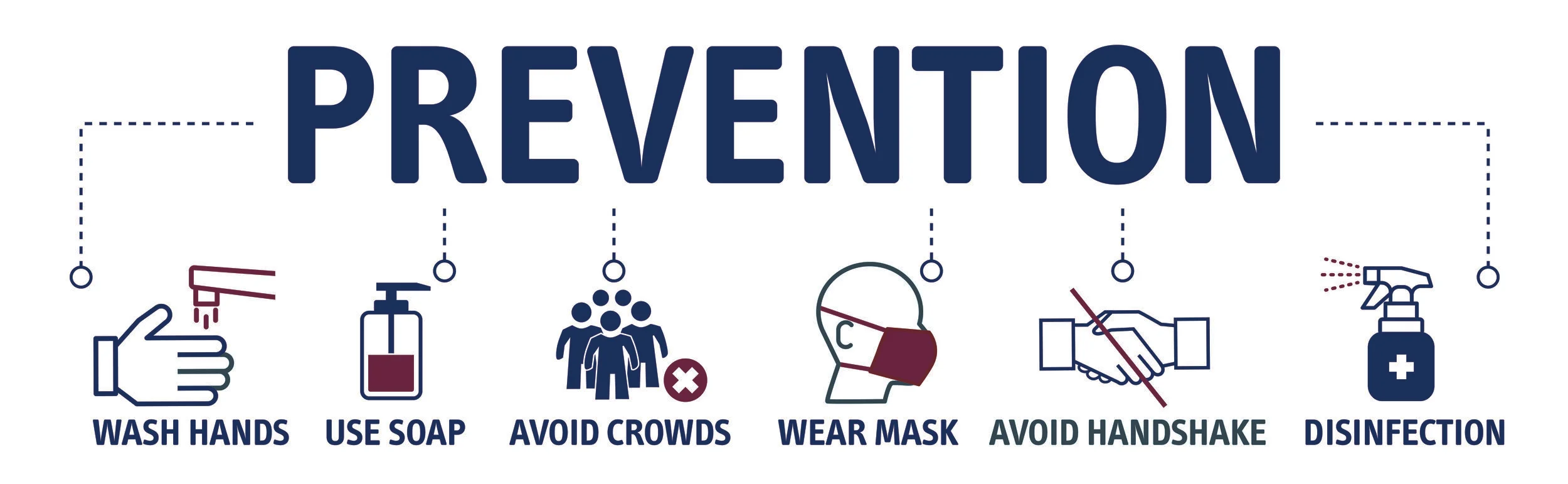
While most of the country is under shelter-in-place orders, many of our clients work in essential industries that must continue to provide vital services to the community. Therefore, it is imperative that they have the tools they need to keep their employees safe.
For those who must continue to operate, we’ve complied resources employers can use to implement COVID-19-specific written safety programs, provide employee training, and signage that can be posted in the workplace. Many of these resources are available in both English and Spanish.
Our goal is to provide the tools our clients’ needs to protect their employees.
Program Administration
Our risk management and safety partners have developed templates that employers can use, today.
COVID-19 Guide (English/Spanish)
This document should be reviewed by ownership and management for clarification on how to implement the COVID-19 Written Program.COVID-19 Guide Amendment A: Employee Has Tested Positive for COVID-19, Now What?
Amendment A provides instructions on what to do if your employee tests positive for the COVID-19 virus.
COVID-19 Health Screening Form (English/Spanish)
Each employee, should complete this form daily before performing any work. Foremen and supervisors should send these completed forms to management for record keeping purposes.COVID-19 Written Program (English/Spanish)
This program should be reviewed by all employees including ownership, management and workers in the field.COVID-19 Written Program Acknowledgement Form (English/Spanish)
All staff members must acknowledge they have read and understand the new program by signing the acknowledgement form.COVID-19 Checklist for Management (English/Spanish)
This checklist should be used daily for management to evaluate safety within the office for employees and identify any areas of concern.COVID-19 Checklist for Jobsites (English/Spanish)
This checklist should be used daily by foreman to evaluate the safety within the jobsite for employees and identify any areas of concern.COVID-19 Site-Specific Safety Plan
This site-specific safety plan may be required by a general contractor or site owner. It is a template employers can use to develop COVID-19 safety plans for specific jobsites where employees are working.
Training Staff
We have complied training that teach staff how to prevent the spread of the COVID-19 virus in the workplace through proper hygiene.
COVID-19 How to Prevent Catching & Spreading Coronavirus (English/Spanish)
Coronavirus and Workplace Hygiene (English/Spanish)
Safety Signage
In addition to proper training, signage is another way to remind employees of proper ways to prevent the spread of the COVID-19 virus within the workplace and among their co-workers.
CDC – Don’t’ Spread Germs at Work (English/Spanish)
CDC – Handwashing Sign (English/Spanish)
CDC – Handwashing: A Corporate Activity
COVID-19 – Do Not Enter If You Have Symptoms
COVID-19 – Eliminate the Spread Workday Flowchart
COVID-19 – How in infects and Spreads
COVID-19 – Prevention Practices – Why is soap better?
COVID-19 – Wash Hands Upon Entry Sign
To access these resources, login to the Risk Management Center and type in “COVID-19” or “Coronavirus” into the search box. If you already have an account but do not remember your login information, click the “Forgot Username or Password” link on the login screen.
We’ll continue to provide COVID-19 resources as they become available. Please visit www.ranchomesa.com/covid-19 for human resources content, insurance carrier statements and more.
3 Cyber Threats of Employee Telecommuting
Author, Sam Clayton, Vice President, Construction Group, Rancho Mesa Insurance Services, Inc.
The recent coronavirus (COVID-19) pandemic has created numerous challenges for both individuals and businesses all over the world. Last week, California Governor Gavin Newsom required all residents to “shelter-in place” and all “non-essential businesses” to cease “in-person” operations. In doing so and in order to keep their business operating, many employers transition employees to work remotely, otherwise known at Telecommuting.
Author, Sam Clayton, Vice President, Construction Group, Rancho Mesa Insurance Services, Inc.

The recent coronavirus (COVID-19) pandemic has created numerous challenges for both individuals and businesses all over the world. Last week, California Governor Gavin Newsom required all residents to “shelter-in place” and all “non-essential businesses” to cease “in-person” operations. In doing so and in order to keep their business operating, many employers transition employees to work remotely, otherwise known as Telecommuting.
While this approach is nothing new for many businesses, employers have been required to expedite these accommodations which creates unanticipated Cyber Liability Exposure.
Below are three online threats that remote workers should be aware of:
1. Secured WiFi Networks
Make sure that all employees are using a secure WiFi network. An unsecured or public WiFi network are prime targets for malicious parties to spy on internet traffic and collect confidential information.
2. Use of Personal Devices and Networks
Many employees will be forced to use personal devices and home networks for work. These devices often lack the tools built into company networks, such as strong antivirus software and firewalls. This lack of security could increase the risk of malware which may allow personal as well as confidential information being exposed.
3. Phishing Scams
Workers may receive emails from hackers impersonating a supplier/vendor or even someone within the organization to obtain confidential information or to transfer funds unknowingly.
In order to minimize these threats, companies should implement a written “Telecommuting Agreement” that outlines specific practices and procedures when employees are working remotely.
For information on implementing these and other internal policies, visit www.ranchomesa.com/COVID-19 and login to our RM365 HRAdvantage™ portal. Contact Alyssa Burley aburley@ranchomesa.com in our Client Services Department to learn more about the platform.
Healthcare Insurance Carriers Respond to COVID-19 Threat
Author, Alyssa Burley, Media Communications and Client Services Manager, Rancho Mesa Insurance Services, Inc.
As Rancho Mesa continues building resources for our clients and their employees across all sectors, we have compiled a list of healthcare insurance providers and their enhanced benefits designed to respond to the COVID-19 virus. Listed below is information related to COVID-19 testing when ordered by a physician.
Author, Alyssa Burley, Media Communications and Client Services Manager, Rancho Mesa Insurance Services, Inc.
As Rancho Mesa continues building resources for our clients and their employees across all sectors, we have compiled a list of healthcare insurance providers and their enhanced benefits designed to respond to the COVID-19 virus. Listed below is information related to COVID-19 testing when ordered by a physician.
Health insurers are responding to the Coronavirus threat by offering members no-cost screening and diagnostic testing.
| Carrier | Enhanced Benefits1 |
|---|---|
| Aetna | Screening/diagnostic testing provided at no cost. $0 copay telemedicine (for next 90 days2). Members diagnosed with COVID-19 will receive a care package with over-the-counter medications and cleaning supplies. CVS Health will help Aetna members that may be experiencing anxiety related to COVID-19 by: • opening Crisis Response Lines • providing plan sponsors with a Resources for Living toolkit • expanding 24/7 access to the Aetna Nurse Medical Line |
| Anthem Blue Cross | Screening/diagnostic testing provided at no cost. |
| Blue Shield of California | Screening/diagnostic testing provided at no cost. |
| Health Net | Screening/diagnostic testing provided at no cost. |
| Kaiser Permanente | Screening/diagnostic testing provided at no cost. |
| MediExcel Health Plan | Screening/diagnostic testing provided at no cost. |
| Oscar Health | Screening/diagnostic testing provided at no cost. Continuing to offer $0 telemedicine through Doctor on Call for most members. |
| Sharp Health Plan | Screening/diagnostic testing will be covered under the member's standard plan benefits. |
| Sutter Health Plan | Screening/diagnostic testing provided at no cost. |
| United Healthcare | Screening/diagnostic testing provided at no cost. Free Emotional-Support Help Line available for members suffering from fear or stress due to COVID-19, open 24/7. |
| Western Health Advantage | Screening/diagnostic testing provided at no cost. |
1 Screening/diagnostic testing when ordered by the physician. View full table here
2 Aetna’s website states a 90-day window as of March 2020, but the page is posted without a start/end date. Check with Aetna before receiving services
For additional resources and telemedicine information for each carrier, download the full PDF document.
Frustrated You’re Not Getting Paid on a Bonded Project?
Author, Matt Gaynor, Director of Surety, Rancho Mesa Insurance Services, Inc.
Getting paid on time by project owners is essential! As construction companies attempt to collect their account receivables, a frustration builds as the overdue payments stretch from 60, to 90, to over 120 days. You might have already paid certain suppliers or subcontractors, and now your cash flow is getting stretched because your receivable has been delayed. If this is a bonded project – you do have an additional avenue of recourse to collect.
Author, Matt Gaynor, Director of Surety, Rancho Mesa Insurance Services, Inc.

Getting paid on time by project owners is essential! As construction companies attempt to collect their account receivables, a frustration builds as the overdue payments stretch from 60, to 90, to over 120 days. You might have already paid certain suppliers or subcontractors, and now your cash flow is getting stretched because your receivable has been delayed. If this is a bonded project – you do have an additional avenue of recourse to collect.
You should first obtain a copy of the bond from the owner, municipality, or general contractor on the project. On a public works project this should not be difficult to obtain.
The next step is to work with your bond agent on the best way to contact the bonding company with your claim. Some bond companies will request you send an email to their claims department. Otherwise, your agent will have the bond company claim department address to ensure your claim goes to the proper area to receive attention. At Rancho Mesa, we have prepared letters that you can use as a sample to provide the bond company the proper information so your claim is not delayed.
The bond company should respond to you (usually within 20 days) and have you fill out their claim form and provide the backup documentation required to support your claim. They will then check with their insured to find out if the claim is legitimate and why payment has not been made.
If you would like a better understanding of how your professional bonding agent can assist you in filing a bond claim on a construction project, please feel free to contact me to ensure you are getting the proper direction to collect your money.
3 Reasons Your Pre-Renewal Meeting Is the Key to Your Success
Author, Sam Brown, Vice President, Human Services, Rancho Mesa Insurance Services, Inc.
Business leaders across the country head into each year with questions regarding the upcoming business insurance renewal process. Owners and officers alike rely on their insurance broker to help them navigate these uncertainties. What should a best practice renewal process look like?
Author, Sam Brown, Vice President, Human Services, Rancho Mesa Insurance Services, Inc.

Business leaders across the country head into each year with questions regarding the upcoming business insurance renewal process. Owners and officers alike rely on their insurance broker to help them navigate these uncertainties. Why should owners and officers expect a pre-renewal meeting?
Discuss important changes to your business
Between 120 and 90 days prior to the insurance renewal, expect your broker to produce a renewal packet designed to facilitate a face-to-face conversation. This important exchange is the perfect setting to update insurance applications, discuss additional coverages and explore any changes to the business. Without this crucial meeting, changes within your business may not be reflected in the documentation presented to the insurance carrier. And, that can be costly.
“When I met with Rancho Mesa three months prior to our insurance renewal, we game-planned a strategy to address a changing market as well as potential new programs and exposures,” comments Florence Andres, Director of Human Resources for North County Lifeline. “I feel comfortable that our broker strives to understand our business and mission. Every year, important decisions are made and questions are answered.”
Create a target premium and renewal strategy
In addition to application updates, it’s important to discuss a detailed review of losses, the current carrier’s performance and changes in the marketplace that will affect the renewal terms. During this meeting, the two parties agree on a proactive plan to approach the marketplace, target the renewal pricing and agree to a meeting 3 to 4 weeks prior to the renewal date to insure no last minute surprises.
How is this possible? By using industry benchmarking like Rancho Mesa’s StatTrac™ program, we are able to compare our client’s performance to their industry peer group.
“Benchmarking a client’s claims performance over five years provides important insight,” reflects Dave Garcia, Rancho Mesa’s President. “In addition to helping us set aggressive renewal pricing objectives, it also assists us in discovering underlining trends and root causes that help us create the appropriate service plan moving forward to correct those areas of need.”
Prepare for the hardening market
As we enter into a hardening property and casualty insurance market with the potential for escalating premiums, the need for a formal renewal meeting, done well in advance of the policy expiration date, should be expected by all business owners and officers. With the marketplace leading to increasing rates, higher retentions, and lower limit options, leaving an underwriter’s interpretation to chance is not an option. Your broker must paint an accurate picture of your company for the underwriter in a way that justifies the appropriate pricing.
If you have questions about the hardening insurance market or wish to learn more about Rancho Mesa and our “Above and Beyond” approach to customer satisfaction, please call me at (619)937-0175 or sbrown@ranchomesa.com.
What Employers Need to Know Before a Serious Injury Occurs in the Workplace
Author, Jim Malone, Workers’ Compensation Claims Advocate, Rancho Mesa Insurance Services, Inc.
Timely reporting of an employee’s work-related serious injury, illness or death can pose a challenge to the employer. As of January 1, 2020, these incidents (including any hospitalizations, unless the injured worker is admitted for medical observation or diagnostic testing) must be reported immediately to Cal/OSHA. Immediately means as soon as practically possible but not longer than 8 hours after the employer knows or, with diligent inquiry, would have known of the serious injury, illness or death.
Author, Jim Malone, Workers’ Compensation Claims Advocate, Rancho Mesa Insurance Services, Inc.

Timely reporting of an employee’s work-related serious injury, illness or death can pose a challenge to the employer. As of January 1, 2020, these incidents (including any hospitalizations, unless the injured worker is admitted for medical observation or diagnostic testing) must be reported immediately to Cal/OSHA. Immediately means as soon as practically possible but not longer than 8 hours after the employer knows or, with diligent inquiry, would have known of the serious injury, illness or death.
Monitoring the employee’s status at a hospital can be difficult if the employer has not put in place procedures and policies that will authorize a healthcare provider to disclose information that is covered by the Health Insurance Portability and Accountability Act (HIPAA). For example, the employer must follow-up with the hospital providing care to the injured employee to determine if the incident must be reported to Cal/OSHA. The employer will need to know if the employee has been moved from the emergency room and admitted to the hospital for in-patient treatment.
Ensuring policies and procedures are developed and implemented to restrict the use and disclosure of protected health information (PHI), are important elements of HIPAA compliance. If health information is used for purposes not permitted by the HIPAA Privacy Rule, or is deliberately disclosed to individuals not authorized to receive the information, there are possible penalties for the covered entity or individual responsible.
HIPAA permits PHI to be used for healthcare operations, treatment purposes, and in connection with payment for healthcare services. It can be argued that employers need this information to comply with State and Federal OSHA laws. Information may be disclosed to third parties for said purposes, provided an appropriate relationship exists between the disclosing covered entity (i.e., the hospital) and the recipient’s covered entity or business associate (i.e., the employee or employer). A covered entity can only share PHI with another covered entity if the recipient had previously or currently has a treatment relationship with the patient. The PHI has to relate to that relationship. In the case of a disclosure to a business associate, a Business Associate Agreement must have been obtained. Disclosures must be restricted to the minimum necessary information that will allow the recipient to accomplish the intended purpose of use.
Prior to any use or disclosure of health information that is not expressly permitted by the HIPAA Privacy Rule, one of two steps must be taken:
A HIPAA authorization must be obtained from a patient, in writing, permitting the covered entity or business associate to use the data for a specific purpose not otherwise permitted under HIPAA.
The health information must be stripped of all information that allows a patient to be identified.
Employers may consider obtaining signed business associate agreements or HIPAA authorizations from their employees before any injury or accident occurs. This will ensure they are able to get the appropriate protected medical information from the hospitals so they can report “serious injury or illness” accurately and timely to Cal/OSHA.
Therefore, it is extremely important for employers to learn the existing laws and new changes to these laws and have a plan of action in place to address these concerns before the next serious injury, illness, or death occurs.
Currently, reporting to Cal/OSHA can be made by telephone or e-mail. With these reporting changes, Cal/OSHA has also been directed to establish an on-line mechanism for reporting these injuries. It is always important to document when these incidents are reported to Cal/OSHA. Until an online mechanism is established, use of e-mail would be such method for documentation. Monitoring of the Cal/OSHA website for implementation of the on-line mechanism of reporting is also suggested.
For more information on how to report serious injuries and illnesses to Cal/OSHA, please reference “Cal/OSHA Updates: AB 1804 Changes How Injuries and Illnesses Are Reported.”
For more information about what is considered a serious injury or illness under Cal/OSHA, please reference “Cal/OSHA Updates: AB 1805 Changes Definition of Serious Injury or Illness.”
Strategies Employers Can Use to Combat the Coronavirus
Author, Jeremy Hoolihan, Account Executive, Rancho Mesa Insurance Services, Inc.
According to the U.S. Center for Disease Control and Prevention (CDC), there is no evidence of widespread transmissions of COVID-19 (commonly known as Coronavirus) in the United States, at this time. But, business owners should ask themselves, would my company be prepared in the event of an outbreak? Employers should be ready to implement strategies to protect their workforce while ensuring some semblance of business operations. The CDC has recommended the following strategies that employers can use, today.
Author, Jeremy Hoolihan, Account Executive, Rancho Mesa Insurance Services, Inc.

According to the U.S. Center for Disease Control and Prevention (CDC) there is no evidence of widespread transmissions of COVID-19 (commonly known as Coronavirus) in the United States, at this time. For the general American public, such as workers in non-healthcare settings, where it is unlikely that work tasks create an increased risk of exposure to COVID-19, the immediate health risk from the virus is considered low. Business owners should ask themselves, would my company be prepared in the event of an outbreak? The CDC recommends creating an Infectious Disease Outbreak Response Plan.
Employers should be ready to implement strategies to protect their workforce in the event of an outbreak of COVID-19 while ensuring some semblance of business operations. The CDC has recommended the following strategies that employers can use, today.
Actively encourage sick employees to stay home.
Employees who have symptoms of acute respiratory illness are recommended to stay home and not come back to work until they are free of a fever (100.4° or greater) without the use of fever reducing medicines. Employees should notify their supervisor and stay home if they are sick.
Ensure that your sick leave policies are flexible and consistent with public health guidelines and that employees are aware of these policies.
If your business utilizes contract of temporary employees, make sure the company you work with implements the same strategies as your business and recommends sick employees stay home.
Separate sick employees:
The CDC recommends that employees who appear to have acute respiratory illness symptoms (i.e. cough, shortness of breath) upon arrival to work or become sick during the day should be separated from other employees and be sent home immediately. Sick employees should cover their noses and mouths with a tissue when coughing or sneezing.
Emphasize staying home when sick, respiratory etiquette and hand hygiene by all employees:
Place posters that encourage staying home when sick, cough and sneezing etiquette, and hand hygiene at the entrance to your workplace and in other workplace areas where they are likely seen.
Provide tissue and no-touch disposal receptacles for use by employees.
Provide and encourage the use of alcohol-based hand sanitizer that contains at least 60-95% alcohol, or wash hands with soap and water for at least 20 seconds.
Perform routine environmental cleaning:
Routinely clean all frequently touched surfaces in the workplace, such as workstations, countertops, and doorknobs.
Provide disposable wipes so that commonly used surfaces can be wiped down by employees before each use.
Advise employees before traveling to take certain precautions:
Check the CDC’s Traveler’s Health Notices for the latest guidelines and recommendations for each country to which you will travel.
Advise employees to check themselves for symptoms of acute respiratory illness before starting travel and notify their supervisor and stay home, if they are sick.
Ensure employees who become sick while traveling or on temporary assignment understand that they should notify their supervisor and promptly call a healthcare provider for advice, if needed.
Additional measures in response to currently occurring sporadic importations of the COVID-19:
Employees who are well but who have a sick family member at home with COVID-19 should notify their supervisor and refer to CDC guidance for how to conduct a risk assessment of their potential exposure.
If an employee is confirmed to have the COVID-19 infection, employers should notify fellow employees of their possible exposure to COVID-19 in the workplace but maintain confidentiality as required by the Americans with Disabilities Act (ADA). Employees exposed to a co-worker with confirmed COVID-19 should refer to CDC guidance for how to conduct a risk assessment of their potential exposure.
Engage state and local health departments to confirm channels of communication and methods for dissemination of local outbreak information.
It is extremely important for business owners to know what they can do to minimize the spread of an infectious disease. It is equally as important to be prepared for an outbreak (whether it’s COVID-19 or any other potential infectious disease). Having an Infectious Disease Outbreak Response Plan can guide a business during these trying times. Rancho Mesa Insurance’s RM365 HR Advantage™ online portal offers instructions on “How to Handle an Infectious Disease Outbreak.” If you have any questions relating to this subject matter please feel free to reach out to Rancho Mesa Insurance.
Fire, Earthquakes, Leaks, Oh My! Property Insurance Market Continues to Worsen
Author, Chase Hixson, Account Executive, Human Services Group, Rancho Mesa Insurance Services, Inc.
Many of our clients have opted for alternative options to the standard insurance programs most are accustomed to purchasing to cover their property. These alternative approaches are allowing our clients to save money while still insuring their property to a level that they feel comfortable.

The 2018 California Wildfires brought unprecedented destruction and loss to the region. The total value of insurance claims is estimated to exceed $13 billion. While some have theorized that Pacific Gas & Electric (PG&E) will reimburse insurance companies as a result of its negligence to maintain trees and equipment that caused the destructive wild fires, many believe this will not be the case.
The total damages expected to fall on PG&E exceeds $30 billion, most of which will go towards municipalities before it goes to the insurance companies. This is omitting any lawsuits that have yet to be filed. Also, much of what PG&E will be required to pay will come from…its insurance policy.
Alternative Options to the Standard Market
Many of our clients have opted for alternative options to the standard insurance programs most are accustomed to purchasing to cover their property. These alternative approaches are allowing our clients to save money while still insuring their property to a level that they feel comfortable.
Many of these options are backed by the state of California and allow the client to have key coverage for fires, water leaks, vandalism, etc. while saving, in many cases, 60-80%. There is no limit to property size and geographic location on these alternative programs.
For more information about alternatives to standard insurance programs for property coverage, please contact Rancho Mesa Insurance Services at (619) 937-0164.
Don’t Trim Down Your Safety Procedures
Author, Rory Anderson, Account Executive, Landscape Group, Rancho Mesa Insurance Services, Inc.
Trees require regular maintenance to ensure their health and safety. Dead or diseased trees must be cut down in order to prevent injuries to people or damage to nearby structures. Maintaining trees through trimming is a dangerous task, even for experienced professionals. Unfortunately, accidents do occur. The three most common types of serious accidents experienced by tree trimmers are…
Author, Rory Anderson, Account Executive, Landscape Group, Rancho Mesa Insurance Services, Inc.
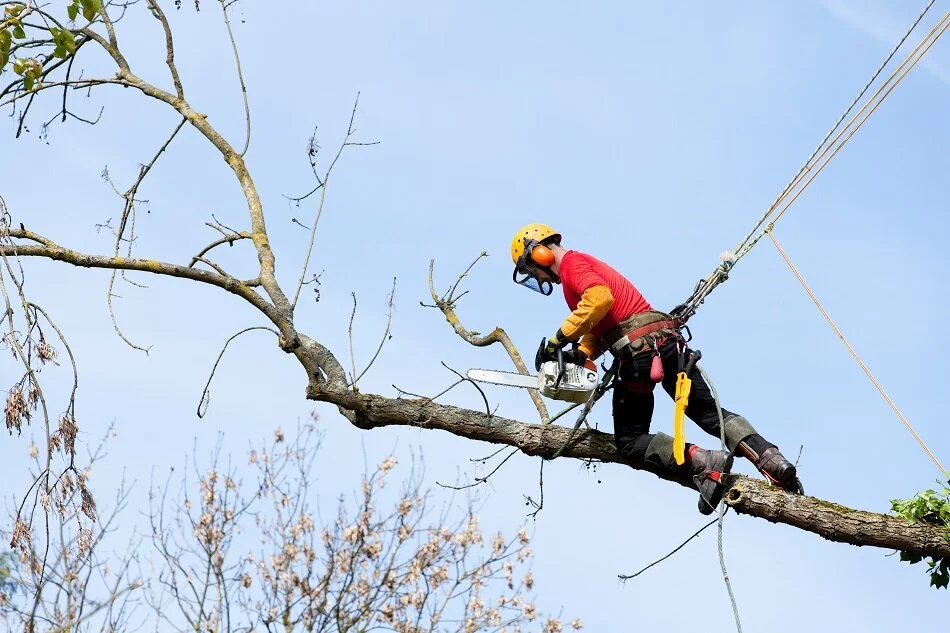
Trees require regular maintenance to ensure their health and safety. Dead or diseased trees must be cut down in order to prevent injuries to people or damage to nearby structures. Maintaining trees through trimming is a dangerous task, even for experienced professionals. Unfortunately, accidents do occur. The three most common types of serious accidents experienced by tree trimmers are falls, electrocution, and being struck by falling objects.
Falls
Falls are a common accident for tree trimmers. They can occur by slipping off of a ladder, falling from a roof, or falling out of a tree. The typical fall victim is unsecured or not properly secured. Using proper personal protective equipment is essential in preventing falls.
Electrocution
The risk of electrocution is very high when working around power lines. Some trees are planted near overhead power lines and there is a risk of electrocution to anyone trimming branches. The worker may accidentally touch the wires, or a falling branch could knock down the wires resulting in a tree trimmer touching the lines. The most common type of victim violates minimum approach distances and makes contact with the power lines through a conductive tool/object such as pruning shears. Training employees on minimum approach distances and proper trimming techniques when working around power lines can help prevent electrocution.
Falling Objects
According to the Centers for Disease Control, being struck by a falling object is the most reported tree trimming accident. A falling object is typically an entire tree or its branches/limbs, but it could also be loose equipment like a chain saw. Most victims are struck by a tree or tree limb after it falls in an unexpected direction; however, careless accidents do occur in specified drop zones. Communication between employees in the tree and on the ground is imperative to ensure the safety of all.
Tree trimming professionals face dangerous hazards on a daily basis and it is extremely important to take precautionary safety measures to make sure that they are doing everything they can to reduce risk. Safety training materials for tree trimmers are available through the Risk Management Center.
For information about Rancho Mesa's TreeOne™ program, contact Rory Anderson at (619) 937-0164.