

Industry News

Promoting Safe Behaviors in the Workplace
Author, Jeremy Hoolihan, Account Executive, Rancho Mesa Insurance Services, Inc.
Safety awareness is one of the most important factors in reducing workplace injuries. There are approximately three million workplace injuries, every year. This amounts to roughly 8,000 injuries per day, 350 per hour, or 6 injuries per minute. Many of these injuries are preventable. Unsafe behaviors or decisions are usually the most common contributing factors. If employees are unaware of hazards or not motivated to follow safety protocol, their behavior will expose them even more.
Author, Jeremy Hoolihan, Account Executive, Rancho Mesa Insurance Services, Inc.
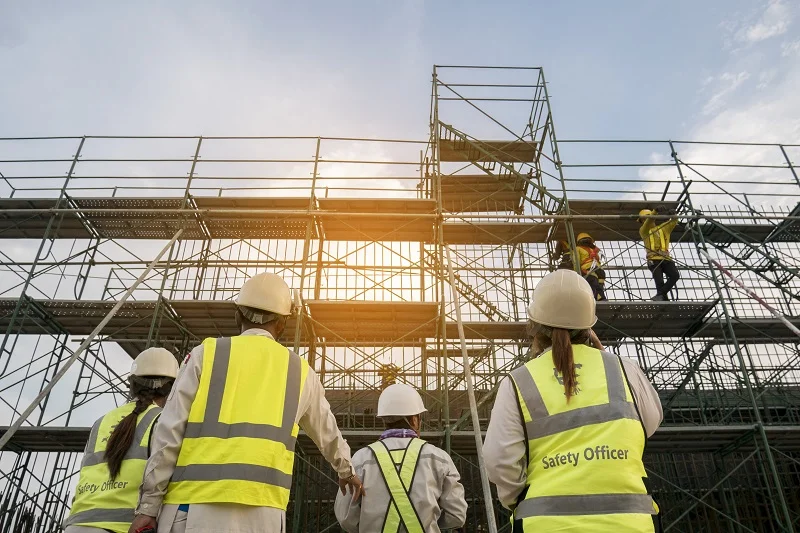
Safety awareness is one of the most important factors in reducing workplace injuries. There are approximately three million workplace injuries, every year. This amounts to roughly 8,000 injuries per day, 350 per hour, or 6 injuries per minute. Many of these injuries are preventable. Unsafe behaviors or decisions are usually the most common contributing factors. If employees are unaware of hazards or not motivated to follow safety protocol, their behavior will expose them even more.
Promoting safe behavior in the workplace can be one of the most impactful ways of reducing injuries. I encourage business owners to go above and beyond the required controls and measures such as engineering, administrative, and personal protective equipment (PPE) and promote safe behaviors and a safe work environment. Below are examples of ways ownership and management can promote safe behaviors.
Conduct frequent safety meetings with employees and encourage participation. Discuss previous injuries or near misses with your employees to identify the root cause and any corrective actions that are necessary. Be aware that not all corrective actions are readily accepted by employees, especially those seasoned employees that are set in their ways. It is important to listen to their concerns, analyze and modify the procedure or task so that the employee will buy into the changes and not be tempted to break the rules and work unsafely.
Give recognition to employees who are performing tasks safely and demonstrate proper behaviors. A little bit of recognition amongst your peers can be extremely influential and can further promote safety in the workplace.
Involve the employees in identifying and correcting hazards in the workplace. This can promote self-worth in an employee. Your employees are your eyes and ears in the field and they may identify an overlooked workplace hazard. It is especially impactful when the corrective action was a hazard they identified on their own.
Perform safety observations to encourage safe behaviors. While supervisory observations are important, business owners should also consider peer to peer safety observations. By collaborating with employees and involving them in the safety program, it will help them buy into any changes that are necessary further promoting workplace safety.
Having ownership and management consistently express their concerns for their employees well-being and safety is another way to promote safe behaviors. As a business owner, communicating to your employees that your main concern is their safety can drastically change the culture of a business. Reminding your employees that you want them to go home safely each day, goes a long way.
Promoting safe behaviors in the workplace starts with ownership and management, but is executed daily by the workforce. Providing sound policies and procedures relating to safety, along with a strong collaboration between ownership, management, and staff can drastically improve safety in the workplace and promote a safety culture.
Rancho Mesa Insurance Services, Inc. is a strong advocate for workplace safety. We like to take a risk management approach with our clients and prospects to develop a program that fits their needs. Please feel free to reach out to me, Jeremy Hoolihan, at (619) 937-0174 to see how Rancho Mesa can improve your risk profile.
Understanding Your Claims: What Do You Have To Lose?
Author, Daniel Frazee, Executive Vice President, Rancho Mesa Insurance Services, Inc.
Claims happen. They come in all shapes and sizes, from all types of parties, and can cost your company in many different ways. An important aspect of managing the costs of risk start with gaining a clear understanding of your claims. Our clients are always looking to improve their bottom line. This article focuses on just one piece of the pie chart; workers compensation claims. Understanding the nuances of these cases can create measurable plans in the future to reduce frequency and severity of claims and ultimately lower your costs.
Author, Daniel Frazee, Executive Vice President, Rancho Mesa Insurance Services, Inc.

Claims happen. They come in all shapes and sizes, from all types of parties, and can cost your company in many different ways. An important aspect of managing the costs of risk start with gaining a clear understanding of your claims. Our clients are always looking to improve their bottom line. This article focuses on just one piece of the pie chart; workers compensation claims. Understanding the nuances of these cases can create measurable plans in the future to reduce frequency and severity of claims and ultimately lower your costs.
DIG UP THE ROOTS
Perhaps the most common problem solving method for identifying causes of problems or faults is referred to as a “Root Cause Analysis.” As someone who likely manages many facets of your business, developing systems that analyze failures of a process makes complete sense. Once a claim occurs, initiate an Accident Investigation that is meant to uncover all of the small details that ultimately led to the injury or incident. In many cases, a Best Practices approach involves this same process for “near miss” incidents. That is, perform the same process despite the fact than injury did not actually result from the incident. This allows your company to refine the approach, improve the analysis, and develop training modules addressing the failure(s).
MORE QUESTIONS LEAD TO ANSWERS...
When claims occur, proactive business owners build a list of specific questions that deliver uncensored facts. Those facts build a story and allow your team a clear view of what really happened. Some examples of questions that can be used by your team are listed below:
How long had this injured worker been employed with us before the claim occurred?
Was the employee following protocol when the injury occurred?
Did the claim occur at the beginning or end of the day?
How quickly did our team provide assistance and get him or her the care they needed?
How quickly was the claim reported to our insurance company?
Have we had incidents like this in the past?
ROLE PLAYING EXAMPLES
While role playing actual incidents and scenarios is not factual, it helps your team walk down a path to understand “what if” scenarios and forces discussion on how to address issues.
Example: Employee ‘A’ was injured when he fell from a ladder and fractured his leg. He had been employed for only two months. The injury that occurred was caused by a lack of proper training as the ladder was not properly secured. This claim occurred in the early morning and the area surrounding the ladder was wet. The team reacted quickly and was able to transfer the injured worker to an emergency room in less than an hour. The claim was reported 3 days from the incident. There have been two other similar “near misses” with ladders that did not result in injury.
Understanding your claims is a vital step in preventing future incidents. An investigation of an incident or near miss can uncover the root cause, explain the circumstances surrounding the incident, and help to identify scenarios and prevention plans. To learn more about understanding your claims, register for the Accident Investigation and Analysis training in Rancho Mesa’s Risk Management Center.
Stay Off OSHA's Radar with an Effective Ladder Safety Program
Author, Casey Craig, Account Executive, Construction Group, Rancho Mesa Insurance Services, Inc.
Year after year OSHA publishes the “Top 10 Most Cited Violations” and it always seems to include violations dealing with falls. Fall protection, scaffolding, ladders, and fall protection (training requirements) all made this list and all of them have been on this list perennially for over a decade. How can a company that is using ladders keep from becoming just another name on the list of violators? How can you ensure that your employees are using provided equipment properly?
Author, Casey Craig, Account Executive, Construction Group, Rancho Mesa Insurance Services, Inc.
Year after year OSHA publishes the “Top 10 Most Cited Violations” and it always seems to include violations dealing with falls. Fall protection, scaffolding, ladders, and fall protection (training requirements) all made this list and all of them have been on this list perennially for over a decade. How can a company that is using ladders keep from becoming just another name on the list of violators? How can you ensure that your employees are using provided equipment properly?

The biggest mistake made with work at height is letting your employees perform their work using materials that are not meant for that job. Employees finding a chair, bucket, or truck to stand on to get those couple extra feet are the easiest ways to lead to an accident. From A-frames to extensions and step stools, there is a perfect tool for the job at hand. It does take a little preparation before sending your employees onto the job site. Having your supervisors make sure ladders are properly set up and fully functional to ensure your employees safety is as important as training your employees how to use a ladder.
Ladders have not miraculously become safer over the years. The materials used in making ladders may have changed, but the injuries that occur from using them have been the same. Here are some common misuses:
Trying to overextend reach at the top of a ladder, instead of taking the time to get all the way to the bottom to move the ladder and maintain three points of contact.
Stepping off from the third rung instead of keeping three points of contact all the way to the ground.
Setting the ladder at the wrong angle before climbing (70-75 degrees is desirable).
Trying to move a 70 pound ladder without asking for help and losing control.
There are countless ways that rushing or not paying attention to detail can leads to injuries. The American Ladder Institute (ALI) claims all injuries that occur on a ladder are preventable with the proper attention to detail. If you know that a ladder has a bent rung, or the frame is compromised, the risk is not worth having an employee get on that ladder. Ladders are manufactured to withhold four times the weight they are rated for, but if damaged there is no telling what could make it catastrophically defective. Make sure that there is enough tread on the foot of the ladder to keep your ladder in place while working at height.
Now that we know a little about our exposure, let’s see what we can do to fix the problem. Making sure you have the right equipment is by far the most important step to keep you from running into a violation. Keep your employees trained in proper ladder safety, and only let the employees that have been trained on a ladder. Properly tie off ladders, maintain your equipment over time, and attend ladder safety seminars regularly. One huge tool that is underutilized in the construction industry is having a consultation meeting with OSHA. Have them come out and inform you of things you could be doing better without the worry of being fined. OSHA is meant to be a tool to keep your employees safe, don’t hesitate to use them.
For questions about ladder safety seminars or what policies may match your company’s risk, please contact Rancho Mesa Insurance Services, Inc. at (619) 937-0164. We look forward to helping better your risk profile.
4 Essential Tools For Managing Your Company's Risk
Author, Alyssa Burley, Client Services Coordinator, Rancho Mesa Insurance Services, Inc.
Risk Management is the identification, analysis, assessment, control, and avoidance, minimization, or elimination of unacceptable risks. Companies manage their risk through what is known as an Injury and Illness Prevention Program (IIPP). As a business owner, supervisor or manager, there are tools available to assist in risk management endeavors.
Author, Alyssa Burley, Client Services Coordinator, Rancho Mesa Insurance Services, Inc.
Risk Management is the identification, analysis, assessment, control, and avoidance, minimization, or elimination of unacceptable risks. Companies manage their risk through what is known as an Injury and Illness Prevention Program (IIPP). As a business owner, supervisor or manager, there are tools available to assist in risk management endeavors.
“Injury and illness prevention programs are systems that can substantially reduce the number and severity of workplace injuries and illnesses while reducing costs to employers,” according to OSHA.
Below are four tools your company can use to proactively manage the IIPP.
Training
Access to a robust bilingual database of both online and offline trainings is essential to ensuring employees are up to date on required and supplemental training. Weekly training shorts (e.g., tailgate topics, safety shorts) that are industry specific and relevant keeps employees focused on safety and reinforces a safety culture within the company.
“Training in the safe way for workers to do their jobs well is an investment that will pay back over and over again in fewer injuries and illnesses, better morale, lower insurance premiums and more,” according to OSHA’s training requirements document.
Tracking of Employee Training
Maintaining employee training documentation is vital for ensuring employees are trained on required topics and in regular intervals. Having an electronic tracking system can streamline the process and allow management to generate reports and search records from any device with internet access.
According to OSHA’s documentation, “it is a good idea to keep a record of all safety and health training. Documentation can also supply an answer to one of the first questions an incident investigator will ask: ‘Did the employee receive adequate training to do the job?’”
To learn more about OSHA training requirements, review Training Requirements in OSHA Standards.
Incident Tracking and OSHA Reporting
Documenting near-misses, injuries, and accidents can keep your company OSHA compliant while helping to prevent incidents in the future. Making sure supervisors complete a thorough investigation and collect witness statements at the time of the incident can also ensure hazards are addressed immediately. Electronic documentation of a near-miss or incident creates a standardization of data that is collected, allows for trend reporting, and electronic submission of OSHA 300A Summary data.
Written Job Hazard Analysis
A job hazard analysis (JHA) identifies the dangers of specific tasks in order to reduce the risk of injury to workers. JHAs are important for managing risk because they help to identify hazards which can be reduced or eliminated before an employee is hurt. Once a JHA is established, management should observe and document their findings and any remedies that are made.
Risk Management starts with a written IIPP, but it is up to management to implement and utilize the available tools to make it effective. Contact Rancho Mesa’s Client Services Department at (619) 438-6869 to learn more about the Risk Management Center platform.