

Industry News

Using Rancho Mesa’s KPI Dashboard to Improve Your Workers’ Compensation Program
Author, Drew Garcia, Vice President, Landscape Group, Rancho Mesa Insurance Services, Inc.
Landscape business leaders can now provide their management team with resources to better support their workers’ compensation program. Rancho Mesa offers its landscape, lawn care and tree care customers an industry specific Workers’ Compensation Key Performance Indicator (KPI) that can be used to help benchmark a company’s experience modification rate (i.e., Ex-Mod, Experience Mod), and the underlying performance trends that can help stakeholders stay informed.
Author, Drew Garcia, Vice President, Landscape Group, Rancho Mesa Insurance Services, Inc.

Landscape business leaders can now provide their management team with resources to better support their workers’ compensation program. Rancho Mesa offers its landscape, lawn care and tree care customers an industry specific Workers’ Compensation Key Performance Indicator (KPI) that can be used to help benchmark a company’s experience modification rate (i.e., Ex-Mod, Experience Mod), and the underlying performance trends that can help stakeholders stay informed.
The KPI is an easy to read one-page document made up of dials and dashboards so that the business leaders can easily absorb the most critical pieces of information.
Three Use cases
Landscape businesses can use the KPI to help set annual leading indicator goals. These goals, like the completion of a certain number of toolbox talks, safety observations, and online trainings can all be tracked in Rancho Mesa’s SafetyOne™ Platform. By using the lagging information provided in the KPI, any business can then set goals to address corrections that the KPI discloses.
The Ex-Mod can be used as a pre-qualification tool for bidding new work or maintaining certain contracts. With the KPI dashboard, landscape businesses will always know their current, 10 previous, and estimated future Ex-Mods.
Underlying information such as frequency and severity rates can easily be understood through the StatTrack™ portion of the KPI dashboard. These rates are viewed as trends and allows the business to make timely corrections.
Empower your leadership team to better understand your workers’ compensation program by providing them with the tools they need to effectively make a difference.
Learn more about the KPI Dashboard on Rancho Mesa’s Mod Doctor webpage.
Understanding Why Your Building’s Leaky Roof Claim Might Be Denied
Author, Jack Marrs, Associate Account Executive, Rancho Mesa Insurance Services, Inc.
Leaky roofs can be a major headache for commercial property owners, often leading to significant damage and costly repairs. Understanding how insurance policies respond to these situations is crucial in navigating the claims process.
Author, Jack Marrs, Associate Account Executive, Rancho Mesa Insurance Services, Inc.

Leaky roofs can be a major headache for commercial property owners, often leading to significant damage and costly repairs. Understanding how insurance policies respond to these situations is crucial in navigating the claims process.
When is a Leaky Roof Covered?
Insurance policies typically cover leaky roofs under certain conditions. The key factor is whether the leak resulted from an unexpected and accidental event, such as a storm causing direct damage to the roof. For instance, if a storm creates a hole or crack in your roof, allowing water to penetrate and cause damage, your insurance policy will likely cover the repairs.
When is a Leaky Roof Not Covered?
On the other hand, if the leak is due to a lack of maintenance or general wear and tear over time, the insurance carrier will typically deny the claim. Routine maintenance and upkeep are the property owner's responsibility, and insurance policies are not designed to cover damages resulting from negligence or normal wear and tear. Also, the age of the roof can determine if the claim will not be covered.
According to the Raizner Slania lawfirm, “In most cases, roof damage on a roof that is 20 years old or older, which accounts for the lifespan of most shingle roofs, will not be covered. A roof on a commercial property can also be deemed too old if one of the lower layers is 20 years old and a new layer was simply added to it rather than the whole roof being replaced.”
Ensuring That Your Claim is Covered
To ensure that your insurance claim for a leaky roof is covered, it is important to document the cause of the damage. If a storm has caused the damage, take photos of the roof and any other affected areas. These photos can serve as evidence when you file your claim. Additionally, maintaining your roof regularly and addressing minor issues before they worsen can help you avoid the claim being denied. Keep records of any maintenance work and inspections conducted on your roof as these documents will be helpful if you need to prove that the damage was not due to lack of upkeep/maintenance.
Remember, if a storm directly causes the damage that leads to a leak, your insurance policy will likely cover the repairs. However, if the leak is due to poor maintenance or normal wear and tear, your insurance policy will most likely deny the claim. By staying up to date with roof maintenance and documenting any storm related damage, you can feel confident your claim will be covered.
To discuss your organization’s potential exposure to property claims, contact me at (619) 486-6569 or jmarrs@ranchomesa.com.
Understanding the Importance of Your Workers’ Compensation Unit Stat Filing Date
Author, Greg Garcia, Account Executive, Rancho Mesa Insurance Services, Inc.
Imagine you are a landscaping company owner and your workers’ compensation policy just renewed January 1st. You are probably thinking, now what? Well, the next date that should be on your radar is June 30th, your unit stat date.
Author, Greg Garcia, Account Executive, Rancho Mesa Insurance Services, Inc.

Imagine you are a landscaping company owner and your workers’ compensation policy just renewed January 1st. You are probably thinking, now what? Well, the next date that should be on your radar is June 30th, your unit stat date. Each unit stat date varies and with the actual filing taking place approximately 180 days from when the workers’ compensation policy was placed. The unit stat date is when all workers’ compensation claim activity is frozen, along with audited payroll information, and sent to the rating bureau so the experience modification (XMOD) can be calculated.
As a reminder, your XMOD is determined by comparing your loss experience and historical payroll to others with similar class codes. The XMOD is derived from three years of audited payroll and losses suffered over those years.
If a particular claim is closed after your unit stat date, that claim will impact your next XMOD at the total incurred value before the unit stat date. Therefore, if you have a claim that can either be closed or reserves reduced, it is critical that this is done ahead of the unit stat date. Staying up to date with your claims adjuster and insurance professional ahead of the filing can quite literally save you points on your XMOD, which in turn can help to reduce your worker’s compensation annual premium.
Using one of the metrics on our proprietary KPI Dashboard, our clients are able to track the number of days until their unit stat date. Combining this KPI tool with our dedicated workers’ compensation claim advocate services at prescheduled claims reviews throughout the policy year helps to close the claims or mitigate claim costs in advance of the filing. This strategy can dramatically lower overall insurance costs.
If you have any questions about the unit stat or would like me to put together a custom KPI dashboard for your team, you can contact me at ggarcia@ranchomesa.com.
Beyond Insurance: Employer Strategies to Prevent Wage and Hour Claims
Author, Sam Brown, Vice President, Human Services Group, Rancho Mesa Insurance Services, Inc.
It was June 86 years ago, Congress and President Franklin D. Roosevelt (FDR) signed into law the Fair Labor Standards Act of 1938 (FLSA). In the words of FDR, the FLSA ensured “a fair day’s pay for a fair day’s work.”
Author, Sam Brown, Vice President, Human Services Group, Rancho Mesa Insurance Services, Inc.

It was June, 86 years ago, when Congress and President Franklin D. Roosevelt (FDR) signed into law the Fair Labor Standards Act of 1938 (FLSA). In the words of FDR, the FLSA ensured “a fair day’s pay for a fair day’s work.”
While the FLSA immediately raised wages for hundreds of thousands of workers and improved working conditions, it has also given rise to a specific type of costly allegation, wage and hour claims.
Wage and hour claims arise when non-salaried or non-exempt employees make a formal complaint stating they were unfairly compensated for work performed.
In 2021, about 19,000 California workers filed unpaid wage claims for a total of more than $330 million, according to Cal Matters.
Wage and Hour Liability Allegations include:
Underpayment of overtime
Miscalculation of wages
Refusal to allow employee breaks
Expecting off-the-clock work
Not paying employees regularly
Refusal to pay exempt employees for absences
Not paying for time required to put on or remove protective gear or clothing
Adhering to federal minimum pay guidelines when state guidelines warrant higher pay
Prevention is always the best line of defense against wage and hour claims. Beyond purchasing insurance, which will typically provide $100,000 to $200,000 of defense costs, employers can mitigate risk by:
Assessing the risk within the company, starting with the State and Local Government Self-Assessment Tool available from the U.S. Department of Labor’s Wage and Hour Division.
Review employee classification as to “exempt” and “non-exempt” status to ensure compliance with guidelines under the FLSA and applicable state laws.
Consult with an attorney or consultant regarding job descriptions and how overtime is calculated.
Review and confirm proper classification for independent contractors.
Keep payroll records for all employees and establish a mechanism for tracking non-exempt employees’ hours.
Review practices and procedures to ensure compliance with meal and rest periods as applicable to state law.
Allow an outside HR firm to conduct an external audit of the employer’s wage and hour practices.
Enacting policies that prohibit off-the-clock work
Navigating employment law and the FLSA will help employers earn good favor among workers and help to avoid costly wage and hour lawsuits. Understanding common wage and hour allegations is a critical step in this process, but may not be enough.
If you have questions about how insurance policies may supplement your existing risk management plan, contact me at sbrown@ranchomesa.com or (619) 937-0175.
Focus on Frequency with a Small Work Comp Deductible
Author, Drew Garcia, Vice President of the Landscape Group, Rancho Mesa Insurance Services, Inc.
Economies of scale create leverage for landscape businesses as they grow. The Bureau of Labor Statistics (BLS) 2022 table of incident rates notes that the landscape industry has an incident rate of 3.4 per 100 full time employees. Landscape is classified by BLS under Administrative and Support and Waste Management and Remediation Services; this sub class has an incident rate of 1.9. The average for all other industries is 3.0.
Author, Drew Garcia, Vice President of the Landscape Group, Rancho Mesa Insurance Services, Inc.

Economies of scale create leverage for landscape businesses as they grow. The Bureau of Labor Statistics (BLS) 2022 table of incident rates notes that the landscape industry has an incident rate of 3.4 per 100 full time employees. Landscape is classified by BLS under Administrative and Support and Waste Management and Remediation Services; this sub class has an incident rate of 1.9. The average for all other industries is 3.0.
With frequency typically being high for the landscape industry, it’s important to continue to focus on ways to minimize injury, prevent severity and focus on return to work opportunities when an injury does arise.
While commercial auto, general liability, and umbrella have been stuck in a hard market, workers’ compensation has relatively been in a soft market. Combined ratios for private insurance carriers on workers’ compensation was published at 87% in 2021 and 84% in 2022, according to the National Council on Compensation Insurance (NCCI) State of the Line Report. This impact on carrier profitability has led to decreased pressure on rates for landscape employers across the country.
Like all things cyclical, it is expected that the workers’ compensation market will reverse and begin to harden.
As the market hardens, landscape employers operating in the middle market (i.e., businesses with an annual workers’ compensation premium between $300,000 and $1,500,00) should consider a small workers’ compensation deductible to tackle the high likelihood of frequency.
Small deductibles vary by carrier from $1,000 to $25,000. Collateral might be required and the ability to apply an aggregate to the policy will also vary by carrier.
A small deductible allows the landscape company an opportunity to take the predicable layer of injury cost while still transferring severity to the insurance carrier.
As your company grows and/or market conditions change, consider a small workers’ compensation deductible to maximize your insurance program.
To discuss implementing this strategy for your business, contact me at (619) 937-0200 or drewgarcia@ranchomesa.com.
Empower Your Crew: The Importance of Heat Illness Training and Preparedness
Author, Greg Garcia, Account Executive, Rancho Mesa Insurance Services, Inc.
As the calendar turns to April and warmer weather into spring time, now is a great time to take a look at your current Heat Illness Prevention Plan (HIPP), as well as make sure all crew members are up to date on their heat illness training.
Author, Greg Garcia, Account Executive, Rancho Mesa Insurance Services, Inc.

As the calendar turns to April and warmer weather into spring time, now is a great time to take a look at your current Heat Illness Prevention Plan (HIPP), as well as make sure all crew members are up to date on their heat illness training.
As the months get hotter, it is important to remember three things: water, rest and shade. It is crucial that crews have access to all three. Adequate water for all crew members, regular rest periods, and identified shade areas around the jobsite or a portable canopy are all considered best practices, and when temperatures heat up, are often a requirement.
With rising temperatures, we anticipate, as has been the case in the past, there will also be a rise in heat-related injuries within the landscape industry. Having an HIPP not only will keep you compliant with state regulations, but more importantly keep your employees safe.
There are certain criteria and templates that all HIPP need to follow. For example, they need to be written, they need to be available in English as well as any other languages that are used at the company. And finally, it needs to be available at the worksite. The HIPP should include:
Procedures supplying and accessing water
High heat procedures
Emergency response
Acclimatization methods and procedures.
It is also important that leaders including foreman keep a regular eye on the crew, looking for signs of heat stress. The signs could be as minor as rashes or cramping to as severe as fainting. Any signs of this with a crew member should be reported immediately.
Knowing the hotter months are coming, now is a great time to dive into your company’s HIPP, make any updates to it, and begin to stress the importance of heat illness prevention.
Rancho Mesa clients can train their employees on heat stress and heat illness prevention with both online courses in English and Spanish, and a variety of toolbox talks in the SafetyOne™ website and mobile app. Clients can distribute their HIPP through the mobile app ensuring foreman and crews have access to the document along with any other related resources when they’re at the jobsite.
Every year, Rancho Mesa hosts Heat Illness Prevention workshops and webinars to assist in educating clients and their employees. A recorded version of the workshop can be accessed online.
Contact me at ggarcia@ranchomesa.com or (619) 438-6905 to discuss how to mitigate heat illness and other potential risks.
Litigation Funding Contributes to Higher Claim Amounts and Premiums
Author, Sam Brown, Vice President, Human Services Group, Rancho Mesa Insurance Services, Inc.
The first quarter of 2024 is in full swing and the insurance industry is already feeling the rising cost of insurance claims, often referred to as social inflation. Commonly discussed reasons for social inflation include socioeconomic, legal, and behavioral trends that produce costly lawsuits, according to research conducted by The Institutes. In addition to these familiar observations, a relatively new factor is now playing a role in large lawsuits: third-party litigation financing.
Author, Sam Brown, Vice President, Human Services Group, Rancho Mesa Insurance Services, Inc.

The first quarter of 2024 is in full swing and the insurance industry is already feeling the rising cost of insurance claims, often referred to as social inflation. Commonly discussed reasons for social inflation include socioeconomic, legal, and behavioral trends that produce costly lawsuits, according to research conducted by The Institutes. In addition to these familiar observations, a relatively new factor is now playing a role in large lawsuits: third-party litigation financing.
Litigation financing refers to the practice of private equity companies, hedge funds, and other investors taking a calculated risk to invest in lawsuits, according to The State Bar of California Standing Committee on Professional Responsibility and Conduct. The Insurance Information Institute estimates that $30 billion will be invested in litigation financing by 2028.
A simple example that typifies the arrangement is an investor paying for legal expenses in exchange for a portion of the settlement. A plaintiff may agree to this in hopes of increased damage awards.
The downsides to litigation financing include prolonged litigation, litigants receiving only a fraction of the award, litigants demanding higher settlements to cover the cost of the investments, and funding agreements impacting an attorney’s judgement when representing a client. The ultimate downside occurs when underwriters charge higher policy premiums or reduce appetite, making coverage very difficult or impossible to obtain.
As the practice of third party litigation financing grows more common, legislation and regulation must catch up and may need to implement guidelines to better protect the interests of both policyholders and insurers.
If you have questions regarding social inflation and the impact on your policy premiums, please contact me at 619-937-0175 or sbrown@ranchomesa.com.
California Rainy Season Offers Online Training Opportunity for Employees
Author, Megan Lockhart, Client Communications Coordinator, Rancho Mesa Insurance Services, Inc.
Californians have experienced record storms this year along with other parts of the United States. However, with Spring on the horizon, construction companies are preparing for rainier months still ahead. When job sites close due to rain and flooding, it's a good opportunity for employees to use that time to revisit safety and operational skills with online training.
Author, Megan Lockhart, Client Communications Coordinator, Rancho Mesa Insurance Services, Inc.

Californians have experienced record storms this year along with other parts of the United States. However, with Spring on the horizon, construction companies are preparing for rainier months still ahead. When job sites close due to rain and flooding, it's a good opportunity for employees to use that time to revisit safety and operational skills with online training.
When the weather is hazardous and construction jobs must close, it's common for employers to send workers home. This can cause a financial setback not only for the business, but also for the employees who were depending on working those hours.
“On days where it would be unwise to expect employees to get up on a roof or scale a building wall, offer virtual training sessions so your employees can still earn a living, and you skill up your workforce,” Eric Mochnacz, Director of Operations at Red Clover HR, said in his article.
To prepare for days when the weather restricts jobsite work, employers can compile a list of training that can be assigned to employees, such as operation skills and safety procedures relevant to their work in the field.
“There’s lots of opportunity and potential in planning for bad weather days by building a strong library of virtual training,” Mochnacz said. “When your ability to meet business goals is directly tied to the weather, having contingency plans is crucial for business continuity.”
Rancho Mesa offers tools for employee online training via both the SafetyOne™ platform and the RM365 HRAdvantage™ Portal. SafetyOne holds a library of online training on a wide range of topics in construction safety. RM365 HRAdvantage Portal online training topics include professional development and compliance.
For more information on utilizing Rancho Mesa’s resources, contact your Client Technology Coordinator.
Optimizing Landscapers’ Commercial Auto Insurance
Author, Drew Garcia, Vice President of the Landscape Group, Rancho Mesa Insurance Services, Inc.
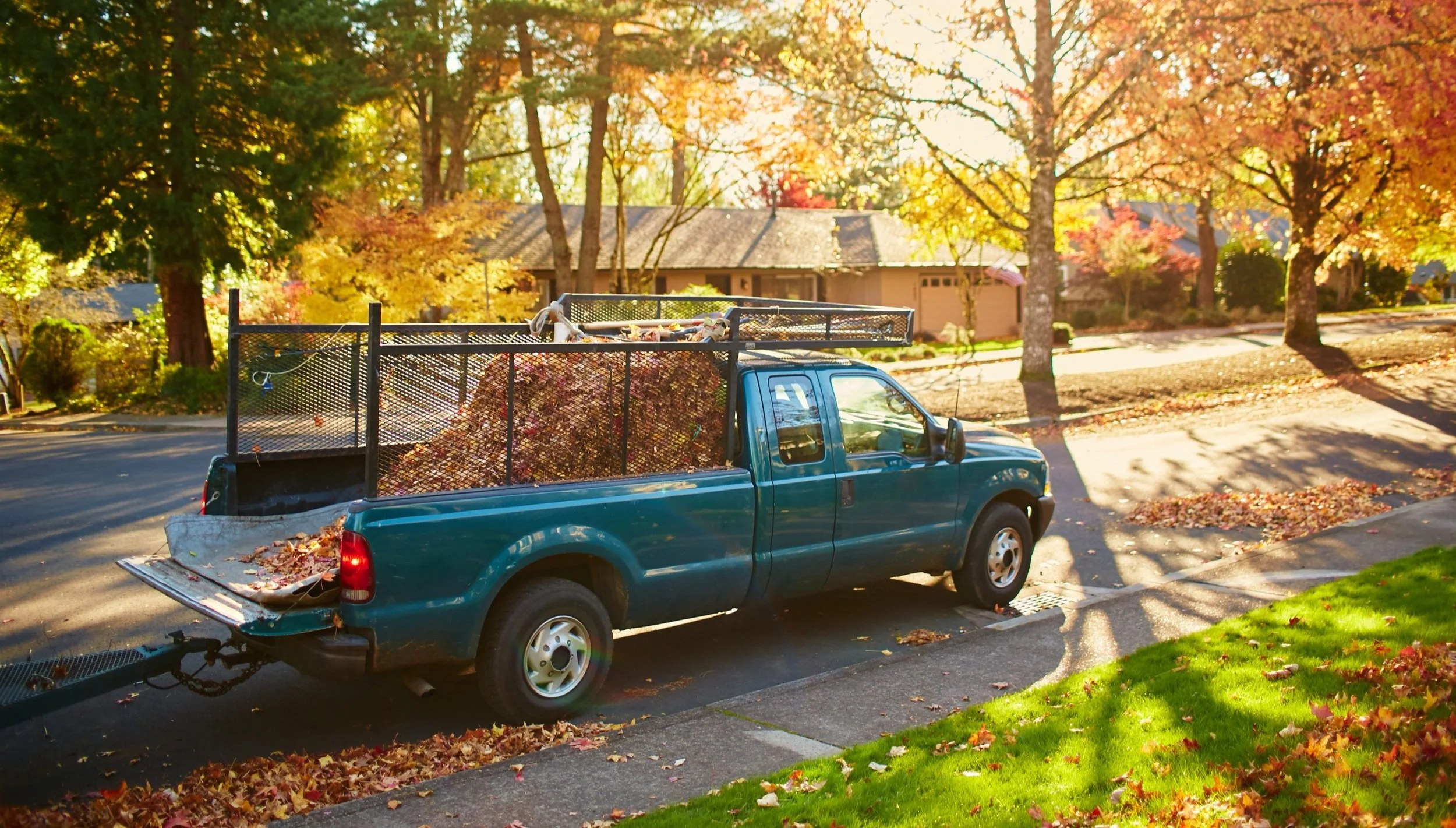
Lawn and landscape professionals across the country have seen the direct impact of a very difficult and challenging commercial auto market. In particular, green industry businesses who specialize in service and maintenance, which require a larger fleet, have felt more of the direct market pressure.
Author, Drew Garcia, Vice President of the Landscape Group, Rancho Mesa Insurance Services, Inc.
Lawn and landscape professionals across the country have seen the direct impact of a very difficult and challenging commercial auto market. In particular, green industry businesses who specialize in service and maintenance, which require a larger fleet, have felt more of the direct market pressure.
In general, large employers (due to their economies of scale), have always been able to navigate tough market conditions by taking on more upfront risk via large deductibles or self-insured retentions in exchange for an upfront premium savings. These businesses are then able to reinvest those funds back into their businesses to better manage and mitigate risk. Like the large employers, there are options for mid-sized employers to optimize their auto insurance.
Rancho Mesa’s focus on the middle market segment of the green industry (which has a rough annualized property and casualty premium between $200,000 and $1,500,000) has led our team to critically take on this challenge and come up with solutions.
As a result of this focus, I recently was invited to present a webinar in conjunction with Wilson360 addressing the contributing factors to the rising costs of commercial auto insurance and some solutions. I discuss:
Why commercial auto insurance costs continue to increase
How to baseline your premium to help track premium fluctuation
Indicators to track and reduce claim frequency
Things to consider when optimizing your commercial auto policy
Fortunately, this webinar is now available to everyone. Register to watch the webinar.
To discuss how to optimize your company’s commercial insurance, contact me at (619) 937-0200 or drewgarcia@ranchomesa.com.
Cracking the Code: Deciphering the Primary Threshold’s Impact
Author, Greg Garcia, Account Executive, Rancho Mesa Insurance Services, Inc.
Every business owner understands the correlation between their Experience MOD (XMOD) and what they will pay in workers’ compensation premiums. When the XMOD increases, there is a good chance that the workers’ compensation rates or premiums will rise as well. This is why it is so crucial to really hone in on company safety procedures to limit work-related injuries as much as possible. The reality is that even the safest company that does everything the right way is going to run into a workers’ compensation claim from time to time.
Author, Greg Garcia, Account Executive, Rancho Mesa Insurance Services, Inc.

Every business owner understands the correlation between their Experience MOD (XMOD) and what they will pay in workers’ compensation premiums. When the XMOD increases, there is a good chance that the workers’ compensation rates or premiums will rise as well. This is why it is so crucial to really hone in on company safety procedures to limit work-related injuries as much as possible. The reality is that even the safest company that does everything the right way is going to run into a workers’ compensation claim from time to time.
So, when the inevitable workers’ compensation claim happens, what are you supposed to do? What impact will this have on the XMOD? The first component that business owners need to understand is that there is a cap to how much any single workers’ compensation claim can impact the XMOD. That cap is called the primary threshold. The primary threshold varies from company to company and is based off of the company’s payroll. The more payroll a company has the higher the primary threshold.
For this example, a company has a primary threshold of $15,000 where the maximum number of points that any one claim can impact the XMOD once reaching the threshold is 10 points. This means that a claim that costs $15,000 and a claim that cost $150,000 will have the same impact (10 points against the XMOD). However, this does not mean that claims that exceed the primary threshold can be disregarded, because the higher claim cost you have will impact your current and 5-year loss ratio (incurred claim cost/premium paid). Additionally, if a claim that was reserved higher than the primary threshold and can be closed or decreased lower than the primary threshold, XMOD points can be shaved off of that claim.
Knowing the importance of the primary threshold, we designed our proprietary the KPI dashboard that allows our clients to see their primary threshold number and corresponding maximum impact to the XMOD any one primary threshold claim would have.
If you have any questions about your XMOD or would like us to create a KPI for your company, please feel free to reach out to me at (619) 438-6905 or ggarcia@ranchomesa.com.
The Final Chapter: Addressing Training, Access and Recordkeeping in the IIPP
Author, Jack Marrs, Associate Account Executive, Rancho Mesa Insurance Services, Inc.
In this third installment of exploring an Injury and Illness Prevention Program (IIPP), we will be taking a closer look at: Providing employee training and instruction, procedures to allow employee access to the program, and recordkeeping and documentation.
Author, Jack Marrs, Associate Account Executive, Rancho Mesa Insurance Services, Inc.

In this third installment of exploring an Injury and Illness Prevention Program (IIPP), we will be taking a closer look at: Providing employee training and instruction, procedures to allow employee access to the program, and recordkeeping and documentation.
Providing Employee Training and Instruction
Providing clear and effective training for both employees and supervisors is essential for the success of an IIPP. All employees are required to be fully aware of the workplace hazards they may face. Comprehensive and well-conducted trainings can help reduce the likelihood of work-related injuries and illnesses. An article from The State Fund suggests “If you are unable to conduct your own required trainings, you should reach out to an outside consultant, Cal/OSHA consultation, vendors, your insurance carrier, and/or broker for assistance.” The more knowledgeable and prepared employees are, the safer the work environment becomes.
Take a look at the training resources that are available to your organization. Rancho Mesa clients can access the online safety training courses in the SafetyOne™ platform.
Procedures to Access the IIPP
All employees are required to have access to the written IIPP. This will ensure that all employees are fully aware of the safety protocols and hazard prevention strategies used to minimize workplace accidents and illnesses and thus, maintain a safe workplace.
According to Cal/OSHA, employers can meet this requirement by:
1. Unobstructed access through a company server or website, which allows employees to review, print, or email a copy of the IIPP
2. When requested, provide a printed copy of the IIPP (unless the employee agrees to receive an electronic copy)
The IIPP can be made accessible to users of the SafetyOne mobile app. It allows organizations to upload digital files into a file cabinet that is available only to their users. For employees who aren’t SafetyOne app users, they could scan a QR code or complete a webform to request the IIPP from their administrator. However your organization decides to distribute the IIPP, it should be easy for employees to access or request.
Recordkeeping and Documentation
Recordkeeping and proper documentation are crucial components of the IIPP. By maintaining accurate records, employers can learn from past incidents and identify injury and illness trends. This knowledge allows for necessary corrections and improvements in future operations, which will improve overall workplace safety. There are 5 steps required by the OSHA for a compliant recordkeeping system:
Each employer (unless exempt by size or industry) must record each fatality, injury, or illness that is work-related, is a new case, or meets one or more of the general recording criteria specified in Title 8, Section 14300.
Record each injury or illness on the Cal/OSHA Log of Occupational Work Related Injuries and Illnesses (Form 300) according to its instructions.
Prepare an Injury and Illness Incident Report (Form 301), or equivalent.
Annually review and certify the Cal/OSHA Form 300 and post the Summary of Work-Related Injuries and Illnesses (Form 300A) no later than February 1 and keep it posted where employees can see it until April 30.
Maintain the last five years of these records in your files.
A simple way to collect the incident information required for the OSHA logs (Form 300, 300A and 301) can be obtained by utilizing SafetyOne’s mobile forms. Either through the mobile app or via a QR Code or web link, employees can complete accident investigation forms and witness statements digitally. Then, the person responsible for documenting and maintaining the OSHA logs, can review the reports that came in through the mobile app and document the OSHA logs in the RM365 HRAdvantage Portal.
Rancho Mesa will host several webinars in the coming months to assist clients with understanding the best practices for completing their OSHA logs using SafetyOne™ and the RM365 HRAdvantage Portal.
Cal/OSHA has a Guide to Developing Your Workplace Injury and Illness Prevention Program that is helpful for organizations that need some assistance with getting started.
Rancho Mesa also has a 6-page Sample Injury and Illness Prevention Overview for California Employers available through our RM365 HRAdvantage Portal.
Following these steps is a proactive approach to building a safer working environment for all employees. The bottom line, it’s all about mitigating accidents before they happen and building a safe work environment.
Please contact me with any questions regarding the IIPP at (619)-486-6569 or via email at jmarrs@ranchomesa.com.
Developing A Strong Subcontract Agreement with Tree Care Partners
Author, Drew Garcia, Vice President of the Landscape Group, Rancho Mesa Insurance Services, Inc.
Having strong service partners that support your customers outside of your core operations is an important part of business. Many commercial landscape businesses have regional relationships with professional tree care companies to support the needs of their customers.
Author, Drew Garcia, Vice President of the Landscape Group, Rancho Mesa Insurance Services, Inc.

Having strong service partners that support your customers outside of your core operations is an important part of business. Many commercial landscape businesses have regional relationships with professional tree care companies to support the needs of their customers.
Here are some of the key components when setting up your overall subcontract program, specific to the tree care industry.
Written Subcontract Agreement
Work with your attorney to draft a master subcontract agreement or project/job specific subcontract agreement since the type of indemnity agreements can change from state to state.
Among other things this agreement should clearly define indemnity and provide insurance requirements.
Insurance Requirements
Limits
Collaborate with your insurance advisor to specify the types of coverages and policy limits you will require in the subcontract agreement.
Arborist Errors & Omissions Coverage
The tree care company should carry some type of Arborist E&O endorsement or have a separate policy providing coverage for Arborist E&O.
Depending on the scope of work, if the tree care company is providing written arborist reports or providing professional consulting services, require them to carry professional liability coverage.
Additional Insured
Ask the tree care company to name you as an additional insured for both ongoing and completed operations coverage, including primary/non-contributory and waiver of subrogation on their general liability policy in your favor.
Certificates of Insurance
Collect certificates of insurance and automate the process of requesting an updated certificate as the policy period nears expiration.
Transferring risk where possible is critical for landscape contractors. Using these initial steps as you build out a best practice subcontract agreement can insulate your company from the ever growing exposures that exist as you engage with partner trades.
To discuss your company’s management of risk, contact me, Drew Garcia, at (619) 937-0200 or drewgarcia@ranchomesa.com.
Implementing Technology and Other Safety Tactics to Protect Your Fleet
Author, Greg Garcia, Account Executive, Rancho Mesa Insurance Services, Inc.
One of the most important practices for any landscape professional is fleet safety. Whether you have 10 trucks or 100, the exposure and risk remain the same. Explore a prior podcast episode, Episode #251, in which I delve into compelling statistics that shed light on the increasing frequency and severity of auto accidents each year.
Author, Greg Garcia, Account Executive, Rancho Mesa Insurance Services, Inc.

One of the most important practices for any landscape professional is fleet safety. Whether you have 10 trucks or 100, the exposure and risk remain the same. Explore a prior podcast episode, Episode #251, in which I delve into compelling statistics that shed light on the increasing frequency and severity of auto accidents each year.
Here are a few ways landscape professionals can improve their fleet safety:
1. GPS/Telematics Systems
A written fleet safety program is a must have for every organization, but how can you take that a step further? Some landscape professionals are turning to technology and installing GPS tracking systems in all of their trucks. These systems have the capabilities of tracking speeding, hard breaking, sharp turning, proper seat belt usage and other metrics. Not to mention, if a truck were ever stolen, they have the capabilities to track down and locate the stolen vehicle.
I was at the National Association of Landscape Professionals’ (NALP) ELEVATE conference a few weeks back in Dallas and spoke with a landscaper who uses GPS on their trucks. I asked how they use the data that is collected. Their response was that each month they sit down and look at the data. They identify any glaring issues and work to get them resolved. For example, if a certain driver has been tracked speeding multiple times, they will sit that driver down and explain the importance of not speeding. They may even have them do a specific driver training course to help that individual become a better driver. Having GPS is a great start to improving fleet safety, but actually using the data collected and being proactive with that data is what the elite landscape company do.
2. Regular routine maintenance checks on vehicles
GPS tracks a vehicle while it’s driven, but what can be done before the vehicle even hits the road to help prevent accidents? Routinely checking vehicles and performing maintenance on them can really have a impact on fleet safety. For example, regularly checking tire pressure, making sure oil changes are up to date, inspecting the brakes and monitoring tire wear are a few things that every landscape company should do to keep their vehicles running in tip top condition.
3. Company Roll Out Procedure
Implementing a mandatory company roll-out check can have a significant impact. I have actually seen a few of these performed in person and it’s impressive. As the trucks leave the yard to head out for the day’s work, the driver signals both blinkers, flashes the headlights, cleans the windshield and mirrors, and performs a small brake check, all the while, an inspector is outside making sure all signals are working before the truck heads out.
Finally, if a trailer is being used, check to make sure the trailer is properly hitched and the equipment in the trailer is tied down or stored securely. Taking time and performing these checks will certainly help prevent auto accidents in the future.
If you would like more information on putting together or updating your Fleet Safety program, reach out to me at ggarcia@ranchomesa.com or (619) 438-6905.
Seasonal Demands Lead to Increased Risk for Landscapers
Author, Megan Lockhart, Media Communications and Client Services Coordinator, Rancho Mesa Insurance Services, Inc.
With summer in full swing and the autumn months close ahead, landscapers are at their busiest time of the year. During this time, landscape companies often increase their employee numbers with temporary hires to meet the seasonal demands. Due to this, employers are encouraged to be more cautious of the increased risk of injuries to their workers, particularly those who are young and less-experienced.
Author, Megan Lockhart, Media Communications and Client Services Coordinator, Rancho Mesa Insurance Services, Inc.

With summer in full swing and the autumn months close ahead, landscapers are at their busiest time of the year. During this time, landscape companies often increase their employee numbers with temporary hires to meet the seasonal demands. Due to this, employers are encouraged to be more cautious of the increased risk of injuries to their workers, particularly those who are young and less-experienced.
Landscaping and grounds keeping is undoubtedly a dangerous field of work. Potential hazards include chemicals, dangerous equipment, wildlife encounters, extreme heat, and electricity. According to the U.S. Bureau of Labor Statistics, 1,072 work-related deaths were reported in the industry from 2011 to 2021, and 142 employees suffered fatal workplace injuries in 2021 alone.
Risk of injury to young people is particularly important this time of year. A study published by the CDC in 2021 analyzed 18,037 workers’ compensation claims in the landscaping services industry from 2001 to 2017. Of these claims, 50% of serious injuries were employees aged 34 and younger. The average age for landscape workers in the United States was 38.1 in 2011, indicating younger workers may be at greater risk to injury than older workers.
Considering younger employees are often hired to work temporary summer jobs and typically have less experience in the industry, employers should ensure young workers are properly trained and are in compliance with the federal child labor law that restricts employees under the age of 17 from being exposed to hazardous occupations.
Newly-hired employees also experience particularly high numbers of work-related injuries in the landscape industry, especially at smaller companies.
“The percentages of all serious injuries occurring during the first 90 days of job tenure ranged from 22% to 30%, with the smallest companies having the highest percentage of these short-tenure claims,” the CDC states in their landscape industry study. “The frequency of injuries to young and early-career workers suggests that better training and supervision of new workers could be crucial to worker safety.”
Increased demand leads to increased risk with less-experienced, young, and temporary hires. As heat continues to soar in late summer and early fall, it is best to make sure your workers all have proper safety training that includes heat illness prevention, in order to prevent workers’ compensation claims.
“Landscaping can be dangerous when workers lack experience and appropriate training in a language they understand,” Assistant Secretary for Occupational Safety and Health Doug Parker said, in an article published by the U.S. Department of Labor. “Too often, our inspectors find workers harmed in ways that their employers could have prevented by following federal and industry safety standards. We urge employers to implement strategies that involve their workers and protect everyone.”
The Federal OSHA website offers Health and Safety Programs applicable to the landscape industry, including an Injury and Illness Prevention Program for High Hazard Employees.
Rancho Mesa’s SafetyOne™ Mobile and Desktop application also contains a library of toolbox talks and online training applicable to landscape workers that can benefit companies during this time of the year. Clients can contact their client technology coordinator for more information.
Take Your Safety Program to the Next Level through Leading Indicators
Author, Drew Garcia, Vice President of the Landscape Group, Rancho Mesa Insurance Services, Inc.
When it comes to measuring safety, most green industry (i.e., lawn, landscape, and tree care) businesses rely on OSHA rates, the experience modification, and, if you’re a Rancho Mesa customer, your Safety KPI Dashboard. This data is important; however, it only captures lagging information. Take your safety program to the next level by measuring predictive, preventive, and proactive - leading indicators.
Author, Drew Garcia, Vice President of the Landscape Group, Rancho Mesa Insurance Services, Inc.

When it comes to measuring safety, most green industry (i.e., lawn, landscape, and tree care) businesses rely on OSHA rates, the experience modification, and, if you’re a Rancho Mesa customer, your Safety KPI Dashboard. This data is important; however, it only captures lagging information. Take your safety program to the next level by measuring predictive, preventive, and proactive - leading indicators.
The SafetyOne™ mobile application provides your green industry business with the ability to capture your leading indicator goals at the yard or on the jobsite.
OSHA published a document on leading indicators along with resources on hazards and solutions for the landscape and horticultural services industry. In the article, OSHA suggest using SMART principles when setting up your program. SMART stands for specific, measurable, accountable, reasonable, and timely.
Examples of Leading Indicators
Attendance at safety meetings - Are your employees attending regular toolbox talks, formal safety meetings, and getting proper safety onboarding? How do you know? Keeping a current record of safety activities allows management to know when safety is a priority or when it’s been neglected. Using data collected in the SafetyOne mobile app, management knows in real-time when a crew did or did not complete a scheduled toolbox talk or safety meeting by the end of the shift. This is a leading indicator that safety is either a priority or it is not and it is time to address the issue before there is an accident.
Industry Known Hazards
Heat Stress – Training, Checklist
Vehicle Accidents – Training, Driving Requirements
Slips, Trips, Falls – Job Hazard Analysis
Lifting – Training, Mobility and Stretch
Cuts and hand injuries - Training
Chemical – SDS, Training
PPE – Training, Checklist
Electrical – Dig alert, Checklist
Review your companies own loss history and extend your indicators to reach your company’s assets and liabilities
Equipment theft
Third-party slip and falls
Vehicle accidents at fault/not at fault
Third party property damage
Equipment damage
By using the SMART principles when developing your leading indicators, you can clearly define your goals. Making the indicators measurable allows your team to take the information and make calculated and informed decisions.
To learn more about the leading indicators or the SafetyOne™ mobile app, contact me at (619) 937-0200 or drewgarcia@ranchomesa.com.
Pure Premium Increase for Landscape (0042) in Consecutive Years
Author, Greg Garcia, Account Executive, Rancho Mesa Insurance Services, Inc.
When my baseball career ended in 2021, it was time for me to do something new with my life. For me the decision was easy and one that I am very grateful for. My dad, Dave Garcia started Rancho Mesa 25 years ago and throughout the years he and many others have contributed into what Rancho Mesa is today, a 16-time National Best Practices Agency. I was fortunate enough to get an opportunity to join such an amazing organization.
Author, Greg Garcia, Account Executive, Rancho Mesa Insurance Services, Inc.

In September 2022, the Workers’ Compensation Insurance Rating Bureau (WCIRB) recommended a 9% increase in the pure premium rate for landscape class code 0042. Effective September of 2023, a 4% increase was recently approved, totaling 13% over the two-year span.
Pure Premium Rates arise from losses sustained and payroll submitted to the WCIRB from all workers’ compensation insurance companies. Per the California Department of Insurance (CDI), “Pure Premium Rates” are defined as “the cost of workers' compensation benefits and the expense to provide those benefits.” The WCIRB evaluates each individual class code and determines what the recommended rates will be for the upcoming year. This recommendation is made to the CDI who ultimately needs to reject or approve the recommendation. Once the pure premium rates are approved, each workers’ compensation insurance carrier will apply their individual least common multiple (LCM) which is an adjustment to the pure premium rate that takes into consideration business expenses and profit for the carrier, thus creating their individual base rates for each class code.
What does this all mean? The claim activity and claim cost as a whole have been increasing over the last two years for landscapes companies in California. This may signal the beginning of a hardening workers’ compensation market resulting in higher premium cost.
What can be done to help combat these potential increases in premium? An increased attention to safety practices to reduce claims, a robust return to work program to mitigate cost of existing claims, proactive claim management, and consistent, documented safety training are a few of the ways that will help a landscape business remain best in class.
Take control of your future costs and look to your existing risk management partners to help you accomplish your goals. For Rancho Mesa landscape clients, we do this through our customized and proprietary programs and tools, including:
Key Performance Indicator (KPI) for workers’ compensation
These pure premium changes will take place on workers’ compensation insurance renewals after September of this year. Don’t be caught by surprise or unprepared. We are here to help you proactively navigate through this. If you have any questions, want to learn more about our programs and tools, please feel free to reach out to me at ggarcia@ranchomesa.com or 619-438-6905.
Importance of Implementing a Stretch and Mobility Program
Author, Greg Garcia, Account Executive, Rancho Mesa Insurance Services, Inc.
When my baseball career ended in 2021, it was time for me to do something new with my life. For me the decision was easy and one that I am very grateful for. My dad, Dave Garcia started Rancho Mesa 25 years ago and throughout the years he and many others have contributed into what Rancho Mesa is today, a 16-time National Best Practices Agency. I was fortunate enough to get an opportunity to join such an amazing organization.
Author, Greg Garcia, Account Executive, Rancho Mesa Insurance Services, Inc.

Strains are one of the top workers’ compensation injuries affecting landscape companies. The Federal Bureau of Labor Statistics states that back strains account for almost 20% of all workers’ compensation injuries. When analyzing this data, we see there is a common theme - a lack of preventative measures to avoid back strains.
One of the reasons for the frequency of these back strain claims is due to the fact that employees are not properly stretching nor engaged before they perform their work for the day. With regards to safety, the top landscape companies have all implemented a stretch and mobility program of some kind.
Every day, there are two great opportunities to implement a stretch and mobility program. One of which would be at a morning huddle and the other would be at the jobsite. In either case, the most important take away is that there is a stretch program being implemented before the employees engage in any physical activity.
Knowing the importance of a stretch and mobility program for our clients, Rancho Mesa created the RM365 Advantage Mobility & Stretch™ Program for them to implement. We collaborated with a certified professional trainer to create a stretch and mobility program that is designed to help eliminate some of these injuries.
One version of the program can be completed at the morning huddle (without using a truck) and the other can be done at the jobsite (using a truck). Both versions are available in English and Spanish with pictures and descriptions of the movements that need to be performed.
Using Rancho Mesa’s SafetyOne™ mobile app, clients can document every day that they performed the RM365 Advantage Mobility & Stretch™ Program with a quick photo showing their employees in action.
By creating these simple programs and implementing it on a daily basis, we aim to lower the chances of our client’s employees being injured; thus, creating a safer work environment. In addition, limiting these types of claims will also help to lower the company’s experience MOD, which can also help create savings on workers’ compensation premiums.
For landscapers who currently do not have a stretch and mobility program, I would encourage them to reach out to their insurance advisor to help set one up. Or, take a look at the RM365 Advantage Mobility & Stretch™ Program on Rancho Mesa’s website.
Feel free to contact me with any questions about implementing a stretch and mobility program at ggarcia@ranchomesa.com or (619) 438-6905.
Maximize Your KPI Dashboard Insight
Author, Drew Garcia, Vice President of the Landscape Group, Rancho Mesa Insurance Services, Inc.
Three years ago, Rancho Mesa launched our proprietary safety KPI dashboard, consolidating experience mod and industry benchmarking reports to one working document. As a Rancho Mesa customer, you can now maximize the benefit of your safety KPI dashboard by completing our baseline training which will challenge the stakeholders in your organization to understand the key concepts this document delivers.
Author, Drew Garcia, Vice President of the Landscape Group, Rancho Mesa Insurance Services, Inc.

Three years ago, Rancho Mesa launched our proprietary safety KPI dashboard, consolidating experience mod and industry benchmarking reports to one working document. As a Rancho Mesa customer, you can now maximize the benefit of your safety KPI dashboard by completing our baseline training which will challenge the stakeholders in your organization to understand the key concepts this document delivers.
With the training and subsequent quiz behind you, you will be poised with the ability to roadmap your company’s commitment to safety and answer some common questions like:
Do all work-related injuries impact my XMOD the same?
What is an indemnity claim?
What is my estimated renewal XMOD?
How do we compare to our industry?
This training can also be used for employees who transition or are hired to help oversee your workers’ compensation program.
Quickly bring these employees up to speed by developing their skills through our online dashboard training.
Maximize your relationship with Rancho Mesa and train your team to better handle your workers’ compenasation program.
This course will be available in the SafetyOne™ platform in May 2023.
For more information, contact Drew Garcia at (619) 937-0200 or drewgracia@ranchomesa.com.
Plan Your SafetyOne™ App to Best Suit Your Organization’s Needs
Author, Megan Lockhart, Media Communications and Client Services Coordinator, Rancho Mesa Insurance Services, Inc.
Rancho Mesa aims to provide clients with tools that are flexible in order to best fit their individual needs, including our proprietary SafetyOne™ application. SafetyOne’s features are systemized based on “Projects.” However, projects are highly adaptable to the way each individual organization works.
Author, Megan Lockhart, Media Communications and Client Services Coordinator, Rancho Mesa Insurance Services, Inc.

Rancho Mesa aims to provide clients with tools that are flexible in order to best fit their individual needs, including our proprietary SafetyOne™ application. SafetyOne’s features are systemized based on “Projects.” However, projects are highly adaptable to the way each individual organization works.
Below are best practices for utilizing projects depending on your organization’s industry and structure.
Construction (Project or Job)
As the name suggests, construction companies will most likely assign their policies, mobile forms and users to their individual construction projects or job sites. Project managers and foremen can access job-specific content based on the projects they are assigned.
This system works well for both short-term and long-term projects that need to manage safety within unique worksites.
Landscape, Tree Care and Janitorial (Service Crew)
Many landscape, tree care and janitorial companies organize their employees in the SafetyOne application into crews. These crews are employees who stay grouped together from one worksite to the next. Companies can name their projects based on a crew number, truck, or team name and assign content, such as toolbox talks to individual crews.
This system works well for companies providing on-going services to multiple accounts that aren’t necessarily tied to one worksite.
Human Services (Client or Program)
Human services organizations like non-profits, home healthcare, and schools can use projects for their different office locations, facilities, programs, or campuses. These organizations may choose to make policies and forms available to employees based on their office, clients, facility, program or campus.
There may be different ways to utilize the projects organization structure in the SafetyOne application. Through the dynamicity of the platform, Rancho Mesa is happy to help clients best meet their organization’s risk management needs.
For more information about how to set up projects in SafetyOne™, please contact your client services coordinator or watch our Administrator Website Overview Training.
Focusing on ONE Industry: The Landscape Industry
Author, Greg Garcia, Account Executive, Rancho Mesa Insurance Services, Inc.
When my baseball career ended in 2021, it was time for me to do something new with my life. For me the decision was easy and one that I am very grateful for. My dad, Dave Garcia started Rancho Mesa 25 years ago and throughout the years he and many others have contributed into what Rancho Mesa is today, a 16-time National Best Practices Agency. I was fortunate enough to get an opportunity to join such an amazing organization.
Author, Greg Garcia, Account Executive, Rancho Mesa Insurance Services, Inc.

When my baseball career ended in 2021, it was time for me to do something new with my life. For me the decision was easy and one that I am very grateful for. My dad, Dave Garcia started Rancho Mesa 25 years ago and throughout the years he and many others have contributed into what Rancho Mesa is today, a 16-time National Best Practices Agency. I was fortunate enough to get an opportunity to join such an amazing organization.
One of the main priorities for Rancho Mesa brokers is to find your “niche.” My brother Drew Garcia who has been a broker here at Rancho Mesa for 7 plus years, found the importance of focusing on one industry and how it can be a benefit for not only his personal success but more importantly for the businesses he serves within his specialty. He decided to focus on the landscape industry, which turns out to be my focus as well.
We found that by focusing on just one industry, we can better understand the issues and needs of our clients, and provide quicker more accurate solutions than if we were a generalist broker. We not only see the common issues that landscape contractors face, but through this expertise are able to develop the right risk management solutions for them. We push ourselves to be constantly searching for better ways to help our clients and future prospects. We are an integral part of the NALP and attend all their events. We are active participants in landscaping peer groups events all over the country to try to gain additional insights and knowledge about the landscape industry.
My family background is in baseball, so needless to say we are all very competitive, and in insurance it is no different. We are looking for an honest way to create a competitive advantage for our clients within the insurance marketplace. Focusing on one industry, the landscape industry, gives us a big advantage over other brokers that are not niched to landscape, because it is all we think about, talk about, and research. Our clients see the advantage in having their broker focus solely on their industry.
If you have never thought about partnering with a specialized broker or did not think that was possible, consider exploring that option before your next insurance renewal. To begin the process, sit down with your current broker and ask how many other clients he or she works with in your same industry.
For all the landscape companies listening who want to learn more about why having a specialized broker is important, please contact me at 619-438-6905 or ggarcia@ranchomesa.com.