

Industry News

The Importance of Properly Classifying Stump Grinding Operations
Author, Rory Anderson, Account Executive, Rancho Mesa Insurance Services, Inc.
Because stump grinding is done from the ground, it can create some confusion for tree care companies on how to properly classify this exposure for workers’ compensation insurance. It’s important to understand how and where to classify this exposure, so you’re not setting yourself up for an issue at the audit. The Workers’ Compensation Insurance Rating Bureau defines all class codes to help companies classify specific operations. Let’s look at how they define 0106 Tree Pruning, Repairing or Trimming.
Author, Rory Anderson, Account Executive, Rancho Mesa Insurance Services, Inc.
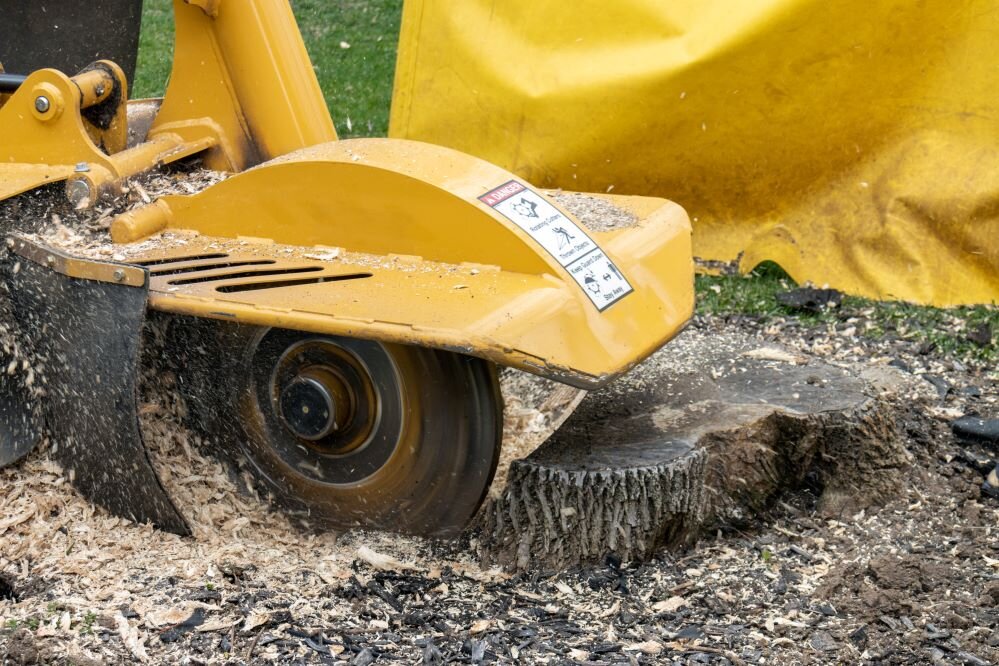
Almost all tree care companies’ operations include stump grinding. Stump grinders are powerful machines that are designed to chew away and grind a tree stump down into little pieces, after a tree has been cut down. The operator guides the blade over the stump to take it down below ground level. Because stump grinding is done from the ground, it can create some confusion for tree care companies on how to properly classify this exposure for workers’ compensation insurance. A lot of tree care companies assume that because the employee operating the stump grinder is on the ground, it should be classified in 0042 – Landscape Gardening, which is more cost effective than classifying them in 0106 – Tree Pruning. However, this assumption is incorrect. It’s important to understand how and where to classify this exposure, so you’re not setting yourself up for an issue at the audit.
The Workers’ Compensation Insurance Rating Bureau defines all class codes to help companies classify specific operations. Let’s look at how they define 0106 Tree Pruning, Repairing or Trimming.
0106 Tree Pruning, Repairing or Trimming
This classification applies to pruning, repairing or trimming trees or hedges when any portion of the operations requires elevation, including but not limited to using ladders, lifts or by climbing. This classification includes clean-up, chipping or removal of debris; stump grinding or removal; and tree spraying or fumigating that are performed in connection with tree pruning, repairing or trimming. This classification also applies to the removal of trees that retain no timber value.
According to this definition, a tree care company must report stump grinding in 0106 if the stump grinding is in connection to the 0106 tree work that they performed. Even though the stump grinding operator is working from the ground, they must be classified as 0106 because the stump grinding is performed in connection with the 0106 tree work that they performed.
For example, a specific job calls for the removal of four valley oak trees. The arborists from a tree care company spend the morning climbing, trimming, and removing the four trees. A few hours later, the ground crew grinds all four stumps down using the stump grinder. Per the WCIRB classification definition, the ground crew who are operating the stump grinder must be classified in 0106 because it was in connection to the 0106 tree work that they (the company) performed.
The WCIRB also states that “stump grinding performed for other concerns on a fee basis and not in connection with tree pruning, repairing or trimming at a particular job or location shall be classified as 3724 – Millwright Work.”
To clarify, a tree care company may report stump grinding in the 3724 Millwright Work class code if it has no connection to 0106 tree work. So, in other words, you may only report stump grinding in 3724 if the job calls for only stump grinding.
For example, a homeowner has a stump in their backyard and calls a tree care company out to grind the stump down. This work may be classified in 3724 Millwright Work only if the tree care company did not trim or remove the tree first; they simply showed up and grinded the stump.
Having an insurance agent who specializes in the tree care industry is instrumental in building trust so that this critical information is communicated to you properly. With this information, you can have the confidence that you are reporting payroll correctly and avoid classification issues that can potentially arise at the final audit.
For questions about your operations and corresponding tree care classification codes, contact me at (619) 486-6437 or randerson@ranchomesa.com.
Top Three Professional Liability Exposures for Tree Care Companies
Author, Rory Anderson, Account Executive, Rancho Mesa Insurance Services, Inc.
Professional tree care companies must have a general liability policy that will cover incidents that cause bodily injury or property damage resulting from their operations. However, there are situations that will not be covered under a typical general liability policy and would require professional liability coverage, or, in the tree care industry it would specifically be Arborist Errors and Omissions coverage. Here are three exposures that tree care companies face that a professional liability policy would address.
Author, Rory Anderson, Account Executive, Rancho Mesa Insurance Services, Inc.
Professional tree care companies must have a general liability policy that will cover incidents that cause bodily injury or property damage resulting from their operations. However, there are situations that will not be covered under a typical general liability policy and would require professional liability coverage, or, in the tree care industry it would specifically be Arborist Errors and Omissions coverage. Here are three exposures that tree care companies face that a professional liability policy would address.
Tree Work
At times, tree care companies could inadvertently remove the wrong tree or prune a tree incorrectly causing various issues. As a result, the client may bring action against the tree care company for a number of reasons, including:
The loss of the intrinsic value the tree provided – shade, design, look, etc.;
The dollar value of the tree for replacement;
Mental distress suffered by the client.
Adjacent Trees
A professional tree care company can also be held responsible for damage caused by a failed tree that they did not even touch, but was on or nearby a recent jobsite. To be held liable for a failed tree (when a tree experiences structural collapse or breakage of any part of the tree: trunk, roots, or limbs) that they did not perform work on may seem unfair, but the client may claim that the arborist is the specialist and has a responsibility to point out any trees on a jobsite that could be dangerous.
Professional Tree Advice (Consulting)
Most tree care companies have a certified arborist who offers tree consulting and will give a professional opinion on whether or not a tree is safe. This leaves the tree care company potentially responsible in the event a tree that was deemed safe actually fails and causes property damage, or even worse, bodily injury to a human.
Tree work, adjacent trees and consulting are three common exposures not typically covered by a general liability policy; therefore, professional tree care companies must strongly consider some form of professional liability coverage. Work with your trusted insurance advisor and have them thoroughly assess your exposure to these concerns. To learn more about professional liability coverage for the tree care industry, listen to our StudioOne™ Safety and Risk Management Podcast Episode 99.
Contact me for a complete risk analysis of your operations at randerson@ranchomesa.com or (619) 486-6437.
A Tree Care Company’s Guide to the Annual Workers’ Compensation Audit
Author, Rory Anderson, Account Executive, Tree Care Group, Rancho Mesa Insurance Services, Inc.
The premium for your workers’ compensation policy is based on the type of work you do, and the amount of payroll incurred. By maintaining proper payroll records, segregating the wages earned by your employees, you may reduce the cost of your workers’ compensation insurance. The final audit is the process that calculates the last premium due. It compares the estimated payrolls to actual wages paid during the policy year. The audit may result in a refund or additional premium due. Workers’ compensation audits also determine if the classification codes quoted at inception accurately reflect the scope of work performed during the policy period. Insurance carriers charge more premium for higher risk operations, like tree trimming.
Author, Rory Anderson, Account Executive, Tree Care Group, Rancho Mesa Insurance Services, Inc.

The premium for your workers’ compensation policy is based on the type of work you do, and the amount of payroll incurred. By maintaining proper payroll records, segregating the wages earned by your employees, you may reduce the cost of your workers’ compensation insurance. The final audit is the process that calculates the last premium due. It compares the estimated payrolls to actual wages paid during the policy year. The audit may result in a refund or additional premium due. Workers’ compensation audits also determine if the classification codes quoted at inception accurately reflect the scope of work performed during the policy period. Insurance carriers charge more premium for higher risk operations, like tree trimming.
In my last article, we looked at how it may be possible for a tree care company to use the 0042 landscape classification code at specific times, if they are trimming hedges or trees from the ground. We noted, however, that when any of the tree care company’s operations are off the ground, at any elevation, that payroll would be classified in 0106 tree trimming. Also, any type of work that is associated with the tree trimming (e.g., clean-up, chipping, stump grinding, etc.) would also be included as 0106.
The basis of premium is the payroll earned during the policy period. Payroll includes regular wages, salaries, overtime, bonuses, vacation pay, sick pay, commissions, cash payments, and other substitutes for money. Summarizing and segregating wages allows for the possible reduction of exposures and lower premium charges. Consider the following for potential adjustments at final audit:
If employees are engaged in both landscape construction/maintenance work, and tree trimming, you can segregate wages between operations and utilize both classifications. Earnings can be split by classification if time cards are maintained showing hours worked by activity, and payroll reports summarize hours and wages earned for each class. Segregation is based on records of actual hours worked; you cannot split earnings by percentages or projected bid calculations.
The wages for miscellaneous employees can be split by class if timecards segregate earnings by type of work performed. If no segregation is maintained, payroll will be assigned to the highest rated class.
Premium overtime is excludable if records document the hours and remuneration earned for regular hours and overtime hours. This includes earnings paid over and above the straight time earnings. If overtime is paid at one and one-half times the regular rate of pay, 1/3 of the total overtime pay can be excluded. If double time is paid, ½ of the overtime pay is excludable.
California allows the exclusion of deductions which are part of a Section 125 Cafeteria Plan. This might include medical, dental, and vision premiums. If these deductions are summarized by employee and by classification, they can be excluded from the workers comp wages.
Severance pay and tips are excludable. Maintain severance agreement letters documenting final payment agreements.
Depending on the type of entity insured, the earnings of sole proprietors, partners, and corporate officers may be excludable. Talk with your agent regarding qualifications and endorsements which can be issued as adjustments to your policy.
Workers’ compensation exposures may include costs for additional earnings paid outside of payroll. This could include bonuses, flat auto allowances, cash payments, casual labor, and subcontractors who could be considered employees. If subcontractors are hired, be sure to use licensed contractors who operate their own business. Always obtain and keep copies of the certificates of insurance from subcontractors to confirm independent coverage.
To prepare for final audit, maintain proper payroll records segregating and summarizing wages earned by your employees. The Auditor will:
Advise you on which reports to prepare for final audit. This typically includes payroll records and summaries, quarterly payroll tax reports, general ledger, cash disbursements, and/or 1099 reports.
Assist you in identifying cost saving measures. They will help to recognize and explain how to take advantage of all potential credits, such as premium overtime, severance, Cafeteria 125 plan deductions, etc.
Ask for a description of the business, and the job duties of employees to verify classification assignments.
Review all findings and suggestions, and address any additional questions you may have.
For questions about your annual audit, contact me at (619) 486-6437 or randerson@ranchomesa.com