

Industry News

The True Cost of DSP Turnover in Developmental Disability Services
Author, Sam Brown, Vice President, Human Services Group, Rancho Mesa Insurance Services, Inc.
Non-profit organizations supporting adults with developmental disabilities fulfill their missions and promise to individuals and families by employing a dedicated group of people, Direct Support Professionals (DSP). The evergreen challenge to attract and retain DSPs adds hidden costs and increases an organization’s exposure to risk. Below we outline these challenges and questions to raise with a National Best Practices insurance agency.
Author, Sam Brown, Vice President, Human Services Group, Rancho Mesa Insurance Services, Inc.

Non-profit organizations supporting adults with developmental disabilities fulfill their missions and promise to individuals and families by employing a dedicated group of people, Direct Support Professionals (DSP). The evergreen challenge to attract and retain DSPs adds hidden costs and increases an organization’s exposure to risk. Below we outline these challenges and questions to raise with a National Best Practices insurance agency.
DSP are aids who help intellectually disabled adults live in the community by teaching individual living skills and providing supported living services. While this role offers a rewarding contribution to one’s community, the DSP turnover in many states has hovered between 40% and 50% for many years due to low wages. Employers struggle to address the issue as Medicaid reimbursement rates have not kept pace with inflation or local wage markets, meaning agencies cannot simply raise pay to compete for talent. In addition, the vacancies force agencies to operate short-handed with heavier workloads for remaining employees.
There is a cost to the turnover that rarely makes it into public conversation. Every departure means another round of onboarding including background checks, training, and CPR/First aid certification. Industry estimates commonly put the full loaded cost of replacing a single DSP well into the thousands of dollars once recruiting, training hours, and lost productivity are factored in. One large service provider reported incurring $300,000 over a 12-month period on job board postings alone.
The inexperience gap can also cost the agency in the form of insurance claims. Without proper guidance and onboarding, new staff are statistically more likely to incur workplace injuries, driving up workers’ compensation insurance claim frequency as well as auto and professional liability exposures. A spike in claims frequency can mean higher premiums at renewal, compounding the very budget pressures faced in the first place.
Given how turnover directly feeds into claims exposure, an experienced business insurance agent can provide valuable guidance at the pre-renewal meeting and throughout the policy term. A few questions worth bringing to that conversation:
How is our workers' compensation experience mod trending, and is turnover a visible driver? An agent can summarize and present data, so leadership sees the direct link between staffing churn and premium cost.
Do our limits and coverage lines reflect current exposure, particularly abuse/molestation coverage, professional liability, and auto/non-owned auto liability for client transport?
What loss-control or risk-management resources do the carrier and insurance agency offer? Training modules, toolbox talks, safety app, HR compliance, and incident-reporting tools can help get new hires up to speed faster and reduce early-tenure incidents.
Is our incident reporting uniform and strong enough to support aggressive underwriting at renewal? Agents can advise on claims reporting lag and best practices that help demonstrate leadership’s commitment to safety and partnership with the insurer.
How do we get favorable pricing that considers our hiring practices, below average turnover rate, and safety training? Underwriters want to learn of an agency’s structured onboarding programs, defensive driving certification, or de-escalation training that could offset costs while also improving employee retention.
How are we positioned for a hard market cycle in liability lines, given the sector's exposure to abuse/molestation and professional liability claims?
There is no easy solution to the DSP staffing crisis, but organizations that understand the connection between workforce stability, risk management, and insurance costs are better positioned to navigate the challenges ahead. Taking a proactive approach today can help protect both the population served and the long-term sustainability of the organization.
If you have questions about any of the topics discussed in this article or would like to talk through your organization's unique circumstances, please contact me at (619) 937-0175 or sbrown@ranchomesa.com.
Navigating Today’s Nonprofit Challenges with Arnulfo Manriquez
Author, Sam Brown, Vice President, Human Services Group, Rancho Mesa Insurance Services, Inc.
Human Services Group Vice President Sam Brown interviews Arnulfo Manriquez of the Manriquez Group to explore the evolving challenges facing nonprofit leaders, from funding pressures and board governance to leadership transitions. With his decades of experience in the nonprofit world, Arnulfo shares practical insights on adaptability, strategic decision-making, and how nonprofits can position themselves for long-term sustainability in a changing environment.
Author, Sam Brown, Vice President, Human Services Group, Rancho Mesa Insurance Services, Inc.
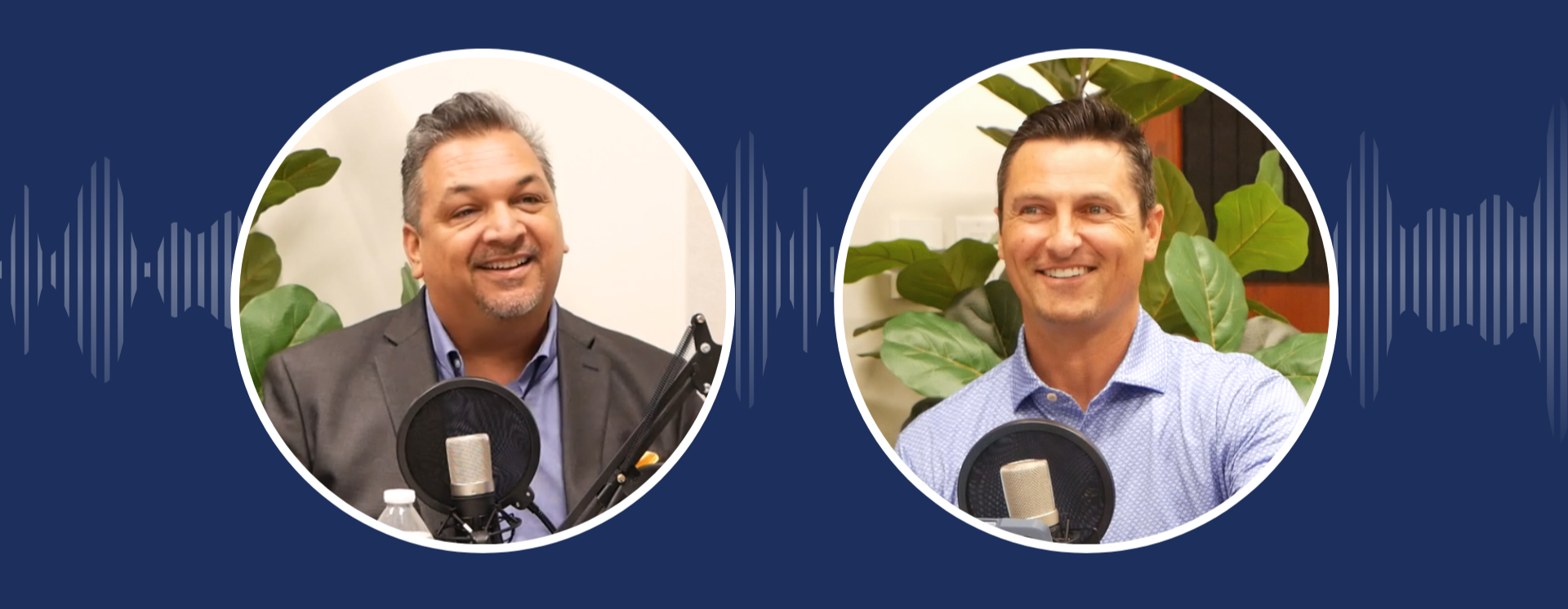
Human Services Group Vice President Sam Brown interviews Arnulfo Manriquez of the Manriquez Group to explore the evolving challenges facing nonprofit leaders, from funding pressures and board governance to leadership transitions. With his decades of experience in the nonprofit world, Arnulfo shares practical insights on adaptability, strategic decision-making, and how nonprofits can position themselves for long-term sustainability in a changing environment.
Sam Brown: Hello, everybody. You're listening to Rancho Mesa's StudioOne™ podcast, where each week we break down complex insurance and safety topics to help your business thrive. I'm your host today, Sam Brown, Vice President of the Human Services Group at Rancho Mesa.
Today, I am joined by Arnulfo Manriquez of Manriquez Group. I'm really excited about our guest today. So, Arnulfo, welcome to Rancho Mesa and StudioOne.
Arnulfo Manriquez: Good morning, and thank you for having me here to join you in this conversation.
SB: Of course. Yeah, long overdue. You're a guest that we've wanted to invite in for many years, so I'm glad we're able to make it happen.
I really thought it would be timely to have you in today because our nonprofit clients and all of, say, San Diego's nonprofit leaders are facing a changing environment. I don't know if it's unique or not. I'm sure there are some differences and some unique characteristics, but someone of your experience, I feel like could speak to past lessons, maybe the role that the board could play in assisting leaders today or what that relationship should look like between C-suite and the board.
And as well as, hey, what are the skills that today's nonprofit leaders need to really sharpen, to adjust to decisions that they need to be making, perhaps some tough ones. So first of all, again, welcome. And hey, what's going on? What's new with you, Manriquez Group, and your personal life?
AM: Well, so the Manriquez Group is new. I've been working with nonprofit organizations for over 33 years. Actually, June was when I graduated from college, and my very first day at work was with a nonprofit.
SB: Nice.
AM: And so it is timely being able to then go off on my own, but really more focused on the reasons why you just talked about why I wanted to do this work. So from a personal perspective, it was the right timing for me as I have three children. All three children are out of the house for the most part. My oldest is in Scotland on their last year of veterinary school. My middle daughter lives in Long Beach Works in Disneyland as a hairstylist with the characters and also with the wigs out there, getting everybody ready out there. And my son has just completed his second year at UC Davis. And so when you look at what's been going on in my own personal life and the shifts, it was really timely for me to be able to go off on an adventure like this.
So in my own personal world the last couple of years I've taken a big interest and learning about wines. Not just going out and drinking them but really learning about the history of the wines the regions understanding where they come from why they taste the way they do and so I've been taking a lot of classes on there and so ultimately my passion has become a little bit more than just a passion. And Tonight, I'll be taking my level three certification for the Wine and Spirits Education Trust, WSET. So I'm a little excited, nervous for the exam. It's going to be a difficult one.
SB: Yeah. So just so everybody knows, I offered Arnulfo coffee and he said, no, he had to keep his palate clean today. So that's how serious this exam is. And I respect it. Nothing but water until this exam, probably. So that's exciting. And you've said that previously you've done some of your studying south of the border. In Mexico's wine region. So what have you learned there?
AM: Well, I've learned one is that I got enamored with the Valle de Guadalupe, with the overall region just by itself. Just going out there and enjoying the environment, the rustic and the rural feel of it, right? It's not fully developed. And then just enjoying meeting the winemakers and the wines. So for me has been, the last 11 years have been, it's the reason why I got so involved with the actual studies of my wines. And from all my classes were done in Spanish. This most recent exam is the only one I've taken in English. But what excited me is and what I've learned about is that Mexico is a very young winemaking region up here in the northern part. And when you compare them to those in France and Italy where they've been making wine for over a thousand years, it is something new and different. And I do actually think that all my lessons and classes and certifications are going to help me have an impact in the winemaking industry and out here as well, because that's the vision I have out here.
SB: Right. Well, that's exciting. I mean, love to see people fall on their passions, whether they be new or ones that have remained dormant for many years. So kudos to you. I wish you the best of luck on the exam today. I'm sure you'll crush it.
AM: Thank you.
SB: So regarding the environment that nonprofit leaders are facing today, what are some things that you feel like maybe are presenting some new challenges? And then maybe what are some challenges that you're seeing that maybe have always been there?
AM: I think the funding crisis that we're seeing right now, and I think crisis is the right word to use. It didn't just happen today. This has been in the building for the last couple of years. When you started looking at what was happening with the state of California budgets, and you started looking at the situations of the city of San Diego, the impacts of these funds, and then some of the referendums that they had on elections that they didn't pass. And so we knew that some of these things were happening. I was seeing them happen within the industry while I was there. It shouldn't be new for most nonprofit leaders, right? But it is.
People are treating it as if it just happened upon us. And so people do need to have, you know, all these government pressures that, you know, we've been feeling it, and they play a big role with the rest of the funding that's coming along, as well as the, with the federal changes that we've had. And we always know when a new administration comes on, we're going to see some changes, sometimes favorable to the nonprofit world, sometimes unfavorable. But we're in that latter part that we have seen a lot of flat funding in the funding sources. And we have seen where there are opportunities to pull back that's being pulled back. And so these are things that we needed to be prepared for, right? We had seen what happened back in 2016 in that administration. And so I kept thinking, that was the practice. And then this time around, it's going to be when the influences do happen and make bigger changes there. And so it's happening.
SB: I find that there's a phrase that has been used called mission creep. And that would be sort of a practice where an organization may venture away from its original roots to pursue maybe programs that are in need in the community or some funding that has become available and is sort of riding a wave of popularity. What would you say to an organization that wants to broaden its revenue streams, but also maybe not put itself in peril by doing a poor job if it's accepting new contracts?
AM: That's a great example because I see it often. It's that mission creep is what we know. Sometimes we call it, we're chasing the money.
SB: Yes.
AM: We're chasing where the money is so that we can make that next payroll for the next year or two. And really what an organization has to be doing right now is, normally, organizations only look at one year to year for the next year of their budgets. But ultimately, we should always be looking at three to five years. We should be planning out where these contracts that we have are going to go, how the fundraising and what changes in the government we might be seeing that might impact us. And so really focus on doing at least a three-year projection of your budgets.
And pay attention to that mission creep, the chasing the money, because it's what gets us in trouble sometimes, right? When we get cuts in certain areas, sometimes we can get a temporary fix by doing some fundraising until we re-stabilize again. But there's a phrase that people use that say, stick to your knitting, like really stay good, you know, focus on what you're good at. If you're going to venture out, it needs to be a strategic venture out it needs to be focused on this was part of our plan this was part of our strategic plan this is where we wanted to go and grow and if it's not there stay away from it.
There are moments right now where in this current environment that we are receiving cuts organizations are receiving their cuts and sometimes it's to the point where you're not getting cut fully but you're getting 60% of what you got in previous years. And pay close attention to what that's going to do with your operations, right? We are not going to fundraise our way out of this. This is not just going to be an anomaly for this year. And so if you can operate at that 60%, if you can pull back and operate it, then do that and begin to look at how you diversify your funding, not chase it. But you also might need to make a decision of saying, Can I do a good job with this 60%? Am I going to chase my tail trying to do the fundraising to keep the rest of the staff that we had going? And we are in an environment where you're going to have to focus somewhere. And if you start going out there and saying, we're going to increase what we are already fundraising to keep this program going, this year and next year might be the time where you say, this is not a viable program for us. And we need to pull back.
And have conversations with your peers, right? If there's another organization that's operating the same program and they also got cut 60%, figure out how you can do this work. It might just be where they've been doing a much better job. You can pull back, maybe they can get that funding or you can subcontract some of the work to them so that you're not having to do that fundraising for now. So there are maybe some temporary solutions that might be two, three years, but don't try to make, this is not the year to try to make it all work because there's more coming.
AM: Yeah, I think that's sage advice. And I've seen where clients and other organizational leaders in town are having to make tough decisions about which of their contracts are financially viable to say, well, if this contract has been a loss leader, then is that maybe first on the chopping block or maybe you don't pursue the renewal or participate in the RFP when it comes up for renewal.
But speaking of RFPs and given the financial crisis or funding crisis, as you mentioned, do you feel like this is going to become a more competitive environment for these various contracts or RFPs that maybe organizations have always felt like they sort of owned the contract without much competition previously?
AM: Yes. And they will, it's always been competitive, right? We've always had the, even if it's the contract that organizations have had for decades, it's always been a competitive process. But I think it's going to be a different type of competitive process. There are bodies of government that are shifting their strength, where they can make and vote decisions where they couldn't before. You've got the county that's been looking at how they're going to subcontract a lot of their programs, but they're also receiving cuts from the state and the federal government. So sometimes it may feel like we're just getting all these county contracts, but they're really tied into the overall picture. And so those are the places where you need to be paying attention to.
And it's a time where you have new leadership there. And they may be saying, you know what, maybe it's time for a change. If there's an organization that's been doing that work for 20, 30, 40 years, and there have been, that there are other organizations that can look at it in a different perspective and look at our current environment and that can adapt a lot quicker than organizations that have some. calcification in them.
SB: Okay. So I think you and I talked about this yesterday a little bit. Sounds like with those changing government bodies, you have new representatives in those roles. Maybe those longstanding relationships that were once very strong are getting a little bit of a shakeup as well. And so the new governmental leaders may be bringing a new perspective and saying, well, you know, what does this other organization have to offer? And maybe taking a closer look at other entrants into the RFP process.
AM: Yes. And we all belong to a certain generation, right? You know, I'm Generation X. We've got the Boomers. We have the Millennials. Gen Z is playing a big role in what's happening in the overall environment, right? In the political environment, but also in they're beginning to fill a lot of these roles. And you are seeing some of these stepping into, like, let's start our own nonprofit. Let's start doing this work and think in a very different way. It's not a bad thing that these changes are coming or that these changes may come, right? But it does behoove us to take a step back and say, okay, we are, you know, if you're a leader that has been doing this for many years, are you listening to your staff, are you listening to the different conversations that are coming up of to what they're seeing out in the community what they're facing day in and day out and how they're looking at the overall environment because um Sometimes we get stuck in our ways and this is something, it happens every generation and happens every time. When you talk about, we used to have real music back when, right? I don't know that I've ever really used that phrase because I am stuck in my own music and I've tried to go find new music to listen to. But that's what leaders have to do. They have to go in and understand out there, how this generation is perceiving their realities, right? And what are some of the ideas that they have to be able to shift? I think that's going to be important to stay competitive in this process.
SB: Okay. So the board of any nonprofit organization should play a role in some of these tough decisions. But what should the process look like whereby the C-suite, the CEO, the chief operating officer, the CFO are informing the board to a degree where everybody, board member, finance committee, governance committee, C-suite can make some of these tough decisions?
Because I imagine I would bet you that not all board members feel informed, which that should be a concerning feeling if that is true. So how does an organization avoid that?
AM: Well, it is a two-way street, right? You join a board because you're passionate about it. You care about it. You care about the work. You care about the community that it serves. And you want to make sure that first that you attend the board meetings. That you read the information ahead of time, that you participate in the committees because that's where the biggest work happens. And if you feel as a board member that you're not fully informed, you have the ability to ask all these questions and over ask sometimes, right? But do understand your role as governance, right? You're asking governance questions. You're not asking about how are we doing the intake on these forms when the participants walk in, right?
SB: Right.
AM: And so stay at the level of governance for the organization. And do be prepared to have the conversations about we just received a 60% cut on these funds. How is it that we want to work this through? And the board can provide that direction generally about saying, you know what, maybe it is time that we pull back from this program. It's not going to kill the organization. It is going to shift. You may have to do some layoffs, but you are looking at the long-term viability of the organization, right? Sometimes these temporary fixes can pull you away from that overall vision.
And so board members need to be prepared to have those conversations. And when they come to the board, right, I think that's important when the CEO and leadership staff are having this conversation with the board, be thoughtful and understand that they have gone through several iterations, right? So when an opportunity comes up and says, I think we need to pull back, it's not an easy thing for any executive to say that, right? So it comes with a lot of difficult process to get there. Nobody really wants to do that. So be thoughtful of that and then plan out how you're going to be communicating this.
SB: Right. When you've been the leader of previous organizations, was it a priority of yours to make sure that You had board members that had previous board experience with other organizations so they could bring those experiences into the room and decision-making process?
AM: Well, not necessarily. It's not always the case, right? Because there has to be a first time for somebody to step into a role. And the organizations that I've led more recently are complicated. Complex organizations. Multiple programs, federal funds, different roles that the boards have to do and approve and move forward. And many times they are technical decisions that they are approving that they don't necessarily understand, right? Real estate transactions and surveys with the participants of the child care programs or the preschool programs and so forth.
But it is important that we also build board leaders. Future board members that may be able to also go and sit on other boards. And I am a big proponent of organizations and people and individuals that care about their communities, that they get involved in their own boards. And so while I've been executive and I've had board members and I've reported to boards, for the last 32 years, I have sat on boards. Not the same board, but there are term limits in many of these organizations, but I've consistently sat on different boards that I care about of the work that they do, making sure there is no conflict of interest with the work that I'm doing.
But all of that experience has taught me governance, right? Understanding how my board works with me and understanding how I can work better with the executive as a board member. And I've had the role of board chair on multiple occasions. And these have been local organizations, regional, statewide boards and national boards. So to me, it is that experience matters and it's important. If you're interested in being a board member, you don't necessarily have to start out at the biggest organization or the one where everybody wants to be a board member. Go find the ones that you care about and you start then connected and understanding the roles. But be present, right? Be there and always ask the questions.
SB: Right. Yeah. Be present. Be active. Probably the worst term we could ever use is “sitting” on the board. We don't want sitters. We want doers.
AM: Perfect word.
SB: So in your role then as interim CEO, are there any commonalities regarding the various challenges that you've accepted? Or do you think that there's a certain maybe set of circumstances that makes an organization ripe for bringing in an interim CEO?
AM: Well, there's two things. One, when there is an existing CEO, I think it is important to start looking at kind of collaborating and sharing some of this work with other organizations, right? We talked about mergers of organizations, but merger is not always the answer, right? Sometimes it is, you're going to have a shared CFO, you're going to have a shared grant writer, you might have a shared compliance officer or HR that are going to help the organizations. But when boards are beginning to look at a transition and when they're looking at whether it's their decision to exit the CEO or the CEO has given notice and they're going to be leaving. On some occasions they're going to be left without a CEO and then they may promote an internal person to the CEO role or as an interim role. But the boards need to be strategic about what's going to happen with that role. You don't want somebody that's going to sit there or maybe, you know, we used the word sitting right now but yeah there's going to be able to sit there and kind of like do status quo and keep the operations until the new permanent person comes on board.
I think it's the moment of opportunity for boards to be able to bring in an experienced CEO that is not interested in being there for the long term, but that someone that can come in day one and start not just keeping the organization stable, but looking at all the places that need to be addressed, that need to be fixed, that need to be shifted or restructured. And every organization will have it.
Successful organizations with successful CEOs that are on their way out. The boards are still going to have some form of limited information because it's what they get. But it's always great to have that third party come in and they can give them and paint the picture of what exactly is in front of them so that when they hire the new individual coming in, that new individual is not going to come back two, three, four months later and say, I discovered this, I found this out, and we have to make these decisions or we didn't do X, Y, Z. And it happens a lot more often than you think. So if you sat on a board and you've had transition, you know what I'm talking about. So be very intentional, right? Interim roles are not somebody that's going to come and step in and keep just normal operations. You want to make sure that they're going to come in and they're going to be able to understand the structure and they can share with the board. So then the board will know exactly who they need to go out and hire.
SB: No, that's interesting. So it sounds like there could be a very intentional decision to when there's a CEO transition rather than going from, say, a long tenured CEO to the next hire, the next permanent, quote unquote, permanent CEO to say, hey, let's bring in an interim CEO who may uncover some things or look at it from an impartial perspective and educate the board as well as other stakeholders.
When it is time to actually get that new, hopefully long tenured CEO in place, maybe a maybe a middle step to say, OK, maybe we're not ready for that, quote unquote, permanent hire. So let's get there with maybe a different perspective first.
AM: Yes. And it does really it will make it easier for the board to make a decision of who that individual is once they know exactly what they have in front of them, right? If there's a problem and the fix is going to be long-term, they will understand that they're going to need to bring somebody with those strengths that can move that organization, right? You don't want the interim providing the vision of how the organization is going to move forward. They are going to bring a vision, but it's a short-term vision, right? This is the time that I'm going to be here, and this is what I plan and can do with this timeframe that I have. But I do feel it will make it a lot easier for board members to identify that next leader. And it may be a leader that has not been an executive director before, but because they know what's in front of them and they know how they can put the guardrails to help this new person coming in, they can now provide opportunities and open doors to people that normally would not have been looked at before.
SB: That makes sense. So given what you've seen, the various organizations that you've sort of ushered into a changing landscape, or as you're paying attention to headlines and talking to leadership, both at the state level and local; what are some skills that you feel like today's nonprofit CEOs ought to at least have or be working on to ensure their success today and then in the future?
AM: Well, you're going to, you know, leaders now, they have to be okay with bringing difficult decisions forward, right, for the board members if it needs a board decision. And being able to implement them themselves, right? So it is always important to be present it is important to be, to communicate it, right? Don't dismiss when questions come up from difficult decisions that you've made and it is a moment of adaptability those that are going to succeed those that are going to be able to keep their organization strong it may not be as big as the organization as they were operating a year ago but those that are able to adapt and make those shifts are preparing themselves for the long-term success. So adaptability is important. And being prepared to look at a merger. I think that right now, the opportunities are more ripe for a merger. And this is something, you know, mergers have, conversations have happened over the past many years. Funders sometimes will say, why don't you guys just go together because you're all asking me for the same type of money. And so there was a time and a place when it was right, when it wasn't right. We're at a moment right now where it does make that important strength for that organization.
You look at the corporate world out there and you see some of the stronger corporations out there are the ones that have merged, that have bought other corporations and so forth. Not that it's a model that is aligned for non-profit organizations but they do it because it strengthens them moving forward and when you look at it from that perspective boards need to be paying attention to where it matters, right? And so from the leadership of the board, boards should not be rubber stamp boards, right? That they follow whatever the CEO says, that they do need to pay attention. They do need their own separate time. They do need their own closed sessions. And they need to be having some of these conversations because boards have a lot of power. Not many boards use that power. And I'm not saying go out and use it every day because then it's going to be crazy for the executives there that are reporting to those boards. But boards do have the ability to influence and to make these decisions. And so have the thoughtful conversations, have the data that you need to be able to make those decisions. So leadership at a board level is ultra-important right now because they may bring over the change that the CEO may not be thinking about or may not want to be doing.
SB: Okay. So we've talked a lot about the current environment. We've talked about how some challenges that maybe have always been there, maybe some challenges that folks would consider new, although they may have been in the building for a couple of years now. So we've talked about the role of the board, as well as how maybe an interim CEO could influence in a positive way the path of the organization. And then as well as some skills that existing leadership should either work on or hone and maybe a future path and maybe some opportunities.
So we've talked a lot about some really important subjects that I know I'm talking with my clients about. Sometimes we might be talking about insurance on the same conversation. Other times they may be giving me a call and saying, hey, we're thinking about going in this direction. So this has been a helpful conversation for me. And I know our audience will gain a lot from it as well.
Going to a lighter side, I don't know if you've ever seen the movie City Slickers, but there's a scene where they're sitting around the campfire and there's two characters who are supposed to be sort of the Ben and Jerry's Ice Cream founders. They don't use those words. I think it's Ira and Barry. If I'm not, I think it's Ira and Barry. And they're sitting around the campfire and Billy Crystal's character says, “All right, I'm going to give you a meal and you need to tell me what ice cream. I should consider on that meal.” And it's a pretty funny scene.
So coming from somebody who is not a connoisseur of fine wines, these might be softball questions for you. And you might be wrong and none of us would know, but I'm going to ask you anyway. So, okay, I'm sitting around, I'm going to have a filet mignon, heavy on the pepper, with maybe grilled asparagus and maybe some, and a baked potato. Let's go real simple here. Just a baked potato. Yes. What would be the glass of wine of choice for you?
AM: Well, that's a big heavy cut of meat and with the peppers out there, with the spices. So you don't want a wine that is going to get lost, right? Because that flavor can take away a lot of the flavors of the wine. So you want to bring in a wine that is going to pair up and have a couple rounds against that steak that you're looking at. So my own personal favorite and my go-to would be a 2020 or older Barolo. And because it has the right amount of tannins, it has the right amount of acidity and the fruit that is going to be able to really pull out and enhance the flavors of that steak out there. It's not everybody's wine, but you can have a Pinot, a nice Pinot Noir that's going to be if you're looking for a little bit lighter. But I think the average of what most people will be going to is getting a Bordeaux blend. That Bordeaux blend is going to be very, it's a lot more palatable to a lot of people. I personally like the stringency of the Barolos. A nice Bordeaux blend is going to be doing great with that state.
SB: Okay. I like that answer. Thank you. Good explanation too. All right. One more for you. So I'm going to, let's see, I'm going to grill up some swordfish and maybe some scallops as well. My vegetable would probably be some green beans that I would probably just throw some lemon juice on there and some sea salt. And then let's say we have some air fried sweet potatoes with a little bit of cinnamon on there. What would be a glass that you might or a bottle you might reach for?
AM: Oh, right. Well, you're going to be looking for a white. You're going to be looking for acidity, right, to match that acidity of some of the citric and some of the seasoning that you'll be using, and that swordfish and the scallops there. So there's a couple ways that you can start, right, depending on how many people are going to be there eating, right? If you only have a glass of wine or a bottle of wine that you're going to go have for this dinner, I would go with a Sauvignon Blanc, a Sancerre from France or a Sauvignon Blanc from New Zealand. It's going to, that crispness, that the acidity is, if you're going to be looking at Sauvignon Blanc from New Zealand, you're going to be looking at a little bit more fruit forward, a little bit riper grapes out there. If you want to look at more of the mineral, style of the Sauvignon Blanc, then you can go with the Sancerre from France.
SB: Well, those are, I do like a good Sauvignon Blanc. I really do. So I'm glad you said that. So if my wife's listening to this, maybe we can make that happen.
AM: Thanks.
SB: Well, I've enjoyed this conversation. I know that you come from such a broad background, leading different organizations. You and I had the pleasure of working together in your last role for, shoot, I don't know, maybe 12 years or so before you decided to found the Manriquez Group. So I know that the future is bright. I know your future clients and current clients will benefit greatly from the knowledge and expertise that you bring, as well as your ability to communicate.
So this is a good opportunity for me to say from all of Rancho Mesa, thank you for entrusting us as the insurance agent at your last role. But then also, if there's anything that we can do to support you moving forward, we'd be happy to do so and really appreciate you coming in today.
AM: Great. Thank you so much. And, you know, I do want to, and I did want to add that there are ways that you can go raise money. There are go, you know, ways that you can kind of structure some things. But insurance can play a big role in savings, in being able to manage your organization.
And I want to use the example that you and I experienced when we had to go in and look at our insurance brokers for the workers' comp situation of the organization. Insurance can be one of those where organizations are not paying attention to. It is something that we just all have to pay and we go in and day out. But if your insurance broker is not spending time with you. If they're not keeping you up to speed of the changes that are going out there, they're not consistently coming up with you and saying, we need to do this training with staff because in the long run, this is going to save you money, right? Because you know the industry, you know what's happening moving forward.
So if that's not happening, you need to then switch to a broker that is doing that, that is paying that attention because the experience that you and I had at MAAC where we looked at the workers comp many years ago where we consistently save money every single year we started really having those efforts that then evolve into the rest of the insurance world out there. So I want to one is that pay attention to that I want to do the appreciation and thank you because that played a big role in the budget planning for us as an organization and so listen to Sam because he knows what he's talking about.
SB: I appreciate that. That was a great partnership was formed when MAAC selected Rancho Mesa. And we took that very seriously. We felt very prepared to take on the role of insurance agent and advisor for MAAC. And we were correct. I think both parties were correct.
AM: Yes, absolutely.
SB: No, I appreciate you bringing that up. And the successful partnership continues. Really want to appreciate or send words of appreciation to Arnulfo for spending time with us today. And if anybody has any questions or concerns or would like further information about the content here, I can be reached at sbrown@ranchomesa.com or 619-937-0175.
And Arnulfo, what's the best way to get in touch with you?
AM: Best way to get a hold of me is themanriquezgroup.com. And my phone number is 619-726-4441. You can get out there. And my email is arnulfo@tmgleads.com.
SB: Excellent. Well, this has been fun. Thanks, Arnulfo. And thanks, everybody. Thanks for tuning in to our latest episode produced by StudioOne. If you enjoyed what you heard, please share this episode and subscribe. For more insights like this, visit us at ranchomesa.com and subscribe to our weekly newsletter.
Essential Steps Non-Profit Leaders Should Take in the Pre-Renewal Process
Author, Sam Brown, Vice President, Human Services Group, Rancho Mesa Insurance Services, Inc.
Non-profit organizations and their leadership often rely heavily on their insurance agent’s experience and insight, gained from working with similar organizations, when considering insurance buying options and risk management throughout the year.
Author, Sam Brown, Vice President, Human Services Group, Rancho Mesa Insurance Services, Inc.

Non-profit organizations and their leadership often rely heavily on their insurance agent’s experience and insight, gained from working with similar organizations, when considering insurance buying options and risk management throughout the year.
Rancho Mesa strongly recommends holding pre-renewal strategy meetings to discuss, at minimum, the following items.
Claims History by Line of Coverage
Non-profits have diverse insurance coverage often spanning everything from cyber liability to employment practices liability to volunteer accident policies. A thorough review of the last 12 months of claims activity will shed light on future pricing as well as claim trends. This conversation should lead the agent to ask what resources can best support leadership, but also broach the topic of new or infrequently used tools the non-profit should consider employing.
Operational Changes that Affect Risk
We consistently ask clients at the pre-renewal strategy meeting whether any operational or programmatic changes have taken place or will be considered in the next year. Non-profit leaders face a changing landscape pertaining to funding, employee retention, and insurance affordability. While funding for a new program or service is often pursued and shared with the agent, the tougher subject of terminating a longstanding program is becoming more common. Non-profit leaders may assume coverage is no longer needed, which is a great time to educate clients on how to insure future claims for incidents that took place in the past.
Coverage Review: Limits, Exclusions, Gaps
Non-profit leaders are excellent at their jobs, but they should not have to be excellent at insurance. A review of the limits of liability can help policyholders understand how coverage is layered and which layers add the most cost. Affordability is now a very real concern. This subject should also promote a discussion about limits and deductibles required by contract versus an anxious board member wanting the highest limits available. Neither approach is incorrect and both warrant discussion. This is also the best time to remind Non-profit leaders of the insurance they do not currently have in the insurance program.
Risk Management and Underwriting Narrative
Knowing risks, such as affordable housing, foster family agencies, and youth programs, are more difficult to place at affordable levels and helping an underwriter understand all programs and the exposure to risk, is now critical to a positive underwriting outcome. Sharing that a high risk program has been terminated can also help an insurance company accurately assess the risk.
The review of recent claims should allow the insured to share steps taken to prevent similar claims from happening. If the claims record is positive, this helps the underwriter understand the internal steps taken to improve their risk profile. The bottom line is applications do not tell the whole story. A well-developed narrative initiates more control over the process.
Renewal Strategy
The agent and non-profit should discuss whether the relationship with the current insurance company or companies is working well. If the goal is to maintain carrier longevity at a competitive premium, then discuss how to best achieve this result in a timeline that works for all parties. Also important, schedule a time to discuss the marketing process at least 30 days prior to the effective date. Perhaps the target premium is not achievable with the current carrier, but an alternative deductible strategy or competing carrier can hit the mark. It is best for everyone to feel informed and comfortable if circumstances change.
Working with a non-profit specialist agent to schedule a pre-renewal strategy meeting is step one in protecting the organization’s mission and future. The five items above should facilitate healthy discussion and help to answer questions and concerns.
For more information about your renewal process, please contact me at (619) 937-0175 or sbrown@ranchomesa.com.
Foreign Voluntary Workers’ Compensation: Closing the Coverage Gap for Cross-Border Teams
Author, Sam Brown, Vice President, Human Services Group, Rancho Mesa Insurance Services, Inc.
In San Diego County, with its diverse workforce and cross border business activities, employers increasingly consider hiring talent from nearby Tijuana or have employees travel into Mexico for business purposes. In other scenarios, American employees decide to move and work remotely from Mexico or commit to a daily commute into the US.
Author, Sam Brown, Vice President, Human Services Group, Rancho Mesa Insurance Services, Inc.

In San Diego County, with its diverse workforce and cross border business activities, employers increasingly consider hiring talent from nearby Tijuana or have employees travel into Mexico for business purposes. In other scenarios, American employees decide to move and work remotely from Mexico or commit to a daily commute into the US.
While Mexico-based employees working remotely and cross-border commuters bring valuable skills to San Diego’s employers, North American workers’ compensation policies do not offer protection from unique international exposures or the services your employees need should an injury occur outside the United States. Fortunately, an insurance product is available to specifically address this international exposure: Foreign Voluntary Workers’ Compensation (FVWC) insurance.
Which employers should consider FVWC?
The coverage is considered voluntary because it is not required by law to purchase. Companies with employees who travel or commute to foreign countries should consider FVWC to cover the following:
Employees on short-term business trips across the US border.
Employees on long-term international assignments.
Hybrid employees working remotely with some commuting into the United States.
What benefits does FVWC provide injured workers?
Medical expenses and lost wages: Covers medical care, lost income, and disability benefits for injuries or illnesses sustained on the job in a foreign country.
Repatriation: Pays for the cost of transporting an ill or injured employee to their home country for treatment, or to a suitable medical facility, and can also cover the return of remains if an employee dies.
Extended coverage: Can include 24-hour coverage, endemic diseases (like malaria), and acts of war or terrorism, which are often excluded by standard policies.
Employer liability protection: Protects the business from potential lawsuits if an employee sues for a work-related injury that occurs abroad.
Facilitates care: Many policies provide a point of contact to help employees navigate the foreign healthcare system, which can be a significant concern for those in unfamiliar countries
San Diego employers with Mexico-based employees or operations outside the United States should learn if the existing workers’ compensation insurance policy will cover international incidents. If not, employers would be wise to explore foreign voluntary worker’s compensation insurance. Please contact me at sbrown@ranchomesa.com or (619) 937-0175 to discuss if this coverage is a fit for your organization.
Protecting the Organization and Employees When Offering Retirement Plans
Author, Sam Brown, Vice President, Human Services Group, Rancho Mesa Insurance Services, Inc.
In this competitive labor market, employers may offer ERISA (Employee Retirement Income Security Act of 1974) compliant retirement plans to draw and retain a talented workforce. It makes sense; data shows that retirement benefits reduce turnover, build employee trust, and offer predictable retirement savings.
Author, Sam Brown, Vice President, Human Services Group, Rancho Mesa Insurance Services, Inc.

In this competitive labor market, employers may offer ERISA (Employee Retirement Income Security Act of 1974) compliant retirement plans to draw and retain a talented workforce. It makes sense; data shows that retirement benefits reduce turnover, build employee trust, and offer predictable retirement savings.
Exposure to Liability
While an ERISA plan offers many benefits to an organization, savvy leaders understand U.S. labor code exposes employers to significant liabilities. This liability is due to the strict fiduciary duties the law requires of plan sponsors and fiduciaries. Under ERISA, a plan fiduciary is any person:
Exercising discretionary control or authority over plan management or administration,
Exercising any authority or control over the management or disposition of plan assets,
Rendering investment advice for a fee or other compensation.
According to the U.S. Department of Labor (DOL), within a leadership framework, fiduciaries may include plan trustees, plan administrators, members of an investment committee, investment managers, and corporate officers with plan oversight.
In addition, fiduciaries who do not follow established principles of conduct may be personally liable to restore any losses to the plan following a breach of fiduciary duty.
A complaint of a breach of fiduciary duty may allege imprudent investment choices, excessive fees, lack of investment diversity, poorly selected service providers, or failure to follow plan documents.
Addressing Exposures
Critical to the ERISA plan discussion is securing insurance to protect the organization, plan assets, and individual fiduciaries in the event of a claim or lawsuit from plan participants. An employer can accomplish this with two lines of insurance coverage.
To protect the ERISA plan’s assets and employee investments, crime insurance policies typically offer ERISA fidelity coverage. This will pay the insured for direct loss of money and securities belonging to an employee benefit plan caused by theft or forgery committed by a fiduciary. Minimum required limits are generally 10% of the plan assets with a $500,000 maximum. Limits can exceed $500,000 with underwriting approval. Additional information on ERISA bonds can be found on the DOL website.
To protect the organization and individual fiduciaries against actual or alleged breach of responsibilities, employers would be wise to secure fiduciary liability insurance coverage. In the event of a claim, lawsuit, or government investigation the policy will pay on behalf of the insured all costs of defense and damages up to the limit of liability. It is important to remember the policy will not protect against intentional wrongdoing and does not cover claims against outside service providers.
As employers strive to attract and retain talent, ERISA plans may give organizational leadership a competitive edge in a tight labor market. In doing so, employers should understand and address exposures to liability. An experienced insurance professional will offer guidance and education when seeking the proper protections.
Please contact me at sbrown@ranchomesa.com to discuss these and other risk transfer solutions.
Ensure Pricing Accuracy and Validity of Insurance Coverage
Author, Sam Brown, Vice President, Human Services Group, Rancho Mesa Insurance Services, Inc.
As the insurance market for nonprofit and human service agencies continues to harden, with fewer and fewer insurance companies willing to insure valuable community programs, careful completion and review of the insurance applications will ensure proper pricing and coverage following an insurance claim.
Author, Sam Brown, Vice President, Human Services Group, Rancho Mesa Insurance Services, Inc.

As the insurance market for nonprofit and human service agencies continues to harden, with fewer and fewer insurance companies willing to insure valuable community programs, careful completion and review of the insurance applications will ensure proper pricing and coverage following an insurance claim.
Failure to ensure an application’s accuracy can lead to voided coverage, insufficient coverage, or overpaying of insurance premiums.
A best practice approach is to avoid all of the above by reviewing areas of concern that commonly lead to underwriter confusion and mistakes on insurance policies.
Statement of Values
Carefully review the broker’s Statement of Values (SOV), which lists each location and its underwriting characteristics. Each characteristic aids the underwriter in pricing and rating for the exposure to risk. The SOV will include:
Location usage - is the location used for office space, a resale shop, a residential recovery center, or all three?
Square footage - this is easy to overlook, but impacts property and general liability insurance premium.
Building construction – what is the building date, construction type, and safeguards like non-sprinklered wood frame or sprinklered steel/concrete construction? Inquiring underwriters (and their supervisors) want to know.
Are all non-owned locations listed? Leased space is often omitted. List the addresses of all operations to ensure coverage.
Vehicle Values
Is the list of vehicles accurate and does the replacement cost of each vehicle include modifications such as wheelchair lifts? Non-standard vehicles are often underinsured if the agent assumes it is just a standard Dodge Caravan without modifications.
Complete the Full Insurance Application
Renewal applications often do not contain space to update existing program details. So, share the details of new programs or ask about recent incidents that could result in a claim. Worse yet, a competing underwriter may offer a quote without firm and bindable terms, meaning the work product is incomplete and does not consider all exposures.
List Employed and Contracted Professionals
Professional liability is often rated on the number of employed professionals. A review of this section will ensure pricing accuracy and highlight professions requiring separate coverage, such as medical malpractice insurance.
Business Interruption Worksheet
Rancho Mesa clients understand the importance of business interruption coverage, so a thorough review of the worksheet’s definitions, the information contained therein, and hypothetical claim scenarios will help leadership make informed decisions. Without the proper limit, a seemingly insignificant property claim can result in critical lost revenue and extra expense.
Right-sized Deductibles
Why pay for a smaller deductible if the organization only reports claims of financial significance? To ensure insurance premiums match leadership’s risk tolerance, the policyholder and broker should carefully review auto, property, and liability deductibles. Organizations accepting risk in the form of a higher deductible will realize premium savings.
In 2025’s hardening market, insurance underwriters need accurate and updated information to provide competitive and comprehensive quotes. Fortunately, it is easy to avoid a potentially uninsured claim or inaccurate insurance premium with a well planned and executed pre-renewal insurance review with an experienced insurance broker. Use these items detailed above to ensure the organization, its mission, and their employees are protected.
To ensure your nonprofit or human service agency has accurate coverage, contact me at (619) 937-175 sbrown@ranchomesa.com.
A Hardening Insurance Market for Non-Profits-Steps to Prepare for the 2025 Renewal Process
Author, Sam Brown, Vice President, Human Services Group, Rancho Mesa Insurance Services, Inc.
Non-profit and human services leaders started experiencing a hardening property and casualty insurance market in 2024 illustrated by reduced limits of liability, higher deductibles, and increased premiums. And, the market shift still may not have been enough to right the ship.
Author, Sam Brown, Vice President, Human Services Group, Rancho Mesa Insurance Services, Inc.

Non-profit and human services leaders started experiencing a hardening property and casualty insurance market in 2024 illustrated by reduced limits of liability, higher deductibles, and increased premiums. And, the market shift still may not have been enough to right the ship.
According to Insurancebusinessmag.com, reinsurers are seeking double digit increases in 2025 due to rising claim costs. Behind these rising claims costs are social inflation, emerging risks (i.e., opioid and synthetic chemicals), reserve increases, litigation funding and no promising tort reform. Reinsurers also argue that 2024 rate hikes were insufficient. As a result, these companies are reducing exposure to the US casualty market.
When reinsurers sneeze, the insurance market and its insurers catch a cold. In 2025, expect more signs of the hardening market. However, there are steps non-profit leaders can do to prepare for the renewal process in 2025.
Anticipate Premium Increases
Consider the organization’s growth in all rating factors, whether it be revenue, employee count, vehicles, or beds. Premium will increase accordingly before rate increases.
Complete Full Insurance Applications
An experienced insurance agent will ask clients to update applications in hard copy, using electronic documents, or via an online portal. If this is not happening, ask why. If it is happening, then complete the full version rather than truncated renewal applications. Creating competition in the marketplace means providing underwriters a full scope and understanding of operations. Very few underwriters will quote using another carrier’s renewal updates.
Review Contract Insurance Requirements
Many carriers are reducing limits of liability for abuse/molestation and professional liability. Others will no longer quote umbrella or excess liability. Stacking quotes from various carriers to achieve once readily attainable limits is possible, but this strategy comes with a significant premium cost. So, before stacking policies, review contracts with counties, regional centers, and funders to understand the required insurance coverage.
Engage with Partners Now
Communicate to organization partners the cost to maintain required insurance limits. Take a hard look at current programs to determine if outcomes (i.e., revenue and impact) warrant the increased insurance costs. Some programs may need to sunset.
A continuing hardening insurance market in 2025 will force non-profit and human services leaders to approach the renewal process with care and new focus. The recommended steps listed above will help organization leaders develop a renewal strategy while helping underwriters’ analysis prior to releasing quotes.
For more information about the hardening market, contact me at sbrown@ranchomesa.com or (619) 937-0175.
Market Update: Sexual Misconduct Liability in Healthcare Organizations
Author, Sam Brown, Vice President, Human Services Group, Rancho Mesa Insurance Services, Inc.
Rancho Mesa’s insurance brokers specializing in healthcare, education and non-profit organizations continue to navigate the hardening insurance marketplace, characterized by tighter underwriting guidelines, reduced limits of liability, increased deductibles, and higher policy premiums.
Author, Sam Brown, Vice President, Human Services Group, Rancho Mesa Insurance Services, Inc.

Rancho Mesa’s insurance brokers specializing in healthcare, education and non-profit organizations continue to navigate the hardening insurance marketplace, characterized by tighter underwriting guidelines, reduced limits of liability, increased deductibles, and higher policy premiums.
One of the sectors most impacted by the hardening market is healthcare and its ability to attain adequate insurance protection, specifically sexual misconduct liability insurance. Continued claim activity, social inflation, third-party litigation financing, and the increased cost of litigation all contribute to the hardening market conditions.
Consider the following data points in order to understand why the market is hardening. Several states have recently removed barriers to reporting abuse. Only five states maintain a criminal statute of limitations on claims of abuse. Nineteen states have eliminated statutes of limitations on civil claims. And, 30 states have enacted laws allowing victims more flexibility to revive claims of sexual abuse.
Additionally, according to the Institute for Legal Reform, from 2016 to 2020 the tort system’s direct economic costs grew 6% every year, exceeding both the inflation rate and GDP. That means more and more cases are litigated each year.
Not only are the number of cases increasing, but a 2023 report titled “Medical Malpractice Claims-Made Social Inflation and Loss Development Report” indicates that claims exceeding $1,000,000 continue to grow in frequency. So, the number of claims are increasing as the cost of claims are increasing.
An increase in third-party litigation financing, the practice of investors funding lawsuits in exchange for a portion of the settlement and return on the investment, can discourage prompt and reasonable settlements. This practice also reduces an attorney’s accountability to good faith standards and produces more lawsuits.
Impact to Sexual Misconduct Coverage and Healthcare Providers
Insurance companies are now reducing their financial risk for abuse exposures. This means medical professional liability underwriters may need additional underwriting information to quote limits in excess of $100,000. Additional underwriting measures may include issuing non-renewals, considering jurisdictional challenges, careful consideration of policies covering young patients, excluding all trafficking allegations, and adding a per victim or perpetrator deductible.
Risk Management Strategies for Healthcare Providers
Healthcare organizations can help mitigate some of the risk by:
Using chaperones to reassure patients of a procedure’s professional nature. The chaperone provides a witness to support the practitioner’s actions.
Performing examinations for a minor in the presence of a parent, guardian, or chaperone.
Educating the patient about the exam and its necessity prior to the patient’s appointment.
Documenting the exam’s medical necessity, the education provided to the patient, and the chaperone’s identity.
Maintaining boundaries by establishing proper practitioner-patient relationships.
Educating staff on proper patient interactions, professional boundaries and reporting of misconduct.
Ensuring familiarity with your state’s reporting obligations related to sexual misconduct and include the requirements in your policies and procedures.
The legal environment and claim trends add financial exposure for both healthcare providers and insurance companies. Rancho Mesa will continue to monitor these trends to better educate and advocate for clients. Please contact me at (619) 937-0175 or sbrown@ranchomesa.com to discuss possible insurance solutions.
Don’t Wait Until It’s Too Late: Notify Your Insurer of a Claim Right Away
Author, Sam Brown, Vice President, Human Services Group, Rancho Mesa Insurance Services, Inc.
Rancho Mesa’s commercial clients purchase insurance to transfer financial risk to a third party and protect their business against claims of liability. These clients rightfully expect their respective insurers to fulfill the obligation found in black and white on the Insurance Service Office (ISO) general liability form that reads “We will pay those sums that the insured becomes legally obligated to pay as damages because of bodily injury or property damage to which this insurance applies.” So, what must a policyholder do to ensure this obligation is fulfilled?
Author, Sam Brown, Vice President, Human Services Group, Rancho Mesa Insurance Services, Inc.

Rancho Mesa’s commercial clients purchase insurance to transfer financial risk to a third party and protect their business against claims of liability. These clients rightfully expect their respective insurers to fulfill the obligation found in black and white on the Insurance Service Office (ISO) general liability form that reads “We will pay those sums that the insured becomes legally obligated to pay as damages because of bodily injury or property damage to which this insurance applies.” So, what must a policyholder do to ensure this obligation is fulfilled?
Most importantly, following a known event, policyholders should not wait until served a lawsuit. Per the policy conditions, the policyholder must notify the insurer “as soon as practicable” of an “occurrence or an offense” which may result in a claim. Failure to do so can result in a breach of duty and forfeiture of coverage for that claim.
When reviewing policy coverage and terms in proposal meetings with their broker, clients often voice concerns about what types of occurrence require notice, how a notice to an insurer will impact future coverage and premiums, and how quickly is “as soon as practicable.”
Per the ISO general liability form, “occurrence” means an accident, including continuous or repeated exposure to substantially the same general harmful conditions.
Various court cases and legal precedent do not provide a clear reporting timeline. It is safe to say policyholders do not want to find out how late is too late to report a claim. Report the incident without delay.
Having some apprehension in reporting the incident due to potential rate increases is common and understandable, but should not come into play at the expense of triggering coverage. It is also true that most insurers do not weigh reported incidents or notice only items when underwriting the risk. In contrast, claims, or matters where a third party actually alleges the policyholder is responsible for damages, will have significance to the underwriter. When determining how or when to properly provide notice to the insurer, your Rancho Mesa service team can educate and advise on how best to proceed.
For more information on a policyholder’s obligation to report an incident or to ask questions about your current policy, please contact me at (619) 937-0175 or sbrown@ranchomesa.com.
Beyond Insurance: Employer Strategies to Prevent Wage and Hour Claims
Author, Sam Brown, Vice President, Human Services Group, Rancho Mesa Insurance Services, Inc.
It was June 86 years ago, Congress and President Franklin D. Roosevelt (FDR) signed into law the Fair Labor Standards Act of 1938 (FLSA). In the words of FDR, the FLSA ensured “a fair day’s pay for a fair day’s work.”
Author, Sam Brown, Vice President, Human Services Group, Rancho Mesa Insurance Services, Inc.

It was June, 86 years ago, when Congress and President Franklin D. Roosevelt (FDR) signed into law the Fair Labor Standards Act of 1938 (FLSA). In the words of FDR, the FLSA ensured “a fair day’s pay for a fair day’s work.”
While the FLSA immediately raised wages for hundreds of thousands of workers and improved working conditions, it has also given rise to a specific type of costly allegation, wage and hour claims.
Wage and hour claims arise when non-salaried or non-exempt employees make a formal complaint stating they were unfairly compensated for work performed.
In 2021, about 19,000 California workers filed unpaid wage claims for a total of more than $330 million, according to Cal Matters.
Wage and Hour Liability Allegations include:
Underpayment of overtime
Miscalculation of wages
Refusal to allow employee breaks
Expecting off-the-clock work
Not paying employees regularly
Refusal to pay exempt employees for absences
Not paying for time required to put on or remove protective gear or clothing
Adhering to federal minimum pay guidelines when state guidelines warrant higher pay
Prevention is always the best line of defense against wage and hour claims. Beyond purchasing insurance, which will typically provide $100,000 to $200,000 of defense costs, employers can mitigate risk by:
Assessing the risk within the company, starting with the State and Local Government Self-Assessment Tool available from the U.S. Department of Labor’s Wage and Hour Division.
Review employee classification as to “exempt” and “non-exempt” status to ensure compliance with guidelines under the FLSA and applicable state laws.
Consult with an attorney or consultant regarding job descriptions and how overtime is calculated.
Review and confirm proper classification for independent contractors.
Keep payroll records for all employees and establish a mechanism for tracking non-exempt employees’ hours.
Review practices and procedures to ensure compliance with meal and rest periods as applicable to state law.
Allow an outside HR firm to conduct an external audit of the employer’s wage and hour practices.
Enacting policies that prohibit off-the-clock work
Navigating employment law and the FLSA will help employers earn good favor among workers and help to avoid costly wage and hour lawsuits. Understanding common wage and hour allegations is a critical step in this process, but may not be enough.
If you have questions about how insurance policies may supplement your existing risk management plan, contact me at sbrown@ranchomesa.com or (619) 937-0175.
Litigation Funding Contributes to Higher Claim Amounts and Premiums
Author, Sam Brown, Vice President, Human Services Group, Rancho Mesa Insurance Services, Inc.
The first quarter of 2024 is in full swing and the insurance industry is already feeling the rising cost of insurance claims, often referred to as social inflation. Commonly discussed reasons for social inflation include socioeconomic, legal, and behavioral trends that produce costly lawsuits, according to research conducted by The Institutes. In addition to these familiar observations, a relatively new factor is now playing a role in large lawsuits: third-party litigation financing.
Author, Sam Brown, Vice President, Human Services Group, Rancho Mesa Insurance Services, Inc.

The first quarter of 2024 is in full swing and the insurance industry is already feeling the rising cost of insurance claims, often referred to as social inflation. Commonly discussed reasons for social inflation include socioeconomic, legal, and behavioral trends that produce costly lawsuits, according to research conducted by The Institutes. In addition to these familiar observations, a relatively new factor is now playing a role in large lawsuits: third-party litigation financing.
Litigation financing refers to the practice of private equity companies, hedge funds, and other investors taking a calculated risk to invest in lawsuits, according to The State Bar of California Standing Committee on Professional Responsibility and Conduct. The Insurance Information Institute estimates that $30 billion will be invested in litigation financing by 2028.
A simple example that typifies the arrangement is an investor paying for legal expenses in exchange for a portion of the settlement. A plaintiff may agree to this in hopes of increased damage awards.
The downsides to litigation financing include prolonged litigation, litigants receiving only a fraction of the award, litigants demanding higher settlements to cover the cost of the investments, and funding agreements impacting an attorney’s judgement when representing a client. The ultimate downside occurs when underwriters charge higher policy premiums or reduce appetite, making coverage very difficult or impossible to obtain.
As the practice of third party litigation financing grows more common, legislation and regulation must catch up and may need to implement guidelines to better protect the interests of both policyholders and insurers.
If you have questions regarding social inflation and the impact on your policy premiums, please contact me at 619-937-0175 or sbrown@ranchomesa.com.
Protecting Non-Profit Operations with Business Interruption Insurance
Author, Sam Brown, Vice President, Human Services Group, Rancho Mesa Insurance Services, Inc.
A non-profit organization’s culture and positive impact often flows through its strategically placed locations in the communities it serves. These locations, whether they be offices, group homes, childcare centers, or shelters all further the mission and may drive revenue. The cost to the organization if one of these locations becomes inoperable due to a property damage claim can often add undue stress to the finances and leadership. This article will address how business interruption insurance (BII) can address these costs.
Author, Sam Brown, Vice President, Human Services Group, Rancho Mesa Insurance Services, Inc.

A non-profit organization’s culture and positive impact often flows through its strategically placed locations in the communities it serves. These locations, whether they be offices, group homes, childcare centers, or shelters all further the mission and may drive revenue. The cost to the organization if one of these locations becomes inoperable due to a property damage claim can often add undue stress to the finances and leadership. This article will address how business interruption insurance (BII) can address these costs.
Following a covered property loss, a business or non-profit organization may suspend a location’s operations while repairs are made. This is known as the period of restoration. If such a suspension occurs, operations may be impacted in several ways.
First, revenues may decline. Examples include a health clinic treating a reduced number of patients, a Boys & Girls Club losing members and monthly dues, or donations decrease.
Second, at the risk of losing staff, the organization may need to keep key employees on the payroll who cannot work their shifts during the repairs.
Third, the organization may continue to incur fixed costs at the location such as mortgage, rent, insurance, taxes, professional services and utilities.
Lastly, the non-profit may incur extra expenses to maintain operations or services at an alternative location. These extra expenses may include the cost of an extended stay hotel for clients or increased rent for an alternative worksite, and the cost of moving expenses.
The Challenge
How does a non-profit leader arrive at the most appropriate limit of insurance to indemnify the organization during a loss?
A Best Practice approach would involve the, use of a business interruption worksheet. This document will guide a policyholder and its insurance broker by asking for different line items to be insured.
These items will include:
Annual net income
Annual compensation for key people to be retained during the suspension of operations
Annual employee benefits, pension costs and payroll taxes for key people
Continuing fixed expenses
Extra expense
The sum of these figures will provide the limit needed for a 12-month period of restoration. If 12 months does not seem long enough, then the policyholder and broker should discuss a realistic length of time operations would be suspended following severe property damage.
If operations may not resume in full capacity following completion of the repairs, then the policyholder and insurance broker should consider an extended period of restoration. This may allow a business 180 to 365 days of extended coverage once the period of restoration ends.
Business interruption insurance coverage continues to confuse employers and many insurance brokers who do not have experience working with non-profit organizations. Rancho Mesa encourages decision makers to discuss this coverage and possible disaster plans at length with their insurance broker. It may help avoid a costly financial loss following property damage.
For more information or to ask questions about business interruption coverage, please contact me at sbrown@ranchomesa.com or (619) 937-0175.
First Four Steps to Take Immediately After a Data Breach
Author, Sam Brown, Account Executive, Rancho Mesa Insurance Services, Inc.
On Friday, July 14th Rancho Mesa hosted a popular workshop titled “Cyber Liability Explained: Hacking Trends for 2023” with presenter Beau Bechelli of Evolve MGA. His 60-minute presentation educated the audience on the cost of cyber-attacks, the most common types of attacks, and practical ways to help reduce the threat of a breach.
Author, Sam Brown, Account Executive, Rancho Mesa Insurance Services, Inc.

On Friday, July 14th Rancho Mesa hosted a popular workshop titled “Cyber Liability Explained: Hacking Trends for 2023” with presenter Beau Bechelli of Evolve MGA. His 60-minute presentation educated the audience on the cost of cyber attacks, the most common types of attacks, and practical ways to help reduce the threat of a breach.
This article will cover recommended steps an organization should take immediately following a data breach.
Call Insurance Agent
Immediately call the business’ insurance agent or the cyber insurance policy’s claim reporting line to report details of the incident.
Secure Operations
According to the FTC.gov’s Data Breach Response Guide, an organization should first take steps to quickly secure its operations. This may require:
New locks and access codes to physical areas
Taking all affected equipment offline immediately
Remove improperly posted information from the organization’s website
Search for the organization’s exposed information on the web
FTC.gov also recommends interviewing individuals who discovered the breach and advises against destroying evidence.
Address Vulnerabilities
The organization should next address the system’s vulnerabilities compromised in the breach. Contact any service providers involved to assess the personal information to which the provider had access and determine if it’s necessary to change access privileges.
Work with the forensics team to understand if the breach is contained and determine the status of the network’s backup data. This process should also produce the number and types of records compromised. Begin corrective measures as soon as possible.
Notify Appropriate Parties
The guide instructs businesses to notify law enforcement, other affected businesses, and affected individuals. Work with the insurance company’s assigned legal counsel to ensure compliance with all state and federal notification requirements.
Please refer to the Federal Trade Commission’s Data Breach Response Guide for more detailed steps.
For those who are interested in learning more about how cyber-crimes affect real businesses, watch “Cyber Liability Explained: Hacking Trends for 2023.”
Contact me to discuss the merits of cyber liability insurance or a possible data breach at (619) 937-0175 or sbrown@ranchomesa.com.
Guidance for Developing an Effective Injury and Illness Prevention Program
Author, Sam Brown, Account Executive, Rancho Mesa Insurance Services, Inc.
As some company leaders may recall, since 1991, all California employers are required to maintain a written Injury and Illness Prevention Program (IIPP). An IIPP is an understandable and accessible safety program tailored to a business’ operations. An effective IIPP will help an employer establish and maintain a safe workplace while setting expectations and protocols for all employees.
Author, Sam Brown, Account Executive, Rancho Mesa Insurance Services, Inc.

As some company leaders may recall, since 1991, all California employers are required to maintain a written Injury and Illness Prevention Program (IIPP). An IIPP is an understandable and accessible safety program tailored to a business’ operations. An effective IIPP will help an employer establish and maintain a safe workplace while setting expectations and protocols for all employees.
The information below outlines the necessary elements of a written and effective IIPP, while recommending a resource to use when creating or updating the plan.
Cal/OSHA requires all Injury and Illness Prevention Programs to contain nine critical components:
A person (or persons) with authority and responsibility for implementing the program is identified.
A system for ensuring employees comply with safe and health work practices.
A system for communicating with employees in a form readily understandable by all affected.
Procedures for identifying and evaluating work place hazards.
Procedures to investigate occupational injury or illness.
Procedures for correcting unsafe or unhealthy conditions, work practices and procedures.
Provide employee training and instruction.
Procedures to allow employee access to the Program.
Recordkeeping and documentation.
California employers looking for guidance on the Cal/OSHA required Injury & Illness Prevention Program can often feel overwhelmed when addressing all required elements, while also abiding by the best practices of updating the plan, annually. Fortunately, California’s State Compensation Insurance Fund offers a free IIPP builder to all employers.
The State Fund’s IIPP Builder will help an employer create an IIPP from scratch, but can also help improve an existing program to make it more effective and compliant. An employer is first asked to answer a series of questions about safety practices. The answers will help build a safety program and tailor it to the business. The IIPP builder will also guide an employer through the required elements of the written IIPP.
Once finished, an employer can save the IIPP to their computer and upload it into their SafetyOne™ mobile app. They can also print and keep a hard copy at all locations. Lastly, to make it a truly effective program, the employers should share details of the IIPP with their employees.
Rancho Mesa wants clients to feel comfortable and confident when creating, updating, and sharing details of their Injury and Illness Prevention Program. To learn more about an effective IIPP and the State Fund’s IIPP BuilderSM, please contact me at sbrown@ranchomesa.com or (619) 937-0175.
Inflation Increases Cost of Workers’ Compensation Claims
Author, Sam Brown, Account Executive, Rancho Mesa Insurance Services, Inc.
As non-profits and leaders of human service organizations navigate important business decisions in the face of inflation, it’s important to consider measures that can reduce inflation’s impact to an organization’s operating budget. Today, we look at inflation’s effect on workers’ compensation insurance and strategies to reduce future costs.
Author, Sam Brown, Account Executive, Rancho Mesa Insurance Services, Inc.

As non-profits and leaders of human service organizations navigate important business decisions in the face of inflation, it’s important to consider measures that can reduce inflation’s impact to an organization’s operating budget. Today, we look at inflation’s effect on workers’ compensation insurance and strategies to reduce future costs.
In August 2022, the U.S. Bureau of Labor Statistics published data reflecting an 8.3% increase to the Consumer Price Index for All Urban Consumers over the previous 12 months. If medical costs are the largest expenditure in workers’ compensation claims, how is the recent inflationary trends affecting worker’s compensation medical and claim costs?
Medical costs per workers’ compensation claim increased almost 18% between 2012 and 2021 according to a study by the National Council on Compensation Insurance (NCCI). Moving forward, the Office of the Actuary at the Centers for Medicare and Medicaid Services projects an index closely related to medical costs in worker’s compensation will increase 2.5% to 3% beyond 2022. Inflation has impacted many segments of the economy, including workers’ compensation insurance.
Strategies to reduce inflation’s impact to workers’ compensation insurance premiums, include:
Offer modified duty to all injured workers.
Offering modified duty to employees with work restrictions is widely known to reduce the likelihood of workers’ compensation litigation and reduces the overall cost and duration of the claim. In addition, if an injured employee rejects the offer, then the individual can no longer receive temporary disability benefits. These positive outcomes may help explain why at least one insurance company offers a 10% rate discount to employers that offer modified duty to all injured workers.
Consider on-call medical technician and telephonic nurse triage services.
Rancho Mesa has published articles about the benefits of on-site medical evaluations and nurse-triage services, but they deserve a fresh look. Both services can advise the injured workers on proper self-care, thereby providing the employee with helpful treatment options while avoiding a costly workers’ compensation claim. The employer will also avoid paying the injured worker’s wages while they travel to and wait inside a medical provider’s office.
The nurse-triage service will continue to manage the injury and help the employee determine if further medical care is necessary. Of course, employers should always report the incident to the workers’ compensation carrier.
Consider an alternative workers’ compensation plan to gain more control over claim and insurance premiums.
It’s true that self-insured worker’s compensation plans are typically reserved for very large organizations, but options exist that replicate some of the most beneficial features. The available options depend on the size of the employer.
Small to medium sized employers can explore self-insured groups (SIG) to potentially split payroll between class codes and receive dividends. SIGs are very motivated to help members avoid workers’ compensation claims, but also closely manage open claims. A member vote is typically required after a review of an applicant’s safety plan, safety record, and operations.
Medium to large organizations may consider loss-sensitive plans. The policy will typically offer reduced annual premium if the employer can control claim frequency and claim costs. There may also be an opportunity to share in the underwriting profit following a plan year. Of course, the insured may also need to share in the claim costs in a poor performing year.
Another alternative, workers’ compensation deductible plans, can also offer a premium savings if the employer is willing to pay a deductible on each claim. Deductibles can range from $10,000 to $100,000 or more, depending on the employer’s risk tolerance.
Looking at alternative workers’ compensation strategies and plans can help employers navigate the current pattern of inflation. The information above can reduce claim frequency, claim cost, and also inform nonprofit and human service leaders about potential insurance premium savings available.
To discuss your organization’s options, contact me at (619) 937-0175 or sbrown@ranchomesa.com.
Training Supervisors on Workplace Injury Protocol Can Improve Claim Outcomes
Author, Sam Brown, Account Executive, Rancho Mesa Insurance Services, Inc.
California employers work hard to maintain a safe workplace, but accidents and injuries can occur. While human resources professionals typically have an excellent understanding of the workers’ compensation claim process, proper supervisor training can improve workers’ compensation outcomes for employers and their injured workers.
Author, Sam Brown, Account Executive, Rancho Mesa Insurance Services, Inc.

California employers work hard to maintain a safe workplace, but accidents and injuries can occur. While human resources professionals typically have an excellent understanding of the workers’ compensation claim process, proper supervisor training can improve workers’ compensation outcomes for employers and their injured workers.
Supervisors are often the first to become aware of a workplace injury. Without proper training a supervisor may have the best of intentions, but can create problems by not following company protocols. Sound supervisor training may include:
How to Get the Injured Worker Medical Attention
Supervisors should know the designated medical provider or understand how and when to direct an employee to use telephonic nurse triage services. The supervisor should know what information the provider will need and, if necessary, how the injured worker should be transported to the medical provider’s physical location.
Internal Communication
Supervisors must know how to initiate documenting a workplace injury and how to notify the proper parties of the incident. What incident report should be used? Are witness statements important? Who needs to know of the incident as soon as possible? Whose responsibility is it to report the claim to the insurance company?
Effective Communication
A supervisor setting a tone of empathy immediately following a workplace injury can lead to positive outcomes and reduce the likelihood of litigation. Effective communication can even reduce claim frequency. A study by Shaw, et al., shows how four hours of supervisor training on communication skills and accommodation for workers reporting health concerns produced “a 47% reduction in new claims and an 18% reduction in active lost-time claims.”
Well-designed training can greatly improve workers’ compensation claim outcomes when supervisors follow company protocols, get injured workers medical care, and practice effective communication in the workplace.
Rancho Mesa has developed downloadable forms for the Supervisor’s Report of Employee Accident or Near Miss, and Witness’ Statement to help collect important information about an accident.
For more information on effective workers’ compensation programs, please contact me at sbrown@ranchomesa.com or (619) 937-0175.
Duty to Defend vs. Reimbursement: A Short Comparison
Author, Sam Brown, Account Executive, Rancho Mesa Insurance Services, Inc.
You hoped this day would never come, but it’s time to notify your insurance agent of a liability insurance claim. You know you need to retain defense counsel, but who chooses the firm and pays the bills?
Author, Sam Brown, Account Executive, Rancho Mesa Insurance Services, Inc.

You hoped this day would never come, but it’s time to notify your insurance agent of a liability insurance claim. You know you need to retain defense counsel, but who chooses the firm and pays the bills?
To answer this question, it’s important to understand the difference between “duty to defend” and “reimbursement” policy language. It is this language which determines who selects legal counsel.
Duty to Defend
Duty to defend is a term used in insurance policies “to describe an insurer’s obligation to provide defense against claims made under a liability insurance policy,” according to the International Risk Management Institute.
Once the claim is made, the insurer selects and retains counsel for the insured, typically choosing from a panel of highly regarded law firms at negotiated rates. Appointing a law firm with whom there is a strong working relationship can slow the wearing down of policy limits and simplify the billing process between the law firm and insurance company.
Reimbursement
Conversely, a reimbursement policy form obligates a policyholder to provide and pay for its own defense, subject to the insurer’s written approval of the firm and rates. The insurer is then obligated to reimburse the policyholder for defense costs.
While selection of counsel can be preferred, a reimbursement form requires policyholders to take an active role in managing legal expenses. Policyholders should also exercise patience as the insurer conducts a detailed bill review and submits adjustments. Submitting monthly invoices to the insurer can help avoid friction.
If considering a reimbursement form, an honest assessment of your company’s balance sheet will help determine if paying the legal bills upfront and patiently awaiting reimbursement is worth the flexibility in choosing defense counsel.
If you have questions about your current insurance policies or are interested in discussing this subject further, please contact me at sbrown@ranchomesa.com or (619) 937-0175.
Four Factors Contributing to Employee Theft
Author, Sam Brown, Vice President of Human Services, Rancho Mesa Insurance Services, Inc.
Crime insurance policies act as one line of defense against financial loss to an employer. At times, guarding against theft can feel like an uphill battle with many factors outside of our control. One common form of crime insurance claims may be more preventable than ever with some quick education. We are talking about employee theft.
Author, Sam Brown, Vice President of Human Services, Rancho Mesa Insurance Services, Inc.

Crime insurance policies act as one line of defense against financial loss to an employer. At times, guarding against theft can feel like an uphill battle with many factors outside of our control. One common form of crime insurance claims may be more preventable than ever with some quick education. We are talking about employee theft.
Employee theft can come in the form of stolen petty cash, liberal use of gas cards, or payroll fraud. A review and understanding of the most common reasons why employees steal from their employer can help prevent such crimes.
1. Financial Need
Real or perceived, a financial crisis can drive an employee to steal. Examples include family illness, falling behind on bills, personal debts, or even the desire to have clothing or material possessions the employee cannot afford on their own.
2. Perceived Unfair Treatment
Employees justify stealing when they believe the employer has overworked and underpaid its employees. An employee may also blame management when job performance does not warrant a pay increase. Employees may feel the company owes them.
3. Opportunity
One theory suggests that even honest people will steal if there is ample opportunity. It would make sense then that the incidence of theft increases for employees near unsecured cash or valuable property. This is especially true for employees who understand the worth of company property.
4. Workplace Norms
Employees who see co-workers get away with stealing from the company are more likely to commit theft themselves. Conversely, a quick reminder to a new employee that theft of an any kind is not condoned can adequately communicate what is and what is not to be tolerated.
Understanding factors that drive an employee to steal from an employer can help organizational leaders identify suspicious behavior. This may also lead to management decisions made to influence company culture in a positive way.
Please contact Rancho Mesa Insurance if your private company or non-profit organization has questions about crime insurance and employee theft.
Nonprofits Insurance Alliance® Discusses Their Mission
On February 8th, 2022 Sam Brown, Vice President of Human Services Group, welcomed Nonprofits Insurance Alliance® (NIA) founder, president, and CEO Pamela E. Davis to Rancho Mesa’s StudioOne® podcast. Pamela shared how she turned a graduate school project and a vision for insuring nonprofits into $250 million in written premium. Sam and Pamela discuss how a nonprofit specialist broker serves clients, and how NIA provides cost-saving tools tailored for nonprofit leaders and brokers.
On February 8th, 2022 Sam Brown, Vice President of Human Services Group, welcomed Nonprofits Insurance Alliance® (NIA) founder, president, and CEO Pamela E. Davis to Rancho Mesa’s StudioOne® podcast.
Pamela shared how she turned a graduate school project and a vision for insuring nonprofits into $250 million in written premium.
Sam and Pamela discuss how a nonprofit specialist broker serves clients, and how NIA provides cost-saving tools tailored for nonprofit leaders and brokers.
Listen to the full interview below.
SB 606 Broadens Cal/OSHA’s Enforcement Reach
Author, Sam Brown, Vice President, Human Services Group, Rancho Mesa Insurance Services, Inc.
California Governor Gavin Newsom recently signed into law Senate Bill 606 (SB 606), greatly expanding Cal/OSHA’s enforcement powers and monetary penalty amounts. The new law will take effect January 1, 2022, so California employers have only a few months to tighten their safety practices or face steep monetary fines.
Author, Sam Brown, Vice President, Human Services Group, Rancho Mesa Insurance Services, Inc.

California Governor Gavin Newsom recently signed into law Senate Bill 606 (SB 606), greatly expanding Cal/OSHA’s enforcement powers and monetary penalty amounts. The new law will take effect January 1, 2022, so California employers have only a few months to tighten their safety practices or face steep monetary fines.
The new law could be especially damaging to employers with multiple worksites. SB 606 creates a rebuttable presumption that an employer with multiple worksites has committed an “enterprise-wide” violation, if Cal/OSHA determines either of the following is true:
The employer has a non-compliant written policy or procedure.
Cal/OSHA "has evidence of a pattern or practice of the same violation or violations committed by that employer involving more than one of the employer's worksites."
This change creates the possibility that a California employer adhering to a written program applicable to all locations can be cited for each California worksite.
Cal/OSHA will also have the authority to seek a temporary restraining order and an injunction against any employer suspected to have committed an enterprise-wide violation.
The far-reaching second part of the law states that if Cal/OSHA determines an employer has “willfully and egregiously” committed a violation, the employer may receive a citation “for each egregious violation” and “each instance of any employee exposed to that violation shall be considered a separate violation for purposes of the issuance of fines and penalties.”
The law details seven bases for “egregious” conduct. Proof of only one will be sufficient to justify a citation.
California employers must prioritize a full review of safety policies, procedures, and practices to reduce the likelihood of an “enterprise-wide” or “egregious” conduct violation. Cal/OSHA’s Consultation Branch offers free on-site visits to proactively address any potential violations.
For helpful safety resources and compliance information, please contact me at (619) 937-0175 or sbrown@ranchomesa.com.