

Industry News

Four RCFE Operational Breakdowns That Turn into Claims
Author, Jack Marrs, Associate Account Executive, Rancho Mesa Insurance Services, Inc.
In Residential Care Facilities for the Elderly (RCFE), most claims do not start with just one huge mistake. They usually begin with small breakdowns that get repeated and eventually one incident turns into a complaint, a licensing issue, or a lawsuit. In my experience working with RCFEs, there are several areas that tend to lead to claims.
Author, Jack Marrs, Account Executive, Rancho Mesa Insurance Services, Inc.

In Residential Care Facilities for the Elderly (RCFE), most claims do not start with just one huge mistake. They usually begin with small breakdowns that get repeated and eventually one incident turns into a complaint, a licensing issue, or a lawsuit. In my experience working with RCFEs, there are several areas that tend to lead to claims.
1) Falls and Transfers
Falls are common with older adults. According to the Center for Disease Control (CDC), once a person falls, they can become afraid of falling again, which leads them to be less active, resulting in them growing weaker and increasing the likelihood of another fall.
So, when a resident falls, ask :
Was the environment safe (e.g., lighting, clutter, wet floors)?
Was the resident supervised the way the care plan outlines?
Did staff respond the right way?
Does the documentation match what actually happened?
Even if staff did everything right, the facility can still get pulled into a claim if the story looks messy or inconsistent on paper.
RCFEs can reduce the risk of a claim by following regular risk management activities:
Complete a daily hazard walk where you document that you checked the floors, rugs, cords, poor lighting, slippery bathrooms, call buttons, etc. through the SafetyOne™ mobile app.
Make care-plan transfer rules non-negotiable (i.e., 1-person vs. 2-person assist).
Use the same post-fall routine every time:
- check the resident
- monitor
- notify family and stick to facts
- document clearly
Track patterns (i.e., same hallway, same time of day, same shift) and treat repeated falls like a system problem.
2) Medication Assistance Drift
Medication issues get serious fast. Even a small mistake can turn into an emergency room visit, a fall, or a family complaint. It also grabs attention because medication practices are a big focus area in RCFE licensing, according to the California Department of Social Services’ Medications Guide for Residential Care Facilities for the Elderly.
The biggest reason medication mismanagement turns into claims is the phenomenon called process drift, or more, specifically medication assistance drift, where over time, staff get busy, they rush, take shortcuts and steps get missed that are designed to safe guard medication administration.
RCFEs can reduce the risk of medication assistance drift by:
Keep one clear, consistent Medication Administration Record system (i.e., clean, readable, auditable).
Create a no-interruptions rule during medication assistance.
Tighten controls for higher-risk medications.
Complete quick refresher trainings, not just at onboarding.
3) Wandering / Elopement
Even if a resident is not hurt, families usually see their loved-ones wandering as a major failure in facility safety.
Facilities also have to balance safety with resident rights, which can come up during disputes, according to the California Code Regs. Tit. 22. § 87705 – Care of Persons with Dementia.
Facilities can reduce therisk their residents face from wondering by:
Identifying at-risk residents early and document why they are a risk for wandering.
Ensure alarms and door controls work and staff know how to respond.
Treat shift change like a danger zone and implement a headcount routine.
Keep expectations simple and documented.
4) Staffing Breakdowns
Staffing pressure can lead to rushed care, injuries, documentation issues, and human resources (HR) complaints. Many employment claims come down to inconsistencies within the workplace.
RCFEs can help reduce the risk of these types of employment claims by ensuring they: Document training clearly.
Build a basic modified duty and/or return-to-work plan.
Keep HR documentation short and factual.
Make it easy for staff to report issues early.
RCFEs do not need to be perfect in order to reduce claims. However, they just need to be consistent by running the same routines every time. This prevents incidents and strengthens the facility’s position when something does happen.
To discuss your facility’s operational risks, contact me at jmarrs@ranchomesa.com or (619) 486-6569.
Kidnap, Ransom & Extortion Insurance: A Board-Recruitment Advantage for Nonprofit
Author, Jack Marrs, Associate Account Executive, Rancho Mesa Insurance Services, Inc.
High-caliber directors—retired Fortune 500 leaders, public figures with reputational exposure do not join boards on faith. They review bylaws and audited financials, D&O policies and look for a solid approach to managing risk.
Author, Jack Marrs, Account Executive, Rancho Mesa Insurance Services, Inc.

High-caliber directors—retired Fortune 500 leaders, public figures with reputational exposure do not join boards on faith. They review bylaws and audited financials, D&O policies and look for a solid approach to managing risk. Then they ask a practical question: “If I am targeted because of my role or if I travel on the organization’s behalf, how will you protect me and my family?” Having Kidnap, Ransom & Extortion insurance answers that question. It shows your organization has thought ahead and lined up real help if something goes sideways—not after the fact. And if you are trying to bring on seasoned, well-connected board members, that goes a long way.
What Does KR&E Provide?
KR&E solves two problems at once. First, it provides immediate access to specialist crisis-response consultants, 24/7, who help manage live incidents such as kidnapping, extortion (including threats), wrongful detention, hijacking, disappearance, and hostage events. Second, it reimburses costs such as crisis-consultant fees, security and medical expenses, travel and accommodations, and ransom/extortion payments. AIG’s CrisiSolution is a representative market offering with broad peril definitions, global reach, and round-the-clock support designed for organizations with people on the move.
A nonprofit with an AIG KR&E policy is not improvising translators, legal contacts, or tactics in an unfamiliar country. It comes with worldwide coverage and a 24/7 crisis-response team, people who speak the language, know local laws, and give directors confidence before they agree to joining your board.
Why Do Top Board Candidates Care about KR&E?
Seasoned directors evaluate mission and risk together. They want to see robust D&O, travel-risk protocol, and KR&E where international work may create exposure. When you can say, “Yes, here is our KR&E, our 24/7 number, and how it integrates with our travel policy,” you make it easier for the people whose time and networks you value to say yes. When you are recruiting, KR&E is a dead-giveaway that you take director safety seriously. If it is missing and your mission carries obvious risk, you are essentially asking directors to take on significant personal exposure without the right tools. The best candidates will not accept that risk.
Where Do Non-Profits Feel the Most Risk?
International site visits and program launches. Work in parts of Latin America, East Africa, the Middle East, or Southeast Asia can increase the exposure
High-profile Board and advisory members. Public figures and major donors can be targeted for their wealth or their influence.
Fundraising travel and donor trips. These are exactly the kinds of situations KR&E is built for and it brings two things you need fast, people on the ground who know exactly what to do, and money to cover the costs so things do not spiral.
How To Present KR&E During Board Recruitment
Be upfront that Board service can involve travel and being in the spotlight. Your nonprofit has invested in protection to support directors and their families if something goes wrong.
Be specific about resources. Share the 24/7 hotline and what the response team actually does in the first hours—coordinating with authorities, retaining local counsel, managing secure communications, and arranging logistics.
Walk through pre-trip risk reviews, itinerary controls and emergency contacts.
Bottom line
KR&E alone will not close the deal, but it clears a major hurdle for top candidates who want straight answers and solid safeguards. If you want proven leaders on your board, make KR&E non-negotiable. Tighten up your travel-risk plan, give Rancho Mesa a call to learn more about AIG’s CrisiSolution. That alone can flip a hesitant maybe to a solid yes.
To learn more about how Rancho Mesa can support your organization’s needs, contact me at (619) 486-6569 or jmarrs@ranchomesa.com.
The Value of Safety Committees in Human Services Organizations
Author, Jack Marrs, Associate Account Executive, Rancho Mesa Insurance Services, Inc.
Human services organizations operate in challenging environments. Staff regularly work in close contact with individuals who may have physical, cognitive, or behavioral needs. This can involve lifting and transferring clients, managing unpredictable situations, or navigating unfamiliar environments. National data from the Bureau of Labor Statistics (BLS) shows that these situations elevate the risk of workplace injuries.
Author, Jack Marrs, Associate Account Executive, Rancho Mesa Insurance Services, Inc.

Human services organizations operate in challenging environments. Staff regularly work in close contact with individuals who may have physical, cognitive, or behavioral needs. This can involve lifting and transferring clients, managing unpredictable situations, or navigating unfamiliar environments. National data from the Bureau of Labor Statistics (BLS) shows that these situations elevate the risk of workplace injuries.
The BLS data confirms the healthcare and social assistance sector has some of the highest injury rates across all industries, with 4.5 nonfatal cases per 100 full-time workers in 2022. While some risk is unavoidable in this field, many of the most common injuries are preventable and that’s where safety committees can make a powerful impact.
Role of a Safety Committee
Safety committees are internal teams that meet regularly to discuss hazards, evaluate recent injuries and near misses, and implement steps to prevent injuries from happening in the first place. They often bring together staff and management from different departments to proactively create a formal structure for addressing workplace safety.
Organizations with engaged safety committees experience fewer claims, lower insurance costs, and stronger relationships with their employees. Safety committees are not just about checking a box, they help create a safe work environment in a way that becomes part of the organization’s culture.
Benefits of an Active Safety Committee
Having an active safety committee comes with several benefits that support both the organization and its employees. Some examples are:
Fewer workplace injuries. One of the most significant benefits of having a safety committee is a reduction in workplace injuries. Over time, committees will begin to identify trends, like repeated lifting injuries or slips in common areas, and respond by recommending lifting trainings or suggest that employees need to wear nonslip shoes. When these improvements are implemented and reinforced, injury rates often decline significantly.
Insurance savings. Insurance carriers pay close attention to how seriously an organization takes safety. An active safety committee that documents meetings, follows through on recommendations, and tracks results can improve underwriting outcomes when presented by the broker.
Improved staff morale and retention. Employees like to feel heard. When staff see leadership taking action on safety issues they have raised, whether it is adding nonslip shoes, improving lighting, or increasing trainings, it fosters trust. And, in a field where burnout and turnover are high, trust matters.
Regulatory compliance. Under OSHA’s General Duty Clause, employers are responsible for maintaining a workplace free from recognized hazards. A safety committee helps fulfill this obligation and can serve as documentation of due diligence during audits or inspections. In California and several other states, safety committees may also play a role in meeting state-specific requirements related to workers' compensation or injury prevention plans.
Best Practices for Human Services Settings
To be effective, a safety committee needs more than just good intentions. The most successful ones follow key practices:
Balanced membership. Include management and frontline workers. Direct support staff often have the insight into daily risk and often have ideas to prevent injuries.
Consistent meetings. Monthly or quarterly meetings keeps safety on the forefront of your mind. Sporadic meetings will not lead to lasting results.
Review of incidents and near misses. Analyze both what went wrong and what almost went wrong. These near misses are also important to document and put steps in place so an injury does not occur in the future.
Site walkthroughs. Physically inspecting locations can uncover hazards that are not easily visible on paper.
Clear documentation. Keep meeting minutes, assign follow-ups, and track progress. This level of detail not only improves accountability, it can also support insurance or OSHA documentation if needed.
If you are just starting out, OSHA has a resources for effective health and safety committees along with many other state and national safety organizations.
For human services organizations, safety is more than checking a box, it is essential to long-term stability. Fewer injuries mean fewer claims, which leads to less disruption, and a stronger team. A well-run safety committee is a low-cost strategy that leads to a safer work environment and a cost savings outcome.
To learn more about how Rancho Mesa can support your safety committee’s efforts, contact me at (619) 486-6569 or jmarrs@ranchomesa.com.
Avoid Surprise Premium Increases by Collecting Subcontractor Insurance Certificates
Author, Jack Marrs, Associate Account Executive, Rancho Mesa Insurance Services, Inc.
In the nonprofit world, every dollar matters. Whether you are running community programs, providing housing, or supporting individuals with disabilities, it is important to keep operating costs predictable and under control. There is one area where we are seeing many nonprofits get blindsided during workers’ compensation audits and it often leads to unexpected premium increases.
Author, Jack Marrs, Associate Account Executive, Rancho Mesa Insurance Services, Inc.

In the nonprofit world, every dollar matters. Whether you are running community programs, providing housing, or supporting individuals with disabilities, it is important to keep operating costs predictable and under control.
There is one area where we are seeing many nonprofits get blindsided during workers’ compensation audits and it often leads to unexpected premium increases.
If your organization pays independent contractors or subcontractors like drivers, program instructors, consultants, and maintenance workers and you do not collect certificates of insurance (COI) showing they have active workers’ compensation coverage, your insurance carrier may treat them like your employees during the annual audit.
The consequences of not collecting proof of workers’ compensation coverage means:
The amounts you paid those individuals will be added to your payroll,
Your final premium could increase significantly,
You will be paying more for coverage you did not intend to buy.
We have recently seen multiple nonprofits hit with unexpected audit bills, not because they did anything wrong, but because they were not aware of this requirement.
Examples:
A nonprofit that hired a part-time yoga instructor for their afterschool program did not request a COI. At audit, the instructor’s pay was included as payroll, adding over $3,000 to the final premium.
Another organization paid an IT consultant $15,000 for a short-term project. The organization assumed since the consultant was not an employee, they didn’t need to worry about workers’ compensation. At audit, the amount paid to the consultant was included in the payroll calculation and the organization had to pay an extra $2,500 in premium.
Carriers are tightening their audit practices. If you cannot provide proper documentation that a subcontractor had their own workers’ compensation coverage, the carrier assumes your organization will be responsible if they get injured. Even if you never intended to cover them, they will count that payment towards your audited payroll and charge you accordingly.
To prevent an unexpected increase in premium at audit, always collect and keep on file a valid COI for any subcontractor or independent contractor you pay. The COI must show active workers’ compensation coverage for the time they performed work for you. If someone says they are exempt or does not have coverage, demand that they provide some form of documentation showing proof they do not need it. When in doubt, consult with your insurance broker and/or your workers’ compensation auditor to understand the potential issues.
If your organization is paying subcontractors or independent contractors, do not risk a surprise audit bill. Collect and retain COIs that prove they are covered. It is a small administrative step that protects your mission and your budget.
For questions about avoiding surprise workers’ compensation increases at audit, contact me at (619) 486-6569 or jmarrs@ranchomesa.com.
Steps to Prevent Social Engineering Fraud
Author, Jack Marrs, Associate Account Executive, Rancho Mesa Insurance Services, Inc.
Social engineering fraud is when cybercriminals impersonate a trusted individual to manipulate others into performing actions such as making wire transfers, sharing confidential information, or granting access to their systems. It is often confused with hacking, but the two are fundamentally different. Hacking involves identifying vulnerabilities in software to breach a system, where as social engineering fraud relies on impersonation and manipulation to trick individuals into helping the cybercriminal.
Author, Jack Marrs, Associate Account Executive, Rancho Mesa Insurance Services, Inc.
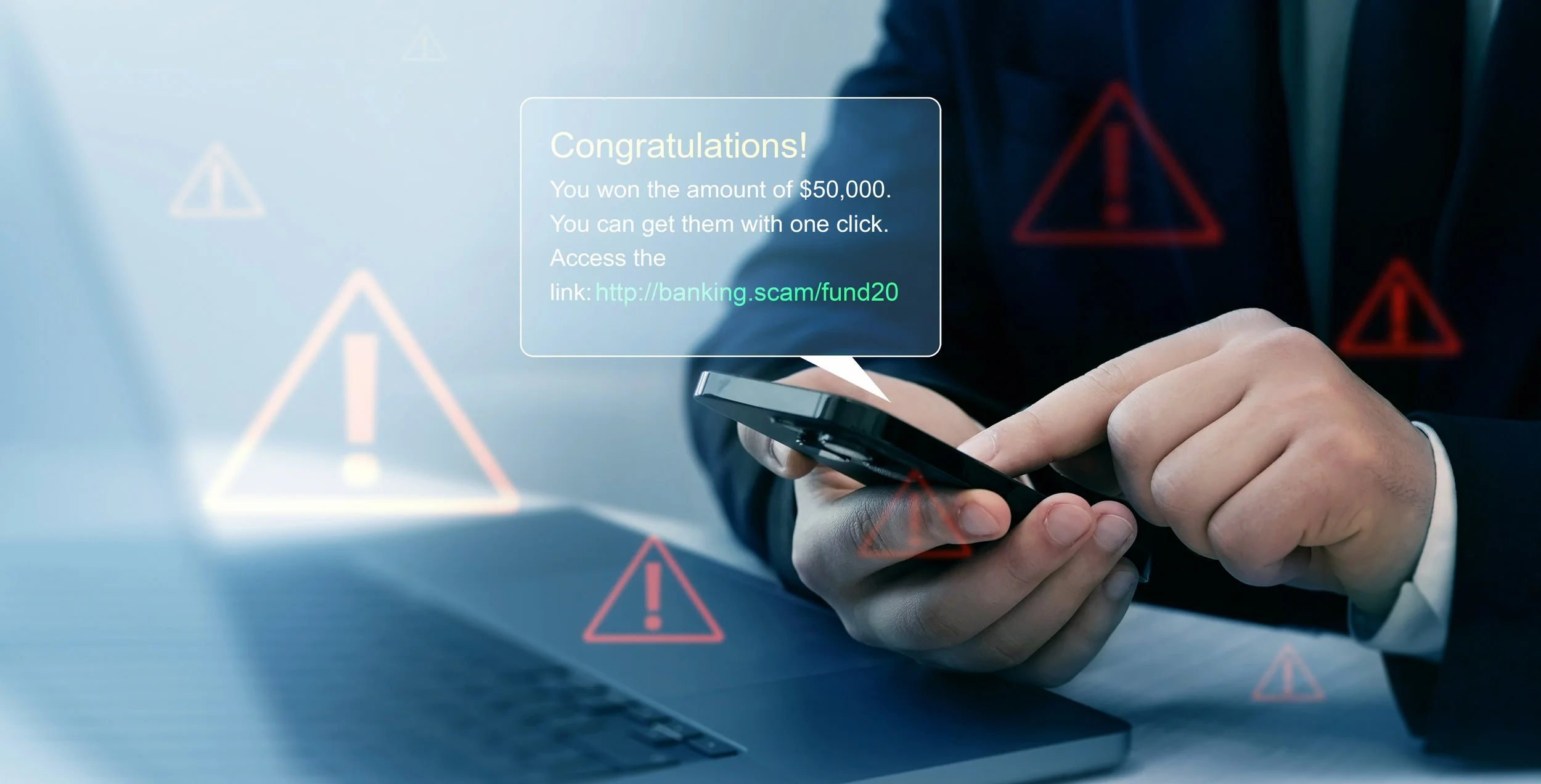
Social engineering fraud is when cybercriminals impersonate a trusted individual to manipulate others into performing actions such as making wire transfers, sharing confidential information, or granting access to their systems. It is often confused with hacking, but the two are fundamentally different. Hacking involves identifying vulnerabilities in software to breach a system, where as social engineering fraud relies on impersonation and manipulation to trick individuals into helping the cybercriminal.
There are multiple types of social engineering fraud schemes, but the most common one is called phishing. CrowdStrike, a global cybersecurity firm, defines phishing as “a cyberattack that leverages email, phone, SMS, social media or other form of personal communication to entice users to click a malicious link, download infected files or reveal personal information, such as passwords or account numbers.” This form of social engineering fraud has increased in popularity since the start of the pandemic as a result of an increase in the population working remote.
Research highlights that 98% of all cyberattacks come from some type of social engineering fraud. In the U.S., more that 80% of businesses have experienced phishing attacks, and nearly all successful network breaches (95%) involve phishing tactics. These statistics show that social engineering fraud is growing and can be challenging to detect because it is designed to grab the user’s attention through human emotions to manipulate their victims. Given these statistics, it is crucial that organizations adopt trainings and proactive measures to prevent these types of cyberattacks.
Even with an increase in these types of crimes, there are strategies organizations can put into place to mitigate risks.
Trainings
Employees need to know exactly what social engineering fraud looks like and how to identify phishing emails, fraudulent phone calls, and other common tactics. Organizations should implement in-house phishing attempts to their own employees to practice guarding against these attacks. It is important that employees are mindful when receiving a potential fraudulent email and they should be checking the source by confirming with person it came from that it is a legitimate request. This is especially important if the email is requesting personal information like passwords or asking to wire money. Educating your employees will help build awareness and help guard against these kinds of cyberattacks.
Secure Devices
Organizations will need to make sure their anti-malware and antivirus software is always up to date to block malware from phishing emails before it reaches the receiver. Another way to secure your devices is to always use different passwords for your various accounts. If you have multiple passwords and a cybercriminal does get ahold of one of your passwords, they are not able to login into other accounts. Also, implementing a two-factor authentication process will also help guard against these attacks. If a cybercriminal does obtain a password, there is now a second step that is required by requesting a text message with a confirmation code or asking a security question.
Minimize Your Digital Footprint
Cyber criminals use social media to their advantage to gather personal information. Kaspersky, an international cybersecurity company, shares an example of how a common security question many banks ask is ‘what is the name of your first pet.’ However, the security firm points out that if someone innocently shares this information on Facebook or other social media sites, you could be vulnerable to a cybercrime. “In addition, some social engineering attacks will try to gain credibility by referring to recent events you may have shared on social networks,” explains Kaspersky. To protect yourself, make sure all of your social media accounts are set to private so only friends and family are able to see what you post. Also, make sure your social media accounts do not include addresses and phone numbers. These easy precautions will guard against social engineering fraud.
Get Cyber Liability Insurance
While you can implement all the best strategies to protect your organization from social engineering fraud, it is still a best practice to talk to your risk advisor about a cyber-liability policy. They can explain the coverage and help you mitigate the risks.
Social engineering fraud is a growing threat for individuals and organizations of all sizes. By implementing these strategies, organizations can help mitigate this risk. Focus on educating your employees by building awareness of what social engineering fraud is and looks like, securing your devices through anti-virus software and implementing two factor authorizations. Lastly, minimize your digital footprint by making sure your social media accounts are set to private and not sharing personal information. By implementing and practicing these steps, organizations and individuals will be better equipped to defend themselves from social engineering fraud.
For questions about your risk management program, contact me at (619)486-6569 or jmarrs@ranchomesa.com.
How Healthcare Staffing Agencies Can Prevent Claims
Author, Jack Marrs, Associate Account Executive, Rancho Mesa Insurance Services, Inc.
Healthcare staffing agencies play a vital role in maintaining patient care standards. That is why it is critical for staffing agencies’ employees to be properly vetted, kept informed, and trained prior to being placed to reduce the likelihood of claims. Preventing such claims requires a collaboration between the healthcare staffing agency and the facility where employees are being placed. Healthcare staffing agencies can take steps to prevent claims and protect their operations.
Author, Jack Marrs, Associate Account Executive, Rancho Mesa Insurance Services, Inc.

Healthcare staffing agencies play a vital role in maintaining patient care standards. That is why it is critical for staffing agencies’ employees to be properly vetted, kept informed, and trained prior to being placed to reduce the likelihood of claims. Preventing such claims requires a collaboration between the healthcare staffing agency and the facility where employees are being placed. Healthcare staffing agencies can take steps to prevent claims and protect their operations.
Employee Screening
A best practice for preventing claims is to ensure that the healthcare professionals being placed are highly qualified and have the required credentials. Proper vetting includes verifying licenses, certifications, and prior work experience. If the potential employee is not properly screened and is hired, it not only is putting the patients in danger but it can result in malpractice claims.
Collective Intelligence, a professional screening service, states that “up to 30% of job applications contain false statements.” The company notes that “by using a healthcare professional screening service, you can rest assured that you are mitigating the risks associated with theft, negligent hiring lawsuits, poor employee retention and fees associated with non-compliance.”
Properly screening potential employees can reduce the risk of unintentionally bringing on unqualified people who could put the organization at risk.
Clear Communication of Job Roles and Responsibilities
Miscommunication or misunderstanding of job roles can lead to situations where healthcare professionals make decisions outside of their job roles. This not only puts the patient at risk but can also expose the agency to liability claims. To prevent this, the agency must clearly outline the roles, responsibilities, and limitations of the healthcare professionals that are being placed in the facility. Healthcare staffing agencies and the healthcare provider that hires them need to make sure that everyone involved knows exactly what the healthcare professional is responsible for at the facility.
Effective Safety Training
The healthcare industry is physically demanding, and healthcare professionals are prone to injuries, whether from lifting patients, long shifts, or a slip and fall. Healthcare staffing agencies are also prone to high turnover which can lead to workers being less familiar with their workplace and safety protocols, thus increasing the risk of accidents.
Healthcare staffing agencies must protect themselves from workers’ compensation, general liability, and medical malpractice claims. One way to do this is by partnering with the facilities where the employees are placed and formally agree to share responsibility for training and safety.
While staffing agencies should provide proper training, client facilities should also offer site-specific training related to their own operations and protocols. Clear agreements between the agency and the client facility regarding training responsibilities will help minimize the risk of claims.
Preventing claims in the healthcare staffing industry is an ongoing process that requires attention to detail, ongoing training, and partnerships with healthcare facilities. By taking these steps, agencies can protect themselves from the financial damage associated with claims and the general safety of their employees.
To learn more about how your healthcare staffing agency can reduce risk, contact me at jmarrs@ranchomesa.com or (619) 486-6569.
Understanding Why Your Building’s Leaky Roof Claim Might Be Denied
Author, Jack Marrs, Associate Account Executive, Rancho Mesa Insurance Services, Inc.
Leaky roofs can be a major headache for commercial property owners, often leading to significant damage and costly repairs. Understanding how insurance policies respond to these situations is crucial in navigating the claims process.
Author, Jack Marrs, Associate Account Executive, Rancho Mesa Insurance Services, Inc.

Leaky roofs can be a major headache for commercial property owners, often leading to significant damage and costly repairs. Understanding how insurance policies respond to these situations is crucial in navigating the claims process.
When is a Leaky Roof Covered?
Insurance policies typically cover leaky roofs under certain conditions. The key factor is whether the leak resulted from an unexpected and accidental event, such as a storm causing direct damage to the roof. For instance, if a storm creates a hole or crack in your roof, allowing water to penetrate and cause damage, your insurance policy will likely cover the repairs.
When is a Leaky Roof Not Covered?
On the other hand, if the leak is due to a lack of maintenance or general wear and tear over time, the insurance carrier will typically deny the claim. Routine maintenance and upkeep are the property owner's responsibility, and insurance policies are not designed to cover damages resulting from negligence or normal wear and tear. Also, the age of the roof can determine if the claim will not be covered.
According to the Raizner Slania lawfirm, “In most cases, roof damage on a roof that is 20 years old or older, which accounts for the lifespan of most shingle roofs, will not be covered. A roof on a commercial property can also be deemed too old if one of the lower layers is 20 years old and a new layer was simply added to it rather than the whole roof being replaced.”
Ensuring That Your Claim is Covered
To ensure that your insurance claim for a leaky roof is covered, it is important to document the cause of the damage. If a storm has caused the damage, take photos of the roof and any other affected areas. These photos can serve as evidence when you file your claim. Additionally, maintaining your roof regularly and addressing minor issues before they worsen can help you avoid the claim being denied. Keep records of any maintenance work and inspections conducted on your roof as these documents will be helpful if you need to prove that the damage was not due to lack of upkeep/maintenance.
Remember, if a storm directly causes the damage that leads to a leak, your insurance policy will likely cover the repairs. However, if the leak is due to poor maintenance or normal wear and tear, your insurance policy will most likely deny the claim. By staying up to date with roof maintenance and documenting any storm related damage, you can feel confident your claim will be covered.
To discuss your organization’s potential exposure to property claims, contact me at (619) 486-6569 or jmarrs@ranchomesa.com.
Building an Effective Renewal Submission in a Hard Market
Author, Jack Marrs, Associate Account Executive, Rancho Mesa Insurance Services, Inc.
Insurance renewals can be challenging for nonprofits, especially in the hard market of 2024, characterized by higher premiums, stricter underwriting, and reduced coverage from insurance carriers. Leaning on your insurance broker as the quarterback, a well-prepared submission can significantly impact the outcome of your insurance renewal, potentially leading to better terms and lower premiums. Nonprofits can work effectively with their insurance broker to build a comprehensive submission using the following strategies.
Author, Jack Marrs, Associate Account Executive, Rancho Mesa Insurance Services, Inc.

Insurance renewals can be challenging for nonprofits, especially in the hard market of 2024, characterized by higher premiums, stricter underwriting, and reduced coverage from insurance carriers. Leaning on your insurance broker as the quarterback, a well-prepared submission can significantly impact the outcome of your insurance renewal, potentially leading to better terms and lower premiums. Nonprofits can work effectively with their insurance broker to build a comprehensive submission using the following strategies.
Pre-Renewal Meeting
Begin the pre-renewal process well in advance by meeting with your insurance broker at least 90 days before your renewal date to update expiring applications and discuss any changes in operations, such as new programs, major grants, changes in leadership, turnover percentage, and employee count, etc. Rancho Mesa meets with clients 120 days prior to the renewal date. This provides plenty of time to gather the necessary documentation, address potential issues, discuss a renewal strategy, and explore alternative options if needed.
Highlight Risk Management Efforts
Insurance carriers are going to favor organizations that proactively manage risk. Demonstrating your commitment to risk management can position your nonprofit as a lower-risk organization, potentially leading to more favorable insurance terms. Risk Management Strategies:
Safety Training
Regularly train staff and volunteers on safety procedures and document these sessions. Rancho Mesa clients have access to our proprietary SafetyOne™ Desktop & Mobile App, which allows you to manage your workplace safety program from anywhere, access important documents, and share job-specific and employee safety data as needed. The SafetyOne platform also includes tailored trainings to ensure proactive risk management.Large Claim Summary
For organizations that have experienced any number of large claims, it is best practice to provide a detailed summary of each claim. This should include exactly what happened and the procedures your organization has put into place to mitigate similar claims from happening in the future. Charity First recommends this approach because it demonstrates to insurance carriers that your organization is proactive about risk management.
Description of Operations
Providing a detailed description of your operations is crucial. This includes explaining how your nonprofit executes its mission, the specific activities and programs you run, and how these activities align with your organizational goals. A comprehensive description helps insurance carriers understand the nature and scope of your work, assess the associated risks accurately, and provide appropriate coverage.
Broker Expertise
Your insurance broker is a valuable resource and should have a deep knowledge of your organization’s insurance market and the specific needs of nonprofits. The broker should be ensuring that the submission is as strong as possible. The broker should be leading you throughout this entire process, informing you exactly what is needed and educating you on what is happening in the marketplace. The broker's role is not only to provide nonprofits with adequate coverage but also to ensure clients feel well-informed about what to expect for their renewal.
Importance for 2024 Renewals in a Hard Market
The insurance market in 2024 is particularly challenging for nonprofits due to an uptick in frequency and severity of claims across all lines of insurance. A hard market typically translates into insurance carriers engaging in more conservative underwriting, more restrictive coverage, elevated retentions/deductibles, and higher premiums. This makes it even more critical for nonprofits to present a strong, well-documented submission.
Building a strong submission for your insurance renewal in 2024 requires a proactive and collaborative approach. By starting early, maintaining open communication with your broker, compiling comprehensive documentation, highlighting risk management efforts, leveraging your broker’s expertise, and exploring alternative options, your nonprofit can secure the best possible terms for its insurance coverage. This strategic approach not only helps in managing costs but also ensures that your organization is properly insured.
To discuss your organization’s insurance renewal, contact me at (619)486-6569 or jmarrs@ranchomesa.com.
The Critical Importance of Nonprofit Executive Transition Planning
Author, Jack Marrs, Associate Account Executive, Rancho Mesa Insurance Services, Inc.
In the world of nonprofit management, the departure of an executive director can cause a time of uncertainty. This kind of challenge is why all nonprofits need a well-crafted executive transition plan. This plan is not just a roadmap for navigating the change in leadership but a tool for sustaining and growing the nonprofit's mission. In this article, we will dive into the importance of having an executive transition plan, the key components that make up an effective plan, and the benefits it brings to the nonprofit sector.
Author, Jack Marrs, Associate Account Executive, Rancho Mesa Insurance Services, Inc.

In the world of nonprofit management, the departure of an executive director can cause a time of uncertainty. This kind of challenge is why all nonprofits need a well-crafted executive transition plan. This plan is not just a roadmap for navigating the change in leadership but a tool for sustaining and growing the nonprofit's mission. In this article, we will dive into the importance of having an executive transition plan, the key components that make up an effective plan, and the benefits it brings to the nonprofit sector.
Understanding the Role of the Executive Director
The executive director's role is crucial in shaping the nonprofit's direction, culture, and public image. These leaders have many roles from strategic planning and fundraising to staff morale and community engagement. Therefore, the departure of an executive can leave a void that is difficult to fill without a transition plan in place.
A well thought out executive transition plan begins with a deep understanding of the executive director role within their nonprofit. It involves evaluating the organization's current needs, future plans, and the specific qualities in a new leader that will allow them to successfully fulfil the nonprofit’s mission moving forward.
Alignment and Visioning
The next step is to make sure that the organization’s future plans align with the board’s vision. In order for the organization to continue to be successful, everyone needs to be on the same page and have a deep understanding of the organization’s goals.
Developing a transition plan that is prepared for different types of departures like planned, unplanned, or strategic, shows your level of preparedness. Whether the transition is expected or sudden, having a clear plan in place minimizes disruptions and allows the organization to focus on its mission.
Cultivating Internal Leadership
One of the plan's key components is the focus on internal leadership development. By identifying and training potential future executives within the organization, this will create qualified employees ready to step into a leadership role when needed. Also, internal employees bring a deeper understanding of the nonprofit’s culture and operations, making the transition period much smoother than hiring from outside the organization.
The Search for New Leadership
Finding the right executive to guide the nonprofit through its next phase is the most important part of the transition plan. This process involves setting clear criteria for the ideal candidate, conducting a thorough search, and the selection process itself. The plan should outline the steps for advertising the position, screening candidates, and holding interviews, while keeping the organization’s mission on the forefront.
Also, finalizing the transition does not simply involve the selection of a new executive director but also ensures that they are fully integrated into the organization. This would involve a detailed onboarding process where the new leader is introduced to the team and understands the nonprofit's operations.
The importance of having a comprehensive executive transition plan cannot be overstated for nonprofits. By thoroughly understanding the role of the executive director, aligning the transition with the nonprofit's vision, cultivating internal leaders, selecting and integrating a new leader, nonprofit organizations can successfully navigate the executive transition with confidence and ease. This approach not only protects the organization's mission during times of change but also sets it up for future success.
With a strong presence representing the insurance needs of nonprofits throughout California, Rancho Mesa prides itself on understanding both the risk management and operational components within this important space. For questions on this article or to learn more about how Rancho Mesa can help your organization, contact me at jmarrs@ranchomesa.com or (619) 486-6569.
Resources
https://alysterling.com/nonprofit-executive-director-transition/
https://www.philanthropy.com/article/the-great-nonprofit-leadership-turnover
https://boardsource.org/fundamental-topics-of-nonprofit-board-service/executive-transition/
https://buildingmovement.org/reports/the-leadership-in-leaving/
The Final Chapter: Addressing Training, Access and Recordkeeping in the IIPP
Author, Jack Marrs, Associate Account Executive, Rancho Mesa Insurance Services, Inc.
In this third installment of exploring an Injury and Illness Prevention Program (IIPP), we will be taking a closer look at: Providing employee training and instruction, procedures to allow employee access to the program, and recordkeeping and documentation.
Author, Jack Marrs, Associate Account Executive, Rancho Mesa Insurance Services, Inc.

In this third installment of exploring an Injury and Illness Prevention Program (IIPP), we will be taking a closer look at: Providing employee training and instruction, procedures to allow employee access to the program, and recordkeeping and documentation.
Providing Employee Training and Instruction
Providing clear and effective training for both employees and supervisors is essential for the success of an IIPP. All employees are required to be fully aware of the workplace hazards they may face. Comprehensive and well-conducted trainings can help reduce the likelihood of work-related injuries and illnesses. An article from The State Fund suggests “If you are unable to conduct your own required trainings, you should reach out to an outside consultant, Cal/OSHA consultation, vendors, your insurance carrier, and/or broker for assistance.” The more knowledgeable and prepared employees are, the safer the work environment becomes.
Take a look at the training resources that are available to your organization. Rancho Mesa clients can access the online safety training courses in the SafetyOne™ platform.
Procedures to Access the IIPP
All employees are required to have access to the written IIPP. This will ensure that all employees are fully aware of the safety protocols and hazard prevention strategies used to minimize workplace accidents and illnesses and thus, maintain a safe workplace.
According to Cal/OSHA, employers can meet this requirement by:
1. Unobstructed access through a company server or website, which allows employees to review, print, or email a copy of the IIPP
2. When requested, provide a printed copy of the IIPP (unless the employee agrees to receive an electronic copy)
The IIPP can be made accessible to users of the SafetyOne mobile app. It allows organizations to upload digital files into a file cabinet that is available only to their users. For employees who aren’t SafetyOne app users, they could scan a QR code or complete a webform to request the IIPP from their administrator. However your organization decides to distribute the IIPP, it should be easy for employees to access or request.
Recordkeeping and Documentation
Recordkeeping and proper documentation are crucial components of the IIPP. By maintaining accurate records, employers can learn from past incidents and identify injury and illness trends. This knowledge allows for necessary corrections and improvements in future operations, which will improve overall workplace safety. There are 5 steps required by the OSHA for a compliant recordkeeping system:
Each employer (unless exempt by size or industry) must record each fatality, injury, or illness that is work-related, is a new case, or meets one or more of the general recording criteria specified in Title 8, Section 14300.
Record each injury or illness on the Cal/OSHA Log of Occupational Work Related Injuries and Illnesses (Form 300) according to its instructions.
Prepare an Injury and Illness Incident Report (Form 301), or equivalent.
Annually review and certify the Cal/OSHA Form 300 and post the Summary of Work-Related Injuries and Illnesses (Form 300A) no later than February 1 and keep it posted where employees can see it until April 30.
Maintain the last five years of these records in your files.
A simple way to collect the incident information required for the OSHA logs (Form 300, 300A and 301) can be obtained by utilizing SafetyOne’s mobile forms. Either through the mobile app or via a QR Code or web link, employees can complete accident investigation forms and witness statements digitally. Then, the person responsible for documenting and maintaining the OSHA logs, can review the reports that came in through the mobile app and document the OSHA logs in the RM365 HRAdvantage Portal.
Rancho Mesa will host several webinars in the coming months to assist clients with understanding the best practices for completing their OSHA logs using SafetyOne™ and the RM365 HRAdvantage Portal.
Cal/OSHA has a Guide to Developing Your Workplace Injury and Illness Prevention Program that is helpful for organizations that need some assistance with getting started.
Rancho Mesa also has a 6-page Sample Injury and Illness Prevention Overview for California Employers available through our RM365 HRAdvantage Portal.
Following these steps is a proactive approach to building a safer working environment for all employees. The bottom line, it’s all about mitigating accidents before they happen and building a safe work environment.
Please contact me with any questions regarding the IIPP at (619)-486-6569 or via email at jmarrs@ranchomesa.com.
Identifying Proper Procedures for the Injury and Illness Prevention Program
Author, Jack Marrs, Associate Account Executive, Rancho Mesa Insurance Services, Inc.
In this second installment of exploring an Injury and Illness Prevention Program (IIPP) we will be taking a closer look at the procedures for identifying and evaluating workplace hazards, investigating occupational injury or illnesses, and correcting unsafe or unhealthy conditions, work practices and procedures.
Author, Jack Marrs, Associate Account Executive, Rancho Mesa Insurance Services, Inc.

In this second installment of exploring an Injury and Illness Prevention Program (IIPP) we will be taking a closer look at the procedures for identifying and evaluating workplace hazards, investigating occupational injury or illnesses, and correcting unsafe or unhealthy conditions, work practices and procedures.
Identifying and Evaluating Workplace Hazards
Employers need to have proper measures in place to identify potential health and safety risks like unsafe conditions and practices within the workplace. These measures involve conducting regular inspections to identify any areas of the workplace that may be hazardous. Also, conducting interviews with employees is a great way to identify any potential workplace hazards. During this process it is important to document any identified hazards and create a plan of action to fix them.
According to California’s State Fund “Inspections should be conducted by personnel who, through experience or training, are able to identify actual and potential hazards and understand safe work practices. They should be knowledgeable in the Cal/OSHA safety orders that apply to your workplace to better help you identify potential hazards.”
Investigating Occupational Injuries or Illnesses
Referring now to the investigation that should take place after an accident or near miss has occurred. The investigation should be done by a trained employee who is able to identify the cause of the accident and understands what solutions need to be put in place to prevent a similar incident from happening in the future. When doing an investigation, it is crucial to fill out an investigation report containing the details about what happened. This information is used to not only identify root causes but much of the data that is collected will need to be documented on the OSHA logs. CAL/OSHA lists five important steps for proper recordkeeping:
Each employer (unless exempt by size or industry) must record each fatality, injury, or illness that is work-related, is a new case, or meets one or more of the general recording criteria specified by OSHA.
Record each injury or illness on the OSHA Form 300, according to its instructions.
Prepare an Injury and Illness Incident Report known as Form 301, or its equivalent.
Annually review and certify the OSHA Form 300 and post the Summary of Work-Related Injuries and Illnesses known as the Form 300A no later than February 1 and keep it posted where employees can see it until April 30.
Maintain the last five years of these records in your files.
Lastly, building an inventory of investigation reports can lead to a stronger ability to identify developing trends and root causes that could lead to additional incidents, if not corrected.
Correcting Unsafe or Unhealthy Conditions, Work Practices and Procedures
Once your safety team becomes aware of a hazard, it is imperative to take immediate action. If the hazard is not easily fixable, employees should vacate the work area until a solution is implemented. Once the solution is in place, only trained staff members should enter the hazardous area to address the issue. This approach ensures effective hazard management while minimizing the risks associated with its correction.
By implementing an effective Injury and Illness Prevention Program, workplaces will begin to fulfill their regulatory obligation of maintaining a safe workplace, but also create a culture of safety and accountability.
Our next installment will cover the last 3 critical components of the IIPP: providing employee training and instruction, procedures to allow employee access to the program, and recordkeeping and documentation.
Please contact me with any questions about managing your risk at (619) 486-6569 or via email at jmarrs@ranchomesa.com.
Breaking Down the First Few Components of the IIPP
Author, Jack Marrs, Associate Account Executive, Rancho Mesa Insurance Services, Inc.
Building upon Sam Brown’s article “Guidance for Developing an Effective Injury and Illness Prevention Program” (IIPP), I would like to delve further into some of the key components of an IIPP. In this first installment, I will explore assigning the right person to create the IIPP, compliance with safety regulations, and effective communication.
Author, Jack Marrs, Associate Account Executive, Rancho Mesa Insurance Services, Inc.

Building upon Sam Brown’s article “Guidance for Developing an Effective Injury and Illness Prevention Program” (IIPP), I would like to delve further into some of the key components of an IIPP. In this first installment, I will explore assigning the right person to create the IIPP, compliance with safety regulations, and effective communication.
Person Responsible for Creating the IIPP
This person must understand the ins and outs of the organization. They must be familiar with the workplace hazards and understand what safety measures need to be put in place. They are also in charge of updating the program and improving it as the organization changes and grows. This individual must also be formally mentioned in the IIPP, clarifying the assigned responsibility for overseeing this aspect of safety by including their name in the document.
Compliance with Safety Regulations
The IIPP outlines the system for ensuring employees comply with safe and healthy work practices.
This entails effectively training and informing employees about their responsibilities and expectations. Employees need to understand the system that is put in place as well as the safety procedures and the requirements of the IIPP. Providing positive recognition and rewarding employees who are following the IIPP guidelines is crucial, while disciplinary measures should be put in place for those who fail to comply. This is how you begin to create a culture of safety and accountability. Also, to ensure your IIPP stays up to date, it is considered best practices to regularly review and update all rules and procedures as needed.
Effective Communication
The IIPP must include a system for communicating with employees in a form readily understandable by all affected.
It remains critical to effectively communicate with your employees on matters that relate to the IIPP. Clear communications can be learned through trainings. And, it is important that employees use language that can be easily interpreted. According to the State Fund, “your communication system should include provisions for encouraging employees to report potential hazards in the work environment without fear of reprisal. One way to do this is to have a notification system where employees report hazards anonymously.” This helps eliminate fear in the employee and allows them to feel comfortable holding their co-workers to the IIPP standard. Effective communication can help prevent injuries from happening in the first place.
By embracing these components, organizations can create a culture of safety and accountability.
The next IIPP article will cover the three critical components of the IIPP: identifying work place hazards, investigating occupational injury or illness, and work practices/procedures.
If you have any inquiries, feel free to reach out to me at (619) 486-6569 or via email at jmarrs@ranchomesa.com.
Directors & Officers Liability Series: Side A Defense Costs & Settlements
Author, Jack Marrs, Associate Account Executive, Rancho Mesa Insurance Services, Inc.
While an insurance agent must continually stay abreast of industry trends and market conditions, it’s equally important to educate clients on the enforce insurance policies. As a non-profit focused insurance agency, Rancho Mesa is accustomed to having important conversations with clients regarding Directors & Officers Liability insurance (D&O).
Author, Jack Marrs, Associate Account Executive, Rancho Mesa Insurance Services, Inc.

While an insurance agent must continually stay abreast of industry trends and market conditions, it’s equally as important to educate clients on the enforce insurance policies. As a non-profit focused insurance agency, Rancho Mesa is accustomed to having important conversations with clients regarding Directors & Officers Liability Insurance (D&O).
This article is the first installment in a 3-part series explaining the most common insurance agreements in a D&O policy: Side A, Side B, and Side C.
Side A addresses defense costs and settlements.
Why Organizations Have D&O Policies
Most non-profit board members understand they may be held personally liable for financial damages they cause while serving the organization.
This scenario might occur if a director or officer unintentionally misappropriates funds, isn’t transparent about a conflict of interest, or unknowingly violates workplace laws. As such, personal assets can be exposed without a D&O policy in place.
Fortunately, the D&O policy’s Side A insuring agreement addresses this concern and protects the personal assets of the organization’s directors.
Having a D&O policy allows organizations to attract qualified board members who do not want to risk their personal assets in order to serve on the organization’s board.
D&O Policy Coverage
Side A covers the cost of claims not indemnified by the organization.
A claim made against an officer during a bankruptcy is one such example. Without this coverage, the officer will be liable for defense costs.
Fortunately, Side A insuring agreements typically do not have a self-insured retention, which acts similar to a deductible.
Our next installment in this Directors & Officers liability series will address the Side B insuring agreement.
To learn more about D&O insurance or to address your organization’s risk, contact me at (619)486-6569 or jmarrs@ranchomesa.com.
NIAC Reimbursing for Damage to Employees Personal Vehicles
Author, Jack Marrs, Associate Account Executive, Rancho Mesa Insurance Services, Inc.
Many employees of non-profit organizations use their personal vehicles while performing work-related duties. Following an auto accident, the employee’s personal auto insurance will respond to a third party liability claim. Only once those policy limits are exhausted will the organization’s non-owned auto liability coverage respond.
Author, Jack Marrs, Associate Account Executive, Rancho Mesa Insurance Services, Inc.

Many employees of non-profit organizations use their personal vehicles while performing work-related duties. Following an auto accident, the employee’s personal auto insurance will respond to a third party liability claim. Only once those policy limits are exhausted will the organization’s non-owned auto liability coverage respond.
But who is responsible for physical damage to the employee’s vehicle?
Below, we discuss the impact of California Labor Code 2802 and one insurer’s response.
If an employee’s vehicle is damaged while performing work-related duties, the responsibility of the repair cost falls to the other driver or the employee’s auto insurance. An issue arises, however, when a personal auto lines carrier adopts exclusions that eliminate coverage for an employee involved in a business-related activity.
Complicating matters, California Labor Code 2802 states that “an employer must indemnify an employee for all necessary expenditures or losses that the employee incurs in direct consequence of performing work-related duties.” Non-profit leaders must understand the organization’s obligation to reimburse the employee for the cost to repair a personal vehicle.
This unexpected expense can be challenging, especially for smaller organizations with employees driving personal vehicles to help fulfill the mission.
Fortunately, Nonprofit Insurance Alliance of California (NIAC), an insurance risk sharing pool for 501(c)3 organizations, has developed a useful coverage to address this issue. If coverage is elected, NIAC will reimburse the employer’s expense for physical damages to a California-based employee’s personal vehicle. Coverage offers $5,000 per claim with a $25,000 policy aggregate limit, thereby easing the financial burden created by Labor Code 2802.
Understanding these types of coverages and their exclusions are key for non-profit organizations. If you’re unsure how your policy would respond to this scenario, contact me at (619) 486-6569 jmarrs@ranchomesa.com for a policy audit to see if your organization is covered.
Retaining Non-Profit Employees in Vital Service Roles
Author, Jack Marrs, Associate Account Executive, Rancho Mesa Insurance Services, Inc.
Employees and volunteers are the heart of non-profits. Without them, non-profits would never have a chance to fulfill their missions. They are the organizations who communities rely on for support.
Author, Jack Marrs, Associate Account Executive, Rancho Mesa Insurance Services, Inc.

Employees and volunteers are the heart of non-profits. Without them, non-profits would never have a chance to fulfill their missions. They are the organizations who communities rely on for support.
Dating back to Spring of 2020, employee retention in the non-profit has become a crisis. Individuals and communities relying on non-profits are suffering because of low employee retention. Non-profits provide a large variety of different services anywhere from food banks to domestic violence shelters. They also provide hope, which gives those in need a fighting chance. According to the National Council of Nonprofits, “staffing shortages in direct-care services mean that families and individuals cannot access life-saving support. When a non-profit closes its doors, the ripple effects cannot be ignored: communities lose access to food, shelter, mental health care, and other vital services.”
Non-profits are not able to provide proper care for the same number of clients that they once could, which is creating a longer waitlist to get access to care.
According to the National Council of Non-Profits survey, “26% of responding organizations reported having a waiting list that is more than a month long, with some organizations highlighting that clients have to wait years to receive services. While 21% of respondents acknowledged that they do not have a wait list, they clarified that it is because they are no longer accepting new clients or referrals and have turned people away at some point.”
Non-profit leaders who are experiencing high employee turnover must take action and consider implementing new tactics that can help retain key employees. To start, employees like to feel valued and appreciate being checked in on and complimented for their hard work. It is important that organizational leaders are engaging with these employees, asking them for their opinion, giving them options, and making them feel heard and supported. This can lead to building an organization that others will want to join because you have created a healthy work environment with employees who regularly share these positive examples with their friends and loved ones.
Also, employees want to be able to grow within non-profit organizations. According to Chelsea Guffy, a graduate of the Master of Nonprofit Leadership and Management program at Arizona State University, who is the Marketing and Events Manager at Homeward Bound in Phoenix, “employees who value their work want the opportunity to grow and gain more experience in their career. Start the professional development in the onboarding process. Find out the training and skills incoming staff wish to learn, and take an interest in their personal career goals.”
With respect to income, Guffy goes on to suggest “When looking at the budget, offering other types of compensation, such as bonuses for exceptional performance; perhaps an implemented paid vacation time could provide incentive for greater work performance and raise appreciation toward the organization.”
Something as small as paid time off can go a long way. It will provide your employee with more of a balanced work-life as well as decrease likelihood of burnout.
Another great way for non-profit employers to retain their employees is to hold exit interviews. Ask the employee a series of questions of what you could improve in order to provide a better experience for the next candidate. Continue to keep track of these statements and you’ll begin to see a pattern. From there, it's up to the non-profit leader to put in the action to resolve those complaints.
Additional tips for retaining employees can be found is Rancho Mesa’s RM365 HRAdvantage™ portal, along with our downloadable “Guide to Improving Retention” and online courses designed for human resources professionals that address engaging your workforce, developing successful teams and a healthy work/life balance.
To discuss your risk management strategies or our HR portal, contact me at (619) 486-6569 or jmarrs@ranchomesa.com.
CA Insurance Bureau Recommends 7.6% Rate Increase
Author, Jack Marrs, Associate Account Executive, Human Services Group, Rancho Mesa Insurance Services, Inc.
The Workers’ Compensation Insurance Rating Bureau of California (WCIRB) voted to submit a September 1, 2022 Pure Premium Rate Filing to California’s Insurance Commissioner Lara.
Author, Jack Marrs, Associate Account Executive, Human Services Group, Rancho Mesa Insurance Services, Inc.

The Workers’ Compensation Insurance Rating Bureau of California (WCIRB) voted to submit a September 1, 2022 Pure Premium Rate Filing to California’s Insurance Commissioner Lara.
The filing will suggest a 7.6% average rate increase above last year’s approved September 1, 2021 pure premium rates.
There are multiple reasons for the WCIRB’s Governing Committee to suggest the rate increase. Most notably,
There is an 11% projected increase to indemnity claim cost by the end of 2024.
The industry predicts a 6.5% increase in medical costs per claim from 12/31/21 to 12/31/24.
We expect increases in frequency of injuries and claims.
Wage inflation will increase claim cost and the cost to adjust claims.
Expected future costs of COVID-19 claims are likely to increase, which were previously excluded when underwriting considers claims history.
Before the increase goes into effect, the WCIRB will submit a proposal to the Department of Insurance. Insurance Commissioner Lara will decide to either approve the rate increase, or reject it and suggest a different outcome.
Although the commissioner cannot mandate any sort of rate increase or decrease, it is common for workers’ compensation carriers to cooperate with his recommendation and follow his lead.
This news is another sign that the California workers’ compensation insurance market may be hardening. With that in mind, it is crucial that employers are implementing trainings and safety programs to ensure workplace safety.
In addition, a strong broker partner must truly understand the clients’ industry, operations, and service needs.
Please contact Rancho Mesa to understand how to better prepare for an increase in claims costs and the hardening workers’ compensation marketplace.
Preventing Stress Claims
Author, Jack Marrs, Associate Account Executive, Human Services Group, Rancho Mesa Insurance Services, Inc.
Specializing in non-profit insurance has opened my eyes to how difficult it is for some non-profit employees to deal with the stress related to their jobs. It’s the nature of the work. Helping people through difficult situations can be rewarding for an employee, but it can also be emotionally draining when they become invested in their clients to the point where it can lead to burnout.
Author, Jack Marrs, Associate Account Executive, Human Services Group, Rancho Mesa Insurance Services, Inc.

Specializing in non-profit insurance has opened my eyes to how difficult it is for some non-profit employees to deal with the stress related to their jobs. It’s the nature of the work. Helping people through difficult situations can be rewarding for an employee, but it can also be emotionally draining when they become invested in their clients to the point where it can lead to burnout.
Employees can suffer from emotional and mental illness as a result of their working environments, which can lead them to file workers’ compensation claims. Depending on the nature of the non-profit’s mission, employees may witness a variety of disturbing realities that the general public isn’t used to experiencing.
Since psychiatric injuries are based on an employees' personal experience, it’s much more difficult for physicians to verify these types of claims. Plus, these conditions can also develop from multiple stressors in an employee’s professional and personal life like when they are dealing with a death, going through a divorce, or filing for bankruptcy. So, it’s hard to determine what percentage of the claim is work-related and what percentage is caused by outside factors.
Workplace stress can trigger mental and physical illnesses and injuries, so identifying and correcting stressful situations early, can prevent costly health care costs and workers’ compensation claims.
Managers should periodically check in with their employees to see how they are doing with regards to their workload, relationships with clients, co-workers and vendors, etc., but also their personal lives. If there is an issue in the workplace, it can be addressed quickly before it causes extreme stress to the employee. If something is happening at home, it could be affecting their productivity and performance on the job. And, the employer may be able to refer their employee to resources to assist them as they deal with whatever stressors are in their personal lives. This also helps to establish if the stress felt by the employee is work-related or personal.
Employers can reduce workplace stress by ensuring effective communication from supervisors to employees. Whether the communication is about job duties and expectations, career growth within the organization, or a traumatic event and relevant resources to help employees cope, being transparent with employees can relieve some stress caused by not knowing what’s to come.
Stress claims take a tremendous toll on both employees working for non-profits and the organizations themselves. Rancho Mesa provides an extensive library of training offered through our Risk Management Center and the RM365 HRAdvantage™ Portal. These trainings can be easily accessed and allow for our non-profit clients to be proactive in mitigating the severe impact of stress claims.
Contact me at jmarrs@ranchomesa.com or (619) 486-6569 to learn more about these options.
Timely Reporting of Workers’ Compensation Claims Lower Overall Costs
Author, Jack Marrs, Associate Account Executive, Rancho Mesa Insurance Services, Inc.
Leading into 2022, it is important for employers to examine their workplace injury reporting practices. Specifically, employers should report all injuries including medical-only workplace injuries to their workers’ compensation insurance company. Best practices dictate all claims should be reported within the first 24 hours in order to improve treatment to the injured worker and reduce the overall cost of the claim to the employer.
Author, Jack Marrs, Associate Account Executive, Rancho Mesa Insurance Services, Inc.

Leading into 2022, it is important for employers to examine their workplace injury reporting practices. Specifically, employers should report all injuries including medical-only workplace injuries to their workers’ compensation insurance company. Best practices dictate all claims should be reported within the first 24 hours in order to improve treatment to the injured worker and reduce the overall cost of the claim to the employer.
A recent conversation with an underwriting manager highlighted the fact that some employers are choosing to pay for occupational clinic visits rather than filing a claim, assuming that small medical-only claims will negatively impact the Experience Modification Factor (X-mod) and ensuing workers’ compensation premiums. However, in actuality claims of $250 or less do not impact the X-mod. Not only are employers legally required to report workplace injuries, but those small claims can easily turn into something bigger, if not reported in a timely manner. Further, the reporting of all incidences can assist a company in identifying trends and root causes thereby allowing for proactive measure to be taken. Rancho Mesa’s proprietary Key Performance Indicator (KPI) dashboard helps track these trends and compare a company’s performance to that of their industry. Request a KPI dashboard for your company.
Why then does reporting lag result in higher claim costs? An insurance carrier’s ability to investigate a claim, determine compensability, and identify fraud may be hindered as details of the incident fade, witnesses may no longer be available or key evidence may not be preserved. According to Liberty Mutual, a 29-day delay in reporting an injury can lead to a 33% increase in lost time, 52% higher average claim cost, and 152% increase in litigation rates. This makes sense when one considers that a delay in seeking treatment could cause an employee’s condition to worsen, extending recovery time and temporary disability payments.
Lastly, an employer paying a medical bill will pay much more than a workers’ compensation carrier would pay for that same bill as insurance companies negotiate a reduced fee schedule for occupational injuries. Bottom line, failure to report workplace incidents in a timely manner can put any organization and its employees at risk for no benefit. Contact Rancho Mesa to learn more about our Risk Management Center and how our free trainings and webinars can improve your reporting practices.