

Industry News

Five Things to Know Before Your Annual Surety Meeting
Author, Matt Gaynor, Director of Surety, Rancho Mesa Insurance Services, Inc.
November is the month that I meet with our contractor clients to discuss how the current year will end up and begin planning for the next year. We will also touch base regarding the items our surety carrier partners will want to hear about when we schedule our annual meetings (after the December 31, 2022 financial information is available).
Author, Matt Gaynor, Director of Surety, Rancho Mesa Insurance Services, Inc.

November is the month that I meet with our contractor clients to discuss how the current year will end up and begin planning for the next year. We will also touch base regarding the items our surety carrier partners will want to hear about when we schedule our annual meetings (after the December 31, 2022 financial information is available).
Similar to having an open book test, if our contractor knows in advance what will be requested, they can prepare accordingly and anticipate any “red flag” type items that might be of concern for the bond company. Below is a general list:
Items on the balance sheet with an emphasis on cash, accounts receivable, borrowing against the bank line of credit, and equity.
An aging schedule of the accounts receivables will be very helpful to determine what amount is in excess of 90 day collections.
The revenue and net profit or net loss from the income statement to reflect if 2022 was a profitable or losing year. Also, a discussion of any Paycheck Protection Program (PPP) money that was loaned to the contractor and if the entire amount was forgiven in 2022.
They will review the work in progress and completed contract schedules to discuss which projects were successful and others that lost money. Be prepared to provide additional detail on any problems connected with losing projects and steps taken to correct this on future work.
Potential new opportunities you anticipate in 2023. Will any of these projects exceed your current program, contain work outside your normal scope or geographic territory? Be prepared to address how you will manage additional risk that may be a concern to the bond company.
Tax Planning. What additional withdraws do you anticipate to cover taxes, etc.?
If you would like more information on how your bond carrier might analyze your 2022 financial information, please contact me at (619)937-0165 or mgaynor@ranchomesa.com.
Contractors Prepare to Bid for $1.2 Trillion in Government Infrastructure Contracts
Author, Sam Clayton, Vice President, Construction Group, Rancho Mesa Insurance Services, Inc.
Last fall, the federal government passed the $1.2 trillion Infrastructure Investment and Jobs Act to rebuild and modernize America’s roads, bridges, transit, rail, airports, broadband and wastewater infrastructure. With this tsunami of public funds starting to become available, state and local government agencies will require contractors to enter a pre-qualification process in order to bid upcoming projects. Many of these entities will look closely at the contractor’s Experience Modification Rate (EMR or ExMod).
Author, Sam Clayton, Vice President, Construction Group, Rancho Mesa Insurance Services, Inc.

Last fall, the federal government passed the $1.2 trillion Infrastructure Investment and Jobs Act to rebuild and modernize America’s roads, bridges, transit, rail, airports, broadband and wastewater infrastructure. With this tsunami of public funds starting to become available, state and local government agencies will require contractors to enter a pre-qualification process in order to bid upcoming projects. Many of these entities will look closely at the contractor’s Experience Modification Rate (EMR or ExMod).
The EMR is a numeric representation of a company’s payroll and claims history, compared to businesses in the same industry or standard industry classification. EMRs create a common baseline for businesses while allowing for a surcharge when employers' claims are worse than expected and credit when employers' claims are better than the industry average. More specifically, companies with an EMR rate of 1.00 are considered to have an average loss experience. Factors greater than 1.00 are considered worse than average, while less than 1.00 are considered better than average.
Pre-Qualification Process
In the highly competitive world of construction bidding, it has become more common that contractors can be precluded from the pre-qualification process due solely to above-average EMRs. This represents an oversight as many companies have strong, well-developed safety programs, yet their EMR is holding them back. Some examples of this are:
EMRs are lagging factors. They only factor the last three policy periods, not including the current policy period.
EMRs can include claims that may have been unavoidable and do not represent a lack of safety (i.e. an employee is rear-ended by an uninsured motorist).
Large severity claims from smaller sized companies can impact the EMR much more negatively than a similar sized claim at a larger firm.
The effectiveness of claims handling may vary from one insurance company to another, thus impacting certain employers when cases remain open with high reserves.
Rather than placing such a critical importance on the EMR Rate, owners and contractors designing the pre-qualification document should include frequency indicators like incident and DART rate (i.e., days away, restricted or transferred) forms. These measuring tools incorporate current year totals and can provide up to 5 years of historical data. Incident rate calculations indicate how many employees per 100 have been injured under OSHA rules within the specific time period. The DART rate looks at the amount of time an injured employee is away from his or her regular job. Lastly, contractors attempting to become pre-qualified should have the ability to provide a detailed explanation should their EMR exceed 100.
This can include loss data, a summary of the company’s Illness and Injury Prevention Plan (IIPP) and code of safe practices, and more information on what exactly the company is doing to reduce future exposure to loss.
Given the importance of the pre-qualification process and the potential for contractors to be precluded from new opportunities to bid work, we’ve developed a Best Practices approach to assist companies in managing their EMR.
Managing Your EMR With Best Practices
The Best Practices approach to high EMRs includes a total claim physical, safety KPI dashboard, claims advocacy, and implementation of risk management tools.
Total Claim Physical
The total claim physical accurately identifies your company's strengths and weaknesses, and then scores the company against others in the industry. It includes an audit of the EMR, analysis of claim frequency and severity, claim trends and determine root causes, provide quarterly claims reviews, and conduct pre-unit stat meetings.
Safety Key Performance Indicators (KPI) Dashboard
A tool companies can use to strategically manage the underlying components that directly impact the experience modification rate and help project future experience modification deviations.
Claims Advocacy
Utilizing a claims advocate can decrease existing claim costs, reduce excessive reserves, and expedite claim closures, which can reduce the EMR.
Risk Management Tools
Our Risk Management application provides access to safety training materials and tracking, analysis of incidents and OSHA recordkeeping, and monthly risk management workshops and webinars.
For more information on managing your EMR before the pre-qualification process, contact me at (619) 937-0167 or sclayton@ranchomesa.com.
Roofing Contractors Prepare for the Dual Wage Threshold Increase
Author, Kevin Howard, Account Executive, Rancho Mesa Insurance Services, Inc.
There is a lot at stake for roofing contractors in California. Many of us recall playing the game “would you rather” as kids. Would you rather jump into a freezing cold pool in December or eat the world’s hottest chili pepper with no milk available?
Author, Kevin Howard, Account Executive, Rancho Mesa Insurance Services, Inc.

There is a lot at stake for roofing contractors in California. Many of us recall playing the game “would you rather” as kids. Would you rather jump into a freezing cold pool in December or eat the world’s hottest chili pepper with no milk available?
For roofers across the state, the question for them is, “would you rather give strategic pay raises to key employees or pay higher than necessary worker’s compensation premiums?” The ideal solution would be to give appropriate pay raises to help retain quality employees and to pay less for worker’s compensation.
To get into the math, the Workers’ Compensation Rating Bureau (WCIRB) has increased the dual wage threshold for the roofing class codes 5552 and 5553 by $2. The prior wage threshold was $27 per hour. The change that went into effect September 1, 2022 adjusted the new wage threshold to $29 for these same codes.
So, any roofers renewing on or after September 1, 2022 will need to explore what makes the most sense regarding the hourly wages of their employees.
This increase for roofing contractors is critical to understand because of the massive rate difference between class code 5553 ($29 or more per hour) and (under $29 per hour).
To drill down further, we analyzed the base rates for class codes 5552 and 5553 from 10 different worker’s compensation carriers. The average delta in base rates was 65%. That is a huge swing in cost for any roofing contractor who is not familiar with the cost benefit analysis that must take place.
As an example, we will use $1 million in payroll for 3 different scenarios to help paint a picture of this wage threshold change.
SCENARIO #1:
ABC Roofing has $1 million in payroll and all employees make $27 per hour. Using a hypothetical net rate of $40 for class code 5552, the insurance premium for scenario #1 would be $400,000.
SCENARIO #2:
XYZ Roofing has $1 million in payroll and all employee make $29 per hour. Using a hypothetical net rate of $14 (which is 65% less than $40), the projected workers’ compensation annual estimated premium would be $140,000.
SCENARIO #3:
ABC’s insurance agent made them aware of the new wage threshold increase well in advance of their renewal. They gave appropriate wage increases to 75% of employees and now have $250,000 of payroll in class code 5552 and $750,000 in class code 5553. Using the same hypothetical net rates from scenarios #1 and #2, the worker’s compensation annual estimated premium would be $205,000.
In conclusion, the massive delta in base and net rates for the roofing class codes 5552 and 5553 requires a proactive approach with your broker in advance of your upcoming workers’ compensation renewal. Laying out options that can include strategic pay increases can and will ultimately bring significant premium savings to your roofing company. With inflationary costs across all trades trending upward, build a plan now to help offset these rising costs.
To learn more about this topic or have a conversation with us, please email me at khoward@ranchomesa.com or call (619) 438-6874.
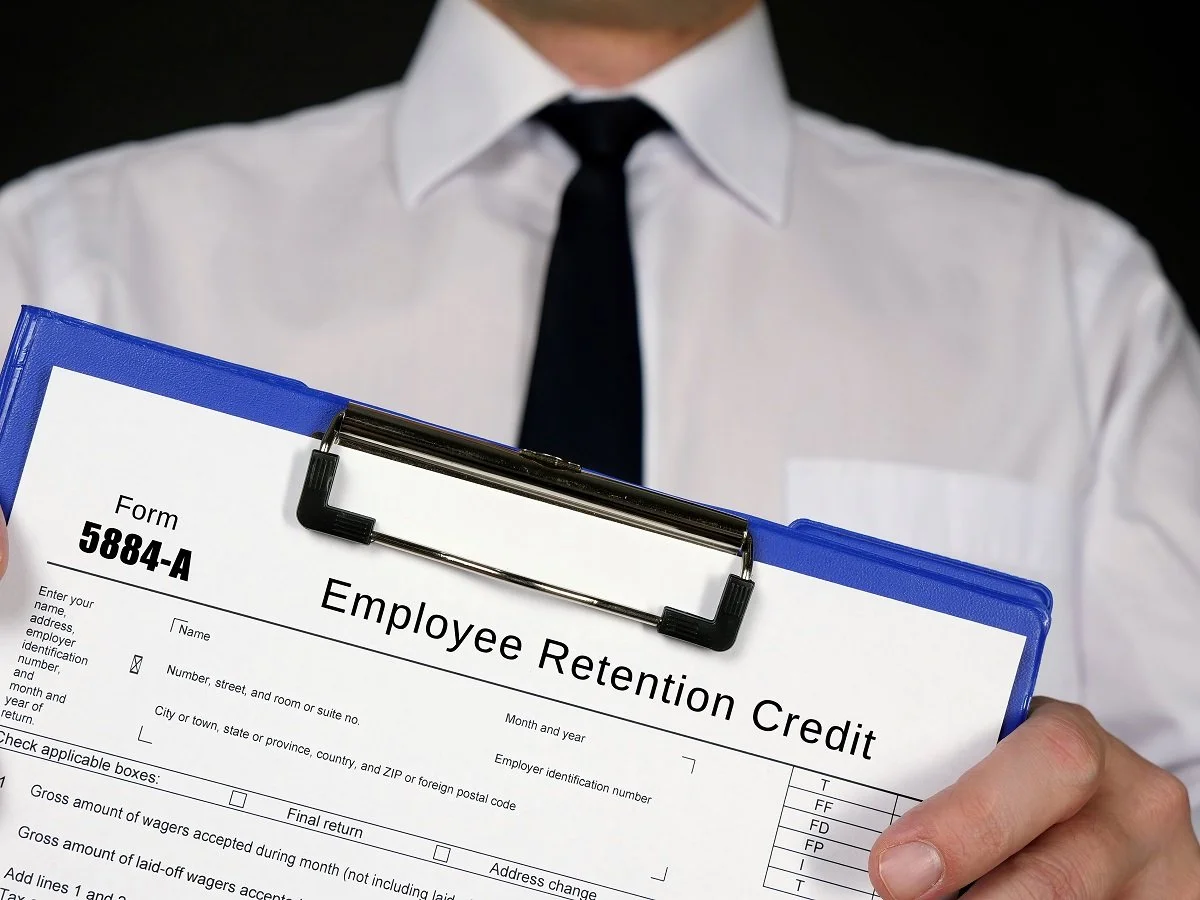
Employee Retention Credit
Rancho Mesa's Account Executive of the Surety Department Andy Roberts is joined by Tina Jani, CPA and Partner at Covell, Jani & Pasch LLP, to discuss the Employee Retention Credit.
Rancho Mesa's Account Executive of the Surety Department Andy Roberts is joined by Tina Jani, CPA and Partner at Covell, Jani & Pasch LLP, to discuss the Employee Retention Credit.
This podcast is designed to provide general information as to the subject matter covered. Neither the publisher nor the presenter by and through this presentation is rendering legal, accounting, or other professional services. If professional advice is required, you need to contact your tax advisor, the presenter, or the publisher for their services under a separate engagement contract.
TRANSCRIPT
Andy Roberts: Hello everyone and welcome back to StudioOne, our safety and risk management network. I’m Andy Roberts, Account Executive in the Surety Group with Rancho Mesa and joining me is Tina Jani, who is a CPA and Partner at Covell, Jani & Pasch LLP. Today we are going to be talking about the Employee Retention Credit, which is something many contractors remain unaware of. Welcome to the show, Tina.
Tina Jani: Thank you very much for having me. I am very excited to be here!
Andy: As I mentioned the Employee Retention Credit is something a lot of contractors haven’t heard of, but what is the ERC?
Tina: The ERC is an economic recovery program created by the CARES Act – the same legislation that created the Paycheck Protection Program (PPP).
Andy: That’s interesting that it was brought about by the same legislation that provided for the PPP but what brought about the need for the ERC?
Tina: The US government introduced the program to help businesses with employees who got affected either by full/partial shutdown rules or if the gross revenue went down by certain percentage in 2020 and 2021.
Your business may qualify for a stimulus check of up to $26,000 per employee by claiming employee retention tax credits.
Andy: You mentioned percentage. Can you elaborate what are those percentages?
Tina: Yes, absolutely! The key percentages to keep in mind are:
a. For 2020 - 50%
b. And for 2021 - 20%
What that means is you take 2019 as a base year. Then you compare your Quarterly Gross revenue for the year 2020 and 2021 with the same quarter in 2019. If your quarterly gross receipt went down by 50% in any quarter in 2020 or 20% in 2021, you are eligible for the Employee Retention credit for that particular quarter.
Please keep in mind that these are just key points. The actual rules are much more detailed and generous.
Andy: This is all great information. So when did the program start and when did it end?
Tina: The program started on March 13, 2020 and it ended for regular business on September 30, 2021. There are special rules for new businesses started after February 15, 2020 or if you are severely financially distressed employer that makes you eligible for the ERC for the fourth quarter of 2021 as well.
Andy: Does that mean it’s too late to apply for the ERC?
Tina: No, absolutely not. You can go back and amend your payroll tax return which is form 941. The statue runs for three years from the date the original 941 was due. You can still apply for the ERC by filing form 941X. The first statue will for Q1 2020 will run out on April 30, 2023. Businesses still have from 6 months to one and a half year to go back and amend their payroll tax returns and apply for the ERC. However, we highly recommend that businesses pay attention to this credit as soon as possible.
Andy: Do you have to prove that your business was affected by COVID to be eligible for the ERC?
Tina: No, you don’t have to prove that your business was affected by COVID. As long as you show a drop in the gross revenue and that can be because of any reason, your business is eligible for the ERC.
Andy: Can you give me an example of a client that didn’t know about the ERC until you told them and how they benefited?
Tina: It is interesting that almost every business was familiar with the PPP loans but not very many businesses are familiar with the ERC. When we started working on the ERC, we contacted all our clients including our largest client and asked for their gross revenue analysis. We made them aware of the ERC and they were eligible for two quarters, total $2.8m. This is just one example. There are numerous businesses out there who are eligible for the ERC and has not applied yet.
Andy: That was all great information and this sounds like a credit that can have a big influence on a contractor’s financial statement, which as you know, in the world of Surety Bonds is very important because a contractors financials are the driving force behind what they can qualify for when it comes to a bond program. This was a somewhat basic overview of the ERC and how it works and I know it’s more complicated and requires the help of an expert like yourself, so how would you recommend a company owner start the process of determining if they qualify for the ERC?
Tina: ERC is a very generous program that a small business owner should not ignore. The process is very simple and straightforward, especially under gross revenue drop method. Basically, you start with comparing your gross revenue. They should contact their CPA or tax professional to start the discussion I am happy to answer any questions and can be reached at my email address pjani@cjp-cpas.com or my phone 760-737-0700.
Andy: That’s great to hear. Thank you so much for joining me Tina to discuss this very important topic.
Tina: Thank you for having me.
WCIRB Approves 2022 Construction Dual Wage Threshold Increase
The Workers' Compensation Insurance Rating Bureau (WCIRB) has approved the recommended increase in hourly wage thresholds for all 16 construction dual wage classifications. The increases range from $2 to $5 depending on the classification and will go into effect for policyholders renewing September 1, 2022 and thereafter. The chart below outlines the increases for each classification.

The Workers' Compensation Insurance Rating Bureau (WCIRB) has approved the recommended increase in hourly wage thresholds for all 16 construction dual wage classifications.
The increases range from $2 to $5 depending on the classification and will go into effect for policyholders renewing September 1, 2022 and thereafter. The chart below outlines the increases for each classification.
| Dual Wage Classifications | Existing Threshold | Approved Increase |
Approved Threshold |
| 5027/5028 Masonry | $28 | $4 | $32 |
| 5190/5140 Electrical Wiring | $32 | $2 | $34 |
| 5183/5187 Plumbing | $28 | $3 | $31 |
| 5185/5186 Automatic Sprinkler | $29 | $3 | $32 |
| 5201/5205 Concrete Work | $28 | $4 | $32 |
| 5403/5432 Carpentry | $35 | $4 | $39 |
| 5446/5447 Wallboard Installation | $36 | $2 | $38 |
| 5467/5470 Glaziers | $33 | $3 | $36 |
| 5474/5482 Painting Waterproofing | $28 | $3 | $31 |
| 5484/5485 Plastering or Stucco | $32 | $4 | $36 |
| 5538/5542 Sheet Metal Work | $27 | $2 | $29 |
| 5552/5553 Roofing | $27 | $2 | $29 |
| 5632/5633 Steel Framing | $35 | $4 | $39 |
| 6218/6220 Grading/Land Leveling | $34 | $5 | $39 |
| 6307/6308 Sewer Construction | $34 | $5 | $39 |
| 6315/6316 Water/Gas Mains | $34 | $5 | $39 |
With the continuing labor shortage in construction, employers have been doing everything possible to retain employees by offering richer benefits plans, pay increases and merit bonuses, when applicable. These approved wage classification increases could potentially push employers to extend additional pay raises to employees in an effort to minimize workers’ compensation premiums.
Rancho Mesa predicts that this information will become a major factor in payroll decisions based on overhead cost management and recommend this as a topic for discussion early, so that our clients and prospects can prepare.
Understanding the Impact of MEP Contractors’ Dual Wage & Total Temporary Disability
Author, Sam Clayton, Vice President, Construction Group, Rancho Mesa Insurance Services, Inc.
What is a dual wage threshold? According to the Workers’ Compensation Insurance Rating Bureau (WCIRB), in California there are sixteen (16) construction operations that are divided into two separate classifications based on the hourly wage of the employee. There are different advisory pure premium rates for the low wage employee and the high wage employee.
Author, Sam Clayton, Vice President, Construction Group, Rancho Mesa Insurance Services, Inc.

What is a dual wage threshold? According to the Workers’ Compensation Insurance Rating Bureau (WCIRB), in California there are sixteen (16) construction operations that are divided into two separate classifications based on the hourly wage of the employee. There are different advisory pure premium rates for the low wage employee and the high wage employee. For mechanical, electrical and plumbing (MEP) contractors, the class codes used are all included in the recently approved increase which will go into effect September 1, 2022. The table below outlines the changes for the MEP class codes by year.
| Classifications | 9/1/2021 - Current | 9/1/2022 - Proposed |
| 5140/5190 | $32 | $34 |
| 5183/5187 | $28 | $31 |
| 5538/5542 | $27 | $29 |
© 2021 Workers' Compensation Insurance Rating Bureau of California. All Rights Reserved.
Why does this matter to MEP contractors? The higher wage employee’s workers’ compensation rate is significantly less (on average 46% less) than the lower wage employee. Therefore, if a company has any employees that are currently just barley in the high wage classification, this would drop those employees into the low wage classification and the employer would pay the higher workers’ compensation rate on those individuals. Depending on how many employees an employer has in this situation, it may be advantageous for the employer to calculate if it makes more sense to give those impacted employees a raise to push them back up into the high wage classification or keep them in the new low wage classification. It should be noted and understood that this change will not impact the employer until their next renewal after September 1, 2022. So while most employers will have time to evaluate the impact, it is crucial to begin the evaluation sooner rather than later.
As with any form of wage inflation, an increase in wages, to keep an employee in the higher wage category will increase the claim costs of a total temporary disability claim if they are injured on the job. While increases in wages are necessary, they will also impact the total cost of the claim, which then can increase the company’s experience modification rating (XMOD).
To mitigate this increase and reduce the likelihood of a lost time claim, employers can take several actions:
Review and update their existing safety programs.
Revisit their hiring practices.
Develop a sustainable return-to-work program.
What should employers do next?
Work with your trusted insurance advisor and run a needs/benefit analysis on increasing employee wages.
Understand your numbers.
What is your primary threshold and why does it matter?
What is my claim cost per point of XMOD?
How does my frequency of claims compare to the MEP industry?
How does my lost time claim average compare to other MEP contractors?
If you would like assistance understanding how these and other data points impact your company, request a proprietary Key Performance Indicator (KPI) dashboard that puts this information at your fingertips.
You still have time to be proactive, do not let these critical changes catch you by surprise!
Changes Are Coming to California Contractor License Bonds
Author, Matt Gaynor, Director, Surety Department, Rancho Mesa Insurance Services, Inc.
Currently, all contractors licensed in the State of California are required by the Contractors State License Board (CSLB) to have a $15,000 contractor license bond on file with the state. This amount has been in effect since January 1, 2016.
Author, Matt Gaynor, Director, Surety Department, Rancho Mesa Insurance Services, Inc.

Currently, all contractors licensed in the State of California are required by the Contractors State License Board (CSLB) to have a $15,000 contractor license bond on file with the state. This amount has been in effect since January 1, 2016.
Effective January 1, 2023, State Bill 607 will require the contractor license bond amount to increase from $15,000 to $25,000 (California Business and Professions Code Chapter 367).
If you are a contractor and currently have a $12,500 bond of qualifying individual (BQI) for your company, the BQI bond is also required to increase to $25,000 effective January 1, 2023.
Although we have several months to get this in place, touch base with your bond agent to discuss the timing of the increase relative to the anniversary date of your CSLB bond.
You may be required to pay a prorated additional premium to cover the increase.
The term of your bond may be prorated, which would change the renewal date.
Bonding companies may not offer renewals on their current bonds. If this is the case with your bond company, you will need to put a new bond in place on the effective date of the cancellation.
If you would like more information on how your particular CSLB bond might be affected, please contact me at (619) 937-0165 or mgaynor@ranchomesa.com.
Surety Industry Forced to Innovate
Author, Andy Roberts, Account Executive, Surety Group, Rancho Mesa Insurance Services, Inc.
Rarely are the words surety and technology advancement synonymous, and that’s because it’s hard to introduce advancements to an industry where so many obligees still require raised seals and wet signatures on the bonds they are receiving. However, due to some challenges that bond companies, insurance agencies and obligees have faced during the pandemic, the industry is being forced to innovate.
Author, Andy Roberts, Account Executive, Surety Group, Rancho Mesa Insurance Services, Inc.

Rarely are the words surety and technology advancement synonymous, and that’s because it’s hard to introduce advancements to an industry where so many obligees still require raised seals and wet signatures on the bonds they are receiving. However, due to some challenges that bond companies, insurance agencies and obligees have faced during the pandemic, the industry is being forced to innovate. E-signatures on bond documents are becoming more commonplace, and electronic powers of attorney and digital seals are being adopted with the eventual goal of creating a surety bond creation process that is wholly digital.
General Indemnity Agreements executed by a contractor/principal when they are establishing a surety program with a bond company, have traditionally needed to be executed in front of a notary and the original document, with the wet signatures, provided back to the bond company. Now, more and more bond companies are moving away from this archaic practice and allowing these documents to be signed digitally. This is an important change as it shows the industry’s willingness to implement changes that are in the best interest of the principal. Another change that is being brought about is the use of electronic powers of attorney (POAs), and digital seals.
A couple of years ago, very few bond companies utilized electronic POAs, opting instead to mail agents hard copies that needed to be dated using a typewriter. While this method is still being used, more and more sureties are opting to provide their agents with e-POAs that they can print as needed. In addition to this change, digital seals are also starting to be more commonplace. These can be affixed to the POAs and the bonds themselves when they are transmitted digitally. The importance of these two changes is worth noting as they are steps towards creating a process which allows for the creation of a surety bond by solely electronic means.
Getting to a point where contract bonds are done only electronically is still a way off, but the technologies that are needed are available, making it necessary that the surety industry continues to embrace technology to improve our processes, and to ensure we are providing bonds in the form, whether electronic or paper, that clients and obligees want.
For questions about technology in surety or your surety needs, contact me at aroberts@ranchomesa.com or call my direct line at (619) 937-0166.
Wearable Technology Is the Future of Jobsite Safety
Author, Sam Clayton, Vice President, Construction Group, Rancho Mesa Insurance Services, Inc.
The future is here and construction companies are starting to adopt wearable technology for their workers to reduce and prevent injuries from occurring on their jobsites. Wearable technology can be defined as any device that construction workers wear on his/her body. Since the construction industry accounts for nearly half of all fatal work injuries, this new type of personal protective equipment (PPE) is going to look radically different in the years ahead and should reduce both fatal and non-fatal injuries on jobsites worldwide. Below is an overview of five technologies in use today or soon to be in use in the near future.
Author, Sam Clayton, Vice President, Construction Group, Rancho Mesa Insurance Services, Inc.

The future is here and construction companies are starting to adopt wearable technology for their workers to reduce and prevent injuries from occurring on their jobsites. Wearable technology can be defined as any device that construction workers wear on his/her body. Since the construction industry accounts for nearly half of all fatal work injuries, this new type of personal protective equipment (PPE) is going to look radically different in the years ahead and should reduce both fatal and non-fatal injuries on jobsites worldwide. Below is an overview of five technologies in use today or soon to be in use in the near future.
Smart Watches
Many people wear smart watches daily, but the powerful sensors in smart watches can provide significant benefit to the construction industry. These devises can monitor vital signs like heart rate and step counts to prevent overexertion. They can also detect falls, which is a leading cause of serious injury on a jobsite and provide an immediate alert to site and emergency personal. In addition, smart watches allow employees hands free communication.
Smart Hard Hats
Hard hats are a vital piece of PPE on every jobsite. But, these aren’t your fathers’ hard hat. By adding a sensor band around the inside of a hard hat, employers will be able to detect fatigue, prevent mircosleeps (when sudden moments of sleep occur in a fatigued individual) and proximity sensing. Proximity sensing will alert both workers and equipment operators of a potential collision and prevent serious injuries. In addition, the outside rim of the smart hard hat is equipped with a ring of LED lights that allow for visibility from a quarter mile away. This feature is especially useful for any contractors performing work at night.
Clip-Ons
Clip-ons are not part of the usual construction PPE but are proving to be very helpful. A clip-on can identify zone-based worker locations and detect free falls. With a direct line of communication, workers can immediately report injures by pushing a button.
Smart Boots
Steel toe boots are already an essential for construction workers, but in the next few years the soles in these boots will be capable of detecting shocks and falls sustained by workers, track the location of the workers more accurately and will recharge themselves by walking in them.
Smart Vests
Highly visible vests are a staple on jobsites. These new vests can track body temperature and will alert workers when a break in the shade or a drink of water is necessary to prevent heat-related illnesses. The built-in sensors can also alert workers when they are nearing or entering a hazardous area. If used in conjunction with GPS equipped equipment, they can detect nearby equipment and slow them down to avoid any safety issues.
The future of construction safety will include some form of smart device that alerts the wearer and/or the safety manager when it detects a hazard. While these wearables are not a replacement for traditional PPE and best practices, they can help prevent hazards created by human error. As they are deployed across jobsites, we’ll be able to prevent workplace injuries before they happen.
For questions about managing your jobsite risk, contact me at sclayton@ranchomesa.com or (619) 937-0167.
How Higher Average Pay Can Lead to Work Comp Savings
Author, Casey Craig, Account Executive, Rancho Mesa Insurance Services, Inc.
Wage thresholds have increased consistently in the past decade. This has pushed owners to give sizable raises every few years to maximize employee compensation, but also reducing insurance cost. The experience modification (MOD) and payrolls are key factors in developing a company’s net rates for workers’ compensation, but average wage per hour represents a big differentiator for most carriers and can lead to even more savings.
Author, Casey Craig, Account Executive, Rancho Mesa Insurance Services, Inc.

Wage thresholds have increased consistently in the past decade. This has pushed owners to give sizable raises every few years to maximize employee compensation, but also reducing insurance cost. The experience modification (XMOD) and payrolls are key factors in developing a company’s net rates for workers’ compensation, but average wage per hour represents a big differentiator for most carriers and can lead to even more savings.
Paying your most competent employees above the wage threshold leads to less fraudulent claims, longer tenured employees, and a happier workplace, not to mention the benefit of a drastic cut in net rates for that class code. The gap that is sometimes felt is when there are employees that have the same job description and are earning 30-40% less. Managing payroll inflation is always critical for businesses but let’s think about what this can do to the employees bringing the average pay down for your company. Consider:
More fraudulent claims as the employee has less to lose if they are terminated or laid off;
Resentment toward employees that are doing same job but making more;
Employees are more likely to move to another company to get raises;
Likelihood to miss more time when injured, leading toward higher temporary disability pay which typically can lead to a higher XMOD.
Insurance companies and their underwriters look closely at average salary per employee when they receive a submission with the renewal documentation.
The higher the average pay, the more aggressive they can be with potential scheduled credits in most cases. Obviously, the employer must be selective with who receives a raise and how much but also understand what potentially positive impacts there can be when giving raises in order to hit those thresholds.
And, perhaps just as important is partnering with a broker that specializes in your industry and knows how to properly benchmark you with like organizations. This consistently leads to more productive discussions with underwriters that lead to more scheduled credits. The happier your workforce is, the less claims you tend to see and that translates to long-term savings.
If you have any questions about how you compare to your industry or would like to discuss any other insurance related topic, do not hesitate to reach out to 619-937-0164 or email me directly at ccraig@ranchomesa.com.
Construction Law and the Future of the Industry With Carlin Law Group
Rancho Mesa's Director of Surety Matt Gaynor interviewed Kevin Carlin of Carlin Law Group on Wednesday, March 23, 2022 to learn about his background, where he started his law career, and current hot topic’s in the construction industry. Kevin is a well-respected construction attorney here in Southern California who represents a number of Rancho Mesa clients.

Rancho Mesa's Director of Surety Matt Gaynor interviewed Kevin Carlin of Carlin Law Group on Wednesday, March 23, 2022 to learn about his background, where he started his law career, and current hot topics in the construction industry. Kevin is a well-respected construction attorney here in Southern California who represents a number of Rancho Mesa clients.
One topic of discussion centered on payment disputes.
MG: Are you seeing a lot of payment disputes right now?
KC: No, as your listeners know, the construction economy is on fire right now as there has been a ton of money sloshing around as a result of low interest rates and stimulus. While there are a few payment lawsuits going on right now, contractors seem to be more focused on getting the next job rather than chasing the money they are owed on the last job. Most of my cases right now seem to involve demands for defense and indemnity on large complex public, commercial and hospitality projects. These cases are highlighting how important, and frightening, indemnity language in prime contracts and subcontracts is, and how important it is to have good insurance. Most contracts contain indemnity language where if you are 1% at fault, you agree to pay 100% of the liability. Most people in the construction industry do not know about this or appreciate this risk because it’s never a problem until it’s a problem. These are the risks that make it so important to have the right coverages and policies of insurance, which is where you guys come in.
Listen to the full episode to learn more about Kevin and the Carlin Law Group.
Understanding the DART and TCIR Calculations
Author, Lauren Stumpf, Media Communications and Client Services Specialist, Rancho Mesa Insurance Services, Inc.
When a project owner asks you to provide the company’s DART or TCIR rate, it may seem a little overwhelming at first. But, the two numbers are really a score that can be used to compare contractors’ safety history. These numbers can be important during the bidding process when comparing multiple bids and could be a determining factor for who is awarded the contract.
Author, Lauren Stumpf, Media Communications and Client Services Specialist, Rancho Mesa Insurance Services, Inc.

When a project owner asks you to provide the company’s DART or TCIR rate, it may seem a little overwhelming at first. But, the two numbers are really a score that can be used to compare contractors’ safety history. These numbers can be important during the bidding process when comparing multiple bids and could be a determining factor for who is awarded the contract.
DART stands for days away, restricted, or transferred. A DART rate is used to track any OSHA recordable workplace injury or illness that result in days away from work, restricted duty, or transfer of duties.
On the other hand, the TCIR is the total case incident rate (also known as the Total Recordable Incident Rate or sometimes referred to as the OSHA Incident Rate). It measures a company's past safety performance based on their incident rate. A TCIR is found by looking at the number of work-related injuries per 100 full-time workers during a one-year period.
The TCIR will likely be higher than the DART because it includes all incidents, not just the ones that results in lost time.
Project owners are increasingly requesting these numbers along with the project bid. Not only do they want to see how much it’s going to cost them to build the project, but they want to know how safe their contractor is on the jobsite. These numbers show that.
OSHA also uses these calculations to monitor high-risk industries.
Rancho Mesa’s Risk Management Center features a tool that helps contractors generate their DARTs and TCIRs. Contractors can use the Incident Track application to enter and track an incident’s details. Once that incident has been saved, the system will allow them to generate OSHA logs based on that data and generate the DART and TCIR.
“It’s an easy-to-use tool that ensures the numbers are accurate and available whenever they’re needed,” said Alyssa Burley, Media Communications and Client Services Manager with Rancho Mesa Insurance Services, Inc.
To learn more about the Risk Management Center’s capabilities, sign up for an upcoming webinar at www.ranchomesa.com/workshops-and-webinars.
Artisans Captive – Risk Control Workshop Recap
Author, Amber Webb, Account Executive, Rancho Mesa Insurance Services, Inc.
On January 20th and 21st of 2022, Captive Resources hosted the Artisans Captive Risk Control Workshop at The US Grant in San Diego, CA. The workshop was intended for all Artisans’ risk and/or safety mangers, human resources, claims managers, supervisors, owners, brokers and any others who wished to attend.
Author, Amber Webb, Account Executive, Rancho Mesa Insurance Services, Inc.

On January 20th and 21st of 2022, Captive Resources hosted the Artisans Captive Risk Control Workshop at The US Grant in San Diego, CA. The workshop was intended for all Artisans’ risk and/or safety mangers, human resources, claims managers, supervisors, owners, brokers and any others who wished to attend.
The workshop began with a brief introduction to the members of Captive Resources and Zurich Insurance Group, along with quick summaries of each of their responsibilities. Then, immediately following was an overview of how the captive is operated and how each member company can earn points which ultimately contribute towards the calculation of their year-end dividend. The group was able to hear from Rich McElhaney from The Real Cost of Safety, as the keynote speaker on the 20th. His story was captivating and eye opening to just how quick something can go wrong on a jobsite without the proper safety protocols in place. He stressed the importance of getting supervisors and employees to report their near misses. Each time a near miss is reported, it gives the company an opportunity to do a training and possibly make changes to their safety policies and procedures to avoid future incidents. Reporting near misses also gives companies a chance to look at areas where trends are taking place and make the appropriate adjustments.
The first day of the workshop ended with dinner and a tour of the USS Midway. This was a great time for member companies to network and chat about what each other are doing with regard to their risk control and safety programs.
The second day of the workshop on the 21st, we all met early for breakfast which also allowed for more networking and learning about different member companies. Immediately after breakfast, we all broke out into our different session groups to learn about specific topics. The first session focused on the, “Do’s & Don’ts of Accident Investigation.” In this session, we went over a twelve-step process for what to do when there is an accident on the job. We were given several great tips for what to do and what not to do. One recommendation was to take pictures of all four corners of your vehicle, then all four sides and repeat for all other vehicles at the scene. The presenter also encouraged not using the phrase, “no comment” if the media becomes involved. Instead, showing empathy and compassion while still not commenting can lead to a better outcome while the investigation is still ongoing. Another takeaway from this session was the importance of reviewing all of your policies to ensure they do not stress productivity over safety. Then, make sure to train your employees to understand that their wellbeing is top of mind, while actually enforcing a safety culture.
The second session we attended was “Driver Safety: Lucky vs. Good” where we learned that the highest auto expenses result from rear end accidents. Also, according to the Bureau of Labor Statistics’ national census of fatal injuries released in December of 2021, transportation incidents have the most workplace fatalities, followed by falls and struck by objects. We also learned with new vehicle technology, such as high-intensity headlights, forward automatic braking, forward collision alert, lane departure warning and rear vision cameras, employers can help reduce vehicle crashes. The speaker went on to explain the importance of utilizing the data given by fleet analytics to help with reducing collision and use as a tool for focusing on trends happening within your fleet.
The final keynote speaker was Sean Bott and he spoke on the “Safety Dance: Creating the Courage to Connect on Site through Three Simple Steps.” His session was not only comedic, but also entertaining. He was able to teach us the 3 steps of meaningful connection; 1) Interrupting, 2) Introducing and 3) Inquiring. We have to start by interrupting people’s defenses and fears and can do this simply by a genuine compliment, a smile, a wave, etc. Then, once the walls are down, we are able to introduce ourselves while slowly saying our name with a pause between our first and last name, all while using the triple nod technique. He also encouraged us to smile and even throw in a wave during this process of introduction. Finally, we were taught to inquire in a clear and meaningful way to get to know the other person on a deeper level. He related these skills back to how employers interact with their employees on all levels, but specifically when it comes to safety. He suggested that we all combine these three skills to make others feel seen, heard, felt and valued. He displayed the value in bringing the human element to safety and reminding the group that the ultimate goal is to make sure all employees go home safely.
Overall, this workshop was very informative with some fun mixed in and ample time for networking to get to know the other companies involved in the Captive. As a Rancho Mesa broker attending with several of our clients, it allowed us to see the value of not only this workshop, but the additional benefits of being a member of the Artisans Captive and what it offers.
For those interested in learning more about Captives and their potential place within your organization, we will be hosting an informational Captive workshop for the Artisans Captive on April the 28th. Register online, today.
If you have any questions or would like to discuss this option further, you can contact me at awebb@ranchomesa.com or call me at (619) 486-6562.
Top 5 OSHA Violations for 2021
Author, Sam Clayton, Vice President, Construction Group, Rancho Mesa Insurance Services, Inc.
Every year, Federal OSHA conducts thousands of inspections and issues costly citations to companies. So, it is imperative for business owners and safety managers to be aware of the most common citations and how to avoid them through effective safety programs.
Author, Sam Clayton, Vice President, Construction Group, Rancho Mesa Insurance Services, Inc.

Every year, Federal OSHA conducts thousands of inspections and issues costly citations to companies. So, it is imperative for business owners and safety managers to be aware of the most common citations and how to avoid them through effective safety programs.
Back in September 2021, Rancho Mesa highlighted the top Cal/OSHA citations issued during the 2019/2020 reporting period in podcast Episode 136. Now that the 2021 Federal OSHA data is available, we can analyze the citations that were most common across the United States to see what’s changed and evaluate our safety programs to avoid being another statistic.
Although OSHA violations can be issued for numerous reasons, there are 5 citations that continue to show up on the list year after year, though their order may change slightly.
Fall Protection, General Requirements (29 CFR 1926.501)
This Standard outlines where fall protection is required, which systems are appropriate for given situations, the proper construction installation of safety systems, and the proper supervision of employees to prevent falls. It is designed to protect employees on walking/working surfaces (horizontal or vertical) with an unprotected side or edge above 6ft.There were 5,295 fall protection violations in 2021. To help avoid fall protection citations, take advantage of Rancho Mesa’s fall protection resources like the online awareness course and safety videos, a webinar on how to implement a fall protection and prevention plan, along with a library of fall protection training shorts (i.e., tailgate talks) that are designed to reinforce the company’s policies.
Respiratory Protection, General Industry (29 CFR 1910.134)
This standard directs employers on establishing or maintaining a respiratory protection program. It lists requirements for program administration, worksite specific procedures, respirator selection, employee training, fit testing, medical evaluation, respirator use, cleaning, maintenance and repair.There were 2,527 respiratory protection violations in 2021. The best way to avoid these types of citations is through training and documentation. Rancho Mesa’s Personal Protection Equipment (PPE) for Management and Respiratory Protection courses address implementing and enforcing the PPE program and information the employee needs to know about their respiratory protection, respectively.
Ladders, Construction (29 CFR 1923.1053)
This standard covers general requirements for all ladders.There were 2,026 ladder violations in 2021. The RM365 Advantage Safety Star™ Program’s Ladder Safety module provides an in-depth practical overview of ladder safety from seasoned risk control experts.
Scaffolding, General Requirements, Construction (29 CFR 1926.451)
This standard covers general safety requirements for scaffolding, which should be designed by a qualified person and constructed and loaded in accordance with that design. Employers are bound to protect construction workers from falls and falling objects while working on or near scaffolding at heights of 10ft or higher.There were 1,948 scaffolding violations in 2021. Safety is everyone’s responsibility, so utilizing Rancho Mesa’s scaffolding online course and safety videos to provide a general awareness of best practices to all employees is a proactive way to help comply with OSHA regulation 29 CFR 1926.451.
Hazard Communication Standard, General Requirements (29 CFR 1910.1200)
This standard addresses chemical hazards, both those chemicals produced in the workplace and those brought into the workplace. It also governs the communication of those hazards to workers.There were 1,947 hazard communication violations in 2021. Proper hazard communication in construction environments can save lives. Consider utilizing the variety of hazard communication resources in the Risk Management Center like online courses for both employees and management along with video training specific to hazard communication in construction environments and a sample Hazard Communication Program template.
Rancho Mesa knows these top five citations can be avoided by reviewing safety programs often and ensuring they are effective. Clients can take advantage of the RM365 Advantage Safety Star™ Program that specifically addresses some of the most common citations.
To discuss your safety program, workers’ compensation or other insurance needs, contact me at (619) 937-0167 or sclayton@ranchomesa.com.
OSHA Posting and Submitting Guide
Author, Alyssa Burley, Media Communications and Client Services Manager, Rancho Mesa Insurance Services, Inc.
Rancho Mesa Insurance Services, Inc. would like to remind its clients that February 1, 2022 marks the start of the OSHA Form 300A Summary posting period. The OSHA Form 300A is a summary of the company's annual work-related injuries and illnesses. It must be posted from February 1, 2022 to April 30, 2022.
Author, Alyssa Burley, Media Communications and Client Services Manager, Rancho Mesa Insurance Services, Inc.

Rancho Mesa Insurance Services, Inc. would like to remind its clients that February 1, 2022 marks the start of the OSHA Form 300A Summary posting period. The OSHA Form 300A is a summary of the company's annual work-related injuries and illnesses. It must be posted from February 1, 2022 to April 30, 2022.
To learn more about maintaining all the OSHA logs, listen to Rancho Mesa's StudioOne™ podcast episode 168 where Alyssa Burley and Megan Lockhart discuss the Forms 300, 300A and 301.

REQUIRED TO POST
According to Cal/OSHA, “If your company had more than ten (10) employees at any time during the last calendar year, you must keep Cal/OSHA injury and illness records unless your establishment is classified as a partially exempt industry under Section 14300.2.”
POST FORM 300A SUMMARY
The Form 300A Summary must be posted in a conspicuous place at each workplace, where notices to employees are usually displayed. Make sure that the posted annual summary is not altered, defaced, or covered by other material. Employers must send a copy of the summary to employees who do not report to the workplace on a regular weekly basis.
NO RECORDABLE INJURIES
Companies with no recordable injuries or illnesses in 2021 must post the OSHA Form 300A Summary with zeros on the “total” lines.
HOW TO GENERATE THE FORM 300A SUMMARY
Through Rancho Mesa's Risk Management Center, clients can generate the OSHA Form 300A Summary using the incident tracking feature. Individual employers are required to maintain the OSHA Forms 300, 300A and 301 throughout the year. So, when it is time to generate the Form 300A Summary, it can be printed from the Risk Management Center, as long as the employer has been documenting the information in the platform throughout the year.
To print the OSHA Form 300A Summary, login to the Risk Management Center and navigate to Incident Track. Ensure you have entered all your incident information, then go to the Reports section and choose the Form 300A Summary from the available list. You'll be able to choose the year and locations (Sites) that you want to print.
SUBMITTING THE FORM 300A SUMMARY TO FEDERAL OSHA
In addition to posting the Form 300A Summary in your workplace, the data must also be submitted to Federal OSHA by March 2, 2022. If you have entered your incident data into the Risk Management Center, you'll be able to generate the electronic .CSV file that is used to upload the data to the Federal OSHA website. Watch out short video on how to generate the electronic Form 300A Summary.
Data Entry and Generating the Electronic Form 300A Summary
There are some minor differences between Cal/OSHA and Federal OSHA requirements. Check with your state’s OSHA division for specific differences for your state.
Visit the California Recordkeeping Standard or Injury & Illness Recordkeeping Forms webpages for more information.
What to Consider When Hiring a Bond Agent
Author, Andy Roberts, Account Executive, Surety Group, Rancho Mesa Insurance Services, Inc.
With the passage of the Infrastructure Investment and Jobs Act, there is $125 billion of federal funds available for procurement. This provides a significant amount of federal construction work which will be put out to bid, with a vast majority of it requiring bonding.
Author, Andy Roberts, Account Executive, Surety Group, Rancho Mesa Insurance Services, Inc.

With the passage of the Infrastructure Investment and Jobs Act, there is $125 billion of federal funds available for procurement. This provides a significant amount of federal construction work which will be put out to bid, with a vast majority of it requiring bonding. For contractors that may have never bonded before or bond infrequently, this is a clear opportunity to build revenues. With that in mind, it is critical that these contractors have a good surety bond agent on their side to help them navigate this process. Here are some questions and things to look for when evaluating if an agent is the right fit.
Experience
It is important to note how many years an agent has been in the industry, but it’s more important to make sure they are a surety specialist. Surety bonding is a very specialized insurance product, and an agent that focuses solely on surety will have a better understanding of what the different bond companies value when they are reviewing a new contractor because each bond company has a different appetite. Additionally, agents that focus solely on surety will have developed stronger relationships with bond companies. This relationship is important because bond companies want to work with agents that are knowledgeable and have good reputations within the industry.
Agent Appointments
Which bond companies does the agent have an appointment? This is an important question to ask, as bond companies are very conservative and the better bond companies are much more selective with the agents that they appoint. When asking this, it is also important to note how many bond companies the agent is appointed with. Having access to numerous sureties, while maintaining key relationships with the main companies, allows an agent to find the best bond company for each contractor.
Additional Value Adds
Surety bonding is a complicated industry, and if a contractor's goal is to increase their bonding capacity, it is vital that the agent provide additional services, like a detailed review of the company’s financials, and yearly analysis of a contractors single and aggregate bond limits. These services are important because they help the agent and the contactor get on the same page with regards to the current bond program, while also allowing them to game plan for the future, and set goals for how to increase bonding capacity. In addition to these in-house services, an agent should be able to recommend a good construction CPA and reputable banking contacts that know what a contractor needs to maximize their bond credit.
Bond agents play a vital role and partnership for contractors, which makes it very important that a contractor performs proper due diligence when hiring an agent. At Rancho Mesa, we have surety only specialists whose expertise is used to ensure our clients are placed with the right bond company to suit their needs.
To answer any questions from this article or discuss if we can assist with any bond related needs, contact me at aroberts@ranchomesa.com or call my direct line at (619) 937-0166.
Your Commercial Vehicle May Require a Motor Carrier Permit
Author, Jeremy Hoolihan, Account Executive, Rancho Mesa Insurance Services, Inc.
When a company has vehicles on the road, it’s important to understand all the commercial vehicle requirements in order to stay in compliance.
Author, Jeremy Hoolihan, Account Executive, Rancho Mesa Insurance Services, Inc.

When a company has vehicles on the road, it’s important to understand all the commercial vehicle requirements in order to stay in compliance.
We recently had a client purchase a new medium-sized truck from a commercial dealership. A few weeks later, an employee driving that new vehicle was pulled over by the California Highway Patrol and fined for not carrying a Motor Carrier Permit (MCP). Our client immediately contacted Rancho Mesa confused by the citation. They have other similar trucks that they have been on the road for many years and never received a citation like this. To avoid a similar situation, it’s essential to understand the MCP and the types of drivers and vehicles that are required to carry one.
The MCP provides proof that the motor carrier is legally operating on California highways. In order to get a MCP, the Department of Motor Vehicles (DMV) verifies that the motor carrier has complied with all the requirements for both registration and insurance. It includes specific information about the motor carrier (e.g. name, mailing address, USDOT number, California Carrier Identification number (CA #), and effective/expiration dates of the permit. MCP terms only last 12 months, so make sure not to miss the deadline.
There are many drivers/companies that are required to have MCPs. If your drivers fall under any of these scenarios, they must have a MCP:
Any person, business or entity who is paid to transport property in their motor vehicle regardless of the vehicle’s size, type or weight. This applies to for-hire carriers.
Any person, business or entity operating a motor vehicle with Gross Vehicle Weight Rating of 10,001 pounds or more. This applies to businesses transporting their own property (i.e., private carrier).
Operators of any vehicle or a combination of vehicles transporting hazardous materials.
Operators of a combination or a motor truck and trailer, semitrailers, pole or pipe dollies, auxiliary dollies, and logging dollies that exceed forty feet in length when coupled together. For purposes of an MCP, a “trailer” excludes camp trailers, utility trailers, and trailer coaches.
While there are many scenarios where a MCP is required, there are still some instances where the MCP is not. A MCP is not needed for:
Vehicles operated by household goods and/or passenger carriers.
Vehicles operated by household goods carriers to transport used office, store, and institutional furniture, and fixtures when operated under a household goods carrier permit.
Pickup trucks with gross vehicle weight rating of fewer than 11,500 pounds, an unloaded weight of fewer than 8,001 pounds, and equipped with a box-type bed not going over 9 feet in length when operated in non-commercial circumstances.
Utility trailers, camp trailers, or trailer coaches.
Vehicles providing transportation of passengers only, a passenger stage corporation transporting baggage and express upon a passenger vehicle incidental to the transportation of passengers.
Vehicles used only for personal use and are 10,000 pounds gross vehicle weight rating or less.
Two-axle daily rental trucks with a gross vehicle weight rating of than 26,001 pounds when operated in a non-commercial use.
Vehicles that are exempt from vehicle registration fees. These includes all publicly-owned vehicles, special construction equipment, special mobile equipment, and any other vehicle used primarily off highway and not required to be registered.
Motor trucks or two-axle truck tractors with a gross vehicle weight of less than 26,001 pounds, when operated singly or when used to tow a camp or utility trailer, a trailer coach, a fifth-wheel travel trailer, or a trailer designed to transport a watercraft, and is never operated commercially.
There are potential fines for not carrying a MCP when its required. If a motor carrier caught operating with a suspended MCP, they could be fined up to $2,500, charged with a misdemeanor and/or receive up to three months in jail. The CHP may also find it necessary to impound the vehicle.
It is important to know the classification of your vehicle prior to purchase in order to determine whether a MCP filing is required.
Manufactures classify their truck based on the Gross Vehicle Weight Rating government guidelines. The GVWR indicates the maximum truck weight plus what it is able to carry fully loaded. That includes the truck’s own weight plus the fuel, cargo, passengers, and even the trailer tongue. Typically, ¾ and 1 ton trucks are referred to as “heavy duty,” though they are technically classified as light duty vehicles. MCP’s are typically required when your vehicle falls into the medium classification (GVWR 10,001-26,000).
Do your due diligence ahead of purchasing the vehicle in order to know the specific licensing and permitting requirements. Also, consider working closely with an insurance broker who can assist with the required insurance coverages and documents needed during the application process.
Rancho Mesa Insurance has extensive experience helping business owners with fleets of all sizes. If you need assistance with your commercial insurance needs, please contact me at (619) 937-0174 or via email at jhoolihan@ranchomesa.com.
Cal/OSHA Adopts Revised ETS Through April 2022
Author, Alyssa Burley, Media Communications and Client Services Manager, Rancho Mesa Insurance Services, Inc.
On Thursday, December 16, 2021, the Cal/OSHA Standards Board voted in favor, 6 to 1, of adopting the revised COVID-19 Prevention Emergency Temporary Standard (ETS). This is the third iteration of the ETS since it originally went into effect in November 2020 and it happens to be the second and final re-adoption that’s allowed.
Author, Alyssa Burley, Media Communications and Client Services Manager, Rancho Mesa Insurance Services, Inc.

On Thursday, December 16, 2021, the Cal/OSHA Standards Board voted in favor, 6 to 1, of adopting the revised COVID-19 Prevention Emergency Temporary Standard (ETS). This is the third iteration of the ETS since it originally went into effect in November 2020 and it happens to be the second and final re-adoption that’s allowed.
The newly adopted revised ETS goes into effect on January 14, 2022 when the current ETS expires, and it will be in effect until April 14, 2022, at which time the temporary standard must expire or Cal/OSHA has to adopt a permanent standard in order to keep some sort of COVID-related standard in place.
Based on the discussions at the Cal/OSHA Standards Board’s December 16th meeting, it looks like Cal/OSHA is moving forward with proposing a permanent COVID-19 standard in March or April 2022. So, we’ll keep an eye on that.
Changes to Cal/OSHA’s COVID-19 Prevention Emergency Temporary Standard:
COVID-19 TEST
Starting January 14, 2022, there is a new definition for what is considered a “COVID-19 test” to account for over-the-counter tests that are now readily available. The new definition specifically says if you’re using an over-the-counter test, it cannot be both self-administered and self-read unless observed by the employer or an authorized telehealth proctor.
So, if an employee wants to use an over-the-counter COVID-19 rapid antigen test, they’ll need to either have the employer or an authorized telehealth proctor witness the test being performed and the results generated. This is really to prevent employees from providing false results to employers.
FACE COVERINGS
The new ETS also provides more details about what types of face coverings are now allowed and what’s not. Acceptable face coverings include surgical masks, a medical procedure mask, a respirator worn voluntarily, or a tightly woven fabric or non-woven material of at least two layers that does not let light pass through when held up to a light source. There are exceptions for clear face coverings when worn strictly for accommodations purposes. Coverings must be secured to the head with ties, ear loops or elastic bands that go behind the head.
This means many of the cloth masks that are currently being used by employees will no longer be acceptable under this new standard. Scarfs, ski masks, bandanas and other make-shift face coverings will not be permitted.
FULLY VACCCINATED
The definition of “fully vaccinated” has changed a bit. The new language recognizes those who may have gotten their first dose of a two-dose vaccine series from one manufacturer and the second dose from another manufacturer.
WORKSITE
Another change is the definition of “worksite.” The new ETS clarifies that a worksite does not include locations where the employee does not have exposure to other employees.
For example, if the employee is working from their home office, it would not be considered a worksite for ETS noticing purposes, nor would an office where the employee works by themselves and never is exposed to other employees.
TESTNG AFTER WORKSITE COVID-19 EXPOSURE
There are new requirements for testing employees after a COVID-19 exposure in the workplace. Regardless of vaccination status, employers must now offer testing to all employees who have had a close contact with a COVID-19 case in the workplace, regardless of their vaccination status.
Prior to the revised ETS, employers did not have to offer testing to vaccinated employees who were exposed. This change is a result of break through cases in those who are fully vaccinated. The only exception for not offering close contacts testing, is for those who have recovered from COVID-19 within the past 90 days and do not have symptoms.
RETURN TO WORK
Another change for vaccinated employees includes wearing a face covering in the workplace in lieu of a quarantine. While those employees who are vaccinated do not need to quarantine if they have had a close contact with a COVID-19 case, as long as they are asymptomatic and test negative, they can return to the workplace, but must wear a face covering and social distance for 14 days following the last date of close contact. This rule also applies to those who have recovered from COVID-19 within the last 90 days and are asymptomatic.
For those who are unvaccinated and have had a close contact with a COVID-19 case, as long as they test negative and are asymptomatic, they can return to the workplace after a 10-day quarantine, however, they must social distance and wear a face covering for 14 days.
There is a 7-day quarantine option for unvaccinated employees that are asymptomatic if they test negative at least five days after the close contact. In this situation, the employee must maintain social distancing and wear a face covering.
TESTING DURING AN OUTBREAK
As for changes to how to handle testing as a result of an outbreak, vaccinated employees can no longer be excluded from being offered testing if there are three or more employee COVID-19 cases within an exposed group. So, employers just need to make sure they’re offering testing to both vaccinated and unvaccinated employees if they’ve had a close contact or were in an exposed group during an outbreak.
One last thing to consider, while Cal/OSHA’s revised ETS does not take into consideration the federal vaccination or weekly testing mandates, nor other state and local requirements, we recommend that you consult your local and state health departments for additional requirements.
Rancho Mesa will make available an updated COVID-19 Prevention Program template that incorporates the modifications, as soon as possible.
Visit www.RanchoMesa.com/covid-19 for all our COVID-related articles, podcast episodes, sample COVID-19 Prevention Program Templates, and links to insurance carriers, the CDC and other agencies.
2022 Construction Dual Wage Thresholds - An Early Look
Author, Kevin Howard, Account Executive, Rancho Mesa Insurance Services, Inc.
There are 16 construction workers’ compensation class code pairs in California, each set up as dual wage classifications. The purpose of these “split” class codes allows the Workers’ Compensation Insurance Rating Bureau (WCIRB) and California insurers to better predict future risk and underwrite with more accuracy.
Author, Kevin Howard, Account Executive, Rancho Mesa Insurance Services, Inc.

There are 16 construction workers’ compensation class code pairs in California, each set up as dual wage classifications. The purpose of these “split” class codes allows the Workers’ Compensation Insurance Rating Bureau (WCIRB) and California insurers to better predict future risk and underwrite with more accuracy.
To illustrate the dual wage threshold, consider a seasoned laborer with years of safety training, exposure awareness, and familiarity with jobsite protocol. This employee is going to be less of a safety risk compared to an apprentice who is still learning his or her trade, the safety techniques and all of the skill associated with a trade. As one might imagine, statistics consistently show a much higher probability of an injury occurring with an apprentice versus a seasoned veteran or journeymen. So, having a dual wage threshold allows carriers to generate pricing based on the employees’ experience and likelihood of having an injury.
Exploring how this can directly impact rates and pricing, the 2021 roofing dual wage class codes of 5552 and 5553 is a great example.
Class code 5552 is defined as roofers who make less than $27 per hour. The average California worker’s compensation insurance base rate for this class code is $40 per $100 of payroll. Class code 5553 includes roofers who make $27 or more per hour. This class code’s average California workers’ compensation insurance base rate is $20 per $100 of payroll. In this example, the workers’ compensation premium base rate is half the cost for a more experienced employee over someone with less experience.
It is crucial for any roofing contractor to be mindful of this wage threshold data knowing that the delta in the 2022 recommended increase represents a staggering 61% gap between the two base rates.
Additionally, the WCIRB has continued to increase wage thresholds. This is to keep up with inflation of the US dollar, the increase in minimum wage and the demand for labor, among other factors.
Dual Wage Classification Thresholds by Year
Shown below are the wage thresholds for all dual wage classifications. For information about these classifications, see the California Workers' Compensation Uniform Statistical Reporting Plan—1995, effective September 1, 2021.
| Classifications | ||||||||||||||||
|---|---|---|---|---|---|---|---|---|---|---|---|---|---|---|---|---|
| Year | 5027 | 5140 | 5183 | 5185 | 5201 | 5403 | 5446 | 5467 | 5474 | 5484 | 5538 | 5552 | 5632 | 6218 | 6307 | 6315 |
| 5028 | 5190 | 5187 | 5186 | 5205 | 5432 | 5547 | 5470 | 5482 | 5485 | 5542 | 5553 | 5633 | 6620 | 6308 | 6316 | |
| 9/1/2022 | $32 | $34 | $31 | $32 | $32 | $39 | $38 | $36 | $31 | $36 | $29 | $29 | $39 | $39 | $39 | $39 |
| 9/1/2021 | $28 | $32 | $28 | $29 | $28 | $35 | $36 | $33 | $28 | $32 | $27 | $27 | $35 | $34 | $34 | $34 |
| 1/1/2021 | $28 | $32 | $28 | $29 | $28 | $35 | $36 | $33 | $28 | $32 | $27 | $27 | $35 | $34 | $34 | $34 |
| 1/1/2020 | $28 | $32 | $28 | $29 | $28 | $35 | $36 | $33 | $28 | $32 | $27 | $27 | $35 | $34 | $34 | $34 |
| 1/1/2019 | $27 | $32 | $26 | $27 | $25 | $32 | $34 | $32 | $26 | $29 | $27 | $25 | $32 | $31 | $31 | $31 |
| 1/1/2018 | $27 | $32 | $26 | $27 | $25 | $32 | $34 | $31 | $26 | $29 | $27 | $25 | $32 | $31 | $31 | $31 |
| 1/1/2017 | $27 | $30 | $26 | $27 | $24 | $30 | $33 | $31 | $24 | $27 | $27 | $23 | $30 | $30 | $30 | $30 |
© 2021 Workers' Compensation Insurance Rating Bureau of California. All Rights Reserved.
WCIRB’s 2022 RECOMMENDATION:
The Bureau is considering raising the hourly wage threshold for all 16 dual wage classification pairs with some codes seeing as much as a $5.00 increase. The average delta between the lower advisory rate and higher advisory rate is 48%.
Proposed Dual Wage Threshold Increases
| Dual Wage Classifications | Existing Threshold | Proposed Increase | Proposed Threshold | Low Wage Advisory Rate | High Wage Advisory Rate | % Difference From Low Wage Rate |
| 5027/5028 Masonry | $28 | $4 | $32 | $8.18 | $4.21 | -48.50% |
| 5190/5140 Electrical Wiring | $32 | $2 | $34 | $3.76 | $1.45 | -61.40% |
| 5183/5187 Plumbing | $28 | $3 | $31 | $5.31 | $2.36 | -55.60% |
| 5185/5186 Automatic Sprinkler | $29 | $3 | $32 | $4.57 | $1.00 | -57.30% |
| 5201/5205 Concrete Work | $28 | $4 | $32 | $6.64 | $1.95 | -36.30% |
| 5403/5432 Carpentry | $35 | $4 | $39 | $10.03 | $4.23 | -55.10% |
| 5446/5447 Wallboard Installation | $36 | $2 | $38 | $5.42 | $4.50 | -55.10% |
| 5467/5470 Glaziers | $33 | $3 | $36 | $7.62 | $2.65 | -59.30% |
| 5474/5482 Painting Waterproofing | $28 | $3 | $31 | $8.09 | $3.10 | -46.40% |
| 5484/5485 Plastering or Stucco | $32 | $4 | $36 | $9.98 | $4.34 | -37.40% |
| 5538/5542 Sheet Metal Work | $27 | $2 | $29 | $5.07 | $2.52 | -50.30% |
| 5552/5553 Roofing | $27 | $2 | $29 | $21.05 | $8.14 | -61.30% |
| 5632/5633 Steel Framing | $35 | $4 | $39 | $10.03 | $4.50 | -55.10% |
| 6218/6220 Grading/Land Leveling | $34 | $5 | $39 | $5.10 | $2.93 | -42.50% |
| 6307/6308 Sewer Construction | $34 | $5 | $39 | $6.98 | $2.84 | -59.30% |
| 6315/6316 Water/Gas Mains | $34 | $5 | $39 | $4.18 | $3.70 | -11.50% |
This recommendation, if approved by the insurance commissioner, would become effective September 1, 2022.
With the continuing labor shortage in the construction arena, employers have been doing everything possible to retain employees by offering richer benefits plans, pay increases and merit bonuses, when applicable. These recommended wage classification increases could potentially push employers to extend additional pay raises to employees in an effort to minimize workers’ compensation premiums.
It is best for contractors who utilize any of the 16 dual wage classification pairs to be aware of the potential increases and to do the math to see if it makes sense to consider raises prior to your 2022-2023 September 1st workers’ compensation renewal.
Rancho Mesa predicts that this info will become a major factor in payroll decisions based on overhead cost management and recommend this as a topic for discussion early so that our clients, prospects and listeners can prepare.
To discuss how the proposed dual wage threshold increases may affect your business, contact me at (619) 438-6874 or khoward@ranchomesa.com.
Top Five Workers’ Compensation Claims That Impact a MEP’s Bottom Line
Author, Amber Webb, Account Executive, Rancho Mesa Insurance Services, Inc.
If you are an MEP contractor who wants to impact both your productivity and profitably, then the following is crucial for your success. Our MEP Group at Rancho Mesa understands the importance of identifying the top five workers’ compensation claims that impact your industry while providing pertinent resources to help mitigate that risk.
Author, Amber Webb, Account Executive, Rancho Mesa Insurance Services, Inc.

If you are a Mechanical, Electrical & Plumbing (MEP) contractor who wants to impact both your productivity and profitably, then the following is crucial for your success. Our MEP Group at Rancho Mesa understands the importance of identifying the top five workers’ compensation claims that impact your industry while providing pertinent resources to help mitigate that risk. By working with leading workers’ compensation carriers and the Occupational Safety and Health Administration (OSHA), we identified the top 5 workers’ compensation claims affecting the MEP industry:
Cut/Puncture/Scrape/Lacerations
Slip/Falls from both same level and ladders/scaffolding
Strains from lifting/handling/pushing/pulling
Struck by object/Foreign Body in Eye
Motor Vehicle Accident (injured employee)
With employee safety at the forefront of your operations, understanding where the claims are likely to come from and then having the support and tools in place to address those concerns is vital to your long term success. When injuries occur on the job, it impacts not only the life of the injured worker and their family but will directly impact the productivity and profitability of the project.
For our clients to proactively mitigate these exposures, we provide them with access to specific trainings related to these top MEP claims and OSHA citations from our Risk Management Center Library. Our Client Services team then works closely with our clients to customize their trainings while meeting their specific risk management needs.
If you are not already a Rancho Mesa client, and would like a free trial of our Risk Management Center, please complete the form or contact Amber Webb at (619) 486-6562 or awebb@ranchomesa.com.