

Industry News

It’s OSHA 300A Time
Author, Emily Marasso, Media Communications Assistant, Rancho Mesa Insurance Services, Inc.
The holidays have come and gone and here we are at the end of another great year. Year-end means calendar updates, process changes and document reviews, as well as time to prepare for filing your OSHA 300A form.
Author, Emily Marasso, Media Communications Assistant, Rancho Mesa Insurance Services, Inc.
The holidays have come and gone and here we are at the end of another great year. Year-end means calendar updates, process changes and document reviews, as well as time to prepare for filing your OSHA 300A form.
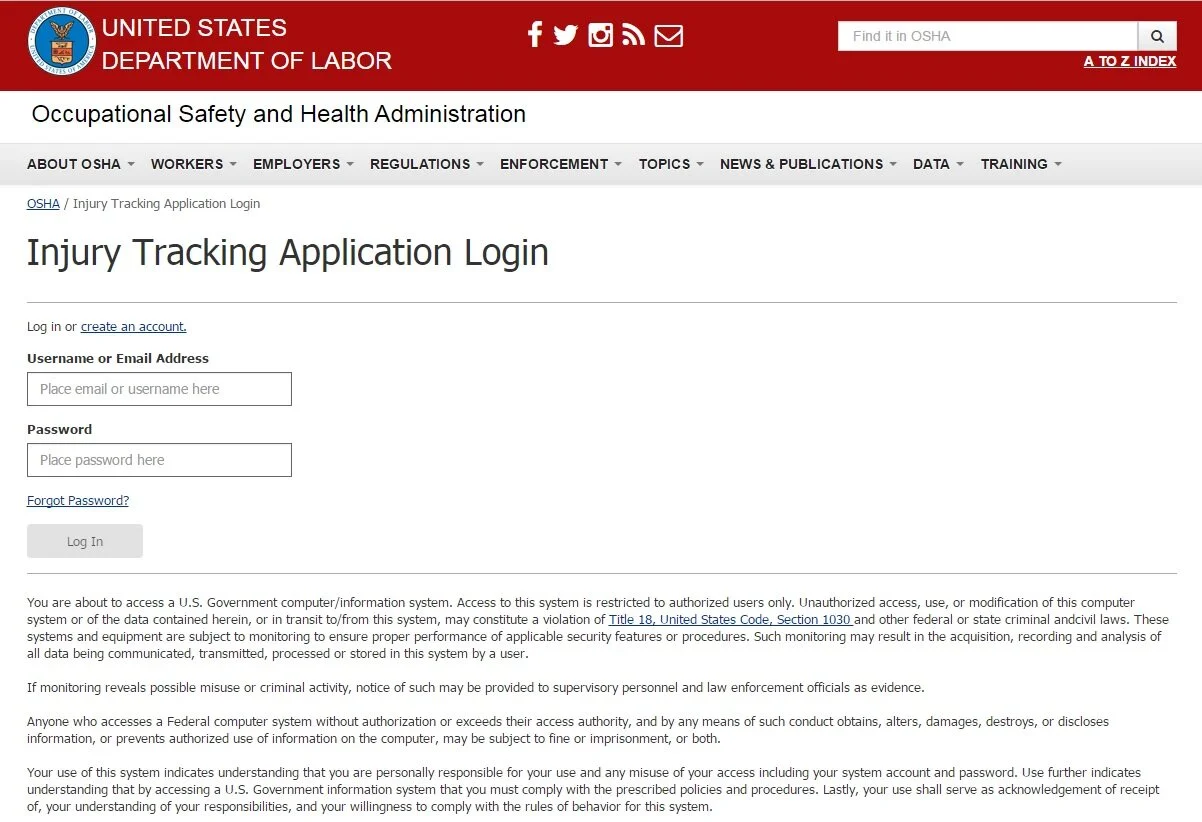
The OSHA 300A form is a summary of injuries and illnesses which occurred on the job during the calendar year. The form must be filed electronically on the Injury Track Application (ITA) starting January 2, 2020. Deadline for 2019 data submissions is March 2, 2020. It must be displayed from February 1, 2020 to April 30, 2020.
Don’t forget, if you are a Rancho Mesa client and utilize the Risk Management Center Incident Track feature, you have access to generate the Cal/OSHA 300A form and export it to a CSV file. From there you can upload it to the OSHA website.
Rancho Mesa has put together a 5-minute tutorial video on how to generate the electronic 300A form data file from the Risk Management Center, that can be uploaded to the Injury Tracking Application website for reporting the data.
For questions about how to track the injury and illness data in the Risk Management Center, contact Alyssa Burley at (619) 438-6869.
Employers Embrace Benefits of Telemedicine to Treat Work-Place Injuries
Author, Jeremy Hoolihan, Account Executive, Rancho Mesa Insurance Services, Inc.
Telemedicine is becoming prevalent in the workplace as a more efficient way to treat non-emergency type injuries. Employers, employees, and insurance companies alike are seeing the benefits of telemedicine from a convenience and efficiency standpoint.
Author, Jeremy Hoolihan, Account Executive, Rancho Mesa Insurance Services, Inc.
Telemedicine is becoming prevalent in the workplace as a more efficient way to treat non-emergency type injuries. Employers, employees, and insurance companies alike are seeing the benefits of telemedicine from a convenience and efficiency standpoint.
Telemedicine is defined as the practice of caring for patients remotely when the provider and patient are not physically present with each other. Modern technology has enabled doctors and nurses to consult patients by using HIPAA compliant audio and video conferencing tools.
Benefits of Telemedicine
Immediate access to medical professionals is provided to injured employees and their supervisors; 24 hours a day, seven days a week. This often eliminates the need for scheduling and attending an in-person appointment and waiting room delays.
The injured workers and supervisors avoid lost time from work driving to and from appointments.
Employees who work remotely can quickly gain access to medical assistance.
Minor injuries such as strains and sprains can respond favorably to appropriate on-site first aid. Often times, these types of injuries are referred to off-site clinics for care that is more expensive and more time consuming, but no more effective.
Sound clinical decisions can be made about when first aid is appropriate and when referrals are necessary.
When off-site referrals are necessary, doctors and nurses can direct the injured worker to pre-selected clinics within the insurance companies Medical Provider Network (MPN).
Many telemedicine providers work directly with the employer’s insurance company to provide the first report of injury and create the claim in their system. This eliminates the need for policyholders to report the claim. This also ensures that claims are reported immediately and without delay.
Telemedicine calls are typically recorded for future reference. The recordings are a useful tool in documenting the symptoms and injuries that are initially reported.
How Telemedicine Works
When a workplace injury occurs and the employee requests medical treatment, a call will be placed to the predetermined telemedicine company. The triage nurse that answers will typically speak with the supervisor first, then privately with the injured employee. During the call, the nurse will provide an initial assessment of the injured worker, determine the seriousness, and evaluate the type of medical care that is appropriate. If further medical care is deemed necessary, the nurse will refer the injured employee to a certified occupational physician who can conduct a virtual appointment online via a computer, tablet, or smartphone. If the telemedicine company is not able to conduct a virtual appointment, the injured employee will be directed to a clinic within the MPN.
Once the assessment is complete, the nurse will provide a treatment plan. If the injured employee can safety return to work, the nurse will provide first aid/self-care instructions. Self-care instructions are typically accessed online or faxed. The nurse typically completes the call by speaking once again with the supervisor to ensure they are aware of the treatment plan.
Telemedicine is recognized by many as an efficient way of treating non-emergency injuries in the workplace. In fact, many insurance companies have recently partnered with telemedicine companies to help prevent a minor injury from becoming more complicated, and help the injured employee focus on returning to wellness.
If you would like to have a discussion about telemedicine and how it could be implemented into your workers’ compensation program, please feel free to reach out to me, Jeremy Hoolihan, at (619) 937-0174.
RM365 Safety Star Program May Lower Risk of Receiving OSHA’s Most Frequently Cited Violation
Author, Kevin Howard, CRIS, Account Executive, Rancho Mesa Insurance Services, Inc.
Rancho Mesa Insurance Services’ RM365 Advantage Safety Star Program™ checks several boxes for contractors who are looking to improve their safety culture and lower risk. The program provides safety training designed to reduce an organization’s probability of work-related injuries; thus, minimizing the likelihood of an OSHA citation when used in conjunction with the Risk Management Center tools.
Author, Kevin Howard, CRIS, Account Executive, Rancho Mesa Insurance Services, Inc.

Rancho Mesa Insurance Services’ RM365 Advantage Safety Star Program™ checks several boxes for contractors who are looking to improve their safety culture and lower risk. The program provides safety training designed to reduce an organization’s probability of work-related injuries; thus, minimizing the likelihood of an OSHA citation when used in conjunction with the Risk Management Center tools.
Encouraging a safety culture through proper training makes sense for employers. Fed OSHA’s, maximum fine for a non-serious violation is $12,600. A willful repeat violation, however, can cost an employer anywhere from $70,000 - $126,000.
According to the United States Department of Labor, the top 10 most frequently cited standards are:
Fall protection, construction
Hazard communication standard, general industry
Scaffolding, general requirements, construction
Respiratory protection
Control of hazardous energy (lockout/tagout), general
Ladders, construction
Powered industrial trucks, general industry
Fall Protection–Training Requirements
Machinery and Machine Guarding, general requirements
Eye and Face Protection
Avoiding OSHA’s #1 Violation
With Fall Protection being at the top of OSHA’s citation list, and one of the most frequent causes of workplace fatalities in construction, it is of the upmost importance to focus on it when developing a safety program.
Rancho Mesa’s Risk Management Center offers a number of safety trainings that cover all 10 of the most frequently cited standards listed above. Fall Protection is one of five modules, within the RM365 Advantage Safety Star Program that could potentially help avoid a severe injury and OSHA fines.
When Century Painting’s Eddie Lopez was asked to give his thoughts on becoming RM365 Safety Star certified, his response was sincere.
“Obtaining my RM365 Safety Star Certificate was not only fulfilling and educational as a safety manager, but it also helped me navigate through safety criteria that OSHA is expecting us to follow regardless,” said Eddie Lopez, Safety Manager for Century Painting Corp.
RM365 Advantage Safety Star Program™ is a comprehensive tool for contractors that are hoping to package several advantages into one single task. To learn more about how to enroll, please visit the Safety Star Program™ page or contact Rancho Mesa Insurance Services at (619) 937-0164.
To learn more about the Fall Protection in Construction requirements, visit Cal OSHA’s Safety & Health Fact Sheet. You will notice links dedicated to each industry down the left side of the page. This information can further help companies avoid a potential OSHA fine, and more importantly, protect employees.
Employers Prepare As Reports of Sexual Harassment Spike
Author, Alyssa Burley, Media Communications and Client Services Manager, Rancho Mesa Insurance Services, Inc.
Americans are all too familiar with the #MeToo movement that has shed light on sexual harassment in the workplace. Outspoken celebrities and prominent public figures have brought this topic to the forefront in the media. With all the publicity surrounding sexual harassment allegations, people are empowered to speak out and report unwanted behaviors in the workplace. This leaves many employers asking what they can do to prevent harassment and prepare for possible harassment allegations.
Editor’s Note: This article was originally published on June 27, 2019 and has been updated for accuracy on September 12, 2019.
Author, Alyssa Burley, Media Communications and Client Services Manager, Rancho Mesa Insurance Services, Inc.
Americans are all too familiar with the #MeToo movement that has shed light on sexual harassment in the workplace. Outspoken celebrities and prominent public figures have brought this topic to the forefront in the media. With all the publicity surrounding sexual harassment allegations, people are empowered to speak out and report unwanted behaviors in the workplace. This leaves many employers asking what they can do to prevent harassment and prepare for possible harassment allegations.

Charges Alleging Sexual Harassment FY 2010 - FY 2018
The United States Equal Employment Opportunity Commission (EEOC) released its “Charges Alleging Sexual Harassment FY 2010 - FY 2018” report. The data shows from 2010 to 2017 reports of alleged sexual harassment incidents actually declined 15.7%, over the seven-year span. However, based on the data, it is difficult to know if incidents of sexual harassment declined or just the reporting of incidents declined.
However, during 2018 there was an increase of 13.6% in alleged sexual harassment incidents, which accounted for over 7,600 claims at a cost of $56.6 million dollars in damages.
| Year | 2010 | 2011 | 2012 | 2013 | 2014 | 2015 | 2016 | 2017 | 2018 |
|---|---|---|---|---|---|---|---|---|---|
| Percentage Change Over Previous Year Number of Charges |
NA 7,944 |
-1.4% 7,809 |
-3% 7,571 |
-4.2% 7,256 |
-5.7% 6,862 |
-0.6% 6,822 |
-0.9% 6,758 |
-0.9% 6,696 |
13.6% 7,609 |
| Percentage Change Over Previous Year Damages (In Millions) |
NA $41.2 |
9.5% $45.1 |
-4.7% $43 |
3.7% $44.6 |
-21.5% $35 |
31.4% $46 |
-11.5% $40.7 |
13.8% $46.3 |
22.2% $56.6 |
EEOC. Charges Alleging Sexual Harassment FY 2010 - FY 2018. https://www.eeoc.gov/eeoc/statistics/enforcement/sexual_harassment_new.cfm.
California’s Senate Bill 1343 (SB 1343) now requires employers with 5 or more employees to provide 2-hour Anti-Harassment training to supervisors and 1-hour training to employees, every two years. As part of this new requirement, the initial training must be completed for all employees and supervisors by January 1, 2021, according to Senate Bill 778, approved on August 30, 2019, which extends the training due date. The changes made by SB 778 not only extends the due date to January 1, 2021, but also addresses concerns about supervisory employees and clarifies when temporary workers must be trained. Read about the changes here.
It’s our belief that as more people are trained to recognize harassment in its many forms, we expect to see the number of reported alleged harassment incidents increase in the coming years. So, what should California employers do to mitigate this increased risk?
Course of Action
For employers, the best course of action is two-fold. Make sure you are compliant by training your employees and supervisors; second, make sure you have Employment Practices Liability Insurance (EPLI) as part of your risk management portfolio.
Training Supervisors and Employees
Understanding the confusion, time and financial burden SB 1343 puts on all California employers, Rancho Mesa offers its clients SB 1343-compliant free online supervisor and employee Anti-Harassment training. Supervisor and employee trainings can be completed 100% online via a computer, tablet or mobile device.
California employers who are not clients of Rancho Mesa can find this training through 3rd party vendors that work in the Human Resource arena and will need to contract with them directly to meet this requirement.
Employment Practices Liability Insurance (EPLI)
EPLI is “a type of liability insurance covering wrongful acts arising from the employment process. The most frequent types of claims covered under such policies include: wrongful termination, discrimination, sexual harassment, and retaliation,” according to the International Risk Management Institute, Inc.
If your organization currently does not have EPLI, or you are unsure about what is covered in your policy, we recommend you contact your insurance broker or call us to get clarification. With the projected increase in these types of claims, not having this vital coverage in place could expose your company to severe negative financial impacts.
Whether the increase in reported alleged sexual harassment incidents is a result of more incidents or simply more people feeling comfortable reporting the harassment, every employer should be prepared to properly train their employees and supervisors, while actively working to prevent and stop all forms of harassment in the workplace.
Contact the Rancho Mesa Insurance Services Client Services Department at (619) 438-6869 or aburley@ranchomesa.com for more information about free anti-harassment training for supervisors and employees, or learn more through our other articles on the topic.
Alyssa Burley is NOT a licensed insurance professional. Informational statements regarding insurance coverage are for general description purposes only. Contact a licensed insurance professional for specific questions.
Fleet Management: Driver Behavior Counts
Author, Sam Clayton, Vice President, Construction Group, Rancho Mesa Insurance Services, Inc.
When you give the car keys to your teenager for the first time, you wish you were sitting in the back seat controlling how they drive. Unfortunately, you have very limited control and the consequences of poor driving can be disastrous. It’s time to think of your employee drivers in a similar manner; these principles apply to your company’s fleet management program.
Author, Sam Clayton, Vice President, Construction Group, Rancho Mesa Insurance Services, Inc.

When you give the car keys to your teenager for the first time, you wish you were sitting in the back seat controlling how they drive. Unfortunately, you have very limited control and the consequences of poor driving can be disastrous. It’s time to think of your employee drivers in a similar manner; these principles apply to your company’s fleet management program.
To gain some sense of control, you regularly perform fleet inspections and driver trainings. You also hire and manage according to driving records, which provides a picture of the employee’s past driving history. Though, if you are honest with yourself, you too have driven over the speed limit many, many times before you received your speeding ticket. So, a driving record is not the only way to gauge a driver’s behavior.
If you had an effective and efficient way to impact your driver’s behavior before a ticket or accident occurs, you would feel more confident about managing your fleet.
There are Global Positioning Systems (GPS) that can monitor some of the problem behaviors like speeding; however, the onus is on you (the employer) to analyze the information then act on it. Another problem with this type of system is willful negligence. What happens if you have the data, know of a problem, but don’t act? This could cause a major problem when an accident occurs because you knew of a driver’s poor behavior but did nothing specifically to correct it.
The insurance industry is in a commercial auto claims crisis. The cost of vehicle repairs have increased and whether you employ safe drivers or not the price to insure a vehicle is skyrocketing. Simply, the claims have exceeded the premiums collected and the carriers are trying to recover the loss. So, steering driver behavior is more important than ever for your bottom line.
To the degree you can control auto claims created by your employee drivers, the better your premiums will be. Fewer claims equal lower premiums — simple as that. Claims are caused from poor driving behavior. Improve drivers’ behavior on any given day, and you’ll reduce the number of accidents.
But, how do you do that? Logistically, you can’t physically ride along with every employee to ensure they are driving safely, and offer real-time corrective guidance when they make mistakes.
As mentioned, there are GPS devises that measure driver behavior and performance. The devices will consolidate the information; but, it is up to the employer to analyze and act on the information.
Ask yourself, do I have enough time to consistently review this information and implement the correct plan of action? Do I have the resources available to manage this process?
If you are unsure and would like to learn about automated ways to track, manage and correct behaviors likes seatbelt usage, speeding, harsh braking, acceleration and corning, join us at our upcoming Fall workshop, “Driver Behavior is What Counts” and learn how to effectively and efficiently improve your fleet management practices and reduce premiums using smart technology.
In the meantime, if you have any questions, please contact Sam Clayton at (619)937-0167.
Promoting Safe Behaviors in the Workplace
Author, Jeremy Hoolihan, Account Executive, Rancho Mesa Insurance Services, Inc.
Safety awareness is one of the most important factors in reducing workplace injuries. There are approximately three million workplace injuries, every year. This amounts to roughly 8,000 injuries per day, 350 per hour, or 6 injuries per minute. Many of these injuries are preventable. Unsafe behaviors or decisions are usually the most common contributing factors. If employees are unaware of hazards or not motivated to follow safety protocol, their behavior will expose them even more.
Author, Jeremy Hoolihan, Account Executive, Rancho Mesa Insurance Services, Inc.
Safety awareness is one of the most important factors in reducing workplace injuries. There are approximately three million workplace injuries, every year. This amounts to roughly 8,000 injuries per day, 350 per hour, or 6 injuries per minute. Many of these injuries are preventable. Unsafe behaviors or decisions are usually the most common contributing factors. If employees are unaware of hazards or not motivated to follow safety protocol, their behavior will expose them even more.
Promoting safe behavior in the workplace can be one of the most impactful ways of reducing injuries. I encourage business owners to go above and beyond the required controls and measures such as engineering, administrative, and personal protective equipment (PPE) and promote safe behaviors and a safe work environment. Below are examples of ways ownership and management can promote safe behaviors.
Conduct frequent safety meetings with employees and encourage participation. Discuss previous injuries or near misses with your employees to identify the root cause and any corrective actions that are necessary. Be aware that not all corrective actions are readily accepted by employees, especially those seasoned employees that are set in their ways. It is important to listen to their concerns, analyze and modify the procedure or task so that the employee will buy into the changes and not be tempted to break the rules and work unsafely.
Give recognition to employees who are performing tasks safely and demonstrate proper behaviors. A little bit of recognition amongst your peers can be extremely influential and can further promote safety in the workplace.
Involve the employees in identifying and correcting hazards in the workplace. This can promote self-worth in an employee. Your employees are your eyes and ears in the field and they may identify an overlooked workplace hazard. It is especially impactful when the corrective action was a hazard they identified on their own.
Perform safety observations to encourage safe behaviors. While supervisory observations are important, business owners should also consider peer to peer safety observations. By collaborating with employees and involving them in the safety program, it will help them buy into any changes that are necessary further promoting workplace safety.
Having ownership and management consistently express their concerns for their employees well-being and safety is another way to promote safe behaviors. As a business owner, communicating to your employees that your main concern is their safety can drastically change the culture of a business. Reminding your employees that you want them to go home safely each day, goes a long way.
Promoting safe behaviors in the workplace starts with ownership and management, but is executed daily by the workforce. Providing sound policies and procedures relating to safety, along with a strong collaboration between ownership, management, and staff can drastically improve safety in the workplace and promote a safety culture.
Rancho Mesa Insurance Services, Inc. is a strong advocate for workplace safety. We like to take a risk management approach with our clients and prospects to develop a program that fits their needs. Please feel free to reach out to me, Jeremy Hoolihan, at (619) 937-0174 to see how Rancho Mesa can improve your risk profile.
Understanding Your Claims: What Do You Have To Lose?
Author, Daniel Frazee, Executive Vice President, Rancho Mesa Insurance Services, Inc.
Claims happen. They come in all shapes and sizes, from all types of parties, and can cost your company in many different ways. An important aspect of managing the costs of risk start with gaining a clear understanding of your claims. Our clients are always looking to improve their bottom line. This article focuses on just one piece of the pie chart; workers compensation claims. Understanding the nuances of these cases can create measurable plans in the future to reduce frequency and severity of claims and ultimately lower your costs.
Author, Daniel Frazee, Executive Vice President, Rancho Mesa Insurance Services, Inc.

Claims happen. They come in all shapes and sizes, from all types of parties, and can cost your company in many different ways. An important aspect of managing the costs of risk start with gaining a clear understanding of your claims. Our clients are always looking to improve their bottom line. This article focuses on just one piece of the pie chart; workers compensation claims. Understanding the nuances of these cases can create measurable plans in the future to reduce frequency and severity of claims and ultimately lower your costs.
DIG UP THE ROOTS
Perhaps the most common problem solving method for identifying causes of problems or faults is referred to as a “Root Cause Analysis.” As someone who likely manages many facets of your business, developing systems that analyze failures of a process makes complete sense. Once a claim occurs, initiate an Accident Investigation that is meant to uncover all of the small details that ultimately led to the injury or incident. In many cases, a Best Practices approach involves this same process for “near miss” incidents. That is, perform the same process despite the fact than injury did not actually result from the incident. This allows your company to refine the approach, improve the analysis, and develop training modules addressing the failure(s).
MORE QUESTIONS LEAD TO ANSWERS...
When claims occur, proactive business owners build a list of specific questions that deliver uncensored facts. Those facts build a story and allow your team a clear view of what really happened. Some examples of questions that can be used by your team are listed below:
How long had this injured worker been employed with us before the claim occurred?
Was the employee following protocol when the injury occurred?
Did the claim occur at the beginning or end of the day?
How quickly did our team provide assistance and get him or her the care they needed?
How quickly was the claim reported to our insurance company?
Have we had incidents like this in the past?
ROLE PLAYING EXAMPLES
While role playing actual incidents and scenarios is not factual, it helps your team walk down a path to understand “what if” scenarios and forces discussion on how to address issues.
Example: Employee ‘A’ was injured when he fell from a ladder and fractured his leg. He had been employed for only two months. The injury that occurred was caused by a lack of proper training as the ladder was not properly secured. This claim occurred in the early morning and the area surrounding the ladder was wet. The team reacted quickly and was able to transfer the injured worker to an emergency room in less than an hour. The claim was reported 3 days from the incident. There have been two other similar “near misses” with ladders that did not result in injury.
Understanding your claims is a vital step in preventing future incidents. An investigation of an incident or near miss can uncover the root cause, explain the circumstances surrounding the incident, and help to identify scenarios and prevention plans. To learn more about understanding your claims, register for the Accident Investigation and Analysis training in Rancho Mesa’s Risk Management Center.
Stay Off OSHA's Radar with an Effective Ladder Safety Program
Author, Casey Craig, Account Executive, Construction Group, Rancho Mesa Insurance Services, Inc.
Year after year OSHA publishes the “Top 10 Most Cited Violations” and it always seems to include violations dealing with falls. Fall protection, scaffolding, ladders, and fall protection (training requirements) all made this list and all of them have been on this list perennially for over a decade. How can a company that is using ladders keep from becoming just another name on the list of violators? How can you ensure that your employees are using provided equipment properly?
Author, Casey Craig, Account Executive, Construction Group, Rancho Mesa Insurance Services, Inc.
Year after year OSHA publishes the “Top 10 Most Cited Violations” and it always seems to include violations dealing with falls. Fall protection, scaffolding, ladders, and fall protection (training requirements) all made this list and all of them have been on this list perennially for over a decade. How can a company that is using ladders keep from becoming just another name on the list of violators? How can you ensure that your employees are using provided equipment properly?

The biggest mistake made with work at height is letting your employees perform their work using materials that are not meant for that job. Employees finding a chair, bucket, or truck to stand on to get those couple extra feet are the easiest ways to lead to an accident. From A-frames to extensions and step stools, there is a perfect tool for the job at hand. It does take a little preparation before sending your employees onto the job site. Having your supervisors make sure ladders are properly set up and fully functional to ensure your employees safety is as important as training your employees how to use a ladder.
Ladders have not miraculously become safer over the years. The materials used in making ladders may have changed, but the injuries that occur from using them have been the same. Here are some common misuses:
Trying to overextend reach at the top of a ladder, instead of taking the time to get all the way to the bottom to move the ladder and maintain three points of contact.
Stepping off from the third rung instead of keeping three points of contact all the way to the ground.
Setting the ladder at the wrong angle before climbing (70-75 degrees is desirable).
Trying to move a 70 pound ladder without asking for help and losing control.
There are countless ways that rushing or not paying attention to detail can leads to injuries. The American Ladder Institute (ALI) claims all injuries that occur on a ladder are preventable with the proper attention to detail. If you know that a ladder has a bent rung, or the frame is compromised, the risk is not worth having an employee get on that ladder. Ladders are manufactured to withhold four times the weight they are rated for, but if damaged there is no telling what could make it catastrophically defective. Make sure that there is enough tread on the foot of the ladder to keep your ladder in place while working at height.
Now that we know a little about our exposure, let’s see what we can do to fix the problem. Making sure you have the right equipment is by far the most important step to keep you from running into a violation. Keep your employees trained in proper ladder safety, and only let the employees that have been trained on a ladder. Properly tie off ladders, maintain your equipment over time, and attend ladder safety seminars regularly. One huge tool that is underutilized in the construction industry is having a consultation meeting with OSHA. Have them come out and inform you of things you could be doing better without the worry of being fined. OSHA is meant to be a tool to keep your employees safe, don’t hesitate to use them.
For questions about ladder safety seminars or what policies may match your company’s risk, please contact Rancho Mesa Insurance Services, Inc. at (619) 937-0164. We look forward to helping better your risk profile.
4 Essential Tools For Managing Your Company's Risk
Author, Alyssa Burley, Client Services Coordinator, Rancho Mesa Insurance Services, Inc.
Risk Management is the identification, analysis, assessment, control, and avoidance, minimization, or elimination of unacceptable risks. Companies manage their risk through what is known as an Injury and Illness Prevention Program (IIPP). As a business owner, supervisor or manager, there are tools available to assist in risk management endeavors.
Author, Alyssa Burley, Client Services Coordinator, Rancho Mesa Insurance Services, Inc.
Risk Management is the identification, analysis, assessment, control, and avoidance, minimization, or elimination of unacceptable risks. Companies manage their risk through what is known as an Injury and Illness Prevention Program (IIPP). As a business owner, supervisor or manager, there are tools available to assist in risk management endeavors.
“Injury and illness prevention programs are systems that can substantially reduce the number and severity of workplace injuries and illnesses while reducing costs to employers,” according to OSHA.
Below are four tools your company can use to proactively manage the IIPP.
Training
Access to a robust bilingual database of both online and offline trainings is essential to ensuring employees are up to date on required and supplemental training. Weekly training shorts (e.g., tailgate topics, safety shorts) that are industry specific and relevant keeps employees focused on safety and reinforces a safety culture within the company.
“Training in the safe way for workers to do their jobs well is an investment that will pay back over and over again in fewer injuries and illnesses, better morale, lower insurance premiums and more,” according to OSHA’s training requirements document.
Tracking of Employee Training
Maintaining employee training documentation is vital for ensuring employees are trained on required topics and in regular intervals. Having an electronic tracking system can streamline the process and allow management to generate reports and search records from any device with internet access.
According to OSHA’s documentation, “it is a good idea to keep a record of all safety and health training. Documentation can also supply an answer to one of the first questions an incident investigator will ask: ‘Did the employee receive adequate training to do the job?’”
To learn more about OSHA training requirements, review Training Requirements in OSHA Standards.
Incident Tracking and OSHA Reporting
Documenting near-misses, injuries, and accidents can keep your company OSHA compliant while helping to prevent incidents in the future. Making sure supervisors complete a thorough investigation and collect witness statements at the time of the incident can also ensure hazards are addressed immediately. Electronic documentation of a near-miss or incident creates a standardization of data that is collected, allows for trend reporting, and electronic submission of OSHA 300A Summary data.
Written Job Hazard Analysis
A job hazard analysis (JHA) identifies the dangers of specific tasks in order to reduce the risk of injury to workers. JHAs are important for managing risk because they help to identify hazards which can be reduced or eliminated before an employee is hurt. Once a JHA is established, management should observe and document their findings and any remedies that are made.
Risk Management starts with a written IIPP, but it is up to management to implement and utilize the available tools to make it effective. Contact Rancho Mesa’s Client Services Department at (619) 438-6869 to learn more about the Risk Management Center platform.