

Industry News

Observations vs. Mobile Forms: Choosing the Right SafetyOne™ Tool
Author, Alyssa Burley, Partner, Rancho Mesa Insurance Services, Inc.
As organizations replace manual safety processes with the SafetyOne™ platform, one of the first decisions administrators face is determining whether a process should be managed as a Safety Observation or a Mobile Form.
Author, Alyssa Burley, Partner, Rancho Mesa Insurance Services, Inc.
As organizations replace manual safety processes with the SafetyOne™ platform, one of the first decisions administrators face is determining whether a process should be managed as a Safety Observation or a Mobile Form.
While both tools help collect important data in the field, they serve different purposes. Understanding when to use each tool improves reporting consistency, strengthens accountability, and provides more meaningful analytics for the organization.
Safety Observations
A Safety Observation is best used to identify, document, and address a specific risk, hazard, unsafe condition, or unsafe behavior observed in the field. It allows users to answer a set of safety questions, add notes and photos, assign issues to internal or external parties, and track corrective actions through resolution.
The observation process supports a proactive safety culture by helping organizations identify and address issues before they result in incidents or injuries.
Safety Observations can be used to identify, document and correct:
Missing guardrails around an elevated work area
Employees not wearing required personal protective equipment (PPE)
Blocked emergency exit
Damaged extension cord in use
Improper ladder setup
Poor housekeeping creating a trip hazard
Other workplace hazards
In each of these examples, the goal is not simply to document the condition, but to ensure the issue is corrected and the corrective action can be tracked and verified.
Mobile Forms
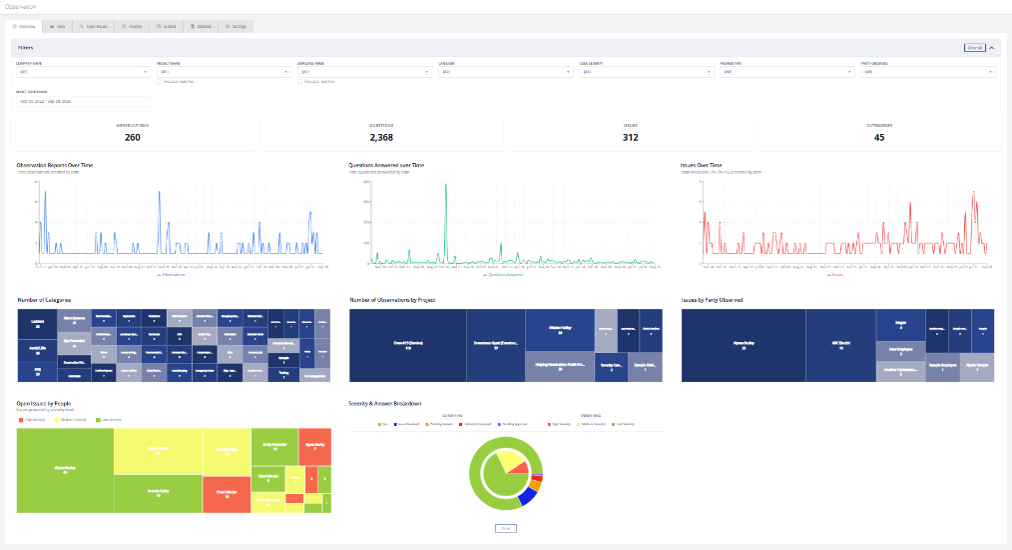
Using Safety Observations in SafetyOne also enables management to identify trends, uncover recurring issues, and analyze potential risks through AI and data analytics.
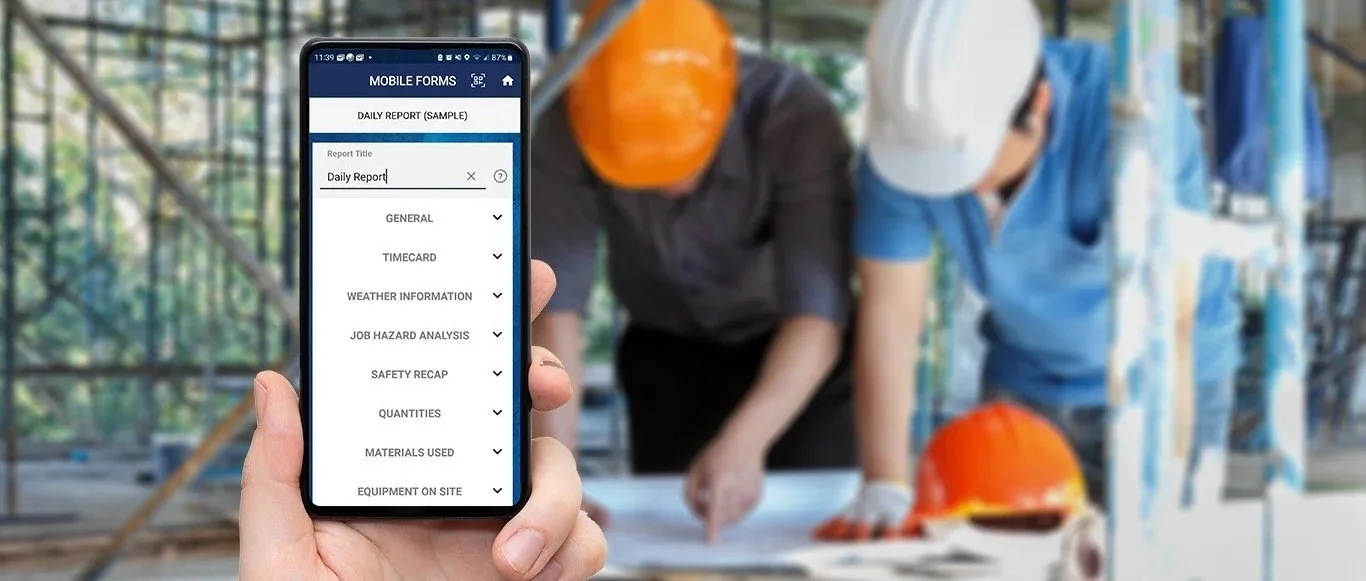
A Mobile Form is used when the primary goal is to collect, document, and store information using a structured template. Forms can be completed through the mobile app, a shared URL, or by scanning a QR code with a mobile device.
Mobile Forms replace paper processes with configurable digital forms that standardize data collection, capture signatures, upload photos, and generate reports.
Mobile Forms can collect standardized data for:
Auto Accident Reports
Daily Reports
Equipment and Vehicle Check-outs
Incident Investigation Reports
Job Hazard Analysis (JHA)
Security Checks
Witness Statements
Other custom forms
In these examples, the primary objective is to document an event, activity, or company process for operational or compliance purposes rather than track corrective actions.