

Industry News

Your Dashboards and AI Tools Are Only as Good as Your Data
Author, Alyssa Burley, Partner, Rancho Mesa Insurance Services, Inc.
As businesses continue to adopt artificial intelligence (AI) tools and data analytics, the quality of the information entered into applications like Rancho Mesa’s proprietary SafetyOne™ Platform has become increasingly important.
Author, Alyssa Burley, Partner, Rancho Mesa Insurance Services, Inc.

As businesses continue to adopt artificial intelligence (AI) tools and data analytics, the quality of the information entered into applications like Rancho Mesa’s proprietary SafetyOne™ Platform has become increasingly important.
Whether your organization uses SafetyOne or another technology platform to manage safety, compliance, and/or operations, accurate and standardized data entry is essential.
Every day, employees at all levels enter information into mobile forms, safety observations, incident reports, and training records. When fields are consistently used as intended, companies can generate meaningful reports, review reliable dashboards, and leverage AI-powered insights to guide future safety training and business decisions. When fields are used inconsistently or not as they were intended by the platform developer, the value of that data can be significantly reduced.
High-quality data helps organizations make informed decisions about training needs, resource allocation, corrective actions, and long-term safety initiatives.
Accurate Fields Lead to Accurate Reporting
One of the most common examples we see in SafetyOne of not using a field as intended is the Project Name field on the Administrator website. This field is designed to identify a specific job, crew, facility, location, or program associated with a group of records. Depending on your organization’s industry, it might make sense for the Project field to track records by each construction job, service team or crew, physical campus, or community program. When the Project field is incorrectly used for individual supervisors or employees, reporting capabilities become ineffective. For example, management may want to analyze incidents, inspections, or training activities by Project to identify trends and allocate resources. If the Project field is used differently than intended, dashboards may not be able to display the aggregated data for jobs, crews, facilities, locations or programs accurately. Dashboards and AI tools rely on consistent data to identify patterns and generate meaningful recommendations.
Complete Data Powers Smarter Decisions
Completing all available fields within a platform can save your organization significant time and frustration down the road. Although many fields in SafetyOne and other platforms are required, optional fields often contain valuable information that may become critical later. What seems unimportant today could become a key data point when leadership wants to analyze trends, evaluate performance, or leverage AI-powered insights. One of the greatest challenges organizations face is realizing they need data that has never been collected. If information is not captured at the time an event occurs or the record is entered, historical insights often cannot be recreated after the fact. As data analytics and AI become increasingly integrated into business operations, the completeness of your data may ultimately determine the quality of the decisions you can make from it.
Unlike a human reviewer who can often infer meaning from incomplete information, AI tools depend on structured, standardized data to identify trends and generate insights. The more organized and complete the data set, the more accurate and useful the resulting recommendations become.
Consistency Unlocks the Full Potential of AI and Data Analytics
Consistency is just as important as completeness. If an employee signs and types their name on a toolbox talk record as “John Smith,” then the next week signs it "Johnny S,” and the following week "J. Smith," the platform may interpret those as three separate people. So, establishing standardized naming conventions throughout the platform helps ensure records are grouped correctly and that reports, dashboards, and AI tools can accurately analyze the data.
As technology continues to evolve, data quality will only become more important. Clean, standardized data is the foundation that supports accurate reporting, effective dashboards, and meaningful AI-generated insights. By taking a few extra moments to ensure information is entered correctly into the proper fields, organizations can significantly improve the accuracy and usefulness of the data they collect.
If you have questions about field usage, reporting, or data management best practices within the SafetyOne platform, contact your Rancho Mesa Client Technology Team. Our team can provide guidance on proper field configuration and data entry standards to help your organization maximize the value of SafetyOne and the information it collects. Additional SafetyOne resources and frequently asked questions are available at www.ranchomesa.com/safetyone-app.
Simply put, data is only as valuable as the accuracy, completeness and consistency of the information being entered.
Fleet Safety is Evolving: How Telematics and AI Are Changing Fleet Risk
Author, Rory Anderson, Partner, Account Executive, Rancho Mesa Insurance Services, Inc.
Fleet safety technology is rapidly shifting from reactive to proactive. Modern telematics and artificial intelligence (AI) tools now give companies real-time visibility into driver behavior, helping identify and correct risky habits before they turn into accidents.
Author, Rory Anderson, Partner, Account Executive, Rancho Mesa Insurance Services, Inc.
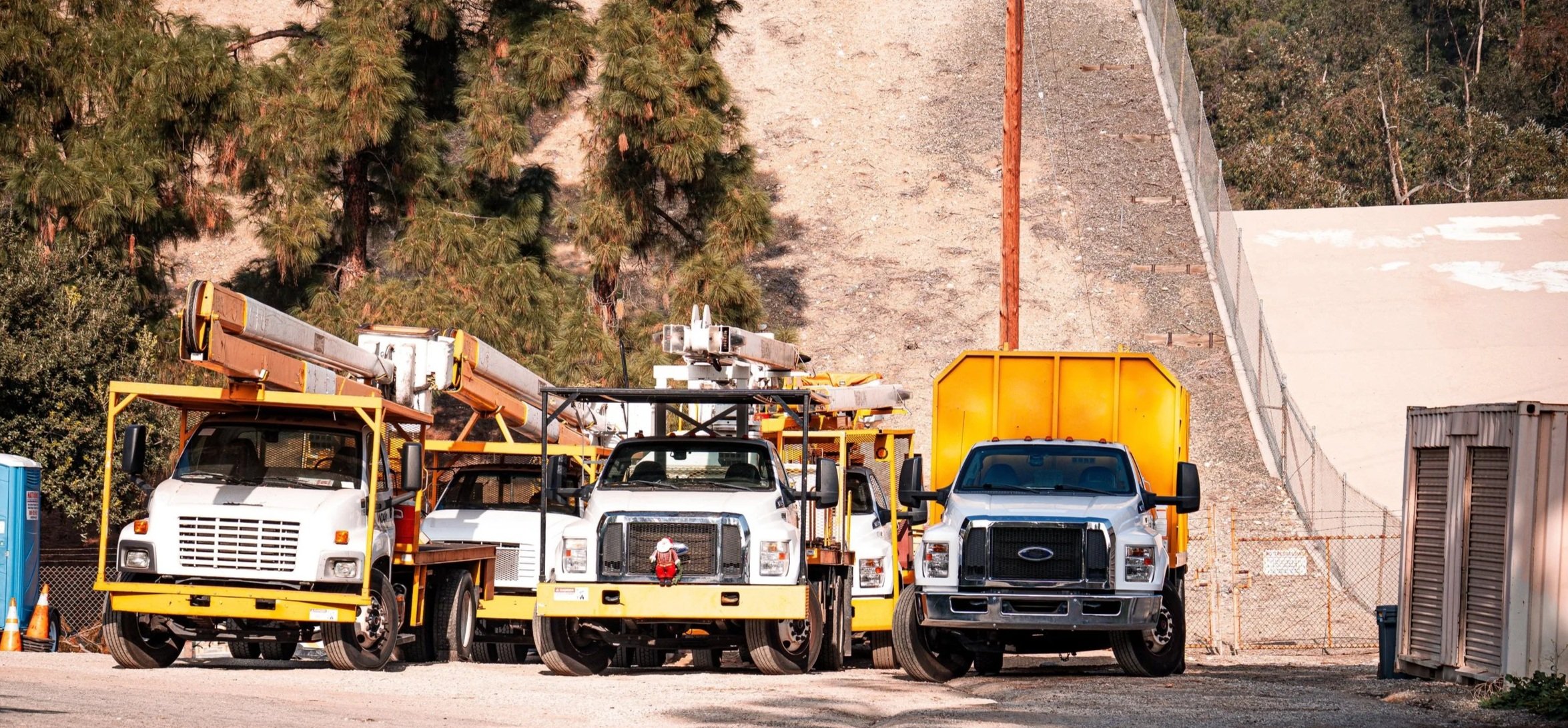
Fleet safety technology is rapidly shifting from reactive to proactive. Modern telematics and artificial intelligence (AI) tools now give companies real-time visibility into driver behavior, helping identify and correct risky habits before they turn into accidents.
I recently attended a webinar titled Telematics, AI & the Future of Fleet Risk hosted by the Insurance Journal, and one of the biggest takeaways was that many companies are seeing immediate value from these tools through reduced claims, improved driver performance, and better operational efficiency which all lead to greater returns on revenue-generating assets like the company’s fleet of vehicles.
Interestingly, many organizations initially implement telematics for safety reasons, but quickly discover benefits across multiple areas of the business. In addition to improving fleet safety, which ultimately leads to fewer out-of-service vehicles, companies often report:
Reduced fuel costs
Improved maintenance tracking
Better workflow efficiency
Greater asset (vehicle) utilization
One analogy from the webinar stood out to me. The speaker compared drivers to professional athletes reviewing game film. Just as athletes use video to improve performance, drivers can now use dash cameras and AI insights to improve driving habits through more personalized coaching.
Of course, implementation is not without challenges. Employee buy-in is often the biggest hurdle, particularly when drivers feel the technology creates a “big brother” environment. Transparency is critical. Companies that clearly explain what the system tracks, how the data is used, and why it is being implemented typically see much stronger adoption.
Another challenge is information overload. Many organizations are surprised by the amount of data available when they first launch a telematics platform. A gradual rollout focused on a few key metrics at a time often leads to the best results.
There was also strong discussion around the impact telematics and AI are having on claims and litigation. Dash camera footage and telematics data can help piece together accidents more accurately, improve claim investigations, and provide objective evidence during litigation. In many cases, these tools help reduce the total cost of risk while improving defensibility.
Fleet technology continues to evolve quickly, and while telematics is not a replacement for a strong safety culture, it is becoming an increasingly valuable tool for contractors looking to improve safety, reduce losses, operate more efficiently, and improve return on assets.
To learn more about how telematics and AI tools can help your company manage risk, contact me at randerson@ranchomesa.com or (619) 486-6437.
New AI Regulations for California Employers
Author, Jadyn Brandt, Client Communications Coordinator, Rancho Mesa Insurance Services, Inc.
On October 1, 2025 California employers with five or more employees will be required to follow new Artificial Intelligence (AI) regulations. The amended regulations address the use of automated-decision systems (ADSs) in employee or prospective-hire evaluations, applying existing antidiscrimination laws to new AI technologies.
Author, Jadyn Brandt, Client Communications Coordinator, Rancho Mesa Insurance Services, Inc.

On October 1, 2025 California employers with five or more employees will be required to follow new Artificial Intelligence (AI) regulations.
The amended regulations address the use of automated-decision systems (ADSs) in employee or prospective-hire evaluations, applying existing antidiscrimination laws to new AI technologies.
Automated-Decision Systems
Employers will be required to comply with the state’s existing antidiscrimination laws when using an ADS. For work-related purposes, an ADS is defined as any computational process that makes or supports employment decision-making, including hiring, promotion, or termination. An ADS may use artificial intelligence, algorithms, or other types of data processing to:
Screen, evaluate, or make predictive assessments about applicants or employees, including their skills, abilities, personality or cultural fit.
Share job advertisements or recruiting materials to certain groups.
Screen resumes for key terms.
Analyze observable traits from online interviews, including facial expressions, word choice, or tone of voice.
Analyze third party data.
Accommodations
Improper use of ADS can lead to discrimination based on disability or religious creed. Individuals with disabilities could be placed at an unfair disadvantage if an ADS evaluates physical abilities or cognitive traits. An applicant’s or employee’s religious beliefs or practice could also conflict with the screening process used by an ADS. Employers should consider whether reasonable accommodations are required in either case before making a decision based on an ADS.
Recordkeeping
Data collected from an automated-decision system must be retained by employers for four years from the date the record was created or the date of the action taken as a result of the ADS, whichever is later.
To ensure your business is compliant with the new regulations, there are a few steps you can take.
Retain ADS data for at least four years.
Ensure HR and managers are aware of what accommodations for a disability or religious beliefs might be required, when using an ADS in employment decisions.
Resources for staying up-to-date with state and federal laws can be accessed through Rancho Mesa’s RM365 HRAdvantage™ portal. Rancho Mesa’s HR experts are also available for clients to answer specific questions about the new regulations and how they could impact your business through the HR portal.