

Industry News

What to Do After A Vehicle, Equipment or Fuel Theft
Author, Jessee Keirstead, Risk Control Consultant, Rancho Mesa Insurance Services, Inc.
When a company vehicle, piece of equipment, or fuel supply is stolen, taking immediate and organized action is critical. A prompt response can increase the chances of recovery, support insurance claims, and help minimize business disruptions.
Author, Jessee Keirstead, Risk Control Consultant, Rancho Mesa Insurance Services, Inc.

When a company vehicle, piece of equipment, or fuel supply is stolen, taking immediate and organized action is critical. A prompt response can increase the chances of recovery, support insurance claims, and help minimize business disruptions.
By following a clear reporting process and preserving important documentation, companies can assist law enforcement, strengthen claim investigations, and alert others who may help identify or recover stolen assets. The following steps outline the key actions to take as soon as a theft is discovered.
1. Call Local Police
As soon as a theft has been identified, call the police and file a report. Provide the PIN/serial number, photos, GPS pings, geofence event, etc.
2. Report Theft to National Equipment Registry (NER)
After contacting the police, submit a free theft report to the NER which requires a police report. The NER will then alert the National Insurance Crime Bureau (NICB).
3. Notify Your Broker and Insurance Carrier
Reach out to your insurance broker/carrier to report the loss. Record keeping is important and can help subrogation efforts and shorten claim investigation time. Collect purchase records, PIN plate, concealed markings, maintenance logs, tracker IDs, geofence history, and other information that can be useful.
4. Contact Contractors
Share photos and serial numbers with state and local contractors who thieves may target to sell your used vehicles and equipment.
Using Rancho Mesa’s proprietary SafetyOne™ mobile app to document vehicles and equipment left on jobsites, along with fuel deliveries and fueling schedules, can help companies quickly identify when an asset or fuel supply is missing. Maintaining accurate, real-time records of equipment locations, usage, and fueling activity provides valuable information that can support theft investigations, improve recovery efforts, and reduce the time spent determining when and where a theft occurred.
The best protection against theft is a combination of preparation and prompt action. By maintaining detailed records, leveraging technology to track assets, and following the reporting steps outlined above, companies can improve their chances of recovering stolen property and minimizing business disruption. A proactive approach not only strengthens security but also helps protect your employees, customers, and bottom line.
Jobsite Fuel Theft is on the Rise
Author, Jessee Keirstead, Risk Control Consultant, Rancho Mesa Insurance Services, Inc.
Gasoline and diesel theft has emerged as a growing and often underreported risk across Southern California, driven in part by persistently high fuel costs and organized theft activity.
Author, Jessee Keirstead, Risk Control Consultant, Rancho Mesa Insurance Services, Inc.
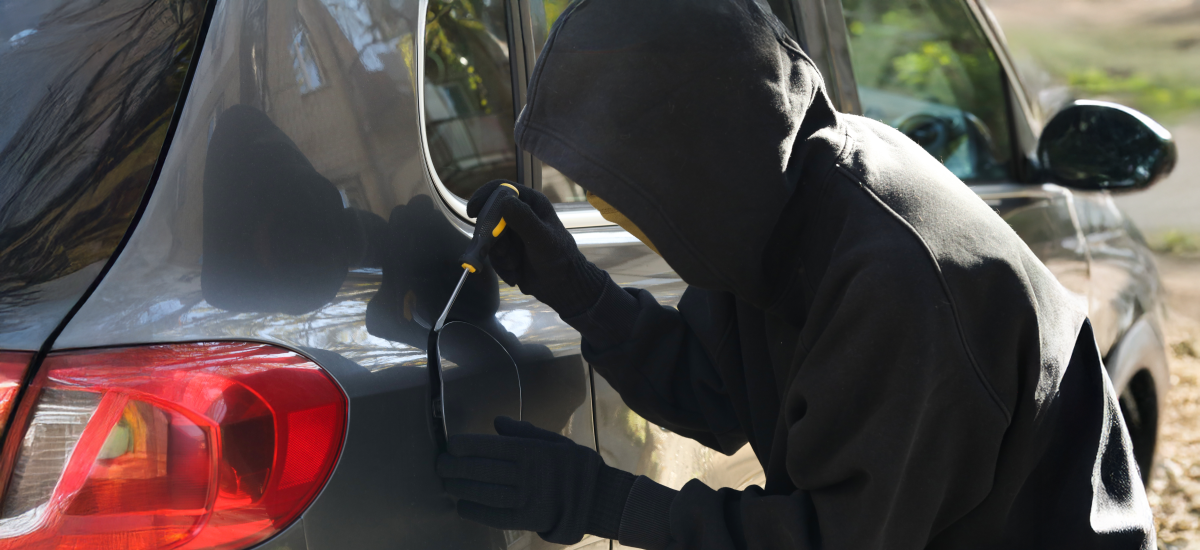
Gasoline and diesel theft has emerged as a growing and often underreported risk across Southern California, driven in part by persistently high fuel costs and organized theft activity.
Regardless of where a business is located, construction contractors are particularly vulnerable to fuel theft due to the nature of their operations. Since jobsites are often temporary, unfenced, and located in high traffic or remote areas, they are ideal conditions for fuel theft, particularly where vehicles, generators, and heavy equipment are left unattended overnight. Thieves are targeting bulk fuel storage tanks, fuel contained within equipment and fleet vehicles.
Gas and diesel theft is no longer just a nuisance, and the rising cost of fuel has a direct impact on theft. California’s fuel cost is amongst the highest in the country, creating stronger incentives for theft. Fuel is typically easier to steal than equipment, easier to transport covertly, and stolen fuel has become much easier to re-sell.
Industry data shows construction theft costs between $300 million and $1 billion annually in the U.S., with more than 11,000 incidents reported each year. Fuel is a frequent target because it is easily siphoned, resold, and almost impossible to trace. In many cases, fuel theft may go unnoticed. However, there has been a surge in fuel theft incidents, including events where thousands of gallons have been siphoned from commercial businesses in a single event.
Beyond the direct loss of fuel, contractors face indirect costs including project delays, equipment downtime, and potential environmental liabilities from damaged or drilled fuel tanks.
Solutions
There are two methods contractors can utilize to reduce the risk of fuel theft from their jobsites: physical and procedural.
Video monitoring and mobile towers paired with alarms and analytics can deter thefts and provide evidence for prosecution. Installing good lighting and heavy-duty access controls create minor hurdles that can often deter or frustrate would-be thieves. At a minimum, secure jobsites with fencing, lighting, and surveillance systems, park vehicles in well-lit and controlled areas. If you have equipment or vehicles that will be unmonitored for a significant period of time, you may want to consider securing fuel storage tanks with locking caps and anti-siphon devices.
Modify company procedures to avoid pre-staging vehicles and equipment near public roads overnight.
And, train crews on security measures, spotting suspicious activity, proper locking of gas caps, use of deterrents, and response to theft. If you have noticed suspicious activity, you may want to consider keeping logs and conducting regular checks of fuel levels. Encourage operators to inspect tanks, fuel caps, and equipment to identify any signs of theft as early as possible.
Fuel theft is a costly and growing threat, but it’s one that contractors can manage with a solid layered approach. Combining physical and procedural security measures can reduce the likelihood your fuel will be stolen. Ultimately, prevention is about discipline, consistency, crew training, and rapid reporting protocols. By integrating these strategies, contractors can protect their fuel and keep projects on schedule.
Construction Equipment Theft on the Rise
Author, Jessee Keirstead, Risk Control Consultant, Rancho Mesa Insurance Services, Inc.
Across the United States, construction equipment theft is on the rise. And, for companies that depend on small and/or heavy equipment to operate, a stolen piece can have devastating consequences that result in project delays and lost revenue.
Author, Jessee Keirstead, Risk Control Consultant, Rancho Mesa Insurance Services, Inc.

Across the United States, construction equipment theft is on the rise. And, for companies that depend on small and/or heavy equipment to operate, a stolen piece can have devastating consequences that result in project delays and lost revenue.
Each year, construction equipment theft losses are estimated to be between $300 million and $1 billion. And, that doesn’t include the indirect costs like equipment downtime, cost of rentals, and delays in construction, which all raise the true impact far beyond direct costs.
Since construction equipment is mobile, valuable, and often stored on jobsites with predictable on-site schedules, it is a target for organized and opportunistic thieves. Equipment that can be moved and resold quickly, often across state lines, is a likely target while recovery rates lag far behind the frequency of thefts.
On average, an equipment claim and recovery typically costs between $29k - $35k per incident. And, while industry briefings have stated around 1,000 equipment pieces are stolen per month on average, it is expected to rise.
Thieves target equipment like skid steer loaders, utility carts, mowers, backhoes, excavators and mini excavators, and bulldozers. They rank among the most stolen machinery types due to mobility and market demand. Compact tracked loaders, towable chippers, generators, and trailers are also consistently targeted because they are easy to move.
Physical Controls
No system is 100% effective, but utilizing physical controls to deter would-be thieves is the first step in protecting equipment at the yard or on the jobsite.
Minor hurdles can often deter or frustrate thieves. So, installing good lighting, utilizing heavy duty access control, wheel locks/boots, chains, cables, and anchors can be enough to slow or stop a thief. Parking smaller equipment boxed in and facing inward so that the hitch on trailers are facing towards larger equipment or a building can also be a deterrent to thieves.
Rekeying equipment eliminates the ability for a thief to use universal keys often installed by equipment manufacturers. This makes it harder for a thief to start the piece of equipment. Once you have rekeyed the equipment, conduct audits on keys, document key storage, control spares, lock keys in a secure location, and require sign out to ensure the keys are not stolen.
Removing batteries and detaching or storing critical attachments separately can immobilize equipment. Making the thief install a battery or other attachments in order to steal the piece of equipment may be enough of a deterrent that they move on.
Modern Solutions
As technology advances, construction companies have increasingly more tools available to help combat equipment theft.
Global Positioning Systems (GPS) and telematics systems can send immediate notifications when equipment moves or leaves a defined zone. Trackers can accelerate law enforcement response and increases recovery rates.
Yard and jobsite security like video monitoring and mobile towers paired with alarms and analytics can deter thefts and provide evidence for prosecution.
The National Equipment Register (NER) HelpTECH (Heavy Equipment Loss Prevention Technology) program, is a centralized, law enforcement-backed equipment ownership database that also boosts recovery and deters theft.
Procedures
Adopting procedures to ensure equipment is inventoried, limit exposure on the jobsite, and employees are properly trained helps limit risk of theft.
Conducting regular inventory of equipment at the yard and daily inventory on the jobsite provides documentation of where equipment is located and where it is supposed to be, plus it can help to confirm when something is missing. Rancho Mesa’s SafetyOne app provides daily jobsite reports that include a section for equipment that is left on the jobsite.
Limit the time the equipment is on a jobsite. Avoid pre-staging trailers or equipment before it is needed near public roads and overnight to reduce the chances the equipment is noticed by thieves.
Train crews on physical and procedural security measures, spotting suspicious activity, proper locking, trailer security, use of deterrents, battery removal, and response to theft.
Using a combination of physical deterrents, modern technology and procedural training can help protect jobsite equipment.
Construction equipment theft is a costly and growing threat, but it is one that contractors can manage with a solid layered approach. Combining physical security measures, such as perimeter controls, key management, and immobilization, with modern technology like GPS tracking, geofencing alerts, and remote monitoring creates a good defense. Programs like NER’s HELPtech add another layer by improving identification and recovery odds.
Ultimately, prevention is about discipline, consistent inventory checks, crew training, and rapid reporting protocols. By integrating these strategies, contractors can significantly reduce theft risk, protect their equipment, and keep projects on schedule.