

Industry News

Reducing Risk Near Traffic for Landscaping and Tree Care Crews
Author, Jessee Keirstead, Risk Control Consultant, Rancho Mesa Insurance Services, Inc.
Landscaping and tree care companies are already high-risk operations, but few job sites present more risk than roadsides, medians, and highway corridors. When employees work is near moving traffic, the potential for severe injury increases significantly, making effective traffic management a priority.
Author, Jessee Keirstead, Risk Control Consultant, Rancho Mesa Insurance Services, Inc.
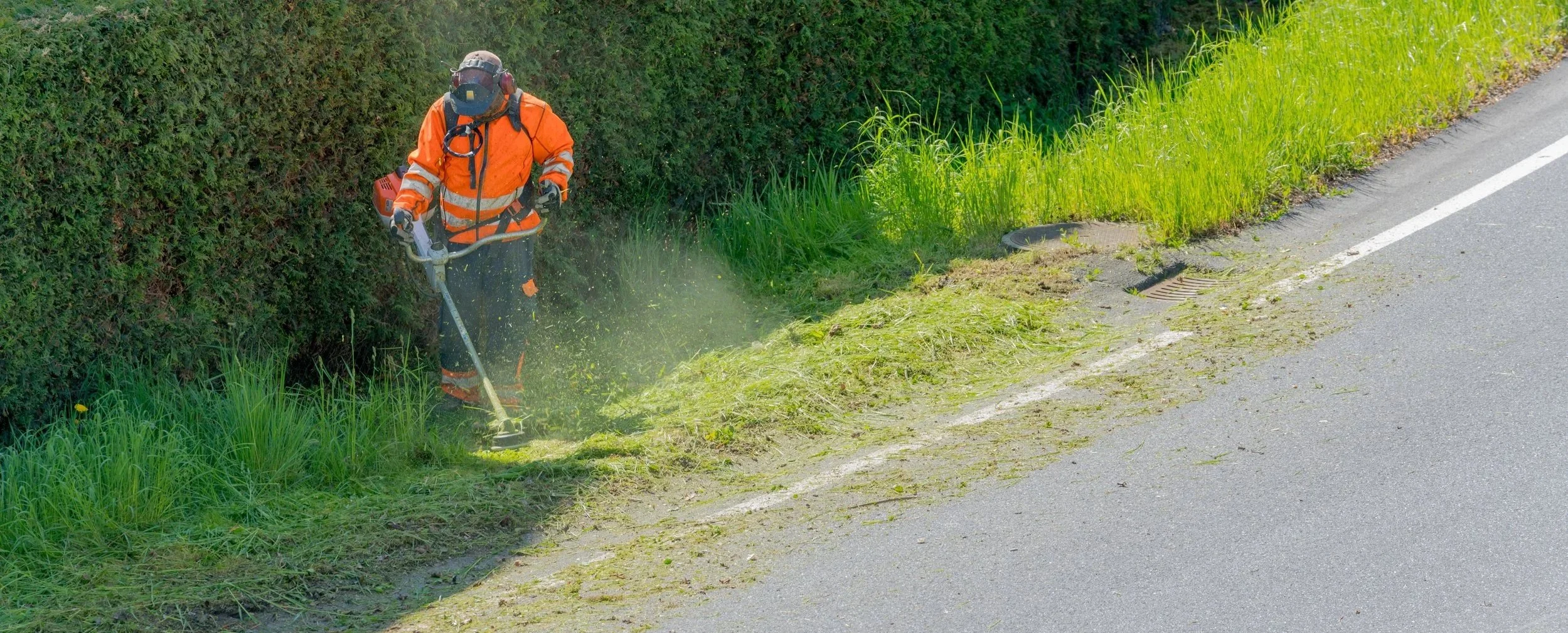
Landscaping and tree care companies are already high-risk operations, but few job sites present more risk than roadsides, medians, and highway corridors. When employees work is near moving traffic, the potential for severe injury increases significantly, making effective traffic management a priority.
Temporary traffic management is a frequent and critical part of the job. And, when crews are exposed to moving traffic, the primary controls are designed to create enough time, space, and visibility for drivers to recognize the work zone and react safely. Even when lane closure is not required, proper planning, vehicle positioning, signs, cones, and escape routes are necessary controls that can prevent serious incidents.
Pre-Planning
Every roadside job should begin with a hazard assessment. Factors such as road speed, traffic volume, sight distance (including curves and hills), proximity of workers to traffic, and available escape routes help determine the level of protection that is needed.
Preparation also includes ensuring the work zone has with all required equipment on-site including signs, cones, communication devices, and high visibility personal protective equipment (PPE). Workers exposed to traffic should wear ANSI Class 2 or Class 3 high visibility reflective vests.
Core Elements of a Safe Roadside Work Zone
Effective temporary traffic control should include five core elements:
Signs provide early warnings to approaching drivers.
Cones create visual separation between traffic and workers.
Buffer zones provide a clear recovery area.
Company vehicles act as a physical protective barrier when positioned between traffic and the work zone.
Escape routes provide a predetermined path to safety and serve as the crew's last line of defense.
Adjust for Roadway Conditions
Traffic control requirements vary depending on roadway type. Urban streets may present challenges like pedestrians, driveways, and intersections, while rural roads often have limited visibility due to hills and curves. Highways present the greatest level of exposure because of higher vehicle speeds and reduced reaction times.
As roadway speeds increase, work zones generally require larger buffer areas and more advanced warning for passing drivers.
Specific Challenges of Median Work
Median operations require special consideration because traffic approaches from both directions.
Effective traffic control typically includes signs in both directions of traffic, cones protecting both sides of the work area, clearly marked access points, and protection that moves with the crew as work progresses.
Workers should never enter the road to conduct work nor should they focus solely on one direction of traffic. They must continuously maintain awareness of vehicles approaching from both sides.
A Proactive Approach to Safety
Although roadside and median work will always involve some exposure to traffic, you can reduce risk through planning and proper work zone setup. The most effective roadside operations provide drivers with early warning signs, create separation between traffic and workers, maintain clear escape routes, and continually adapt to changing conditions. Implementing these best practices can help landscaping and treecare companies conduct roadside work safely while protecting employees.
Rancho Mesa’s proprietary SafetyOne™ mobile app offers both landscape and tree care-specific traffic control toolbox talks designed to streamline training of workers on the hazards of roadside and median work.
Companies that prioritize visibility, communication, traffic control, and worker awareness are better positioned to protect employees while performing essential landscaping and tree care services in high-traffic environments.