

Industry News

Hierarchy of Controls Applied to Landscape Maintenance Fleet Safety
Author, Drew Garcia, Vice President, Landscape Group, Rancho Mesa Insurance Services, Inc.
The National Safety Council introduced the Hierarchy of Controls in the 1950s as a safety framework. The framework is organized as an inverse pyramid of risk mitigation practices that can help organizations reduce workplace hazards.
Author, Drew Garcia, Vice President, Landscape Group, Rancho Mesa Insurance Services, Inc.
Hierarchy of Controls
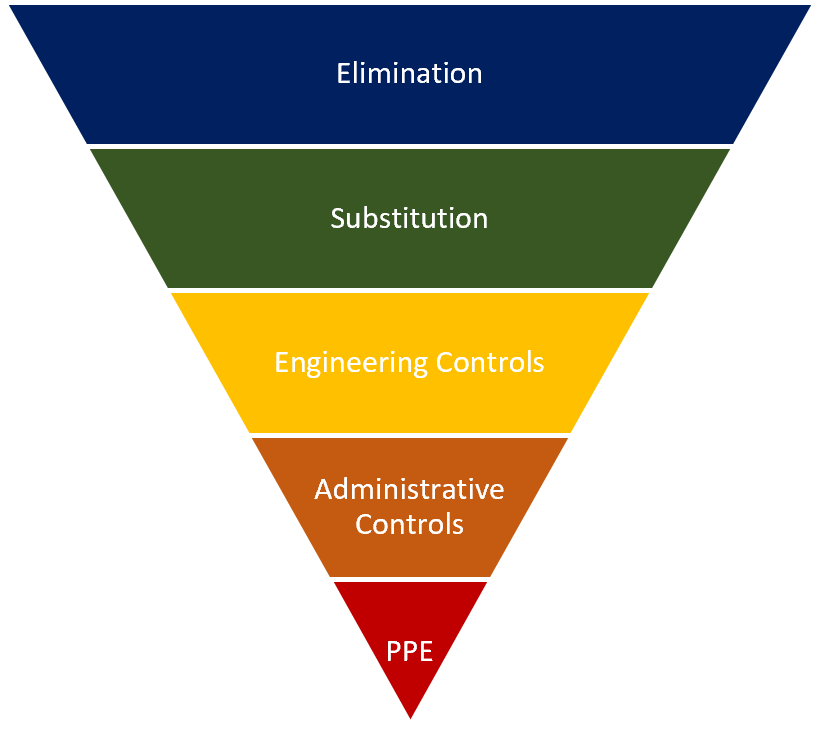
The National Safety Council introduced the Hierarchy of Controls in the 1950s as a safety framework. The framework is organized as an inverse pyramid of risk mitigation practices that can help organizations reduce workplace hazards. The graphic places the most effective methods at the top and the least effective at the bottom starting from elimination, substitution, engineering controls, administrative controls, and personal protective equipment.
Applying the Hierarchy of Controls to fleet safety for a commercial landscape maintenance company is critical. Using the five levels of controls in the order of most effective first to the least effective can reduce overall fleet risks.
Elimination
Although eliminating the over-the-road exposure all together is impossible for landscape companies, there are still ways to critically reduce the risk through other means.
Eliminate unnecessary trips due to route optimization or job consolidation can reduce overall miles driven.
Eliminate hazardous or unsafe vehicles from the fleet immediately.
Eliminate driving in severe weather conditions like rain, wind, fog, and snow.
Eliminate the need for backing up at job sites with pre site planning.
Substitution
If a risk cannot be eliminated, try replacing the hazard with something less risky.
Replace older vehicles that lack updated safety technology with more modern options.
Replace open utility trailers with enclosed options.
Stagger morning rollouts, when appropriate, for a safer start to the day.
Engineering Controls
The third option is deploying engineering controls to isolate people from the hazard.
Utilize safety controls such as backup cameras, 360-degree cameras, blind spot notice, land departure, forward collision warning and automatic emergency braking technology in vehicles.
Organized and fitted trailers help hold equipment and material while in transport to prevent shifting.
Dash cameras and global positioning systems (GPS) are tools help monitor driver behavior and provide more insight if an accident occurs.
Prepare flow maps for the yard to help crews enter and exist safely.
Administrative Controls
Changing the way people work is an administrative control that can reduce fleet risks.
The controls can consist of MVR reviews, driver authorization programs, driver evaluations, and driver training.
Implement cell phone, seatbelt, and drug/alcohol policies.
Perform daily vehicle inspections and telematics safety habit reviews.
Implement a preventive maintenance program that helps keep vehicles operating safely.
Personal Protective Equipment
The last control in the hierarchy is personal protective equipment (PPE).
High visibility safety vest help with existing and entering the vehicles.
Signage and cones when parked near roadsides alert drivers that people are working near by.
Safety blocks for parking and effective tools that can help employees in and out of truck beds or trailers to minimize slip and trip hazards.
When looking for opportunities to improve your fleet safety program, look at your risk through the hierarchy of controls. We tend to see most improvements within engineering space with telematics, GPS and dashcameras alongside strong administrative controls from driver selection to ongoing monitoring and training.