CyberOne™ Insurance Program
for the National Association of Women in Construction

Cyber Liability Program for National Association of Women in Construction Members
Cybercrimes are a real concern for organizations of all sizes, in every industry that utilizes even basic technology to operate. It threatens to disrupt business operations while extorting capital and damaging the organization’s reputation. Scams are growing in sophistication, frequency and severity. According to a 2019 CNA/Hardy Risk and Confidence Survey, cybercrime is among the top risk concerns of companies, globally.
Cybercrimes range from simple telephone scams to highly sophisticated technological attacks. Preventive measures are vital to keep an organization’s data and capital safe, but no preemptive actions can offer a 100% guarantee against cybercrimes. Having a robust insurance policy to cover those instances that are unpreventable is vital for protecting the organization.
CNA Epack Extra Network Security & Privacy
Indication Grid for NAWIC
| Revenue Range | Retention | Premium Range |
|---|---|---|
| Under $10,000,000 | $2,500 | $1,700 - $2,100 |
| $10,000,000 - $30,000,000 | $5,000 | $2,100 - $2,900 |
| $30,000,000 - $50,000,000 | $10,000 | $2,600 - $3,100 |
Program Overview
NAWIC members with annual revenues up to $50,000,000
CNA Cyber Prep
WhiteHaX – Cloud-Based Penetration Test
CyberArk – Privileged Access Security Assessment
CNA’s eRiskHub® Web Portal
Computer-Based Privacy and Security Training Modules
CNA-Approved Breach Counsel Consultation

To learn more about the National Association of Women in Construction (NAWIC), visit nawic.org.
Documents
Liability Coverage
Network Security and Broad Form Privacy Liability
Privacy Event Expense
Regulatory Proceedings including Privacy Fines
Network Extortion
Netowrk Restoration and Business Interruption (including Dependent BI and Network Failure)
Media Liability
E-Theft, Social Engineering and Telephone Fraud
Bricking
Voluntary Shutdown
Cyber Liability News

Author, Anne Wright, Surety Relationship Executive, Rancho Mesa Insurance Services, Inc.
In true government fashion, the Cybersecurity Maturity Model Certification requirement, more commonly referred to as CMMC, is a mouthful! While most companies are familiar with or are working on compliance with this requirement by now, we felt it was appropriate to share the history of this certification with our audience.
Author, Jack Marrs, Associate Account Executive, Rancho Mesa Insurance Services, Inc.
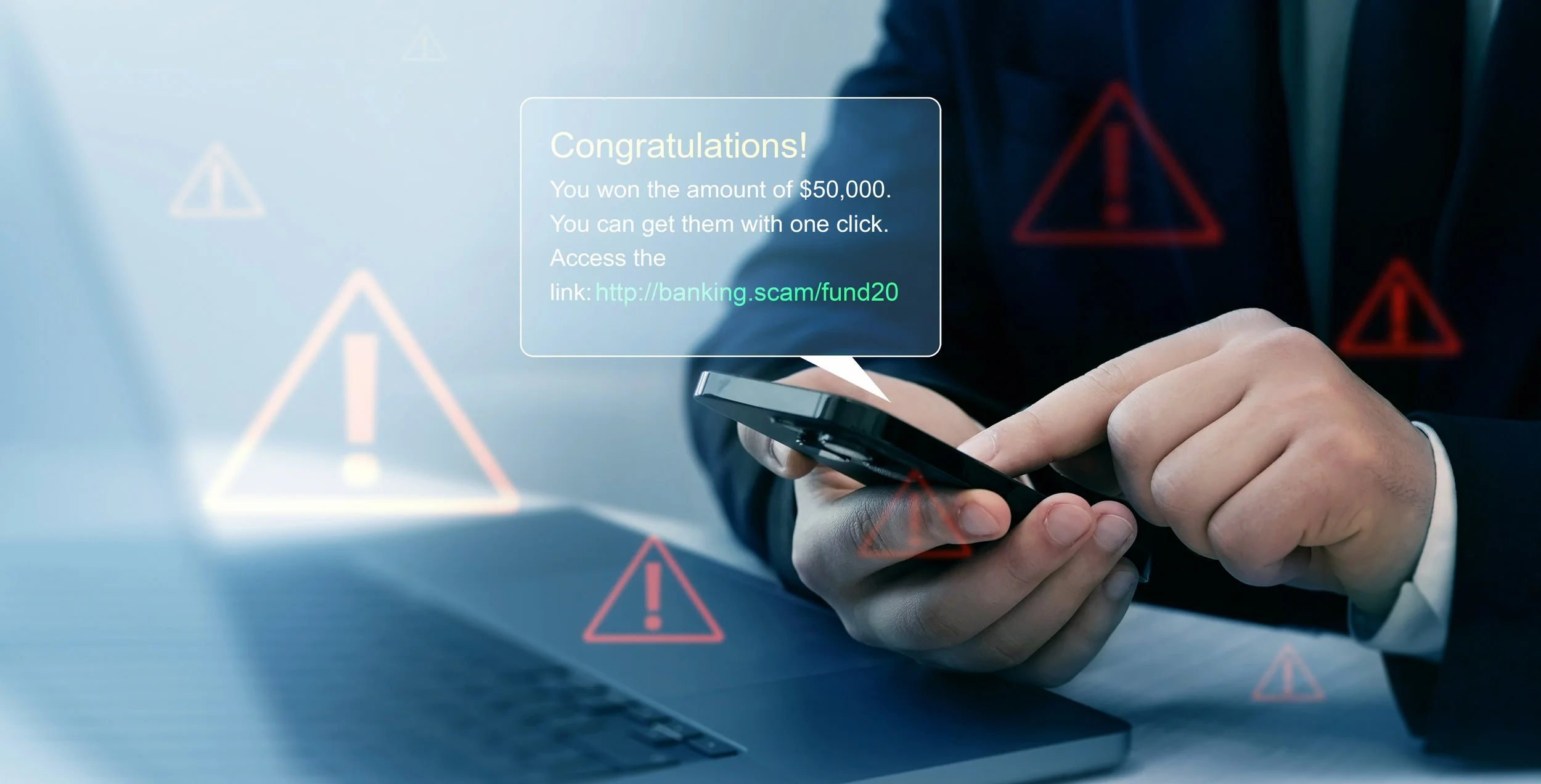
Social engineering fraud is when cybercriminals impersonate a trusted individual to manipulate others into performing actions such as making wire transfers, sharing confidential information, or granting access to their systems. It is often confused with hacking, but the two are fundamentally different. Hacking involves identifying vulnerabilities in software to breach a system, where as social engineering fraud relies on impersonation and manipulation to trick individuals into helping the cybercriminal.
Author, Sam Brown, Account Executive, Rancho Mesa Insurance Services, Inc.
On Friday, July 14th Rancho Mesa hosted a popular workshop titled “Cyber Liability Explained: Hacking Trends for 2023” with presenter Beau Bechelli of Evolve MGA. His 60-minute presentation educated the audience on the cost of cyber-attacks, the most common types of attacks, and practical ways to help reduce the threat of a breach.
Author, Jeremy Hoolihan, Account Executive, Rancho Mesa Insurance Services, Inc.
Cybercrimes are at an all-time high. News sources report cybercrimes almost on a daily basis with most of the press relating to company breaches and cyber extortion. However, one of the biggest cyber threats that is often overlooked is Business Email Compromise (BEC).
Author, Sam Brown, Vice President of the Human Services Group, Rancho Mesa Insurance Services, Inc.
The dramatic increase in cyber-attacks since 2020 has resulted in employer pain and made headlines as the economic cost skyrockets. The recent Hiscox Cyber Readiness Report 2021 states that the number of firms attacked rose from 38% to 43%. Not surprisingly, more than 28% of those employers suffered multiple cyber-attacks.
Author, Dave Garcia, President, Rancho Mesa Insurance Services, Inc.
As we come to the end of 2020, the most challenging year most of us have ever experienced, where COVID-19, wild fires and other natural disasters took their toll emotionally, physically, mentally and financially on all of us we can only hope for a brighter 2021.
Author, Sam Brown, Vice President, Human Services Group, Rancho Mesa Insurance Services, Inc.
As American employers navigate the Coronavirus Pandemic, many business leaders quickly adapted to a virtual office and virtual workforce. While many organizations anxiously wait for the day employees can all safely head into the office Monday through Friday, employers must adjust risk management practices to account for the virtual workforce.
Author, Drew Garcia, Vice President, Landscape Group, Rancho Mesa Insurance Services, Inc.
Even prior to the COVID-19 pandemic, many construction companies were utilizing some form of cloud-based systems to effectively streamline business operations and increase accessibility of information. While hosting sensitive data in the cloud has many benefits like shared access to data, applications and storage, there are some risks contractors should take into account before relinquishing their data to the cloud.
Author, Sam Clayton, Vice President, Construction Group, Rancho Mesa Insurance Services, Inc.
Equipment and material theft as well as jobsite vandalism are exposures that unfortunately contractors have become accustomed to over the years. Over the last decade, however, the construction industry has seen a new threat arise and its name is Cybercrime.
Author, Sam Clayton, Vice President, Construction Group, Rancho Mesa Insurance Services, Inc.
The recent coronavirus (COVID-19) pandemic has created numerous challenges for both individuals and businesses all over the world. Last week, California Governor Gavin Newsom required all residents to “shelter-in place” and all “non-essential businesses” to cease “in-person” operations. In doing so and in order to keep their business operating, many employers transition employees to work remotely, otherwise known at Telecommuting.
Author, Sam Clayton, Vice President, Construction Group, Rancho Mesa Insurance Services, Inc.
When we hear of a data breach, we typically think of large corporations or more recently municipalities that collect customers’ personal identification information or are using technology to manage physical locations (i.e. buildings), transit systems, and people. However, just about any large, medium or small organization that uses technology to operate their business faces a cyber-exposure.
Author, Jeremy Hoolihan, Account Executive, Rancho Mesa Insurance Services, Inc.
Working within the construction unit at Rancho Mesa for over 15 years, I have developed strong long-term business relationships with my clients. As an insurance advisor, I have an obligation to insulate clients from exposures and liabilities. Many of which may remain the same from year to year. However, it is vital that business owners meet with their insurance advisor frequently, especially prior to an insurance renewal, to avoid potential gaps in coverage. Below are a few key topics that should be reviewed on a regular basis by a company’s insurance advisor.
Author, Alyssa Burley, Client Services Coordinator, Rancho Mesa Insurance Services, Inc.
With the recent cyberattacks spreading across the globe, Rancho Mesa would like to remind its clients to take the necessary precautions to protect their business’s data.
Author Chase Hixson, AAI, Human Services Group, Rancho Mesa Insurance Services, Inc.
As technology and the common usage of the internet in business grow, Cyber Crime is an ever increasing exposure for businesses. Most businesses carry large quantities of sensitive data that if breached, can create a financial and administrative headache. Many business owners are unaware of the real exposures they have should their information be compromised, whether directly or indirectly.
Author, Brian Robb, Underwriting Director and Cyber Industry Leader, CNA
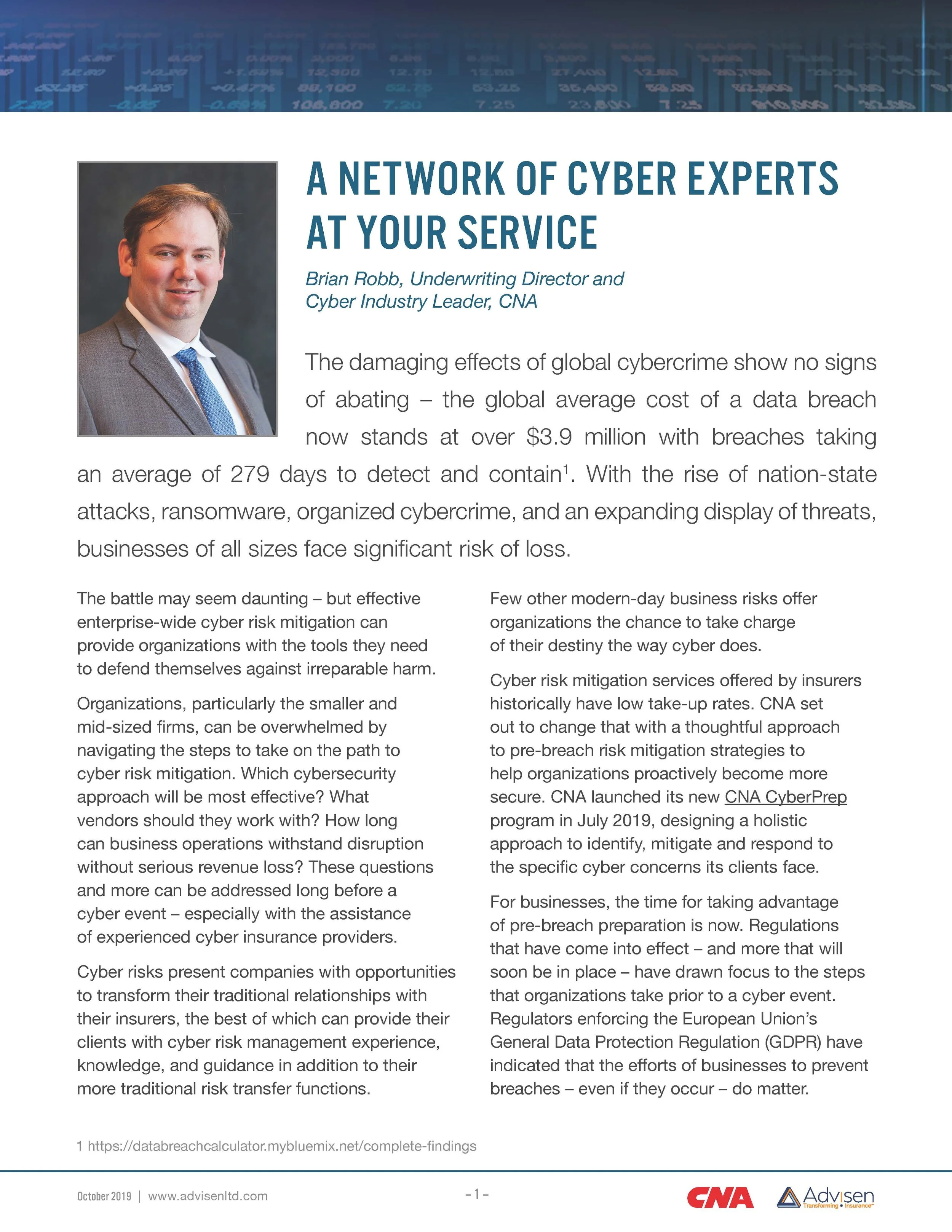
The damaging effects of global cybercrime show no signs of abating – the global average cost of a data breach now stands at over $3.9 million with breaches taking an average of 279 days to detect and contain1. With the rise of nation-state attacks, ransomware, organized cybercrime, and an expanding display of threats, businesses of all sizes face significant risk of loss.
Author, Nick Graf, ARM, CISSP, CEH | Assistant Vice President, CNA
As mobile devices continue to increase in popularity, many consumers use them as their primary means of communication. These hand-held devices, which are equipped with increasing amounts of processing power and data storage capability, are not only used for written and verbal communication, but also for taking high-definition photos and video, conducting financial transactions and transmitting health data. Therefore, ensuring this information is adequately protected is critical, but often overlooked.
Author, Nick Graf, ARM, CISSP, CEH | Assistant Vice President, CNA
While most people think of hacking as an attack against a website exploiting a vulnerability, in reality, hacking can be as simple as asking for a password. Today's hackers have realized that social engineering a user to give up his or her password may be the easiest way into an organization. The term social engineering refers to the "psychological manipulation of people into performing actions or divulging confidential information." And, it is important to understand this type of attack can occur via email, phone or even in person.