
The Evolving Workers’ Compensation Landscape with State Fund CEO Vern Steiner
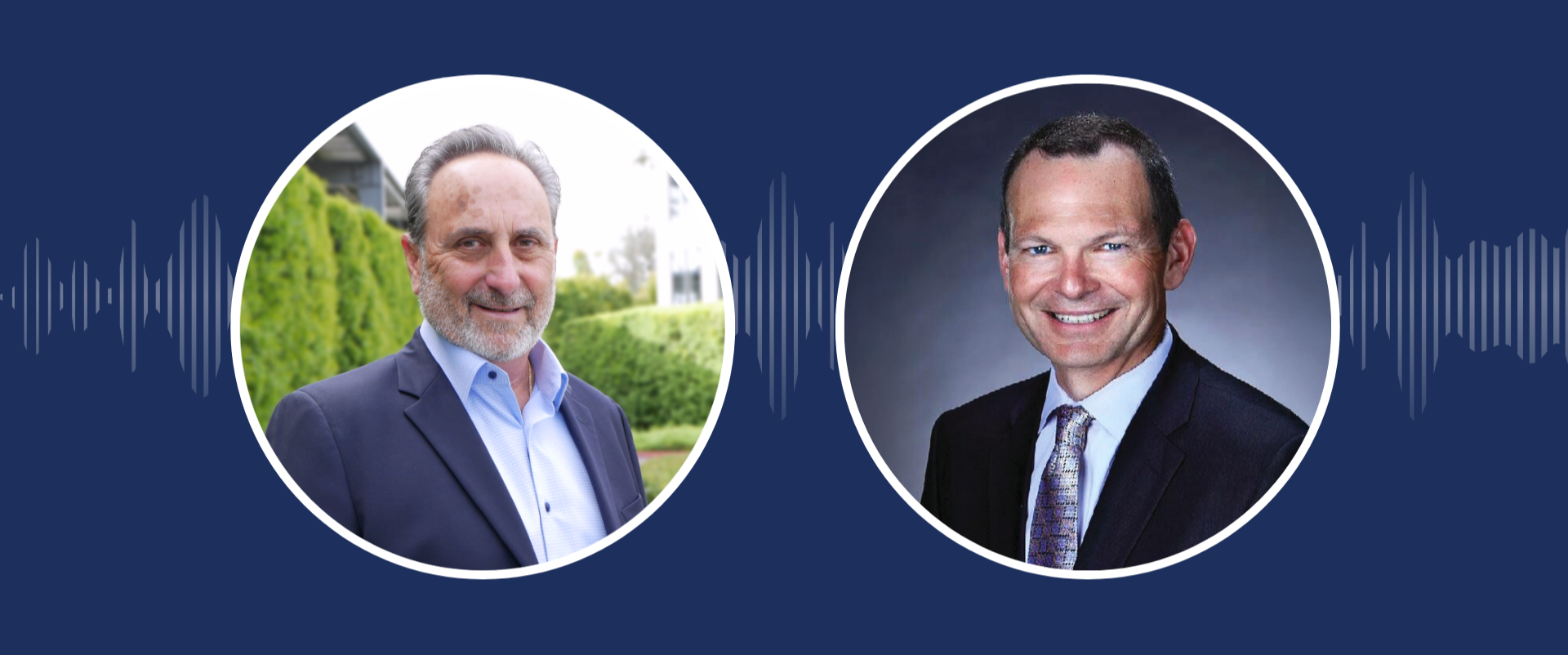
Rancho Mesa President and CEO Dave Garcia speaks with California State Fund CEO Vern Steiner about the current state of California’s workers’ compensation market. They discuss key industry trends, cost drivers impacting employers, and offer considerations for the future of the workers’ compensation system in California.
Dave Garcia: Hi everybody, you're listening to Rancho Mesa’s studio and podcast, where each week we break down complex insurance and safety topics to help your businesses thrive. I'm your host, Dave Garcia, and my guest today is Vern Steiner, the CEO of the California State Fund. Vern, welcome to StudioOne™. We're super pleased and excited to have you join us today.
Vern Steiner: Thanks for having me, Dave.
DG: Sure. All right. Let's just jump into it. So, Vern, you've built an impressive career spanning more than 30 years, in workers’ compensation in the insurance industry, starting in claims and now becoming the CEO of the State Fund. Looking back on that journey, what experience has had the biggest impacts on your leadership philosophies and how do you approach the industry today?
VS: Well, Dave, I think it my leadership philosophy probably started being shaped even before I got into insurance. And it's all a set of experiences with people. There's, you put it leadership. Right. And there's leadership and there's management right. And there's technical and there's inspirational things. And I think leadership is more about motivation, alignment, mission, communication, all those kinds of things.
And frankly, I learned a lot from various leaders I had along the way. Some things I learned what to do and some things I learned who I don't ever want to do that. And more than anything else, I reached the conclusion at some point in my journey that the most effective thing you can do is build an environment that people enjoy being a part of, and they feel like they can trust you and that they're trusted, and that that unleashes the best that they have to offer, right?
And so that's my focus has been for the 12 years I've been at State Fund, my focus has been, let's build a culture that really sets us apart, that values the mission of the organization, which is we're a not for profit organization that were created to help make the workers compensation system work in California and draws people into it, that that mission will give them the day to day rewards and positive feeling about what they're doing.
And I think that cultural part of things. I remember years ago studying, you know, strategy, whether you're thinking about corporate strategy or sometimes it was political strategies, five year plans, ten year plans. And today the world moves so fast that a five-year plan is insane. A three-year plan is insane; you know? But you still have to have a strategy.
And I think the strategy then has to be, how do you get really good at change? And that again boils down to culture boils down to trust that enables that change agility. So I won't name names for who was a particularly great influence or who was a particularly negative influence. You may know a few of them, but it's really just about every interaction I've had along the way with people I've worked with, people I worked for, interactions I had as a leader, lessons I learned of what not to do early on.
And I remember thinking at the beginning of my journey, our experience is overrated. And now I think, wow, experience is really valuable. I don't know if I think that just because I have it now and I want to protect my position, or if it's if it's something you can only really understand after having gone through the journey.
DG: I think you're right. Boy, you hit on so many great topics. I mean, we could spend, you know, forget the insurance world for a second. We could just talk about your philosophy and leadership and culture, because I do. I've had similar experience, both good and bad, from different leaders that I've worked for or been around. Just experience with them.
But what I, what really touched me is I'm big on culture as well, is I do believe there's a difference between employee satisfaction and employee engagement. And I think what you're hitting on is really the engagement side. People can be satisfied, you know, they make a good wage. You know, they don't hate their job, that sort of thing. They have nice benefits.
But how do you get them engaged? And I think the engagement piece is what I've watched you build over those 12 years at the State Fund, because I think it cascades out from the top down. If the leaders are engaged, then then they're going to send that message out. And I just want to commend you on that.
I've witnessed that personally with the people that work with us here at the agency level. So bravo to that. And for those of you that listening, really think about that. Think about in your organizations, you know, the difference between just satisfaction and engagement. And it really focuses on the culture that you're providing. So thanks for sharing that piece. That's a great takeaway for me.
VS: Thank you. And I appreciate the feedback and just adding one more thing to it. I think that engagement, if it comes from how you feel emotionally, your emotional connection with the people you work with, with the way the organization treats you, and it is different than satisfaction.
DG: Yeah, there's there, you know, and I learned that from somebody much smarter than me. They sat me down and said, yeah, do you understand the difference between employee satisfaction and employee engagement? And at that point I'm like, they're the same. And then they explain to me through examples and, you know, different things. No they're not. And so the goal here at Rancho Mesa is obviously employee satisfaction.
But more importantly, we should be accomplished that if you're engaged, you will be satisfied, right? If you're satisfied, you may not be engaged. That’s the reality.
Okay, let's shift gears and let's talk about, you know, the current state of workers’ compensation here in California. You know, how would you describe the current state in California's marketplace and what are the biggest challenges you think employers are should be paying attention to right now?
VS: Well, it's an interesting time. Yeah, it is a loaded question. Yeah. And it's an interesting time in kind of the history of California workers’ comp, at least in my 30 plus year career. We're coming off and maybe still in a period where the market has been stable for a very, very long, the longest time I've ever experienced. Prices had generally come down and cost have generally come down.
So pretty much employers, insurers and even injured workers have benefited from this period. I think there is a school of thought that the injured workers benefited from the last reform, which was pushed through, I think in 2013 initially, and now they fallen behind. But I said we're coming off of it, you know, it's gone on for the last dozen years.
And now there are signs that, you know, the patient's running a fever, right? You know, maybe it's a low grade fever. Yeah. But under underlying all that, it's still we still have a very healthy patient because we've had ten years to condition ourselves. And I think what comes next depends on how high this fever gets and how long the fever lasts and what other, you know, comorbidities we have.
You know, if, if the underlying health is what it appears to be, I think the system still has some stability left in it. But if there's been more deterioration than is obvious on the surface in the last couple of years, because for the last 2 or 3 years, combined ratios for California have been over 100, which means from an underwriting basis, insurers are losing money, and yet they haven't really done anything to address that. Prices have stayed pretty stable.
It depends on how far they're dipping into their savings, for how long that can continue. And I don't know what the answer to that is. We know the numbers, the big numbers that the shares. But those are industry wide numbers. Some carriers could be extremely healthy and some maybe not so much healthy, if that's what's going on, you know, the market will continue to be relatively stable, but if it's an increase the board fever, then we could be heading for a little bit of disruption.
And I think that's against a backdrop of we have a new governor. We don't know who the new governor will be, but a new governor next year. And in my career, with the exception of Governor Newsom, every governor has presided over some sort of significant change.
We'll call it reform, although reform sometimes lower costs and sometimes increases costs to the workers’ comp system. And I think that's overdue. And I'm not saying that I think we need it, although I think there are some symptoms now, particularly the CT issue that maybe demands some attention. But I think the system being reformed is kind of the cycle has gone long enough that it's likely to happen again in the next 2 or 3 years.
DG: Yeah, let's get a tune up. Right? Yeah. And I think, you know, well, I think CT is something we're going to touch on here in a couple of minutes. But in the interim, just like hot off the news just last Friday, current commissioner Laura who will also be we will also have a new insurance commissioner. So the WCIRB had recommended a 10.4 average rate increase several months ago.
He finally got his private actuaries and concluded that there should be an increase. But he's recommending or advising a 6.6% increase. So that marks the second year in a row that we've kind of seen mid, you know, between 5 and 10% projected increase need. So where do you see. And this is where CT’s going to come into play.
But in your view what's driving these increases and how do you think this might actually trickle down to the employer. Do you think we'll see, again some people have rate decreases, we know I mean in terms of their premiums? But you think if you were an employer in California would you be budgeting, you know, for decrease, increase or flat in most cases?
How do you see that, Vern, with this recommendation?
VS: All right. So I'll take the last question first. And I think if for years we've seen whatever the commissioner or the WCIRB has recommended, we've seen the average charged rates by carriers go down. But last year it didn't go down. It didn't really go up either. It kind of held flat. I don't know if it'll hold flat next year in spite of these industry trends or if it will start to adjust up.
I do know that over a long enough period of time, if the trends continue the way they are, rates have to go up, right? But whether that's going to happen this year or not, I think that a lot of different factors could enter into individual carriers’ decision making for how they approach this. I think the underlying factors, if I remember the first part of the question, which is really what's driving this increase, that that also is multiple things and some, some odd, unusual type of things that we're still having I think a bit of a reaction to COVID in here, not COVID itself, but the way that the world changed in COVID and remote work started to become more of a factor. And one of the things that happened with that was the courts started operating remotely as well.
DG: Correct.
VS: California is really not one consistent system up and down the state. You know, San Diego is a little bit different than Orange County, different than LA, much different than the Bay area and way different from, you know, the extreme north or the Sierras. And one of the things that's happened, and it relates to the growth of the continuous or cumulative trauma claims is now that the courts have become virtual, law firms, applicant law firms from Los Angeles are able to represent people up and down the state.
And this cumulative trauma behavior was far more prevalent in LA. And now it's being exported to other areas as well. So there is a growth overall in in cumulative traumas in California. And cumulative traumas are more complicated, almost always more expensive. And another factor that I don't think has been fully accounted for by the WCIRB or the commissioners, actuaries, or anyone else who's studying it, is cumulative trauma claims are usually paid later, and the full exposure is recognized later, because there's a lot of investigation that has to go on at the front end of them that are often not accepted, and a claims person has to do their best to estimate what this is going to cost without nearly enough information.
DG: Right.
VS: I suspect that most of the forecasts that we're working with today are understating what the ultimate liabilities are going to be for the growth of the cumulative trauma claims, because they just develop later.
DG: Yeah.
VS: So those are the things the trauma, this remote work.
There's also this period of the post-last reform was, the last reform was so effective in driving down costs that for a number of years it not only erased medical inflation, it created medical deflation. Now that is over. And so medical inflation is going to take hold again. And it is. But that's a pretty severe shift in the trend from cost being naturally or unnaturally lowered by the impact of the reform offsetting other natural increases, inflationary increases in the system.
So now there's no offset. And in fact medical costs are going up and contributing to the inflation in the system. And that's I think that's a pretty significant driver. The last thing that I think is worth talking about is both a change to the way that regulation decided we had to pay for medical legal exams for years and years and years there was no increase in medical legal reimbursement to doctors.
And when the state took a look at that a few years back, the avenue, they chose to address that. And I think it needed to be addressed. I think it was one of the worst avenues they could have chosen. And they decided, well, we're going to pay doctors a dollar per page that they have to review and medical records.
Yeah, well, that's just rife with all kinds of abuse problems and, and so medical legal costs have exploded. And throughout our, throughout my history in this comp system, there have been ways that people that really try to abuse the system find loopholes in, in the regulation that is supposed to make the costs predictable. That had really slowed down for a long time.
But now we're seeing this kind of activity in pain management and I think long-term, kind of severe care, brain trauma, where the actual procedures being provided, provided or not listed in the fee schedule and the providers get to charge pretty much whatever they want. And we're seeing that being used more and more often.
DG: Wow.
VS: Maybe, maybe it's appropriate for a small percentage of claims, but there's a larger and larger percentage of claims where that activity is going on. And so that is also driving some of the cost increase.
DG: Yeah. It's everything you touched on are things that we see daily. You know, when we're doing our claim meetings with our clients and we're looking at the loss information, we see this, you know, put preponderance of cumulative trauma where five years ago we didn't see it. Now we're seeing it regularly. I think I may be misstating it, but I think the total number of average percentage, 27% of indemnity claims California now cumulative trauma obviously that number used to be in the low teens.
So there are some, you know, forces at work that have looked at how to manipulate possibly the system a little bit for their own gain, not necessarily for the injured worker necessarily, but just for their own game. So, you know, that's a that's a cause. And it probably has to do with I've been in the insurance industry about 40 years now, and when I see things like this, I get frustrated because it's just wrong.
You know, it's just, you know, there are, you know, cumulative trauma cases that need to be taken care of. Nobody's arguing that. But two times that number and the cost and the drivers is just too much. So I think you've mentioned several great things that to me, the answer is going to be some form of legislative reform.
Doubtful it's going to happen in 2026. Too much going on. Do you, is there anything that you think is reasonable to believe? Maybe in the ‘27 cycle, maybe we could see some differences here?
And I'm not naive enough to know that if some of these things were to change, you know, that you mentioned like proximity attorneys where they can't do they have to appear, not appear cumulative trauma is 1%, you know, should it be 51?
I mean, some of this stuff is really not complicated, but you're going to have to give something up in order to get that through. So how do you see that balancing out legislation or without, you know, with given your position, I know you'd be sensitive to what you can, you know, share. But do you see that? Is there hope out there that we could see some reform to try to alleviate some of these cost drivers in the next few cycles?
VS: Yeah, I do think there's hope and I don't know anything in particular given my position. We're, you know, we're a quasi-state agency, but I'm not on the inside of any discussions about what's happening from a, you know, potential reform or what any party is going to support. But what I, what I am aware of is there is this pressure building up to it's been years since the last reform, 2013/14, since there's been any kind of increase in the rate that an injured worker’s paid for permanent disability.
And, you know, after 12, 13 years, yeah, there's a belief that what's being paid now is inadequate given the rates of inflation we've all experienced. So that is a, you know, a motivating factor for, I think, labor to start to address that issue. And I, traditionally employers, business has negotiated over that issue. Okay, we're going to raise costs in the system in this way. Where can we recapture some costs?
And cumulative trauma has been an issue that we've all been aware of for many, many years. But it is now exploding. And it just there's no way to say that, okay, it's gone from the teens, as you said, to the mid-20s now and it's over. It could continue to explode. So I think that that is definitely one of the cards to be played to try to offset the increases in benefit rates.
There's also been a long term attempt by, you know, the doctors lobby, the applicants’ attorneys lobby to undo the medical networks, the medical provider networks and/or utilization review and IMR. And I think both are very effective ways to make sure that medical care is appropriate. Particularly UR an IMR. And if these things are attacked or unwound, it's impossible to really estimate what the impact on the system will be.
But my estimate would be without these controls, medical care will go wild and costs will escalate rapidly. So that's, I think, something we have to be very careful about as the next round of discussions take place. And, and these discussions generally take place between key stakeholders, which labor and employers.
DG: Right.
VS: You know, insurers are maybe invited to a third table, but it's this is really a bargain between labor and employers and, and the effectiveness of the people negotiating on both sides of that table in the next year or the year after, I think will determine where we end up.
DG: Yeah, I think that's great. I know that, you know, from a grassroots perspective, you know, we've drafted letters to the committee chairs that would deal with something like this, both the senator and the committee chair, and just trying to raise the level of awareness and try to get we know it's going to come from, as you said, employers.
So we need to raise that like they feel the people that we've spoken with just on the CT issue in particular, they just feel helpless, you know, they don't know how to prevent it. You know, what can you know, they've asked this a hundred times. What can we do as an employer to try to mitigate this exposure? And there are certain things they can do. Their hiring practices, how they treat their employees, if they're going to lay somebody off, have a really good process to do that. All of those things. And many people say, yep, and we're doing all of those things, but we still have a lot of these claims. So they're really looking, I really think the employer is looking for legislative reform to answer some of this question.
It sounds like, you know, you're talking about everybody's talking about it. At some point it's going to be addressed. And I think the giveback everybody's in favor of, You know, raising some of that permanent disability. Think nobody's going to argue that, you know, and that goes actually to who? The injured worker, not to a third party that's kind of feeding off the system.
So sorry, I'm letting my 40 years of, you know, fighting for the advocacy of, you know, clients and business owners. But anyway, so I'll get off that soapbox.
All right. We'll wrap it up here pretty quickly. So, Vern, here you go. This I always like this question at the end. If you had one minute to speak directly to every California employer listening, what message would you want them to hear relative to workers’ compensation for the next year?
VS: Well, I think you've set that up pretty well in that when we're at one of those forks in the road in the workers’ compensation system, the last one was 2013. The one before that was probably 2003. The one before that was around 1995. Where decisions are going to be made that will change the system. And the people making those decisions do not always get it right, and they do, generally do not understand what the total impact of those decisions are going to be, particularly when you start changing the not the amount of benefits, but what determines whether you're eligible for a benefit.
And those things drive behavioral changes that are really hard to quantify when you go to actuaries and say what's, they get it wrong every time. This last time, they wildly understated the impact of things like independent medical review. This next time. Yeah. The more that we tweak that part of the system, the more volatility we're going to introduce to it. Maybe on the upside, maybe on the downside.
But get involved.
DG: Yeah.
VS: This is one of those forks in the road. I mean if you make sure your voice is heard go to your Chamber of Commerce. You figure out how to make sure that your legislator knows where you stand on these issues, because it is likely that in the next year to three years, we're going to take another path, with workers’ compensation.
And it could be another path that isn't so different than the one we've been on, or could be one that is wildly disruptive. And we're already at a stage now where the health of the system, which had been accumulated and been very healthy for a ten-year period, is starting to deteriorate. You know, as I said earlier, the analogy, the patient definitely has a fever now.
Maybe it's just a little cold. Maybe it's going to turn into something else. Well, we don't want to turn into is a whole new disease that we don't understand. And that's why involvement in this political process, the voices that matter most in this, are the voices of California employers and the folks who represent labor.
DG: Perfect. Well, listen, I can't thank you enough for joining me today. Your candid insights, your leadership, and, you know, the impact you've just made throughout your career is second to none. So thank you for spending time with us, sharing your expertise with our audience. Really appreciate you jumping into StudioOne. Love to have you back at some point in the future.
So Vern, thank you for your time today.
VS: My pleasure Dave, it's been fun talking to you.
DG: Great. Everyone, thank you for tuning in to our latest episode produced by StudioOne. If you enjoyed what you heard, please share the episode and subscribe. For more insights like this, visit us at ranch and or subscribe to our weekly newsletter. Until next time, thank you. Goodbye.